Breathing clean air shouldn’t feel like a luxury reserved for pristine mountain peaks or sterile laboratories. Yet, with escalating concerns about indoor pollutants – from wildfire smoke drifting continents away to the invisible cloud of VOCs released by everyday household items – the air inside our homes can often be significantly worse than what’s outside. In 2026, the convergence of advanced filtration science and intelligent connectivity has transformed the humble air purifier from a simple fan-and-filter box into a proactive guardian of our personal breathing spaces. Understanding how to navigate this evolved landscape is no longer just about removing dust; it’s about harnessing technology to actively monitor, analyze, and optimize the very air we depend on for health and well-being, moment by moment.
The concept of “smart” in air purification has matured far beyond basic Wi-Fi control. Today’s intelligent systems represent a sophisticated ecosystem designed to work seamlessly with our lives, adapting to changing conditions without constant manual intervention. They learn our routines, anticipate pollution spikes from cooking or seasonal allergens, and provide tangible, data-driven insights into our indoor environment. However, the sheer volume of features and technical jargon can be overwhelming. Is laser particle counting essential? How crucial is true real-time gas detection? Does app complexity outweigh convenience? Cutting through the marketing noise to identify the features that genuinely deliver value for your specific needs and space is the critical first step. This guide cuts through the hype, focusing on the essential considerations and technological advancements that truly matter when investing in your home’s air quality future.
Top 10 Smart Air Purifiers
Detailed Product Reviews
1. LEVOIT Air Purifier for Home Large Room Up to 1073Ft² with Air Quality Monitor, AHAM VERIFIDE, Smart WiFi, Washable Pre-Filter, HEPA Sleep Mode for Pets, Allergies, Dust, Pollen, Vital 100S-P, White

Overview: The LEVOIT Vital 100S-P targets large spaces up to 1,073 sq. ft., featuring AHAM VERIFIED certification, Smart WiFi, and a washable pre-filter. Designed for pet owners and allergy sufferers, it emphasizes reliable air quality monitoring and quiet operation.
What Makes It Stand Out: AHAM VERIFIED performance ensures independently tested efficacy (4.8x air changes/hour in 222 sq. ft.), while Pet Mode optimizes fur capture via its U-shaped inlet. The HEPA Sleep Mode auto-dims the display and operates at a whisper-quiet 23dB, maintaining filtration without disruption.
Value for Money: Priced competitively for large-room coverage, its AHAM certification validates performance claims others may overstate. The washable pre-filter extends main filter life, reducing long-term costs versus non-certified alternatives with similar specs.
Strengths and Weaknesses:
Pros: Genuine large-room capacity; exceptionally quiet sleep mode; pet-specific optimization; energy-efficient AHAM verification.
Cons: Smart features require stable 2.4GHz Wi-Fi; no explicit aroma support; premium filters add replacement costs.
Bottom Line: An excellent investment for large households with pets or allergies, offering certified performance and serene operation. Ideal for open-concept spaces where reliability matters most.
2. LEVOIT Air Purifier for Home Bedroom Dorm Room, Smart & Voice Control, AHAM Verifide, 3-in-1 Filter With HEPA Sleep Mode, for Pollen, Pollutants, Smoke, Dander, Dust, Core 200S-P, White

Overview: The LEVOIT Core 200S-P is a compact, smart air purifier for rooms up to 140 sq. ft., featuring AHAM VERIFIED performance, voice control, and a 3-stage HEPA filtration system. Tailored for bedrooms or offices, it prioritizes quiet, efficient purification.
What Makes It Stand Out: Its 360° air intake and high-efficiency motor refresh air 4.8x hourly in small spaces, while the 27dB Sleep Mode and “Display Off” button ensure uninterrupted rest. Genuine filter monitoring via the app prevents guesswork in maintenance.
Value for Money: Affordable for its class, the AHAM certification justifies the cost by guaranteeing real-world efficacy. The focus on small spaces avoids overpaying for unnecessary capacity, and voice/app control adds convenience without premium pricing.
Strengths and Weaknesses:
Pros: Truly silent operation; intuitive app/filter tracking; ideal size for bedrooms; effective 3-stage filtration.
Cons: Limited to small rooms; no air quality display; carbon filter may need frequent replacement for strong odors.
Bottom Line: A top choice for compact spaces like bedrooms or dorms, delivering certified quiet performance. Best for users prioritizing simplicity and reliability over whole-home coverage.
3. GoveeLife Mini Air Purifier for Bedroom, Smart Filter Air Purifier with App Alexa Control for Pet Hair, Odors, Pollen, HEPA Portable Air Cleaner with 3 Speeds, 2 Modes, Timer, Aroma for Home

Overview: This pint-sized purifier covers up to 376 sq. ft. with app/Alexa control, 3 fan speeds, and a unique aromatherapy feature. Its dual-channel 360° intake and Energy Star certification target portability without sacrificing core functionality.
What Makes It Stand Out: The built-in aroma slot (for essential oils) merges purification with scent customization—a rarity in this segment. Custom Mode allows preset scheduling for fan speeds, while the 24dB sleep operation ensures tranquility. Energy Star/ETL certifications validate efficiency claims.
Value for Money: Budget-friendly for its features, though its 376 sq. ft. claim feels optimistic for sustained purification. The aromatherapy adds lifestyle value, but the lack of an air quality display limits precision versus pricier models.
Strengths and Weaknesses:
Pros: Compact and stylish; aromatherapy integration; strong app customization; very quiet sleep mode.
Cons: 5GHz Wi-Fi incompatible; small room focus only; certifications don’t include AHAM for airflow verification.
Bottom Line: A solid pick for small rooms needing discreet, customizable air cleaning with a wellness twist. Avoid if you require verified large-room performance or real-time air quality data.
4. Air Purifier for Home Large Rooms Cover Up to 3500 Ft², Powerful HEPA Air Purifier with WiFi APP Control, (PM2.5) AQI Display,Sleep Mode and Auto Mode, HEPA Air Cleaner for Pets Hair,Dust,Pollen

Overview: Marketed for expansive areas (up to 3,500 sq. ft.), this purifier boasts WiFi, real-time PM2.5 monitoring, and a 3-stage HEPA system. It emphasizes smart automation for pet hair, dust, and pollen removal in large living spaces.
What Makes It Stand Out: The color-coded AQI display provides instant air quality feedback, triggering Auto Mode to adjust fan speed dynamically. Sleep Mode operates below 22dB, while the 3,500 sq. ft. claim (though likely optimistic for rapid purification) targets high-ceilinged homes.
Value for Money: Competitive for ultra-large spaces, but actual effective coverage is likely closer to 1,000–1,500 sq. ft. The PM2.5 sensor and app control justify the price over basic models, though AHAM verification is absent—raising questions about airflow claims.
Strengths and Weaknesses:
Pros: Real-time AQI display; ultra-quiet sleep mode; comprehensive 3-stage filtration; strong app functionality.
Cons: Overstated room coverage; no AHAM certification; filter indicator may lack precision.
Bottom Line: A capable option for large homes needing visible air quality tracking, but verify coverage expectations. Prioritize if AQI monitoring is critical; skip if AHAM validation is non-negotiable.
5. ECOSELF Smart Air Purifier for Home Large Rooms, with WiFi Control, Covers Up to 2400 Ft², Smart Mode, AQI Display, 22dB Sleep Mode & Aromatherapy with 2X-Power Filtration, HAP603WF, White
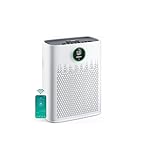
Overview: The ECOSELF HAP603WF combines 2,400 sq. ft. coverage, WiFi, an AQI display, and aromatherapy. Its “2X-Power Filtration” promises double-hourly air refreshment, targeting smoke, pets, and allergens with a focus on serene operation.
What Makes It Stand Out: The 22dB QuietMax Sleep Mode pairs with aromatherapy for a uniquely soothing experience. Real-time PM2.5 monitoring auto-adjusts fan speed, while the “2X-Power” claim (though context-dependent) suggests robust airflow for large rooms.
Value for Money: Mid-range pricing balances smart features and coverage. The aromatherapy and ultra-quiet sleep mode add lifestyle value, but the lack of AHAM certification makes “2X” claims hard to verify against LEVOIT’s certified models.
Strengths and Weaknesses:
Pros: Exceptionally quiet sleep mode; integrated aromatherapy; clear AQI display; versatile smart controls.
Cons: “2X-Power” marketing lacks independent validation; no washable pre-filter; replacement filters must be proprietary.
Bottom Line: Choose for luxury-focused large-room purification where ambiance matters. Not ideal for data-driven buyers—opt for LEVOIT if certification is essential.
6. LEVOIT Air Purifiers for Home Large Room Up to 1875 Ft² with Washable Pre-Filter, AHAM VERIFIDE, Air Quality Monitor, HEPA Sleep Mode for Allergies, Pet Hair in Bedroom, Vital 200S-P, White

Overview: The LEVOIT Vital 200S-P targets large spaces (up to 1,875 sq ft) with AHAM VERIFIED performance, focusing on allergy and pet-owning households. Its triple-layer filtration tackles airborne pollutants while prioritizing quiet operation for bedrooms.
What Makes It Stand Out: AHAM VERIFIED certification guarantees independently tested efficacy (CADR: Smoke 250, Dust 254, Pollen 289 CFM). The U-shaped air inlet uniquely captures pet hair without clogs, and real-time air quality monitoring auto-adjusts purification. Washable pre-filters reduce long-term costs.
Value for Money: Priced mid-range, it outperforms budget models in coverage and verification. While premium units exist, the 200S-P’s certified large-room capability and included washable filter offer superior ROI for pet owners versus similarly sized competitors.
Strengths and Weaknesses: Strengths include exceptional large-space coverage, genuinely quiet sleep mode, and reliable AHAM-backed performance. Weaknesses involve the bulky footprint unsuitable for small rooms and slightly slower initial air turnover in max-capacity spaces. Filter replacements also add ongoing costs.
Bottom Line: Highly recommended for large households with pets or allergies seeking verified, hassle-free air purification; avoid only if space constraints are critical.
7. LEVOIT Air Purifier for Home Allergens Pet Hair in Bedroom, Covers Up to 1073 ft² by 56W High Torque Motor, AHAM VERIFIDE, 3-in-1 Filter with HEPA Sleep Mode, Remove Dust Smoke Odor, Core300-P, White

Overview: The LEVOIT Core300-P delivers targeted air purification for medium-large rooms (up to 1,073 sq ft), emphasizing allergen and pet-hair removal. Its compact design suits bedrooms, backed by AHAM VERIFIED metrics and HEPA-grade filtration in sleep mode.
What Makes It Stand Out: The 56W high-torque motor achieves rapid air cleaning (CADR: Smoke 143, Dust 153, Pollen 167 CFM) in a surprisingly quiet package. Customizable filter options—like Pet Allergy or Smoke Remover variants—address specific household needs, a rarity in this class.
Value for Money: Exceptional for its price, offering AHAM-certified performance typically found in costlier models. The Core300-P undercuts premium brands while providing versatile filtration swaps, making it ideal for budget-conscious pet owners or allergy sufferers.
Strengths and Weaknesses: Strengths are its quiet operation, specialized filter choices, and energy efficiency. Weaknesses include lower coverage than the Vital 200S-P and reliance on proprietary filters that limit third-party alternatives, increasing long-term expenses.
Bottom Line: A top pick for medium rooms needing adaptable, certified air cleaning; skip only if you require ultra-large coverage.
8. SereneLife HEPA Air Purifier for Home – Smart WiFi & App Control, Ultra-Quiet Air Purifier for Bedrooms & Large Rooms, Removes Dust, Pet Hair & Odors, Ideal for Pets & Allergies (1,800 Sq Ft, White)

Overview: Marketed for expansive areas (up to 1,800 sq ft), this SereneLife purifier combines smart connectivity with HEPA filtration. Despite the title’s claim, its 200 m³/h CADR optimally serves spaces near 1,076 sq ft, targeting pet owners and allergy sufferers.
What Makes It Stand Out: Seamless WiFi/app control allows remote monitoring and scheduling—a standout for tech-savvy users. Its whisper-quiet sleep mode (under 25dB) and dedicated pet-hair filtration distinguish it in the smart purifier segment.
Value for Money: Competitively priced for smart features, yet its CADR lags behind LEVOIT’s AHAM-verified models. You pay a premium for app integration over raw performance, making it worthwhile only if automation is non-negotiable.
Strengths and Weaknesses: Strengths include intuitive app functionality, excellent noise control, and strong pet-odor handling. Weaknesses are overstated room coverage, no air quality display, and inconsistent filter lifespan reports.
Bottom Line: Choose for smart convenience in medium-large rooms; prioritize LEVOIT or BLUEAIR for superior verified performance per dollar.
9. GoveeLife Air Purifiers for Home, Smart Air Purifier for Large Rooms with App & Alexa Control, Covers up to 1162ft², Air Quality Monitor, PM2.5 Sensor Air Purifier for Pet Hair, Pollen, Dust, Smoke

Overview: The GoveeLife smart purifier covers large areas (up to 1,162 sq ft) with app-driven automation, featuring real-time PM2.5 tracking and voice control. It balances rapid cleaning via Turbo Mode with near-silent sleep operation for versatile use.
What Makes It Stand Out: Intelligent Auto Mode dynamically adjusts fan speed using live air-quality data, while the color-changing pollution indicator offers instant visual feedback. Alexa/Google compatibility and 24dB sleep mode enhance user experience beyond basic competitors.
Value for Money: Affordable for its tech suite, though CADR (150 CFM) falls short for true large-room dominance. Ideal for smart-home enthusiasts seeking data-driven cleaning without splurging on premium brands.
Strengths and Weaknesses: Strengths are responsive sensors, excellent quietness, and robust app analytics. Weaknesses include weak 5GHz Wi-Fi support, slower purification beyond 600 sq ft, and occasional app connectivity hiccups.
Bottom Line: Best for tech-focused users in medium-large spaces; not recommended for severe allergy cases needing higher CADR.
10. BLUEAIR Blue Signature SP3i Air Purifier for Medium Rooms up to 498 sq ft, HEPASilent Filtration, WiFi Smart Control, Auto Mode, Odor & Smoke Removal, Pet Hair & Dust, AHAM Verified, Table Design

Overview: The BLUEAIR SP3i excels in medium rooms (up to 498 sq ft) with medical-grade HEPASilent tech, capturing 99.97% of ultrafine particles. Its sleek table design and odor-focused filtration cater to urban dwellers and pet owners.
What Makes It Stand Out: Seven-stage filtration with OdorFence technology breaks down gases/VOCs 10x more effectively than standard units. Real-time AQI color coding and Auto Fresh Mode (which learns routines) set it apart for precision air quality management.
Value for Money: Premium-priced but justified by superior gas/odor removal and AHAM VERIFIED efficiency. Outperforms LEVOIT in smoke/pollutant handling for its size, though filter costs are higher—worth the investment for sensitive users.
Strengths and Weaknesses: Strengths include unmatched odor elimination, elegant design, and adaptive auto-mode. Weaknesses are limited room coverage and expensive proprietary filters, making it less cost-effective for large homes.
Bottom Line: Highly recommended for medium rooms with odor/smoke concerns; opt for LEVOIT if budget or coverage is paramount.
Understanding Core Filtration Technologies
The Non-Negotiable Foundation: True HEPA Performance
When evaluating any serious air purifier, the filtration core remains paramount. Look for certification to the True HEPA standard (specifically H13 or H14 grade), which guarantees the filter captures 99.95% (H13) or 99.995% (H14) of particles as small as 0.3 microns. This includes the most problematic airborne threats: fine dust, pollen, mold spores, and crucially, the ultrafine particles associated with wildfire smoke and vehicle exhaust. Beware of terms like “HEPA-like” or “HEPA-type,” which offer significantly less reliable capture efficiency. The physical construction of the filter media and the sealing within the unit are equally important to prevent air bypass.
Addressing Gases and Odors: The Activated Carbon Imperative
Particulate filtration alone is insufficient for comprehensive air cleaning. Volatile Organic Compounds (VOCs) from paints, cleaning supplies, furniture, and cooking gases require a different approach. A substantial bed of high-quality, granular activated carbon is essential. The weight and volume of the carbon matter significantly – a thin mesh insert is largely ineffective. Look for units specifying a minimum carbon weight (often 2+ pounds for meaningful performance) and potentially impregnated carbon designed to target specific gases like formaldehyde, which is a common concern in modern homes. This layer works silently but powerfully to neutralize odors and harmful chemical vapors.
The Ozone Question: Prioritizing Safety
Some air purification technologies, particularly older ionizers and certain PCO (Photocatalytic Oxidation) systems, can generate ozone as a byproduct. Ozone, even at low levels, is a lung irritant and can worsen asthma and other respiratory conditions. Regulatory standards strictly limit ozone emissions from consumer devices. Always verify that any unit you consider is certified as ozone-free by a recognized body (like CARB in California) and avoid technologies known for producing ozone unless explicitly proven safe and compliant. Your health depends on clean air, not air that introduces new pollutants.
Decoding Smart Features: Beyond Basic Connectivity
Real-Time Air Quality Monitoring: Seeing the Invisible
The hallmark of a truly smart purifier is its ability to accurately sense the air it’s cleaning. Advanced units incorporate multi-sensor arrays, often including:
- Laser Particle Counters: Precisely measure PM1.0, PM2.5, and PM10 levels, providing granular data on particulate pollution.
- Metal Oxide Semiconductor (MOS) Sensors: Detect a broad range of VOCs and combustible gases, giving insight into chemical pollutants and odors.
- Electrochemical Sensors (for specific gases): Higher-end models may include dedicated sensors for carbon monoxide or formaldehyde. The quality and calibration of these sensors are crucial; inaccurate readings render the “smart” aspect useless. Look for units that clearly display real-time AQI (Air Quality Index) or specific pollutant levels, not just vague “good/bad” indicators.
Intelligent Automation: Responding to Actual Conditions
Smart sensors are only valuable if the purifier uses that data effectively. True intelligence means the unit automatically adjusts its fan speed based on real-time pollution levels. If particle counts spike from cooking, it ramps up; when air clears, it quiets down to save energy. This isn’t just convenient – it ensures optimal cleaning precisely when needed and minimizes noise and energy waste during clean periods. Avoid units that only offer manual scheduling without sensor-driven auto-mode; that’s basic automation, not true intelligence.
App Ecosystem and User Experience: Convenience vs. Clutter
A well-designed companion app is a key smart feature, but its value depends entirely on execution. Essential app functions include:
- Real-time air quality data visualization (graphs, historical trends)
- Remote control of power and fan speed
- Filter life monitoring and replacement alerts
- Customizable auto-mode sensitivity
- Scheduling capabilities However, beware of overly complex apps that are difficult to navigate or prone to crashing. The app should simplify control and provide useful insights, not create frustration. Consider whether the app integrates with broader smart home platforms you use (like Google Home or Apple HomeKit) for seamless voice control and routines, but don’t let platform compatibility overshadow core functionality.
Critical Performance and Practical Considerations
Match the Machine to Your Space: CADR and Room Size
The most common mistake is under-sizing an air purifier. The key metric here is CADR (Clean Air Delivery Rate), specifically for smoke, dust, and pollen. This number, certified by AHAM (Association of Home Appliance Manufacturers), indicates the volume of clean air delivered per minute. Crucially, the unit’s recommended room size should align with its lowest CADR rating (usually smoke, representing the smallest particles). Don’t rely solely on manufacturer square footage claims; cross-reference with the AHAM Verifide CADR numbers. Using a unit in a room significantly larger than its CADR capacity means it will constantly run at maximum speed, be noisy, and struggle to clean the air effectively.
Noise Levels: The Balancing Act for Livability
Air purifiers need airflow, which inherently creates noise. The critical factor is the noise level at the fan speeds you’ll actually use most often, particularly during sleep. Many units have a “quiet” or “sleep” mode designed for bedroom use. Look for decibel (dB) ratings at low and medium settings – anything below 30 dB is generally considered very quiet for sleep. Pay attention to user reviews specifically mentioning noise; sometimes manufacturer specs can be optimistic. A unit that cleans well but is too loud for your bedroom at night is functionally useless for that critical space.
Energy Efficiency: The Long-Term Operating Cost
Air purifiers often run continuously, making energy consumption a significant factor over their lifespan. Check the unit’s wattage, especially in the typical auto-mode or medium-speed setting you’d use most. Look for ENERGY STAR certification, which signifies the model meets strict energy efficiency guidelines set by the EPA. While the upfront cost might be similar, a more efficient unit can save noticeable money on your electricity bill over several years of constant operation. Consider it part of the total cost of ownership.
Filter Costs and Replacement Frequency: Budgeting for Clean Air
Filtration is a consumable process. Factor in the long-term cost and availability of replacement filters. True HEPA and substantial carbon filters aren’t cheap. Understand the expected replacement interval (usually 6-12 months for HEPA, potentially less for carbon depending on usage and air quality) and the current market price for genuine replacement filters. Some manufacturers lock users into proprietary, expensive filters, while others offer more affordable third-party options (though quality can vary). Ignoring this recurring cost can lead to sticker shock down the line or, worse, neglecting necessary filter changes, rendering the purifier ineffective.
Installation, Placement, and Operational Nuances
Strategic Placement: Maximizing Airflow and Effectiveness
Where you put your air purifier dramatically impacts its performance. Avoid cramming it into a corner behind furniture or curtains, as this severely restricts airflow intake and output. The ideal location is:
- Centrally located in the room if possible
- At least 1-2 feet away from walls and large obstructions
- Positioned so the clean air outlet isn’t immediately blocked (e.g., not facing directly into a wall)
- Away from sources of excessive dust or moisture (like a dryer vent) For multi-room coverage, consider units designed for open floor plans or strategic placement in key areas like bedrooms and main living spaces, as air doesn’t move perfectly between closed rooms.
Understanding Air Changes Per Hour (ACH)
Effectiveness isn’t just about cleaning the air once; it’s about how many times the entire volume of air in the room is processed per hour. For general allergen and particle reduction, 4-5 ACH is a common target. For more demanding situations like wildfire smoke or severe allergies, 6+ ACH is preferable. You can calculate potential ACH using the CADR: (CADR x 60) / Room Volume (in cubic feet). A unit with a CADR of 200 in a 300 sq ft room with 8 ft ceilings (2400 cu ft) provides roughly (200 x 60) / 2400 = 5 ACH. Ensure the unit’s capacity meets your desired ACH target.
Maintenance Beyond Filter Swaps: Keeping Sensors Clean
Smart purifiers rely on sensors, which can become coated with dust over time, leading to inaccurate readings. Many units now include prompts or indicators for sensor cleaning. This is typically a simple process involving gently wiping the sensor port with a dry cotton swab or soft brush – consult the manual. Neglecting sensor maintenance can cause the auto-mode to malfunction, running too little or too much. Factor this minor but essential upkeep into your routine.
Future-Proofing Your Investment
Software Updates: Ensuring Longevity and Improvement
As smart devices, air purifiers increasingly rely on firmware to manage sensors, connectivity, and features. Choose a brand with a proven track record of providing regular, timely firmware updates. These updates can fix bugs, improve sensor accuracy, enhance app functionality, add new features, and patch security vulnerabilities. A unit that receives ongoing software support will remain effective and secure for longer, protecting your investment beyond the initial purchase.
Modular Design and Filter Availability
Consider the manufacturer’s commitment to long-term support. Will replacement filters still be available 5 or 10 years from now? Is the design modular, allowing potential future upgrades (like enhanced sensor modules)? While harder to gauge upfront, researching brand reputation for customer support and parts availability can provide clues. Avoid obscure brands with limited market presence, as filter supply chains can dry up quickly.
Interoperability with the Evolving Smart Home
The smart home ecosystem is constantly evolving. While specific platform integrations (like Matter support) are valuable now, prioritize units from established players known for adapting to new standards. Look for open APIs or compatibility with major, stable platforms rather than betting on a single, potentially fading proprietary system. Future-proofing means the purifier can integrate with whatever home automation setup becomes dominant in the coming years.
Frequently Asked Questions
Frequently Asked Questions
How often do I really need to replace the filters? Filter replacement frequency depends heavily on usage hours, your indoor air pollution levels (pets, smoking, location), and the specific filter type. HEPA filters typically last 6-12 months under normal use, while carbon filters may need replacing every 3-6 months, especially in high-VOC environments. Always follow the manufacturer’s guidelines and pay attention to the unit’s filter life indicator, but be prepared to change them sooner if you notice reduced airflow or effectiveness, or if you live in an area with high pollution.
Can a smart air purifier help with allergies or asthma? Yes, a properly sized unit with a True HEPA filter is highly effective at capturing common allergens like pollen, dust mites, pet dander, and mold spores, which are significant triggers for allergies and asthma. The real-time monitoring and auto-mode of smart purifiers ensure it actively responds to increases in these particles (e.g., during high pollen seasons or after vacuuming), providing more consistent relief than a basic unit running on a fixed schedule.
Are the air quality readings from the app accurate enough to trust? The accuracy varies significantly by model and sensor quality. Units with certified laser particle counters and well-calibrated MOS sensors generally provide reliable relative readings (showing trends and significant changes) that are sufficient for managing your home environment. However, they are not laboratory-grade instruments. Don’t expect medical-grade precision for specific gas concentrations, but they are excellent for identifying pollution sources, verifying cleaning effectiveness, and understanding general air quality trends in your space.
Do I need to run the air purifier all day, every day? For maintaining consistently clean air, especially in homes with allergy sufferers, pets, or in areas with poor outdoor air quality, continuous operation on auto-mode is generally recommended. Modern, energy-efficient units with good auto-modes consume minimal power during clean-air periods. Turning it on only when you notice problems means you’re constantly playing catch-up, as pollutants build up quickly. Continuous, low-level operation is most effective.
Will a smart air purifier work in a large open-concept home? Effectiveness in large, open spaces depends entirely on the unit’s CADR rating relative to the total volume of the area. You may need a single, very high-CADR unit specifically designed for large spaces (often 1000+ sq ft coverage), or strategically place multiple appropriately sized units in distinct zones (e.g., living area, dining area). Air doesn’t circulate perfectly across vast open areas, so a single unit meant for a bedroom won’t suffice for a 500 sq ft great room.
Can smart air purifiers detect and remove viruses? True HEPA filters are certified to capture particles down to 0.3 microns with 99.97% efficiency. Most viruses, including influenza and coronaviruses, travel on larger respiratory droplets or aerosols that are within the size range captured by HEPA filters. While not marketed as medical devices for virus elimination, a properly functioning HEPA-based purifier significantly reduces the concentration of airborne viral particles in a room, contributing to reduced transmission risk as part of a layered approach (ventilation, filtration, etc.).
Is it worth getting a model with a formaldehyde-specific sensor? If you have new construction, significant new furniture, or flooring known to off-gas formaldehyde (a common VOC and known carcinogen), a dedicated formaldehyde sensor adds valuable specificity. General VOC sensors can detect its presence but can’t distinguish it from other gases. Units with electrochemical formaldehyde sensors provide more targeted monitoring and alerts, which is beneficial for addressing this specific, persistent indoor pollutant common in modern building materials.
How much noise should I expect during normal operation? Noise levels vary greatly. In sleep/quiet mode, good units operate between 20-30 dB (similar to a whisper), suitable for bedrooms. On medium settings for normal auto-mode operation, expect 35-45 dB (like quiet conversation). High/power modes for rapid cleaning can reach 50-60+ dB (moderate background noise). Always check decibel ratings at multiple fan speeds, not just the maximum, and prioritize reviews mentioning real-world noise experience, especially for nighttime use.
Do I need an air purifier if I have central HVAC with a good filter? While high-MERV filters in your central HVAC help, they have limitations. They only clean air when the system fan is running (which isn’t constant), and high-MERV filters can restrict airflow, potentially straining your HVAC system. A dedicated air purifier works continuously, independently of your HVAC, and typically uses superior True HEPA filtration that standard HVAC systems cannot accommodate due to airflow constraints. They are complementary solutions, not replacements.
Can smart air purifiers help with wildfire smoke? Yes, this is a critical application. Units with a True HEPA filter (for fine PM2.5 smoke particles) combined with a substantial activated carbon filter (to absorb the gases and odors in smoke) are essential during wildfire events. Smart features become invaluable here: real-time particle sensors show the smoke’s intensity, auto-mode ramps up fan speed as smoke infiltrates, and the app allows you to monitor conditions remotely and ensure the unit is working at maximum capacity when needed most.