Recessed lighting transforms ordinary rooms into galleries of light, washing walls in even illumination while keeping fixtures discreetly hidden. But when that warm, focused glow suddenly becomes smart—responsive to your voice, shifting with your mood, or automating your daily rhythm—it’s pure magic. Yet, navigating the world of smart BR30 bulbs for these essential ceiling fixtures can feel like deciphering a secret code. Beam angles, color temperatures, hub requirements… it’s overwhelming when all you want is beautiful, effortless light without rewiring your entire home.
Imagine walking into a room where the lighting intuitively matches the hour: energizing cool white for morning coffee, soft golden hues for evening relaxation, all without lifting a finger. That’s the promise of smart BR30 bulbs designed specifically for recessed cans. But not all smart bulbs play nice with your existing setup or deliver on that promise. Choosing the wrong one means frustrating flickers, incompatible apps, or worse—bulbs that physically won’t fit your trim. Let’s cut through the confusion and pinpoint exactly what makes a smart BR30 bulb truly shine in your recessed fixtures, so you invest in brilliance, not buyer’s remorse.
Top 10 Smart BR30 Light Bulbs
Detailed Product Reviews
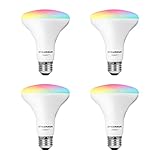
1. Sylvania WiFi LED Smart Light Bulb, 65W Equivalent Full Color and Tunable White BR30, Dimmable, Works with Alexa and Google Home Only - 4 Pack (75688)
Overview:
This 4-pack of Sylvania SMART+ BR30 bulbs delivers full-color customization and tunable white lighting for recessed fixtures. Compatible with Alexa and Google Assistant (no hub required), it offers 16 million colors, scheduling, and remote control via Wi-Fi, backed by a 2-year warranty and 15,000-hour lifespan.
What Makes It Stand Out:
The seamless hub-free setup and vibrant 16M-color spectrum stand out, enabling mood-driven ambiance for any room. Scheduling routines for security or bedtime adds practical value, while tunable whites (2700K–6500K) adapt lighting to tasks. The BR30 form factor ensures recessed-can compatibility.
Value for Money:
Priced competitively for a 4-pack color-changing option, it excels for Alexa/Google users prioritizing ease of use over Apple integration. Though lacking HomeKit, the no-hub requirement saves long-term costs compared to systems needing bridges.
Strengths and Weaknesses:
Strengths: Reliable voice control; extensive color range; strong warranty; simple app scheduling.
Weaknesses: No Apple HomeKit support; limited to 2.4GHz Wi-Fi; may struggle in high-interference areas.
Bottom Line:
Ideal for non-Apple smart home users seeking affordable, versatile recessed lighting with robust color options. Avoid if you rely on HomeKit; otherwise, a reliable, feature-rich choice for ambiance control.
2. Govee BR30 Smart Light Bulbs, Works with Matter, Alexa and Google Assistant, LED Light Bulb, WiFi RGBWW Color Changing Flood Light Bulbs, Recessed Can Light Bulb, 2.4Ghz only, 850 Lumen, 4 Pack

Overview:
Govee’s Matter-compatible BR30 bulbs merge RGBWW color tech with future-proof smart home integration. This 4-pack supports Matter, Alexa, and Google Assistant, offering 16M colors, tunable whites (2700K–6500K), and app-based scheduling for recessed or flood lighting setups.
What Makes It Stand Out:
Matter protocol support ensures seamless cross-platform compatibility and local control—key for privacy and reliability. The RGBWW tech provides superior white-light accuracy alongside vibrant colors, and group synchronization simplifies multi-room management.
Value for Money:
A premium pick justified by Matter readiness, which future-proofs your investment. While pricier than basic Wi-Fi bulbs, it outperforms non-Matter alternatives in stability and ecosystem flexibility, especially for larger smart homes.
Strengths and Weaknesses:
Strengths: Matter compatibility enhances reliability; precise color/white tuning; robust group control; energy-efficient scheduling.
Weaknesses: Incompatible with dimmer switches; 2.4GHz Wi-Fi only; app can feel cluttered for beginners.
Bottom Line:
Highly recommended for tech-forward users building a Matter-based smart home. Its cross-platform reliability and color accuracy make it worth the investment, despite dimmer-switch limitations.
3. Linkind Matter Smart Light Bulb, BR30 Smart Bulbs, Recessed LED Color Changing Light Bulbs RGBTW, E26 Smart Flood Light Bulbs 650LM 60W Work with Alexa, Apple Home, Google Home, SmartThings, 4Pack

Overview:
Linkind’s BR30 bulbs combine RGBTW color tech with broad Matter ecosystem support, including Apple Home, Google, and SmartThings. This 4-pack suits recessed cans (5"/6"), offering tunable whites, music sync, and preset scenes via the AiDot app.
What Makes It Stand Out:
Apple HomeKit compatibility is its crown jewel—rare among BR30 bulbs—making it essential for iOS users. Music rhythm modes and festival-themed scenes add flair, while Matter ensures reliable local control without cloud dependency.
Value for Money:
Competitively priced for HomeKit-enabled color bulbs. The inclusion of Matter and multi-platform support delivers exceptional versatility, outperforming Sylvania in Apple integration at a similar cost.
Strengths and Weaknesses:
Strengths: Works flawlessly with Apple Home; Matter-certified for stability; creative music/scene modes; solid app functionality.
Weaknesses: Requires microphone permissions for music sync; strict 2.4GHz Wi-Fi/dimmer-switch limitations; lower brightness (650LM) than rivals.
Bottom Line:
The top choice for Apple-centric households needing recessed color lighting. Its HomeKit compatibility and Matter reliability justify purchase, though dimmer-switch users should verify fixture compatibility first.
4. Sylvania WiFi LED Smart Light Bulb, 65W Equivalent Dimmable Soft White BR30, Works with Alexa and Google Home Only - 4 Pack (75689)

Overview:
This Sylvania 4-pack focuses on simplicity: dimmable soft-white (2700K) BR30 bulbs for recessed fixtures. Controlled via Alexa/Google voice commands or app scheduling, it emphasizes ambient warmth without color customization, backed by a 2-year warranty.
What Makes It Stand Out:
Its pure soft-white output (2700K) creates consistent, relaxing ambiance—ideal for bedrooms or living rooms. Hub-free setup and robust scheduling for security/vacation modes prioritize usability over complexity, appealing to minimalist smart homeowners.
Value for Money:
An excellent budget option for users wanting only tunable white lighting. Cheaper than color-changing packs, it avoids unnecessary features while delivering reliable dimming and scheduling—perfect for cost-conscious upgrades.
Strengths and Weaknesses:
Strengths: Warm, consistent light quality; effortless voice/app control; strong value for basic needs; no hub required.
Weaknesses: No color options; lacks Apple HomeKit; limited to 2.4GHz Wi-Fi; minimal “smart” features beyond dimming/scheduling.
Bottom Line:
Best for those seeking straightforward, warm-white recessed lighting without color gimmicks. A smart buy for simplicity-focused users, but skip if you desire color versatility or HomeKit support.
5. Lightinginside Smart Light Bulb 1100LM, RGBCW BR30 E26 Bulb Works with Alexa/Google Home/SmartLife, 2.4G WiFi Bluetooth Recessed Flood LED Bulbs 12W, No Hub Required, 75W Equivalent, ETL Listed, 4PCS

Overview:
Lightinginside’s 4-pack BR30 bulbs feature dual-band Bluetooth/Wi-Fi connectivity and 1100 lumens of RGBCW light (2700K–6500K). Compatible with Alexa/Google via SmartLife, they offer music sync, scenes, and robust remote/local control without a hub.
What Makes It Stand Out:
The dual-channel chip enables 3x faster setup and Bluetooth fallback during Wi-Fi outages—a rarity in this category. High brightness (1100LM) and RGBCW tech deliver vivid colors and precise whites, while ETL listing ensures safety compliance.
Value for Money:
Mid-range pricing is justified by exceptional connectivity reliability and brightness. Outperforms single-protocol rivals in stability, making it a savvy pick for users in areas with spotty Wi-Fi or who prioritize uninterrupted control.
Strengths and Weaknesses:
Strengths: Bluetooth backup ensures connectivity; bright 1100LM output; versatile SmartLife app; fast dual-band setup.
Weaknesses: Initial pairing requires both Bluetooth/Wi-Fi; music mode needs phone proximity; app less polished than Govee/AiDot.
Bottom Line:
A top contender for reliability-focused users, especially in Wi-Fi-unstable homes. Its brightness and connectivity edge make it worthwhile, though tech novices may find setup slightly complex.
6. Govee Smart Light Bulbs, 1200 Lumens Dimmable BR30 Bulbs, RGBWW Color Changing Light Bulb, Flood Light Bulbs Work with Alexa, Google Assistant, WiFi & Bluetooth LED Bulbs, Music Sync, 2 Pack

Overview:
This 2-pack of Govee BR30 smart bulbs delivers vibrant, customizable lighting for recessed fixtures. With 1200 lumens (85W equivalent), RGBWW color options, and tunable whites (2700K–6500K), it targets users seeking bright, dynamic ambiance without a hub.
What Makes It Stand Out:
The standout features include 16 million colors, 54 scene modes, and real-time music synchronization via the Govee Home app. Dual-band WiFi/Bluetooth ensures stable connectivity, while CRI90+ guarantees rich color accuracy. Compatibility with Alexa, Google Assistant, and group control enhances smart-home flexibility.
Value for Money:
Priced moderately for a 2-pack, it offers exceptional value for color enthusiasts. The high brightness (surpassing standard 60W LEDs) and energy efficiency justify the cost versus basic white-only bulbs, though the premium over non-smart alternatives is expected for its feature set.
Strengths and Weaknesses:
Strengths: Exceptional brightness for large rooms; seamless voice/app control; music sync adds entertainment value; no hub required. Weaknesses: Not dimmer-switch compatible; app interface can feel cluttered; Bluetooth pairing occasionally unstable.
Bottom Line:
Ideal for users prioritizing vibrant color, music integration, and strong brightness in large spaces. A top pick for entertainment-focused setups, though white-light purists might find it over-specified.
7. Amazon Basics Smart BR30 LED Light Bulbs for Bedroom Living Room, Dimmable Soft White (2700K), 9W (60W Equivalent), 800LM, Voice Control, Works with Alexa Only, 2.4 GHz Wi-Fi, No Hub Required, 4-Pack

Overview:
This budget-friendly 4-pack offers straightforward smart lighting for Alexa users. Emitting 800 lumens of soft white (2700K) light, it focuses on simplicity with dimming (5–100%) and remote scheduling via the Alexa app.
What Makes It Stand Out:
Its tight integration with Alexa is unmatched—routines, geofencing, and room grouping work flawlessly. The 4-pack provides exceptional coverage for whole-home white lighting at a low entry cost, with no hub needed and reliable 2.4GHz WiFi.
Value for Money:
Outstanding value for white-light needs. The 4-pack price undercuts most color-changing competitors, making it perfect for cost-conscious households prioritizing basic smart functionality over color variety.
Strengths and Weaknesses:
Strengths: Very affordable per bulb; seamless Alexa routines; easy room grouping; reliable remote access. Weaknesses: Alexa-only (no Google/Apple support); limited to warm white; dimming only via app/voice (no physical switch); lower brightness (800LM) than rivals.
Bottom Line:
The go-to choice for Alexa households wanting affordable, no-fuss white lighting automation. Skip if you need color options or multi-assistant compatibility.
8. Govee Smart Light Bulbs, 1200 Lumens Dimmable BR30 Bulbs, RGBWW Color Changing Light Bulbs, WiFi & Bluetooth LED Bulbs, 16 Million Colors, Music Sync, Compatible with Alexa, Google Assistant, 6 Pack

Overview:
Govee’s 6-pack BR30 bulbs amplify its popular color-changing formula with higher volume. Identical to Product #6 in specs (1200 lumens, RGBWW, music sync), it targets users outfitting multiple rooms affordably.
What Makes It Stand Out:
The 6-pack drastically reduces per-bulb cost while retaining all key features: 54 scene modes, CRI90+ color accuracy, and cross-platform voice control. Ideal for whole-home color ecosystems, it excels in synchronized ambiance across large spaces.
Value for Money:
Superior long-term value for color lighting enthusiasts. Buying in bulk saves ~30% versus the 2-pack, making whole-house deployment feasible. Still more expensive than white-only bulbs, but justified by the rich feature set.
Strengths and Weaknesses:
Strengths: Best per-bulb value in Govee’s range; powerful brightness for recessed lighting; robust multi-assistant support; music sync enhances entertainment. Weaknesses: Same app quirks as #6; not dimmer-switch compatible; Bluetooth instability persists.
Bottom Line:
The definitive pick for budget-conscious color lovers needing coverage in multiple rooms. Opt for this over the 2-pack if outfitting an entire home.
9. OREiN Matter Smart Light Bulb, BR30 Smart Light Bulbs 650LM 60W, Recessed Color Changing Bulbs RGBTW, Smart Flood Light Bulb Compatible with Alexa, Apple Home, Google Home, SmartThings, 4Pack

Overview:
OREiN’s 4-pack leverages Matter protocol for future-proof, hub-free color lighting. With 650 lumens, RGBTW color range, and Matter’s unified ecosystem, it emphasizes interoperability and local-network reliability.
What Makes It Stand Out:
Matter compatibility is its crown jewel—works natively with Alexa, Apple Home, Google, and SmartThings without separate apps. Local control persists during internet outages, and music sync modes (Party, Rhythm) add flair.
Value for Money:
Mid-range pricing reflects its cutting-edge Matter support. While dimmer than Govee (650LM vs 1200LM), the protocol’s longevity and multi-platform ease offer strategic value for smart-home veterans.
Strengths and Weaknesses:
Strengths: True multi-platform harmony via Matter; offline functionality; clean setup; music sync. Weaknesses: Lower brightness limits room size suitability; requires Matter-compatible hub/speaker; iOS/Android OS updates needed.
Bottom Line:
A forward-thinking investment for users invested in Matter ecosystems. Choose this over alternatives if unified control and future-proofing outweigh raw brightness needs.
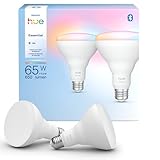
10. Philips Hue Essential Smart LED BR30 Bulb 2-Pack, White and Color Ambiance, E26, 7.2W, 2200K-6500K, 650 Lumens, Dimmable, Works with Alexa, Google Assistant, Apple Home
Overview:
Philips Hue’s Essential BR30 2-pack represents premium smart lighting. Offering 16 million colors and tunable whites (2200K–6500K) via the Hue app, it targets users seeking refined, ecosystem-integrated ambiance.
What Makes It Stand Out:
Hue’s legendary color accuracy and curated light scenes set it apart. Seamless integration with Alexa/Google/Home is enhanced by optional Bridge expansion (for geofencing, entertainment sync), and buttery-smooth dimming down to 2% elevates usability.
Value for Money:
Highest price point here, but justifiable for Hue’s polish. The Bridge (sold separately) unlocks advanced features, making it cost-effective long-term for power users. Less ideal for budget-focused buyers needing basic control.
Strengths and Weaknesses:
Strengths: Industry-leading color precision; intuitive app; exceptional dimming range; robust ecosystem expansion. Weaknesses: Requires Bridge for full potential; moderate brightness (650LM); expensive upfront.
Bottom Line:
The premium choice for discerning users prioritizing ecosystem depth and lighting quality. Worth the splurge if you plan to expand into Hue’s broader smart-home suite.
Understanding BR30 Bulbs and Recessed Lighting Demands
Why BR30 is the Standard for Recessed Fixtures
BR30 bulbs are engineered specifically for residential recessed lighting cans, typically 4-inch or 5-inch in diameter. Their “Bulged Reflector” shape and 3.75-inch width ensure the bulb sits correctly within the housing, directing light downward efficiently without creating harsh glare or hotspots on the ceiling. Standard A19 smart bulbs simply won’t fit properly or provide the controlled beam spread needed, often resulting in light spilling awkwardly into the fixture housing.
Decoding Key Physical Specifications
Beyond the “BR30” label, scrutinize the bulb’s actual dimensions and base type. Most require an E26 (standard medium) base, but double-check your fixture. Crucially, measure the maximum bulb height allowed by your recessed housing and trim – some deep-recessed trims or older housings have tight clearance. Bulbs exceeding this height won’t seat correctly, potentially causing overheating or poor light distribution. Always verify the maximum wattage equivalent your housing supports.
The Critical Role of Beam Angle
Beam angle determines how widely the light spreads from the fixture. For general room illumination in living areas or kitchens, a wider beam angle (typically 120-140 degrees) creates a soft, even wash. Narrower beams (90-110 degrees) are better for task lighting or highlighting specific features. Smart BR30s vary significantly here; choosing the wrong angle means either a harsh spotlight effect or insufficient coverage for your space.
Essential Smart Features for Recessed Applications
Brightness and Dimming Performance Nuances
Recessed lighting often serves as primary illumination, so adequate brightness (lumens) is non-negotiable. Look for smart BR30s offering at least 800 lumens (equivalent to a 60W incandescent) for most rooms; larger spaces may need 1100+ lumens. Crucially, test dimming performance before buying if possible. Poorly implemented dimming in smart bulbs can cause flickering, inconsistent behavior at low levels, or a limited dimming range, ruining the ambiance recessed lights are meant to create.
Color Temperature Flexibility Explained
The ability to adjust color temperature (measured in Kelvins) is vital for setting the mood. A range from warm white (2700K-3000K) for cozy evenings to cool daylight (4000K-5000K) for focused tasks transforms a room’s function. Ensure the bulb offers a continuous range, not just preset points, for seamless transitions. This is especially important in multi-story homes where lighting needs vary dramatically by room and time of day.
Full Color vs. Tunable White: Making the Right Choice
Full-color bulbs (offering millions of hues) are fantastic for accent lighting or entertainment, but often overkill and more expensive for general recessed lighting. Tunable white bulbs, which only adjust between warm and cool white temperatures, typically deliver higher quality white light, better efficiency, and lower cost – often the smarter pick for primary overhead lighting where pure white light quality matters most.
Voice Control and App Reliability Realities
Seamless voice control via assistants like Alexa, Google Assistant, or Siri is a major smart bulb perk. However, reliability varies wildly. Some bulbs connect directly via Wi-Fi for standalone voice control, while others require a separate hub. Prioritize bulbs known for stable app performance and responsive voice commands – laggy or unresponsive bulbs quickly become frustrating novelties rather than useful tools.
Installation and Compatibility Hurdles to Avoid
Fixture Compatibility: Enclosed Ratings Matter
Many recessed fixtures, especially older models or those with certain trims (like baffle or reflector trims), are considered “enclosed” because they restrict airflow around the bulb. Standard smart bulbs can overheat and fail prematurely in these environments. Always verify the bulb is explicitly rated for enclosed fixtures – this is non-negotiable for safety and longevity in most recessed cans.
Dimmer Switch Compatibility Quirks
If your recessed lights are on a traditional wall dimmer, compatibility becomes critical. Most smart bulbs require the wall dimmer to be set to 100% “on” to function correctly; using the dimmer switch to control them can cause flickering or damage. Some smart bulbs work with specific smart dimmers, but this adds complexity. Understand your switch setup before purchasing to avoid rewiring surprises.
Trim Type Interactions You Can’t Ignore
Your recessed trim (the visible part in the ceiling) significantly impacts light quality with smart bulbs. Open trims offer the widest spread but more glare. Baffle trims reduce glare but narrow the beam slightly. Reflector trims maximize light output downward. Consider how the bulb’s beam angle interacts with your specific trim – a narrow-beam bulb in a reflector trim creates an intense spotlight, which might not be desirable for general room lighting.
Smart Ecosystem Integration Essentials
Hub vs. Hub-Free (Wi-Fi) Operation Trade-offs
Wi-Fi smart BR30s connect directly to your router, eliminating the need for an extra hub, simplifying setup. However, they can congest your Wi-Fi network and may be slower to respond. Hub-based bulbs (using protocols like Zigbee or Z-Wave) are generally more responsive, create less Wi-Fi traffic, and often support more advanced automations and larger groups, but require purchasing and placing a separate hub. Consider your network strength and automation desires.
Platform Agnosticism: Why It Matters Long-Term
Locking yourself into a single brand’s ecosystem can be risky. Prioritize bulbs certified for multiple platforms (Works with Alexa, Google Home, Apple HomeKit/Siri). This future-proofs your investment, allowing you to switch voice assistants or integrate with broader smart home systems without replacing all your bulbs. Check compatibility lists meticulously before buying.
Group Control and Scene Building Capabilities
The real power of smart recessed lighting shines when controlling multiple fixtures together. Ensure the bulb’s app allows easy grouping of BR30s in different rooms or zones. Robust scene creation – saving specific brightness/color settings for activities like “Movie Night” or “Morning Wake-Up” – transforms convenience. Test how intuitive the app is for setting up these routines; clunky interfaces undermine the smart benefit.
Cost Considerations and Value Assessment
Beyond the Initial Purchase Price
While the upfront cost per bulb is obvious, factor in long-term value. Hub-based systems have a higher initial outlay (bulb + hub), but individual bulbs are often cheaper, and the hub enables more devices. Wi-Fi bulbs have no hub cost, but each bulb is usually pricier. Also, consider energy efficiency differences – some smart LEDs are significantly more efficient than others, impacting your electricity bill over years.
Warranty and Support: The Safety Net
Smart electronics can fail. Look for manufacturers offering at least a 2-year warranty, preferably longer. Research the brand’s reputation for responsive customer support – a dead bulb with poor support leaves you in the dark (literally). This is especially important for recessed fixtures, which are harder to access and replace than table lamps.
Evaluating Long-Term Reliability Data
Don’t just rely on marketing claims. Seek out independent reviews and user forums discussing real-world longevity. Smart BR30s endure more heat stress than standard bulbs due to recessed housing. Bulbs with better thermal management (often indicated by metal heat sinks) tend to last significantly longer, making them a wiser investment despite a potentially higher sticker price.
Optimizing Your Smart Recessed Lighting Experience
Strategic Placement for Even Illumination
Avoid the “golf ball” effect (dark spots between fixtures) by calculating spacing based on ceiling height. A common rule is spacing fixtures 4-6 feet apart for 8-foot ceilings. Use smart bulbs’ tunable white features strategically – warmer tones in seating areas, cooler tones over kitchen islands – by grouping fixtures logically within your app.
Leveraging Scheduling and Automation Smartly
Go beyond simple on/off schedules. Program lights to gradually brighten in the morning, mimicking sunrise for a gentler wake-up. Set them to automatically shift to warmer tones after sunset to support natural circadian rhythms. Use geofencing so lights turn on as you approach home, but ensure location accuracy to avoid unnecessary energy use.
Troubleshooting Common Smart Bulb Glitches
Flickering? First, ensure the bulb is rated for enclosed fixtures and your dimmer (if present) is set to 100%. Unresponsive voice commands? Check your Wi-Fi signal strength at the fixture location – recessed cans deep in ceilings can be dead zones; a mesh network might be needed. App disconnects? Power cycling the bulb (turn off at the switch for 10 seconds) often resolves temporary glitches.
Frequently Asked Questions
Can I use any smart bulb in my recessed lighting?
No. You specifically need a BR30-shaped smart bulb designed for recessed cans. Standard A19 smart bulbs won’t fit correctly, cause poor light distribution, and may overheat due to lack of proper airflow in the housing.
Why is my smart BR30 bulb flickering in the recessed can?
Flickering is often caused by incompatibility with an existing wall dimmer switch (set it to 100% on), the bulb not being rated for enclosed fixtures (critical for most recessed housings), or weak Wi-Fi signal strength at the fixture location.
Do smart BR30 bulbs require a hub to work with voice assistants?
It depends. Wi-Fi enabled smart BR30s connect directly to your router and work with voice assistants without a hub. Bulbs using Zigbee or Z-Wave protocols require a compatible hub (sold separately) to connect to voice assistants and your network.
How bright should a smart BR30 bulb be for my living room?
For general illumination in an average-sized living room (e.g., 12x15 ft), aim for smart BR30 bulbs providing 800-1100 lumens each. The exact number needed depends on ceiling height, room color, and how many fixtures you have – more fixtures allow lower lumen bulbs per can.
Can I adjust the color temperature of smart BR30 bulbs throughout the day?
Yes, tunable white smart BR30 bulbs allow you to shift the light from warm white (around 2700K) to cool daylight (up to 5000K or higher) via the app, voice command, or automation, helping align with your natural energy levels.
Will a smart BR30 bulb work with my existing recessed light trim?
Most standard trims (baffle, reflector, open) work with BR30 bulbs. However, very old or specialty trims might have size constraints. Always double-check the physical dimensions of the bulb against your fixture’s maximum allowable bulb size before purchasing.
Are color-changing smart BR30 bulbs necessary for general lighting?
Not usually. For primary room illumination, tunable white bulbs (adjusting only warmth/coolness) typically provide superior white light quality, are more energy-efficient, and cost less than full RGB color-changing bulbs, which are better suited for accent lighting.
How do I prevent my smart recessed lights from creating harsh spots?
Choose bulbs with an appropriate beam angle (120-140 degrees for general room wash) and ensure proper spacing between fixtures (typically 4-6 feet apart on 8-foot ceilings). Using baffle trims can also help soften the light distribution.
Can I control different groups of recessed smart bulbs independently?
Yes, a key advantage of smart lighting. Using the manufacturer’s app, you can easily create groups (e.g., “Kitchen Cans,” “Living Room Main Lights”) and control each group’s brightness, color temperature, or schedule separately.
What’s the biggest mistake people make when buying smart BR30 bulbs?
Overlooking the enclosed fixture rating. Most recessed housings are considered enclosed, and using a bulb not rated for this environment leads to premature failure, overheating, and potential safety hazards. Always verify this specification first.