Imagine standing at your front door after a long day, key fumbling in the lock, only to realize you left it on the kitchen counter. Or worse, hearing that unsettling rattle of someone testing your knob in the dead of night. In today’s world, where convenience and security often feel at odds, the humble deadbolt is undergoing a quiet revolution. Smart deadbolts aren’t just gadgets; they’re becoming essential sentinels for modern homes, blending robust physical security with intuitive digital control. As we move deeper into 2026, the question isn’t if you should consider upgrading your entry point, but how to choose the right intelligent lock that truly fortifies your sanctuary without complicating your life.
Gone are the days when a deadbolt was merely a piece of metal you turned with a key. Today’s smart deadbolts offer peace of mind that extends far beyond your doorstep. Picture remotely granting access to a trusted neighbor while you’re stuck in traffic, receiving instant alerts if a door is left ajar, or seamlessly integrating with your existing home ecosystem for a truly unified security experience. But with a rapidly evolving market flooded with features and technical jargon, navigating the options can feel overwhelming. This guide cuts through the noise, focusing squarely on the critical features, security fundamentals, and practical considerations you must evaluate to find the perfect smart deadbolt solution for your unique needs and lifestyle in the current security landscape.
Top 10 Smart Deadbolts
Detailed Product Reviews
1. TEEHO TE001 Keyless Entry Door Lock with Keypad - Smart Deadbolt Lock for Front Door with 2 Keys - Auto Lock - Easy Installation - Satin Nickel
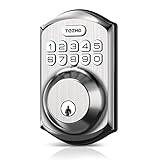
Overview: The TEEHO TE001 is a budget-friendly keypad deadbolt offering keyless convenience without complex smart home integrations, designed for straightforward front-door security with physical key backup.
What Makes It Stand Out: Its standout features include 20 customizable access codes, a truly disposable one-time guest PIN, and a reliable auto-lock function adjustable from 10–99 seconds. The IP54 weather resistance and anti-peep keypad enhance durability and privacy for outdoor use.
Value for Money: Priced accessibly, it delivers core keyless functionality at half the cost of Wi-Fi-enabled rivals. While lacking remote control, it’s ideal for renters or secondary doors where simplicity and reliability outweigh smart features, offering solid ROI for basic needs.
Strengths and Weaknesses: Strengths: Hassle-free installation; 365-day battery life with clear low-battery alerts; sturdy aluminum alloy build; intuitive one-touch auto-lock. Weaknesses: No remote/app access or voice control; limited to keypad/key entry; no activity logs or guest scheduling beyond one-time codes.
Bottom Line: A dependable, no-frills entry-level lock perfect for users seeking keyless convenience without subscriptions or tech complexity, though unsuitable for those needing remote management.
2. ULTRALOQ Bolt SE Smart Lock, Built-in Wi-Fi, Matter Over Thread, Works with Apple Home, Alexa, Google, 7-in-1 Keyless Entry Deadbolt with Fingerprint ID, App, Keypad, Remote Control, 18 Months Battery
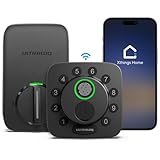
Overview: The ULTRALOQ Bolt SE is a premium, hub-free smart lock merging seven unlocking methods—including fingerprint and Matter protocol—with robust remote management for comprehensive home security.
What Makes It Stand Out: Its seamless Matter Over Thread support enables cross-platform compatibility (Apple Home, Alexa, Google) without a hub, while Thread’s low-energy network extends battery life to 18 months. The 7-in-1 access (fingerprint, app, voice, etc.) and real-time notifications via 2.4GHz Wi-Fi set it apart.
Value for Money: Justifying its higher price, it eliminates hub costs and offers enterprise-grade access management (50 codes, eKey sharing) with future-proof Matter integration. Outperforms similarly priced locks in versatility, though router proximity (70ft) is a constraint.
Strengths and Weaknesses: Strengths: True hub-free remote control; Matter ecosystem flexibility; exceptional battery longevity; detailed activity logs; secure fingerprint sensor. Weaknesses: Requires Thread border router for Matter; 2.4GHz Wi-Fi only; installation can challenge non-tech users; no physical keypad backlight.
Bottom Line: An exceptional investment for smart home enthusiasts prioritizing Matter compatibility and multi-method access, despite minor connectivity limitations.
3. Philips Wi-Fi Door Lock, WiFi Smart Lock Keyless Entry Deadbolt for Front Door, Compatible with Alexa & Google Assistant, Remote Control, Built-in WiFi, APP Fingerprint Passcode Unlock, Auto Locking

Overview: Philips’ Wi-Fi lock delivers versatile keyless entry via fingerprint, app, passcode, or voice, emphasizing user-friendly remote control and family-centric access management for modern households.
What Makes It Stand Out: The standout fingerprint sensor provides instant one-touch unlocking, complemented by robust remote access (no hub needed) and support for 100+ customizable passcodes, including unlimited one-time/scheduled codes for deliveries or cleaners.
Value for Money: Competitively priced, it offers fingerprint convenience and reliable remote control at a mid-range cost. While lacking Matter support, its 100-code capacity and voice integration provide better flexibility than budget alternatives, though battery life lags behind rivals.
Strengths and Weaknesses: Strengths: Intuitive fingerprint access; strong app functionality; extensive code management; simple voice control setup; no hub required. Weaknesses: Shorter battery life (unspecified, but implied); router range limited to 65ft; no physical key override mentioned; fingerprint storage capacity unclear.
Bottom Line: Ideal for families needing fingerprint speed and flexible guest access, but power users may prefer longer battery life or Matter compatibility.
4. Schlage Encode Smart Wi-Fi Deadbolt Lock with Touchscreen Keypad, Keyless Front Door Entry, App Control, Alexa, Google Home and Airbnb Compatible, Matte Black, BE489WB CEN 622
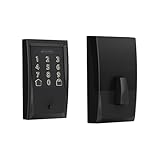
Overview: Schlage Encode is a premium, BHMA-certified smart lock blending military-grade security with seamless Wi-Fi connectivity, targeting homeowners seeking reliability, certification, and effortless app-based management.
What Makes It Stand Out: As the only lock here with BHMA’s highest security/durability rating, it features a fingerprint-resistant keypad, forced-entry alarms, and Airbnb compatibility. Its Snap ‘n Stay installation and 100-code management via Schlage Home app enhance usability.
Value for Money: Priced at a premium, it justifies cost through certified security, robust construction, and hassle-free DIY setup. Outperforms cheaper locks in longevity and trustworthiness, though lacks fingerprint tech found in similarly priced models.
Strengths and Weaknesses: Strengths: Industry-leading BHMA certification; reliable auto-lock; customizable security alarms; excellent app experience; broad voice assistant support. Weaknesses: No fingerprint sensor; battery life unspecified (typical for Schlage: ~6 months); limited to 2.4GHz Wi-Fi; higher initial cost.
Bottom Line: The top choice for security-focused buyers wanting certified durability and polished app integration, despite missing biometric options.
5. eufy Security Smart Lock C30, Keyless Entry Door Lock, Built-in WiFi Keypad Deadbolt for Front Door, No Bridge Required, Easy Installation, App Remote Control, Reliable Power, BHMA Grade 3

Overview: The eufy C30 prioritizes reliability and user support with a physical-button interface, built-in Wi-Fi, and BHMA Grade 3 certification, targeting those valuing durability and customer service over flashy features.
What Makes It Stand Out: Its mechanical buttons (vs. touchscreens) promise superior weather/error resistance, while 24/7 customer support and an 18-month warranty address common smart lock pain points. Auto-lock customization and eufy ecosystem integration (e.g., doorbells) add practicality.
Value for Money: Mid-priced with exceptional support—15-minute tool-free installation and comprehensive warranty justify cost. It trades Matter/fingerprint tech for ruggedness, making it a pragmatic pick versus feature-heavy but less durable alternatives.
Strengths and Weaknesses: Strengths: Ultra-durable physical buttons; strong customer service; simple installation; reliable auto-lock; no bridge needed. Weaknesses: Lacks fingerprint and Matter support; limited to basic voice commands; BHMA Grade 3 (mid-tier security); no one-time code scheduling details.
Bottom Line: A trustworthy, user-friendly lock for reliability seekers, though tech enthusiasts may desire more advanced integrations.
6. eufy Security Smart Lock C220, Fingerprint Keyless Entry Door Lock, Built-in Wi-Fi, App Remote Control, Front Door Smart Lock Deadbolt, 8Months Battery, Reliable Power, IP53 Waterproof, BHMA Grade 3

Overview: The eufy C220 is a feature-rich smart deadbolt offering keyless entry via fingerprint, app, keypad, physical key, Apple Watch, or voice assistants. Its built-in Wi-Fi enables direct remote access without a bridge, targeting homeowners seeking seamless integration and long-term reliability.
What Makes It Stand Out: Built-in Wi-Fi eliminates the need for a separate hub, allowing true remote control via the eufy app. The self-learning AI fingerprint sensor improves accuracy over time, unlocking in under 1.5 seconds. Eight-month battery life and IP53 weather resistance ensure durability in varied climates, while integration with eufy’s ecosystem (like doorbells) enhances smart home functionality.
Value for Money: Priced mid-to-high range, it justifies cost through premium features like bridge-free Wi-Fi, robust build (BHMA Grade 3), and an 18-month warranty. Competitors often require extra hubs, making the C220 a cost-effective long-term investment despite the initial outlay.
Strengths and Weaknesses:
Strengths: No bridge needed; versatile unlocking methods; excellent battery life; responsive fingerprint sensor; strong ecosystem compatibility.
Weaknesses: IP53 rating lags behind IP54 competitors; voice control requires additional hardware; limited to 100 access logs in the app.
Bottom Line: Ideal for eufy ecosystem users or those prioritizing bridge-free Wi-Fi and fingerprint reliability. Despite minor weatherproofing limitations, its seamless integration and durability make it a top-tier choice for secure, convenient home entry.
7. LOCKSTAR® Smart Door Lock • Keyless Entry Deadbolt Door Lock • Multiple Entry Methods – APP • Fingerprint Touch ID • Keypad Code • Card FOB • Traditional Key • Smart Home Devices

Overview: LOCKSTAR’s versatile smart lock emphasizes accessibility with seven entry methods (app, fingerprint, keypad, card fob, physical key, etc.) and targets renters or busy households needing flexible access management via its dedicated app.
What Makes It Stand Out: The included Wi-Fi gateway/bridge is rare at this price point, enabling true remote access—crucial for rental properties. Auto-lock (via door closure or keypad tap) and real-time event history provide hands-off security. DIY installation with included tools lowers setup barriers significantly.
Value for Money: Budget-friendly while including a bridge (often sold separately elsewhere). Competes well against mid-tier locks by bundling essentials—gateway, screwdriver, and drill bits—making it exceptional for renters needing temporary access without permanent modifications.
Strengths and Weaknesses:
Strengths: Gateway included; effortless rental-property suitability; simple DIY install; auto-lock convenience; real-time activity logs.
Weaknesses: Fingerprint sensor less refined than premium models; no explicit battery life claim; limited weatherproofing details (IP rating unspecified).
Bottom Line: A standout for renters or budget-conscious users needing remote access without hidden costs. Though lacking advanced biometrics, its inclusive bundle and auto-lock features deliver outstanding practicality for everyday security.
8. TEEHO TE001 Keyless Entry Door Lock with Keypad - Smart Deadbolt Lock for Front Door with 2 Keys - Auto Lock - Easy Installation - Matte Black

Overview: TEEHO’s TE001 is a straightforward keypad-centric deadbolt emphasizing simplicity, with 20 user codes, one-time guest access, and auto-lock functionality. It targets users prioritizing ease of use over smart-home complexity.
What Makes It Stand Out: The one-time PIN code for guests—auto-deleting after use—is a security highlight. Auto-lock triggers via timed delay (10–99 seconds) or a 2-second keypad hold, while IP54 weatherproofing and anti-peep keypad design bolster reliability. Four AA batteries offer a full year of power.
Value for Money: Positioned affordably, it excels as a no-frills keypad lock. Lacks app/Wi-Fi but compensates with robust hardware (aluminum alloy), long battery life, and included physical keys—ideal for those avoiding subscription models or complex setups.
Strengths and Weaknesses:
Strengths: True one-time guest codes; clear low-battery indicator; simple auto-lock; IP54 rating; 1-year battery life.
Weaknesses: No remote/app control; limited to keypad/fob/key entry; basic security features lack smart alerts.
Bottom Line: Perfect for users wanting reliable, app-free keyless entry with guest flexibility. Sacrifices smart features for durability and simplicity, making it a smart buy for low-tech households or secondary doors.
9. DESLOC Smart Door Lock B200, Smart Deadbolt Lock, Keyless Entry Door Lock, Fingerprint Smart Lock, Smart Locks for Front Door, App Control, Touchscreen Keypad Deadbolts,12-Month Battery, BHMA Grade3

Overview: DESLOC’s B200 combines fingerprint speed (0.3s unlock) with 12-month battery life and BHMA Grade 3 certification. It uses Bluetooth (not Wi-Fi) for app control, targeting security-focused users who value local data storage and extreme-condition resilience.
What Makes It Stand Out: Marketed AI-enhanced fingerprint recognition claims industry-leading speed (<0.3s), while local data storage minimizes hacking risks. The 12-month battery (with USB-C emergency power) and BHMA certification assure reliability in temperatures from -22°F to 158°F. Includes fobs and physical keys for backup.
Value for Money: Mid-priced with exceptional security credentials. The 12-month warranty and included fobs/key backup justify cost versus Wi-Fi models, though Bluetooth range limits remote access—ideal for privacy-centric buyers avoiding cloud dependence.
Strengths and Weaknesses:
Strengths: Blazing-fast fingerprint sensor; military-grade durability; local data storage; USB-C emergency power; comprehensive entry options.
Weaknesses: Bluetooth-only (no Wi-Fi); voice control requires separate hub; limited customer support hours (Mon–Fri).
Bottom Line: A top pick for security purists prioritizing speed, offline reliability, and certified durability. Skip if you need remote access; choose for unmatched local performance and peace of mind.
10. Tapo Smart Wi-Fi Deadbolt Door Lock – Keyless Tactile Buttons, Customized Access with in-App Monitoring, Auto-Lock, IP54 Weatherproof, BHMA Grade 3, Compatible with Standard Door Sizes, Tapo DL100

Overview: Tapo’s DL100 merges Wi-Fi convenience with enterprise-grade scalability, supporting up to 200 user codes and group-based access management. Designed for families or property managers needing granular control via the Tapo app.
What Makes It Stand Out: Unmatched 200-code capacity with group management (family/guests) sets it apart. Wi-Fi + Bluetooth dual-mode extends battery life (200–300 days), while IP54 weatherproofing and BHMA Grade 3 certification ensure resilience. Anti-peep keypad and USB-C emergency power add practical security.
Value for Money: Competitive pricing for its scalability. Includes 4 AA batteries and excels in multi-user scenarios where competitors cap at 100 codes—ideal for Airbnb hosts or large households seeking app-based oversight without subscription fees.
Strengths and Weaknesses:
Strengths: Massive 200-code capacity; dual Wi-Fi/Bluetooth efficiency; clear group access controls; included batteries; IP54 rating.
Weaknesses: Fingerprint not supported; auto-lock less customizable than rivals; voice control requires PIN entry.
Bottom Line: The definitive choice for multi-user environments needing scalable, app-managed access. Compromises on biometrics but delivers exceptional value for families or rental managers prioritizing code management and reliability.
Understanding Smart Deadbolt Security Fundamentals
Evaluating Physical Build Quality and Materials
The foundation of any deadbolt, smart or traditional, lies in its physical construction. Look for models crafted from solid metal components like hardened steel or zinc alloy for the bolt itself and the strike plate. Avoid plastic internals, especially in the lock mechanism, as they are prone to failure under stress or forced entry attempts. A robust bolt throw (the distance the bolt extends into the strike plate) of at least 1 inch is non-negotiable for resisting kicks or prying. The lock body should feel substantial and securely anchor into your door frame.
Assessing Locking Mechanism Reliability
Beyond brute strength, the mechanism’s operation is paramount. Seek deadbolts with a smooth, consistent throw that locks and unlocks reliably every time, whether using the physical thumbturn, keypad, or app command. Consider the deadbolt’s resistance to common bypass techniques like lock bumping or picking; some models incorporate specialized pins or anti-bump features. Crucially, ensure the lock automatically re-locks after a set period or upon door closure – a feature often called “auto-relock” – to prevent accidental vulnerability.
Verifying Third-Party Security Certifications
Don’t rely solely on marketing claims. Look for independent security certifications that validate a lock’s resistance to forced entry. The ANSI/BHMA Grade 1 certification is the highest residential standard in North America, indicating superior strength and cycle life (typically 800,000+ operations). While Grade 2 is common, Grade 1 provides the strongest assurance for primary entry points. Certifications from organizations like UL (Underwriters Laboratories) for security devices add another layer of credible validation.
Essential Smart Features for Modern Security
Prioritizing Connection Protocols and Range
Your smart deadbolt needs to communicate reliably. Evaluate the wireless protocols used: Wi-Fi offers direct app control without a hub but can drain batteries faster; Bluetooth provides local control and is power-efficient but requires proximity; Z-Wave or Zigbee require a compatible smart home hub but offer excellent mesh networking range and reliability within the home. Consider your home’s size and existing smart ecosystem – a hub-based system might be essential for whole-home coverage, while Wi-Fi suffices for smaller spaces or single-door setups.
Mastering Access Management Capabilities
The true power of a smart deadbolt lies in flexible access control. Look for systems allowing you to create unique, temporary, or scheduled access codes for family, guests, service providers, or dog walkers. The ability to instantly revoke access remotely is crucial for lost keys or terminated services. Some advanced systems integrate with video doorbells, allowing you to see and verify who is at the door before granting entry via the app. Granular user permissions (e.g., child access only during certain hours) add another layer of control.
Implementing Robust User Authentication Methods
Move beyond simple PIN codes. Seek deadbolts offering multi-factor authentication (MFA) options, such as requiring both a PIN and a fingerprint scan, or a PIN plus confirmation via your smartphone app. Biometric sensors (fingerprint) provide keyless convenience and strong security, but ensure the sensor is reliable in various conditions (wet/dry fingers). Voice control integration (via Alexa, Google Assistant) is convenient but should never be the sole method for granting full entry due to potential spoofing risks; it’s best paired with other authentication.
Power, Reliability, and Fail-Safes
Calculating Realistic Battery Life Expectations
Battery life is a critical practical concern. Most smart deadbolts run on standard AA or 9V batteries. Manufacturer claims often represent ideal conditions; factor in your usage frequency (auto-lock cycles, app checks, Wi-Fi vs. Bluetooth). Look for models with clear low-battery warnings (app alerts, keypad beeps, visual indicators) well in advance – ideally 30+ days. Some offer external power options (like a 9V battery terminal) for emergency power during critical low-battery situations, a vital fail-safe feature.
Understanding Physical Override Mechanisms
Technology fails. A reliable smart deadbolt must have a secure physical backup. Traditional keyed entry remains the most common and trusted override method – ensure the key cylinder is high-security (e.g., ANSI Grade 1 keyed alike or differently). Some models offer a mechanical thumbturn inside. Crucially, verify that the physical override cannot be easily compromised from the outside (e.g., through the keyhole with tools). Avoid models relying solely on electronic entry with no physical backup.
Evaluating Connectivity Failure Scenarios
What happens when your Wi-Fi goes down or the smart home hub crashes? A well-designed smart deadbolt should continue functioning as a basic electronic lock (using keypad or thumbturn) even without network connectivity. Ensure local operation (keypad, physical key, interior thumbturn) remains fully functional during outages. Some models have built-in cellular backup for critical alerts, but this is less common; focus on ensuring core locking functionality persists offline.
Installation and Compatibility Considerations
Measuring Your Door’s Specific Requirements
Not all doors are created equal. Before purchasing, meticulously measure your door’s thickness, the backset (distance from the edge of the door to the center of the bore hole), and the cross-bore hole diameter. Check the depth of your doorframe to ensure the strike plate recess is sufficient. Most smart deadbolts fit standard prepped doors (1-3/4" thick, 2-3/8" or 2-3/4" backset), but older or custom doors may need modification. Measure twice, buy once.
Assessing Smart Home Ecosystem Integration
Your deadbolt shouldn’t exist in isolation. Determine its compatibility with your existing smart home platform (Apple HomeKit, Google Home, Amazon Alexa, Samsung SmartThings, or a specific brand’s ecosystem). Look beyond basic “works with” badges; check if full functionality is supported (e.g., remote locking/unlocking, precise status reporting, scene automation) within your preferred app. Deep integration allows for powerful automations, like automatically locking all doors when you say “Goodnight” or when your security system arms.
Weighing DIY Installation Feasibility
While many smart deadbolts are marketed as DIY-friendly, installation complexity varies. Replacing an existing deadbolt is generally straightforward if your door is prepped correctly. However, integrating with complex wiring (for some electronic strikes), dealing with non-standard door prep, or ensuring proper strike plate alignment for optimal security can be challenging. Honestly assess your skill level. If unsure, professional installation is a worthwhile investment to guarantee both security and proper function – a poorly installed lock is a vulnerability, no matter how smart it is.
Future-Proofing Your Investment
Scrutinizing Firmware Update Policies
Smart locks require ongoing software maintenance to patch security vulnerabilities and add features. Investigate the manufacturer’s track record: How frequently do they release firmware updates? How long do they commit to supporting a model (5+ years is ideal)? Is the update process seamless and automatic, or does it require user intervention? A company that abandons older models leaves you exposed to emerging threats, negating the security benefits.
Considering Expandability and Ecosystem Growth
Think about your future smart home ambitions. Does the deadbolt manufacturer offer other compatible security products (sensors, cameras, alarms) that could integrate later? Does the platform support adding more locks easily? Choosing a lock within a robust, growing ecosystem can save you headaches and potential incompatibilities down the line, allowing you to build a cohesive security strategy rather than a collection of isolated gadgets.
Evaluating Data Privacy and Security Practices
Your smart lock collects sensitive data: who enters, when, and potentially video if integrated. Research the manufacturer’s privacy policy thoroughly. How is your data encrypted (in transit and at rest)? Where is it stored? Do they sell anonymized data? Look for companies transparent about security practices, offering strong encryption standards (like AES-256), and providing clear user control over data sharing. Your home’s digital footprint is as important as its physical security.
Frequently Asked Questions
How secure are smart deadbolts compared to traditional ones?
Smart deadbolts, when chosen carefully (ANSI Grade 1, quality materials), offer physical security on par with high-end traditional deadbolts. Their smart features add layers like access logs and remote monitoring, but introduce potential digital vulnerabilities. The key is selecting a model with robust encryption, regular updates, and strong physical security – a well-chosen smart lock is generally more secure overall than a basic traditional lock due to these added features and monitoring capabilities.
Can smart deadbolts be hacked?
All connected devices carry some risk. However, reputable smart deadbolts use strong encryption (like Bluetooth LE Secure Connections or Z-Wave S2) and undergo security testing. Risks are significantly minimized by choosing models from established brands with good security practices, keeping firmware updated, using strong unique passwords for your Wi-Fi and lock account, and enabling multi-factor authentication where available. Physical security (the lock mechanism itself) remains the primary barrier.
What happens if the batteries die?
Quality smart deadbolts provide ample low-battery warnings (weeks in advance via app and keypad). Most include an external 9V battery terminal on the bottom or side, allowing you to temporarily power the lock to gain entry or replace the internal batteries. Crucially, the physical key override (if present) should always function independently of battery power, ensuring you can never be locked out solely due to dead batteries.
Do I need a smart home hub for a smart deadbolt?
It depends on the lock’s connectivity. Wi-Fi models connect directly to your router and don’t require a hub. Bluetooth models typically only work when your phone is nearby. Z-Wave or Zigbee models do require a compatible smart home hub (like those from Samsung SmartThings, Hubitat, or Home Assistant) to connect to your Wi-Fi network for remote access and integration. Check the lock’s specifications against your existing setup.
Can I still use a physical key with a smart deadbolt?
Virtually all smart deadbolts designed for primary exterior doors include a traditional key cylinder as a mandatory backup and override mechanism. This is a critical security and safety feature. Some interior smart locks (for bedrooms, etc.) might omit the key cylinder, but for your main entry point, a physical key option is standard and essential.
How do auto-lock features work, and are they reliable?
Auto-lock automatically secures the deadbolt after a set time (e.g., 30 seconds) once the door is closed, or immediately upon door closure. This prevents accidentally leaving the door unlocked. Reliability varies; look for models with precise door position sensors (not just timers) and positive mechanical engagement confirmation. It’s a highly recommended feature for peace of mind, but always verify the lock status via the app if unsure.
Are fingerprint scanners on smart locks secure and reliable?
Fingerprint scanners offer convenient keyless entry. Security depends on the sensor quality and matching algorithm; look for models with capacitive sensors (resistant to fake prints) and liveness detection. Reliability can be affected by wet/dry fingers, minor cuts, or dirt. They are generally secure for home use but shouldn’t be the only entry method; always have a backup PIN or key. Performance varies significantly between models.
Will a smart deadbolt work during a power outage?
Yes, absolutely. Smart deadbolts run on batteries, independent of your home’s electrical power. As long as the batteries have charge, the lock’s core functions (keypad entry, thumbturn, physical key) will operate normally during a power outage. Wi-Fi connectivity might be lost if your router is down, but local operation remains unaffected.
How often do I need to replace the batteries?
Battery life typically ranges from 6 months to 2 years, depending heavily on usage (frequency of auto-lock cycles, connectivity type - Wi-Fi drains faster than Bluetooth/Zigbee), and battery quality. High-quality alkaline batteries are recommended. Pay close attention to low-battery warnings and replace proactively; don’t wait for the lock to become unresponsive.
Can I control multiple smart deadbolts from one app?
Yes, this is a standard feature of most reputable smart lock platforms and compatible smart home hubs. Whether you have locks from the same brand or different brands within the same ecosystem (e.g., all Z-Wave locks controlled via SmartThings), a single app should allow you to monitor status, lock/unlock, and manage access codes for all your installed smart deadbolts across different doors.