Moving into a new rental? You’ve probably spent hours scrolling through listings, checking for in-unit laundry and hardwood floors, but let’s talk about something far more critical that rarely makes the “must-have” list: water damage prevention. As a renter, the threat of a sudden leak—from a faulty dishwasher, a clogged washing machine drain, or even a burst pipe in the unit above—looms large. Unlike homeowners, you’re not just worried about the immediate mess; it’s the dreaded security deposit deduction, potential liability for repairs, and the stress of dealing with a landlord over avoidable damage. The harsh reality? Water damage is the second most common insurance claim in rentals, often striking when you’re asleep or away, silently wreaking havoc until it’s too late.
This is where smart water sensors transform from a “nice-to-have” gadget into an essential layer of financial and peace-of-mind protection. But here’s the catch: traditional home security systems or permanent leak detectors often require drilling, hardwiring, or complex installations that violate your lease agreement. Renters need solutions that are truly temporary, non-invasive, and incredibly easy to deploy (and remove!) without leaving a trace. Forget about permanent modifications; the right sensor for your apartment or rental home should feel as effortless to set up as plugging in a lamp, offering powerful protection without a single nail in the wall. Let’s dive into what makes a water sensor genuinely renter-friendly and how to choose one that keeps your belongings—and your deposit—safe.
Top 10 Smart Home Water Sensors
Detailed Product Reviews
1. GoveeLife Upgraded Smart Water Leak Detector 1s with 1804ft Ultra-Long Range, WiFi Water Sensor with SMS/Email/APP Push and Sound Alarm,5-Year Battery Life, 5 Pack, Suit for Home, Basement, Kitchen

Overview:
This 5-pack of GoveeLife Smart Water Leak Detectors offers comprehensive coverage for large properties. Utilizing Sub-1G wireless technology, each sensor provides ultra-long-range connectivity (up to 1,804 feet/550m) through walls, with IP67 waterproofing, 5-year battery life, and multi-channel alerts via SMS, email, app push, and a 105dB sound alarm. Ideal for basements, kitchens, and vacation homes.
What Makes It Stand Out:
The standout feature is the exceptional 1,804ft Sub-1G range, far exceeding standard WiFi sensors, ensuring reliability in sprawling layouts or dense-wall environments. The combination of free unlimited SMS alerts, 4-level volume adjustment, IP67 durability for repeated submersion, and the “Find Device” app function creates a uniquely robust, user-friendly system without hub dependency.
Value for Money:
Priced competitively for a 5-sensor pack, it delivers exceptional value for whole-home or large-property protection. The long-range capability reduces needed units versus shorter-range alternatives, while the 5-year battery minimizes maintenance. Though requiring a stable 2.4GHz WiFi network, the elimination of a hub and free SMS alerts lower long-term costs compared to subscription-based systems.
Strengths and Weaknesses:
Strengths: Unmatched Sub-1G range; versatile alert options (SMS/email/app/sound); IP67 waterproof durability; 5-year battery; easy app management; volume customization.
Weaknesses: Fully dependent on WiFi (no offline operation); requires Govee app/gateway; potential SMS delivery delays; red flash may not suffice for hearing-impaired users.
Bottom Line:
A top-tier choice for large homes needing extensive, reliable leak detection without hubs. Its long range, multi-alert system, and durability justify the investment, though WiFi reliance is a caveat for areas with spotty coverage. Highly recommended for proactive water damage prevention.
2. YoLink Water Leak Starter Kit: Hub + 4 Leak Sensor 1 (Silent), LoRa Long-Range, App/SMS/Email Alerts, D2D Offline Triggers, 2 AAA Up to 5-Year Battery, Compatible with Alexa/IFTTT/Home Assistant

Overview:
The YoLink Starter Kit includes a hub and four silent water leak sensors, leveraging LoRa long-range wireless (up to 1/4-mile) for whole-home coverage. It delivers app/SMS/email alerts and uniquely operates during internet outages via Direct-to-Device (D2D) triggers. Sensors fit critical zones like water heaters and sump pumps, with 5-year battery life and smart home integration.
What Makes It Stand Out:
YoLink’s game-changer is D2D offline functionality: sensors directly trigger sirens or shutoff valves without internet, crucial for outage-prone areas. The LoRa technology ensures reliability where WiFi fails, while hub scalability (300+ devices) and compatibility with Alexa/Home Assistant create a future-proof ecosystem. The silent-sensor design also offers flexible alert customization.
Value for Money:
The kit provides excellent value as a foundational smart home security system. The hub’s offline capability eliminates a major vulnerability of WiFi sensors, justifying its cost. Long-range LoRa reduces sensor quantity needed, and the 5-year batteries lower upkeep. Though pricier upfront than single-sensor packs, its resilience and scalability offer superior long-term ROI for serious leak prevention.
Strengths and Weaknesses:
Strengths: D2D offline operation during outages; LoRa range in challenging environments; hub scalability; silent sensors for flexible alert expansion; Alexa/Home Assistant support; 5-year battery life.
Weaknesses: Silent sensors require additional sirens for audible alerts; hub adds complexity/cost; SMS alerts may incur carrier fees; setup slightly more involved than hubless systems.
Bottom Line:
Essential for users prioritizing reliability during power/internet outages. Its offline D2D triggers and LoRa robustness make it ideal for rural properties or flood-prone basements. While silent sensors necessitate add-ons for sound, the ecosystem’s flexibility warrants a strong recommendation for comprehensive protection.
3. GoveeLife Upgraded Smart Water Leak Detector 1s with 1804ft Ultra-Long Range, WiFi Water Sensor with SMS/Email/APP Push and Sound Alarm, 5-Year Battery Life, Suit for Home, Basement, Kitchen, 3 Pack
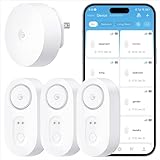
Overview:
This 3-pack of GoveeLife Smart Water Leak Detectors delivers targeted protection for smaller homes or key zones like kitchens and basements. Featuring Sub-1G long-range tech (1,804ft), 105dB alarms, IP67 waterproofing, 5-year batteries, and multi-channel alerts via SMS/email/app, it’s a hub-free solution for essential water leak monitoring.
What Makes It Stand Out:
The standout is the industry-leading Sub-1G range penetrating 5+ walls—uncommon in WiFi sensors—ensuring reliability in multi-story homes. Combined with free unlimited SMS alerts, IP67 submersion tolerance, and 4-level volume adjustment, it offers exceptional flexibility. The app’s “Find Device” feature and multi-email sharing further enhance usability without requiring a hub.
Value for Money:
The 3-pack strikes a sweet spot for most households, covering critical areas cost-effectively. The elimination of hub costs and free SMS alerts beat subscription models, while the 5-year battery reduces replacements. Though WiFi-dependent, the extended range minimizes dead zones better than standard WiFi sensors, making it a savvy investment for focused protection at its price point.
Strengths and Weaknesses:
Strengths: 1,804ft Sub-1G range through walls; free SMS/email/app alerts; loud 105dB alarm with volume control; IP67 waterproof resilience; easy app setup; 5-year battery.
Weaknesses: No offline functionality during WiFi outages; requires 2.4GHz network; SMS delivery not instantaneous; red LED insufficient for deaf users.
Bottom Line:
An excellent budget-conscious choice for reliable, hub-free leak detection in typical homes. Its range and alert versatility outperform most WiFi competitors, though internet dependency is a limitation. Ideal for renters or homeowners seeking straightforward, wide-coverage protection without complex setups.
4. GoveeLife Upgraded Smart Water Leak Detector 1s with 1804ft Ultra-Long Range, WiFi Water Sensor with SMS/Email/APP Push and Sound Alarm, 5-Year Battery Life, Suit for Home, Basement, Kitchen, 6 Pack

Overview:
This 6-sensor GoveeLife pack provides maximum coverage for expansive properties, vacation homes, or commercial spaces. Each unit boasts Sub-1G long-range connectivity (1,804ft), IP67 waterproofing, 5-year batteries, and multi-alert capabilities (SMS/email/app/sound alarm), ensuring no critical area like basements, garages, or laundry rooms goes unprotected.
What Makes It Stand Out:
The 6-pack’s uniqueness lies in its unparalleled scalability for large-scale deployment. The Sub-1G range maintains signal integrity through dense walls over vast distances—critical for estates or properties with detached structures. Free unlimited SMS alerts and IP67 durability (surviving repeated submersion) further distinguish it from competitors limited by WiFi range or fragile designs.
Value for Money:
For large properties, this pack offers unmatched value per sensor. The cost per unit drops significantly versus buying smaller packs, while the 1,804ft range reduces total sensors needed compared to short-range alternatives. The 5-year battery and hub-free design slash long-term costs, though WiFi dependency remains a consideration. It’s economical for comprehensive, enterprise-grade coverage.
Strengths and Weaknesses:
Strengths: Cost-effective bulk coverage; exceptional Sub-1G range for large properties; resilient IP67 construction; versatile alert options; minimal maintenance (5-year battery).
Weaknesses: Entirely reliant on stable WiFi; no offline operation; potential SMS delays; app required for full functionality; overkill for small apartments.
Bottom Line:
The premier solution for large homes, vacation properties, or landlords needing extensive leak monitoring. Its bulk pricing, long-range reliability, and robust build justify the investment where coverage is paramount. Highly recommended for anyone prioritizing thorough, low-maintenance protection across sprawling spaces.
5. Govee WiFi Water Leak Detector 3 Packs, Leak Alert with Remotely Email/APP Push and Sound Alarm, Smart Water Sensor with 100dB Adjustable Alarm, Suit for Home and Basement

Overview:
This Govee 3-pack uses a central WiFi gateway to connect up to 20 sensors, offering scalable leak detection for homes. Sensors trigger 100dB alarms, app/email alerts, and feature front/back probes for drip detection. Designed for basements and kitchens, it includes mute functionality and 3-level volume adjustment, with a focus on simplicity.
What Makes It Stand Out:
The dedicated gateway enabling 20-sensor connectivity is its key differentiator, allowing dense monitoring in high-risk zones. Dual-probe design enhances sensitivity to slow drips, while the physical mute button provides instant alarm silencing—practical during false alarms. The 100dB alarm and location-naming in-app streamline leak identification versus single-sensor systems.
Value for Money:
The gateway-based model offers strong value for multi-zone setups. Connecting 20 sensors per gateway beats per-unit hub costs of some competitors, and the 3-pack covers essentials affordably. Though the alarm is slightly quieter (100dB vs 105dB) and SMS alerts are absent, the mute button and drip-focused probes justify the price for focused home use.
Strengths and Weaknesses:
Strengths: Gateway supports 20 sensors; dual-probe drip detection; physical mute button; location naming in app; 3-volume settings; easy setup.
Weaknesses: No SMS alerts; shorter range than Sub-1G models; gateway adds single-point failure risk; alarm volume capped at 100dB; limited to 2.4GHz WiFi.
Bottom Line:
A solid, budget-friendly option for small-to-medium homes needing targeted leak detection. Its gateway scalability and mute feature are practical advantages, though lacking SMS and long range holds it back for larger properties. Recommended for straightforward, app-centric monitoring where drip sensitivity matters.
6. X-Sense Wi-Fi Water Leak Detector Kit, Smart Water Sensor Alarm with App Alerts and Ultra-Slim Design, Water Alarm Leak Detector for Basements, 4 Water Sensors and 1 Base Station, Model SWS0A41

Overview: The X-Sense SWS0A41 is a 5-piece smart water leak detection system featuring an ultra-slim base station and four sensors, designed for early leak detection in basements, bathrooms, and other vulnerable areas using 2.4 GHz Wi-Fi connectivity via its dedicated app.
What Makes It Stand Out: Its standout feature is the ultra-slim profile (0.7 inches thick), enabling placement in tight spaces where bulkier detectors won’t fit. Dual top/bottom sensors detect leaks as shallow as 0.4 mm and overhead drips, while the app offers granular control: adjustable alarm volume, temporary muting (up to 12 hours), and detailed history tracking—critical for remote monitoring.
Value for Money: Priced mid-range for a 4-sensor kit, it delivers strong value with reliable app integration and physical alarm redundancy (100 dB). While competitors offer longer ranges, the focus on discreet placement and robust app features justifies the cost for homeowners prioritizing space-constrained installations over expansive coverage.
Strengths and Weaknesses: Strengths: Exceptionally slim design; dual-sided leak detection; intuitive app with flexible alarm management; loud local alarm. Weaknesses: 2.4 GHz Wi-Fi only (no 5 GHz); base station required (not direct-to-phone); limited third-party smart home integration.
Bottom Line: Ideal for renters or homeowners needing unobtrusive, reliable leak detection in compact areas, this kit excels in usability and discreetness but lacks broad ecosystem compatibility; recommended for focused, app-centric monitoring.
7. GoveeLife Premium Smart Water Leak Detector 2 with 1968ft Ultra-Long Range, WiFi Water Sensor with SMS/Email/APP Push and Sound Alarm, 5-Year Battery Life, Suitable for Home, Basement, Kitchen, 6 Pack

Overview: GoveeLife’s 6-sensor kit leverages LoRa technology for extensive coverage, targeting large properties with real-time SMS/email/app alerts, voice assistant support, and an industry-leading 1968-foot range between sensors and the gateway.
What Makes It Stand Out: The unparalleled 1968-foot LoRa range is its crown jewel, effortlessly covering detached sheds, basements, and sprawling yards. Triple-alert notifications (SMS, email, app) ensure no leak goes unnoticed, while IP66 waterproofing and a 5-year battery life promise durability in harsh, wet environments like near sump pumps or water heaters.
Value for Money: The 6-sensor bundle offers exceptional coverage density per dollar, especially for large or multi-building properties. The long-range capability and triple-alert system offset the premium price, though the 5-year battery claim may vary in high-leak-risk zones; superior for expansive spaces versus smaller homes.
Strengths and Weaknesses: Strengths: Unmatched wireless range; robust SMS/email/app alerts; IP66 waterproofing; voice assistant compatibility; long battery life. Weaknesses: Requires Govee ecosystem; LoRa setup may confuse beginners; no adjustable alarm duration beyond defaults.
Bottom Line: A top pick for large properties or commercial use needing extreme range and fail-safe alerts, though overkill for small apartments; invest for peace of mind across vast, damp areas where standard Wi-Fi kits falter.
8. Aqara Water Leak Sensor 3 Pack, Zigbee Wireless Water Leak Detector for Alarm System and Smart Home Automation, Requires AQARA HUB, App Notifications, for Kitchen, Bathroom, Basement, Works with IFTTT

Overview: This 3-pack of Zigbee sensors pairs exclusively with Aqara hubs to enable smart home automation and leak alerts, targeting tech-savvy users invested in ecosystems like Apple HomeKit or Google Home for integrated water monitoring.
What Makes It Stand Out: Deep smart home integration sets it apart: triggers automations (e.g., shutting off smart valves) via Aqara Hub and works with Apple/Google/Alexa for voice alerts. Its precision shines with 0.5 mm leak detection and seamless IFTTT support, though it demands Aqara’s ecosystem—no third-party hub compatibility.
Value for Money: Cost-effective for Aqara ecosystem adopters, but the mandatory hub (sold separately) inflates the total entry cost. The automation potential justifies this for smart home enthusiasts, though standalone users may find it less economical versus all-in-one Wi-Fi kits.
Strengths and Weaknesses: Strengths: Powerful home automation triggers; precise leak detection; compact wireless design; supports major platforms via hub. Weaknesses: Hub required (no direct Wi-Fi); limited to 10m from hub; no SMS/email alerts without third-party workarounds.
Bottom Line: Essential for Aqara/Apple HomeKit users seeking automated leak responses, but avoid if you lack the hub or prefer standalone SMS alerts; best for integrated smart homes, not simple monitoring.
9. Winees WiFi Water Leak Detector for Home, 3 Pack Water Sensors with 100dB Adjustable Alarm, Leak Alert Email&SMS Notification, 200M Transmission for Basement, Bathroom, Laundry, IFTTT, 2.4G WiFi Only

Overview: Winees’ 3-sensor kit offers direct Wi-Fi connectivity (no base station) with SMS/email/app alerts, adjustable alarms, and 200-meter sensor range, targeting users wanting affordable, flexible monitoring for basements and laundry areas.
What Makes It Stand Out: Triple-notification redundancy (app, SMS, email) and IFTTT compatibility ensure leak alerts never get missed, while the 1.8mm-thin sensors slide under appliances effortlessly. Unique adjustable alarm durations (30 sec to always on) and volume levels let users customize urgency without app dependency.
Value for Money: Excellent value for a 3-sensor bundle with SMS/email support at a competitive price. The pre-paired sensors and no-base-station design simplify setup versus X-Sense, though the 200m range is modest compared to GoveeLife’s LoRa; ideal for budget-conscious medium-sized homes.
Strengths and Weaknesses: Strengths: SMS/email/app alerts; ultra-thin sensors; adjustable alarm settings; IFTTT support; IP66 rating. Weaknesses: 200m range limits large properties; app interface reportedly less polished; no voice assistant integration.
Bottom Line: A practical, no-frills choice for reliable multi-channel alerts and easy placement in standard homes; skip if you need voice control or vast coverage, but highly recommended for straightforward, alert-focused monitoring.
10. Kidde WiFi Water Leak Detector & Freeze Alarm, Alexa Device, Smart Leak Detector for Homes with App Alerts,White

Overview: Kidde’s single-sensor device uniquely combines water leak detection with freeze alerts, targeting cold-climate homeowners via direct Wi-Fi connectivity and Alexa integration for voice-controlled monitoring of pipes and appliances.
What Makes It Stand Out: Freeze detection (triggering at 37°F or rapid temperature drops) is its defining feature—unmatched by competitors—which prevents burst pipes before leaks occur. As a certified Alexa device, it enables hands-free status checks (“Alexa, is my basement leak detector okay?”), adding convenience rare in this category.
Value for Money: Priced higher than basic leak sensors, the freeze protection adds significant value in freezing regions, potentially saving thousands in pipe damage. The Alexa-native design eliminates hub costs, but the single-sensor limit may necessitate multiple purchases for whole-home coverage.
Strengths and Weaknesses: Strengths: Dual leak/freeze detection; Alexa-native (no hub); compact design; app/family alert sharing; included batteries. Weaknesses: No SMS/email alerts; single sensor per unit; limited to leak/freeze (no automation triggers).
Bottom Line: A must-have for cold-weather homes prioritizing freeze prevention, though supplement with additional units for comprehensive coverage; ideal as a first line of defense but insufficient alone for large properties.
Why Renters Need Specialized Water Sensors
The Unique Vulnerability of Rental Properties
Renters face a distinct risk profile compared to homeowners. You typically lack control over the building’s plumbing infrastructure and may not be notified promptly about maintenance issues in shared walls or ceilings. A small leak originating in a neighboring unit or a common area pipe can quickly flood your space, causing significant damage to your belongings before you even notice. Since you’re often not responsible for the initial cause, proving damage wasn’t your fault to a landlord or insurance adjuster becomes a stressful battle. A proactive sensor shifts this dynamic, providing timestamped evidence of when a leak occurred.
Lease Restrictions and the No-Drill Imperative
Your lease agreement is your bible, and it almost certainly prohibits permanent alterations. Drilling holes for hardwired sensors or even some adhesive mounts that risk paint damage is a fast track to a disputed security deposit. Landlords frequently require walls and fixtures to be returned exactly as they were upon move-in. This makes non-permanent installation not just convenient, but a mandatory requirement for any device you bring into your rental. Solutions requiring professional installation or electrical work are immediately off the table.
Portability and the Transient Lifestyle
Renting often means frequent moves. A water sensor that’s a hassle to uninstall and reinstall loses its value the moment you get a better apartment offer. The ideal solution must be designed for portability—lightweight, compact, and simple enough to pack in your moving box and set up in your new space within minutes. Devices that bind you to a specific home hub or require complex reconfiguration for a new Wi-Fi network simply aren’t practical for a renter’s lifestyle.
Key Features to Prioritize for Renter-Friendly Sensors
Truly Non-Invasive Mounting Systems
Look for sensors that utilize strong, removable adhesives (like specialized tapes designed not to damage paint) or clever placement strategies that require zero adhesion at all—sitting directly on the floor near appliances, tucked under sinks, or resting on shelves in basements. Avoid anything marketed as “semi-permanent” or requiring screws, anchors, or putty that could mar surfaces. The best options should come with mounting accessories explicitly designed for temporary, damage-free use.
Battery Life That Matches Renter Realities
Frequent battery changes are a nuisance for anyone, but for renters, it’s compounded by the risk of forgetting during a move or losing the specific battery type in transit. Prioritize sensors boasting multi-year battery life (think 2-3 years or more on a single set of standard, easily replaceable batteries like CR123A or AA). Longevity reduces the chance of the device going dead unnoticed and minimizes maintenance hassles during your tenancy. Check if the battery compartment design allows for quick, tool-free replacement.
Universal Connectivity Without Complex Hubs
Avoid systems locked into proprietary ecosystems requiring a separate, always-on hub that you’d need to relocate. Opt for sensors connecting directly via Wi-Fi or Bluetooth to your existing smartphone. Wi-Fi models provide remote alerts even when you’re not home (crucial for renters often away at work or traveling), while Bluetooth options might suffice for smaller rentals if you’re frequently on-site. Ensure compatibility with both iOS and Android to cover all household members.
Instant, Actionable Alert Capabilities
A sensor that only chirps locally when you’re home is nearly useless for renters. The core value is receiving immediate push notifications, SMS alerts, or even email warnings the moment moisture is detected, no matter where you are. Investigate if the system allows customizing alert sensitivity to minimize false alarms from condensation while ensuring real leaks trigger urgent notifications. Some integrate with broader smart home routines (like turning off a smart water valve), but even standalone alerting is vital.
Compact Size and Discreet Design
Rental spaces are often smaller, and you might share living areas. Bulky sensors are harder to place effectively and more likely to be bumped or hidden poorly. Prioritize sleek, low-profile designs that tuck neatly under appliances, behind furniture, or along baseboards without drawing attention. A small footprint also makes them easier to pack and less likely to get damaged during moves. Consider color options that blend with common flooring or cabinetry.
Strategic Placement Guide for Maximum Protection
High-Risk Zones Every Renter Must Monitor
Focus your limited sensors (you likely can’t cover every inch) on the areas with the highest probability of leaks. This universally includes directly under and around washing machines (hose connections are notorious failure points), beneath kitchen and bathroom sinks (checking for loose connections or overflowing drains), and near water heaters if accessible in your unit. Don’t overlook less obvious spots like under dishwashers, near refrigerator water lines, or in basements/crawl spaces if you have access.
Optimizing Placement in Confined Spaces
Apartment layouts often mean tight quarters under sinks or behind appliances. Choose sensors slim enough to fit in these cramped areas without blocking access for maintenance. Position them as close as possible to potential leak sources (like valve connections) but ensure they aren’t obstructed by pipes or the appliance itself. For under-sink placement, put one sensor near the drain P-trap and another near the shutoff valves for comprehensive coverage.
Avoiding Common Placement Pitfalls
Placing sensors too high off the floor defeats their purpose—they need to contact water immediately. Conversely, placing them directly in a known drip path might cause premature saturation or damage. Avoid locations prone to regular splashes (like right next to the shower drain in a small bathroom) unless the sensor is specifically rated for continuous moisture exposure, as this causes false alarms. Also, steer clear of spots where they could be easily kicked, stepped on, or covered by rugs.
Connectivity & Alert Systems Demystified
Wi-Fi vs. Bluetooth: Choosing Your Connection
Wi-Fi sensors offer the gold standard for renters: real-time remote alerts via the cloud, accessible globally. You’ll know about a leak while at work, on vacation, or even after you’ve moved out but before the landlord does. Bluetooth sensors are usually cheaper and simpler but only alert your phone when it’s within range (typically 30-100 feet), making them far less reliable for detecting issues while you’re away. For true peace of mind, Wi-Fi is almost always the superior choice despite potentially slightly higher cost.
Understanding Notification Channels and Reliability
Don’t assume all apps are equal. Verify the companion app reliably delivers push notifications without significant delay (check user reviews for “notification lag” complaints). Look for systems offering multiple alert paths: critical leaks should trigger push and SMS at minimum. Some premium systems even offer phone call alerts for the most severe events. Crucially, the system should notify you if the sensor itself loses power or connectivity, so you know it’s no longer functioning.
Integration Potential Without Commitment
While deep integration with smart home platforms (like Alexa or Google Home) can be useful for voice announcements of leaks, it’s not essential for core functionality. As a renter, avoid sensors requiring a specific platform’s hub. However, if your chosen sensor offers optional, non-mandatory integration, it can add value (e.g., “Hey Google, is there water under the sink?”) without locking you in. Prioritize standalone reliability first.
Power Solutions for Hassle-Free Operation
Evaluating Battery Technologies and Lifespans
Sensor batteries aren’t all created equal. Lithium-based batteries (like CR123A) often last significantly longer than alkaline in low-power devices and perform better in temperature extremes (like unheated basements). Check the manufacturer’s estimated battery life under typical conditions—it should be clear and realistic (2+ years is common for good models). Avoid obscure battery types that are hard to find; standard sizes ensure easy replacements anywhere.
Low-Battery Warning Systems
A sensor that dies silently is worse than useless; it creates a false sense of security. Ensure the system provides ample, persistent low-battery warnings well before the power runs out—both within the app and potentially via the sensor itself (a slow blinking light). The warning period should give you weeks, not days, to replace the battery. Some apps even track battery health over time.
Solar and Rechargeable Options: Practical for Renters?
While solar-powered sensors exist, they’re often impractical in typical rental locations (under sinks, in basements) where sunlight is nonexistent. Similarly, rechargeable battery models require remembering regular charging cycles, which adds maintenance burden. For most renters, long-life disposable batteries remain the simplest, most reliable power solution. Focus on maximizing time between changes.
Privacy and Data Security Considerations
What Data Do Sensors Actually Collect?
Understand exactly what information your sensor transmits. Basic water sensors typically only report “dry” or “wet” status, battery level, and signal strength—minimal data. However, some advanced models might log moisture levels over time or precise location within your home. Scrutinize the privacy policy: does the company sell anonymized leak data? How long is your usage history stored? Opt for manufacturers with transparent, strict data policies.
Securing Your Home Network
A compromised sensor could be a gateway to your broader home network. Ensure the sensor and its companion app use strong encryption (look for TLS/SSL) for data transmission. Verify the manufacturer has a history of promptly releasing security updates for their devices and apps. Avoid sensors with known vulnerabilities reported in security databases. Strong, unique passwords for your Wi-Fi and the sensor app are non-negotiable.
Ownership of Leak Data
Consider who owns the data if a leak occurs. In a dispute with a landlord, having timestamped, cloud-stored evidence from your sensor could be invaluable proof the leak originated externally or started after you moved out. Check if the app allows easy exporting of event logs or screenshots. Some services delete data after a short period, so understand the retention policy.
Installation and Maintenance Walkthrough
Step-by-Step Setup for Zero Damage
- Identify Zones: Walk through your unit noting high-risk areas (sinks, washer, etc.).
- Clean Surfaces: Wipe floors/cabinets thoroughly where sensors will sit; grease or dust ruins adhesion.
- Apply Mounting: For adhesive models, peel backing only when ready, press firmly for 30 seconds. For non-adhesive, simply place securely.
- Power On: Insert batteries correctly, following polarity markings.
- App Pairing: Download the app, create an account, and follow in-app instructions to connect the sensor (usually involves scanning a code or pressing a button).
- Test: Pour a tiny amount of water near (not directly on) the sensor to verify alert functionality—then dry immediately!
Ongoing Maintenance Made Simple
Renter-friendly maintenance should take seconds. Monthly, quickly wipe sensor contacts with a dry cloth to prevent dust buildup from causing false readings. Every 6 months, check the app for battery status and clean around the sensor location (e.g., under the sink). Before any major move or trip, do a quick visual check that sensors are still in place and the app shows they’re online. Document sensor locations and status with photos when you move in/out.
Hassle-Free Removal and Relocation
When moving out, removal should be as clean as installation. For adhesive mounts, use dental floss or thin fishing line slid between the sensor base and surface to cut the bond cleanly—avoid pulling upwards which can peel paint. Any residual adhesive can usually be removed with a dab of rubbing alcohol on a cotton swab. Pack sensors in their original boxes or wrap contacts in tissue to prevent accidental activation in transit. Setting up in your new place repeats the simple steps above.
Frequently Asked Questions
How do I get landlord permission for a water sensor?
Most landlords are receptive to non-damaging preventative devices that protect their property. Present it as a win-win: “I’d like to install small, removable water leak detectors under the sink and near the washer to catch any issues early and prevent major damage to the unit. They use removable tape and leave no marks—here are photos of how they look.” Get approval in writing via email.
Will a sensor work if I’m not home and my Wi-Fi is down?
Sensors relying solely on Wi-Fi won’t send remote alerts during an outage. Some high-end models have cellular backup, but this is rare. Basic models might store the event locally and alert you once Wi-Fi is restored, but you won’t get immediate notification. Consider this a limitation of Wi-Fi models; no truly renter-friendly cellular option exists yet for most budgets.
Can these sensors detect very small leaks or slow seeps?
Yes, most quality sensors are designed to trigger at the first sign of moisture—often just a few drops. They use conductive probes that complete a circuit when water bridges the gap. This makes them ideal for catching slow leaks (like a dripping faucet valve) before they escalate into major floods, which is crucial for preventing mold and structural damage.
Are there sensors that work without any app or smartphone?
Some basic models offer only local audible alarms (a loud beep when water is detected). While better than nothing if you’re home, they provide zero protection when you’re away—which is when most significant leaks occur. For meaningful renter protection, an app-connected sensor with remote alerts is essential. Truly effective modern leak detection requires smartphone integration.
How do I prevent false alarms from humidity or condensation?
Choose sensors with adjustable moisture sensitivity settings in the app. Place them strategically away from direct sources of steam (like shower drains) or cold pipes that sweat heavily. Look for models with “wet/dry” detection logic that requires sustained contact with water, not just a brief splash or high humidity. Proper placement is your first line of defense against false triggers.
What happens if the sensor gets wet? Is it ruined?
Most quality sensors are designed to be water-resistant or even submersible for short periods to handle the very leaks they detect. After a leak event, promptly dry the sensor thoroughly (including the contact points) according to the manual. While they can generally withstand the moisture they’re meant to detect, prolonged submersion or exposure to corrosive liquids might damage them. Always test after drying.
Can I use these sensors in a rental basement or garage?
Absolutely, and it’s highly recommended as these areas are prone to flooding. Ensure the sensor is rated for the environment (e.g., some have wider temperature/humidity ranges). Place them on the floor in low spots or near sump pumps/foundation walls. If the area is prone to deep flooding, consider a sensor designed to float or be mounted higher to trigger before water reaches critical levels.
Do I need a separate sensor for each appliance?
Ideally, yes. A single leak under your washing machine won’t trigger a sensor under the kitchen sink. Prioritize your highest-risk zones first (washer is #1 for most). Many systems allow multiple sensors to connect to one app, so start with 1-2 critical spots and expand later. Don’t try to cover too much with one sensor; placement accuracy is key.
Will the sensor work through tile or laminate flooring?
No. Water sensors must be in direct contact with the potential leak source or the floor surface where water would pool. They detect moisture at the point of installation. Water traveling under flooring might not reach the sensor location immediately. Place them where water is most likely to emerge visibly, like at the base of an appliance or along a wall seam.
How do I prove to my landlord that a leak wasn’t my fault?
Timestamped alerts and logs from your sensor app provide crucial evidence. Take screenshots showing the exact time the “wet” alert was triggered. Document the scene immediately with photos/video when you discover the leak. If your sensor data shows the leak started suddenly while you were away (e.g., at work), it strongly suggests an external plumbing failure rather than your negligence.