Watering a small yard shouldn’t feel like a high-stakes balancing act. You know the drill: forgetting to turn off the hose and watching precious water pool uselessly, or worse, coming home to parched petunias because you got caught in afternoon meetings. For compact outdoor spaces, where every square foot counts and overwatering can drown delicate roots just as easily as neglect, precision is non-negotiable. Small yards often feature a mix of containers, flower beds, and maybe a tiny patch of grass – each with wildly different thirst levels. Hand-watering becomes tedious, sprinklers are often too broad, and the guilt of wasted water (or dead plants) lingers. It’s a surprisingly common frustration for urban gardeners and suburban homeowners alike.
Enter the smart hose timer: your potential secret weapon for effortless, efficient irrigation tailored precisely to your petite paradise. Forget the days of clunky mechanical dials or racing home before noon. These intelligent devices connect to your existing outdoor faucet, transforming your ordinary garden hose into a programmable watering system controlled by your smartphone. Imagine adjusting schedules from your office, skipping a cycle because rain is forecasted, or giving thirsty container plants an extra sip while you’re on vacation – all without stepping foot outside. For small-space gardening, where resources are limited and attention to detail matters most, a smart timer isn’t just a gadget; it’s the key to healthier plants, significant water savings, and reclaiming your weekends. Let’s explore what makes these devices indispensable and how to choose the perfect one for your compact oasis.
Top 10 Smart Hose Timers
Detailed Product Reviews
1. Orbit 24634 B-hyve XD 4-Port Smart Hose Watering Timer
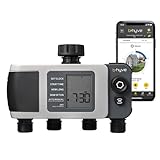
Overview: The Orbit B-hyve XD is a weather-responsive smart hose timer designed to optimize outdoor watering through hyperlocal data. It automates irrigation schedules based on real-time conditions while adhering to municipal restrictions, positioning itself as a premium water-conservation solution for gardens and lawns.
What Makes It Stand Out: Its standout feature is dynamic adjustment using precise local weather and drought data, earning EPA WaterSense certification when paired with a hub. The IPX-5 waterproof rating ensures durability against elements, and flexible programming via Wi-Fi/Bluetooth caters to varying user preferences. Automatic drought-response customization is unmatched in this tier.
Value for Money: Priced mid-to-high range, it justifies cost through significant water savings and reduced manual oversight. While cheaper timers exist, the XD’s weather intelligence and WaterSense certification offer long-term ROI via lower utility bills and compliance with watering regulations, outperforming basic programmable models.
Strengths and Weaknesses: Strengths: Exceptional weather adaptation, robust waterproofing, intuitive app controls, and drought-mode customization. Weaknesses: Requires separate Wi-Fi hub for full WaterSense benefits (sold separately), and initial setup can be complex for non-tech users. Bluetooth-only mode limits remote access without hub.
Bottom Line: Ideal for eco-conscious homeowners in drought-prone areas seeking automated, regulation-compliant watering. Despite the hub dependency, its precision water management delivers strong value, making it a top recommendation for sustainable landscaping.
2. RAINPOINT WiFi Water Timer, Sprinkler Timer for Garden Hose, Smart Automatic Irrigation System with Brass Inlet for Yard, Lawn, APP Remote Control via 2.4Ghz WiFi and Bluetooth
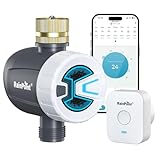
Overview: The RAINPOINT WiFi Water Timer offers app-driven sprinkler control with a focus on expandability and hardware durability. Targeting users needing multi-zone coverage, it combines voice control, flexible scheduling, and a brass inlet for reliable high-pressure performance in diverse garden setups.
What Makes It Stand Out: Its expandable 1-hub/4-timer ecosystem and integrated soil moisture meter compatibility enable scalable irrigation. The reinforced 360° brass swivel inlet prevents leaks under high pressure—a rarity in this segment—while true 2.4GHz WiFi ensures consistent remote access without Bluetooth fallback limitations.
Value for Money: Competitively priced for its brass construction and multi-timer support, it outperforms plastic-bodied rivals in longevity. The hub’s capacity to manage four timers (plus sensors) provides excellent scalability, making it cost-effective for larger yards compared to single-unit systems requiring multiple purchases.
Strengths and Weaknesses: Strengths: Durable brass inlet, seamless TUYA app integration, Alexa/Google compatibility, and flexible 3-mode watering (rain delay/manual/auto). Weaknesses: Hub required for multi-timer use (sold separately), and TUYA app may feel less polished than dedicated irrigation platforms.
Bottom Line: A robust choice for users prioritizing hardware durability and system scalability. The brass inlet and expandability justify its price, earning a solid recommendation for medium-to-large properties needing reliable, voice-controllable watering.
3. Rachio Smart Hose Timer (1 Valve + 1 WiFi Hub) – App-Controlled Outdoor Faucet Timer, Quick Install & Scheduling, Expandable System

Overview: Rachio’s entry-level smart hose timer simplifies irrigation with app-based scheduling and weather intelligence. Geared toward beginners, it emphasizes effortless installation and rain-based automation, eliminating manual dial adjustments for time-strapped homeowners.
What Makes It Stand Out: “Ditch the Dial” marketing highlights its user-friendly app interface, while rain-skip technology prevents unnecessary watering. Flow monitoring for leak detection and low-battery alerts add practical safety features. The expandable hub (supporting up to 8 valves) allows future system growth.
Value for Money: Priced accessibly for the single-valve kit, it offers exceptional ease of use and core smart features. Though pricier than non-WiFi timers, Rachio’s reliability and water savings offset costs. Limited scalability per hub makes bulk purchases less economical than competitors for large setups.
Strengths and Weaknesses: Strengths: Intuitive app, reliable rain skips, quick installation, and valuable flow alerts. Weaknesses: Hub required for all functionality (no Bluetooth), and only 1 valve included necessitates additional spending for multi-zone use. Less flexible scheduling than rivals.
Bottom Line: Perfect for first-time smart timer users with small yards seeking hassle-free, weather-aware watering. Its simplicity and reliability warrant a strong recommendation despite limited out-of-box scalability.
4. Insoma WiFi Water Timer for Garden Hose, Smart Sprinkler Timer, APP Remote Control WiFi Hose Timers, Voice Control with Alexa, Rain Delay and Manual Mode for Yard Lawn Watering

Overview: The Insoma WiFi Timer delivers direct cloud connectivity without a hub, prioritizing remote accessibility and scheduling depth. It targets users frustrated by Bluetooth dependencies, offering extensive programming options and voice control for comprehensive garden management.
What Makes It Stand Out: True 100% WiFi operation (no hub or Bluetooth fallback) ensures reliable remote control from anywhere. Its standout feature is 20 customizable schedules (including cycle/soak modes) and family sharing via Smart Life app—far exceeding competitors’ typical 5–10 schedules.
Value for Money: Mid-priced with exceptional scheduling capacity, it outperforms rivals in program flexibility. The hub-free design reduces long-term costs, though Smart Life app integration may feel less specialized than Rachio’s. Ideal for complex watering needs without extra hardware.
Strengths and Weaknesses: Strengths: Hub-free WiFi, 20-schedule capacity, voice control, and broad pressure tolerance (7.26–116 PSI). Weaknesses: Smart Life app lacks advanced weather intelligence (e.g., Rachio’s rain skips), and build quality feels less premium than brass-inlet models.
Bottom Line: Best for tech-savvy users needing intricate scheduling and consistent remote access. While weather adaptation is basic, its scheduling depth and no-hub convenience make it a top pick for customizable, app-centric irrigation.
5. Rachio Smart Hose Timer (2 Valves + 1 WiFi Hub) – App-Controlled Outdoor Faucet Timer, Quick Install & Scheduling, Expandable System

Overview: This Rachio bundle doubles the functionality of its single-valve counterpart, providing dual-zone control out of the box. It retains Rachio’s signature simplicity and weather intelligence while addressing multi-faucet needs for medium-sized landscapes.
What Makes It Stand Out: The inclusion of two valves and one hub eliminates incremental costs for basic multi-zone setups. Rain-skip technology and flow monitoring remain central, but the expanded valve count enables independent scheduling for distinct garden areas—like lawns versus flower beds—without extra hubs.
Value for Money: Offers significant savings versus buying two single-valve kits (Product 3). The bundled hub/valves provide immediate multi-zone capability unmatched by similarly priced competitors. Long-term water efficiency and leak alerts further enhance ROI, especially for yards needing zoned watering.
Strengths and Weaknesses: Strengths: Cost-effective dual-valve setup, effortless installation, reliable rain adaptation, and expandable to 8 valves. Weaknesses: Still requires the hub for all operations, and scheduling depth lags behind Insoma’s 20-program limit. No brass inlet for high-pressure resilience.
Bottom Line: The optimal Rachio choice for multi-zone yards, delivering excellent value through bundled hardware. Highly recommended for users needing two independent watering zones with Rachio’s trusted simplicity and weather smarts.
6. Lumary WiFi Water Timer for Garden Hose with Hub, Battery Sprinkler Timer for Watering Brass Inlet Outdoor, Rain Delay/Remote/Manual/Auto Drip Irrigation System Programmable Faucet, Work with Alexa
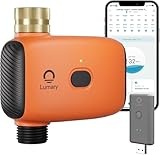
Overview:
This smart hose timer integrates a dedicated hub for 2.4GHz WiFi connectivity, enabling automated garden irrigation via the Lumary app. Designed for durability and convenience, it targets homeowners seeking weather-responsive watering without manual intervention.
What Makes It Stand Out:
Its all-brass inlet and IP55 rating ensure exceptional resilience against sun, heat, and corrosion—uncommon in budget timers. Unique scheduling flexibility includes rain delay (24–72 hours), cyclical irrigation modes, and multi-control options (app, Alexa voice commands, or manual), though schedules cannot cross midnight (must start from 00:05).
Value for Money:
Priced mid-range, it delivers premium brass construction and core smart features often found in costlier models. While the hub is included, the 2.4GHz-only limitation and minor scheduling quirks are reasonable trade-offs for its robust build and water-saving rain delay.
Strengths and Weaknesses:
Strengths: Industrial-grade brass components for longevity; intuitive app with irrigation history tracking; effective rain delay conserves water; versatile manual/remote control. Weaknesses: Scheduling restrictions around midnight; hub requires constant power; no 5GHz WiFi support limits modern router compatibility.
Bottom Line:
A highly recommended, affordable smart timer for reliable, eco-friendly irrigation, ideal for users prioritizing durability and weather adaptation in small-to-medium gardens.
7. Smart WiFi Sprinkler Timer 3 Zone,WiFi Water Timer for Garden Hose with 984 FT Range,APP & Remote Control,Alexa & Google Voice Compatible,Rain Delay, Manual Mode Sprinkler System

Overview:
This 3-zone timer excels in large-scale irrigation, using an RFID gateway for industry-leading 984-foot range control. It enables precise, app-driven scheduling for diverse garden areas via Smart Life or Tuya apps, with voice compatibility for hands-free operation.
What Makes It Stand Out:
Its unmatched 300-meter signal range solves connectivity issues in expansive yards, while triple-zone programming allows individual schedules (1-minute to 24-hour durations) for lawns, beds, or vegetable patches. Flexible modes include misting for cooling and recirculating schedules, plus detailed irrigation records.
Value for Money:
Priced for serious gardeners, the long-range reliability and 3-zone versatility justify its cost versus single-zone alternatives. Though reliant on third-party apps, water savings from customizable rain delay (1–7 days) and efficient zone management deliver strong ROI for large properties.
Strengths and Weaknesses:
Strengths: Exceptional 984-foot range; comprehensive 3-zone customization with 5 schedules; useful misting mode; detailed usage history. Weaknesses: Bluetooth only for initial setup (not ongoing control); app experience less polished than proprietary systems; overkill for small gardens.
Bottom Line:
A top choice for large or complex landscapes needing rock-solid remote control, though best suited for tech-comfortable users managing multi-zone watering demands.
8. Orbit 24632 B-hyve XD 2-Port Smart Hose Watering Timer

Overview:
Orbit’s dual-port timer leverages hyperlocal weather data to automate watering, focusing on eco-conscious efficiency. It’s engineered for users in drought-prone areas who need adaptive irrigation without manual adjustments.
What Makes It Stand Out:
It uniquely auto-adjusts for regional drought conditions and local watering restrictions—a rarity among competitors. EPA WaterSense certification (with hub) and IPX-5 waterproofing ensure regulatory compliance and all-weather resilience, while dual WiFi/Bluetooth connectivity simplifies setup.
Value for Money:
Premium-priced but justified by intelligent water savings and official efficiency credentials. The separate hub purchase is a drawback, yet long-term resource conservation and plant health benefits outweigh costs versus basic timers that waste water.
Strengths and Weaknesses:
Strengths: Proactive drought adaptation; WaterSense-certified precision; rugged IPX-5 construction; seamless weather integration. Weaknesses: Hub sold separately; only two ports limit scalability; occasional app latency during weather updates.
Bottom Line:
Essential for environmentally focused gardeners, this timer delivers unmatched smart conservation and regulatory compliance, making it a worthwhile investment for sustainable landscaping.
9. Diivoo Brass WiFi Sprinkler Timer 2 Zone, Smart Water Timer for Garden Hose Remote Control,Compatible with Alexa and Google Home,12 Irrigation Plans,Rain Delay & Manual Watering for Garden,Lawn,Yard

Overview:
Featuring solid brass connectors, this dual-zone timer prevents leaks and corrosion while supporting independent scheduling for two garden areas. Controlled via app or voice (Alexa/Google), it targets users needing durable, flexible irrigation.
What Makes It Stand Out:
Upgraded brass fittings (7.25–116 PSI rated) with metal filters ensure longevity in high-pressure setups, while dual-zone operation allows 12 total schedules. Unique mist mode enables interval watering for cooling or dust control—ideal for patios or greenhouses beyond standard irrigation.
Value for Money:
Competitively priced for its brass build, it outperforms plastic alternatives in lifespan. The 12-schedule capacity and mist functionality add value, though third-party app reliance (Tuya/Smart Life) slightly reduces polish versus dedicated ecosystems.
Strengths and Weaknesses:
Strengths: Superior leak-proof brass durability; versatile 2-zone control with 12 schedules; innovative mist mode; intuitive rain delay/manual override. Weaknesses: Generic app experience; no real-time weather adaptation; pressure limits may exclude commercial use.
Bottom Line:
An excellent pick for homeowners prioritizing corrosion resistance and multi-scene flexibility, especially where misting capabilities or long-term reliability are paramount.
10. Rachio Smart Hose Timer (1 Valve Only) – App-Controlled Outdoor Faucet Timer, Quick Install & Scheduling, Expandable System - Requires WiFi Hub

Overview:
Rachio’s single-valve timer emphasizes simplicity and water conservation through its intuitive app. It’s designed for beginners seeking hassle-free smart irrigation with room to expand via Rachio’s ecosystem.
What Makes It Stand Out:
Its standout features are industry-leading flow monitoring (detecting leaks instantly) and hyperlocal rain skips that prevent overwatering. The “ditch the dial” philosophy ensures 5-minute installation, while expandability to 8 valves per hub future-proofs your setup.
Value for Money:
Affordable as a starter unit, but the mandatory separate hub inflates total cost. Rachio’s superior app reliability and data accuracy justify the investment versus all-in-one units, especially for water-conscious users valuing long-term scalability.
Strengths and Weaknesses:
Strengths: Best-in-class flow alerts; effortless setup; precise weather-based rain skips; seamless multi-zone expansion. Weaknesses: Hub sold separately; single valve limits immediate versatility; no native voice control without additional devices.
Bottom Line:
Perfect for smart irrigation newcomers, this timer excels in core efficiency and growth potential, though hub costs should factor into decisions for budget-focused buyers.
Why Smart Hose Timers Are Essential for Compact Outdoor Spaces
Overcoming the Unique Challenges of Small Yards
Small yards present distinct watering hurdles that generic solutions often miss. Limited square footage means plants are frequently packed closer together, yet their individual water needs can vary dramatically – a sun-baked container of succulents next to moisture-loving ferns on a shaded patio, for example. Traditional sprinklers waste water on hardscapes like patios or walkways, which dominate smaller plots. Manual watering is inefficient and inconsistent, leading to either waterlogged soil in one spot and dust-dry patches in another. Smart timers solve this by enabling hyper-localized scheduling, ensuring each zone within your compact space receives exactly the right amount of water at the optimal time, eliminating guesswork and waste.
Precision Watering for Healthier Plants in Limited Areas
In confined gardens, every plant’s health is magnified. Overwatering is a silent killer, especially in containers where drainage is restricted, leading to root rot that can wipe out prized specimens overnight. Conversely, small beds and pots dry out much faster than expansive lawns, demanding more frequent but smaller water applications. Smart timers deliver this precision through customizable duration and frequency settings for individual zones or cycles. You can program short, targeted bursts for delicate seedlings in the morning and slightly longer sessions for established shrubs in the evening, all automated. This tailored approach promotes deeper root growth, reduces disease susceptibility from wet foliage, and ultimately yields lusher, more resilient plants within your spatial constraints.
Significant Water Conservation Benefits for Urban and Suburban Settings
Water scarcity and municipal restrictions are increasingly common concerns, making efficiency crucial even in small landscapes. Smart hose timers are powerful tools for conservation, directly impacting your utility bills and environmental footprint. By automating schedules to avoid peak evaporation hours (midday) and leveraging weather intelligence to skip unnecessary cycles, these devices prevent gallons of water from simply vanishing into thin air or running off paved areas. For city dwellers on strict watering schedules or those in drought-prone regions, the ability to maximize every drop through precise, targeted irrigation isn’t just eco-friendly – it’s often a practical necessity for maintaining a thriving yard within local regulations.
Critical Features to Evaluate for Your Small Yard Setup
Connectivity Options: Wi-Fi, Bluetooth, and Hybrid Models
Your choice of connectivity fundamentally shapes your user experience. Wi-Fi models offer the broadest control, allowing you to manage watering from anywhere via your smartphone app – perfect for adjusting schedules during unexpected work trips or checking status while at the office. Bluetooth options are typically more affordable and simpler to set up but require you to be physically near the timer (usually within 30-100 feet) to make changes, which might suffice if you’re often in the yard. Hybrid models combine both, giving you local Bluetooth control plus remote Wi-Fi access. For small yards where you might be indoors but still want quick adjustments, Wi-Fi or hybrid provides the most flexibility, though ensure your outdoor signal strength is adequate near the faucet.
Scheduling Flexibility: Zones, Durations, and Frequency
Don’t assume one-size-fits-all scheduling works for your diverse small space. Look for timers that allow multiple independent programs (often called “zones” even for single-hose setups). This lets you assign different watering durations and frequencies to distinct areas – say, 5 minutes every other day for potted herbs on the sunny deck and 10 minutes daily for a shaded vegetable bed. Daily, every-other-day, or specific weekday scheduling options are essential. Crucially, verify the minimum and maximum run times; small containers often need very short bursts (as little as 1-2 minutes), while deeper beds might require longer sessions. The ability to create complex, tailored cycles is non-negotiable for optimizing plant health in compact landscapes.
Weather Intelligence and Sensor Integration
This feature transforms a basic timer into a truly “smart” irrigation manager. Advanced models integrate with local weather forecasts to automatically skip watering if significant rain is predicted, preventing over-saturation – a critical function for small yards where saturated soil has nowhere to drain. Some include built-in frost sensors that shut off the system when temperatures near freezing, protecting both your timer and delicate plants. Others offer ports for external soil moisture sensors, providing real-time data on actual ground conditions rather than relying solely on a fixed schedule. For small-space efficiency, weather adaptation is paramount, as microclimates in patios or sheltered corners can differ drastically from regional forecasts.
Power Source Reliability: Batteries vs. AC Adapters
Power failure means watering failure, so reliability is key. Most smart timers run on standard D-cell batteries (4 or 6), offering easy installation without needing an outdoor outlet. However, battery life varies significantly – some last 6 months, others over a year – and constant app connectivity or frequent weather updates can drain them faster. Models with AC power adapters eliminate battery anxiety but tether you to an accessible outdoor electrical source, which many small yards lack near the spigot. Consider your setup: if an outlet is nearby, AC power provides ultimate peace of mind. Otherwise, prioritize timers known for exceptional battery life (check user reviews for real-world data) and ensure they have low-battery warnings to prevent unexpected shutdowns during dry spells.
Durability and Weather Resistance for Year-Round Use
Your timer faces the elements 24/7, so robust construction is vital. Look for an IP (Ingress Protection) rating of at least IP65 or higher, indicating strong resistance to dust and water jets from any direction – essential for surviving heavy rain, sprinkler overspray, or accidental hose knocks. Material matters too; high-quality UV-resistant plastics won’t become brittle and crack under intense sun exposure common in small, open yards. Brass or stainless-steel internal components for the water pathway prevent corrosion and ensure longevity, especially important if you use the timer year-round in climates with freezing winters (remember to winterize!). Don’t sacrifice durability for a lower price; a flimsy timer failing mid-season disrupts your entire watering rhythm.
Installation and Setup Considerations for Tight Spaces
Faucet Compatibility and Physical Footprint
Not all outdoor spigots are created equal, especially on older homes or in tight utility nooks. Measure the space around your faucet before buying. Some smart timers have bulky bodies or protruding battery compartments that won’t fit against a wall or under a deck railing. Ensure the timer’s inlet thread size matches your standard outdoor faucet (usually 3/4" garden hose thread). Consider low-profile designs if space is extremely constrained. Also, verify that the timer allows easy access to the manual override lever – you don’t want to struggle to turn water on for filling a bucket just because the timer is wedged into a corner. Compact yards often mean compact installation spots, so physical dimensions are critical.
Initial App Pairing and Network Stability
A smooth setup experience prevents early frustration. Check if the timer requires a specific app and whether it’s compatible with your smartphone OS (iOS/Android). Read reviews about the pairing process: some connect seamlessly via Bluetooth first, then transition to Wi-Fi, while others can be finicky. Crucially, test your Wi-Fi signal strength at the faucet location before purchasing. Weak signals cause disconnects, making remote control unreliable – a major issue if you rely on weather adjustments. If your signal is poor, you might need a Wi-Fi extender, or opt for a Bluetooth model if remote access isn’t your top priority. A stable connection is the backbone of the “smart” functionality, so don’t skip this verification step.
Winterization and Off-Season Storage Solutions
In freezing climates, proper winterization is mandatory to prevent cracked housings and costly damage. Most smart timers require complete draining and indoor storage when temperatures consistently drop below freezing. Evaluate how easy this is: timers with drain ports or simple disassembly are preferable. Consider storage space – compact designs are easier to tuck away in a garage or shed over winter. Some models are explicitly marketed as “frost-proof” with special materials or internal heaters, but these are less common and often pricier. For small-yard owners with limited storage, a timer that’s quick to remove, drain, and store becomes a significant advantage come autumn.
Troubleshooting Common Smart Timer Issues in Small Gardens
Dealing with Connectivity Dropouts and App Glitches
Even the best systems occasionally hiccup. If your timer disconnects from the app, first check your home Wi-Fi – restart the router if needed. Ensure the timer’s firmware is up-to-date via the app settings. For persistent dropouts, move your Wi-Fi router closer to the yard or install a mesh node. If using Bluetooth, ensure your phone isn’t blocking background app activity for the timer’s software. For small yards, physical obstructions like metal siding or dense shrubs near the faucet can weaken signals; repositioning the timer slightly (if possible) or trimming foliage might help. Always consult the manufacturer’s troubleshooting guide before assuming hardware failure.
Addressing Inconsistent Watering or Flow Problems
If plants aren’t getting enough (or too much) water despite correct programming, investigate the basics first. Check for kinks in the hose or clogged spray nozzles/attachments – common culprits in small setups with frequent hose movement. Ensure the timer’s valve is fully opening; sediment in older plumbing can sometimes interfere. Verify water pressure: very low pressure might not trigger the timer’s flow sensor correctly, while extremely high pressure could damage it. Some timers have adjustable flow settings; consult the manual. Also, double-check your schedule settings – it’s easy to mis-set start times or durations, especially with multiple programs running for different zones in a compact space.
Managing Battery Drain and Power Failures
Unexpected shutdowns usually point to power issues. If batteries deplete faster than advertised, check if frequent weather updates or constant app pings are enabled – reducing these settings can extend life. Use high-quality lithium batteries for better cold-weather performance and longevity. If the timer loses settings during battery changes, ensure you replace them quickly (some have a supercapacitor backup) or reprogram immediately. For AC-powered models, check the outlet is live and the adapter isn’t damaged. Always note your schedule before changing batteries or power cycling to minimize downtime, especially during hot, dry periods critical for small, fast-drying beds.
Maximizing Value and Long-Term Use for Your Investment
Leveraging Automation for Routine Maintenance Tasks
Go beyond basic watering schedules to simplify yard upkeep. Program short, daily “mist” cycles early morning to keep delicate seedlings or newly planted seeds consistently moist without drowning them – ideal for small nursery areas. Set up a weekly 2-minute flush for drip lines attached to your hose to prevent clogs from mineral buildup. Use the timer to automate filling a birdbath or small pond feature on a schedule, ensuring fresh water without manual topping up. For container gardens, program a pre-dawn soak to minimize evaporation. These small automations, unique to the focused nature of small-space gardening, add significant convenience and plant health benefits beyond simple irrigation.
Integrating with Broader Smart Home Ecosystems
While not essential, compatibility can enhance your experience. Check if the timer works with voice assistants (like Alexa or Google Assistant) for hands-free “turn on the deck plants” commands – handy when your hands are muddy. Some integrate with broader smart home platforms (like Apple HomeKit or IFTTT), allowing complex automations: “If the soil moisture sensor reads dry AND the forecast shows no rain tomorrow, water the vegetable patch for 8 minutes.” For tech-savvy small-yard owners, this layer of integration creates a truly responsive, low-maintenance ecosystem where your irrigation works seamlessly with other home systems.
Future-Proofing Your Purchase with Software Updates
Technology evolves, so your timer should too. Prioritize brands known for regular firmware updates that add features, improve weather algorithms, or enhance app functionality. Check the manufacturer’s support page for update history and commitment. A timer that receives updates for 3+ years offers better long-term value than a cheaper model abandoned after one season. Read reviews specifically mentioning software support. For small-yard efficiency, future updates might bring more precise microclimate adjustments or better integration with hyperlocal weather services, ensuring your investment stays effective as your gardening needs or technology landscape changes.
Frequently Asked Questions
Can I use one smart timer for multiple zones in my small yard?
Yes, many models support multiple independent watering programs. You can assign different durations and schedules to distinct areas (like containers vs. flower beds) by manually moving the hose between zones according to the timer’s sequence, or by using a multi-outlet manifold attached to the timer’s output.
How accurate are the weather-based skip features really?
Accuracy depends on the service the timer uses (often national weather services or providers like Weather Underground). While generally reliable for significant rain events, microclimates in small, sheltered yards might differ slightly. It’s wise to occasionally check the forecast manually, but for most users, the savings from skipped unnecessary cycles far outweigh minor inaccuracies.
Do I need an outdoor electrical outlet for installation?
No, the vast majority run on standard D-cell batteries, designed specifically for locations without nearby power. AC adapter models exist but are less common; battery operation is the standard for hose-end timers due to typical faucet placements.
Can smart timers prevent overwatering in container plants?
Absolutely. Their precision is ideal for containers, which dry out fast but are prone to root rot. Set short, frequent cycles (e.g., 2-3 minutes daily) tailored to pot size and sun exposure, and leverage rain skip features to avoid saturation – a critical advantage over fixed sprinklers.
What happens during a power outage at home?
Battery-powered timers continue operating normally as they don’t rely on household electricity. They’ll maintain their schedule and settings. AC-powered models will stop functioning until power is restored, potentially disrupting your watering if the outage is prolonged.
Are smart timers difficult to install for someone not tech-savvy?
Most are designed for simple DIY installation: screw onto the faucet, attach your hose, insert batteries, and follow the app’s guided setup (usually QR code scanning). The process often takes less than 15 minutes. Detailed manuals and video tutorials from manufacturers further simplify it.
How do I protect my smart timer from freezing temperatures?
Complete winterization is essential in freeze-prone areas. Before the first frost, disconnect the timer, drain all water (using any drain ports), and store it indoors in a dry place. Never leave it attached and filled with water outdoors when freezing is possible.
Can I still water manually with a bucket or wand when the timer is installed?
Yes, virtually all models include a manual override button or lever. Pressing this bypasses the timer’s schedule, allowing immediate, unrestricted water flow for filling buckets, hand-watering, or using spray wands, functioning just like a standard hose faucet.
Will a smart timer work with a rain barrel?
Generally, no. Most require standard household water pressure (40-80 PSI) to operate the internal valve reliably. Rain barrels provide gravity-fed, low pressure that typically won’t activate the timer correctly. Use a dedicated rain barrel watering system instead.
How long do the batteries typically last?
Battery life varies by model and usage but typically ranges from 6 months to 2 years. Factors include Wi-Fi signal strength (weak signals drain power faster), frequency of weather updates, and how often you use the app. Opt for models using common D-cells for easy, affordable replacement.