Water waste isn’t just a guilt trip for new homeowners; it’s a tangible drain on your wallet and a strain on precious resources, especially during those unpredictable summer months. As a new homeowner, navigating the world of lawn care can feel overwhelming, and your irrigation system is often the silent culprit behind unexpectedly high water bills or patchy, struggling landscapes. The good news? Smart irrigation controllers have evolved far beyond simple timers, becoming essential tools for efficient, effortless yard management. They take the guesswork out of watering, adapting to real conditions so you don’t have to constantly second-guess your schedule or rush outside when rain clouds gather.
Imagine never having to manually adjust your sprinklers after a downpour, or knowing your system automatically skips watering when heavy dew has already saturated the soil. For the new homeowner eager to establish a beautiful, sustainable property without becoming a landscaping expert overnight, this level of intelligent automation is transformative. These systems learn your landscape’s needs, integrate seamlessly with your daily life through your smartphone, and significantly reduce water consumption – often by 20% or more. Understanding what truly matters in a smart controller, rather than chasing specific brand names, is the key to making a confident, long-term investment in your home’s outdoor health and your own peace of mind.
Top 10 Smart Irrigation Controllers
Detailed Product Reviews
1. Orbit 57946 B-hyve 6-Zone Smart Indoor/Outdoor Sprinkler Controller
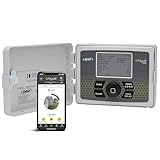
Overview: The Orbit B-hyve 6-Zone controller offers Wi-Fi-enabled smart irrigation for smaller yards, automating watering while adapting to local weather. Its dual indoor/outdoor design suits diverse installations without rewiring. What Makes It Stand Out: Weather-based adjustments and app control from anywhere are core strengths, but its true differentiator is flexible placement—operating reliably in garages, sheds, or covered outdoor areas. The intuitive B-hyve app simplifies scheduling and manual overrides. Value for Money: Priced mid-range, it delivers robust smart features typically found in costlier units. For 6-zone systems, it outperforms basic timers and matches competitors on weather intelligence, making it a cost-effective upgrade for modest landscapes. Strengths and Weaknesses: Strengths: Reliable weather adaptation; flexible indoor/outdoor housing; user-friendly app; supports drip irrigation. Weaknesses: Limited to 6 zones (unsuitable for larger properties); app occasionally lags during firmware updates; no advanced soil moisture integration. Bottom Line: An excellent budget-friendly smart controller for small to medium yards needing weather-responsive watering without complex installation.
2. Rachio WiFi Smart Sprinkler Controller (8-Zone Irrigation Remote Control) – App-Based Scheduling, Local Weather Intelligence, Rain Skips, Easy DIY Install
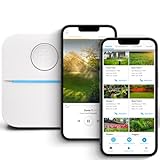
Overview: Rachio’s 8-zone controller modernizes irrigation with precise app-based scheduling and hyperlocal weather intelligence. It’s designed for DIYers seeking effortless installation and water savings for average-sized properties. What Makes It Stand Out: Rachio’s patented Weather Intelligence+ is industry-leading, skipping watering for rain, wind, and evaporation forecasts. Its “Flex Daily” scheduling dynamically adjusts runtimes based on real-time climate data, outperforming basic rain-skip systems. Value for Money: Slightly pricier than entry-level models, but justifies cost through superior water savings (up to 50% annually) and reliability. The robust app, no-subscription model, and 2-year warranty enhance long-term value over cheaper alternatives. Strengths and Weaknesses: Strengths: Best-in-class weather adaptation; intuitive app with usage tracking; easy DIY setup; freeze/rain/wind skips; strong third-party integrations (Alexa, Google). Weaknesses: 8-zone limit restricts larger yards; requires stable Wi-Fi; initial setup can confuse non-tech users. Bottom Line: The top choice for 8-zone systems prioritizing water efficiency, reliability, and seamless smart-home integration—ideal for eco-conscious homeowners.
3. Rachio WiFi Smart Sprinkler Controller (16-Zone Irrigation Remote Control) – App-Based Scheduling, Local Weather Intelligence, Rain Skips, Easy DIY Install

Overview: Rachio’s 16-zone model scales smart irrigation for larger properties, offering the same intelligent features as its 8-zone sibling but with double the capacity for expansive lawns or complex gardens. What Makes It Stand Out: It retains Rachio’s acclaimed Weather Intelligence+ while accommodating intricate landscapes. The “Seasonal Shift” feature automatically adjusts schedules as temperatures change, and its high-capacity design eliminates the need for multiple controllers. Value for Money: A premium investment, but essential for properties needing 9–16 zones. It prevents costly water waste through precise scheduling, recouping its price over time via utility savings. Beats multi-controller setups in simplicity and app cohesion. Strengths and Weaknesses: Strengths: Handles large properties effortlessly; advanced weather-based adjustments; unified app control for all zones; excellent grow-in scheduling for new lawns. Weaknesses: Highest price point in Rachio’s line; requires robust Wi-Fi coverage; installation complexity increases with zone count. Bottom Line: Unmatched for large yards demanding comprehensive smart control—worth the investment for serious landscapers seeking water efficiency at scale.
4. Orbit 57950 B-hyve 12-Zone Smart Indoor/Outdoor Sprinkler Controller
Overview: Orbit’s 12-zone B-hyve controller bridges mid-sized to large landscapes, combining weather-responsive automation with flexible indoor/outdoor mounting. It targets users needing more zones than the 6-zone model but avoiding Rachio’s premium pricing. What Makes It Stand Out: The 12-zone capacity at a sub-$150 price is its standout trait. Like other B-hyve units, it offers solid weather adaptation and app control but uniquely includes a weather-resistant outdoor housing—uncommon in this tier. Value for Money: Exceptional value for 9–12 zone systems. It undercuts Rachio by $40–$60 while delivering comparable core features (rain delay, custom schedules), making it the go-to for budget-conscious buyers with medium-large yards. Strengths and Weaknesses: Strengths: Affordable 12-zone capacity; durable outdoor-rated housing; simple app interface; supports drip zones. Weaknesses: Weather algorithms less refined than Rachio’s; app lacks detailed water usage analytics; occasional connectivity drops in humid conditions. Bottom Line: The smart pick for cost-effective automation on medium-large properties—sacrifices some precision for significant savings and versatile placement.
5. Orbit 57985 B-hyve XR 8-Zone Smart Indoor/Outdoor Sprinkler Controller

Overview: The B-hyve XR 8-Zone focuses on extended-range reliability for properties with spotty Wi-Fi, featuring enhanced signal reception while maintaining Orbit’s core weather-smart functionality for standard yards. What Makes It Stand Out: Its “XR” (Extended Range) technology ensures stable connectivity up to 300 feet from routers—critical for detached garages or backyard installations. Pairing this with underground system optimization sets it apart from standard models. Value for Money: Priced competitively with other 8-zone controllers, the XR’s superior connectivity justifies a slight premium over Orbit’s base model. It prevents costly signal boosters or repositioning, offering tangible ROI for challenging setups. Strengths and Weaknesses: Strengths: Best-in-class Wi-Fi range; weather-adaptive scheduling; flexible indoor/outdoor installation; easy retrofit for existing systems. Weaknesses: No zone-count advantage over standard Orbit; app less polished than Rachio’s; limited third-party smart-home support. Bottom Line: Essential for properties with weak Wi-Fi coverage—delivers reliable smart irrigation where competitors falter, though general users may prefer Rachio’s ecosystem.
6. Smart Sprinklers Controller 2.4GHz WiFi, Irrigation Controller Easy Use App Enabled, 4 Zone + 16 Plans, Save Water Auto Skip Rain, Freeze & Wind, 10 Minutes Install (Deep Grey)

Overview: This Hioazo smart controller modernizes lawn care with app-based management and weather intelligence. Designed for DIYers, it replaces traditional timers to automate irrigation across 4 zones using 2.4GHz WiFi connectivity, promising water conservation through adaptive scheduling.
What Makes It Stand Out: Its standout features include automatic rain/freeze/wind detection that skips watering to prevent waste, dual irrigation modes (Standard and Soak), and 16 customizable plans per zone. The claimed 10-minute installation and 99% compatibility with existing systems lower adoption barriers significantly.
Value for Money: Priced mid-range, it delivers exceptional value for small-to-medium yards. The water savings from weather adaptation offset the cost over time, outperforming basic timers while avoiding the premium of high-zone commercial units.
Strengths and Weaknesses: Strengths: Effortless setup; intuitive app; robust weather adaptation; dual watering modes; space-saving design. Weaknesses: Limited to 4 zones (unsuitable for large properties); 2.4GHz WiFi only (no 5GHz support); app stability occasionally inconsistent in user reports.
Bottom Line: An ideal entry-point smart controller for homeowners with modest yards seeking water efficiency and convenience. Its ease of use and reliable weather features make it a top recommendation for budget-conscious gardeners.
7. Orbit 57995 B-hyve XR 16-Zone Smart Indoor/Outdoor Sprinkler Controller
Overview: Orbit’s B-hyve XR is a high-capacity smart controller built for extensive landscapes, supporting 16 zones for both indoor and outdoor installation. It leverages WiFi for remote management and weather-based automation, targeting users with complex irrigation needs.
What Makes It Stand Out: The 16-zone capacity is its defining advantage, rare in residential controllers. It integrates hyperlocal weather data for dynamic scheduling, offers soil-type customization, and includes EPA WaterSense certification for verified efficiency—features typically found in commercial systems.
Value for Money: Justified for large properties where multi-zone control is essential. While pricier than 4-8 zone models, it eliminates the need for multiple controllers, saving long-term installation costs and streamlining management via one app.
Strengths and Weaknesses: Strengths: Unmatched 16-zone support; precise weather adjustments; durable outdoor-rated housing; detailed water usage reports. Weaknesses: Complex setup for non-technical users; premium price; bulkier design may not suit all garages.
Bottom Line: The premier choice for estates, farms, or avid gardeners with sprawling lawns. Its scalability and professional-grade features justify the investment for serious irrigation management.
8. Orbit 57925 B-hyve 8-Zone Smart Indoor Sprinkler Controller

Overview: This Orbit model delivers smart irrigation for mid-sized properties with 8 zones, designed exclusively for indoor mounting. It combines WiFi/Bluetooth connectivity with water-saving intelligence, emphasizing user-friendly app control for residential landscapes.
What Makes It Stand Out: Bluetooth pairing simplifies initial setup without immediate WiFi, while its compatibility with drip irrigation and multi-stream rotators enhances watering precision. The app provides plant-specific schedules and freeze/rain skip—tailored for diverse garden ecosystems.
Value for Money: Excellent for homeowners needing 6-8 zones. It undercuts competitors like Rain Bird on price while matching core features, and Orbit’s reputation for reliability ensures longevity that offsets the cost.
Strengths and Weaknesses: Strengths: Seamless Bluetooth/WiFi hybrid setup; versatile zone capacity; intuitive app with plant-type presets; compact indoor form factor. Weaknesses: Indoor-only (no weatherproofing); limited to 8 zones; app lacks advanced data analytics of premium models.
Bottom Line: A highly practical, mid-tier controller perfect for suburban homes. Its balance of flexibility, ease of use, and water efficiency makes it a standout for everyday gardeners.
9. Rain Bird ARC6 App-Based Indoor Smart WiFi Irrigation Sprinkler Timer/Controller, 6-Zone/Station, EPA WaterSense Certified, Compatible with Alexa, Indoor 6-Station

Overview: Rain Bird’s EPA WaterSense-certified ARC6 is a 6-zone indoor controller focused on eco-conscious precision. It integrates with smart home ecosystems and uses postal-code-level weather data to optimize watering, appealing to sustainability-focused users.
What Makes It Stand Out: Its EPA certification validates 30% water savings claims, while Alexa/Google Assistant compatibility enables voice control. Unique features include schedule sharing with landscapers and hyperlocal forecast integration—uncommon in its class.
Value for Money: Slightly premium but warranted by WaterSense credibility and robust third-party integrations. It outperforms generic brands in accuracy, making it cost-effective for users prioritizing conservation.
Strengths and Weaknesses: Strengths: Trusted water savings; seamless smart home integration; professional schedule sharing; reliable app performance. Weaknesses: Only 6 zones; indoor use restricts placement; installation slightly more complex than Hioazo.
Bottom Line: The best pick for eco-aware households wanting verified efficiency and smart home synergy. Its certification and sharing tools justify the price for conscientious gardeners.
10. Smart Sprinklers Controller WiFi, Irrigation Controller Easy Use App Enabled, 6 Zone + 16 Plans, Save Water Auto Skip Rain, Freeze & Wind, 10 Minutes Install

Overview: Another Hioazo model, this 6-zone controller builds on Product #6 with expanded capacity and a 5-year warranty. It retains weather-smart automation and app control, targeting users needing broader coverage without complex installation.
What Makes It Stand Out: The 6-zone support bridges a gap for larger yards, while the industry-leading 5-year warranty signals exceptional durability. Like its 4-zone sibling, it offers automatic weather adaptation and dual irrigation modes in a DIY-friendly package.
Value for Money: Superior longevity makes it cheaper per year than most competitors. The extra zones add versatility over Product #6 at minimal cost increase, offering the best ROI in Hioazo’s lineup for average-sized properties.
Strengths and Weaknesses: Strengths: Extended 5-year coverage; 6-zone flexibility; 10-minute install; effective rain/freeze skip; budget-friendly. Weaknesses: Still 2.4GHz-only WiFi; app lacks Rain Bird’s granular data; no outdoor housing option.
Bottom Line: The optimal Hioazo model for most homeowners—combining expanded capacity, outstanding warranty, and proven efficiency. Unbeatable for value-driven buyers seeking reliability.
Understanding Smart Irrigation: Beyond the Simple Timer
What Exactly Makes an Irrigation Controller “Smart”?
A smart irrigation controller fundamentally differs from traditional timers by connecting to the internet and utilizing external data. Instead of rigidly sticking to a pre-programmed schedule regardless of weather, soil conditions, or plant types, it dynamically adjusts watering based on real-time information. This intelligence translates into significant water savings, healthier plants, and elimination of the chore of constant manual adjustments, providing immediate value for new homeowners focused on establishing their property efficiently.
The Core Water-Saving Mechanism: Evapotranspiration (ET) Data
The most advanced controllers leverage Evapotranspiration (ET) data, a scientific measurement of the combined water loss from soil (evaporation) and plants (transpiration). By accessing hyper-local weather data or on-site sensors, the controller calculates daily ET rates. This allows it to precisely determine how much water your specific landscape actually needs to replace what was lost, preventing both underwatering stress and the massive waste associated with overwatering. Understanding if a controller utilizes accurate, localized ET is crucial for true efficiency.
Why Weather Integration is Non-Negotiable
Basic rain delay features are insufficient. Truly smart controllers integrate with reliable, localized weather services (or on-site weather stations) to automatically pause watering not just during rain, but also during periods of high humidity, sustained cloud cover, or extreme heat that significantly alters plant water needs. This real-time responsiveness is the cornerstone of preventing runoff and ensuring every drop counts, a vital feature for the environmentally conscious new homeowner.
Key Features New Homeowners Should Prioritize
User-Friendly App Experience and Remote Access
As a new homeowner likely juggling many responsibilities, a controller’s companion app must be intuitive, reliable, and offer genuine remote control. Look for apps that allow easy schedule adjustments, instant manual watering from anywhere, clear water usage reports, and straightforward system diagnostics. A complicated app defeats the purpose of smart convenience; seamless mobile integration is essential for fitting irrigation management into your busy life.
Simplified Installation and Compatibility
Worrying about complex wiring or incompatible valve types adds unnecessary stress. Prioritize controllers designed for straightforward DIY installation, often featuring clear step-by-step guides within the app and compatibility with standard 24V AC irrigation systems (the most common type in residential settings). Features like pre-wired harnesses or intuitive terminal labeling significantly reduce installation time and frustration for the novice.
Essential Sensor Integration Capabilities
While the controller itself is the brain, its effectiveness hinges on input from sensors. Ensure it supports critical add-ons: a reliable rain/freeze sensor (often required by local ordinances) to halt watering during precipitation or freezing temps, and crucially, the ability to integrate with soil moisture sensors. Soil sensors provide direct feedback on actual root zone conditions, offering the most precise watering control possible and preventing water waste in specific zones.
Zone Management and Scheduling Flexibility
Your new property likely has diverse areas – a sunny front lawn, shaded backyard beds, maybe a vegetable patch. A robust controller must allow granular control over individual zones, enabling you to set different watering durations, frequencies, and start times based on sun exposure, soil type, and plant varieties. Flexible scheduling options, including seasonal adjustment percentages and advanced start time staggering to manage water pressure, are vital for landscape health.
Water Usage Monitoring and Reporting
Visibility into consumption is key for understanding impact and identifying potential issues. Controllers that provide detailed water usage reports, broken down by zone or time period, empower you to track savings, spot anomalies (like a sudden spike indicating a leak), and make informed adjustments. Clear, visual data within the app turns abstract “water savings” into tangible results on your utility bill.
Installation and Setup Considerations for New Homes
Assessing Your Existing Irrigation System
Before purchasing, take inventory of your current setup. Note the number of irrigation zones, the type of controller (if any), and the wiring condition. This determines compatibility and potential installation complexity. New homeowners should be aware that while smart controllers work with most standard systems, very old wiring might need inspection or replacement for optimal performance and safety.
Wi-Fi Requirements and Signal Strength
Reliable internet connectivity is the lifeblood of a smart controller. Evaluate your Wi-Fi coverage in the location where the controller will be installed (typically a garage, basement, or utility closet). Weak signals can cause connectivity drops, disrupting weather updates and remote access. Consider a Wi-Fi extender if necessary, as a stable connection is non-negotiable for core smart functionality.
Power Source Options and Reliability
Most smart controllers require a standard 24V AC power source, commonly found at existing irrigation controller locations. However, some newer models offer battery backup options to retain settings and schedules during brief power outages. For new homeowners, understanding the power requirements and ensuring a stable source prevents system resets and missed watering cycles, especially during critical establishment periods for new lawns or plants.
Maximizing Benefits and Long-Term Value
Leveraging Seasonal Adjustments and Customization
Smart controllers shine with automatic seasonal adjustment, but they also allow manual fine-tuning. Learn how to easily increase or decrease watering for an entire system or individual zones as your landscape matures, seasons change, or you add new plantings. This customization ensures your system evolves with your property, protecting your investment in new sod, trees, or garden beds.
Utilizing Maintenance Alerts and Leak Detection
Advanced systems can monitor flow rates and pressure. If a significant deviation occurs (indicating a broken sprinkler head, mainline break, or stuck valve), the controller can send an immediate alert to your phone. For the new homeowner, this proactive notification can prevent thousands of gallons of wasted water and costly landscape damage before it becomes a major disaster, offering invaluable peace of mind.
Understanding Warranty and Support Structure
As a new homeowner investing in home systems, reliable support matters. Investigate the manufacturer’s warranty length and coverage specifics. Equally important is the quality and accessibility of customer support – look for readily available resources like detailed online help centers, video tutorials, and responsive customer service channels. Strong support ensures you’re not left stranded if technical questions arise during setup or operation.
Future-Proofing with Smart Home Ecosystems
Consider how the controller integrates with broader smart home platforms you might adopt (like voice assistants or home automation hubs). While not essential day one, compatibility with ecosystems such as Apple HomeKit, Google Home, or Amazon Alexa can add layers of convenience down the line, allowing voice commands or integration into larger automation routines, enhancing the long-term value of your purchase.
Cost Considerations and Return on Investment
Evaluating the Initial Investment vs. Long-Term Savings
Smart controllers represent a higher upfront cost than basic timers, but the return on investment through reduced water bills is often substantial and relatively quick. New homeowners should calculate potential savings based on local water rates and typical outdoor usage. Factor in not just the controller cost, but also potential rebates from local water authorities, which are increasingly common for water-efficient technologies.
Hidden Savings Beyond the Water Bill
The value extends far beyond lower utility costs. Consider the saved time previously spent manually adjusting schedules, the reduced risk of landscape damage from over/underwatering (saving on plant replacement and potential erosion repair), and the avoidance of municipal fines for watering during drought restrictions. These tangible and intangible benefits significantly enhance the overall ROI for a new property owner.
Frequently Asked Questions
How much water can I realistically expect to save with a smart controller?
Most studies and user reports indicate average water savings between 15% and 30% compared to traditional timer-based systems, primarily by eliminating watering during or after rain and optimizing schedules based on actual weather and soil conditions. Savings can be even higher in regions with variable weather or for systems previously under-managed.
Do I need professional installation, or can I do it myself as a new homeowner?
Many modern smart controllers are explicitly designed for DIY installation by homeowners with basic electrical awareness, often taking under an hour. They typically connect to existing wiring. However, if your current system wiring is damaged, outdated, or you’re uncomfortable with electrical connections, hiring a licensed irrigation professional is recommended for safety and proper setup.
Will a smart controller work if my Wi-Fi goes down?
During a temporary Wi-Fi outage, the controller will usually default to its last saved schedule to prevent your landscape from drying out. However, it won’t receive weather updates or allow remote access until connectivity is restored. Most retain settings through brief power outages if they have battery backup. Long-term outages negate the “smart” features.
Are soil moisture sensors worth the extra cost?
For maximizing water efficiency and landscape health, especially in areas with varied soil types or microclimates, soil moisture sensors are highly valuable. They provide direct feedback, preventing watering when soil is already sufficiently moist. While the base controller offers significant savings, adding sensors targets water use even more precisely, often justifying the additional investment.
Can smart controllers handle complex landscapes with different plant types?
Yes, this is a key strength. They allow you to program individual watering schedules, durations, and start times for each zone. You can set shorter, more frequent cycles for shallow-rooted plants in one zone and deeper, less frequent watering for trees in another, tailoring irrigation precisely to the diverse needs found in most new homeowner landscapes.
How do these controllers handle freezing temperatures?
Reputable smart controllers integrate with freeze sensors or use weather service data to automatically suspend watering when temperatures are forecast to drop near or below freezing. This prevents water from being applied that could freeze on surfaces (creating ice hazards) or damage pipes and sprinkler heads, a critical feature for new homeowners in colder climates.
Are there rebates available for purchasing a smart irrigation controller?
Absolutely. Many municipal water districts and state water agencies offer significant rebates or incentives to promote water conservation. Check the websites of your local water utility or state’s water resources department, or look for rebate information directly on major smart controller manufacturer websites. These can substantially reduce the upfront cost.
How often do I need to adjust the settings after initial setup?
The beauty of a good smart controller is minimal ongoing adjustment. After the initial setup (defining zones, plant types, soil, slope), the system should automatically handle daily scheduling based on weather. You might make seasonal tweaks (e.g., a slight increase during peak summer heat) or adjust if you significantly change your landscape, but constant manual intervention shouldn’t be necessary.
Can I control multiple irrigation systems (e.g., front and back yard on separate timers) with one app?
This depends on the specific controller model and brand. Some higher-end or newer systems allow managing multiple controller units (e.g., one for the front yard, one for the back) through a single unified app interface. Check the manufacturer’s specifications regarding multi-controller support if you have a large or segmented property.
What happens during a power outage? Will I lose my settings?
Most smart controllers have internal memory that retains all settings and schedules through short power outages. Many also offer optional battery backup (either included or as an add-on) to maintain the real-time clock during extended outages, ensuring watering resumes correctly once power is restored without needing a full reprogramming. Always verify the specific model’s outage protection features.