Imagine snapping your fingers or whispering a command to transform your living room from a bright workspace to a cozy movie den. For voice control enthusiasts, this isn’t science fiction—it’s the everyday magic that smart light switches bring to modern homes. Gone are the days of fumbling for physical toggles in the dark or interrupting your flow just to adjust the ambiance. Voice-activated lighting offers unparalleled convenience, accessibility, and a touch of futuristic flair that seamlessly integrates into your daily routines. Whether you’re hands-full cooking dinner, settling in for bedtime, or simply craving a more intuitive home environment, the ability to control your lights through natural speech commands elevates your entire living experience.
Yet, diving into the world of smart switches can feel overwhelming. With a dizzying array of options promising seamless voice integration, it’s easy to get lost in technical jargon and conflicting claims. Are all voice commands truly responsive? Will the switch work flawlessly with your existing smart home ecosystem? How much effort does setup really require? The truth is, not all smart switches are created equal when it comes to voice control performance, reliability, and long-term compatibility. Choosing the right one requires understanding the underlying technology, compatibility requirements, and key features that separate a frustrating gimmick from a genuinely indispensable part of your smart home. This guide cuts through the noise, focusing squarely on what matters most for enthusiasts who prioritize effortless, reliable voice interaction with their lighting.
Top 10 Smart Light Switches
Detailed Product Reviews
1. GHome Smart Switches for Lights, WiFi Smart Light Switch Works with Alexa and Google Home, Single-Pole, Neutral Wire Required, 2.4Ghz WiFi Light Switch with APP Control, No Hub Required, UL FCC Listed

Overview: The GHome Smart Switch replaces traditional light switches, enabling Wi-Fi control via the GHome app (SW5) without a hub. Requiring a neutral wire and 2.4GHz Wi-Fi, it handles up to 1800W loads and integrates with Alexa/Google Assistant for voice commands. UL/FCC certification ensures safety compliance for 120V household use.
What Makes It Stand Out: Its standout feature is the high 1800W capacity, surpassing many competitors, making it suitable for larger lighting setups. The dedicated scheduling for sunrise/sunset automation (e.g., porch lights at specific offsets) offers nuanced control. Included jumper wires simplify installation, though compatibility excludes smart bulbs.
Value for Money: Priced competitively, it delivers robust functionality without subscription fees. While similar switches exist, the higher wattage rating and precise scheduling justify its cost for users with demanding lighting needs, though the neutral wire requirement may necessitate professional installation.
Strengths and Weaknesses: Strengths: High 1800W capacity, intuitive sunrise/sunset scheduling, UL/FCC safety certifications, group control via app. Weaknesses: 2.4GHz Wi-Fi only (no 5GHz support), neutral wire mandatory (excludes older homes), app limited to SW5 model, jumper wires incompatible with smart bulbs.
Bottom Line: Ideal for tech-savvy homeowners seeking high-wattage control and granular scheduling. Its safety certifications and strong capacity make it a reliable choice, but neutral-wire dependency limits retrofit potential. Recommended for new installations.
2. Kasa Smart Light Switch HS200, Single Pole, Needs Neutral Wire, 2.4GHz Wi-Fi Light Switch Works with Google Home, UL Certified, No Hub Required, White

Overview: The Kasa HS200 is a single-pole smart switch requiring a neutral wire and 2.4GHz Wi-Fi. Controlled via the Kasa app or voice assistants (Alexa/Google), it offers remote access, scheduling, and UL-certified safety. Designed for simplicity, it targets users upgrading standard switches without hub complexity.
What Makes It Stand Out: Kasa’s app-guided installation simplifies setup, even for beginners, while its “Away Mode” randomly toggles lights to deter burglars—a security edge over basic scheduling. Backed by 4+ million users and Silicon Valley engineering, it balances reliability with intuitive automation.
Value for Money: Excellent value for a standalone switch. The robust app, voice control, and security-focused “Away Mode” outperform cheaper alternatives, while UL certification ensures longevity. Slightly pricier than no-name brands, but justified by trust and seamless ecosystem integration.
Strengths and Weaknesses: Strengths: User-friendly app setup, effective “Away Mode,” reliable voice/app control, UL safety certified, broad device compatibility. Weaknesses: Neutral wire essential (not retrofit-friendly), 2.4GHz Wi-Fi only, no physical dimming control, requires electrician for non-experts.
Bottom Line: A top pick for hassle-free smart lighting. Its security features and polished app make it worth the investment for neutral-wire homes. Avoid if your wiring lacks a neutral line, but otherwise, it’s a dependable, no-fuss upgrade.
3. Kasa Smart Light Switch HS200P3, Single Pole, Needs Neutral Wire, 2.4GHz Wi-Fi Light Switch Compatible with Alexa and Google Home, UL Certified, No Hub Required, 3 Count -Pack of 1 , White

Overview: This Kasa HS200P3 bundle includes three identical single-pole smart switches, each requiring a neutral wire and 2.4GHz Wi-Fi. Sharing the HS200’s core features—app/voice control, scheduling, and UL certification—it’s designed for multi-room setups without hub dependency.
What Makes It Stand Out: The 3-pack offers exceptional convenience for whole-home automation, eliminating per-switch setup redundancy. Unified control via the Kasa app lets users manage all switches simultaneously, while “Away Mode” and sunrise/sunset scheduling provide cohesive security and energy savings across rooms.
Value for Money: Highly cost-effective for outfitting multiple rooms. Buying individually would cost 20-30% more; this bundle delivers uniform performance at a discount. Ideal for new builds or renovations where multiple switches are upgraded together, maximizing long-term utility.
Strengths and Weaknesses: Strengths: Bulk savings for multi-room use, consistent performance across units, seamless group scheduling, reliable voice/app integration. Weaknesses: Neutral wire needed for all switches, no dimming capability, identical limitations as single HS200 (2.4GHz only).
Bottom Line: The best value for comprehensive home automation. If you’re upgrading several switches, this pack saves money and simplifies management. Stick to the single HS200 if only one room needs smart lighting.
4. Kasa Smart Switch 2-Gang HS200-2, Single Pole,Neutral Wire Required, 2.4GHz Wi-Fi Light Switch Compatible with Alexa and Google Home, UL Certified, No Hub Required, White

Overview: The Kasa HS200-2 is a dual-switch unit controlling two separate circuits from one panel. Requiring a neutral wire and 2.4GHz Wi-Fi, it replaces traditional 2-gang switches with app/voice control, scheduling, and UL-certified safety—all without a hub.
What Makes It Stand Out: Its 2-gang design consolidates control of two lights (e.g., room + fan) into a sleek, flush-mount unit—unlike pairing two single switches. The Kasa app simplifies complex wiring guidance, while “Away Mode” and dual-circuit scheduling offer unique flexibility for layered automation.
Value for Money: Justifiable for spaces needing dual controls (e.g., kitchens, entries). Avoids buying/mounting two singles, saving space and installation time. Priced higher than single switches but economical versus separate units, especially with professional installation.
Strengths and Weaknesses: Strengths: Space-saving 2-gang design, intuitive app-guided wiring, independent circuit scheduling, robust “Away Mode,” UL safety. Weaknesses: Neutral wire mandatory for both circuits, 2.4GHz Wi-Fi limitation, higher upfront cost than singles.
Bottom Line: Essential for dual-light setups where aesthetics and simplicity matter. The streamlined installation and unified control justify its niche appeal, though neutral-wire dependency remains a barrier for older homes.
5. TP-Link Tapo Smart Light Switch, Single Pole, Neutral Wire Required, 2.4GHz Wi-Fi Light Switch Compatible with Alexa and Google Home, UL Certified, No Hub Required, White, Tapo S500(4-Pack)

Overview: The Tapo S500 4-pack delivers four single-pole smart switches requiring neutral wiring and 2.4GHz Wi-Fi. Controlled via the Tapo app or voice assistants, they feature scheduling, “Away Mode,” and UL certification, targeting users seeking budget-friendly whole-home coverage.
What Makes It Stand Out: The 4-pack is its biggest draw, offering the lowest per-unit cost among listed options. Tapo’s app provides identical functionality to Kasa (TP-Link’s sister brand) but with a 2-year warranty—longer than competitors—and 8M+ user trust, emphasizing reliability.
Value for Money: Unbeatable for large-scale deployments. At ~$15/unit, it undercuts Kasa bundles while matching core features. The extended warranty and no-hub design ensure long-term savings, making it ideal for cost-conscious users upgrading multiple rooms.
Strengths and Weaknesses: Strengths: Lowest per-switch price, 2-year warranty, easy app setup, effective “Away Mode,” strong brand trust. Weaknesses: Neutral wire required, Tapo app less polished than Kasa’s, no dimming, 2.4GHz Wi-Fi only.
Bottom Line: The go-to for affordable, scalable smart lighting. If you need four+ switches and prioritize value over premium app experience, this pack is a smart, future-proof investment.
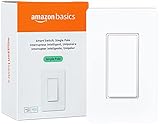
6. Amazon Basics Smart Light Switch, Single Pole, Works with Alexa Only, Voice Control, Schedule, 2.4 GHz Wi-Fi, No Hub Required, Easy to Install, White
Overview:
This budget-friendly smart switch replaces standard wall switches, enabling Alexa voice control and scheduling for lights. It requires no hub, connects directly to 2.4 GHz Wi-Fi, and targets Alexa-centric households seeking a simple, affordable smart lighting entry point.
What Makes It Stand Out:
Its exclusivity to Alexa simplifies setup and reduces cost, while guided installation (via video/manual) lowers barriers for DIYers. The no-hub requirement and seamless Alexa Routine integration for scheduling—like automating lights when away—make it ideal for Amazon ecosystem users prioritizing ease over cross-platform flexibility.
Value for Money:
Priced significantly lower than multi-platform competitors, it delivers core smart functionality (voice control, scheduling) without bloat. Though limited to Alexa, it’s exceptional value for Amazon households avoiding hub costs, though non-Alexa users should consider alternatives.
Strengths and Weaknesses:
Strengths: Ultra-affordable; truly hub-free; straightforward Alexa integration; simple installation guides. Weaknesses: Alexa-only compatibility (no Google/Siri); lacks neutral wire support for advanced features; limited scheduling granularity compared to premium apps.
Bottom Line:
A no-frills, cost-effective solution for Alexa users needing basic voice/scheduled light control. Avoid if you use Google Home or Apple HomeKit; otherwise, it’s a reliable entry-level upgrade.
7. Kasa Matter Smart Light Switch: Voice Control w/Siri, Alexa & Google Assistant, UL Certified, Timer & Schedule, Easy Guided Install, Neutral Wire Required, Single Pole, 2.4GHz Wi-Fi, 3-Pack

Overview:
This 3-pack leverages Matter protocol for universal smart home compatibility, supporting Siri, Alexa, Google Assistant, and SmartThings. It requires a neutral wire and offers app-guided installation, advanced scheduling, and LAN-based offline control.
What Makes It Stand Out:
Matter protocol is its crown jewel—enabling true cross-platform control (e.g., dimming via Alexa while monitoring in Apple Home) and offline LAN operation. Multi-Admin support lets multiple hubs manage one switch, while Away Mode randomizes lighting to deter burglars.
Value for Money:
The 3-pack price undercuts buying singles elsewhere, offering premium Matter features at mid-range cost. Neutral wire requirement limits retrofitting, but for new builds or compatible homes, it’s future-proof value against single-ecosystem switches.
Strengths and Weaknesses:
Strengths: Unmatched Matter compatibility; offline LAN control; robust Away Mode; 3-pack savings; intuitive app setup. Weaknesses: Mandatory neutral wire excludes older homes; no dimming; initial Matter setup can confuse beginners.
Bottom Line:
Essential for multi-ecosystem smart homes seeking reliability and flexibility. The neutral wire caveat aside, it’s a top-tier investment for seamless, hub-agnostic lighting control.
8. Kasa Smart Light Switch HS200-LA, Light Almond, Single Pole,Neutral Wire Required, 2.4GHz Wi-Fi Light Switch Compatible with Alexa and Google Home, UL Certified, No Hub Required

Overview:
This single-pole switch in light almond offers Kasa’s reliable smart control with Alexa/Google compatibility. It requires a neutral wire and 2.4 GHz Wi-Fi, featuring app-guided installation, scheduling, and Away Mode for security.
What Makes It Stand Out:
The light almond finish caters to decor-focused users, while Kasa’s polished app provides granular scheduling (e.g., sunrise-triggered routines) and Away Mode’s randomized lighting. Direct phone/app control without hubs ensures responsiveness, even when internet falters locally.
Value for Money:
Priced competitively against similar non-Matter switches, it excels in Kasa’s ecosystem with no hidden fees. Neutral wire dependency is a limitation, but the durable build and consistent performance justify the cost for Google/Alexa households.
Strengths and Weaknesses:
Strengths: Elegant light almond design; user-friendly Kasa app; reliable voice control; strong Away Mode; no subscription fees. Weaknesses: Neutral wire essential (not universal); no Matter support; limited to 2.4 GHz Wi-Fi.
Bottom Line:
A stylish, dependable choice for neutral-wire homes invested in Alexa or Google ecosystems. Skip if you need Matter compatibility; otherwise, it’s a polished, decor-friendly workhorse.
9. Kasa Smart Dimmer Switch HS220P3, Single Pole, Needs Neutral Wire, 2.4GHz Wi-Fi Light Switch Works with Alexa and Google Home, UL Certified,, No Hub Required, 3-Pack

Overview:
This 3-pack dimmer switch adds brightness control to Kasa’s smart lineup, compatible with Alexa/Google. It requires a neutral wire, offers app-guided setup, and enables precise dimming schedules for ambiance-focused lighting.
What Makes It Stand Out:
True 0%-100% dimming with customizable fade effects (e.g., double-click to fade off at bedtime) sets it apart. The Kasa app allows sunrise-simulated wake-up routines, while physical button shortcuts enhance usability without voice/app reliance.
Value for Money:
The 3-pack bundles premium dimming functionality at a per-unit cost lower than many competitors. Neutral wire necessity narrows its audience, but for those eligible, it’s a cost-efficient path to whole-home dimmable lighting without hubs.
Strengths and Weaknesses:
Strengths: Smooth, full-range dimming; intuitive physical button controls; versatile scheduling; robust 3-pack value; no hub needed. Weaknesses: Neutral wire required; no Matter support; slight delay in voice-command response.
Bottom Line:
The best dimmer option here for Alexa/Google users seeking ambiance control. Prioritize neutral-wire verification, but if compatible, it’s a versatile, budget-smart upgrade for layered lighting.
10. TP-Link Tapo Matter Smart Light Switch: Voice Control w/Siri, Alexa & Google Assistant | UL Certified | Timer & Schedule | Easy Guided Install | Neutral Wire Required | Single Pole | Tapo S505

Overview:
Tapo’s S505 brings Matter protocol to TP-Link’s ecosystem, supporting Siri, Alexa, Google, and SmartThings. It requires a neutral wire and offers app-based scheduling, LAN control, and Matter’s multi-admin flexibility.
What Makes It Stand Out:
As Tapo’s first Matter switch, it bridges Kasa’s reliability with Matter’s cross-platform magic. Offline LAN operation ensures lights stay controllable during internet outages, while Multi-Admin lets you toggle lights via multiple apps simultaneously—e.g., Alexa voice + SmartThings app.
Value for Money:
Competitively priced for Matter entry, it avoids Kasa’s premium markup while delivering identical protocol benefits. Neutral wire dependency is the sole caveat, but for future-proofing a smart home, it’s a savvy, mid-tier investment.
Strengths and Weaknesses:
Strengths: Full Matter compatibility; seamless multi-app control; offline LAN functionality; Tapo app simplicity; strong security (UL certified). Weaknesses: Neutral wire mandatory; Tapo app less feature-rich than Kasa’s; no dimming.
Bottom Line:
A streamlined Matter gateway for multi-platform users. Choose over Kasa if you prefer Tapo’s interface or seek Matter at a slight discount—just confirm neutral wire availability first.
Understanding Voice Control Compatibility
Decoding Smart Home Ecosystems
Your chosen switch must speak the same language as your voice assistant. This means verifying deep integration with platforms like Amazon Alexa, Google Assistant, or Apple HomeKit/Siri. Look beyond basic “works with” badges; true compatibility ensures you can use natural language commands (“Alexa, set the living room to 50%”), control individual switches within groups, and leverage advanced routines without constant workarounds. Compatibility isn’t just about initial setup—it’s about sustained, feature-rich interaction.
The Critical Role of Local vs. Cloud Processing
Voice command responsiveness hinges on where processing happens. Switches relying solely on cloud processing (commands sent to a remote server) can suffer from delays, especially during internet outages. Prioritize models supporting local processing where possible—commands are handled directly by your home hub or the switch itself. This results in near-instantaneous responses (“Turn on kitchen lights” happens now, not after a lag) and ensures functionality even when your internet is down, a crucial factor for reliability.
Matter Protocol: Future-Proofing Your Investment
The emergence of the Matter standard is a game-changer. Matter-enabled smart switches promise simplified setup, enhanced security, and crucially, unified voice control across different ecosystems (Alexa, Google, Siri) using a single device. While full ecosystem maturity is ongoing, prioritizing Matter-compatible switches ensures your voice control experience remains robust and adaptable as smart home standards evolve, protecting your investment well beyond 2026.
Essential Features for Voice Control Enthusiasts
Ultra-Responsive Command Recognition
Speed and accuracy are non-negotiable. A premium voice-controlled switch should recognize commands instantly, even with moderate background noise, and handle nuanced requests (“Dim the bedroom to sunset level”). Pay attention to user reviews specifically mentioning voice response times and accuracy in real-world settings—lab specs often don’t reflect kitchen chaos or living room conversations.
Granular Control and Scene Integration
True voice mastery goes beyond simple on/off. Look for switches that allow precise dimming levels via voice (“Set dining room to 30%”), control multiple switches simultaneously (“Turn off all downstairs lights”), and integrate seamlessly into complex smart scenes (“Alexa, start Movie Night” dims specific lights and adjusts others). The ability to name switches intuitively (“This is the ‘Reading Lamp’ switch”) prevents frustrating misidentification during commands.
Hands-Free Activation and Far-Field Microphones
For the ultimate convenience, consider switches paired with compatible hubs or systems featuring always-on, far-field microphones. This allows true hands-free activation (“Hey Google, turn on hallway”) without needing to press a button first, even from across the room. Evaluate microphone sensitivity and range—can it hear you clearly from your couch during dinner, or only when you’re standing right next to it?
Installation and Setup Considerations
Electrical Requirements and DIY Feasibility
Not all homes are wired for smart switches. Many require a neutral wire for power, which older homes often lack. Some models offer neutral-wire-free options but may have limitations (like slight flicker with certain bulbs or incompatible with low-wattage LEDs). Honestly assess your electrical setup and comfort level; complex wiring might necessitate an electrician, impacting your overall cost and timeline. Don’t assume DIY is always straightforward.
App Integration and Initial Configuration
The companion app is your command center for setup and voice assistant linking. A well-designed app streamlines pairing with your voice platform, allows precise naming of switches (“Master Bedroom Right Lamp” vs. just “Switch 1”), and enables scheduling or automation creation that voice commands then trigger. Test the app interface in reviews—clunky apps lead to frustration before you even get to voice control.
Network Stability and Bandwidth Impact
Smart switches rely on your home Wi-Fi or a dedicated hub protocol (like Zigbee or Thread). Overloading your Wi-Fi with too many devices can cause voice command delays or failures. For larger installations, switches using mesh protocols (Zigbee, Thread, or Matter over Thread) connected to a central hub often provide more reliable, lower-bandwidth communication, ensuring your voice commands cut through the network noise consistently.
Long-Term Reliability and User Experience
Firmware Updates and Manufacturer Support
Voice control features evolve. A manufacturer committed to regular firmware updates ensures your switch gains new voice command capabilities, improves recognition accuracy, and maintains compatibility with the latest voice assistant versions. Research the brand’s track record—do they actively support devices for 3, 5, or more years? Abandoned products quickly become voice control dead ends.
Physical Switch Quality and Tactile Feedback
Even with voice control, you’ll occasionally use the physical toggle. High-quality switches feature durable mechanisms with satisfying, quiet clicks and no wobble. Crucially, they should provide clear visual or haptic feedback when toggled physically, syncing instantly with the smart system so voice commands (“Is the light on?”) remain accurate. Cheap mechanisms feel flimsy and wear out, disrupting the seamless experience.
Privacy Safeguards for Voice Interaction
Voice-controlled devices raise privacy questions. Understand how the switch and its associated platform handle your voice data. Does it process locally by default? Can you easily review and delete voice recordings? Are there physical mute buttons for microphones if the switch includes them? Prioritize brands with transparent, robust privacy policies, especially for devices constantly listening in your living spaces.
Advanced Capabilities Worth Exploring
Multi-Assistant Support Without Compromise
Some advanced setups allow a single switch to respond to commands from multiple voice assistants (e.g., both Alexa and Google Assistant on the same circuit). This is invaluable in households with divided loyalties or specific assistant preferences per room. Verify that multi-assistant support doesn’t degrade performance or limit feature access compared to single-ecosystem use.
Adaptive Lighting and Voice Synergy
Imagine voice commands that adjust not just brightness but also color temperature to match the time of day or your activity (“Set kitchen to energizing white”). Switches with tunable white or full-color capabilities, when combined with voice control, offer sophisticated ambiance management. Ensure the voice platform fully supports these nuanced adjustments without requiring complex app navigation first.
Energy Monitoring and Voice-Activated Insights
High-end switches can track real-time and historical energy usage per circuit. The next level is voice integration: “Hey Google, how much energy did the living room lights use yesterday?” or “Alexa, did I leave any lights on upstairs?”. This transforms voice control from simple operation into a tool for awareness and potential savings, adding significant value beyond basic convenience.
Navigating Common Voice Control Pitfalls
Mitigating False Triggers and Accidental Activation
“Hey Siri, turn off!” – accidental activations are the bane of voice control. Look for switches/hubs with adjustable sensitivity settings, customizable wake words, or the ability to require a physical button press before listening. Features like “voice confirmation” for critical commands (e.g., “Turn off all lights? Yes.”) prevent disruptive mishaps, especially in noisy households.
Troubleshooting Unresponsive Commands
When voice control fails, know where to look. Is it the switch, the voice assistant app, your network, or the cloud service? A good diagnostic starting point is checking if the switch is responsive via its app—this isolates the issue. Understanding basic network troubleshooting (rebooting router/hub) and voice platform-specific quirks (re-linking accounts) saves immense frustration and is often essential for sustained reliability.
Managing Complex Multi-Switch Environments
Controlling dozens of switches via voice demands excellent organization. Invest time in clear, logical naming conventions within your voice assistant app (“Upstairs Hallway Light” not “Light 7”). Utilize room grouping effectively so “Turn off the bedroom lights” affects only intended switches. Poor organization leads to constant correction (“No, the other bedroom!”), undermining the convenience voice control promises.
Frequently Asked Questions
How do I know if my home’s wiring supports a smart light switch?
Check for the presence of a neutral wire (usually white) in your switch box; most modern smart switches require it for reliable operation. If absent, research specific neutral-wire-free models, but be aware of potential limitations with certain bulb types or dimming performance. When in doubt, consult a qualified electrician.
Will a smart switch work with my voice assistant if my internet is down?
Only if the switch and your voice assistant hub support local processing. Cloud-dependent switches will be unresponsive during internet outages. Look for Matter-over-Thread devices or switches explicitly stating local execution capabilities for essential voice commands like on/off.
Can I use voice control to set specific dimming levels easily?
Yes, most quality voice-controlled switches allow precise dimming via voice commands like “Set kitchen lights to 40%.” Ensure your chosen switch and voice platform support granular percentage control for the best experience, as some may only offer vague terms like “medium bright.”
Do I need a separate hub for voice-controlled smart switches?
It depends. Wi-Fi switches connect directly to your router and work with voice assistants without an extra hub. However, switches using Zigbee or Thread protocols require a compatible hub (like those built into Echo devices, Nest Hubs, or Apple TVs) to bridge communication with your voice assistant for optimal reliability and features.
How can I prevent my smart switch from responding to TV shows or radio?
Adjust the sensitivity settings in your voice assistant app if available. Choose wake words less likely to appear in media. Some advanced hubs allow “voice isolation” features or require a physical button press before listening. Proper speaker placement relative to the hub/microphone also helps minimize false triggers.
Are voice-controlled switches secure from eavesdropping?
Reputable brands employ encryption for data in transit and storage. Review privacy settings within your voice assistant app to control data retention and access. Look for switches that offer physical microphone mute buttons if privacy is a top concern, though many rely solely on software toggles.
Will smart switches work with my existing dimmable LED bulbs?
Compatibility is crucial. Not all LED bulbs are compatible with all smart switch dimmers, potentially causing flickering, buzzing, or limited dimming range. Always check the switch manufacturer’s compatibility list for specific bulb models before purchasing both components.
Can I control multiple smart switches with one voice command?
Absolutely. Grouping switches within your voice assistant app (e.g., “Living Room Lights” group) allows commands like “Alexa, turn off Living Room Lights” to affect all grouped switches simultaneously. Proper naming and grouping are essential for smooth multi-switch voice control.
How often do smart light switches need firmware updates?
Frequency varies by manufacturer, but expect critical security updates every few months and feature updates potentially once or twice a year. Choose brands known for consistent, long-term support to ensure your voice control capabilities remain up-to-date and secure.
What’s the biggest mistake people make when setting up voice-controlled lighting?
Skipping thorough naming and organization within the voice assistant app. Vague names like “Switch 1” lead to constant confusion and failed commands. Take time to assign clear, descriptive names and organize switches into logical rooms/groups for truly intuitive voice control.