Imagine coming home after a long day, hands full of groceries, only to fumble for keys that inevitably end up buried at the bottom of your bag. Or worse, realizing you left the front door unlocked while you’re already halfway to work. These everyday frustrations are precisely why smart locks have moved from futuristic novelty to essential home security component. They promise seamless access, remote control, and peace of mind that traditional keys simply can’t match. But with so many options flooding the market, how do you cut through the tech jargon and marketing hype to find the solution that truly fits your home and lifestyle? It’s not just about buying the latest gadget; it’s about making a strategic investment in your security and daily convenience.
The landscape of home security is evolving rapidly, and smart locks sit squarely at the intersection of safety and modern living. However, diving headfirst into this world without understanding the critical factors can lead to disappointment, wasted money, or even unintentionally compromising your security. Choosing the wrong lock might mean battling constant connectivity issues, struggling with complex installations, or discovering too late that it doesn’t integrate with your existing smart home ecosystem. This guide cuts through the noise, focusing solely on the universal considerations every homeowner must evaluate before making a decision. Forget chasing fleeting “best of” lists; let’s build a foundation for finding the lock that works flawlessly for your unique situation.
Top 10 Smart Locks
Detailed Product Reviews
1. eufy Security Smart Lock C220, Fingerprint Keyless Entry Door Lock, Built-in Wi-Fi, App Remote Control, Front Door Smart Lock Deadbolt, 8Months Battery, Reliable Power, IP53 Waterproof, BHMA Grade 3

Overview: The eufy C220 is a keyless smart deadbolt offering fingerprint recognition, app control, and multiple access methods for modern home security. Designed for front doors, it eliminates physical keys while prioritizing reliability through extended battery life and weather resistance.
What Makes It Stand Out: Its self-learning AI fingerprint sensor improves accuracy over time, unlocking in under 1.5 seconds. Built-in Wi-Fi enables direct remote access without a bridge, and seamless integration with eufy’s ecosystem (like doorbells) creates unified routines. The 8-month battery life and IP53 rating ensure consistent operation in varied climates.
Value for Money: Priced mid-range, it justifies costs with BHMA Grade 3 durability, 18-month warranty, and professional 24/7 support. While competitors often require hubs, the C220’s direct Wi-Fi connectivity saves long-term expenses, making it a cost-effective upgrade for smart home enthusiasts.
Strengths and Weaknesses: Strengths: Exceptional battery longevity, six flexible unlock options (fingerprint/app/keypad/voice/key/Apple Watch), easy 15-minute installation, and robust security alerts. Weaknesses: Limited to 2.4GHz Wi-Fi, no auto-relock scheduling, and voice control requires stable app connectivity.
Bottom Line: An outstanding entry-level smart lock balancing innovation and reliability; ideal for users seeking keyless convenience without subscription fees or complex setups. Highly recommended for tech-savvy homeowners.
2. TEEHO TE001 Keyless Entry Door Lock with Keypad - Smart Deadbolt Lock for Front Door with 2 Keys - Auto Lock - Easy Installation - Satin Nickel
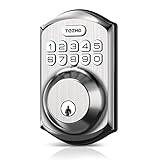
Overview: This budget-friendly keypad deadbolt provides keyless entry for front doors using customizable passcodes, targeting users seeking simplicity without smart-home complexity. Its no-frills design focuses on core security and ease of installation.
What Makes It Stand Out: The one-time temporary PIN feature excels for guest access, automatically deleting after use. Smart auto-locking (10–99-second timer or one-touch hold) adds convenience, while the anti-peep keypad prevents code snooping. Aluminum alloy construction and IP54 weatherproofing ensure outdoor resilience.
Value for Money: As an affordable option, it delivers exceptional utility with 20 permanent codes, year-long battery life, and a low-battery indicator. Though lacking Wi-Fi, it outperforms cheaper mechanical locks in security and flexibility, making it perfect for rentals or secondary doors.
Strengths and Weaknesses: Strengths: Hassle-free installation, reliable auto-lock customization, long battery runtime, and discreet satin nickel finish. Weaknesses: No remote access or voice control, limited to keypad/physical keys, and battery not included.
Bottom Line: A dependable, no-nonsense solution for basic keyless security; best for cost-conscious users prioritizing simplicity over smart features. Recommended for apartments or vacation homes.
3. Philips Wi-Fi Door Lock, WiFi Smart Lock Keyless Entry Deadbolt for Front Door, Compatible with Alexa & Google Assistant, Remote Control, Built-in WiFi, APP Fingerprint Passcode Unlock, Auto Locking

Overview: Philips’ Wi-Fi deadbolt merges fingerprint tech with comprehensive smart-home integration, enabling keyless entry via multiple methods. It targets users wanting seamless voice control and remote management without extra hubs.
What Makes It Stand Out: Standout features include 100 customizable passcodes (with unlimited temporary/scheduled options) and instant one-touch fingerprint access. Built-in Wi-Fi allows direct remote locking/unlocking, while Alexa/Google voice compatibility works smoothly when paired with the updated app. The 2.4GHz-only requirement is clearly noted.
Value for Money: Premium-priced but justified by its versatility—fingerprint, app, voice, and passcode options cover all user scenarios. Competitors often charge more for similar capacity (e.g., 100 codes), though excluded batteries slightly dent value.
Strengths and Weaknesses: Strengths: High code capacity, intuitive app interface, responsive fingerprint sensor, and reliable voice control. Weaknesses: No physical key backup highlighted, battery life unconfirmed, and 65-foot router proximity limits remote range.
Bottom Line: A feature-rich powerhouse ideal for large households; recommended for those deeply invested in smart ecosystems despite minor connectivity constraints.
4. Schlage Encode Smart Wi-Fi Deadbolt Lock with Touchscreen Keypad, Keyless Front Door Entry, App Control, Alexa, Google Home and Airbnb Compatible, Matte Black, BE489WB CEN 622
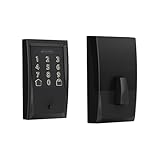
Overview: Schlage’s Encode is a premium smart deadbolt emphasizing security certifications and seamless app control. It caters to security-focused users needing robust access management for primary residences or rentals.
What Makes It Stand Out: BHMA-certified security (highest residential rating) and fingerprint-resistant touchscreen set it apart. Built-in Wi-Fi enables real-time lock history, customizable alerts, and Airbnb compatibility. The Snap ‘n Stay installation system simplifies setup, while 100-code management suits households with frequent visitors.
Value for Money: Priced at a premium, it’s worth the investment for its military-grade encryption, durability, and Schlage’s trusted reputation. Outperforms mid-tier locks in security depth, though budget buyers may find it excessive for basic needs.
Strengths and Weaknesses: Strengths: Industry-leading security certification, intuitive Schlage Home app, versatile voice control, and effortless installation. Weaknesses: Matte black finish shows fingerprints, no fingerprint sensor, and limited to standard door thicknesses.
Bottom Line: The gold standard for secure, user-friendly smart locks; highly recommended for homeowners prioritizing safety and reliability over cutting-edge biometrics.
5. TEEHO TE001 Keyless Entry Door Lock with Keypad - Smart Deadbolt Lock for Front Door with 2 Keys - Auto Lock - Easy Installation - Matte Black

Overview: Identical to Product 2 but in matte black, this TEEHO lock offers keyless keypad entry with auto-locking features. It’s a straightforward security upgrade for doors where aesthetics blend with functionality.
What Makes It Stand Out: The matte black finish resists scratches better than metallic alternatives while maintaining IP54 weatherproofing. Like its sibling, it shines with one-time guest codes and customizable auto-lock timing (10–99 seconds), plus a red low-battery indicator for proactive maintenance.
Value for Money: Matches Product 2’s affordability, delivering reliable performance without smart-tech markups. The included physical keys and aluminum alloy build provide peace of mind, making it a smart buy for budget installations where color coordination matters.
Strengths and Weaknesses: Strengths: Sleek matte finish conceals smudges, year-long battery life, and simple one-touch auto-lock. Weaknesses: No remote capabilities, requires separate battery purchase, and keypad may wear over time.
Bottom Line: A stylish, functional entry-level lock; choose this matte black variant if aesthetics align with your door hardware. Recommended for secondary entrances or minimalist setups.
6. ULTRALOQ Bolt SE Smart Lock, Built-in Wi-Fi, Matter Over Thread, Works with Apple Home, Alexa, Google, 7-in-1 Keyless Entry Deadbolt with Fingerprint ID, App, Keypad, Remote Control, 18 Months Battery
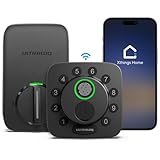
Overview: The ULTRALOQ Bolt SE is a high-end smart deadbolt offering seven keyless entry methods, including fingerprint ID, app control, and voice commands. It integrates Matter over Thread for future-proof smart home compatibility and features built-in Wi-Fi for direct remote access without a hub.
What Makes It Stand Out: Its seamless Matter integration enables reliable cross-platform control via Apple Home, Alexa, or Google Assistant, while Thread’s low-energy mesh extends battery life to 18 months. The 7-in-1 entry system and remote eKey sharing (up to 50 codes) provide exceptional flexibility for households and guests.
Value for Money: Priced competitively for its tier, it justifies cost with hub-free Wi-Fi, Matter support, and robust access management. Though pricier than basic models, the long-term savings from reduced battery changes and eliminated hub costs enhance its value.
Strengths and Weaknesses: Strengths: Versatile entry options; excellent battery life; no hub needed; detailed activity logs. Weaknesses: Requires 2.4GHz Wi-Fi only; router must be within 70 feet for optimal connectivity; Matter features demand a compatible Thread border router.
Bottom Line: Ideal for tech-savvy users seeking a reliable, multi-ecosystem smart lock with exceptional battery life and hub-free operation—despite minor Wi-Fi constraints, it delivers premium convenience worth the investment.
7. Yale Security Assure Lock 2 Deadbolt, Black Suede Keyed Smart Entry Door Lock with Wi-Fi Connected Keypad for Code Entry and Remote Access, YRD410-WF1-BSP

Overview: Yale’s Assure Lock 2 replaces traditional deadbolts with key-free convenience, featuring Wi-Fi connectivity for remote control via the Yale Access App. It supports keypad entry, voice commands, and auto-unlock functionality, targeting users prioritizing seamless home integration.
What Makes It Stand Out: DoorSense technology enables automatic locking when the door closes, while hands-free auto-unlock (via smartphone proximity) eliminates manual interaction. Its DIY installation—no locksmith required—and compatibility with major voice assistants streamline setup and daily use.
Value for Money: Mid-range pricing reflects its robust feature set, including reliable auto-lock and remote access. Though cheaper alternatives exist, Yale’s trusted security pedigree and no-hub design justify the cost for those valuing hands-off convenience.
Strengths and Weaknesses: Strengths: Hassle-free installation; reliable DoorSense auto-lock; intuitive app; works with Apple Watch. Weaknesses: Limited to U.S./Canada; 2.4GHz Wi-Fi only; auto-unlock can occasionally misfire in crowded areas.
Bottom Line: A top pick for homeowners wanting effortless, secure access with dependable auto-features. Its minor geo-restrictions are outweighed by user-friendly design and smooth smart home integration—excellent value for peace of mind.
8. eufy Security Smart Lock C30, Keyless Entry Door Lock, Built-in WiFi Keypad Deadbolt for Front Door, No Bridge Required, Easy Installation, App Remote Control, Reliable Power, BHMA Grade 3

Overview: The eufy C30 is a budget-friendly smart deadbolt with built-in Wi-Fi, offering remote control via app without a bridge. It emphasizes simplicity, with physical buttons (not touchscreens) for durability and BHMA Grade 3 security certification for basic residential use.
What Makes It Stand Out: 15-minute DIY installation requires no drilling, and physical keypad buttons resist weather/errors better than capacitive screens. Auto-lock timers and 24/7 customer support via phone/email add practical reliability for less tech-inclined users.
Value for Money: Its affordable price undercuts premium rivals while delivering core features like remote access and auto-lock. The 18-month warranty and included support make it a low-risk entry point for smart lock newcomers.
Strengths and Weaknesses: Strengths: Tool-free setup; rugged physical keypad; strong warranty; no hub needed. Weaknesses: Lacks fingerprint/Matter support; limited smart home ecosystem integration; auto-lock only time-based (no door sensor).
Bottom Line: Best for budget-conscious buyers seeking reliable, no-frills keyless entry. Though less feature-rich than high-end models, its ease of use and solid warranty offer compelling value for basic security needs.
9. Keypad Smart Door Lock with Knob, Yamiry Keyless Entry Digital Lock with Handle, Fingerprint Electronic Knob for Front Door

Overview: Yamiry’s keyless knob lock combines fingerprint access with traditional handle functionality, targeting standard front doors. It uses Bluetooth for local control and requires a separate Wi-Fi gateway for remote features, positioning itself as an accessible entry-level option.
What Makes It Stand Out: Aluminum construction provides corrosion resistance and physical durability, while 5-in-1 unlocking (fingerprint, app, key fob, etc.) caters to varied preferences. The inclusion of mechanical keys as backup addresses common smart lock reliability concerns.
Value for Money: Low price point makes it appealing for renters or secondary doors, but the mandatory Wi-Fi gateway for remote access inflates true cost. Better suited for local-only use where its physical security shines.
Strengths and Weaknesses: Strengths: Solid aluminum build; versatile unlocking methods; lifetime support; easy installation. Weaknesses: No native Wi-Fi (gateway sold separately); limited remote functionality; app experience feels basic compared to rivals.
Bottom Line: A sturdy, affordable knob lock ideal for local access—but skip it if remote control is essential. Its physical security and backup keys justify the price for non-tech-heavy use cases.
10. August Home, Silver Wi-Fi Connected Smart Keyless Entry Door Lock, Electronic Door Lock Fits Your Existing Deadbolt in Minutes, AUG-SL05-M01-S01

Overview: August Home’s add-on lock attaches to existing deadbolts instead of replacing them, enabling smart features without altering door hardware. Its minimalist design focuses on auto-unlock/lock and seamless smart home compatibility via built-in Wi-Fi.
What Makes It Stand Out: Ten-minute installation preserves your current deadbolt, while DoorSense auto-locks the door upon closure. Hands-free auto-unlock (via phone proximity) and broad ecosystem support (Apple HomeKit, Alexa, etc.) prioritize effortless daily use.
Value for Money: Slightly premium pricing is offset by preserving your deadbolt investment and avoiding drilling. Renters or those with quality existing locks get smart convenience without permanent modifications—a niche but valuable proposition.
Strengths and Weaknesses: Strengths: Non-invasive installation; reliable DoorSense; excellent voice assistant integration; compact design. Weaknesses: Dependent on phone battery for auto-unlock; occasional connectivity hiccups; no fingerprint/keypad.
Bottom Line: Perfect for renters or deadbolt preservationists wanting effortless auto-features. While not a full replacement lock, its clever design and broad compatibility make it a standout for specific use cases.
Understanding Smart Lock Fundamentals
Before comparing features, it’s vital to grasp the core mechanics and variations within the smart lock category. Not all smart locks operate the same way, and understanding these differences is the first step toward a suitable purchase.
Identifying Your Lock Type Compatibility
Your existing door hardware is the primary constraint. Smart locks generally fall into two categories: deadbolt replacements and add-on motorized units that attach to your current deadbolt. Replacements offer a cleaner look and often more robust security but require specific door prep (like a standard 2-1/8" bore hole). Add-on models are easier to install on many existing doors but may protrude more and have slightly different operational feels. Measure your door thickness, backset (distance from edge of door to center of bore hole), and cross-bore diameter meticulously before browsing.
Connectivity Protocols Demystified
How the lock communicates with your network and other devices is crucial for reliability and integration. Common protocols include Wi-Fi (direct internet connection, best for remote access without a hub), Bluetooth (short-range, often used for proximity-based unlocking and initial setup), Z-Wave, and Zigbee (both require a compatible smart home hub but offer better mesh network reliability and battery life). Consider your existing smart home setup – if you have a hub, Z-Wave or Zigbee might be optimal; if not, Wi-Fi or Bluetooth could simplify things, though Wi-Fi models can sometimes strain home networks.
Power Source Considerations
Battery life is non-negotiable. Most smart locks run on standard AA or AAA batteries, typically lasting 6-12 months. Look for models with clear low-battery warnings sent directly to your phone. Avoid locks requiring proprietary or hard-to-find batteries. Some high-end models offer optional wired power or backup ports (like a 9V battery terminal), but these are less common. Always factor in the ease of battery replacement – you don’t want to be locked out because changing batteries requires disassembling half the lock.
Evaluating Core Security Features
Security is the primary reason for installing a smart lock, so scrutinizing its protective capabilities is paramount. Don’t be swayed solely by convenience features; the lock must first and foremost be a reliable physical and digital barrier.
Physical Build Quality and Mechanism Strength
Examine the materials: look for solid metal construction (like zinc alloy or stainless steel) for the exterior and interior components, especially the bolt itself. Avoid flimsy plastic parts. The locking mechanism should feel robust and secure when manually operated. Check for ANSI/BHMA grading – Grade 1 or 2 certification indicates higher resistance to forced entry, drilling, and wear. The bolt throw (how far it extends into the strike plate) should be substantial, typically 1 inch or more.
Encryption and Data Protection Standards
Your lock handles sensitive access data. Ensure it uses strong, industry-standard encryption (like AES-128 or higher) for all communication between the lock, your phone, and the cloud. Investigate the manufacturer’s data privacy policy: where is data stored? How is it used? Do they have a history of security vulnerabilities? Look for features like two-factor authentication (2FA) for your lock account and regular, automatic firmware updates pushed to patch security holes. Avoid locks with known, unpatched vulnerabilities.
Tamper Alerts and Physical Security Sensors
Beyond just locking, proactive security matters. Essential features include alerts for forced entry attempts (like excessive torque on the bolt), repeated incorrect keypad code entries, or the lock being physically removed from the door. Some advanced models include built-in sensors that detect if the door is left ajar or not fully latched, sending immediate notifications. These layers provide critical awareness beyond the basic lock/unlock function.
Installation and Physical Requirements
A smart lock is only as good as its installation. Getting this step right ensures security, reliability, and prevents damaging your door.
Door and Frame Assessment
Not every door is smart-lock ready. Solid core or metal doors are ideal; hollow core doors can be problematic as they lack the structural integrity to securely hold the lock mechanism, potentially allowing forced entry. The door frame must be sturdy and properly aligned so the bolt fully engages the strike plate without binding. Measure your door’s backset, bore hole size, and edge bore depth accurately – mismatched dimensions are the most common reason for installation failure or returns.
DIY vs. Professional Installation Complexity
Honesty about your skill level is key. Many locks tout “easy DIY installation,” but this often assumes basic tool proficiency and understanding of door hardware. Replacing a deadbolt is generally simpler than installing a motorized add-on. If your door requires significant modification, has non-standard hardware, or you’re uncomfortable with the process, professional installation is a worthwhile investment. Poor installation compromises security and voids warranties. Check if the manufacturer offers certified installer networks.
Strike Plate and Latch Alignment
This is frequently overlooked but critical. The strike plate on the door frame must be perfectly aligned with the bolt. Misalignment causes binding, premature wear, and can prevent the lock from engaging fully – a major security flaw. High-quality locks often include adjustable strike plates or multiple plate options to accommodate minor alignment issues, but significant frame warping might need professional correction before installation.
Usability and Smart Home Integration
The best security is useless if it’s too cumbersome to use consistently. Seamless integration into your daily routine and existing tech ecosystem is essential for long-term satisfaction.
User Access Management Systems
How easily can you grant and revoke access? Look for intuitive management through a dedicated app. Key features include creating unique, temporary or recurring access codes for guests (cleaners, dog walkers), remote lock/unlock capability, and detailed activity logs showing who accessed the door and when. The ability to manage multiple users with different permission levels (e.g., kids vs. contractors) is highly valuable for families or rental properties.
Voice Control and App Ecosystem Compatibility
Does the lock play nicely with your existing voice assistant (like Alexa, Google Assistant, or Siri via HomeKit)? Ensure compatibility before buying. More importantly, verify seamless integration with your primary smart home platform (e.g., Apple Home, Google Home, Samsung SmartThings). This allows for creating automations, like automatically locking the door when your security system arms or when your phone leaves the geofenced area.
Keypad Reliability and Alternative Access Methods
The physical keypad is a primary access point. It should be well-lit (backlit keys), responsive in all weather (rain, snow, cold), and offer anti-peep features like scrambling keypads to prevent shoulder surfing. Crucially, there must be reliable backup access methods: a physical key override (hidden inside) is non-negotiable for emergencies, and some models offer NFC tags or wearables. Never rely solely on smartphone access.
Specialized Features for Unique Needs
Beyond the basics, specific scenarios might demand additional functionality. Consider these niche features based on your household dynamics and environment.
Vacation Mode and Enhanced Privacy Settings
“Vacation Mode” is a critical feature that disables all remote access and notifications, making it appear the home is unoccupied to potential burglars monitoring activity logs. Similarly, “Privacy Mode” instantly disables interior thumbturns (preventing someone inside from unlocking) – essential for bathrooms or rooms needing temporary privacy. These features add significant layers of security and peace of mind for specific situations.
Auto-Lock and Auto-Unlock Functionality
Auto-lock (the door locks after a set time or when the door closes) is highly convenient and prevents accidental unlocked doors. Auto-unlock (the door unlocks as you approach, detected by your phone) is popular but controversial. It offers ultimate keyless convenience but raises security concerns if your phone is lost or the geofencing is inaccurate. Evaluate if the convenience outweighs the potential risk for your lifestyle; ensure it has robust, adjustable settings.
Package Delivery and Temporary Access Solutions
Some advanced systems integrate with delivery services (like Amazon Key), granting one-time, time-limited access for secure in-home or in-garage deliveries. While not universally available, this highlights the trend towards specialized access. More commonly, the ability to generate single-use, time-bound virtual keys for deliveries or service personnel is a practical feature worth considering for frequent package recipients or those using on-demand services.
Future-Proofing Your Investment
Technology evolves quickly. Choosing a lock with longevity in mind saves money and hassle down the line.
Firmware Update Policy and Longevity
How does the manufacturer handle updates? Automatic, over-the-air (OTA) updates are essential for ongoing security and adding new features. Investigate the company’s track record: how long do they typically support a model with updates? A lock that becomes obsolete or insecure within 1-2 years due to lack of updates is a poor investment. Check community forums for user experiences with update reliability.
Interoperability with Emerging Standards
The smart home world is moving towards Matter, a new connectivity standard designed to improve compatibility across brands and platforms. While full adoption is ongoing, locks with Matter support (often via Thread or Wi-Fi) promise better long-term integration and resilience against proprietary platform changes. Even if you don’t have Matter devices now, it’s a strong indicator of future-proofing.
Warranty and Customer Support Reputation
A robust warranty (2+ years is common, 3+ is better) covering both parts and labor for defects is standard. More importantly, research the manufacturer’s customer support reputation. Are they responsive to security issues? Do they have accessible technical support for installation hiccups? Poor support can turn a minor issue into a major headache. Look for evidence of proactive communication during past security incidents.
Frequently Asked Questions
Frequently Asked Questions
How secure are smart locks compared to traditional deadbolts? When properly installed and configured, high-quality smart locks with strong physical construction (ANSI Grade 1/2) and robust encryption offer security comparable to, and in some aspects exceeding, traditional deadbolts due to features like activity logs and remote locking. However, their security is only as strong as the weakest link – poor installation, weak passwords, or unpatched vulnerabilities can create risks. They add digital layers but don’t inherently replace the need for solid physical security fundamentals.
Can smart locks be hacked? Like any internet-connected device, smart locks carry a potential hacking risk, though the likelihood varies significantly based on the model’s security design. Locks using strong encryption (AES-128+), regular automatic firmware updates, and secure account practices (like two-factor authentication) are much harder to compromise. Most reported “hacks” involve exploiting user negligence (weak passwords, unpatched firmware) or physical tampering, not sophisticated remote breaches of well-designed locks.
What happens if the power goes out or my Wi-Fi fails? Most smart locks run on batteries, so a home power outage won’t affect them. Wi-Fi failure impacts remote access and some automations, but local access methods (keypad, physical key, Bluetooth if your phone is nearby) will still work. Wi-Fi locks won’t lock/unlock remotely during an outage, but the lock itself remains functional. Always ensure you have reliable local access methods as a backup.
How long do the batteries typically last, and how will I know when they’re low? Battery life usually ranges from 6 to 12 months depending on usage and features (like frequent auto-unlock). Reputable locks provide multiple low-battery warnings: visual indicators (flashing lights), audible chirps, and crucially, push notifications to your smartphone well before the batteries die. Always keep spare batteries on hand.
Is professional installation really necessary? It depends on your skill level and door type. Many modern locks are designed for DIY installation with clear instructions and common tools, especially deadbolt replacements on standard doors. However, if your door is non-standard (hollow core, unusual dimensions), you’re uncomfortable with basic carpentry, or the lock requires complex wiring/modifications, professional installation is highly recommended to ensure security and avoid damage. Poor installation is a major security vulnerability.
Can I still use my physical keys with a smart lock? Yes, virtually all residential smart locks include a traditional physical keyway as a mandatory backup access method for emergencies (like dead batteries or phone loss). This is a critical safety feature required by fire codes in many areas. Some minimalist designs hide the keyhole, but the physical key option is always present.
How do I manage access for family members or frequent visitors? User management is handled through the lock’s companion app. You can typically create unique, named access codes for different people, set schedules for recurring access (e.g., cleaning crew every Tuesday), and generate temporary one-time codes for guests or deliveries. Activity logs show who used which code and when, providing accountability.
Will a smart lock work with my existing smart home system (Alexa/Google Home/Apple Home)? Compatibility varies. Before purchasing, verify the lock specifically lists compatibility with your primary smart home platform (e.g., “Works with Alexa,” “Apple HomeKit Certified,” “Google Home compatible”). Integration depth can differ – basic lock/unlock might work, but advanced features like automations might require specific platform support. Check the manufacturer’s compatibility list.
Are smart locks suitable for rental properties or Airbnb? Smart locks are often ideal for rentals and short-term lets due to easy, remote access code management. You can instantly revoke access between tenants, provide unique codes for each guest, and monitor entry without needing to rekey the property. Ensure the model allows robust user management and detailed activity logging, which are crucial for landlords and property managers.
What should I do if I lose my phone, which I use for access? Never rely solely on your phone. Always have alternative access methods: a physical backup key stored securely (not under the mat!), a memorized keypad code, or NFC tags. Immediately use the lock’s app on another device (or a web portal) to revoke the phone’s access token. Enable two-factor authentication on your lock account for an extra layer of security if your phone is compromised.