Imagine standing in your driveway, fumbling for keys while wondering if you left the coffee maker on. Or settling into bed only to second-guess whether that space heater is truly off. For many, the promise of a smarter home feels just out of reach – tangled in confusing jargon, complex setups, and the nagging fear of buying the wrong gadget. But what if the gateway to effortless control was simpler than you think? Enter the humble smart plug, the unsung hero of home automation that transforms ordinary lamps and appliances into intelligent, connected devices with minimal fuss.
You don’t need a degree in electrical engineering or a hefty budget to start reaping the benefits of a responsive living space. Smart plugs are the perfect entry point, offering tangible convenience and energy savings without overwhelming complexity. Forget worrying about hubs, proprietary ecosystems, or intricate wiring – these compact devices slip directly into your existing outlets, turning “dumb” appliances into smart companions you can control from your couch, your office, or even across the globe. This guide cuts through the noise, focusing purely on what you, as a newcomer, absolutely need to know to choose wisely and start automating with confidence.
Top 10 Smart Plugs for Beginners
Detailed Product Reviews
1. Kasa Smart Plug Ultra Mini 15A, Smart Home Wi-Fi Outlet Works with Alexa, Google Home & IFTTT, No Hub Required, UL Certified, 2.4G WiFi Only, 2 Count (Pack of 1)(EP10P2) , White

Overview:
This 2-pack of Kasa Smart Plug Ultra Mini outlets delivers compact, hub-free smart control for home electronics via Wi-Fi, compatible with Alexa, Google Assistant, and IFTTT. Designed for 2.4GHz networks only, it enables remote scheduling and voice commands for lamps, fans, and more.
What Makes It Stand Out:
Its ultra-mini size preserves adjacent outlet access—a rarity in smart plugs—while UL certification and a 2-year warranty underscore safety and reliability. The dual compatibility with Alexa and Google Home (unlike Amazon’s single-platform plug) provides broader ecosystem flexibility. Trusted by 6+ million users, it also features precise scheduling and remote control via the intuitive Kasa app.
Value for Money:
Priced moderately for a 2-pack, it offers excellent value over single-unit competitors. The included second plug justifies the cost for multi-room setups, and Kasa’s proven stability reduces long-term replacement needs compared to budget brands with spotty connectivity.
Strengths and Weaknesses:
Strengths: Space-saving design; robust app with scheduling; dual voice assistant support; UL safety certification.
Weaknesses: 2.4GHz Wi-Fi only (excludes 5GHz networks); requires Kasa app (no native Alexa setup).
Bottom Line:
Ideal for users seeking reliable, space-efficient smart plugs with dual-voice assistant support. The 2-pack delivers strong value for expanding smart homes, though 5GHz Wi-Fi users should look elsewhere.
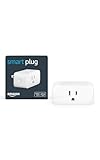
2. Amazon Smart Plug, Works with Alexa, Simple Setup, Endless Possibilities
Overview:
Amazon’s entry-level smart plug integrates seamlessly with Alexa for voice-controlled appliance management. Its minimalist design and Alexa app-centric setup target beginners seeking effortless smart home adoption without hubs or complex configurations.
What Makes It Stand Out:
The plug’s standout feature is native Alexa app integration—no third-party apps needed—and its compact form factor keeps a second outlet free. Setup is notably streamlined: plug in, open Alexa app, and control devices in minutes. It’s optimized for Amazon ecosystem loyalists.
Value for Money:
As one of the most affordable smart plugs, it’s perfect for testing smart home basics. While lacking Google Assistant support, its rock-bottom price and zero app clutter make it a no-risk starter option, though long-term functionality is limited compared to feature-rich alternatives.
Strengths and Weaknesses:
Strengths: Extremely simple setup; Alexa-native app; space-efficient design; budget-friendly.
Weaknesses: Alexa-only voice control (no Google); no scheduling in Alexa app; minimal advanced features.
Bottom Line:
Best for Alexa-focused households wanting a fuss-free, inexpensive plug. Avoid if you use Google Assistant or need scheduling—opt for Kasa for broader functionality.
3. Kasa Smart Plug Ultra Mini 15A, Smart Home Wi-Fi Outlet Works with Alexa, Google Home & IFTTT, No Hub Required, UL Certified, 2.4G WiFi Only, 1-Pack(EP10), White

Overview:
This single-unit Kasa Smart Plug Ultra Mini offers the same core functionality as its 2-pack sibling (Product 1) but targets users needing only one smart outlet. It provides voice/app control, scheduling, and broad compatibility via 2.4GHz Wi-Fi.
What Makes It Stand Out:
Identical to Product 1 in features—UL certification, dual voice assistant support, and space-saving design—it stands out for its à la carte pricing. The 1-pack suits first-time buyers testing smart plugs or those with single-device needs, avoiding the commitment of a bundle.
Value for Money:
Priced lower than the 2-pack per unit, it’s ideal for targeted use (e.g., a single lamp or fan). While cost-per-plug is higher than multipacks, the flexibility to start small without overspending makes it sensible for minimalists or budget-conscious users.
Strengths and Weaknesses:
Strengths: Trusted reliability; compact size; robust Kasa app; supports Alexa/Google; UL safety certified.
Weaknesses: 2.4GHz Wi-Fi limitation; no energy monitoring; single unit less economical for whole-home setups.
Bottom Line:
A superb standalone entry for Kasa’s ecosystem. Choose this for single-device control with top-tier reliability, but get the 2-pack if expanding multiple rooms.
4. GHome Smart Plug, WiFi Smart Plugs Work with Alexa and Google Home, Smart Outlet Timer with APP Remote Control, 2.4GHz Wi-Fi Only, No Hub Required, ETL FCC Listed, White

Overview:
GHome’s budget smart plug offers essential voice/app control and scheduling via 2.4GHz Wi-Fi, compatible with Alexa and Google Assistant. It emphasizes multi-app support (GHome, Smart Life, Tuya) but requires initial app setup before voice integration.
What Makes It Stand Out:
Triple-app compatibility (GHome/Smart Life/Tuya) provides unusual flexibility for tech-savvy users, while ETL/FCC safety listings ensure baseline reliability. The scheduling features rival Kasa’s, though setup is less intuitive—requiring app configuration before Alexa/Google pairing.
Value for Money:
Competitively priced, it’s a solid value for users already in the Tuya/Smart Life ecosystem. However, Kasa’s smoother integration and UL certification justify its slight premium for less technical buyers seeking hassle-free operation.
Strengths and Weaknesses:
Strengths: Multi-app support; ETL safety certified; affordable; scheduling/timer functions.
Weaknesses: Clunky voice assistant setup (app-first); inconsistent connectivity reports; no group control.
Bottom Line:
Worth considering for Tuya/Smart Life users prioritizing cost, but Kasa is preferable for seamless daily use. Avoid if you dislike complex initial setup.
5. GHome Smart Plug, WiFi Smart Plugs Work with Alexa and Google Home, Smart Outlet Timer with APP Remote Control, 2.4GHz Wi-Fi Only, No Hub Required, ETL FCC Listed

Overview:
This GHome plug builds on Product 4 with added group control and device sharing, enabling unified management of multiple plugs via app. It retains multi-app support (GHome/Smart Life/Tuya) and 2.4GHz Wi-Fi dependency.
What Makes It Stand Out:
Group control—allowing one-tap management of multiple plugs—is its key differentiator, ideal for syncing lights or appliances. Family sharing lets household members control shared devices, a feature absent in Product 4 and most budget plugs.
Value for Money:
Slightly pricier than Product 4, the group/sharing features justify the cost for households with multiple plugs. It undercuts Kasa’s group functionality price-wise but lacks UL certification, making it a mid-tier option for app-flexible users.
Strengths and Weaknesses:
Strengths: Group control and family sharing; triple-app support; ETL certified; scheduling.
Weaknesses: Voice setup still app-dependent; sporadic connectivity; no energy tracking.
Bottom Line:
Choose this over Product 4 if you need group control and share devices with family. For rock-solid performance, Kasa remains superior—but this is the best budget pick for multi-plug setups.
6. Kasa Smart Plug Mini 15A, Smart Home Wi-Fi Outlet Works with Alexa, Google Home & IFTTT, No Hub Required, UL Certified, 2.4G WiFi Only, 4-Pack(EP10P4) , White

Overview:
Kasa’s 4-pack of Smart Plug Minis offers compact, reliable smart home control for lamps, fans, or holiday lights. Requiring only 2.4GHz Wi-Fi and the Kasa app (no hub), these UL-certified plugs deliver remote access, scheduling, and voice control via Alexa or Google Assistant.
What Makes It Stand Out:
Its seamless integration with multiple platforms (Alexa, Google, IFTTT) and award-winning reliability—backed by 6+ million users and PCMag’s 2020 Reader’s Choice—sets it apart. The intuitive app enables precise scheduling (countdowns/timers) and energy monitoring, while the mini design avoids blocking adjacent outlets.
Value for Money:
Priced mid-range for a 4-pack, it justifies cost through robust security (UL certification, 2-year warranty), consistent performance, and no subscription fees. Outperforms budget plugs with broader compatibility and superior app features, though cheaper options exist for basic needs.
Strengths and Weaknesses:
Strengths: Reliable app, space-saving design, extensive scheduling, strong safety credentials.
Weaknesses: 2.4GHz Wi-Fi only (no 5GHz), requires Kasa app (no direct Alexa setup), occasional app lag during updates.
Bottom Line:
Ideal for users seeking versatile, trustworthy smart plugs with multi-assistant support. A top pick for whole-home automation at a fair price, despite minor connectivity limitations.
7. Amazon Basics Smart Plug, Works with Alexa Only, 2.4 GHz Wi-Fi, No Hub Required, 4-Pack, White

Overview:
Amazon Basics’ 4-pack delivers bare-bones smart plug functionality exclusively for Alexa users. Setup is streamlined via the Alexa app (no separate hub or third-party apps), enabling remote control, scheduling, and voice commands for lamps, coffee makers, or fans.
What Makes It Stand Out:
Zero-touch setup during Amazon checkout and deep Alexa integration are key highlights. The ultra-compact design ensures it doesn’t obstruct neighboring outlets, perfect for tight spaces like power strips or multi-plug adapters.
Value for Money:
The most affordable 4-pack here, it’s exceptional value if you’re committed to Alexa. No app fees or hubs needed, but limited to Alexa routines (sunrise/sunset triggers) and basic scheduling. Lacks Google/IFTTT support, making it less flexible than competitors.
Strengths and Weaknesses:
Strengths: Budget-friendly, effortless Alexa pairing, minimal footprint, reliable for core tasks.
Weaknesses: Alexa-only ecosystem, no energy monitoring, basic scheduling (no countdowns), app customization lags behind rivals.
Bottom Line:
A no-frills, cost-effective solution for Alexa devotees needing simple on/off control. Avoid if you use Google Assistant or want advanced features.
8. Govee Smart Plug, WiFi Plugs Work with Alexa & Google Assistant, Smart Outlet with Timer & Group Controller, WiFi Outlet for Home, No Hub Required, ETL & FCC Certified, 2.4G WiFi Only, 4 Pack

Overview:
Govee’s 4-pack smart plugs combine dual connectivity (Wi-Fi + Bluetooth) for stable control of home appliances. Managed via the Govee Home app, they support Alexa/Google voice commands, group control, and scheduling, with ETL/FCC safety certifications for 120V devices.
What Makes It Stand Out:
Bluetooth hybrid connectivity minimizes disconnections—a rare advantage over Wi-Fi-only rivals. The Govee app excels at group management (control all plugs simultaneously) and offers creative scheduling (randomized timers for security). Compact size fits snugly in outlets.
Value for Money:
Competitively priced, it offers premium features like group control and robust stability without subscriptions. Outshines Amazon Basics in flexibility but trails Kasa in app polish. Ideal for multi-plug setups needing synchronized routines.
Strengths and Weaknesses:
Strengths: Bluetooth/Wi-Fi stability, intuitive group control, energy-saving schedules, space-efficient design.
Weaknesses: Govee app less mature than Kasa’s, no IFTTT support, max 10A (lower than Kasa’s 15A).
Bottom Line:
Best for users prioritizing reliable group control and hybrid connectivity. A smart buy for coordinated routines, though power limits may deter heavy-duty use.
9. Kasa Smart Plug HS103P4, Smart Home Wi-Fi Outlet Works with Alexa, Echo, Google Home & IFTTT, No Hub Required, Remote Control, 15 Amp, UL Certified, 4-Pack, White

Overview:
Kasa’s HS103P4 4-pack delivers premium smart plug functionality with 15A capacity for high-wattage devices. Like its Mini counterpart, it uses 2.4GHz Wi-Fi and the Kasa app for remote control, scheduling, and voice commands via Alexa/Google—sans hub.
What Makes It Stand Out:
Higher 15A rating (vs. 10A in most rivals) accommodates heaters or vacuums safely. Silicon Valley engineering and UL certification ensure reliability, while the Kasa app offers granular scheduling (countdowns, recurring timers) and energy tracking absent in budget models.
Value for Money:
Priced slightly above average, it’s justified for users needing heavy-duty support. The 2-year warranty and PCMag-endorsed trust outclass Amazon Basics, though Govee offers comparable features at lower cost for standard appliances.
Strengths and Weaknesses:
Strengths: High power capacity, detailed energy monitoring, broad compatibility, sleek app.
Weaknesses: Bulky design blocks adjacent outlets, 2.4GHz Wi-Fi limitation, same app dependency as Kasa Mini.
Bottom Line:
Choose this for high-wattage appliances and meticulous scheduling. Opt for the Mini if space efficiency matters more than power capacity.
10. EIGHTREE Smart Plug, WiFi Outlet Works with Alexa & Google Home, Smart Home Socket with Remote Control & Timer Function, 2.4GHz WiFi Only, 4 Packs

Overview:
EIGHTREE’s 4-pack enables basic smart control via the Smart Life app, supporting Alexa/Google voice commands after setup. It offers scheduling, remote access, and a compact design for lamps or kitchen gadgets—all without a hub but reliant on 2.4GHz Wi-Fi.
What Makes It Stand Out:
Bluetooth-assisted setup simplifies pairing (phone auto-detects plugs), a rarity among budget options. The Smart Life app provides versatile scheduling (cyclical/random timers) and family sharing, though voice control requires app linking.
Value for Money:
Among the cheapest 4-packs, it delivers core features affordably. However, the mandatory Smart Life app layer complicates Alexa/Google integration versus Kasa or Amazon Basics, reducing convenience despite low cost.
Strengths and Weaknesses:
Strengths: Low price, easy Bluetooth setup, flexible scheduling, family sharing.
Weaknesses: No direct voice assistant pairing (requires Smart Life intermediary), app can be glitchy, limited customer support.
Bottom Line:
A functional budget option if you tolerate app dependency. Avoid if seamless voice control is a priority—Kasa or Amazon Basics offer smoother experiences.
Understanding Why Smart Plugs Are the Ideal Starter Smart Home Device
The Low Barrier to Entry Advantage
Smart plugs require almost zero technical expertise to get running. Unlike systems needing complex hubs or professional installation, you simply plug them in, connect via a straightforward app, and start controlling devices. This immediate “wow” factor – turning a lamp on from your phone within minutes of unboxing – builds confidence and excitement for further smart home exploration, making them the undisputed champion for first-timers.
Transforming Existing Appliances Instantly
One of the most compelling benefits is their ability to breathe new life into the appliances you already own. That reliable bedside lamp? Make it your sunrise alarm. The trusty fan in the living room? Schedule it to run only during peak hours. You avoid the cost and hassle of replacing entire devices, leveraging your current investments while gaining smart functionality. It’s home automation without the disposal pile.
Tangible Benefits Beyond Convenience
While the “I can turn things on from bed” factor is huge, the real value often lies in practical efficiency. Monitoring energy usage for high-consumption devices like space heaters or entertainment systems provides clear data to reduce bills. Scheduling coffee makers or lamps creates the illusion of occupancy while you’re away, enhancing security subtly. These aren’t just gimmicks; they solve everyday problems you might not have realized needed solving.
Key Features to Evaluate Before Your First Purchase
Compatibility: The Non-Negotiable Starting Point
Before falling in love with features, verify compatibility with your existing ecosystem. Does it work with the voice assistant you already use daily (like the one built into your phone or speaker)? Does the app feel intuitive on your smartphone? Ignoring this step leads to frustration – a plug that integrates seamlessly with your current setup is infinitely more valuable than a feature-packed one that doesn’t play nice.
Core Functionality: Beyond Simple On/Off
While basic remote control is standard, consider what “smart” truly means for your needs. Essential features include reliable scheduling (for routines like morning coffee or evening wind-down), countdown timers (perfect for heaters or hair tools), and energy monitoring (crucial for understanding usage patterns and costs). Ensure these core functions are robust and easy to set up within the app interface.
Physical Design and Power Requirements
Not all plugs are created equal physically. Measure your outlet space – bulky plugs can block adjacent outlets, rendering them useless. Check if the plug is a standard rectangular shape or a more compact “cube” design. Crucially, verify the maximum wattage/amperage it supports; plugging a high-draw appliance like a space heater into an underpowered plug is a serious fire hazard. Safety specs are non-negotiable.
Navigating Setup and Connectivity Options
Wi-Fi vs. Hub-Based Systems: Pros and Cons for Beginners
Most beginner-friendly plugs connect directly to your home Wi-Fi, eliminating the need for an extra hub. This is generally simpler and cheaper upfront. However, Wi-Fi plugs can sometimes be slower to respond and are vulnerable to your home internet going down. Hub-based systems (using protocols like Zigbee or Z-Wave) often offer faster, more reliable local control and better mesh networking, but require purchasing and setting up the hub first. For absolute simplicity, Wi-Fi is usually the smoother starting path.
The App Experience: Your Control Center
The app is your primary interface, so its quality is paramount. Look for clean navigation, intuitive scheduling setup (drag-and-drop is ideal), clear energy usage graphs, and reliable push notifications. Test the app store screenshots – if menus look cluttered or confusing, the real app likely is too. A great plug is useless if its app is a chore to use; prioritize user-friendliness here.
Voice Assistant Integration Made Simple
Seamless voice control is a major convenience driver. Confirm effortless setup with your preferred assistant (e.g., “Hey Google, turn on the lamp”). Check if the plug appears correctly in your assistant’s device list and if naming is flexible (calling it “Bedroom Lamp” instead of “Plug 3” matters!). Reliable voice response times are key – laggy responses erode trust in the system quickly.
Considering Long-Term Use and Advanced Capabilities
Future-Proofing Your Investment
While starting simple is wise, consider if the plug can grow with your ambitions. Does the manufacturer have a history of adding features via firmware updates? Does it support more advanced automations (like “if the weather is cold, turn on the heater 30 mins before I wake up”) through its app or broader platform? Choosing a foundation that supports complexity later saves you from replacing devices prematurely.
Understanding Automation Triggers and Routines
Move beyond simple schedules. Explore how the plug integrates with other potential future devices or services. Can it trigger based on your phone’s location (turning on lights as you approach home)? Can it react to other sensors (like turning on a fan if a smart thermostat detects high humidity)? Understanding the potential for interconnected routines helps select a plug that won’t become isolated tech clutter.
Energy Monitoring Depth: From Basic to Detailed
Basic plugs might just tell you “on” or “off” with estimated cost. More advanced models provide real-time wattage, historical daily/weekly usage charts, and precise cost calculations based on your local electricity rate. If reducing energy bills is a primary goal, prioritize plugs offering granular, accurate monitoring data – it transforms from a novelty into a genuine money-saving tool.
Safety and Reliability: Non-Negotiable Factors
Certifications That Matter: Beyond the Marketing Hype
Always, always look for recognized safety certifications like UL (US), ETL, or CE (Europe) visibly marked on the product or packaging. These indicate independent laboratory testing for electrical safety and fire risk. Avoid uncertified plugs, no matter how cheap or feature-rich they seem – the potential danger isn’t worth the savings. Safety isn’t a feature; it’s the baseline requirement.
Build Quality and Overload Protection
Feel the weight and examine the materials. A flimsy, lightweight plug often indicates poor internal components. Reliable models include automatic overload protection that cuts power if the connected device draws too much current, preventing overheating. Check reviews specifically mentioning durability and whether the plug stays cool during extended use with moderate loads.
Network Stability and Response Times
A smart plug that frequently disconnects or takes 10 seconds to turn on a light defeats the purpose. Research reliability regarding consistent Wi-Fi connectivity and responsive commands. Plugs using newer Wi-Fi standards (like Wi-Fi 6 compatibility) often handle network congestion better. Consistent, snappy performance is critical for daily usability and maintaining your trust in the technology.
Making Your Decision: Actionable Steps for Confidence
Defining Your Primary Use Case First
Before comparing specs, get crystal clear: Why are you buying this? Is it solely for remote lamp control? Energy monitoring on a specific appliance? Creating security schedules? Your main goal dictates which features are essential (e.g., energy monitoring is vital for bill tracking but irrelevant if you just want voice-controlled holiday lights). Prioritize features that serve your specific need.
Reading Between the Lines of Reviews
Focus reviews on setup difficulties, app stability, and long-term reliability (“still working perfectly after 18 months”), not just initial impressions. Watch for recurring complaints about specific issues like frequent disconnections or inaccurate energy readings. Be wary of overwhelmingly positive reviews that seem generic – look for detailed, nuanced feedback from users with setups similar to yours.
Starting Small: One Plug to Validate Your Choice
Resist the urge to automate your entire house on day one. Buy a single plug, connect it to a low-risk, frequently used device (like a table lamp), and live with it for a few weeks. Test scheduling, voice commands, app responsiveness, and energy reporting. This hands-on trial reveals if the reality matches the promise before you commit to a full rollout, saving potential headaches and returns.
Frequently Asked Questions
How difficult is setting up a smart plug for the first time?
Setting up a smart plug is generally very straightforward, often taking less than 10 minutes. You plug it in, download the companion app, connect it to your home Wi-Fi network through the app (similar to connecting a new phone), and then name your device. Most apps guide you step-by-step with clear instructions, making the process accessible even for those not tech-savvy.
Can I use a smart plug with any appliance or lamp?
While smart plugs work with most standard lamps and appliances, there are important limitations. They should never be used with high-wattage devices like space heaters, air conditioners, refrigerators, or major kitchen appliances unless the plug is explicitly rated for that specific high load (check its maximum wattage/amperage). They are ideal for lamps, fans, coffee makers, and entertainment systems within their specified limits.
Do smart plugs work when my Wi-Fi is down?
Most Wi-Fi connected smart plugs will lose remote control and scheduling capabilities if your home internet or Wi-Fi router goes offline. You can usually still control the plug manually using the physical button on the device itself (if it has one), but voice commands, app control from outside the home, and scheduled automations relying on the internet will not function until connectivity is restored.
Will a smart plug increase my electricity bill just by being plugged in?
Smart plugs themselves consume a very small amount of standby power (typically 0.5W to 2W) to maintain their Wi-Fi connection and functionality. This translates to a negligible cost – usually less than a dollar per year. The significant energy savings come from using the plug to turn off energy-hungry devices completely (eliminating “vampire drain”) or optimizing their usage schedules.
Are smart plugs safe to leave plugged in all the time?
Yes, certified smart plugs (look for UL, ETL, CE marks) are designed for continuous use and are safe when used correctly within their specified load limits. Key safety features include overload protection that cuts power if a device draws too much current. Always ensure the plug feels cool during operation and never force it into an outlet; if it’s hot, unplug it immediately and investigate.
Can I control smart plugs when I’m not at home?
Yes, this is a core feature. As long as the smart plug is connected to your home Wi-Fi network and your home internet is functioning, you can control it remotely using the companion app on your smartphone from anywhere with internet access. You can turn devices on/off, check their status, and adjust schedules while traveling or at work.
Do I need a separate hub for smart plugs?
Many popular smart plugs connect directly to your existing home Wi-Fi network, eliminating the need for a separate hub. This is the most common and beginner-friendly option. Some plugs use other wireless protocols (like Zigbee or Z-Wave) and do require a compatible hub, but these are less common for entry-level users. Always check the product requirements before purchasing.
How accurate is the energy monitoring on smart plugs?
Accuracy varies significantly between models. Higher-end plugs with dedicated power monitoring chips can be quite accurate (within 1-5% of a professional meter). Cheaper models might offer only rough estimates. If precise energy tracking is important for your goals (like detailed billing), research models known for reliable monitoring or look for specifications on accuracy percentage.
Can I group multiple smart plugs together for control?
Yes, virtually all smart plug apps allow you to create groups or scenes. You can name a group (e.g., “Living Room Lights”) and include multiple plugs. With one command in the app or via voice (“Hey Google, turn on Living Room Lights”), all plugs in that group will activate simultaneously, simplifying control of multiple devices.
Are voice control commands reliable with smart plugs?
Reliability depends heavily on your Wi-Fi network strength, the smart plug’s responsiveness, and the voice assistant’s performance. Generally, commands like “Turn on/off [Device Name]” are very reliable on good networks. More complex routines might have slight delays. Ensuring strong Wi-Fi coverage near the plug and using clear, consistent device names improves voice control success rates significantly.