Imagine standing at your kitchen window on a sweltering summer afternoon, watching your sprinklers blast water onto sunbaked pavement while your prized roses visibly wilt just a few feet away. It’s frustrating, wasteful, and all too common with traditional irrigation systems. The reality is, outdated timers contribute significantly to residential water waste—up to 50% according to some environmental studies—draining both precious resources and your wallet. As droughts intensify and water costs climb, the humble sprinkler timer has evolved from a simple on/off switch into a sophisticated water conservation tool. Smart sprinkler technology isn’t just a luxury anymore; it’s becoming essential infrastructure for conscientious homeowners who want lush landscapes without the guilt or the sky-high bills.
The good news? You don’t need a degree in hydrology to harness this power. Next-generation smart irrigation controllers use hyperlocal weather data, soil science, and even your landscape’s unique layout to deliver exactly what your plants need, when they need it. Forget rigid schedules that water during downpours or ignore sudden heatwaves. These systems learn, adapt, and optimize automatically, turning irrigation from a set-it-and-forget-it chore into a precision science. But with so many features and capabilities emerging, how do you cut through the marketing hype to find the right system for your yard, climate, and budget? This guide cuts straight to what truly matters—helping you understand the core technologies, evaluate real-world performance, and avoid costly mismatches—so you can make a confident, future-proof investment in smarter watering.
Top 10 Smart Sprinkler Timers
Detailed Product Reviews
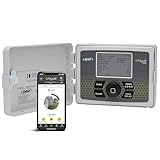
1. Orbit 57946 B-hyve 6-Zone Smart Indoor/Outdoor Sprinkler Controller
Overview:
The Orbit B-hyve 6-Zone Controller is a weather-adaptive smart irrigation system designed for residential lawns and gardens. It automates watering schedules while integrating local weather data to optimize water usage, suitable for both indoor wall mounting and outdoor installations with its weather-resistant design.
What Makes It Stand Out:
Its standout feature is hyperlocal weather intelligence, which automatically skips watering after rainfall or during freezing conditions. The intuitive B-hyve app enables remote scheduling adjustments, manual overrides, and detailed water usage reports. The dual indoor/outdoor placement flexibility and seamless integration with major smart home ecosystems (Alexa, Google Assistant) further differentiate it from basic timers.
Value for Money:
Priced moderately for a 6-zone smart controller, it offers exceptional long-term savings through water efficiency (EPA WaterSense certified) and reduced manual intervention. While cheaper non-smart alternatives exist, the B-hyve’s precision watering prevents overuse, justifying its cost for eco-conscious homeowners with medium-sized landscapes.
Strengths and Weaknesses:
Strengths: Reliable weather adaptation; user-friendly app; durable outdoor housing; no hub required; robust smart home compatibility.
Weaknesses: Limited to 6 zones (unsuitable for larger properties); initial Wi-Fi setup can be finicky; app occasionally lags during firmware updates.
Bottom Line:
Ideal for homeowners with modest yards seeking hassle-free, water-efficient automation. Its intelligent adjustments and solid build make it a worthwhile investment for saving time and resources, though larger properties will need the 12-zone model.
2. Smart WiFi Sprinkler Timer 3 Zone,WiFi Water Timer for Garden Hose with 984 FT Range,APP & Remote Control,Alexa & Google Voice Compatible,Rain Delay, Manual Mode Sprinkler System

Overview:
This 3-zone hose timer delivers long-range Wi-Fi control for garden irrigation, targeting users needing reliable connectivity across large properties. It replaces traditional hose timers with app-based scheduling, voice control, and adaptive features via Smart Life/Tuya apps, operating exclusively on 2.4GHz Wi-Fi.
What Makes It Stand Out:
The exceptional 984-foot (300m) Wi-Fi range outperforms most competitors (typically limited to 50 feet), ensuring stable signal in expansive gardens. Its dual-zone programming per timer, rain delay with detection, and granular scheduling (down to 1-second increments) provide unmatched precision for diverse plant zones, from delicate flowers to lawns.
Value for Money:
Competitively priced for a multi-zone hose timer, it excels in large-yard value due to its extended range and dual-zone efficiency. While basic single-zone timers cost less, this model eliminates signal dropouts and supports complex watering routines, making it cost-effective for serious gardeners unwilling to compromise on coverage.
Strengths and Weaknesses:
Strengths: Industry-leading range; flexible dual-zone control; detailed irrigation history; robust rain delay; supports misting cycles.
Weaknesses: Requires consistent 2.4GHz Wi-Fi (no Bluetooth fallback); app interface feels cluttered; not suitable for underground sprinkler systems.
Bottom Line:
A top choice for large-property owners needing reliable, app-controlled hose watering. Its range and scheduling depth justify the price, though Wi-Fi dependency may challenge users with spotty coverage.
3. Orbit 57950 B-hyve 12-Zone Smart Indoor/Outdoor Sprinkler Controller
Overview:
Orbit’s 12-Zone B-hyve Controller scales up their smart irrigation solution for larger landscapes, managing complex in-ground sprinkler systems. Like its 6-zone sibling, it uses hyperlocal weather data and app control but accommodates more valves, making it ideal for estates or multi-zone commercial gardens.
What Makes It Stand Out:
The 12-zone capacity is its defining advantage, allowing precise control over expansive properties without add-ons. It retains all core B-hyve strengths: automatic weather adjustments, freeze protection, and intuitive scheduling via the B-hyve app. The indoor/outdoor versatility (IP66-rated for wet conditions) ensures flexible installation near garages or sheds.
Value for Money:
Justified for properties exceeding 6 zones, as adding multiple 6-zone units would cost more and complicate management. Though pricier than entry models, its water savings (up to 50% per Orbit) and elimination of manual oversight deliver strong ROI for large lawns, orchards, or community gardens.
Strengths and Weaknesses:
Strengths: High zone capacity; accurate weather-based adjustments; durable outdoor housing; no hub needed; comprehensive app analytics.
Weaknesses: Bulky design; installation complexity for DIYers; app lacks advanced soil-moisture integration; higher upfront cost.
Bottom Line:
Essential for large-scale irrigation where zone capacity matters. While overkill for small yards, it’s a premium, water-smart solution for estates seeking centralized, weather-responsive control.
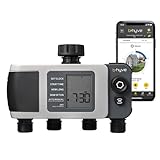
4. Orbit 24634 B-hyve XD 4-Port Smart Hose Watering Timer
Overview:
The B-hyve XD is a smart hose timer focused on simplicity and water conservation, connecting directly to outdoor faucets. It automates drip irrigation or sprinklers for gardens, patios, and containers, leveraging weather intelligence without requiring a separate hub.
What Makes It Stand Out:
Its EPA WaterSense certification (when used with Wi-Fi hub) guarantees verified water efficiency. Unique drought-adaptation features auto-adjust schedules based on local restrictions, while Bluetooth + Wi-Fi dual connectivity allows local control without internet. The IPX-5 waterproofing ensures resilience in harsh conditions.
Value for Money:
Priced higher than basic hose timers, but its water savings and compliance tools (e.g., enforcing watering bans) offer tangible returns. For renters or those avoiding in-ground systems, it’s more affordable than whole-property controllers while delivering smart features tailored to hose-based setups.
Strengths and Weaknesses:
Strengths: Exceptional water efficiency; easy hose/faucet installation; drought-mode customization; rugged waterproof build; no monthly fees.
Weaknesses: Limited to 4 ports; Wi-Fi hub sold separately for full features; app less intuitive than Orbit’s in-ground models; shorter range than dedicated long-range timers.
Bottom Line:
Perfect for container gardens, small yards, or eco-focused users prioritizing water conservation. Its niche focus on hose efficiency makes it a smart buy despite minor connectivity limitations.
5. Insoma WiFi Water Timer for Garden Hose, Smart Sprinkler Timer, APP Remote Control WiFi Hose Timers, Voice Control with Alexa, Rain Delay and Manual Mode for Yard Lawn Watering

Overview:
Insoma’s hose timer emphasizes gateway-free Wi-Fi connectivity for straightforward app control. Designed for gardens, pools, and lawns, it promises reliable remote access without signal switches between Bluetooth and Wi-Fi, supporting up to 20 custom schedules.
What Makes It Stand Out:
The “100% Wi-Fi” claim eliminates Bluetooth dependency—unlike many competitors—ensuring consistent remote access. Its standout feature is 20-schedule capacity (10 standard + 10 soak cycles), ideal for complex plant needs. Family sharing and detailed watering history add collaborative management, while 7.26–116 PSI pressure tolerance suits diverse setups.
Value for Money:
Offers premium scheduling depth at a mid-range price. While similar to Product 2, its higher schedule count and no-gateway simplicity provide better value for multi-plant households. Cheaper timers lack its granular control, making it cost-effective for serious gardeners needing precision without professional systems.
Strengths and Weaknesses:
Strengths: True Wi-Fi reliability; extensive scheduling options; broad pressure compatibility; intuitive Smart Life app; Alexa/Google support.
Weaknesses: No zone expansion beyond single faucet; rain delay limited to 72h; plastic build feels less durable than Orbit’s; occasional app login issues.
Bottom Line:
A reliable, feature-rich choice for tech-savvy gardeners wanting robust scheduling and consistent remote access. Its no-gateway design and high schedule capacity make it a compelling upgrade from basic hose timers.
6. Rain Bird ARC6 App-Based Indoor Smart WiFi Irrigation Sprinkler Timer/Controller, 6-Zone/Station, EPA WaterSense Certified, Compatible with Alexa, Indoor 6-Station

Overview: The Rain Bird ARC6 is an indoor 6-zone smart sprinkler controller designed for homeowners seeking precise, remote management of in-ground irrigation systems. EPA WaterSense certified, it prioritizes water conservation through weather-based automation while offering app and voice control via Alexa compatibility.
What Makes It Stand Out: Its standout feature is the seamless integration of hyperlocal weather data (using postal codes) to automatically adjust or skip watering, potentially saving 30% on water use. The intuitive mobile app allows global access, schedule sharing with family or professionals, and real-time weather forecasting—uncommon at this price point.
Value for Money: Priced mid-range, it offers exceptional value for larger yards needing multi-zone control. The EPA certification and robust weather intelligence provide long-term savings on water bills, outperforming basic timers and rivaling pricier systems in efficiency.
Strengths and Weaknesses: Strengths: Reliable indoor installation, easy app navigation, significant water savings, Alexa/Google compatibility. Weaknesses: Limited to 6 zones (insufficient for expansive properties), requires 2.4GHz Wi-Fi only, no built-in soil moisture integration.
Bottom Line: Ideal for eco-conscious homeowners with medium-sized lawns, the ARC6 delivers reliable automation and water savings. Its weather adaptation justifies the cost, though large properties may need additional units.
7. Rachio WiFi Smart Sprinkler Controller (8-Zone Irrigation Remote Control) – App-Based Scheduling, Local Weather Intelligence, Rain Skips, Easy DIY Install
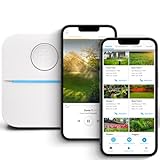
Overview: Rachio’s 8-zone controller revolutionizes irrigation with AI-driven “Weather Intelligence,” automating watering adjustments based on hyperlocal conditions. Designed for DIY installation, it targets users wanting effortless, eco-friendly lawn care without manual schedule tweaks.
What Makes It Stand Out: Rachio’s patented Weather Intelligence uniquely factors in rain, wind, freeze, and evaporation to skip or modify watering—saving up to 50% more water than competitors. Its “Grow-In” scheduling gradually adjusts runtimes for new lawns, a feature absent in most rivals.
Value for Money: Premium-priced but justified by advanced water savings and durability. Outperforms budget controllers in efficiency, and its 8-zone capacity covers most residential needs, reducing the need for multiple units. Long-term utility savings offset the upfront cost.
Strengths and Weaknesses: Strengths: Industry-leading weather adaptation, user-friendly app, flexible scheduling (including seasonal), easy installation. Weaknesses: No Bluetooth backup (Wi-Fi dependent), limited voice control customization, higher entry price than basic smart timers.
Bottom Line: A top-tier choice for sustainability-focused users, Rachio excels in water conservation and adaptability. Worth the investment for those prioritizing intelligent automation over budget simplicity.
8. Diivoo Brass WiFi Sprinkler Timer 2 Zone, Smart Water Timer for Garden Hose Remote Control,Compatible with Alexa and Google Home,12 Irrigation Plans,Rain Delay & Manual Watering for Garden,Lawn,Yard

Overview: The Diivoo 2-zone hose timer is a durable, outdoor-focused solution for managing garden irrigation via Wi-Fi. Built with solid brass connectors, it targets users needing weather-resistant reliability for hose-based systems like drip lines or flower beds.
What Makes It Stand Out: Its all-brass construction (7.25–116 PSI rated) prevents leaks and corrosion far better than plastic alternatives. Dual independent zones with 12 total schedules and dual modes (Irrigation for lawns, Mist for cooling) offer unmatched flexibility for small-space gardening.
Value for Money: Mid-priced for a dual-zone brass timer, it’s a steal given its longevity and versatility. Avoids frequent replacements common with plastic timers, and water-saving features like 72-hour rain delay maximize resource efficiency.
Strengths and Weaknesses: Strengths: Exceptional brass durability, dual-zone independence, mist mode for cooling, manual override. Weaknesses: 2.4GHz Wi-Fi only, app occasionally glitchy, limited to low-pressure hose systems (not in-ground).
Bottom Line: Perfect for patio or small-yard irrigation, Diivoo’s rugged build and dual-zone control deliver excellent value. Choose it for longevity and precision in hose-based setups, but skip if managing large in-ground systems.
9. Smartale WiFi Sprinkler Timer, Smart Bluetooth Hose Timer, Programmable Automatic Irrigation System with Remote APP, Compatible with Alexa Google, Watering for Outdoor Garden Yard Lawn, 1 Outlet
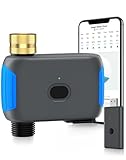
Overview: Smartale’s single-outlet hose timer combines Wi-Fi and Bluetooth connectivity for reliable remote control of garden watering. Featuring a weatherproof design and app-based scheduling, it’s tailored for users needing flexible, voice-activated irrigation for flower beds or container gardens.
What Makes It Stand Out: The dual Wi-Fi/Bluetooth connectivity ensures stable operation even with weak router signals (50ft Bluetooth range), while the cycle/soak mode prevents runoff on sloped lawns. Low-battery auto-shutoff also prevents overwatering—a rare safety feature.
Value for Money: Budget-friendly yet feature-rich, it outperforms cheaper timers with its hybrid connectivity and robust brass coupler. The 6+ month battery life and IP55 rating justify its price for seasonal gardeners seeking hassle-free automation.
Strengths and Weaknesses: Strengths: Reliable Bluetooth backup, cycle/soak mode, brass inlet durability, rain delay, Alexa/Google support. Weaknesses: Single zone limits scalability, app interface less intuitive than Rachio, no multi-timer hub support.
Bottom Line: An affordable, reliable pick for small gardens, Smartale shines with connectivity and safety features. Best for beginners or supplemental watering, but not for complex multi-zone needs.
10. RAINPOINT WiFi Water Timer, Sprinkler Timer for Garden Hose, Smart Automatic Irrigation System with Brass Inlet for Yard, Lawn, APP Remote Control via 2.4Ghz WiFi and Bluetooth
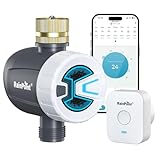
Overview: RAINPOINT’s hose timer offers expandable smart irrigation with a focus on scalability and brass durability. Its unique hub system supports up to four timers, making it ideal for users planning to automate multiple garden zones via a single app.
What Makes It Stand Out: The 1-hub-for-4-timers capability is unparalleled, allowing coordinated control of sprinklers, drip lines, and misters. Reinforced 360° brass swivel inlets prevent leaks under high pressure, and Tuya app integration enables soil moisture meter pairing for precision watering.
Value for Money: Excellent long-term value for expanding systems. The hub reduces per-timer costs, and brass construction ensures years of use. Outvalues single-timer competitors when covering large yards, though initial setup is pricier.
Strengths and Weaknesses: Strengths: Scalable hub system, brass durability, soil sensor compatibility, flexible 3-mode scheduling. Weaknesses: Tuya app less polished than Rachio’s, Bluetooth range untested, no mist-specific mode.
Bottom Line: A future-proof solution for evolving gardens, RAINPOINT’s scalability and brass build make it ideal for tech-savvy users. Invest if planning multi-zone expansion; opt for Rachio/Diivoo for simpler setups.
Understanding the Core Value of Smart Irrigation
Why Watering Intelligence Matters Beyond Convenience
Smart timers move far beyond basic scheduling by addressing the root cause of outdoor water waste: irrelevant watering. They dynamically adjust run times based on actual evaporation rates, recent rainfall, and forecasted conditions. This isn’t just about saving money on your water bill (though that’s a significant perk); it’s about responsible resource stewardship. Municipalities increasingly impose watering restrictions, and systems that ignore real-time conditions can lead to fines or system damage during freezes. Intelligent irrigation also promotes healthier plants by preventing overwatering (a leading cause of root rot) and underwatering stress, leading to stronger root systems and more vibrant growth.
The Hidden Costs of “Dumb” Timers
Sticking with an older, non-smart timer carries hidden financial and environmental burdens. Overscheduling during cool, cloudy periods or after heavy rain wastes thousands of gallons annually. More critically, undetected leaks or broken heads can go unnoticed for days with basic timers, potentially flooding yards or draining entire pools of water. Manual adjustments for weather changes are easily forgotten, especially during vacations. The cumulative effect? Higher water bills, potential landscape damage, increased strain on local water supplies, and unnecessary wear on your irrigation system components. Investing in intelligence often pays for itself through avoided waste and extended system lifespan.
Measuring True Water Efficiency Gains
Evaluating a smart timer’s effectiveness requires looking beyond marketing claims of “up to 50% savings.” Real-world efficiency depends heavily on your local climate, soil type, plant varieties, and system design. Look for systems that provide detailed water usage reports and comparative data (e.g., “saved 1,200 gallons vs. your old schedule this month”). The most valuable metrics often include evapotranspiration (ET) rate integration—using scientific models to calculate precise plant water loss—and the ability to factor in your specific soil’s water retention capacity. True efficiency isn’t just less water; it’s applying the optimal amount for plant health in your unique conditions.
Key Features to Evaluate for Maximum Impact
Hyperlocal Weather Integration Capabilities
Generic ZIP code weather data is insufficient for precise irrigation. Top-tier systems leverage hyperlocal networks, pulling data from personal weather stations within your immediate neighborhood or even on your property via compatible sensors. This granularity captures microclimates—like a south-facing slope that bakes hotter than the rest of your yard—and detects passing showers your area might have missed. Crucially, verify how the system sources its data: direct partnerships with high-resolution networks (like those using airport sensors or dense community stations) are far more reliable than broad regional forecasts. Real-time rain delay triggers and freeze protection based on your driveway temperature, not the city center, prevent disastrous watering.
Advanced Scheduling Algorithms and Flexibility
The sophistication of the scheduling engine separates basic smart timers from truly intelligent ones. Look beyond simple “water less when it rains” features. Advanced systems use historical weather patterns, seasonal shifting, and plant-type databases to create dynamic baseline schedules. Can it handle complex scenarios like watering different zones at varying frequencies based on sun exposure? Does it allow for “cycle and soak” programming to prevent runoff on clay soils? Essential flexibility includes manual override without disrupting the smart schedule, customizable watering windows to avoid peak utility rates, and the ability to set distinct schedules for different landscape zones (e.g., drought-tolerant beds vs. a vegetable garden).
Flow Monitoring and Leak Detection
This is arguably the most critical feature for protecting your investment and preventing catastrophic waste. Systems with integrated flow sensors measure the actual volume of water passing through your main line. They learn your system’s normal flow patterns for each zone. If a broken head sprays wildly or a main line cracks, the sensor detects the abnormal flow rate—often within minutes—and automatically shuts off the water. Some even pinpoint the likely location of the leak. Beyond emergencies, flow data helps identify inefficient nozzles or clogged lines before they cause visible damage. Ensure the system offers immediate, actionable alerts (not just buried logs) and consider models that integrate pressure sensors for even more precise diagnostics.
Installation and Compatibility Considerations
Matching Controller Complexity to Your System
Don’t over-engineer or under-spec your controller. A small yard with 3 simple zones doesn’t need a 32-socket powerhouse, but a large property with drip lines, rotors, and multiple valve types requires robust capacity. Count your existing valves and anticipate future expansions (like adding a vegetable garden). Crucially, verify voltage compatibility—most residential systems use 24V AC, but confirm your existing wiring matches. Consider physical space; some controllers are bulkier, especially those with built-in displays. If you have complex hydraulics (like master valves or pump starts), ensure the controller supports these auxiliary functions. Underestimating your system’s needs leads to costly add-ons or premature replacement.
Wi-Fi Reliability and Network Requirements
Your smart timer is only as smart as its connection. Evaluate your yard’s Wi-Fi coverage—especially near the controller location (often a garage or basement). Weak signals cause missed schedules and delayed alerts. Does the controller support 2.4 GHz networks only (most do, as 5 GHz has shorter range), or is it dual-band? Check for features like signal strength indicators during setup. Some higher-end models offer cellular backup options for critical leak detection during internet outages, though this adds cost. Consider your router’s stability; frequent home network drops will cripple even the best controller. Don’t assume your indoor signal strength extends reliably to the irrigation panel.
Retrofitting vs. New Installation Challenges
Integrating a smart controller with an existing system is usually straightforward but requires attention. Most replace traditional timers directly, connecting to the same valve wires. However, older systems might have degraded wiring or non-standard configurations. Check if your current timer uses common wire setups; missing a common wire complicates certain smart features. Systems with complex multi-station setups or proprietary older tech (like certain Rain Bird or Hunter legacy models) might need adapter modules. For new builds, discuss controller placement and wiring requirements with your landscaper early—dedicated low-voltage conduit simplifies future upgrades. Always power down the system at the breaker before working on wiring.
Integration and User Experience Essentials
Mobile App Usability and Critical Functions
Your phone becomes the primary control interface, so app quality is non-negotiable. Test the interface (if possible via reviews)—is it intuitive or cluttered? Essential functions must be accessible within two taps: manual watering, rain delay activation, and leak alert acknowledgment. Robust reporting—showing historical water use, savings estimates, and system health—is vital for understanding efficiency. Look for offline functionality: can you start a zone if your internet is down? Check notification reliability; delayed leak alerts defeat the purpose. Avoid apps notorious for crashing or requiring constant re-login. The best apps also offer video tutorials and clear troubleshooting guides embedded within the interface.
Voice Assistant and Smart Home Ecosystem Compatibility
While not strictly necessary, seamless integration with platforms like Amazon Alexa, Google Home, or Apple HomeKit enhances convenience. Test if voice commands work reliably (“Alexa, water the front yard for 10 minutes”) beyond basic on/off. More valuable is integration with broader smart home routines—like triggering a “Goodnight” scene that checks for active watering and delays it until morning. Compatibility with weather services for advanced forecasting or with soil moisture sensors for hyper-granular control adds layers of intelligence. Prioritize systems using open standards (like Matter) for future-proofing, ensuring they’ll work with next-generation smart home devices without relying solely on a single brand’s ecosystem.
Long-Term Software Support and Updates
A smart controller is a software platform first. Investigate the manufacturer’s track record: How frequently do they release meaningful firmware updates? Do updates add significant features or just patch bugs? Companies that abandon older models leave you with a “dumb” timer once servers shut down (a common issue in early smart home devices). Check community forums for user experiences with long-term support. Systems using open-source platforms or backed by established irrigation brands (with decades of service infrastructure) often have better longevity. Avoid controllers requiring mandatory cloud subscriptions for core functionality—truly smart features should work locally even if the internet is briefly down.
Future-Proofing Your Investment
Emerging Sensor Technologies to Watch
Look beyond basic weather integration. The next frontier involves dense sensor networks directly in your landscape. Affordable, wireless soil moisture sensors placed at different root depths provide real-time data on actual plant needs, eliminating guesswork. Some systems now integrate with in-ground temperature and salinity sensors. Emerging tech includes micro-rain gauges for hyperlocal precipitation measurement and even spectral sensors analyzing plant health via smartphone cameras. While not all are mainstream yet, ensure your chosen controller has open protocols (like Bluetooth LE or specific sensor ports) to add these capabilities later without replacing the entire unit.
Water Utility Partnerships and Rebate Programs
Many municipalities actively promote smart irrigation through rebates, sometimes covering 30-50% of the controller cost. These programs often require specific certification (like EPA WaterSense). Research your local water agency’s offerings before purchasing—eligibility criteria can be strict (e.g., requiring ET-based scheduling or leak detection). Forward-thinking utilities are also developing direct integrations, where the controller automatically adheres to mandatory watering restrictions during droughts. Choosing a model compatible with your utility’s preferred platform ensures you access current and future incentives and avoids potential compliance headaches down the line.
Sustainability Metrics and Reporting Depth
As water conservation becomes more regulated, detailed reporting gains importance. Beyond simple “gallons saved” estimates, advanced systems track metrics aligned with sustainability standards: gallons per square foot, ET compliance rates, and historical comparisons against baseline usage. This data can be crucial for homeowners in areas with tiered water pricing or for those pursuing green certifications. Future systems will likely integrate with home energy monitors, providing holistic resource usage dashboards. Prioritize controllers with exportable data (CSV/JSON) and clear visualizations, not just raw numbers buried in logs.
Making the Right Choice for Your Landscape
Assessing Your Yard’s Unique Watering Profile
Your landscape’s specific characteristics dictate feature priorities. A shady, established yard in a rainy climate needs robust rain sensing and freeze protection more than intense drought algorithms. A sunny, sandy-soil property in an arid zone demands precise ET calculation and soil moisture integration. Consider your plant types: native, drought-tolerant species require very different scheduling than thirsty turfgrass or a vegetable patch. Map your sun exposure throughout the day—zones in full sun need more frequent, shorter cycles than shaded areas. This assessment prevents overspending on irrelevant features and ensures the core functionality aligns with your actual watering challenges.
Balancing Upfront Cost with Long-Term Value
Smart controllers range significantly in price. While budget models offer basic weather adjustment, premium units deliver comprehensive leak protection, advanced diagnostics, and expandable sensor support. Calculate potential savings: if a $200 controller saves 15,000 gallons annually (common in moderate climates), and water costs $5 per 1,000 gallons, that’s $75/year saved—paying for itself in under 3 years. Factor in avoided costs from leak damage (a single undetected break can cost hundreds). Prioritize features that address your biggest pain points (e.g., if leaks are a concern, invest in flow monitoring). A mid-range model with excellent core intelligence often offers the best value over a feature-laden unit with poor reliability.
Trial Periods and Real-World Testing
Treat your purchase like software—insist on a substantial trial period (30-90 days is ideal). Use this time rigorously: test rain delay triggers with a hose, simulate a leak, check app responsiveness during peak Wi-Fi hours. Verify scheduling accuracy over a full weekly cycle. Monitor battery drain if using wireless sensors. Pay attention to subtle frustrations—is adjusting zone times cumbersome? Are alerts clear? Don’t rely solely on lab-tested specs; real-world performance in your environment is paramount. Reputable brands stand behind their products with generous return policies because they know user experience is the ultimate test.
Frequently Asked Questions
Frequently Asked Questions
What’s the biggest mistake people make when choosing a smart sprinkler timer? Underestimating the importance of flow monitoring and leak detection, focusing only on weather-based scheduling. Preventing catastrophic water loss is often more valuable than incremental efficiency gains.
Can I install a smart timer myself if I’ve never touched my irrigation system before? Yes, most replacements are DIY-friendly if you’re comfortable with basic wiring (matching labeled terminals). However, complex systems or integrating flow sensors may require a professional to avoid damaging valves or misconfiguring safety features.
How much water can I realistically expect to save with a smart timer? Savings vary widely (15-50%), but the most consistent gains come from eliminating watering during or after rain and preventing undetected leaks. Expect 20-30% reductions in typical suburban landscapes with proper setup.
Do smart timers work during internet outages? Core scheduling usually continues locally, but weather adjustments and remote control require internet. Critical leak detection with flow sensors often works locally to shut off water, but alerts may be delayed until connectivity is restored.
Are soil moisture sensors worth the extra cost? For landscapes with varied soil types, slopes, or high-value plants, absolutely. They provide ground-truth data that weather models can’t, preventing over/under-watering in specific zones, especially beneficial in sandy or clay soils.
How often do I need to update the controller’s firmware? Reputable brands release updates quarterly or biannually. These often add features, improve weather data sources, or enhance security. Automatic updates are ideal; manual updates shouldn’t be overly burdensome.
Will a smart timer work with my old irrigation valves? Virtually all smart controllers support standard 24V AC solenoid valves used in residential systems for decades. Compatibility issues are rare unless you have extremely outdated proprietary systems.
Can smart timers help me comply with local watering restrictions? Many integrate directly with municipal water agency programs, automatically adjusting schedules to adhere to day-of-week or odd/even restrictions, especially valuable in drought-prone regions with strict enforcement.
How long do these controllers typically last before needing replacement? Quality units last 8-12 years, similar to traditional timers. However, obsolescence due to discontinued cloud services is a bigger risk than hardware failure. Choose brands with a strong history of long-term support.
Is the mobile app the only way to control the system? Most offer basic physical controls (manual start/stop) on the unit itself, but full functionality, scheduling, and diagnostics require the app. Voice control via smart speakers is a convenient secondary option for simple commands.