Imagine hearing your doorbell chime while you’re elbows-deep in dinner prep. Instead of rushing to the door, you glance at your phone, see a delivery person holding a package, and calmly say, “Just leave it by the side gate, please!” That instant connection – the ability to see and speak to someone at your property from anywhere – is the transformative power of modern security cameras with two-way audio. It turns passive surveillance into active communication, offering peace of mind that goes far beyond simply recording events. Whether it’s deterring an unexpected visitor, reassuring a lost pet, or simply telling your teenager they forgot their keys again, real-time dialogue bridges the physical gap between you and your home like never before.
This isn’t just about convenience; it’s a fundamental shift in home security dynamics. Traditional cameras provided situational awareness after the fact, but two-way audio empowers you to intervene in the moment. You become a virtual presence, capable of issuing warnings to potential intruders, communicating with service personnel, or checking in on elderly relatives – all without being physically present. In today’s world, where remote monitoring is increasingly essential, the ability to both hear and respond audibly transforms a security camera from a silent observer into an active guardian, fundamentally enhancing its value and utility for modern homeowners and renters alike.
Top 10 Two-Way Audio Security Cameras
Detailed Product Reviews
1. Blink Mini - Compact indoor plug-in smart security camera, 1080p HD video, night vision, motion detection, two-way audio, easy set up, Works with Alexa – 2 cameras (Black)

Overview: The Blink Mini offers a straightforward, budget-friendly solution for basic indoor home monitoring. This dual-camera pack provides essential features like 1080p HD video, night vision, motion detection alerts, and two-way audio, all controlled via a smartphone app and compatible with Alexa. What Makes It Stand Out: Its compact plug-in design eliminates complex wiring, and setup is exceptionally user-friendly. The free 30-day Blink Subscription Plan trial allows local clip saving (with Sync Module 2, sold separately), while its role as an indoor chime for Blink Video Doorbells adds unique versatility for existing Blink ecosystem users. Value for Money: Priced accessibly for two cameras, it’s ideal for entry-level security. However, long-term value hinges on adopting Blink’s subscription for cloud storage or purchasing the Sync Module 2 for local storage, which adds cost compared to competitors offering free basic cloud storage. Strengths and Weaknesses: Strengths: Extremely easy installation; reliable motion detection with customizable zones; seamless Alexa integration; compact size. Weaknesses: No free continuous cloud storage; night vision range is limited; requires separate purchase for local storage; audio quality can be tinny. Bottom Line: A solid, affordable starter kit for basic indoor monitoring, especially within the Blink ecosystem, but recurring costs for cloud storage or the Sync Module reduce long-term value; best for users prioritizing simplicity over extensive features.
2. ANNKE 2MP Two-Way Audio Wired Security Camera, 4 Pack 1080P HD TVI Add-on Outdoor CCTV Analog Bullet Cameras, 2-Way Talk, Smart Dual Light, Color Night Vision, IP67, 3.6mm Lens, White

Overview: This ANNKE 4-pack delivers robust, weatherproof analog bullet cameras designed for expanding existing TVI DVR systems. Offering 1080p resolution, reliable two-way audio, and versatile night vision, it targets users needing dependable outdoor surveillance for homes or businesses. What Makes It Stand Out: The standout feature is the “Smart Light” color night vision, which automatically switches from B&W to color upon detecting humans/vehicles, significantly improving nighttime identification. Combined with true two-way audio and IP67 weatherproofing, it provides comprehensive 24/7 monitoring in harsh conditions. Value for Money: Excellent value as an add-on kit for compatible ANNKE/TVI systems. The inclusion of Digital Noise Reduction (DNR) enhances image clarity without premium pricing, outperforming basic 720p analog cameras. It’s cost-effective for expanding coverage but requires an existing compatible DVR. Strengths and Weaknesses: Strengths: Effective color night vision; solid IP67 build for outdoor use; clear 1080p footage with DNR; true two-way audio; affordable expansion. Weaknesses: Requires existing TVI DVR (not standalone); limited to analog resolution; no advanced AI detection; fixed 3.6mm lens restricts field of view. Bottom Line: A highly practical and weather-resistant add-on solution for enhancing analog CCTV systems, particularly valued for its smart color night vision, making it ideal for users prioritizing reliable outdoor monitoring without upgrading their entire DVR.
3. ANNKE 2MP Two-Way Audio Security Camera System, 8CH 3K Lite DVR, 8pcs 1080P CCTV White Wired Cams with Smart Color Night Vision, AI Motion Detection, 2TB HDD for Outdoor Home Surveillance
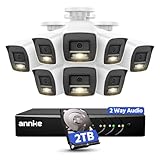
Overview: This complete ANNKE 8-camera system provides an all-in-one wired surveillance solution. It includes an 8-channel DVR with 2TB storage, eight 1080p outdoor-ready cameras featuring color night vision, and AI-powered motion detection, targeting comprehensive home or small business security. What Makes It Stand Out: The AI Motion Detection 2.0 significantly reduces false alarms by distinguishing humans/vehicles, sending precise app alerts. Paired with the Smart Light color night vision (switching to color on detection) and true two-way audio across all cameras, it delivers intelligent, actionable monitoring without ongoing fees. Value for Money: Exceptional bundled value. The inclusion of 2TB storage, eight weatherproof cameras, and AI features at this price point undercuts many competitors requiring separate subscriptions for similar intelligence. It’s a cost-efficient foundation for reliable, high-quality surveillance. Strengths and Weaknesses: Strengths: Effective AI human/vehicle detection; smart color night vision; true two-way audio on all cams; no monthly fees; generous 2TB storage; easy HDD expansion. Weaknesses: Max 1080p resolution limits detail; analog system (not IP); fixed 3.6mm lenses; initial setup can be complex for beginners. Bottom Line: A highly compelling, subscription-free system offering intelligent detection and color night vision. Best for users seeking a complete, feature-rich wired setup without recurring costs, though resolution is capped at 1080p.
4. ANNKE 3K Two-Way Audio Security Camera System, 8CH 3K Lite H.265+ DVR with AI Human/Vehicle Detection, 4X 5MP/3K CCTV Wired Cams with Color Night Vision, 1TB HDD for Home Surveillance 24/7 Recording

Overview: ANNKE’s step-up system delivers enhanced clarity with four 3K (5MP) cameras and an 8-channel DVR, supporting up to 3K resolution. It features AI motion detection, versatile color night vision, and two-way audio, designed for users demanding superior detail in their security footage. What Makes It Stand Out: The 3K resolution (2960x1665) provides noticeably sharper detail than 1080p, crucial for identifying faces or license plates, especially when digitally zooming. The three-mode night vision (IR, White Light, Triggered Color) ensures adaptable 24/7 clarity, while H.265+ compression maximizes 1TB storage efficiency. Value for Money: Justifies its higher price with significantly better image quality and modern H.265+ encoding. The inclusion of AI detection and robust color night vision avoids subscription traps common in wireless systems. While the 4-camera kit is expandable, the initial resolution jump offers substantial ROI for detail-focused users. Strengths and Weaknesses: Strengths: Superior 3K image detail; efficient H.265+ storage; excellent AI human/vehicle detection; flexible triple-mode night vision; no subscription fees; dual HDD support. Weaknesses: Only 4 cameras included (DVR supports 8); 3K requires more storage/bandwidth; setup is more complex than wireless; fixed 2.8mm lenses. Bottom Line: A top-tier wired system for users prioritizing high-resolution detail and intelligent alerts without subscriptions. The 3K footage and advanced night vision make it worth the investment for critical surveillance areas, despite a steeper setup curve.
5. 《130°Wide Angle & Two-Way Audio》Wireless Security Camera System Outdoor, WiFi Cameras Systems,Video Surveillance DVR Kits

Overview: This system offers a hybrid “wireless” (WiFi-connected) solution with four outdoor cameras requiring wired power. It emphasizes a 130° wide field of view per camera, two-way audio, and 100ft night vision, targeting users wanting broad coverage without complex cabling—though power wiring is essential. What Makes It Stand Out: The ultra-wide 130° lens significantly reduces blind spots, ideal for large areas like driveways. The dual connectivity (WiFi or Ethernet) ensures stable transmission, while the 100ft night vision and real-time two-way audio provide robust monitoring capabilities in diverse lighting. Value for Money: Offers good value for wide-area coverage at a competitive price. The Ethernet option enhances reliability over pure WiFi systems, but the need for power wiring per camera and potential WiFi interference in dense networks can diminish the “wireless” convenience it advertises. Strengths and Weaknesses: Strengths: Exceptional 130° field of view; flexible WiFi/Ethernet connection; strong 100ft night vision; true two-way audio; straightforward installation for tech-savvy users. Weaknesses: “Wireless” is misleading (power cables required); WiFi can suffer interference; night vision quality may degrade at max range; build quality less rugged than IP67 wired cams. Bottom Line: A practical choice for covering large outdoor spaces affordably, especially where Ethernet is feasible, but manage expectations: it’s not truly wire-free, and reliability depends heavily on your WiFi environment. Best for users prioritizing wide angles over ruggedness.
6. GNCC 2K Security Cameras 4pcs, Home Security Camera Indoor with 360° Motion Detection for Pets/Baby/Dog, Two-Way Audio, Night Vision, 24/7 SD Card Storage, Cloud Storage, Compatible with Alexa
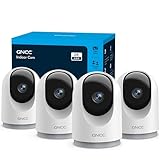
Overview:
The GNCC 2K Security Cameras offer a 4-piece indoor system designed for vigilant home monitoring. With 2K resolution, 355° horizontal/90° vertical rotation, and robust night vision, it targets pet owners, parents, and security-conscious households seeking comprehensive coverage without blind spots.
What Makes It Stand Out:
Its standout features include seamless 360° motion tracking via the OSAIO app, crystal-clear night vision, and flexible storage options (24/7 SD card or 30-day cloud trial). The two-way audio enables real-time interaction, while Alexa/Google Assistant compatibility simplifies voice-controlled viewing. The type-C continuous power ensures uninterrupted monitoring.
Value for Money:
Priced competitively for a 4-camera 2K kit, it outperforms cheaper 1080p alternatives in resolution and coverage. The inclusion of cloud storage (even as a trial) and SD card flexibility adds value, though the lack of included SD cards is a minor drawback. Ideal for those prioritizing detail and wide-area surveillance.
Strengths and Weaknesses:
Strengths: Exceptional 2K clarity; smooth pan/tilt tracking; reliable motion alerts; versatile storage; easy multi-device sharing.
Weaknesses: Requires 2.4GHz Wi-Fi only; no included SD card; app connectivity can be finicky beyond 3 feet from router.
Bottom Line:
A feature-rich, high-value kit for whole-home monitoring. Despite minor connectivity constraints, its resolution, tracking, and storage options make it a top pick for pet/child safety and security.
7. Blink Mini - Compact indoor plug-in smart security camera, 1080p HD video, night vision, motion detection, two-way audio, easy set up, Works with Alexa – 2 cameras (White)

Overview:
Blink Mini delivers a streamlined 1080p indoor security solution in a compact, plug-in design. Tailored for budget-conscious users, it emphasizes simplicity with motion detection, night vision, and Alexa integration, ideal for entry-level home monitoring.
What Makes It Stand Out:
Its ultra-compact size and effortless plug-in setup differentiate it from bulkier competitors. The motion zone customization and integration with Blink doorbells (as a chime) enhance practicality. Two-way audio and real-time alerts via the intuitive Blink app ensure responsive interaction.
Value for Money:
An affordable dual-camera entry point into smart security. While the free tier limits cloud storage, the 30-day subscription trial provides initial flexibility. Lacks local storage without a separate Sync Module, but excels as a no-frills, reliable basic monitor.
Strengths and Weaknesses:
Strengths: Tiny footprint; simple installation; responsive motion zones; Alexa compatibility; cost-effective for two cams.
Weaknesses: Cloud storage requires subscription; no local storage without add-on; limited night vision range; 1080p lags behind 2K rivals.
Bottom Line:
Perfect for renters or first-time users needing discreet, essential monitoring. Its limitations in storage and resolution are offset by ease of use and price, making it a smart starter kit.
8. LaView Security Cameras 4pcs, Home Security Camera Indoor 1080P, Wi-Fi Cameras Wired for Pet, Motion Detection, Two-Way Audio, Night Vision, Phone App, Works with Alexa, iOS & Android & Web Access
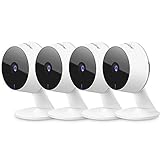
Overview:
LaView’s 4-camera wired Wi-Fi system provides stable 1080p indoor monitoring with a focus on accessibility. Designed for pet/child supervision, it combines noise-canceling two-way audio, night vision, and broad platform support (web, iOS, Android) for versatile home oversight.
What Makes It Stand Out:
The wired connection ensures consistent performance, avoiding Wi-Fi dropouts. Unique strengths include 20-user sharing capacity, 33ft IR night vision, and AWS-secured US cloud storage (30-day trial). Web browser access and 9-camera multi-view set it apart for collaborative household monitoring.
Value for Money:
Offers exceptional value with its 4-camera wired setup, prioritizing reliability over ultra-high resolution. The free cloud trial and microSD support (up to 128GB) reduce long-term costs. Competes well against pricier wireless kits by eliminating connectivity risks.
Strengths and Weaknesses:
Strengths: Wired stability; extensive sharing/web access; strong night vision; noise-canceling audio; AWS-secured cloud.
Weaknesses: Only 1080p resolution; requires physical wiring; 2.4GHz Wi-Fi limitation; setup less flexible than plug-in models.
Bottom Line:
A dependable, user-friendly system for families needing rock-solid connectivity and collaborative access. Best for those prioritizing reliability over portability and higher resolution.
9. Tapo 2K Pan/Tilt Security Camera for Baby Monitor, Dog Camera w/Motion Detection, 2-Way Audio Siren, Night Vision, Cloud&SD Card Storage, Works w/Alexa & Google Assistant, 2-Pack (Tapo C210P2)

Overview:
Tapo’s C210P2 2K dual-camera pack merges high-definition security with smart monitoring for babies and pets. Featuring pan/tilt functionality, crying detection, and a built-in siren, it targets users seeking advanced, interactive home surveillance.
What Makes It Stand Out:
2K resolution paired with 360° horizontal/114° vertical coverage delivers unmatched detail. The baby crying detection (subscription-free) and integrated siren for intruder deterrence are standout innovations. Seamless Alexa/Google integration and dual storage (cloud/SD) enhance usability.
Value for Money:
Priced mid-range for a 2K dual-pack, it justifies cost with premium features like siren and crying detection absent in competitors. Local storage avoids mandatory subscriptions, offering better long-term savings than cloud-reliant brands like Blink.
Strengths and Weaknesses:
Strengths: Superb 2K clarity; comprehensive pan/tilt; useful siren/crying detection; no subscription for core features; flexible storage.
Weaknesses: Chromecast display limitations; 2.4GHz Wi-Fi only; siren range may be limited indoors.
Bottom Line:
An excellent all-in-one solution for pet/child safety with unique proactive features. Its balance of resolution, intelligence, and value makes it highly recommended for tech-savvy households.
10. Tapo 1080P Indoor Pan/Tilt Wired Security Camera - Works as a Baby & Pet Monitor, Motion Detection, 2-Way Audio, Siren, Night Vision, Subscription-Free Local Storage or Optional Cloud, Black, C201

Overview:
The Tapo C201 is a wired 1080p pan/tilt camera focused on essential security with subscription-free local storage. Built as a reliable baby/pet monitor, it emphasizes affordability and data privacy through microSD-based recording.
What Makes It Stand Out:
Its wired design ensures uninterrupted performance, while the 360° pan/tilt and 30ft night vision cover entire rooms. The standout feature is truly subscription-free local storage (up to 512GB microSD), avoiding recurring fees. The built-in siren and crying detection add proactive security.
Value for Money:
Exceptional value for privacy-focused users. Eliminating mandatory cloud subscriptions saves long-term costs, and the single-camera price undercuts wireless competitors. Ideal for budget buyers needing dependable, no-nonsense monitoring without hidden fees.
Strengths and Weaknesses:
Strengths: Zero-cost local storage; wired reliability; siren/crying detection; broad compatibility; simple setup.
Weaknesses: Only 1080p resolution; requires wiring; limited night vision vs. rivals; microSD compatibility checks needed.
Bottom Line:
A minimalist, cost-effective powerhouse for those prioritizing data control and reliability. Highly recommended for users wary of subscriptions and seeking straightforward, secure monitoring.
Understanding Two-Way Audio Technology
How Real-Time Communication Actually Works
Two-way audio relies on integrated microphones and speakers within the camera housing. When you activate the feature via your smartphone app, your voice travels through your home’s Wi-Fi network to the camera’s cloud server, then back down to the device’s speaker almost instantly. Simultaneously, the camera’s microphone picks up sounds at the location and streams them back to your device. This creates a live audio loop, mimicking a standard phone call but integrated directly with the video feed. The quality and reliability hinge heavily on your internet speed and the camera’s internal processing capabilities.
Key Factors Influencing Audio Clarity
Achieving clear communication isn’t automatic. Background noise cancellation algorithms are crucial for filtering out wind, rain, traffic, or household sounds that can drown out voices. The physical placement of the microphone and speaker within the camera housing significantly impacts pickup range and distortion. Higher-quality components generally provide better frequency response, making voices sound more natural rather than tinny or muffled. Don’t underestimate environmental factors; a camera mounted under an overhang will perform better outdoors during rain than one fully exposed.
The Critical Role of Low Latency
Latency – the slight delay between speaking and hearing your voice played back through the camera – is the silent killer of natural conversation. High latency (over 300-500 milliseconds) makes interactions feel stilted and awkward, like talking on a very bad satellite phone. Modern systems prioritize minimizing this delay through efficient data compression and optimized server routing. Low latency is non-negotiable for smooth, effective communication, especially in urgent situations where split-second responses matter.
Essential Features to Evaluate Beyond Basic Audio
Video Quality Synchronization with Audio
Crystal-clear video is meaningless if the audio is garbled, and vice versa. Prioritize cameras offering at least 1080p resolution with good low-light performance (color night vision is a significant plus). Ensure the video stream remains stable and synchronized with the audio feed; noticeable lag between lip movements and sound is frustrating and counterproductive. High frame rates (30fps) contribute to smoother overall interaction.
Field of View Considerations for Effective Interaction
A narrow field of view (FOV) might capture great detail but miss people approaching from the side, making audio communication feel disconnected from the visual. A wider FOV (130-150 degrees or more) provides better context, allowing you to see who you’re talking to and their surroundings more effectively. Consider if you need pan-tilt-zoom (PTZ) functionality to actively direct the camera towards a sound source detected by the microphone.
Motion and Sound Detection Triggers
Smart detection features are vital for timely intervention. Look for systems that offer customizable motion zones to avoid false alerts from swaying trees. Advanced sound detection (like glass break or specific alarm frequencies) can trigger instant notifications, prompting you to jump into the live feed and use two-way audio immediately. The ability to differentiate between a person and general movement significantly reduces notification fatigue.
Installation and Placement Strategies for Optimal Performance
Indoor vs. Outdoor Camera Requirements
Outdoor cameras demand robust weatherproofing (look for IP65 or higher ratings) and often require hardwiring or robust battery solutions. Placement must consider wind noise interference with microphones and potential speaker distortion from rain. Indoor units prioritize discretion and placement near common interaction points (front doors, back patios visible through windows, nurseries). Avoid placing indoor mics directly next to noisy appliances like HVAC vents.
Strategic Positioning for Clear Audio Capture
Elevate the camera slightly above head height for the best downward viewing angle and to minimize direct exposure to wind. Position the microphone away from potential noise sources like ceiling fans or busy streets. For doorbell cameras, ensure the speaker/mic unit is mounted at a height where visitors naturally speak towards it (typically 4-5 feet). Test placements by having someone stand at the expected interaction point while you monitor audio quality remotely.
Wired vs. Wireless Power Considerations
Hardwired cameras (often doorbells or fixed outdoor units) provide consistent power, eliminating battery anxiety and ensuring the microphone/speaker is always active. Battery-powered options offer flexible placement but require regular recharging; ensure the model allows two-way audio use without rapidly draining the battery. Solar charging can be a viable supplement for outdoor battery cams. Power stability directly impacts audio feature reliability.
Privacy, Security, and Ethical Usage Guidelines
Understanding Data Encryption Protocols
Your live audio and video streams are sensitive data. Insist on end-to-end encryption (E2EE) for both video and audio streams between the camera and your app. This ensures only you and authorized users can access the communication, preventing interception by hackers or even the manufacturer’s servers. Avoid systems that only offer encryption “in transit” without E2EE for maximum privacy assurance.
Securing Your Camera Network from Hacks
Two-way audio cameras are attractive targets. Use strong, unique passwords for both your Wi-Fi network and the camera account. Enable two-factor authentication (2FA) everywhere possible. Keep the camera’s firmware updated religiously to patch security vulnerabilities. Isolate cameras on a separate Wi-Fi network (a guest network) if your router supports it, adding a layer of protection to your main home devices.
Navigating Legal and Ethical Boundaries
Laws regarding audio recording vary significantly by location (e.g., two-party consent states in the US). Research your local regulations thoroughly before installing. Always inform visitors if they are being recorded with audio; many jurisdictions require visible signage. Use the feature responsibly: avoid eavesdropping on neighbors, respect privacy in sensitive areas like bathrooms, and never use it for harassment. Ethical use builds trust and prevents legal headaches.
Maximizing Value Through Smart Integration
Compatibility with Existing Smart Home Ecosystems
Ensure the camera integrates seamlessly with your current smart home platform (e.g., Apple HomeKit, Google Home, Amazon Alexa, Samsung SmartThings). This allows for voice commands (“Hey Google, show me the front door camera”) and automation triggers. For instance, motion detection could automatically turn on indoor lights while you initiate a two-way audio check via your smartwatch, creating a layered security response.
Leveraging Cloud Storage and Local Options
Cloud storage subscriptions often include event-based recording triggered by motion/sound, allowing you to review past interactions where you used two-way audio. Understand the retention period and costs. Local storage (via microSD card) offers a privacy-focused backup but may not capture pre-event footage crucial for context. Some systems offer both. Assess which model aligns with your need to review past communication events.
Utilizing Advanced Notification Settings
Fine-tune alerts to avoid overwhelm. Set specific schedules (e.g., only get audio-triggered alerts between 10 PM and 6 AM). Use activity zones to ignore motion in your neighbor’s yard. Prioritize notifications for human detection over general motion. The goal is to receive alerts only when immediate two-way audio intervention is likely necessary, ensuring you respond to genuine events.
Long-Term Reliability and User Experience Factors
Assessing Build Quality and Weather Resistance
For outdoor use, scrutinize the Ingress Protection (IP) rating – IP65 is the bare minimum for weather resistance, IP66 or IP67 offers better protection against heavy rain and dust. Check reviews for reports of microphone ports clogging with debris or speakers failing prematurely due to moisture. Sturdy mounting hardware is essential to prevent wind-induced movement that creates noise.
Evaluating App Interface and Ease of Use
The app is your command center. It must be intuitive, stable, and provide one-tap access to the two-way audio function during live view. Test the app responsiveness – does activating audio cause lag or crashes? Look for features like voice enhancement sliders or noise reduction toggles within the app settings. A clunky interface undermines the entire real-time communication benefit.
Considering Long-Term Support and Updates
Investigate the manufacturer’s track record for providing regular firmware updates, especially for security patches and feature improvements. Companies that abandon older models quickly leave you with vulnerable devices. Check community forums for user sentiment regarding ongoing support. Long-term software maintenance is critical for both security and preserving the functionality of your two-way audio feature.
Frequently Asked Questions
How much delay should I expect with two-way audio?
Most modern, well-configured systems aim for latency under 300 milliseconds, which feels nearly instantaneous for conversation. Delays exceeding half a second become noticeably disruptive. Your home internet speed and stability are the biggest factors; a strong 5GHz Wi-Fi connection is highly recommended.
Can two-way audio work if my internet goes down?
Generally, no. Two-way audio relies on your home Wi-Fi connecting to the manufacturer’s cloud servers and then to your smartphone app. If your home internet is down, the camera cannot communicate with the outside world. Some advanced systems with local processing hubs might offer limited local network functionality, but this is rare.
Is it safe to use two-way audio to talk to delivery drivers?
Yes, it’s a common and practical use case. It allows you to confirm delivery instructions, request specific placement, or even instruct them to leave a package if you’re unexpectedly unavailable. Always be polite and remember they are performing a service. Avoid using it to argue or be demanding.
How can I prevent my camera’s microphone from picking up constant background noise?
Strategic placement is key – avoid locations near loud appliances, busy streets, or under eaves where wind howls. Look for cameras with advanced noise suppression technology that actively filters out constant low-frequency hums (like HVAC) or wind noise. Adjusting the microphone sensitivity settings in the app can also help.
Do I need a subscription for two-way audio to work?
Basic live view with two-way audio typically works without a subscription. However, features like cloud recording of your audio interactions, advanced person detection to trigger audio alerts, or extended history usually require a paid cloud storage plan. Always check the feature breakdown.
Can pets trigger the two-way audio feature?
Motion detection can be triggered by pets, potentially sending you an alert. However, the two-way audio feature itself is manual – you have to actively open the app and press the talk button. Some cameras offer pet-specific motion detection zones or AI that filters out small animals, reducing unnecessary alerts that might prompt you to use audio.
Is two-way audio secure from hackers listening in?
Security depends entirely on the camera manufacturer’s practices. Choose models with end-to-end encryption (E2EE) for both video and audio streams. Enable strong passwords and two-factor authentication. Without E2EE, there’s a risk that data could be intercepted or accessed by unauthorized parties, including the company itself.
Can I use two-way audio cameras for baby monitoring?
Many people do use indoor security cameras with two-way audio for this purpose. However, dedicated baby monitors often offer superior audio quality (optimized for faint sounds), longer battery life, and features like temperature monitoring specifically designed for nurseries. Security cameras can work, but assess audio clarity carefully.
Why does my voice sound muffled or distorted through the camera speaker?
This is often caused by low speaker quality, physical obstructions near the speaker grill, or environmental factors like wind or rain outdoors. It can also happen if the microphone is too close to the speaker, causing feedback. Try adjusting the volume settings in the app or repositioning the camera slightly.
Are there legal restrictions on recording audio with security cameras?
Yes, significantly. Laws vary by country, state, and even municipality. In many places (like parts of the US), you must have the consent of at least one party involved in the conversation (one-party consent), meaning you can record if you are part of the conversation (which you are, via the camera). In other areas (two-party consent states), all parties must be aware they are being recorded. Always check your local laws before installation. Visible signage is often required.