Imagine waking up to the sound of dripping water—not from the shower, but from your ceiling. Or discovering a soggy patch on your rental apartment’s hardwood floor, praying it’s not from the unit above. Water damage strikes silently, often when you’re asleep or away, turning minor leaks into catastrophic, wallet-draining disasters. For renters, the stakes feel especially high; a single undetected leak could mean losing your entire security deposit or facing steep charges. Homeowners, meanwhile, dread the structural nightmares and insurance headaches that follow. The good news? Technology has evolved far beyond the days of hoping for the best. Smart water leak detectors now offer an affordable, proactive shield against one of the most common—and preventable—household crises.
You might be wondering: “Are these devices really worth adding to my already crowded smart home setup?” Especially when you’re balancing a tight budget as a renter or prioritizing value as a homeowner. The answer isn’t just yes—it’s how you choose the right one that transforms it from a gadget into a genuine safety net. Forget complex installations or sky-high price tags. Today’s smart detectors are designed with real-world constraints in mind: no permanent modifications for renters, seamless integration for tech-savvy owners, and features that prioritize actionable alerts over constant noise. This guide cuts through the marketing fluff to show you exactly what makes a detector deliver true value in 2026, focusing on the features that matter most for your living situation and peace of mind.
Top 10 Smart Water Leak Detectors
Detailed Product Reviews
1. GoveeLife Upgraded Smart Water Leak Detector 1s with 1804ft Ultra-Long Range, WiFi Water Sensor with SMS/Email/APP Push and Sound Alarm, 5-Year Battery Life, Suit for Home, Basement, Kitchen, 3 Pack
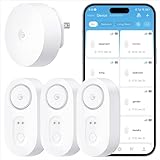
Overview:
This 3-pack of GoveeLife 1s detectors offers robust water leak protection for critical home areas. Utilizing Sub-1G wireless tech, it provides exceptional range and multi-channel alerts via SMS, email, app push, and a loud 105dB alarm, paired with a 5-year battery life and IP67 waterproofing.
What Makes It Stand Out:
Its breakthrough 1,804ft/550m range through dense walls is unmatched for large properties, ensuring coverage from basements to detached garages. The free SMS alerts (unlimited usage) and 4-level volume adjustment via app add unique flexibility, while IP67 rating guarantees resilience against submersion and humidity.
Value for Money:
Priced competitively for a 3-pack, it delivers premium features like ultra-long range and multi-method alerts typically found in costlier systems. Ideal for small-to-medium homes needing targeted coverage without a hub, it outperforms basic WiFi sensors with shorter ranges.
Strengths and Weaknesses:
Strengths: Exceptional range; reliable SMS/email/app alerts; durable IP67 build; customizable alarm volume; 5-year battery. Weaknesses: Requires stable WiFi (no offline mode); app-centric setup may challenge less tech-savvy users; SMS alerts depend on carrier reliability.
Bottom Line:
A top choice for homeowners prioritizing long-range coverage and multi-channel alerts in key areas. The 3-pack offers excellent value for targeted protection, though those needing whole-home scalability should consider hub-based alternatives.
2. GoveeLife Upgraded Smart Water Leak Detector 1s with 1804ft Ultra-Long Range, WiFi Water Sensor with SMS/Email/APP Push and Sound Alarm,5-Year Battery Life, 5 Pack, Suit for Home, Basement, Kitchen

Overview:
This 5-pack expands GoveeLife’s proven 1s detector system, delivering extensive coverage for larger homes. It retains the core strengths of the 3-pack model—Sub-1G wireless tech, multi-notification alerts, 105dB alarm, and 5-year battery—but with added sensors for comprehensive protection.
What Makes It Stand Out:
The ultra-long 1,804ft range through multiple walls remains its crown jewel, enabling seamless monitoring across expansive properties. Free SMS alerts and app-based volume control provide user-friendly customization, while IP67 waterproofing ensures sensors survive repeated wet exposures.
Value for Money:
The 5-pack offers significant savings per sensor versus buying multiple 3-packs, making it economical for whole-home deployment. It surpasses competitors in range and notification reliability at this price point, though hub-dependent systems may offer more advanced automation.
Strengths and Weaknesses:
Strengths: Cost-effective bulk coverage; industry-leading range; durable IP67 rating; versatile alert system; 5-year battery life. Weaknesses: No offline functionality during internet outages; relies solely on WiFi connectivity; SMS delivery isn’t guaranteed.
Bottom Line:
Highly recommended for larger homes or properties needing broad, reliable leak detection. The 5-pack maximizes value for extensive coverage, but users in areas with spotty internet should explore offline-capable alternatives like YoLink.
3. YoLink Water Leak Starter Kit: Hub + 4 Leak Sensor 1 (Silent), LoRa Long-Range, App/SMS/Email Alerts, D2D Offline Triggers, 2 AAA Up to 5-Year Battery, Compatible with Alexa/IFTTT/Home Assistant

Overview:
This starter kit combines a hub with four silent leak sensors, leveraging LoRa technology for exceptional range and offline functionality. Designed for whole-home coverage, it integrates with smart ecosystems while offering critical protection during internet outages.
What Makes It Stand Out:
The standout feature is YoLink’s Control-D2D, enabling sensors to directly trigger sirens or shutoff valves without internet—crucial during floods. Its 1/4-mile open-air range outperforms WiFi models, and the silent-sensor design (paired with optional SpeakerHub) allows customizable alert strategies.
Value for Money:
While pricier upfront than standalone sensors, the kit’s offline capability and hub scalability (supporting 300+ devices) justify the cost for serious flood prevention. Long-term savings come from automating water shutoffs and avoiding hub subscription fees.
Strengths and Weaknesses:
Strengths: Works during internet/power outages; massive LoRa range; highly scalable ecosystem; silent sensors reduce false alarms; Alexa/IFTTT/Home Assistant support. Weaknesses: Requires hub purchase; no built-in siren on sensors; setup is more complex than WiFi-only models.
Bottom Line:
Essential for homeowners prioritizing reliability during emergencies. The offline functionality and ecosystem integration make it worth the investment for comprehensive, future-proof protection—ideal for basements, vacation homes, or flood-prone areas.
4. Govee WiFi Water Leak Detector 3 Packs, Leak Alert with Remotely Email/APP Push and Sound Alarm, Smart Water Sensor with 100dB Adjustable Alarm, Suit for Home and Basement

Overview:
This budget-friendly 3-pack uses standard WiFi for real-time leak detection, featuring email/app alerts, a 100dB alarm, and multi-sensor connectivity. It targets entry-level users needing basic coverage for kitchens, basements, or laundry rooms.
What Makes It Stand Out:
The gateway’s ability to connect 20 sensors creates a flexible “protection net,” while triple probe design (front + dual back groups) improves drip detection accuracy. Adjustable volume and mute function add practicality for noise-sensitive areas like bedrooms.
Value for Money:
An affordable entry point for WiFi-based leak detection, though range is limited compared to Sub-1G/LoRa models. Best for small homes with reliable WiFi; lacks SMS alerts and ultra-long range but offers solid core functionality at a lower price.
Strengths and Weaknesses:
Strengths: Low-cost 3-pack; easy WiFi setup; mute button for alarms; 20-sensor gateway capacity; triple-probe sensitivity. Weaknesses: Shorter range (~100ft typical); no SMS/cellular alerts; 100dB max volume (quieter than competitors); battery life unspecified beyond “years.”
Bottom Line:
A practical solution for renters or compact homes with strong WiFi. While it lacks advanced features like SMS alerts or extreme range, its simplicity and expandable gateway make it a sensible budget pick for essential leak monitoring.
5. GoveeLife Premium Smart Water Leak Detector 2 with 1968ft Ultra-Long Range, WiFi Water Sensor with SMS/Email/APP Push and Sound Alarm, 5-Year Battery Life, Suitable for Home, Basement, Kitchen, 4 Pack

Overview:
The Premium 2 model (4-pack) upgrades Govee’s lineup with LoRa technology, voice assistant integration, and enhanced probes. It delivers extended range, multi-platform alerts, and high sensitivity for comprehensive home flood prevention.
What Makes It Stand Out:
LoRa enables an industry-leading 1,968ft range—ideal for large properties—while Alexa/Google voice alerts provide hands-free monitoring. Six total probes (2 top + 4 bottom) offer superior drip detection versus competitors, and IP66 rating ensures durability in damp zones like sump pumps.
Value for Money:
Priced higher than the 1s model, the Premium 2 justifies cost with LoRa reliability, voice control, and probe density. The 4-pack balances coverage for medium homes better than the 3-pack 1s, though IP66 (vs IP67) offers slightly less submersion protection.
Strengths and Weaknesses:
Strengths: LoRa’s stable long-range; voice assistant compatibility; high-sensitivity 6-probe design; 5-year battery; SMS/email/app alerts. Weaknesses: IP66 less robust than IP67 for full submersion; 100dB alarm (lower than 1s’ 105dB); no offline mode.
Bottom Line:
A compelling upgrade for tech-savvy users wanting voice control and maximum sensitivity. The 4-pack excels in larger homes but loses points for no offline operation—choose this over the 1s if voice features and probe count outweigh absolute waterproofing needs.
6. GoveeLife Upgraded Smart Water Leak Detector 1s with 1804ft Ultra-Long Range, WiFi Water Sensor with SMS/Email/APP Push and Sound Alarm, 5-Year Battery Life, Suit for Home, Basement, Kitchen, 6 Pack

Overview: This 6-pack smart water leak detector suite leverages Sub-1G wireless technology for expansive property coverage, targeting critical areas like basements and kitchens with long-range monitoring and multi-channel alerts.
What Makes It Stand Out: Its breakthrough 1,804-foot range through dense walls and free SMS/email/app notifications—plus a 105 dB alarm and 5-year battery—set it apart. The IP67 rating ensures resilience against submersion, while 4-level volume adjustment caters to varied environments.
Value for Money: At a competitive price for six sensors, it offers exceptional reach and notification flexibility unmatched by most hubs requiring subscriptions for SMS. The long battery life and durability justify the cost for large or multi-building setups.
Strengths and Weaknesses: Strengths: Unrivaled range; no SMS fees; robust waterproofing; family alert sharing; easy volume control. Weaknesses: Requires gateway (sold separately); app functionality may lack depth versus competitors; SMS reliance could delay alerts in poor signal areas.
Bottom Line: Ideal for large properties needing wall-penetrating range and free SMS alerts, though confirm gateway compatibility first—highly recommended for vacation homes or expansive estates seeking reliable, long-term leak prevention.
7. X-Sense Wi-Fi Water Leak Detector Kit, Smart Water Sensor Alarm with App Alerts and Ultra-Slim Design, Water Alarm Leak Detector for Basements, 4 Water Sensors and 1 Base Station, Model SWS0A41

Overview: This kit includes four ultra-slim sensors and a base station for 2.4 GHz Wi-Fi homes, providing immediate leak detection via app alerts, a 100 dB alarm, and flexible placement in tight spaces like under sinks.
What Makes It Stand Out: Dual-sensing probes (2 top, 4 bottom) detect 0.4mm-thin leaks from above or below, while the app offers “Remind Me Later” scheduling and low-battery tracking. Its 0.7-inch profile fits cramped areas most sensors cannot.
Value for Money: The bundle price is fair for four sensors plus a hub, but competing direct-Wi-Fi models eliminate hub costs. The slim design and precise leak detection justify investment for cluttered spaces despite the hub requirement.
Strengths and Weaknesses: Strengths: Exceptional thinness; top/bottom leak detection; intuitive app controls; strong 100 dB alarm; “Remind Me Later” feature. Weaknesses: Mandatory base station adds cost/complexity; 2.4 GHz only; limited to four sensors per hub.
Bottom Line: A top pick for cramped installations needing multi-angle leak detection, though the hub dependency may deter some—best for organized homes prioritizing space-saving design over hub-free simplicity.
8. GoveeLife Premium Smart Water Leak Detector 2 with 1968ft Ultra-Long Range, WiFi Water Sensor with SMS/Email/APP Push and Sound Alarm, 5-Year Battery Life, Suitable for Home, Basement, Kitchen, 3 Pack
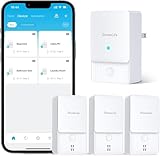
Overview: This 3-pack uses LoRa technology for extreme-range leak monitoring, delivering SMS/email/app alerts and voice assistant integration via Alexa, targeting whole-home coverage from basements to sheds.
What Makes It Stand Out: Industry-leading 1,968-foot range and Alexa voice alerts differentiate it, alongside dual-sensing probes (2 top, 4 bottom) and IP66 waterproofing for damp zones. Five-year battery life ensures minimal maintenance.
Value for Money: Priced moderately for three sensors, it excels in large-property value with free SMS and LoRa reliability. However, the IP66 rating (vs. IP67 on rivals) and gateway requirement slightly reduce cost efficiency for flood-prone areas.
Strengths and Weaknesses: Strengths: Extreme LoRa range; voice assistant support; long battery life; multi-probe sensitivity; family alert sharing. Weaknesses: IP66 (not IP67) waterproofing; gateway needed; no volume adjustment beyond app.
Bottom Line: Optimal for vast properties needing voice alerts and unmatched range, but verify gateway compatibility—choose over competitors if SMS/voice integration outweighs minor waterproofing compromises.
9. TP-Link Tapo Smart Water Leak Detector, Requires Tapo Hub, Water Leak Sensor Wi-Fi with Rapid Dripping Detection, 90dB Adjustable Alarm, App Alerts, Compatible with Alexa and Google Home, T300

Overview: This compact sensor requires TP-Link’s Tapo Hub but delivers rapid 1-second leak detection and seamless smart-home integration, targeting quick response for kitchens or laundry rooms.
What Makes It Stand Out: Six probes enable top/bottom sensing with industry-fast 1-second alerts, while adjustable 90 dB alarms and IP67 waterproofing ensure reliability. Direct compatibility with Alexa/Google adds convenience.
Value for Money: Hub dependency increases initial cost, but rapid detection and smart-home synergy justify it for Tapo ecosystem users. Battery life (3 years) trails Govee’s 5-year standard, slightly reducing long-term value.
Strengths and Weaknesses: Strengths: Blazing-fast 1-second response; dual-side sensing; IP67 rating; smart assistant support; adjustable alarm. Weaknesses: Mandatory Tapo Hub; shorter battery life; hub limits sensor scalability.
Bottom Line: A must for Tapo Hub owners prioritizing speed and smart-home integration, but avoid if unwilling to invest in the ecosystem—ideal for tech-savvy users seeking instant leak mitigation.
10. X-Sense Wi-Fi Water Leak Detector for Home - Smart 2-in-1 Leak & Low-Temperature Sensor with App Alerts, Protection for Homes, Kitchens & Basements, Works with X-Sense Home Security App, Model SWS0B

Overview: This hub-free sensor detects both water leaks and freezing temperatures via 2.4 GHz Wi-Fi, offering direct app alerts and a powerful 110 dB alarm for proactive home protection.
What Makes It Stand Out: Unique dual functionality—monitoring 0.4mm leaks and temperature drops to 39°F—sets it apart. Wi-Fi direct connectivity eliminates hubs, while 6 probes and replaceable batteries enhance versatility.
Value for Money: Higher per-sensor cost is offset by freeze protection and hub elimination. The 2-year battery (replaceable) trades longevity for easy maintenance, offering strong value for cold-climate homeowners.
Strengths and Weaknesses: Strengths: No hub needed; freeze detection; 110 dB alarm; top/bottom probes; replaceable battery. Weaknesses: Shorter battery life than 5-year rivals; 2.4 GHz only; no SMS/email alerts.
Bottom Line: The premier choice for cold regions needing freeze alerts without hubs—highly recommended despite SMS limitations, especially for basements or seasonal properties vulnerable to pipe bursts.
Why Every Home Needs a Smart Water Leak Detector Now
Water damage isn’t a distant possibility; it’s a constant, silent threat lurking under sinks, behind toilets, and near water heaters. The average insurance claim for water damage exceeds several thousand dollars, and for renters, even minor incidents can lead to disputes over security deposits or lease violations. Beyond the financial hit, mold growth can begin within 24-48 hours of a leak, posing serious health risks. Smart detectors act as your 24/7 sentinel, catching moisture before it escalates into a major problem. They provide the critical early warning that manual checks simply can’t match, especially when you’re traveling or asleep.
The Rising Cost of Ignoring Small Leaks
That slow drip under the kitchen sink might seem trivial, but it represents wasted water and mounting damage. Over time, even minor leaks erode cabinetry, warp flooring, and compromise structural integrity. For property managers and landlords, undetected leaks in rental units are a significant liability, leading to higher maintenance costs and tenant dissatisfaction. Homeowners face similar risks, with small issues snowballing into expensive repairs that could have been avoided with timely intervention. Proactive detection isn’t just about fixing a leak; it’s about preserving the value and safety of your living space.
How Smart Detectors Outperform Traditional Methods
Unlike basic moisture sensors that only sound a local alarm (easily missed if you’re not home), modern smart detectors connect directly to your smartphone. Real-time alerts mean you get notified the instant moisture is detected, no matter where you are. Some even integrate with other smart home systems, automatically shutting off the main water supply to prevent flooding. This level of responsiveness transforms a passive warning into an active defense system, minimizing potential damage exponentially compared to waiting for visible signs like stains or warping.
Key Features That Define Real Value in 2026
When evaluating detectors, it’s easy to get overwhelmed by specs. True value lies in features that directly address reliability, ease of use, and long-term functionality without breaking the bank. Focus on what genuinely impacts your day-to-day protection and fits your specific living scenario—whether you’re renting a studio apartment or maintaining a multi-story home.
Sensor Accuracy and False Alarm Reduction
The most frustrating flaw in older detectors? Constant false alarms triggered by humidity or condensation. Modern models leverage advanced sensor technology and smarter algorithms (often using basic AI pattern recognition) to distinguish between a dangerous leak and normal environmental moisture. Look for units with adjustable sensitivity settings and proven reliability in real-world reviews. Accuracy isn’t just convenient; it ensures you take every alert seriously, preventing alert fatigue that could make you ignore a genuine emergency.
Alert Delivery and Notification Options
A detector is useless if you don’t get the alert. Prioritize models offering multiple notification pathways: push notifications to your phone are essential, but email alerts, SMS texts, and even voice alerts through smart speakers add crucial redundancy. Ensure the companion app is intuitive and allows customization—like setting specific alert times (e.g., no middle-of-the-night pings for minor humidity spikes) or designating multiple contact people (a trusted neighbor for renters, family members for homeowners).
Power Source Flexibility and Battery Life
Battery life is a major value factor. Units requiring frequent battery changes become a nuisance and create security gaps if forgotten. Seek detectors boasting multi-year battery life (often 3-5 years) on standard, easily replaceable batteries like CR123A or AA. For permanent installations in owned homes, hardwired options with battery backup offer ultimate reliability, though these are less common for renters. Avoid proprietary batteries that are hard to source or expensive.
Installation Simplicity and Versatility
How easy is it to place the detector exactly where leaks happen? The best value models feature adhesive mounts, magnetic bases, or compact designs that tuck neatly under sinks, beside washing machines, or near water heaters without tools. Renters especially need solutions that leave no marks and are effortless to remove and relocate when moving. Look for peel-and-stick pads that won’t damage surfaces and sensors small enough to fit in tight spaces.
Connectivity Range and Hub Requirements
Consider your home’s layout. Detectors relying solely on Bluetooth have limited range (often 30-50 feet), making them suitable only for small apartments. For larger homes or multi-story dwellings, Wi-Fi or Z-Wave/Zigbee connectivity (requiring a compatible smart home hub) provides whole-home coverage and reliable remote alerts. Assess whether you already have a hub ecosystem; adding a hub just for leak detectors might negate the value for simple setups, while integrated systems offer significant long-term benefits for tech-savvy homeowners.
Water Shut-Off Valve Integration Potential
While not a standard feature on entry-level models, the ability to connect to an automatic water shut-off valve represents the pinnacle of leak protection. If a leak is detected, the system can instantly cut off the main water supply, preventing catastrophic flooding. For homeowners, this feature, though requiring a higher initial investment and professional installation, delivers immense value by potentially saving tens of thousands in damage. Renters generally can’t install these, but knowing which detectors are compatible helps future-proof a purchase.
Tailoring Your Choice: Renters vs. Owners
Your living situation dramatically impacts which features are non-negotiable. Understanding these differences ensures you invest in protection that aligns with your rights, responsibilities, and mobility needs.
Critical Considerations for Renters
Renters operate under unique constraints: no permanent modifications, potential landlord restrictions, and the need for portability. Prioritize detectors that are entirely self-contained (no drilling or wiring), leave zero residue when removed, and are compact enough to pack in a moving box. Battery life is paramount—changing batteries annually feels manageable; doing it monthly is a dealbreaker. Ensure the device works reliably on standard renters’ internet (no mandatory hub if you don’t have one). Always check your lease agreement regarding smart devices, though most non-invasive detectors are permissible.
Portability and Non-Permanent Installation
The ability to take your detector with you when you move is a massive value add for renters. Look for models that don’t require any screws, adhesives that cleanly peel off (test on inconspicuous area first!), or complex setups. Magnetic mounts or simple gravity-based placements under sinks are ideal. Avoid anything needing electrical outlets near potential leak zones unless it’s specifically designed for that location with safety certifications.
Landlord Communication and Lease Compliance
Proactively discussing your detector with your landlord can prevent issues. Frame it as a mutual benefit: “This small device helps prevent major water damage that could inconvenience us both and potentially damage the property.” Most landlords appreciate the proactive approach, especially if you clarify it causes no damage. Keep documentation of the device model and its non-invasive nature handy.
Maximizing Value for Homeowners
Homeowners have more flexibility to invest in comprehensive, integrated systems that offer long-term protection and potential insurance benefits. Focus on durability, scalability, and features that integrate with your existing or planned smart home ecosystem for maximum ROI.
Long-Term Durability and Placement Strategy
Since you’re not moving it, prioritize robust construction and optimal sensor placement. Consider placing detectors not just under sinks, but at the base of water heaters, near sump pumps, and in basements or crawl spaces prone to seepage. Hardwired models with battery backup offer the most reliable continuous monitoring for critical areas in owned homes, though high-end battery models with multi-year life are often sufficient.
Integration with Home Insurance and Smart Ecosystems
Some insurance providers offer modest premium discounts for homes with monitored leak detection systems. Research this possibility—it adds tangible financial value. Furthermore, deep integration with platforms like Apple HomeKit, Google Home, or Samsung SmartThings allows for automated routines (e.g., “If leak detected in basement, turn on dehumidifier and notify me”). This ecosystem synergy significantly enhances the device’s utility beyond simple alerts.
Future-Proofing Your Investment
Technology evolves. Choose detectors using open standards (like Matter support emerging in 2026) to ensure compatibility with future hubs and services. Avoid proprietary systems that could become obsolete. Consider brands known for long software support and regular security updates, protecting your investment and your home network.
Understanding True Cost vs. Long-Term Value
“Economical” doesn’t mean “cheapest upfront.” True value considers total cost of ownership, potential damage prevention, and how well the device meets your specific needs over time. A slightly higher initial cost can yield massive savings if it prevents even one moderate leak incident.
Breaking Down the Price Spectrum
Detectors range significantly in price. Basic single-sensor units with essential alerts start very affordably, suitable for covering one critical spot (like under the kitchen sink). Mid-range models offer better battery life, improved accuracy, and multi-sensor compatibility (allowing you to add more detectors later for whole-home coverage). High-end systems include hub requirements, shut-off valve integration, and premium support. Assess which tier genuinely addresses your risk profile—don’t overpay for features you won’t use, but don’t underinvest in core reliability.
Calculating Potential Savings
Think beyond the detector’s price tag. Consider the average cost of common water damage repairs: a burst pipe under a sink can easily run $1,500-$5,000; a washing machine hose failure might cause $5,000-$10,000+ in damage. Even preventing a minor leak that ruins a section of flooring saves hundreds. A $50-$150 detector that stops one $2,000 repair pays for itself many times over. For renters, avoiding a $500 security deposit deduction is a clear win.
Subscription Services: Worth the Ongoing Cost?
Some systems offer cloud storage for leak history, professional monitoring, or advanced analytics via a monthly subscription. Evaluate critically: Is the extra data truly valuable to you? Most users find the core alert functionality sufficient without subscriptions. If a subscription is mandatory for basic remote alerts, it’s often a sign to look elsewhere—many top-tier detectors offer essential remote features without recurring fees. Only pay for subscriptions that deliver concrete, personalized benefits you’ll actively use.
Frequently Asked Questions
Frequently Asked Questions
How difficult is it to install a smart water leak detector as a renter? Installation is typically very simple for renters, often requiring just peeling a protective strip off an adhesive pad and sticking the sensor in place under a sink or near an appliance. No tools, drilling, or wiring is needed with the best renter-friendly models, and they remove cleanly without damaging surfaces.
Will my landlord allow me to install one? Most landlords permit non-invasive, removable leak detectors as they protect the property. It’s always best to inform your landlord politely beforehand, explaining it’s a small, removable device that helps prevent costly water damage, benefiting both parties.
Can these detectors work in older homes with poor Wi-Fi? Yes. Many detectors use long-range wireless protocols (like Z-Wave or Zigbee) that work reliably through walls and don’t depend solely on strong home Wi-Fi. Some also offer Bluetooth options for smaller spaces, ensuring coverage even in challenging signal areas.
How long do the batteries actually last? Top models now offer 3-5 years of battery life using standard, widely available batteries (like CR123A). Always check independent reviews for real-world battery performance, as manufacturer claims can sometimes be optimistic under ideal conditions.
Do I need a smart home hub for these to work? It depends on the model. Many modern detectors connect directly to your Wi-Fi router without a hub, making setup straightforward. Others use protocols like Z-Wave or Zigbee, which do require a compatible hub you may already own for other smart devices.
Can they detect leaks inside walls or under floors? No, detectors only sense surface moisture where they are physically placed. They won’t find hidden leaks inside walls. Their value is in catching leaks early at common failure points (under sinks, near appliances) before they cause widespread damage or become hidden.
Are there any monthly fees I should know about? Many quality detectors function fully without any subscription. Be wary of models requiring mandatory monthly fees for basic alert functionality. Optional subscriptions for advanced features like cloud history or professional monitoring exist, but core leak detection should be fee-free.
How sensitive are they to normal humidity, like in a bathroom? Advanced models have improved significantly at distinguishing between harmless ambient humidity and actual liquid water leaks, often using multi-point sensing and smart algorithms. Look for models specifically mentioning low false alarm rates in humid environments.
Can I take the detector with me when I move to a new place? Absolutely. Renters should prioritize detectors that are compact, battery-powered, and designed for easy removal and reinstallation. Ensure the mounting method (adhesive, magnetic) allows for clean transfer to your next home.
Will this device lower my homeowners insurance premium? Some insurance companies offer small discounts (typically 5-10%) for homes with monitored water leak detection systems, especially those integrated with automatic shut-off valves. Contact your insurer directly to inquire about specific programs and requirements.