Ever stared at a brown, patchy lawn after a week of heavy rain, wondering why your sprinklers kept running? Or cringed at a sky-high water bill despite your best efforts to water “just enough”? You’re not alone. Traditional irrigation timers operate blindly, sticking to rigid schedules regardless of actual weather conditions—wasting precious resources and often harming your landscape in the process. The reality is, your lawn and garden don’t need a fixed amount of water every Tuesday and Friday; they need moisture based on real-time evaporation, rainfall, temperature, and soil conditions. This mismatch between outdated watering practices and the dynamic needs of your green space is where a smarter approach becomes essential.
Weather-based irrigation controllers, often called “smart controllers” or ET (Evapotranspiration) controllers, are revolutionizing how we care for our outdoor spaces. These intelligent systems ditch the calendar for live data, automatically adjusting watering schedules to deliver only what your plants truly require. Imagine your irrigation system pausing during a downpour, watering deeply after a scorching heatwave, or skipping cycles entirely during cool, humid stretches. It’s not just about convenience; it’s a fundamental shift towards sustainability, significant cost savings, and cultivating a healthier, more resilient landscape. Understanding how these systems work and what features truly matter is the first step to unlocking this precision watering potential.
Top 10 Weather-Based Irrigation Controllers
Detailed Product Reviews
1. Rachio WiFi Smart Sprinkler Controller (8-Zone Irrigation Remote Control) – App-Based Scheduling, Local Weather Intelligence, Rain Skips, Easy DIY Install
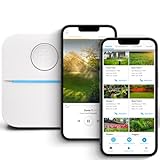
Overview:
The Rachio 8-Zone Smart Sprinkler Controller modernizes irrigation with Wi-Fi connectivity, replacing outdated timers. Its intuitive app enables precise scheduling and real-time adjustments, targeting homeowners seeking water efficiency and convenience without complex installation.
What Makes It Stand Out:
Rachio’s patented Weather Intelligence+ is its crown jewel, automatically skipping watering during rain, high winds, or freezes using hyperlocal forecasts. The “Grow-In” scheduling adapts to new lawn or garden installations, while detailed water-usage tracking empowers eco-conscious users. Seamless DIY setup and no hub requirement simplify adoption.
Value for Money:
Priced at a premium tier, it justifies cost through substantial water savings (up to 50% annually) and long-term lawn health benefits. Though pricier than basic timers, it undercuts professional irrigation systems and delivers ROI faster than competitors like Orbit due to superior weather integration.
Strengths and Weaknesses:
Strengths: Exceptional weather adaptation; user-friendly app; robust water-tracking; easy DIY install; no subscription fees.
Weaknesses: Limited to 8 zones (insufficient for large properties); outdoor-only installation; no physical display for manual overrides.
Bottom Line:
Ideal for eco-focused homeowners with mid-sized yards, this controller’s intelligence and ease of use make it a top-tier investment for water conservation and hassle-free lawn care, despite zone limitations.
2. Orbit 57946 B-hyve 6-Zone Smart Indoor/Outdoor Sprinkler Controller
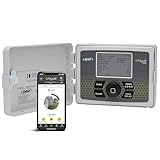
Overview:
Orbit’s B-hyve 6-Zone Controller offers flexible smart irrigation for smaller landscapes, featuring indoor/outdoor placement and app-based control. It targets budget-conscious users wanting weather-responsive watering without professional installation.
What Makes It Stand Out:
Its dual indoor/outdoor compatibility stands out, allowing placement in garages or sheds—unlike many outdoor-only rivals. The B-hyve app provides weather-based adjustments and leak detection, while “Seasonal Adjust” auto-modifies schedules based on temperature shifts, simplifying maintenance.
Value for Money:
Positioned as a mid-range option, it delivers strong value for small to medium yards. It’s cheaper than Rachio but lacks comparable weather granularity. The absence of subscription fees and solid water savings (up to 35%) make it cost-effective for casual gardeners prioritizing flexibility over advanced features.
Strengths and Weaknesses:
Strengths: Indoor/outdoor versatility; intuitive app; drip irrigation support; affordable entry price; no ongoing costs.
Weaknesses: Less precise weather intelligence than Rachio; limited to 6 zones; occasional app connectivity hiccups reported.
Bottom Line:
A practical, budget-friendly choice for compact gardens needing basic smart features, though it sacrifices some sophistication for accessibility and placement flexibility.
3. Rachio WiFi Smart Sprinkler Controller (16-Zone Irrigation Remote Control) – App-Based Scheduling, Local Weather Intelligence, Rain Skips, Easy DIY Install

Overview:
Rachio’s 16-Zone model scales up for larger properties, retaining the brand’s signature smart features. It’s engineered for homeowners with expansive lawns or complex irrigation needs requiring granular zone control via a single, unified system.
What Makes It Stand Out:
Doubling the zones of its 8-zone sibling while keeping identical Weather Intelligence+ tech is key. The app’s advanced scheduling—like customizing run times per zone for mixed plant types—and detailed water analytics cater to serious gardeners. DIY installation remains straightforward despite higher capacity.
Value for Money:
Priced higher than the 8-zone version, it’s justified for properties needing 9+ zones, avoiding the cost of multiple controllers. Water savings potential scales with yard size, offsetting the premium. Competitors like Orbit require separate units for large setups, making Rachio 16-zone more economical long-term.
Strengths and Weaknesses:
Strengths: Industry-leading weather adaptation; 16-zone capacity; comprehensive app analytics; no subscription; robust water-saving algorithms.
Weaknesses: Higher upfront cost; strictly outdoor use; overkill for small yards.
Bottom Line:
The definitive smart controller for large properties, merging Rachio’s best-in-class intelligence with expanded capacity—essential for maximizing efficiency in substantial landscapes.
4. Orbit 57950 B-hyve 12-Zone Smart Indoor/Outdoor Sprinkler Controller
Overview:
Orbit’s 12-Zone B-hyve bridges the gap between Rachio’s capacity tiers, offering versatile placement and smart features for medium-to-large yards. It’s designed for users needing more zones than Orbit’s 6-zone model without Rachio’s premium pricing.
What Makes It Stand Out:
The 12-zone capacity combined with indoor/outdoor flexibility is unique at this price point. Weather-based adjustments and “Seasonal Adjust” work across all zones, while the app’s leak alerts and usage reports enhance reliability. Its compatibility with existing wiring simplifies upgrades from older systems.
Value for Money:
Offers the best zone-per-dollar ratio among reviewed models. Significantly cheaper than Rachio’s 16-zone unit but supports larger setups than Orbit’s 6-zone. Water savings and durability justify the cost for growing landscapes, though weather precision lags behind Rachio.
Strengths and Weaknesses:
Strengths: 12-zone capacity; indoor/outdoor installation; affordable scalability; drip irrigation support; no subscription.
Weaknesses: Weather intelligence less refined; app occasionally glitchy; no physical display.
Bottom Line:
An excellent mid-range solution for expanding gardens, balancing zone capacity, placement flexibility, and cost—ideal where Rachio’s pricing is prohibitive but more zones are essential.
5. Hunter Hydrawise X2 8 Zone Sprinkler Controller, Outdoor Irrigation Timer for Lawn and Garden, Weather Based Scheduling, Cycle and Soak, Smart Controller Ready with Optional WiFi Module
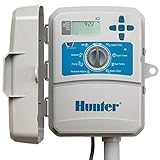
Overview:
Hunter’s X2 is a pro-grade 8-zone controller with smart readiness, blending rugged outdoor design with optional Hydrawise integration. It targets users prioritizing durability and future-proofing, especially in challenging climates or commercial-adjacent settings.
What Makes It Stand Out:
The modular “smart” approach stands out: the base unit includes weather-based scheduling and Hunter’s signature Cycle and Soak (preventing runoff on slopes/clay soil), while the optional WAND module adds full Hydrawise app control. Pro features like QuickCheck diagnostics and Easy Retrieve backup cater to tech-savvy users.
Value for Money:
The base unit is competitively priced for its commercial durability and built-in water-saving features. Adding the WAND module ($50+) approaches Rachio’s cost but delivers superior diagnostics and Cycle and Soak. Best value for those needing reliability first and smart features later.
Strengths and Weaknesses:
Strengths: Rugged outdoor build; Cycle and Soak for runoff prevention; modular smart upgrade; pro diagnostics; backup during outages.
Weaknesses: Smart features require separate purchase; app less polished than Rachio; limited to 8 zones.
Bottom Line:
A durable, future-proof workhorse for serious gardeners in tough conditions—opt for the WAND add-on if smart features are non-negotiable, but the base unit excels standalone for weather-responsive reliability.
6. Orbit 57985 B-hyve XR 8-Zone Smart Indoor/Outdoor Sprinkler Controller

Overview: The Orbit B-hyve XR is a versatile smart sprinkler controller designed for both indoor and outdoor installation, managing up to 8 zones. It leverages Wi-Fi for remote access and weather-based automation to optimize watering schedules. What Makes It Stand Out: Its dual indoor/outdoor rating and robust weather intelligence are key differentiators. The controller automatically adjusts watering based on hyperlocal forecasts and historical data, significantly reducing waste. The intuitive B-hyve app provides real-time control, usage reports, and easy scheduling from anywhere. Value for Money: Priced mid-range for smart controllers, it delivers excellent value through substantial water savings (often 20-30%) and eliminates manual seasonal adjustments. While competitors exist, its reliable outdoor durability combined with smart features justifies the cost over basic timers. Strengths and Weaknesses: Strengths: True indoor/outdoor flexibility; highly accurate weather adaptation; user-friendly app; significant water conservation; strong build quality. Weaknesses: Requires stable Wi-Fi; initial setup can confuse non-tech users; no Bluetooth for offline setup. Bottom Line: A top-tier smart controller for homeowners seeking reliable, weather-responsive watering that saves water and money; ideal for those needing both indoor mounting and outdoor resilience.
7. Orbit 57925 B-hyve 8-Zone Smart Indoor Sprinkler Controller

Overview: This Orbit B-hyve model is an indoor-focused smart sprinkler controller for 8 zones, emphasizing app-based management and water efficiency. It targets users wanting precise control over irrigation without outdoor installation requirements. What Makes It Stand Out: Seamless integration with the B-hyve app enables remote programming, real-time monitoring, and weather-based adjustments. Its compatibility with drip irrigation and smart home ecosystems (like Alexa) enhances convenience. Bluetooth setup adds flexibility beyond just Wi-Fi. Value for Money: Offers solid value for indoor installations, especially where outdoor exposure isn’t needed. The water savings from adaptive scheduling offset the price compared to non-smart timers. However, it’s less cost-effective than the XR model if outdoor mounting is required. Strengths and Weaknesses: Strengths: Excellent app experience; Bluetooth + Wi-Fi connectivity; easy DIY installation; promotes water efficiency; compatible with various irrigation types. Weaknesses: Indoor-only use limits placement; weather adjustments rely solely on internet data (no local sensor input); app occasionally lags. Bottom Line: A strong choice for dedicated indoor smart irrigation control, particularly for homes with protected utility rooms; skip if you need a weatherproof outdoor unit.
8. Orbit 57894 4-Station Outdoor Swing Panel Sprinkler System Timer
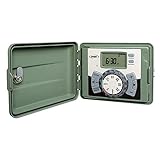
Overview: A straightforward, non-smart mechanical timer for outdoor use, controlling up to 4 stations (expandable via add-ons). It prioritizes simplicity and reliability for basic automatic watering without app connectivity. What Makes It Stand Out: The swing-panel design and push-wire terminals make wiring and schedule adjustments exceptionally quick and tool-free. The included locking outdoor cabinet provides essential weather protection, while features like cycle/soak programming add practical flexibility for soil types. Value for Money: Represents exceptional value for users needing reliable, no-frills automation. It’s significantly cheaper than smart controllers and ideal for smaller yards or as a backup system. The durability and ease of use justify the low cost for basic needs. Strengths and Weaknesses: Strengths: Extremely easy installation/maintenance; robust weatherproof housing; simple cycle/soak programming; very affordable; wide valve compatibility. Weaknesses: No smart features or remote access; manual rain delay; limited to 4 zones without add-ons; basic display. Bottom Line: The go-to choice for budget-conscious users or contractors wanting a dependable, easy-to-service mechanical timer for fundamental irrigation control; avoid if you want app-based smarts.
9. Hunter Hydrawise HPC400 Smart WiFi Irrigation Controller for Lawns and Gardens, 4 Zone, Expandable to 32 Zones, Weather Based, App Controlled Sprinkler System

Overview: Hunter’s HPC400 is a highly capable entry-level smart controller starting with 4 zones (expandable to 32). It focuses on weather-based automation via the Hydrawise app, offering professional-grade features in a DIY-friendly package. What Makes It Stand Out: Its standout feature is exceptional weather intelligence, using local forecasts to dynamically adjust schedules, potentially saving 50% on water bills. The touchscreen interface simplifies setup, and seamless expandability caters to growing landscapes without replacing the core unit. Value for Money: Excellent value for its water-saving potential and scalability. Though pricier than basic timers, the ROI from reduced water usage and the ability to start small/expands makes it cost-effective for medium to large properties compared to fixed-zone smart controllers. Strengths and Weaknesses: Strengths: Industry-leading weather adaptation; intuitive touchscreen setup; massive expandability (up to 32 zones); robust outdoor rating; very user-friendly app. Weaknesses: Base unit only has 4 zones; expansion modules cost extra; app requires Hydrawise subscription for full features. Bottom Line: Highly recommended for homeowners seeking a future-proof, water-efficient system with professional capabilities and easy scalability; ideal for evolving landscapes.
10. Hunter X2 14-Station Outdoor Sprinkler Controller, Wi-Fi Capable Smart Irrigation System, Hydrawise Compatible, Weather-Based Scheduling for Lawn and Garden
Overview: The Hunter X2 is a powerful 14-zone standalone controller designed for larger properties, featuring robust outdoor construction and optional Wi-Fi connectivity (via separate WAND module) for Hydrawise smart functionality. What Makes It Stand Out: Its 14 built-in stations, rugged outdoor enclosure, and advanced diagnostics (QuickCheck) cater to demanding residential or light commercial use. Weather-based scheduling via Hydrawise and a large backlit display enhance usability in all conditions. Value for Money: Offers strong value for larger yards needing 10+ zones. The standalone capability provides reliability, while the optional Wi-Fi upgrade path avoids paying for unused smart features upfront. Durability ensures long-term cost efficiency versus cheaper, less robust units. Strengths and Weaknesses: Strengths: High zone capacity (14); exceptional outdoor durability; useful diagnostics; flexible scheduling; retains settings during power loss; bright display. Weaknesses: Wi-Fi requires separate WAND purchase; Hydrawise subscription needed for full smart features; complex for very small yards. Bottom Line: A top recommendation for larger properties needing a reliable, high-capacity controller with a clear upgrade path to smart watering; skip only if you need under 8 zones or full smart features out-of-the-box.
Understanding the Water Waste Problem in Traditional Systems
The Inefficiency of Fixed Schedules
Most conventional irrigation timers operate on preset run times and days, completely ignoring what’s happening outside. This leads to chronic overwatering during cool, rainy periods and potential underwatering during unexpected heat spikes. Plants suffer from stress, disease, or shallow root development, while homeowners waste hundreds of gallons unnecessarily each season—water that’s increasingly precious and costly.
Environmental and Financial Impact
Excessive runoff from poorly timed watering carries fertilizers and pesticides into storm drains, polluting local waterways. This isn’t just an ecological concern; many municipalities now impose strict watering restrictions and tiered pricing, making inefficient systems financially punishing. The cumulative effect of widespread overwatering strains community water resources, especially in drought-prone regions, highlighting the urgent need for smarter solutions.
Signs Your Current System is Wasting Water
Look for telltale indicators: water running off paved areas during or immediately after irrigation, consistently soggy soil, fungal growth on lawns, or plants showing stress despite regular watering. If your system activates during or right after significant rainfall, it’s a glaring red flag. These signs point directly to a lack of responsiveness to actual environmental conditions, a gap weather-based controllers are designed to fill.
How Weather-Based Irrigation Controllers Actually Work
The Core Principle: Evapotranspiration (ET)
At the heart of these systems is the science of Evapotranspiration—the combined process of water evaporating from the soil and transpiring through plant leaves. Weather-based controllers calculate daily ET rates using real-time local weather data (temperature, humidity, wind speed, solar radiation). This calculation determines precisely how much water has been lost from the landscape and needs replenishing, forming the basis for dynamic scheduling.
Data Sources: Local Weather Stations vs. On-Site Sensors
Controllers access critical weather data in two primary ways. Many leverage hyper-local forecasts and historical data from vast networks of professional weather stations, often via Wi-Fi or cellular connectivity. Others utilize dedicated on-site sensors (like rain, soil moisture, or freeze sensors) that provide immediate, property-specific conditions. Advanced systems combine both approaches for the highest accuracy, using regional data as a baseline and on-site sensors for real-time microclimate adjustments.
Translating Data into Watering Adjustments
The controller’s algorithm takes the calculated ET rate, factors in your specific landscape characteristics (like plant type and soil), and automatically adjusts run times and frequency. For instance, after a 0.5-inch rainfall, the system might reduce watering by 50% for the next few days. During a sudden 10-degree temperature spike, it could increase duration slightly. This continuous, data-driven recalibration ensures water application matches actual demand.
The Role of User Input and Customization
While highly automated, these systems aren’t fully autonomous out of the box. Initial setup requires inputting key details: your geographic location (for accurate weather data), soil type (sand vs. clay holds water differently), plant types (turf grass vs. drought-tolerant shrubs have varying needs), and sprinkler head types (rotors vs. sprays apply water at different rates). This customization allows the controller to tailor its calculations precisely to your landscape’s unique requirements.
Key Features to Evaluate When Choosing a System
Connectivity Options and Reliability
Consider how the controller connects to weather data. Wi-Fi models integrate easily with home networks but depend on stable internet. Cellular-connected units operate independently of home Wi-Fi but may require a subscription. Bluetooth models often need proximity to a phone for updates. Assess your home’s connectivity strength and reliability—poor signal can disrupt data flow and undermine the system’s intelligence.
Sensor Integration Capabilities
Look beyond basic weather data. Does the controller support optional add-on sensors? Rain sensors are fundamental (mandatory in many areas) to halt watering during precipitation. Soil moisture sensors provide direct feedback on root zone conditions, preventing watering when the ground is already saturated. Freeze sensors protect pipes in winter. The ability to integrate multiple sensor types significantly enhances precision and system resilience.
User Interface and App Experience
A sophisticated backend is useless with a confusing interface. Evaluate the physical controller display—is it clear and intuitive? Crucially, test the companion mobile app (if available) for ease of setup, schedule visibility, manual control, and notification features. A well-designed app allows you to monitor water usage, receive alerts for system issues or heavy rain, and make quick adjustments remotely, putting true control in your hands.
Water Budgeting and Seasonal Adjust
While the system auto-adjusts based on weather, you should retain manual oversight. Look for easy seasonal adjustment sliders (e.g., “Water Budget” %) to fine-tune overall watering for your landscape’s seasonal phases (e.g., reducing by 20% in spring, increasing slightly in peak summer). Granular control over individual zone run times and schedules within the smart framework is essential for addressing specific microclimate areas in your yard.
Installation and Setup Considerations
Compatibility with Existing Systems
Most weather-based controllers are designed as direct replacements for traditional timer boxes, connecting to your existing valve wires. However, verify voltage compatibility (typically 24V AC) and the number of zones your current system uses against the new controller’s capacity. If adding wireless sensors, ensure the controller model supports them—some require specific hubs or have limited sensor slots.
Professional Installation vs. DIY
While replacing a timer box is often a manageable DIY project for those comfortable with basic wiring, integrating complex sensor networks or cellular modules might warrant professional help. Incorrect wiring can damage valves or the controller. If your system involves complex zoning, pump starts, or master valves, consulting a licensed irrigation professional ensures optimal setup and avoids costly mistakes, maximizing the smart controller’s potential from day one.
Initial Configuration is Crucial
The accuracy of a weather-based controller hinges entirely on correct initial setup. Take time to accurately input your ZIP code, soil type (research your local soil if unsure), plant water needs (grouping zones by similar plant types is vital), and sprinkler precipitation rates. Skipping or guessing these details leads to suboptimal performance. Many apps guide you through this step-by-step, but diligence here pays massive dividends in water savings and landscape health.
Maximizing Performance and Long-Term Value
Ongoing Calibration and Observation
Even the smartest system benefits from periodic human checks. Observe your landscape—does it look vibrant without stress signs? Use a simple soil probe to check moisture depth after watering. If issues arise, revisit your initial settings; perhaps the soil type was misidentified, or plant water needs changed as landscaping matured. Treat the controller as a sophisticated tool that works best with informed oversight, not complete hands-off operation.
Leveraging Usage Data and Reports
Most connected controllers provide detailed water usage reports, showing gallons or inches applied per zone, per week. Review these regularly. They highlight anomalies (like a sudden spike indicating a leak) and demonstrate tangible savings over time. This data is invaluable for understanding your landscape’s true water needs and justifying the system’s investment through verifiable reductions in consumption and cost.
Maintenance for Reliable Operation
Like any electronic system, weather-based controllers require basic upkeep. Clean physical controllers and sensor housings periodically to prevent dirt or debris buildup. Check battery backups (if equipped) annually. Ensure Wi-Fi antennas have clear lines of sight. Test rain and freeze sensors manually according to the manufacturer’s instructions. Proactive maintenance prevents unexpected failures and ensures consistent, intelligent operation year after year.
Frequently Asked Questions
How much water can I realistically save with a weather-based irrigation controller?
Most users see reductions of 15-30% in outdoor water use compared to traditional timers, with some achieving even higher savings during wet seasons. Actual savings depend on your climate, landscape size, previous watering habits, and how accurately the system is configured.
Are these systems difficult to install for a homeowner?
Replacing an existing timer box is often a straightforward DIY project similar to installing a new thermostat, requiring basic wiring skills. However, integrating additional sensors or complex systems may benefit from professional installation to ensure optimal performance and avoid errors.
What happens if my internet or Wi-Fi goes out?
Controllers typically revert to a safe, basic backup schedule (often based on historical averages for your location) until connectivity is restored. Data is usually stored locally and syncs once back online. Systems using cellular networks avoid home Wi-Fi dependency altogether.
Do I still need to manually adjust the system throughout the year?
Initial setup handles most adjustments automatically. However, seasonal water budgeting (e.g., slightly reducing output in spring/fall) and occasional checks against actual landscape conditions are recommended for peak efficiency, especially as your plants mature.
Can these controllers work effectively in areas with frequent, short rain showers?
Yes, especially models using hyper-local forecast data or paired with sensitive on-site rain sensors. They can detect even light precipitation and adjust schedules accordingly, preventing unnecessary watering that traditional timers would initiate.
Are soil moisture sensors worth the extra cost?
For landscapes with varied soil types, slopes, or valuable plantings, they add significant value by providing direct root-zone feedback, preventing overwatering in specific zones even when weather data suggests irrigation is needed. They are highly recommended for maximum precision.
How do these systems handle extreme weather events like heatwaves?
Advanced controllers dynamically increase watering duration or frequency during prolonged high temperatures and intense sun, based on real-time ET calculations. This proactive adjustment helps prevent plant stress that fixed schedules often cause during sudden weather extremes.
Is there a significant upfront cost difference compared to basic timers?
Yes, weather-based controllers represent a higher initial investment than simple mechanical timers. However, the water savings, potential rebates from local utilities, and extended landscape health typically provide a strong return on investment within a few seasons.
Can I control the system when I’m away from home?
Virtually all modern Wi-Fi and cellular-connected models offer full remote control and monitoring via smartphone apps, allowing you to check status, run zones manually, adjust schedules, or pause watering from anywhere with internet access.
Will this system work with my existing rain sensor?
Most weather-based controllers are designed to accept input from standard third-party rain sensors (typically using a simple two-wire connection). Check the controller’s specifications for compatibility, but integration is usually straightforward and adds a crucial layer of redundancy.