Imagine arriving home after a long day, hands full of groceries, only to realize you left your keys on the kitchen counter. Or worse—waking up in the middle of the night wondering if you actually locked the front door before bed. The peace of mind that comes with knowing you can verify and control your home’s primary entry point from anywhere in the world isn’t just a luxury anymore; it’s becoming an essential layer of modern home security and convenience. Wi-Fi door locks transform this anxiety into effortless control, putting the power to lock, unlock, and monitor access literally at your fingertips, no matter where you are. This isn’t science fiction; it’s the evolving reality of connected home security, designed to fit seamlessly into your daily life.
Yet, with this convenience comes critical questions. How secure are these devices really against digital threats? What happens when your internet connection glitches? And how do you navigate the maze of features without getting overwhelmed or overspending on capabilities you’ll never use? Choosing the right Wi-Fi lock isn’t just about picking the shiniest gadget—it’s about finding a reliable, secure guardian for your home that integrates smoothly with your existing routines and ecosystem. This guide cuts through the marketing noise to focus on the essential considerations, empowering you to make a confident, informed decision that prioritizes both your security and your sanity. Let’s explore what truly matters when selecting a Wi-Fi door lock built for remote access.
Top 10 Wi-Fi Door Locks
Detailed Product Reviews
1. Philips Wi-Fi Door Lock, WiFi Smart Lock Keyless Entry Deadbolt for Front Door, Compatible with Alexa & Google Assistant, Remote Control, Built-in WiFi, APP Fingerprint Passcode Unlock, Auto Locking

Overview: The Philips Wi-Fi Door Lock offers keyless entry for front doors with integrated smart features. It eliminates traditional keys through multiple access methods and direct Wi-Fi connectivity, targeting homeowners seeking convenience and remote management without additional hubs.
What Makes It Stand Out: Its standout feature is flexible unlocking via app, fingerprint, passcode, physical key, or voice commands (Alexa/Google). Built-in Wi-Fi enables true remote access from anywhere, while auto-locking ensures security. The fingerprint sensor allows instant family access, and support for 100 custom passcodes simplifies guest management.
Value for Money: Priced mid-range, it justifies cost through hub-free Wi-Fi operation and robust feature parity with premium locks. While batteries aren’t included, the elimination of subscription fees and long-term versatility for families or rentals enhances its value over basic smart locks requiring bridges.
Strengths and Weaknesses:
Strengths: True remote access via 2.4GHz Wi-Fi; voice control compatibility; intuitive fingerprint sensor; high passcode capacity; no hub needed.
Weaknesses: Fingerprint storage limited vs. competitors; no explicit weather rating; requires stable 2.4GHz network within 65ft of router.
Bottom Line: A reliable, versatile smart lock ideal for tech-savvy households prioritizing flexible access. Despite minor range limitations, its seamless integration and multiple entry options make it a strong mid-tier investment for modern home security.
2. TEEHO TE012W WiFi Smart Lock, Fingerprint Door Lock with Built-in Wi-Fi, Keyless Entry Keypad Smart Deadbolt, App Remote Control, Alexa Compatible, IP55 Waterproof for Front Door – Satin Nickel

Overview: The TEEHO TE012W is a weather-resistant smart deadbolt designed for front doors, emphasizing security and ease of use. It features built-in Wi-Fi, fingerprint access, and robust encryption, catering to renters and homeowners needing durable, keyless entry.
What Makes It Stand Out: BHMA Grade 3 certification and IP55 waterproofing ensure resilience against weather and tampering. The KK Home App enables secure user management with AES-128 encryption, while 20 fingerprint slots, silent mode, and a backlit keypad enhance usability. The 8-month battery life with low-power alerts is notably practical.
Value for Money: Competitively priced, it delivers exceptional value through certified durability and no hidden costs. The inclusion of two backup keys, long battery life, and hub-free operation make it cost-effective versus similar-grade locks, though fingerprint capacity lags behind high-end models.
Strengths and Weaknesses:
Strengths: IP55 weatherproofing; BHMA Grade 3 security; AES-128 encryption; 8-month battery; backlit keypad; voice control.
Weaknesses: Only 20 fingerprint slots; app ecosystem less established than eufy/Philips; no auto-lock customization mentioned.
Bottom Line: An excellent choice for outdoor durability and security-conscious users. Its certified build and practical features justify the price, making it a top contender for apartments or homes in harsh climates.
3. eufy Security Smart Lock C30, Keyless Entry Door Lock, Built-in WiFi Keypad Deadbolt for Front Door, No Bridge Required, Easy Installation, App Remote Control, Reliable Power, BHMA Grade 3

Overview: The eufy C30 is a straightforward smart deadbolt focusing on simplicity and reliability. It offers keyless entry with physical buttons (not touchscreen), built-in Wi-Fi, and seamless eufy ecosystem integration, ideal for users prioritizing ease of use over biometrics.
What Makes It Stand Out: Its physical button keypad—more durable and error-resistant than touchscreens—sets it apart. Auto-lock customization, 15-minute DIY installation, and 24/7 customer support enhance accessibility. Integration with eufy doorbells creates cohesive smart-home routines without third-party apps.
Value for Money: Mid-priced with strong justification: BHMA Grade 3 certification, hassle-free setup, and no subscription fees. While lacking fingerprint access, its focus on core functionality (app/voice/keypad) offers better value than feature-bloated competitors at similar price points.
Strengths and Weaknesses:
Strengths: Physical button durability; effortless 15-minute install; reliable auto-lock; excellent customer service; eufy ecosystem synergy.
Weaknesses: No fingerprint sensor; limited to keypad/app/voice; shorter battery life than fingerprint models; fewer guest-access features.
Bottom Line: Perfect for users wanting a no-nonsense, reliable smart lock. Its physical buttons and stellar support make it a standout for simplicity seekers, though biometric fans should consider alternatives.
4. eufy Security Smart Lock C220, Fingerprint Keyless Entry Door Lock, Built-in Wi-Fi, App Remote Control, Front Door Smart Lock Deadbolt, 8Months Battery, Reliable Power, IP53 Waterproof, BHMA Grade 3

Overview: The eufy C220 combines fingerprint recognition with built-in Wi-Fi in a weather-resistant deadbolt. It targets security-focused users needing fast, biometric access and long battery life, with self-learning AI for improved fingerprint accuracy over time.
What Makes It Stand Out: The self-learning AI fingerprint sensor unlocks in under 1.5 seconds and adapts to usage patterns, reducing failed attempts. Six unlock methods (including Apple Watch), 8-month battery life, and IP53 weatherproofing provide versatility. BHMA Grade 3 certification ensures mechanical reliability.
Value for Money: Priced slightly higher, it justifies cost through AI-enhanced biometrics and exceptional battery longevity. Integration with eufy doorbells adds smart-home value, though fingerprint storage (20 users) is average for its tier.
Strengths and Weaknesses:
Strengths: Self-learning fingerprint AI; 8-month battery; 6 unlock methods; IP53 weather resistance; real-time tamper alerts.
Weaknesses: Fingerprint capacity capped at 20; IP53 less robust than IP55 rivals; no silent mode mentioned; requires app updates for voice control.
Bottom Line: A premium pick for biometric enthusiasts. The AI fingerprint tech and battery life excel, but weather resistance and user slots slightly trail competitors—best for primary residences with moderate guest traffic.
5. Philips WiFi Keypad Door Lock with Handle, Built-in WiFi, APP Remote Control, Voice & Fingerprint Unlock, Smart Locks for Front Door with Auto Lock, Digital Front Door Lock Set, Keyless Entry Deadbolt
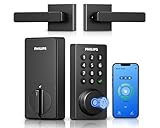
Overview: This Philips lock integrates a handle with keyless entry, offering all-in-one front door security. It features built-in Wi-Fi, fingerprint access, and versatile passcode options, designed for users wanting a complete smart door solution without extra hardware.
What Makes It Stand Out: The 0.3-second fingerprint recognition is industry-leading for speed, while permanent/one-time/recurring passcodes cater to rentals or frequent guests. The handle integration simplifies installation, and real-time access history via the Philips app provides unmatched oversight for shared households.
Value for Money: Positioned as a premium model, its value lies in the handle-lock combo and ultra-fast biometrics. Though pricier, eliminating separate handle costs and offering superior speed justifies investment over basic deadbolts, especially for Airbnb hosts.
Strengths and Weaknesses:
Strengths: Blazing 0.3s fingerprint unlock; handle included; versatile passcode scheduling; real-time access history; voice/app control.
Weaknesses: No explicit weather rating; fingerprint storage details unspecified; requires 2.4GHz Wi-Fi within close range; higher price point.
Bottom Line: The top choice for speed and integrated design. Ideal for landlords or busy families, its rapid access and management tools offset the cost, though outdoor durability warrants verification.
6. Schlage Encode Smart Wi-Fi Deadbolt Lock with Touchscreen Keypad, Keyless Front Door Entry, App Control, Alexa, Google Home and Airbnb Compatible, Matte Black, BE489WB CEN 622
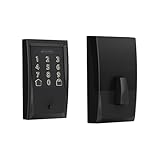
Overview: The Schlage Encode is a premium smart deadbolt offering keyless entry via touchscreen, app control, and voice assistants. Designed for residential use, it integrates seamlessly with major smart home ecosystems while prioritizing physical security standards.
What Makes It Stand Out: Built-in Wi-Fi eliminates hub dependency, enabling direct remote access via the Schlage Home app. Its BHMA-certified security (highest residential rating), fingerprint-resistant keypad, and customizable forced-entry alarms set it apart. Unique Airbnb compatibility simplifies guest access management without extra hardware.
Value for Money: Positioned at a premium price point, it justifies cost through exceptional durability, industry-leading security certifications, and robust app features like 100-user code management. Competitors often require separate hubs for similar functionality, making this a cost-efficient long-term investment despite higher upfront cost.
Strengths and Weaknesses: Strengths: Zero-hub Wi-Fi, military-grade encryption, effortless installation (Snap ‘n Stay design), and trusted brand reliability. Weaknesses: Limited to 2.4GHz Wi-Fi (no 5GHz), and fingerprint access requires third-party accessories (not native).
Bottom Line: Ideal for security-conscious homeowners seeking hassle-free, hub-free smart access. Its certification-backed durability and Airbnb integration make it a top-tier choice worth the investment for long-term peace of mind.
7. Veise VE017G-H Wi-Fi Smart Fingerprint Front Door Lock Set, Remote App Control, Keyless Entry Deadbolt with Handle, Backlit Keypad, IP55 Weatherproof, Auto Lock, Easy to Install, Matte Black
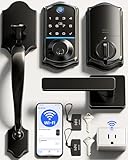
Overview: The Veise VE017G-H is an all-in-one smart door lock with integrated handle, featuring Wi-Fi connectivity, fingerprint recognition, and multiple access methods. Targeted at tech-savvy households, it combines security with modern convenience for front-door use.
What Makes It Stand Out: Its 8-in-1 access system—including 0.2-second AI fingerprint scanning, voice control, and anti-peep keypad codes—exceeds competitors. The built-in Wi-Fi gateway can network other Veise locks, while IP55 weatherproofing ensures outdoor resilience. Auto-lock customization (10s–180s) adds practical security.
Value for Money: Offers exceptional versatility at a mid-range price. The fingerprint speed, unlimited temporary codes, and handle/deadbolt combo provide more features than Schlage alternatives at lower cost, though build quality may not match premium brands long-term.
Strengths and Weaknesses: Strengths: Blazing-fast fingerprint recognition, flexible code management (100+ permanent/one-time codes), and no-hub Wi-Fi. Weaknesses: App interface can be less intuitive than Schlage’s, and matte finish may show scratches over time.
Bottom Line: A feature-packed powerhouse for families needing rapid access options and remote management. Best for users prioritizing multi-method entry over ultra-premium durability—delivering outstanding value for tech-forward homes.
8. Veise VE012W Built-in WiFi Fingerprint Smart Lock, App Remote Control, Compatible with Alexa & Google Assistant, Keyless Entry for Front Door, Digital Keypad Deadbolt, Auto Lock, Satin Nickel

Overview: This Veise deadbolt focuses on minimalist keyless entry with built-in Wi-Fi and fingerprint tech. Designed for standard doors, it targets users seeking app-controlled security without handle hardware, emphasizing speed and password flexibility.
What Makes It Stand Out: The AI-powered 0.2-second fingerprint recognition (99.99% accuracy) self-learns over time for improved reliability. Unique anti-peeping codes—allowing random digit additions—thwart shoulder surfing. Built-in 2.4GHz Wi-Fi and 6 access methods (including voice) eliminate hub costs.
Value for Money: Competitively priced for its fingerprint precision and unlimited one-time codes. Outperforms similarly priced locks with advanced password customization (recurring/time-limited codes), though satin nickel finish may lack the luxury feel of Schlage’s matte options.
Strengths and Weaknesses: Strengths: Industry-leading fingerprint speed, robust code variety, and seamless voice assistant integration. Weaknesses: Limited to deadbolt-only installation (no handle), and battery life dips with heavy fingerprint use.
Bottom Line: A streamlined, security-first choice for fingerprint enthusiasts. Ideal for secondary doors or users wanting frictionless access—just verify door compatibility before purchasing for best results.
9. Schlage Encode Smart Wi-Fi Deadbolt Lock with Touchscreen Keypad, Keyless Front Door Entry, App Control, Alexa, Google Home and Airbnb Compatible, Satin Nickel, BE489WB CAM 619

Overview: Identical to Product 6 but in satin nickel finish, this Schlage Encode deadbolt delivers keyless entry via touchscreen, app, and voice control. It retains all core security features while offering a brighter aesthetic for modern door hardware.
What Makes It Stand Out: Like its matte-black sibling, it boasts hub-free Wi-Fi, BHMA-certified security, and Airbnb-ready code management. The satin nickel finish resists corrosion better than black coatings in humid climates, and its fingerprint-resistant keypad maintains usability in varied lighting.
Value for Money: Priced slightly higher than Veise alternatives, it excels in longevity and trusted engineering. The finish upgrade justifies minimal cost differences for users matching existing hardware, though fingerprint access still requires add-ons unlike Veise.
Strengths and Weaknesses: Strengths: Unmatched durability certifications, intuitive Schlage Home app, and reliable auto-lock history. Weaknesses: Same 2.4GHz-only limitation as Product 6, and finish may show water spots in hard-water areas.
Bottom Line: The definitive choice for homeowners prioritizing certified security and resale value. Opt for this satin nickel variant if aesthetics align with your door—otherwise, identical functionality to Product 6 makes either a superb investment.
10. Veise VE027-K Built-in WiFi Smart Lock with 2 Knob, Fingerprint Keyless Entry Door Lock Handle Set for Front Door, App Remote Control, Electronic Digital Keypad Deadbolt, IP65 Waterproof, Matte Black
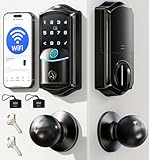
Overview: Veise’s VE027-K is a comprehensive handle-and-deadbolt set with built-in Wi-Fi and IP65 waterproofing. Designed for full front-door replacement, it emphasizes all-weather reliability and eight access methods for family-centric security.
What Makes It Stand Out: IP65 waterproofing (superior to Product 7’s IP55) ensures performance in heavy rain/snow. The dual-knob design with auto-lock (10s–180s adjustable) and 0.2s fingerprint recognition caters to households. Unique code-sharing via app simplifies guest access without physical keys.
Value for Money: Delivers commercial-grade weather resistance at a consumer price. More affordable than Schlage’s ecosystem while offering fingerprint speed and eight entry options—ideal for renters or coastal homes where durability is non-negotiable.
Strengths and Weaknesses: Strengths: Best-in-class weatherproofing, versatile access methods, and real-time battery monitoring. Weaknesses: App occasional lag during remote commands, and physical keys feel less robust than Schlage’s.
Bottom Line: A weatherproof workhorse for demanding environments. Choose this if you need military-grade outdoor resilience and multi-user flexibility—just confirm app stability meets your expectations before committing.
Understanding Wi-Fi Door Locks: Beyond Basic Convenience
Wi-Fi door locks represent a significant leap from traditional keys or even basic keypad locks. Their core differentiator is direct integration with your home Wi-Fi network, enabling true remote access and control without requiring a separate hub or bridge. This direct connection allows you to interact with your lock from anywhere with an internet connection—whether you’re across town, across the country, or even traveling internationally—using a dedicated mobile application. This eliminates the common frustration of relying on intermediary devices that can fail or add complexity.
How Direct Wi-Fi Connectivity Changes the Game
Unlike locks that depend on Bluetooth or require a separate hub (like Z-Wave or Zigbee models), Wi-Fi locks connect straight to your router. This direct link means commands from your phone—like unlocking for a guest or checking lock status—travel instantly over the internet without needing someone else physically present at home to relay the signal. It simplifies setup for many users and provides the most reliable pathway for real-time remote interaction, a non-negotiable feature for true “anywhere” access.
Remote Access vs. Local Control: Defining Your Needs
It’s crucial to distinguish between remote access capabilities and local operation. While all Wi-Fi locks offer remote features via an app, their local functionality varies significantly. Some rely solely on the app or a keypad, while others retain a traditional keyhole for physical backup. Consider your daily routine: Do you need the speed of a keypad for frequent access without pulling out your phone? Is a physical key backup essential for emergencies or power outages? Understanding this balance ensures the lock fits your practical use case, not just its remote potential.
Essential Features for True Remote Access Capability
When prioritizing remote access, certain features move from “nice-to-have” to absolute necessities. These are the functionalities that directly impact your ability to securely and reliably manage your door from afar, forming the bedrock of a worthwhile investment.
Real-Time Status Monitoring: Know Before You Go
The ability to instantly check whether your door is locked or unlocked via your phone is fundamental. This isn’t just about convenience; it’s a critical security checkpoint. Did the last person leave securely? Did the auto-lock feature engage after your dog walker exited? Real-time status updates provide immediate peace of mind and allow for swift corrective action if something seems amiss, preventing potential security lapses before they become problems.
Remote Lock/Unlock Functionality: The Core Promise
This is the feature that defines the category. Seamless, one-tap (or voice-command) ability to lock or unlock your door from your smartphone app, regardless of your physical location, is the primary reason for choosing a Wi-Fi lock. Evaluate the app’s responsiveness and reliability—laggy interfaces or frequent disconnections undermine the entire purpose. Look for consistent performance reviews focusing specifically on remote command execution.
Auto-Lock: Your Security Safety Net
Manual locking is prone to human error. A reliable auto-lock feature, customizable to your schedule (e.g., lock automatically 30 seconds after unlocking, or at a specific time each night), acts as a crucial failsafe. Ensure this feature is robust and functions correctly even if your phone is out of range or the app isn’t actively open, providing a consistent layer of security without demanding constant vigilance.
Security: The Non-Negotiable Foundation
Remote access introduces potential digital vulnerabilities, making security the paramount concern. A Wi-Fi lock is only as good as its defenses against unauthorized access, both digital and physical. Cutting corners here jeopardizes your entire home security.
Encryption Standards: Your Digital Shield
End-to-end encryption (E2EE) is non-negotiable. This ensures that all communication between your phone, the lock, and the cloud servers is scrambled, making it extremely difficult for hackers to intercept commands or access codes. Look specifically for AES-128 or AES-256 encryption—the industry gold standard. Avoid any lock that doesn’t explicitly detail its encryption protocols in marketing materials or specifications.
Secure Authentication: Guarding the Gateway
How you prove you are who you say you are to access the lock matters immensely. Strong authentication goes beyond a simple app password. Seek locks that support two-factor authentication (2FA) for app logins, adding a critical second step (like a code from your phone) even if your password is compromised. Biometric options (like fingerprint sensors on the lock itself) can enhance local security but are separate from remote access security protocols.
Physical Tamper Resistance: The Last Line of Defense
Don’t neglect the physical lock mechanism itself. A Wi-Fi lock should still adhere to robust physical security standards. Look for ANSI/BHMA Grade 1 or 2 certifications for residential locks, indicating resistance to forced entry, drilling, and picking. Features like anti-pry shields around the exterior assembly and secure internal mounting further deter physical attacks, ensuring the digital connection doesn’t create a weak physical link.
Installation and Compatibility: Ensuring a Smooth Setup
Even the most feature-rich lock is frustrating if it’s difficult to install or doesn’t work with your existing door and home ecosystem. Careful consideration here prevents headaches and ensures long-term usability.
Door and Frame Requirements: Measure Twice
Not all doors are created equal for smart locks. Critical factors include:
- Bore Hole Size: Most standard residential doors have a 2-1/8 inch bore hole, but older or custom doors might differ. Measure yours before purchasing.
- Backset Measurement: The distance from the edge of the door to the center of the bore hole (typically 2-3/8" or 2-3/4"). The lock must match this.
- Door Thickness: Ensure the lock mechanism is designed for your door’s thickness (usually 1-3/4" to 2-1/4").
- Handedness: Some locks are specific to left-handed or right-handed doors (which way the door swings). Verify compatibility.
Smart Home Ecosystem Integration: Working with What You Have
Your lock shouldn’t exist in a silo. Seamless integration with your existing smart home platform (like Apple HomeKit, Google Home, or Amazon Alexa) unlocks powerful automation possibilities. Imagine saying “Hey Google, lock the front door” or having your lights turn on automatically when the lock disengages upon your arrival. Verify deep compatibility—does it support voice commands directly? Can it trigger complex routines within your chosen ecosystem? Superficial integration often leads to frustration.
Power Source and Battery Life: Avoiding Lockouts
Wi-Fi connectivity is power-hungry. Most locks rely on standard batteries (4-8 AA or similar). Key considerations:
- Battery Type: Lithium batteries generally last significantly longer than alkaline, especially in colder climates, and are less prone to leakage damage.
- Low-Battery Alerts: Robust, multi-channel alerts (app notification, email, in-app warning) are essential to prevent unexpected lockouts. Some locks even provide estimated remaining operational time.
- Emergency Power Options: A 9V battery terminal or USB-C port for temporary external power during critical low-battery situations is a highly valuable safety net.
User Management and Access Control: Tailoring Permissions
The ability to grant and manage access for others is a major advantage of Wi-Fi locks, but it needs to be flexible and secure to be truly useful.
Custom User Codes and Schedules: Precision Access
Move beyond a single shared code. Look for systems that allow you to create unique, temporary, or permanent access codes for different people (family, cleaners, contractors, guests). The real power lies in scheduling: set specific days and times when a code is active (e.g., your dog walker only has access Tues/Thurs 10 AM-11 AM). This granular control enhances security and convenience significantly.
Remote Access Granting: Welcoming Guests Effortlessly
The ability to generate and send temporary access codes remotely via the app is invaluable. Need to let a plumber in while you’re at work? Send a one-time code valid only for their expected arrival window. This eliminates the need for physical key exchanges or hiding spare keys, providing secure, convenient access without compromising your main security.
Activity Logs: Seeing Who Comes and Goes
A detailed, timestamped log of all lock activity (locked/unlocked, method used—app, code, key, auto-lock) is crucial for security awareness and accountability. Ensure logs are easily accessible within the app, searchable, and ideally, provide notifications for specific events (like an unlock during an unusual time). This transparency helps monitor access and investigate any concerns.
Privacy Considerations in the Connected Home
Granting a device remote access to your most secure entry point means understanding how your data is handled. Privacy shouldn’t be an afterthought.
Data Collection and Usage Policies
Scrutinize the manufacturer’s privacy policy. What data does the lock collect (beyond basic lock/unlock events)? Location data? Usage patterns? How is this data stored? Is it anonymized? Most critically, does the company sell or share your data with third parties for advertising? Opt for companies with clear, transparent, and restrictive data policies prioritizing user privacy.
Local vs. Cloud Processing: Minimizing Exposure
Some advanced locks offer local processing for certain functions (like recognizing a valid access code), reducing the amount of sensitive data that needs to travel to and from the cloud. While full remote access inherently requires some cloud interaction, minimizing unnecessary data transmission enhances privacy. Research if the manufacturer emphasizes local decision-making where possible.
Future-Proofing Your Investment
Technology evolves rapidly. Choosing a lock with an eye toward the future protects your investment and ensures longevity.
Firmware Update Policy and Track Record
Regular, timely firmware updates are vital for patching security vulnerabilities and adding new features. Investigate the manufacturer’s history: How frequently do they release updates? How quickly do they respond to security flaws? A company committed to long-term software support is essential for maintaining security and functionality over the lock’s lifespan, which should ideally be 5+ years.
Emerging Technology Readiness
While not always critical immediately, consider if the lock’s platform shows potential for adopting future advancements. This could include support for newer, more secure communication protocols (as Wi-Fi standards evolve), compatibility with upcoming smart home features, or even potential integration with broader home security systems. A flexible architecture suggests better longevity.
Making Your Final Decision: A Practical Checklist
Armed with knowledge, condense your research into actionable criteria. Prioritize ruthlessly based on your non-negotiables:
- Security First: Encryption (E2EE, AES), physical build (ANSI Grade), authentication (2FA).
- Core Remote Functionality: Reliable real-time status, responsive lock/unlock, robust auto-lock.
- Compatibility: Fits your door specs, integrates deeply with your smart home ecosystem.
- Power & Reliability: Long battery life (lithium compatible), clear low-battery alerts, emergency power option.
- User Management: Flexible code scheduling, remote code sharing, detailed activity logs.
- Privacy & Support: Transparent data policy, proven history of timely firmware updates.
Frequently Asked Questions
Frequently Asked Questions
Can Wi-Fi door locks be hacked?
All connected devices carry some risk, but reputable Wi-Fi locks employ strong encryption (like AES-256) and regular security updates to minimize vulnerability. Choosing brands with a strong security focus and enabling features like two-factor authentication significantly reduces this risk compared to less secure alternatives.
What happens if my internet or Wi-Fi goes down?
Most Wi-Fi locks retain local functionality. You can typically still use a keypad code, physical key (if equipped), or fingerprint (on biometric models) to lock/unlock from inside or outside. Remote access and real-time notifications will be unavailable until your internet connection is restored. Auto-lock usually continues to function locally.
Do I need a separate hub for a Wi-Fi door lock?
No, that’s a key advantage. True Wi-Fi locks connect directly to your home Wi-Fi network, eliminating the need for an additional hub or bridge required by some Bluetooth, Z-Wave, or Zigbee smart locks. This simplifies setup and reduces potential points of failure for remote access.
How long do the batteries typically last?
Battery life varies significantly based on usage, Wi-Fi signal strength, and battery type. With standard alkaline batteries, expect 6-12 months. Using lithium batteries often extends this to 12-18 months or more. Robust low-battery alerts are crucial to avoid unexpected lockouts.
Can I still use a physical key with a Wi-Fi lock?
Many, but not all, Wi-Fi locks include a traditional keyhole as a mechanical backup for emergencies (like total battery failure or lock malfunction). Always verify this feature if having a physical key backup is important to you, as some sleeker designs omit it.
Are Wi-Fi locks more secure than traditional deadbolts?
A high-quality Wi-Fi lock installed correctly on a solid door should meet or exceed the physical security of a standard Grade 2 or 1 deadbolt. The added security comes from features like activity logs, auto-lock, and remote monitoring, which mitigate human error. However, poor installation or weak digital security can introduce new risks.
How do temporary access codes work for guests?
You generate unique, time-limited codes through the lock’s app. You specify exactly when the code is valid (e.g., only between 2:00 PM and 4:00 PM on Saturday). The guest enters the code on the keypad during that window to unlock the door. The code automatically deactivates afterward, no physical key exchange needed.
Will a Wi-Fi lock work with my existing smart home system (Alexa/Google/Apple)?
Compatibility varies. Check the lock’s specifications for explicit support of Apple HomeKit, Google Home, or Amazon Alexa. True integration allows voice commands (“Hey Siri, lock the front door”) and inclusion in automated routines within those ecosystems, not just basic app control.
What’s the biggest drawback of Wi-Fi door locks compared to other smart locks?
The primary drawback is higher power consumption due to the constant Wi-Fi connection, leading to more frequent battery changes compared to low-energy options like Z-Wave or Zigbee locks (which usually require a hub). Signal strength can also be an issue on large properties if the lock is far from the router.
How important is the mobile app experience?
Critically important. The app is your primary interface for remote control, user management, and monitoring. A poorly designed, buggy, or unreliable app will severely diminish the user experience and potentially compromise security. Prioritize locks with highly rated, intuitive, and consistently updated mobile applications.