Imagine walking into your home after a long day, and the lights gently illuminate your path while the thermostat adjusts to your perfect temperature—all without lifting a finger. This seamless magic often starts with a foundation most homeowners overlook: the humble sensor kit. While flashy hubs and voice assistants grab headlines, the real intelligence in a smart home flows from the network of sensors quietly observing your environment. Choosing the right Z-Wave sensor kit isn’t just about adding gadgets; it’s about building a responsive, intuitive ecosystem that anticipates your needs and enhances security without constant manual intervention. Getting this foundational layer right transforms a collection of devices into a genuinely smart living space.
Z-Wave technology stands out in the crowded smart home arena for its exceptional reliability, low power consumption, and impressive interoperability across thousands of devices from different manufacturers. Unlike Wi-Fi dependent sensors that can clog your network or Bluetooth options with limited range, Z-Wave creates a dedicated, secure mesh network where each device strengthens the signal for others. This means your door sensor in the garage can reliably communicate with the hub in your basement, even through multiple walls. But with so many sensor kits flooding the market, how do you cut through the noise? It’s not about chasing the “newest” model; it’s about understanding the critical features that ensure your investment integrates flawlessly, operates reliably for years, and scales effortlessly as your smart home ambitions grow. Let’s break down exactly what matters when selecting your Z-Wave sensor foundation.
Top 10 Z-Wave Sensor Kits
Detailed Product Reviews
1. Zooz 800 Series Z-Wave Long Range Open|Close XS Sensor ZSE41 800LR for Door, Window, and Gate Monitoring. Hub Required (Sold Separately). Compatible with SmartThings, Hubitat, and Ring Alarm.
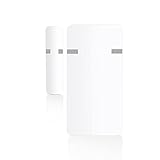
Overview: The Zooz ZSE41 800LR is an ultra-compact Z-Wave sensor for monitoring doors, windows, and gates, leveraging 800-series Long Range (ZWLR) technology. It requires a compatible Z-Wave hub for setup and alerts, targeting DIY security enthusiasts seeking reliable, discreet monitoring with enhanced range and security.
What Makes It Stand Out: Its standout features include a remarkably slim profile for inconspicuous installation, S2 security with SmartStart for fully encrypted setup, and ZWLR support enabling up to 1,300 feet of range on compatible hubs. The rubber-oil coating adds indoor moisture resistance, while the 5-year registered warranty and lifetime support bolster confidence.
Value for Money: Priced competitively, it offers exceptional value for ZWLR adoption. The extended range and battery life surpass older Z-Wave models, and the warranty exceeds industry standards. However, the outdoor case sold separately adds cost for exterior use.
Strengths and Weaknesses: Strengths: Exceptional range with ZWLR hubs, top-tier S2 security, discreet size, 5-year warranty, and broad compatibility with open hubs (Hubitat, Home Assistant). Weaknesses: No outdoor rating without add-on case, incompatible with major alarm panels (Vivint, ADT), and Ring/SmartThings lack advanced settings access.
Bottom Line: An outstanding choice for users with ZWLR-compatible hubs seeking secure, long-range door/window monitoring. Its reliability and warranty justify the price, though outdoor use requires an extra purchase. Highly recommended for modern Z-Wave ecosystems.
2. Shelly Wave Door/Window White, Z-Wave Long Range Operated Sensor, Home Automation, Compatible with Alexa, Google Home, SmartThings & Home Assistant, Bulletproof Security, Lux & Tilt Angle Measurement

Overview: The Shelly Wave Door/Window LR is a feature-rich Z-Wave Long Range sensor that detects openings, measures tilt angle and ambient light (lux), enabling complex automations. It requires a Z-Wave hub but promises extensive range and scalability for large properties.
What Makes It Stand Out: Its unique triple functionality—door/window monitoring, tilt sensing, and light detection—sets it apart. ZWLR enables a massive 1.5-mile range at full power and supports networks up to 4,000 devices. The lux sensor allows light-based automations (e.g., turning lights on at dusk), while tilt data aids in detecting forced entry.
Value for Money: Justifies its cost with unparalleled versatility and future-proof scalability. The inclusion of tilt and lux sensors in one device eliminates the need for multiple purchases. The 3-year warranty and global support add tangible value for smart home enthusiasts.
Strengths and Weaknesses: Strengths: Multi-sensor capability (open/close, tilt, lux), industry-leading 1.5-mile range, massive 4,000-device network support, and robust compatibility. Weaknesses: Hub not included, outdoor durability not specified, and advanced features require hub automation setup.
Bottom Line: A premium, versatile sensor ideal for advanced automations and large properties. Its multi-functional design and exceptional range deliver strong value for tech-savvy users with compatible hubs. Recommended for those seeking beyond basic door monitoring.
3. Zwave Door Sensor Aeotec Recessed Door Sensor 7, Z-Wave Plus Enabled Smart Door Sensor Battery Powered, SmartStart S2, Zwave Hub Required SmartThings Fibaro Home Centre 3 Hubitat
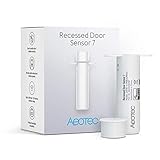
Overview: Aeotec’s Recessed Door Sensor 7 is a Z-Wave Plus V2 device designed for flush mounting, offering reliable door/window monitoring with enhanced security and simplified setup. It requires a Z-Wave hub and targets users prioritizing security and clean aesthetics.
What Makes It Stand Out: Its recessed design ensures near-invisible installation, while mandatory SmartStart (via QR scan) enables effortless plug-and-play pairing. The S2 security framework provides military-grade encryption, and 66% reduced power consumption extends battery life beyond competitors.
Value for Money: Excellent value for those wanting a seamless, secure install. The recessed form factor avoids visible bulk, and the 3+ year battery life minimizes maintenance. Compatibility with major hubs (SmartThings, Hubitat) ensures broad usability without hidden costs.
Strengths and Weaknesses: Strengths: Recessed installation for discreetness, SmartStart QR pairing, S2 security, exceptional battery efficiency, and wide hub support. Weaknesses: Requires precise recessed cutout (not DIY-friendly for all), no outdoor rating, and limited to basic open/close detection.
Bottom Line: The top choice for users seeking a hidden, secure door sensor with hassle-free setup. Its battery life and SmartStart integration make it a reliable long-term investment, especially for renovations. Highly recommended where aesthetics matter.
4. Zooz 800 Series Z-Wave Long Range S2 Motion Sensor ZSE18 800LR with Magnetic Mount, Works with Z-Box, Hubitat, and Home Assistant

Overview: The Zooz ZSE18 800LR is a compact motion sensor using Z-Wave Long Range technology for security and automation. It features adjustable settings, dual power options, and S2 security, requiring a compatible hub for operation in smart home setups.
What Makes It Stand Out: Its magnetic mounting base allows precise, tool-free positioning, while dual power (battery or micro-USB) offers flexibility. The built-in range tester simplifies network troubleshooting, and ZWLR support extends detection range to 1,300 feet with compatible hubs. Vibration sensing on select hubs adds utility.
Value for Money: Delivers strong value through versatile installation and extended range. The USB option enables permanent placement as a signal repeater, and the 1-year battery life is decent for motion sensors. Zooz’s 7-day support and focus on open hubs enhance reliability.
Strengths and Weaknesses: Strengths: Magnetic mount for easy adjustment, USB power option (extends range/repeaters), S2 security, range tester, and compact size. Weaknesses: Micro-USB cable not included, vibration reports hub-limited, and incompatible with Wink/ADT/Vivint.
Bottom Line: A highly adaptable motion sensor ideal for flexible placement and robust Z-Wave networks. Its magnetic mount and dual power make it stand out, though USB cable inclusion would improve value. Recommended for Hubitat/Home Assistant users.
5. Zooz 800 Series Z-Wave Long Range Temperature | Humidity XS Sensor ZSE44 800LR. Hub Required (Sold Separately). Compatible with Z-Box, SmartThings, Hubitat, and Home Assistant (Z-Wave JS).

Overview: The Zooz ZSE44 800LR is a dual-function sensor monitoring temperature and humidity via Z-Wave Long Range. Designed for climate control automation, it requires a hub and suits users optimizing home comfort with precise environmental data.
What Makes It Stand Out: Its ultra-slim XS design blends discreetly into rooms while delivering dual-sensor accuracy. ZWLR support enables 1,300-foot range and S2 security with SmartStart. The rubber-oil coating allows limited outdoor use under eaves (with separate bracket), and humidity data can trigger smart humidifiers.
Value for Money: Excellent for whole-home climate management. The dual-sensor capability replaces two devices, and Zooz’s 5-year warranty (when registered) offers peace of mind. Compatibility with popular hubs ensures broad utility, though Ring Alarm lacks humidity support.
Strengths and Weaknesses: Strengths: Compact dual-sensor design, ZWLR range/security, indoor/outdoor flexibility (with bracket), and strong warranty. Weaknesses: Outdoor bracket sold separately, Ring Alarm ignores humidity, and incompatible with major alarm panels.
Bottom Line: A top-tier environmental sensor for Z-Wave enthusiasts seeking precise climate control. Its discreet size, dual functionality, and robust range make it a worthy investment for comfort-focused smart homes. Highly recommended for Hubitat/Home Assistant users.
6. Aeotec MultiSensor 7, 6-in-1 Zwave Sensors Contains Monitor Motion, Temperature, Light, Humidity, UV, and Vibration, Z-Wave Plus, Gen7, S2, SmartStart Enabled, Compatible with Zwave Hub Smartthings

Overview: The Aeotec MultiSensor 7 consolidates six critical environmental monitoring functions—motion, temperature, light, humidity, UV, and vibration—into a single, ultra-compact Z-Wave Plus device. Designed for Gen7 hubs with S2 security and SmartStart, it offers versatile placement options, from corners to recessed lighting, and supports both battery and USB power.
What Makes It Stand Out: Its unparalleled 6-in-1 integration eliminates the need for multiple sensors, while the Gen7 chip delivers 50% faster communication, enhanced encryption, and a 4-year battery life. The USB power option is rare for multi-sensors, providing a permanent installation solution without battery replacements. SmartStart further simplifies setup via QR code.
Value for Money: Priced competitively against single-function sensors, it saves significantly on hardware and installation costs. Though pricier than basic models, the breadth of data (including UV and vibration) justifies the investment for comprehensive home intelligence, outperforming alternatives like the older MultiSensor 6.
Strengths and Weaknesses: Strengths: Exceptional feature density, USB/battery flexibility, tiny footprint, robust security, and long battery life. Weaknesses: Requires a Z-Wave 700-series hub for full features, UV sensing has limited practical use for most users, and no local alerts without a hub.
Bottom Line: An essential upgrade for Z-Wave 700-series users seeking holistic environmental monitoring; its versatility, reliability, and future-proof design make it a top-tier investment for smart home ecosystems.
7. Zooz Outdoor/Indoor Motion Sensor ZSE70, Z-Wave Long Range, Temperature Monitoring, 800 LR Range

Overview: The Zooz ZSE70 is a dual-purpose outdoor/indoor motion and temperature sensor built on Z-Wave Long Range (Z-Wave LR) technology. It offers 30-foot motion detection, temperature tracking, and functions as a signal repeater when hardwired, targeting users needing extended coverage for large properties or challenging layouts.
What Makes It Stand Out: Z-Wave LR support enables an industry-leading 1,300-foot range with compatible hubs—tripling standard Z-Wave reach. The dual power options (batteries or 12V) and repeater functionality when wired ensure adaptability for remote installations, while temperature data enables climate-based automations like fan control.
Value for Money: It commands a premium over standard motion sensors but excels in large or outdoor settings where signal reliability is critical. The LR capability reduces the need for extra repeaters, offering long-term savings. Alternatives like Aeotec sensors lack true LR support, making this ideal for expansive setups.
Strengths and Weaknesses: Strengths: Unmatched range with Z-Wave LR, weather-resistant design, repeater functionality, and precise temperature monitoring. Weaknesses: Requires Z-Wave LR hub (still emerging), no light/UV sensing, and 12V power supply sold separately.
Bottom Line: The definitive choice for large homes or outdoor areas needing rock-solid motion detection and extended Z-Wave coverage; indispensable if your hub supports LR, but overkill for small apartments.
8. Enbrighten Z-Wave Smart Motion Sensor Light Indoor, On/Off, Vacancy/Occupancy Sensor, Includes White & Almond, Zwave Hub Required, Works with SmartThings, Wink, & Alexa, Smart Light Switch, 26931
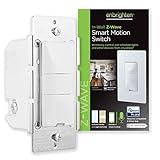
Overview: This Enbrighten device is an in-wall smart light switch with integrated motion and ambient light sensing. It replaces standard switches, offering occupancy/vacancy modes, adjustable sensitivity, and multi-switch compatibility for lights, fans, or appliances—requiring a neutral wire and Z-Wave hub.
What Makes It Stand Out: Its true innovation lies in flexible operational modes: occupancy (auto-on/off), vacancy (manual-on/auto-off), or manual. Combined with five timeout durations, three sensitivity levels, and light-sensing thresholds, it enables highly tailored room automation—unlike standalone motion sensors.
Value for Money: Priced higher than basic smart switches, it eliminates the need for separate motion sensors and switches. The included color kits and add-on switch support (up to 4) provide whole-room customization, outperforming cheaper switches with limited automation logic.
Strengths and Weaknesses: Strengths: Versatile occupancy logic, customizable settings, neutral wire support, and seamless multi-switch integration. Weaknesses: Requires professional installation (neutral wire needed), no temperature monitoring, and limited to lighting/appliance control.
Bottom Line: Ideal for automating room lighting with precision; worth the investment for hands-free convenience in high-traffic areas, but less compelling for simple on/off use cases.
9. Aeotec Door Window Sensor 7, Z-Wave Plus Enabled Zwave Hub Required, Gen7, White (Door/Window Sensor 7)

Overview: The Aeotec Door Window Sensor 7 is a compact, next-gen security sensor for monitoring entry points. Using Z-Wave Plus Gen7 technology, it alerts users to openings/closings while doubling as an automation trigger for scenes like “Goodnight” modes, requiring a compatible hub.
What Makes It Stand Out: Its 40% smaller size (2.8"x0.75") than prior models allows discreet placement on narrow frames. The Gen7 chip ensures 50% faster response, military-grade encryption, 4-year battery life, and SmartStart QR pairing—streamlining setup versus older sensors needing manual inclusion.
Value for Money: Slightly pricier than basic door sensors, but the enhanced speed, security, and longevity justify the cost. It outperforms budget options (e.g., generic Z-Wave sensors) with superior reliability and seamless integration into Z-Wave 700-series ecosystems.
Strengths and Weaknesses: Strengths: Ultra-compact design, exceptional battery life, SmartStart simplicity, and robust encryption. Weaknesses: No environmental sensing (e.g., temperature), requires precise alignment for reliable detection, and niche appeal for non-Z-Wave users.
Bottom Line: A top-tier choice for securing doors/windows in Z-Wave 700-series setups; its reliability and ease of use make it a must-have for foundational smart home security.
10. PRO Version ZWave Water Sensor: Aeotec Water Sensor 7 Pro, with Flood, Temperature, Humidity Sensor, SmartThings Sensor Compatible, Z-Wave Plus, S2, SmartStart, ZWave hub Required

Overview: The Aeotec Water Sensor 7 Pro detects minute water leaks (as small as 0.02") while monitoring temperature and humidity. Built for Z-Wave 700-series hubs, it uses S2 security and SmartStart to prevent flood damage and enable climate-based automations like triggering dehumidifiers.
What Makes It Stand Out: Its ultra-sensitive leak detection—far exceeding most competitors (typically 0.1"+)—combined with dual environmental sensors, creates a comprehensive moisture management tool. The Gen7 chip ensures rapid alerts, 3-year battery life, and secure SmartStart pairing, critical for basements or under sinks.
Value for Money: Premium-priced but invaluable for flood-prone areas; replacing one incident justifies the cost. While basic water sensors lack temp/humidity tracking, this Pro model’s tri-sensor approach offers holistic protection, outpacing rivals like Fibaro’s single-function leak sensor.
Strengths and Weaknesses: Strengths: Industry-leading leak sensitivity, temperature/humidity integration, robust security, and long battery life. Weaknesses: No audible alarm (relies on hub notifications), requires hub for alerts, and overkill for dry climates.
Bottom Line: The gold standard for water damage prevention; essential for peace of mind in risk areas, though casual users may prefer simpler (and cheaper) leak detectors.
Understanding Z-Wave Sensor Kit Fundamentals
What Exactly Constitutes a Sensor Kit?
A Z-Wave sensor kit is more than just a random assortment of gadgets bundled together. At its core, it’s a curated collection designed to provide immediate functionality for specific scenarios—like basic security, environmental monitoring, or routine automation. Typically, these kits include a central hub (sometimes sold separately), various sensors (door/window, motion, temperature, etc.), and clear setup instructions. The key differentiator from buying individual sensors is the guaranteed compatibility and often simplified initial configuration, giving you a head start in building your smart home ecosystem without the guesswork of piecing components together one by one.
The Critical Role of the Hub in Your Kit
Your Z-Wave hub is the brain of the entire operation, acting as the central communication point between your sensors, your home network, and your control interface (like a smartphone app). When evaluating kits, scrutinize the hub’s specifications: Does it support the latest Z-Wave protocol (like 800 Series for longer range and lower power)? How many devices can it support? Does it offer local processing for automations, ensuring your lights turn on even if your internet goes down? A robust hub included in the kit eliminates a major compatibility hurdle right from the start and sets the stage for reliable, responsive automations that form the backbone of your smart home experience.
Mesh Networking: Why It’s Your Sensor Kit’s Secret Weapon
One of Z-Wave’s most significant advantages is its mesh networking capability. Unlike star-topology systems where every device talks only to the hub, Z-Wave sensors and compatible devices (like smart plugs or locks) act as repeaters. This means a signal from a sensor in your detached workshop can hop through a smart outlet in the garage and then to the hub inside your house, dramatically extending effective range and improving reliability. When choosing a kit, consider how the included sensors contribute to this mesh. Devices that are always powered (like plug-in modules) are excellent repeaters, while battery-powered sensors typically aren’t. A well-designed kit often includes a mix to naturally bolster your network’s strength from day one.
Key Features to Evaluate Before Purchase
Battery Life Expectations and Real-World Performance
Battery longevity is paramount for sensors, especially those tucked away in hard-to-reach places like attic windows or garage doors. While manufacturers advertise “up to 5 years,” real-world performance varies significantly based on transmission frequency, signal strength (struggling to reach the hub drains batteries faster), and environmental factors like extreme temperatures. Look for kits using standard, easily replaceable batteries (like CR123A or AA) and check if sensors offer configurable reporting intervals. The ability to reduce how often a motion sensor checks for movement, for example, can dramatically extend battery life without sacrificing core functionality. Reliable low-battery alerts within the hub software are non-negotiable.
Range Considerations for Your Specific Property Layout
Z-Wave’s theoretical range (often 100+ meters outdoors) rarely translates directly to indoor environments filled with walls, furniture, and interference. Concrete, metal framing, and large appliances are particularly challenging. Before committing to a kit, map out your intended sensor placements relative to where you’ll install the hub. Pay special attention to problem areas like basements, detached garages, or large open-plan living spaces. Kits designed for larger homes might include a dedicated signal repeater or emphasize sensors with stronger transmission power. Remember, the mesh network helps, but the initial “hop” from the farthest sensor to the first repeater is crucial—don’t assume the advertised range applies directly to your unique home layout.
Compatibility Beyond the Basics: Exploring Device Types
While door/window and motion sensors are staples, the best kits anticipate future expansion. Does the included hub seamlessly integrate water leak sensors, multi-sensors (combining motion, temperature, and light), or environmental monitors? Crucially, verify compatibility with the Z-Wave Plus or Z-Wave 800 Series certification level your hub supports. Older Z-Wave devices might work, but often lack modern features like S2 security or efficient sleep modes. A forward-thinking kit ensures the hub supports the latest security protocols and can incorporate diverse sensor types you might add later, preventing costly hub upgrades down the line. Check the manufacturer’s compatibility list meticulously, not just for the kit’s included sensors.
Security and Reliability: Non-Negotiables
The Imperative of S2 Security Framework
Security isn’t an optional extra for smart home sensors—it’s foundational. Older Z-Wave devices used less secure pairing methods vulnerable to potential exploits. The S2 (Security 2) framework, now standard in modern Z-Wave Plus v2 and Z-Wave 800 Series devices, provides robust end-to-end encryption during the critical inclusion (pairing) process and for ongoing communication. Any kit you consider must feature S2 security on both the hub and all included sensors. This prevents unauthorized devices from joining your network and ensures sensitive data (like when your front door opens) remains private. Never compromise on this; it’s the bedrock of a trustworthy smart home.
Ensuring Consistent Signal Strength and Minimizing Dropouts
Nothing erodes trust in a smart home system faster than sensors that randomly stop reporting. Signal dropouts usually stem from weak signal paths, network congestion, or failing batteries. A reliable kit minimizes this risk through thoughtful design: hubs with strong radios, sensors positioned to leverage the mesh network effectively, and clear tools within the hub’s app to visualize signal strength (often called RSSI values). Look for hubs that offer network healing features, which automatically optimize communication paths between devices. During setup, take the time to test sensor placement thoroughly—moving a motion sensor just a few feet can make the difference between reliable operation and constant frustration.
Firmware Updates: The Lifeline for Long-Term Performance
Technology evolves, and vulnerabilities or performance issues may be discovered after you purchase your kit. Regular, hassle-free firmware updates for both the hub and sensors are essential for maintaining security, improving reliability, and sometimes even adding new features. Investigate the manufacturer’s track record: How frequently do they release updates? Is the update process automatic and user-friendly, or does it require complex manual steps? A kit from a company committed to ongoing software support ensures your investment remains secure and functional for many years, adapting to new challenges and standards as they emerge.
Practical Considerations for Real-World Use
Installation Simplicity vs. Professional Requirements
The appeal of DIY smart home kits lies in their ease of setup, but complexity varies. Basic adhesive-backed door sensors are trivial to install, while integrating a water leak sensor under a sink might require more dexterity. Evaluate the kit’s installation process: Are tools required? Is wiring involved for any components (like certain environmental sensors)? Clear, step-by-step instructions—preferably with video guides—are vital. Consider your own comfort level; if you’re uneasy about placing sensors in critical locations (like near a water heater), a kit that offers optional professional installation support, even if you don’t use it immediately, provides valuable peace of mind for complex scenarios.
Scalability: Planning for Your Smart Home’s Future Growth
Your smart home journey rarely ends with the initial kit. Will this foundation support your ambitions six months or two years from now? Check the hub’s maximum device limit—some budget hubs cap out at 20-30 devices, which fills up quickly with multiple sensors per room plus lights and locks. Ensure the hub platform has a proven history of supporting new device types as they hit the market. Kits from established ecosystems often integrate more smoothly with third-party services (like voice assistants or advanced automation platforms) as your needs become more sophisticated. Think beyond the box; choose a kit that grows with you, not one that forces a complete overhaul later.
Environmental Tolerance for Outdoor and Extreme Locations
Not all sensors are created equal when faced with the elements. If you plan to monitor a shed, garage, or outdoor gate, standard indoor sensors will fail quickly. Look for kits that specify outdoor-rated or weather-resistant sensors where needed. Check the operating temperature and humidity ranges—extreme cold can kill batteries fast, and high humidity can corrode contacts. For critical areas like basements prone to flooding, ensure any included water leak sensors are designed for continuous moisture exposure. Don’t assume all components in a “home security” kit are suitable for every location; scrutinize the environmental specs for each sensor type included.
Optimizing Your Z-Wave Sensor Network
Strategic Placement Principles for Maximum Effectiveness
Where you put a sensor is just as important as the sensor itself. Motion sensors work best when mounted in corners, 6-8 feet high, with a clear view of entry points but not pointed directly at heat sources like vents or windows (which cause false triggers). Door/window sensors need precise alignment—the magnet and sensor must be within the specified gap (often 1-1.5 inches) when closed. Temperature sensors should be away from direct sunlight, drafts, or appliances to get an accurate room reading. Take the time during setup to experiment; small adjustments can significantly improve reliability and reduce false alarms, making your automations genuinely useful rather than annoying.
Fine-Tuning Sensitivity and Reporting Intervals
Most Z-Wave sensors offer configurable settings to match your specific environment. A motion sensor in a busy hallway might need higher sensitivity to detect movement, while one in a quiet bedroom might benefit from lower sensitivity to ignore a pet. Similarly, you can often adjust how frequently a sensor reports temperature changes or battery status. Reducing unnecessary reports (e.g., only sending a temp update if it changes by 2 degrees instead of 0.5) conserves battery life and reduces network traffic. Explore the settings within your hub’s app—these tweaks transform generic sensors into precision tools tailored to your home’s unique rhythms and your personal preferences.
Leveraging Automations to Unlock True Value
The real magic happens when sensors trigger meaningful actions. A door sensor opening at 3 AM shouldn’t just send an alert—it could turn on a hallway light at 10% brightness, disarm the security system if it recognizes your phone’s presence, or even adjust the thermostat if you’re heading to the garage. When setting up your kit, think beyond basic notifications. How can motion detection in your living room automatically adjust the lighting based on ambient light levels? Could a water leak sensor instantly shut off the main water valve via a smart relay? Building thoughtful automations using the sensor data is where the initial investment pays off, creating convenience, enhancing security, and saving energy effortlessly.
Frequently Asked Questions
How do I know if a Z-Wave sensor kit is compatible with my existing smart home hub?
Check the hub manufacturer’s official compatibility list for the specific sensor models included in the kit. Focus on Z-Wave protocol versions (Plus, 800 Series) and required security frameworks like S2. Never assume compatibility based solely on brand or “works with Z-Wave” claims.
Can I mix and match sensors from different brands within one Z-Wave kit ecosystem?
Yes, Z-Wave’s core strength is interoperability. As long as all devices support the same Z-Wave protocol version (ideally Z-Wave Plus or 800 Series) and the required security level (S2), sensors from various reputable manufacturers should work seamlessly with a compatible hub.
What’s the typical battery life for Z-Wave sensors, and how will I know when to replace them?
Most quality door/window and motion sensors last 1-3 years on standard batteries. Multi-sensors or those reporting frequently may have shorter lifespans. Reliable hubs provide clear low-battery alerts in the app weeks before failure, often with estimated time remaining.
Do Z-Wave sensor kits work during a power outage?
Battery-powered sensors will continue to function and report to the hub. However, if your hub loses power (unless it has a backup battery) or your home internet is down, remote access and cloud-based features will be unavailable. Local automations may still run if the hub has local processing capability.
How far apart can Z-Wave sensors be placed in a typical home?
Indoors, expect reliable communication within 30-100 feet between devices, depending heavily on walls and interference. The mesh network extends this significantly—sensors can relay signals through other powered Z-Wave devices, covering large homes effectively without direct hub line-of-sight.
Are Z-Wave sensors vulnerable to hacking?
Modern Z-Wave sensors using the S2 security framework are highly secure, employing strong encryption during pairing and communication. Always choose kits with S2 security and keep hub/sensor firmware updated to mitigate any potential vulnerabilities.
Can Z-Wave sensor kits integrate with voice assistants like Alexa or Google Home?
Yes, but this depends on the hub. Most modern Z-Wave hubs offer direct integration with major voice platforms, allowing you to create routines triggered by sensor events or check sensor status via voice command through the hub’s ecosystem.
What should I do if a sensor loses connection or stops reporting?
First, check the battery. Then, verify physical placement isn’t obstructed. Use your hub’s app to check signal strength (RSSI) and consider relocating the sensor or adding a powered repeater (like a smart plug) to boost the mesh network in that area.
Is professional installation necessary for most Z-Wave sensor kits?
Most kits are designed for DIY installation with adhesive mounts and simple setup. Professional help is generally only needed for complex integrations (like hardwired water valves) or if you’re uncomfortable placing sensors in specific locations, though many kits offer optional support.
How do Z-Wave sensor kits handle extreme temperatures in garages or sheds?
Only use sensors explicitly rated for outdoor or wide-temperature operation in these areas. Standard indoor sensors will malfunction or fail prematurely. Check the manufacturer’s specifications for operating temperature range (e.g., -20°C to +50°C) before installing in non-climate-controlled spaces.