Imagine waking up to the shrill, unmistakable sound of a siren piercing the quiet of your home. It’s not a drill—it’s your security system alerting you to a potential break-in or fire while you slept. That jolt of adrenaline underscores why a reliable siren isn’t just an add-on to your smart home; it’s the critical voice that turns silent sensors into actionable protection. In today’s interconnected homes, where lights, locks, and cameras work in harmony, the siren serves as the urgent, undeniable signal that cuts through the noise when seconds count. It transforms your entire ecosystem from a passive observer into an active guardian, demanding attention in ways a phone notification simply cannot.
But not all sirens are created equal, especially when woven into the intricate tapestry of a Z-Wave smart home. You’ve likely invested in a hub, door sensors, and motion detectors—all communicating seamlessly over the Z-Wave mesh network. Yet, if your siren lacks the right integration depth, volume, or reliability, it becomes a weak link in your security chain. The frustration of a siren that chirps feebly during a power outage or fails to trigger an automated lockdown sequence is more than inconvenient; it undermines the very purpose of your smart setup. Choosing the right Z-Wave siren means ensuring it doesn’t just make noise, but actively participates in your home’s intelligent response—elevating your system from reactive to truly proactive.
Top 10 Z-Wave Siren Alarms
Detailed Product Reviews
1. Zooz Z-Wave Long Range Smart Siren & Chime ZSE50 800LR (Z-Wave Hub Required) | Works with Z-Box, Home Assistant, Hubitat, and HomeSeer
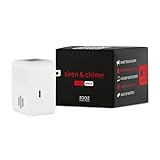
Overview:
This compact plug-in siren delivers powerful 90 dB audio alerts and programmable visual alarms via LED, designed for Z-Wave automation ecosystems. It operates on standard 120V power with battery backup for outage resilience, fitting discreetly in outlets without blocking adjacent sockets. Ideal for security notifications or custom chimes in smart homes.
What Makes It Stand Out:
Custom audio uploads (MP3/WAV) enable personalized alerts, a rare feature absent in competitors. Its visual LED is fully programmable for colors and patterns, enhancing multi-sensory alerts. The Long Range (LR) Z-Wave protocol ensures extended coverage, and its slim design preserves outlet access—unlike bulkier rivals.
Value for Money:
Priced mid-range, it justifies cost through unique customization and reliability. While cheaper sirens exist, they lack audio uploads or LR compatibility. However, its exclusion of SmartThings/alarm panels limits audience, making it best for open-source hub users (Home Assistant, Hubitat).
Strengths and Weaknesses:
Strengths: Custom sound support; true outlet-preserving design; reliable battery backup; visual/audible flexibility.
Weaknesses: 90 dB slightly quieter than rivals; incompatible with major platforms (SmartThings, Ring); requires technical setup for custom audio.
Bottom Line:
A top pick for Z-Wave LR enthusiasts seeking deep customization and space efficiency, but avoid if using mainstream hubs like SmartThings. Its unique audio features offset the modest volume limitation.
2. Aeotec Siren 6, Z-Wave Plus S2 Enabled Zwave Siren Safety Speaker, Wall-Mounted Sound & Light Security Intruder Zwave Alarm with Backup Battery, 110dB

Overview:
The Aeotec Siren 6 combines a piercing 110 dB alarm with a 1,000-lumen strobe light, offering robust security and safety alerts. Featuring Z-Wave Plus S2 encryption, it includes a 4-hour battery backup and wall-mount flexibility, supporting smoke/CO sensor integrations and doorbell functionality via optional buttons.
What Makes It Stand Out:
Its exceptional 1,000-lumen strobe outshines competitors’ visuals, critical for emergencies. With 30 pre-loaded tones (6 security, 8 safety) and 80–110 dB volume control, it covers diverse scenarios. S2 certification ensures top-tier security and 490-foot range, while Z-Wave Plus certification guarantees broad hub compatibility.
Value for Money:
Premium-priced but justified by unmatched brightness, volume, and S2 security. Cheaper models lack its lumens or encryption. Compatibility with SmartThings (unlike Zooz) broadens appeal, though Vera users are excluded. The 4-hour battery is a reliable safeguard.
Strengths and Weaknesses:
Strengths: Industry-leading 1,000-lumen strobe; versatile tone library; S2 security; SmartThings support; wall-mountable.
Weaknesses: Requires separate buttons for doorbell use; no custom audio uploads; slightly shorter battery life than Zooz.
Bottom Line:
The best all-around Z-Wave siren for security-focused users, especially with SmartThings. Its brightness and tone variety make it worth the investment despite minor feature gaps.
3. Ecolink Z-Wave 700 Chime + Siren, Z-Wave Plus S2 Enabled, with Battery Backup, Security Intruder (ISZW7-ECO)
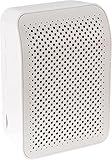
Overview:
This dual-purpose device serves as both a 105 dB security siren and a versatile chime for home automation. Supporting SmartThings (via handler) and Hubitat, it features 10 siren sounds, 20 chimes, and SD card support for custom audio. It plugs into standard outlets without obstructing adjacent ports.
What Makes It Stand Out:
The SDHC card slot (16GB/32GB) enables unlimited custom chime sounds—unmatched among reviewed products. Its dedicated chime mode (20 built-in options) caters to non-security automations like doorbells or reminders, offering unique versatility beyond typical sirens.
Value for Money:
Competitively priced for its dual functionality. While Aeotec offers louder volume, Ecolink’s chime specialization and custom audio via SD card provide distinct value for automating household notifications, not just emergencies. Battery backup is standard but unspectacular.
Strengths and Weaknesses:
Strengths: SD card for custom chimes; extensive built-in sound library; outlet-preserving design; SmartThings/Hubitat support.
Weaknesses: No visual strobe/light alerts; 105 dB quieter than Aeotec; SD card setup adds complexity.
Bottom Line:
Ideal for users prioritizing customizable chimes over emergency strobes. A smart buy for whole-home automation, but skip if you need intense visual alerts.
4. Qolsys QZ2300-840 IQ Siren, Z-Wave

Overview:
A streamlined wireless siren designed exclusively for Qolsys IQ Panel 2 systems. It amplifies alarm volume, acts as a Z-Wave repeater, and features tri-LED strobing during alerts. Powered via standard outlets with a 3-hour backup battery, it focuses on core security functionality without frills.
What Makes It Stand Out:
Its role as a Z-Wave repeater strengthens mesh network reliability—a subtle but valuable perk. The 3-LED strobe is effective for attention-grabbing alerts, and Qolsys-specific integration ensures seamless pairing with IQ Panel 2 systems, minimizing setup headaches.
Value for Money:
Budget-friendly but niche. It delivers solid performance for Qolsys users at a low cost, though limited compatibility (no SmartThings/Home Assistant) restricts broader appeal. You pay for simplicity and brand synergy, not advanced features.
Strengths and Weaknesses:
Strengths: Z-Wave repeater functionality; easy Qolsys integration; affordable; compact plug-in design.
Weaknesses: IQ Panel 2 exclusive; no volume/sound customization; weak 3-hour battery; no custom tones.
Bottom Line:
A practical, no-fuss add-on for Qolsys IQ Panel 2 owners seeking louder alarms. Avoid if using other hubs—it’s too specialized for general smart home use.
5. Zigbee Smart Siren Alarm: Wireless Alarm for Security & Automation, App Control, Strobe Flash 100dB Siren, Tuya Zigbee Hub Required, Compatible with Alexa & Google Home

Overview:
This Zigbee siren offers 100 dB alerts, a red strobe light, and app-based control via Tuya/Smart Life. It supports voice assistants, scene automation (e.g., triggering with motion sensors), and 18 selectable tones. Requires AC power with optional battery backup (battery not included).
What Makes It Stand Out:
App-centric control enables scheduling, remote arming, and push notifications—unavailable in Z-Wave models reviewed. Alexa/Google Home compatibility provides voice control, while scene automation (e.g., pairing with PIR sensors) streamlines security workflows without hub complexity.
Value for Money:
Cost-effective for Zigbee users, especially Tuya ecosystem adopters. Its app features rival pricier Z-Wave options, though the missing battery is a drawback. Ideal for renters or those avoiding Z-Wave hubs, but limited to Tuya-compatible setups.
Strengths and Weaknesses:
Strengths: Robust app automation; voice assistant support; versatile scene triggers; 18 tones with volume levels.
Weaknesses: Battery not included; no custom sound uploads; Zigbee fragmentation risks; weaker 100 dB vs. top Z-Wave models.
Bottom Line:
A compelling choice for Tuya/Smart Life users wanting app-driven security. Prioritize it for voice control and automation ease, but consider Z-Wave for louder, battery-included alternatives.
6. eufy Indoor Siren E20, Loud 110 dB Alarm for Whole-Floor Coverage, Reliable Power, Backup Battery, Flexible Installation Options, Long Communication Range, Requires HomeBase 2, 3, Mini, or Pro

Overview: The eufy Indoor Siren E20 is a dedicated wireless alarm designed to integrate with eufy’s HomeBase ecosystem, providing a loud audible deterrent for security events within the home. It requires a compatible HomeBase unit to function. What Makes It Stand Out: Its standout features include a potent 110 dB alarm ensuring whole-floor coverage, a robust 48-hour backup battery for power outages, and flexible installation via adhesive or screws. The impressive 656 ft open-air wireless range with HomeBase ensures reliable connectivity in larger homes. Value for Money: Priced competitively within the eufy ecosystem, it offers excellent value for existing eufy camera/HomeBase users seeking enhanced audible alerts. However, the mandatory HomeBase requirement adds significant upfront cost for new users, making it less economical as a standalone purchase compared to universal alternatives. Strengths and Weaknesses: Strengths: Very loud alarm, long battery backup, versatile mounting, strong range. Weaknesses: Ecosystem lock-in (only works with specific eufy HomeBases), no visual strobe, HomeBase not included, requires periodic firmware updates. Bottom Line: A highly effective and reliable siren only for those already invested in the eufy HomeBase ecosystem; new users should consider more universal options due to the additional hardware requirement.
7. IQ Siren (Z-Wave)

Overview: The IQ Siren is a plug-in Z-Wave module designed to add a loud audible and visual alarm to any Z-Wave security system, activating during triggered events like intrusions or emergencies. What Makes It Stand Out: Its key differentiators are seamless plug-and-play installation into any standard outlet, the inclusion of three strobing LEDs for visual alerts alongside the 105 dB siren, and its dual role as a Z-Wave signal repeater to extend network range—features uncommon in basic plug-in sirens. Value for Money: Offering solid functionality at a typical mid-range Z-Wave accessory price, it provides good value for Z-Wave users needing a simple, reliable alarm. The repeater function adds extra utility not found in cheaper competitors, justifying its cost within the ecosystem. Strengths and Weaknesses: Strengths: Easy plug-in setup, visual strobe lights, acts as Z-Wave repeater, no separate hub battery dependency. Weaknesses: Limited 3-hour battery backup, slightly lower volume (105 dB) than some rivals, Z-Wave ecosystem lock-in. Bottom Line: A practical, no-fuss plug-in siren with valuable repeater functionality, highly recommended for expanding Z-Wave security systems where visual alerts and network extension are beneficial.
8. Zigbee Smart Siren Alarm: Wireless Home Security Alarm, Burglar Alarm Sound Light Alarm with 100dB Sounder, Tuya App Control, Tuya Zigbee Hub Required, Compatible with Alexa, Google Assistant

Overview: This compact Zigbee siren integrates with Tuya/Smart Life ecosystems via a required hub, providing 100dB audible alarms and bright red strobe lights for various security or automation triggers within smart homes. What Makes It Stand Out: It excels with 18 customizable alarm sounds, extensive automation triggers (doors, leaks, temp), and broad voice assistant compatibility. Its ultra-compact size (3 inches) and dual power options (USB AC adapter primary + emergency battery) offer unique flexibility for tight spaces. Value for Money: Positioned affordably, it delivers exceptional versatility for Tuya Zigbee users. The ability to handle multiple sensor types without subscriptions provides significant long-term savings over professionally monitored systems, though the mandatory hub is an extra cost. Strengths and Weaknesses: Strengths: Highly customizable sounds/lights, broad trigger compatibility, very compact, Tuya/Smart Life/Alexa/Google support. Weaknesses: Hub required (not included), battery is emergency-only (must stay plugged in), Zigbee ecosystem limitation. Bottom Line: An outstandingly versatile and compact siren for Tuya Zigbee users seeking customizable, multi-scenario audible/visual alerts without ongoing fees; essential hub requirement is its main barrier.
9. Smart Siren Alarm, Wireless Home Security Alarm with 110 dB Loud Audible Alerts, Remote Control, Compatible with Alexa, Google, Home Assistant, IFTTT - Hub Required
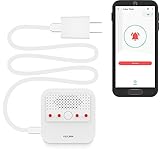
Overview: This YoLink-based siren delivers 110dB alerts and integrates with major platforms (via optional hub), emphasizing device-to-device communication for critical alerts even without internet or mains power. What Makes It Stand Out: Its revolutionary feature is device-to-device pairing (up to 128 devices), enabling sirens to trigger directly from sensors like water leak detectors without Wi-Fi, internet, or hub—ideal for offline security. The “SirenFob” remote pairing extends this to vehicles/RVs. Value for Money: Excellent value for resilience-focused users. The offline functionality eliminates reliance on spotty internet for critical alerts, a premium feature often missing elsewhere. Avoiding monthly fees enhances long-term savings, though the YoLink hub is an initial cost. Strengths and Weaknesses: Strengths: Unmatched offline device pairing, 110dB volume, no mandatory subscriptions, wide compatibility (Alexa, Google, HA, IFTTT). Weaknesses: Hub required for app control, complex setup for advanced features, ecosystem-specific (YoLink). Bottom Line: The top choice for users prioritizing reliable, internet-independent security alerts; indispensable for RVs, sheds, or areas with unstable connectivity, despite requiring the YoLink ecosystem.
10. Nippon America High Decibel High Power Outdoor Alarm Security Siren (TC-S7545-110), Long Range, 80 Watts, 120 Decibels, Remotely Activate with Wi-Fi Socket (Sold Separately)
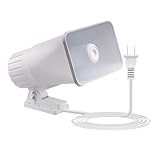
Overview: A rugged, wired outdoor siren delivering extreme 120 dB output at 80 watts, designed for wide-area perimeter security on properties like warehouses, farms, or commercial buildings, activated via manual plug or smart plug. What Makes It Stand Out: It dominates with sheer power (120 dB/80W) and long-range audibility unmatched by indoor smart sirens. The 90-degree rotation mount optimizes sound direction, and its weather-resistant build suits harsh outdoor environments where wireless units fail. Value for Money: Justified for large-property security where maximum deterrence is critical. While the siren itself is reasonably priced, the need for a separate smart plug/Wi-Fi adapter for remote control adds cost. It’s a cost-effective powerhouse compared to commercial-grade alternatives. Strengths and Weaknesses: Strengths: Exceptional volume/range, weatherproof, high power output, flexible mounting. Weaknesses: Requires hardwiring/AC plug (no battery), no built-in smart features (relies on external smart plug), purely audible (no strobe), complex installation. Bottom Line: The definitive choice for high-decibel outdoor perimeter security on large properties; prioritize it for sheer audible deterrence, but pair with a smart plug for modern remote control functionality.
Understanding the Critical Role of Z-Wave Sirens in Modern Security
Beyond Basic Noise: The Functional Purpose of a Smart Siren
A Z-Wave siren is far more than a loudspeaker for emergencies. It acts as the central auditory command center for your security ecosystem, capable of emitting distinct, customizable alerts for different threats—like a high-pitched wail for intrusions versus a steady whoop for fire or carbon monoxide. This specificity prevents panic and guides appropriate action. Crucially, it leverages Z-Wave’s two-way communication to confirm activation status back to your hub, ensuring you’re never left guessing if the alarm actually sounded during an event. This reliability transforms it from a simple noisemaker into an accountable, integrated component of your home’s defense strategy.
How Z-Wave Integration Transforms Siren Capabilities
Unlike basic standalone alarms, Z-Wave sirens unlock sophisticated automation through the mesh network. They can trigger complex sequences: sounding the alarm while locking doors, turning on all hallway lights, and sending video clips from nearby cameras to your phone. Z-Wave’s low-latency communication ensures near-instantaneous response, critical when every millisecond matters. Furthermore, the mesh network’s self-healing properties mean the siren remains operational even if other devices fail, as signals reroute through alternative paths. This resilience makes Z-Wave sirens uniquely dependable within a holistic security framework.
Key Technical Specifications to Evaluate
Decoding Volume and Frequency Requirements
Loudness, measured in decibels (dB), is non-negotiable—aim for sirens producing at least 100 dB at 1 meter for whole-home coverage. However, frequency matters just as much. Human hearing is most sensitive to mid-range frequencies (2,000–5,000 Hz), so sirens optimized here penetrate walls and background noise more effectively than deep bass tones. Test how the siren sounds in your actual living environment; a spec sheet number doesn’t guarantee audibility in your bedroom over a running dishwasher. Prioritize models offering adjustable volume profiles to avoid excessive noise pollution in dense neighborhoods while maintaining effectiveness.
Power Source Reliability and Backup Mechanisms
Never underestimate the vulnerability of power-dependent alarms. A quality Z-Wave siren must include robust backup power—typically a long-life lithium battery (3+ years lifespan)—that automatically engages during outages. Verify if the siren sends low-battery alerts via Z-Wave to your hub, allowing proactive replacement before failure. Some advanced models support hardwiring with battery backup, eliminating reliance on plug outlets vulnerable to tampering. During installation, ensure backup batteries are easily accessible; a siren rendered useless by a dead, inaccessible battery defeats its purpose entirely.
Durability and Environmental Resistance
Consider where the siren will live. Indoor units need basic dust resistance, but garages or utility rooms demand higher ingress protection (IP) ratings—look for at least IP30 to withstand humidity and minor splashes. Outdoor-rated sirens require rigorous weatherproofing (IP65 or higher) to endure rain, snow, and temperature extremes without corrosion or electrical failure. Test the housing material; UV-resistant polycarbonate prevents yellowing and brittleness from sun exposure. Remember, a siren silenced by environmental damage is as ineffective as one without power.
Deep Dive into Integration and Smart Features
Seamless Hub Communication and Network Stability
Your siren must be certified for your specific Z-Wave hub (e.g., 700-series, 800-series chips) to guarantee compatibility and leverage the latest features like longer range or enhanced encryption. Check if it supports Z-Wave’s S2 security framework for encrypted communication, preventing signal hijacking. Crucially, verify its role in the mesh: does it act as a repeater to strengthen your network? A siren that extends your mesh’s reach adds value beyond its primary function, improving overall system reliability for all connected devices.
Customizable Alert Profiles and Automation Triggers
The best Z-Wave sirens let you define unique sounds for specific scenarios—police, fire, medical emergency, or even “kids home from school.” This is configured through your hub’s interface, not just physical buttons. Deep integration allows sirens to react to any Z-Wave event: a water leak sensor activating could trigger a distinct “flood warning” tone, while a motion sensor in a restricted zone at night initiates a full intrusion sequence. Ensure the siren supports multiple notification classes within your hub’s automation engine for truly tailored responses.
Strobe Lights and Visual Alerts as Critical Add-Ons
For households with hearing-impaired members, integrated high-intensity strobe lights (often 170+ lumens) are essential. These shouldn’t be an afterthought—they must synchronize perfectly with the audible alarm and be bright enough to penetrate daylight through windows. Verify the strobe’s coverage angle (180+ degrees is ideal) and whether intensity/duration is adjustable. Some models offer optional remote strobes for larger homes, ensuring visual alerts reach every corner during an emergency.
Installation and Practical Considerations
Optimal Placement Strategies for Maximum Effectiveness
Location dictates performance. Mount sirens high on walls (near ceilings) where sound propagates evenly, avoiding corners that create dead zones. Prioritize central locations like hallways near bedrooms, but ensure coverage extends to vulnerable entry points (garage doors, ground-floor windows). Crucially, avoid placing near HVAC vents or noisy appliances that could mask the alarm. For multi-story homes, deploy at least one siren per floor—sound doesn’t travel reliably between levels through standard doors.
DIY Installation Complexity vs. Professional Setup
Most Z-Wave sirens are DIY-friendly with simple screw mounts and plug-in power, but hardwired models require electrical expertise. Assess your comfort level: incorrectly wiring a hardwired siren risks fire hazards or voiding warranties. Even plug-in models need careful placement testing—activate the siren at night to confirm audibility in all critical areas. If integrating with professional monitoring, verify compatibility with your alarm company’s protocols; some require specific certification (like UL listing) that DIY setups might not meet.
Maintenance and Self-Diagnostics for Long-Term Reliability
A siren is only trustworthy if it’s functional. Choose models with built-in self-test routines that automatically check battery levels, speaker integrity, and network connectivity—reporting status directly to your hub. Monthly manual tests are still essential; schedule them in your smart home app to avoid forgetting. Dust accumulation can muffle sound, so opt for designs with sealed speaker grilles or easy-clean housings. Document battery replacement dates; treat it like a fire extinguisher—routine checks prevent catastrophic failures.
Advanced Capabilities for Future-Proofing
Wireless Range and Mesh Network Contribution
Z-Wave’s range (typically 100+ feet line-of-sight) shrinks through walls. Position sirens to act as repeaters—ideally spaced 30-50 feet apart—boosting signal strength for distant sensors. Sirens with external antenna ports allow range extension in challenging layouts (like sprawling ranch homes). Check if your hub identifies “weak” siren connections; a siren at the network’s edge might need relocation to maintain reliable command reception during crises.
Firmware Updates and Long-Term Support
As Z-Wave protocols evolve (e.g., shifts to 700/800-series chips), firmware updates keep sirens compatible and secure. Verify the manufacturer’s track record: do they provide updates for 5+ years? Hub-side updates are common, but some sirens require physical interaction for firmware flashes—a major hassle. Prioritize brands with clear update pathways documented in their support resources to avoid obsolescence.
Interoperability Beyond Basic Security
Think beyond alarms. Advanced Z-Wave sirens can integrate with non-security automations: sounding a gentle chime when a smart doorbell rings, or emitting a unique tone to signal package delivery. This versatility increases daily utility, keeping the device “top of mind” for routine checks. Ensure your hub supports these creative use cases through its scene or routine builder—turning a safety device into an active part of your home’s personality.
Navigating Security and Compliance
Encryption Standards and Tamper Protection
Z-Wave S2 security is non-negotiable—it encrypts siren commands to prevent spoofing or deactivation by intruders. Additionally, physical tamper switches should trigger an immediate alarm if the siren is removed from its base. Confirm these features are enabled by default in your hub’s settings; disabling them for “convenience” creates dangerous vulnerabilities. For high-risk areas, consider sirens with anti-jamming technology that detects RF interference attempts.
Adherence to Safety Certifications
Look for certifications like UL 924 (for emergency lighting/sirens) or EN 50131 (European security standards), indicating rigorous testing for reliability and sound output. These aren’t just checkboxes—they ensure the siren meets minimum performance thresholds during real emergencies. While not all regions mandate certifications for DIY systems, they provide objective proof of quality beyond marketing claims.
Building Your Evaluation Checklist
Prioritizing Features Based on Your Home Layout
Small apartments might need only one powerful indoor siren, while multi-story homes require strategic placement of multiple units. Homes with hearing-impaired residents mandate integrated strobes. Outdoor sirens are essential for properties with detached garages or large yards where indoor alarms may not be heard. Map your space first—your layout dictates critical features, preventing over- or under-specification.
Budget Allocation: Value vs. Essential Functionality
Avoid cheap sirens lacking Z-Wave certification or proper backup power—they’re false economies. Instead, allocate budget toward core reliability: battery longevity, certified volume output, and robust encryption. Fancy features (like multi-color LED mood lighting) are secondary; prioritize flawless execution of fundamental security tasks. Remember, you’re investing in peace of mind, not gadgetry.
Frequently Asked Questions
How does a Z-Wave siren differ from a Wi-Fi or Bluetooth alarm?
Z-Wave operates on a dedicated low-frequency mesh network designed for reliability during power outages and without internet dependency. Unlike Wi-Fi alarms that can jam or drop during network congestion, Z-Wave maintains consistent communication with your hub using minimal power, ensuring the siren activates even when your router is down.
Can I adjust the siren volume remotely after installation?
Yes, most Z-Wave sirens allow volume adjustment through your smart home hub’s app. This lets you customize loudness for nighttime (reducing sleep disruption) or specific zones, and even schedule volume changes based on time of day or occupancy sensors.
What prevents false alarms from triggering the siren unnecessarily?
Advanced hubs use “alarm validation” rules requiring multiple sensor triggers (e.g., motion + door sensor) within a short timeframe before activating the siren. You can also set entry/exit delays and exclude certain automations from triggering full alarms, reducing nuisance alerts.
How long do backup batteries typically last in Z-Wave sirens?
Lithium backup batteries generally last 3-5 years under normal conditions. The siren should send low-battery alerts via Z-Wave to your hub months before failure, giving ample time for replacement without compromising security.
Will a Z-Wave siren work with non-Z-Wave security systems?
Only if your primary hub supports Z-Wave integration. Standalone non-Z-Wave systems (like traditional ADT panels) usually cannot communicate with Z-Wave devices. The siren must connect to a Z-Wave hub that then interfaces with other systems via protocols like IFTTT or Matter.
Is professional installation necessary for hardwired Z-Wave sirens?
Yes, hardwired models require electrical work connecting to your home’s low-voltage security circuit, which should be handled by a licensed technician to ensure safety and compliance with local building codes.
Can outdoor Z-Wave sirens withstand extreme temperatures?
Weatherproof outdoor models (rated IP65 or higher) typically operate between -22°F to 140°F (-30°C to 60°C). Always verify the specific temperature range in the product specifications to match your climate’s extremes.
Why is a strobe light important if I can hear the siren?
Strobe lights provide critical visual alerts for deaf or hard-of-hearing household members, ensure alerts are noticed during loud environments (like thunderstorms), and comply with accessibility standards in many regions—making security truly inclusive.
How do I test my Z-Wave siren without disturbing neighbors?
Use your hub’s “test mode” to trigger a brief, low-volume alert or silent strobe sequence. Many sirens also have physical test buttons for quick checks. Schedule tests during daytime hours and notify neighbors if full-volume testing is unavoidable.
Do Z-Wave sirens require firmware updates, and how are they managed?
Yes, updates patch security flaws and add features. They’re typically pushed automatically through your Z-Wave hub’s interface. Ensure your hub supports over-the-air (OTA) updates for seamless maintenance without physical access to the siren.