Imagine waking up to a gentle notification that your back gate drifted open during the night, or receiving an alert the moment your child returns home from school – all seamlessly integrated into your morning Alexa routine. Smart home door sensors have evolved far beyond simple security buzzers; they’re now intelligent sentinels that weave physical security into the fabric of your connected life. By 2026, these unassuming devices are fundamental building blocks of a truly responsive home, transforming how we interact with our living spaces through the familiar voice interface of Alexa. They quietly monitor the pulse of your home, turning everyday entries and exits into actionable insights and automated comfort.
Gone are the days when home security felt intrusive or complex. Modern door sensors operate with near-silent efficiency, leveraging advancements in wireless technology and AI to provide peace of mind without constant vigilance. Integrating them with Alexa unlocks a powerful synergy: your voice becomes the command center for awareness. Whether it’s triggering welcome lighting sequences, adjusting thermostats based on occupancy, or delivering discreet security updates, the right sensor setup transforms Alexa from a helpful assistant into an intuitive guardian of your home environment. Understanding what truly matters in these devices ensures you build a system that’s reliable, future-proof, and effortlessly enhances your daily life.
Top 10 Smart Home Door Sensors
Detailed Product Reviews
1. Tapo Door Sensor Starter KIT, Matter Compatible, 3X Smart Door Window Contact Sensor and 1x Smart Hub with Built-in Chime, Smart Automation, Real-Time Notification, T31 KIT

Overview:
This Tapo starter kit delivers a complete Matter-compatible security foundation, bundling three T110 contact sensors and an H100 hub with chime. Designed for seamless smart home integration, it uses Sub-GHz protocol for extended range and superior battery efficiency over Wi-Fi alternatives, requiring only a 2.4 GHz network.
What Makes It Stand Out:
Matter compatibility ensures future-proof interoperability across ecosystems, while the hub’s 90dB customizable alarm and direct integration with Tapo cameras create a proactive security layer. Real-time app notifications for door/window status and activity history provide robust monitoring beyond basic alerts, covering cabinets or mailboxes effectively.
Value for Money:
Including both hub and three sensors at a mid-range price offers significant savings versus buying components separately. The Sub-GHz protocol’s 10x battery life extension reduces long-term costs, though Matter support adds premium appeal versus cheaper non-Matter kits.
Strengths and Weaknesses:
Strengths: Reliable Sub-GHz range, Matter-certified, camera sync capability, and no subscription fees. Weaknesses: Hub limited to Tapo ecosystem (no direct SmartThings/Apple HomeKit), requires app for all functions, and chime volume may be insufficient for large homes.
Bottom Line:
Ideal for Tapo/ecosystem newcomers seeking Matter-ready security with strong automation; skip if invested in non-Tapo platforms.
2. Aqara Zigbee Door and Window Sensor 3 Pack, Wireless Mini Contact Sensor, Home Automation, Requires Aqara Hub, Zigbee Connection, Kid Safety, Compatible with Apple HomeKit, Alexa, Works with IFTTT

Overview:
Aqara’s compact Zigbee sensors offer precise door/window monitoring but require a separate Aqara hub (sold separately). Targeting Apple HomeKit and Alexa users, they enable real-time phone alerts, local alarms, and automation triggers while supporting kid-safety applications like cabinet monitoring.
What Makes It Stand Out:
Native Apple HomeKit Secure Remote Access allows direct iCloud-based control without a bridge, a rarity among Zigbee sensors. The ultra-slim design (0.86-inch gap tolerance) fits tight spaces, and seamless integration with Aqara cameras/hubs creates cohesive automations like lights activating on door opening.
Value for Money:
Competitively priced per sensor, but the mandatory hub adds $50–$100 upfront. Superior battery life (2+ years) and HomeKit compatibility justify the cost for Apple-centric homes, though budget buyers may prefer all-in-one WiFi kits.
Strengths and Weaknesses:
Strengths: Apple HomeKit native support, miniaturized design, reliable Zigbee 3.0 connectivity. Weaknesses: Hub exclusivity (no third-party hubs), 400-inch hub range limit, and SmartThings incompatibility restrict flexibility.
Bottom Line:
Top pick for Apple ecosystem users prioritizing HomeKit integration; avoid if using SmartThings or seeking hub-free setup.
3. WiFi Door Window Sensor: Smart Contact Sensor with App Alerts, Door Open Detector Compatible with Alexa Google Assistant, Entry Detector Sensor for Home Security and Home Automation (4-Pack)

Overview:
This budget-friendly 4-pack operates directly over WiFi (2.4 GHz) without a hub, using Tuya/Smart Life apps for real-time door/window alerts. It supports voice queries via Alexa/Google Assistant and basic automations like light triggers, targeting DIY security seekers.
What Makes It Stand Out:
True hub-free operation simplifies setup—install sensors via adhesive strips, connect to WiFi, and receive instant app alerts. Voice command compatibility (“Alexa, is the front door closed?”) and Tuya automation routines (e.g., lights on at entry) enhance accessibility for non-tech users.
Value for Money:
The four-sensor bundle under $40 is exceptionally affordable. No hub cost or subscription appeals to renters, but Tuya’s reliance on cloud services may raise privacy concerns versus local-hub alternatives with similar pricing.
Strengths and Weaknesses:
Strengths: Zero hub requirement, ultra-simple installation, Alexa/Google voice support. Weaknesses: Cloud-dependent (alerts delayed during outages), shorter battery life (1 year), and limited smart home ecosystem depth.
Bottom Line:
Best for renters or budget-first users wanting effortless setup; not recommended for whole-home security due to cloud reliance.
4. 4 Pack Zigbee Door Sensor, Mini Smart Contact Sensors for Doors, Home Automation, Compatible with SmartThings, Alexa, Home Assistant, Hubitat, Aeotec and Homey (Zigbee Hub Required)
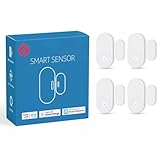
Overview:
This versatile 4-pack leverages Zigbee for broad compatibility with SmartThings, Home Assistant, Hubitat, and Alexa (with Zigbee hubs). It focuses on reliable door/window monitoring with instant app alerts and automation triggers, requiring a separate Zigbee hub.
What Makes It Stand Out:
Unmatched ecosystem support—works natively with nearly all major hubs (unlike brand-locked rivals). Compact size enables discreet placement on drawers or cabinets, while local Zigbee processing ensures faster alerts than cloud-dependent WiFi sensors during internet outages.
Value for Money:
At $35–$45 for four sensors, it’s cost-effective for multi-room coverage. The hub requirement adds expense, but longevity (2+ year batteries) and flexibility across platforms offer superior long-term value versus closed ecosystems.
Strengths and Weaknesses:
Strengths: Exceptional hub compatibility, local processing speed, compact design. Weaknesses: Hub not included, no built-in siren (relies on hub alarms), and Alexa routines require hub setup.
Bottom Line:
Essential for SmartThings/Home Assistant power users; overkill for casual Alexa-only households.
5. WiFi Door Alarm System, Wireless DIY Smart Home Security System, with Phone APP Alert, 8 Pieces-Kit (Alarm Siren, Door Window Sensor, Remote), Work with Alexa, for House, Apartment, by tolviviov

Overview:
This all-in-one 8-piece kit includes a siren, door sensor, remote, and hub for standalone security. Using WiFi (2.4 GHz only), it delivers app alerts, voice-controlled modes (via Alexa/Google), and expandable monitoring for doors/windows across apartments or small homes.
What Makes It Stand Out:
The integrated 110dB siren provides immediate audible deterrence—unlike sensor-only kits. DIY expansion to 20 sensors (motion detectors, water alarms) creates a scalable system, while AC-powered hub with 8-hour backup ensures reliability during outages.
Value for Money:
The complete kit (siren + sensor + remote) at $60–$80 undercuts professional systems. Expandability adds long-term value, but limited siren volume control and basic app functionality may disappoint tech-savvy users.
Strengths and Weaknesses:
Strengths: Built-in loud siren, easy expansion, voice mode control. Weaknesses: Hub requires constant AC power, app interface is rudimentary, and 5GHz WiFi incompatibility frustrates modern routers.
Bottom Line:
Solid entry-level alarm for renters needing audible alerts; choose Tapo/Aqara for deeper smart home integration.
6. WiFi Door Sensor Chime, Smart Door Open Alert Window Sensor for Business/Home/Kids Safety, Real-Time App Notification, 500ft Range, 32 Melodies, 5 Volume Levels, Window Contact Sensor Alarm Kit

Overview: This wire-free sensor system offers real-time door/window monitoring via the Tuya/Smart Life app, targeting home safety for children, elderly care, and business entry points. It combines local audible alerts with smartphone notifications, supporting up to 20 sensors for comprehensive coverage without monthly fees.
What Makes It Stand Out: Its standout features include 500ft range, 32 customizable melodies with 5 volume levels (up to 110dB), and family sharing for simultaneous alerts. The auto-memory function retains settings after power loss, while the plug-and-play installation uses adhesive strips for quick setup—ideal for renters or multi-room deployment.
Value for Money: Priced competitively for a no-subscription system, it outperforms basic standalone chimes with app integration and expandability. Though similar entry-level kits exist, the 20-sensor support and free push notifications deliver superior long-term value versus fee-based alternatives.
Strengths and Weaknesses:
Strengths: No monthly fees; loud, customizable alerts; effortless DIY installation; family sharing; robust 500ft range.
Weaknesses: Requires 2.4GHz WiFi (excludes 5GHz networks); app dependency for remote alerts; adhesive may fail on textured surfaces.
Bottom Line: An excellent, budget-friendly choice for renters or multi-room security needing instant alerts without subscriptions. Best for those already using Tuya/Smart Life ecosystems, though WiFi limitations require verification.
7. Zwave Door Sensor Aeotec Recessed Door Sensor 7, Z-Wave Plus Enabled Smart Door Sensor Battery Powered, SmartStart S2, Zwave Hub Required SmartThings Fibaro Home Centre 3 Hubitat
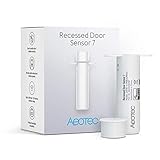
Overview: This Z-Wave Plus V2 recessed sensor prioritizes security and seamless integration within advanced smart home hubs. Designed for in-wall installation, it leverages the S2 security framework and SmartStart for encrypted, reliable door/window monitoring in Z-Wave ecosystems.
What Makes It Stand Out: Its recessed design offers discreet, tamper-resistant installation. SmartStart QR pairing simplifies setup, while Z-Wave S2 security provides military-grade encryption. The 66% reduced battery consumption enables a 3+ year lifespan—critical for hard-to-reach locations.
Value for Money: Premium-priced but justified for Z-Wave enthusiasts prioritizing security and longevity. Outperforms cheaper WiFi sensors in reliability and encryption, though hub dependency adds initial cost. Ideal for users investing in whole-home Z-Wave networks.
Strengths and Weaknesses:
Strengths: Top-tier Z-Wave S2 security; 3+ year battery life; recessed, tamper-proof design; SmartStart QR setup; ultra-low power consumption.
Weaknesses: Requires Z-Wave hub (not standalone); recessed install needs drilling; limited to Z-Wave frequency bands (908/916 MHz).
Bottom Line: A must-have for serious Z-Wave adopters seeking military-grade security and discreet installation. Avoid if you lack a compatible hub, but unparalleled for encrypted, long-term monitoring in professional setups.
8. Smart WiFi Door Sensor: Wireless Window Sensor with App Notification Alert, Tuya Door Open Contact Sensor for Home Security, No Hub Required, Compatible with Alexa Google Assistant

Overview: This budget-friendly WiFi sensor delivers direct smartphone alerts via Tuya/Smart Life apps without a hub. It triggers instant notifications for door/window activity and integrates with voice assistants, targeting DIY home security seekers.
What Makes It Stand Out: True hub-free operation with Alexa/Google voice status checks (“Is the door open?”) and Tuya ecosystem automation (e.g., lights turning on when doors open). The 24-month warranty and included batteries enhance its DIY appeal for quick, versatile placements.
Value for Money: Exceptional for entry-level users—no hub or subscription costs. While feature-light compared to Z-Wave options, its app control, voice compatibility, and automation at this price point undercut competitors like Product 9’s 4-pack.
Strengths and Weaknesses:
Strengths: Zero hub/subscription fees; voice assistant compatibility; Tuya automation triggers; 24-month warranty; included batteries with low-power alerts.
Weaknesses: 2.4GHz WiFi only; shorter 6-month battery life; limited range vs. Z-Wave; app-centric (no local chime).
Bottom Line: The top pick for beginners wanting simple, affordable door monitoring with voice control and smart home automation. Skip if you need local alarms or longer battery life, but perfect for Tuya-first households.
9. 4 Pack WiFi Door Window Sensor Detector: Wireless Security Alarm Door Sensor, Tuya Door Open Contact Sensor, Compatible with Alexa,Google Home,Siri, Smart Door Sensors for Home Business Security
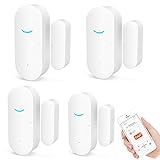
Overview: This 4-sensor bundle provides comprehensive coverage for doors, windows, and valuables via Tuya/Smart Life apps. It emphasizes broad placement flexibility (garages, cabinets, pet doors) with no hub or fees, targeting multi-point home security.
What Makes It Stand Out: The quad-pack offers exceptional coverage density at a low per-unit cost. Universal compatibility includes Siri Shortcuts, while the 1-year battery life and low-power app alerts reduce maintenance. The 3M adhesive ensures secure mounting on diverse surfaces.
Value for Money: Unbeatable for whole-home deployment—four reliable sensors undercut buying singles separately. Though similar to Product 8, the bundle includes extras like Siri support and a broader warranty/refund policy, maximizing ROI for large spaces.
Strengths and Weaknesses:
Strengths: Cost-effective 4-pack; Siri compatibility; 1-year battery life; versatile placement (garages, cabinets); hassle-free 3M installation.
Weaknesses: 2.4GHz WiFi limitation; no local sounder; voice commands limited to status checks (no automation triggers).
Bottom Line: The definitive choice for securing multiple entry points affordably. Ideal for renters or large homes needing extensive coverage without hub costs, though automation features lag behind Product 8.
10. CHAMBERLAIN Smart Garage Control - Wireless Garage Hub and Sensor with Wifi & Bluetooth - Smartphone Controlled, myQ-G0401-ES, White
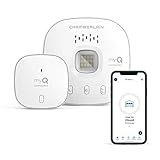
Overview: This dedicated garage hub transforms standard openers into smart systems via Bluetooth and WiFi. It enables remote garage control through the myQ app, targeting homeowners tired of second-guessing if their garage is closed.
What Makes It Stand Out: Unique Amazon Key in-garage delivery integration secures package deliveries. Scheduled auto-close, remote access sharing, and Bluetooth pairing (for signal reliability) differentiate it from generic door sensors, focusing purely on garage-specific needs.
Value for Money: Priced higher than basic sensors but justified by niche functionality. The Amazon Key perk adds tangible value for Prime users, while no subscription for core features beats competitors like Ring’s fee-based garage kits.
Strengths and Weaknesses:
Strengths: Amazon Key delivery support; scheduled closing; Bluetooth + WiFi redundancy; family access sharing; no myQ subscription fees.
Weaknesses: Garage-specific (no door/window use); requires existing Chamberlain/LiftMaster opener; Bluetooth setup can be finicky.
Bottom Line: A specialized, must-have upgrade for Chamberlain/LiftMaster garage owners wanting delivery security and peace of mind. Not versatile for whole-home security, but unrivaled for garage control.
Understanding Alexa Integration Requirements
Core Compatibility Protocols for 2026
Before purchasing any sensor, verifying its compatibility with Alexa in 2026 is non-negotiable. The widespread adoption of the Matter standard over the past few years means most new devices should work seamlessly across ecosystems, including Alexa. However, always check for explicit “Works with Alexa” certification and ensure the sensor utilizes either Matter over Thread/Wi-Fi or a well-established, supported protocol like Zigbee 3.0 within the Alexa ecosystem. Avoid legacy protocols nearing obsolescence to prevent future integration headaches.
The Critical Role of Hub Connectivity
Many advanced sensors, particularly those using Thread or Zigbee, require a compatible smart home hub to bridge communication with Alexa. By 2026, hubs supporting Matter are commonplace, but it’s essential to confirm your existing hub (like those built into newer Echo devices or dedicated hubs) supports the specific protocol your chosen sensor uses. Some Wi-Fi-only sensors connect directly to your router and Alexa, bypassing the need for a separate hub – a simpler setup worth considering for smaller installations.
Firmware Updates and Long-Term Support
Technology evolves rapidly, and sensor firmware is crucial for maintaining Alexa compatibility, security patches, and new feature rollouts. Prioritize manufacturers known for consistent, long-term firmware support. Check community forums or support documentation to gauge how actively a brand updates its devices. A sensor without ongoing firmware updates risks becoming incompatible with future Alexa features or vulnerable to security exploits within a few years.
Types of Door Sensors and Their Applications
Magnetic Contact Sensors: The Reliable Foundation
The classic reed switch sensor remains a cornerstone of door and window monitoring. Consisting of two parts – one mounted on the door/window frame and the other on the moving sash – they trigger when the magnetic field is broken upon opening. Their simplicity, low cost, and minimal power consumption make them ideal for basic entry point monitoring, forming the bedrock of most Alexa security routines like “Goodnight” modes.
Advanced Motion-Activated Door Sensors
Moving beyond simple open/close detection, newer sensors incorporate passive infrared (PIR) motion detection specifically tuned for doorways. These can distinguish between a door opening due to wind (no motion detected) versus someone actually entering, significantly reducing false alarms. When integrated with Alexa, this allows for smarter routines, like announcing “Someone entered the garage” only when motion accompanies the door opening.
Multi-Functional Entryway Monitors
The trend in 2026 leans towards sensors that gather multiple data points. These advanced units might combine contact sensing, motion detection, ambient light measurement, and even basic environmental monitoring (like sudden temperature shifts near an exterior door). This rich data stream enables incredibly nuanced Alexa interactions, such as adjusting indoor lighting based on both the time of day and whether someone is actively entering.
Key Features for Optimal Alexa Experience
Ultra-Low Latency Communication
The frustration of delayed alerts defeats the purpose of real-time monitoring. Sensors using modern protocols like Matter over Thread offer significantly faster and more reliable communication than older Wi-Fi or Bluetooth options. For Alexa routines that need to trigger instantly – like turning on hallway lights the moment a bedroom door opens at night – low latency is paramount. Check manufacturer specifications for response times.
Customizable Alert Thresholds and Sensitivity
Not every door creak warrants an alert. The best sensors for Alexa integration offer granular control over sensitivity and notification rules within their companion app. Can you set a delay before triggering an alert (e.g., ignore brief openings under 5 seconds)? Can you adjust motion detection range specifically for the doorway? This customization, fed into Alexa routines, prevents notification fatigue and ensures alerts are truly meaningful.
Voice Feedback Nuance and Context
Beyond simple “Door opened” announcements, advanced integration allows for contextual voice feedback through Alexa. A sensor detecting the front door opening after dark might trigger, “Welcome home! Lights are on and the thermostat is set to 72.” This requires sensors that transmit not just state changes, but potentially additional context (time of day, ambient light data) to the Alexa routine engine for more personalized responses.
Installation and Physical Considerations
Discreet Design and Placement Flexibility
Modern sensors are remarkably compact, but aesthetics still matter. Look for low-profile designs that blend with trim or can be easily hidden within door frames. Consider the mounting method: strong adhesives are common, but some offer screw mounts for permanent, tamper-resistant installation. Placement is key – ensure the sensor halves align perfectly when the door is closed, and avoid metal surfaces that can interfere with the magnetic field or wireless signal.
Environmental Resilience for All Entry Points
Where you install the sensor dictates its required toughness. Exterior doors and windows demand sensors rated for outdoor use – think IP65 or higher for dust and water resistance, and wide operating temperature ranges (-20°C to 50°C+). Interior sensors have less stringent needs but should still handle typical household humidity and temperature fluctuations. Never assume an indoor-rated sensor is suitable for a garage or porch door.
Alignment Tools and User-Friendly Setup
Misaligned contact sensors are the #1 cause of failure. The best models include visual alignment aids (like LEDs that light when properly positioned) or companion app guidance during setup. A smooth, intuitive pairing process directly with Alexa (often via the “Add Device” flow in the Alexa app) significantly reduces setup friction compared to requiring a separate hub app first.
Power Management and Longevity
Battery Life Expectations and Monitoring
Most door sensors rely on coin cell batteries (CR2032, CR123A). By 2026, efficient designs using Matter/Thread often boast 3-5 years of battery life. Crucially, check if the sensor provides accurate low-battery warnings integrated into Alexa – “The basement window sensor battery is low” is far more useful than a generic hub alert. Avoid models where battery monitoring is inconsistent or absent.
Rechargeable vs. Replaceable Battery Options
While replaceable batteries are standard, some premium sensors now feature small, integrated rechargeable cells, often charged via a discreet USB-C port. This eliminates the need for battery replacements but requires periodic physical access for charging. Consider your tolerance for maintenance: replaceable batteries offer simplicity for hard-to-reach spots, while rechargeables reduce long-term waste for easily accessible sensors.
Energy Harvesting: The Emerging Frontier
Keep an eye on emerging energy-harvesting sensors, particularly for high-traffic exterior doors. Some experimental models in 2026 capture minute amounts of kinetic energy from the door’s movement itself or solar energy from ambient light to trickle-charge their batteries, promising near-lifetime operation without manual intervention. While not yet mainstream, this tech is gaining traction for ultimate set-and-forget reliability.
Security and Privacy Imperatives
End-to-End Encryption Standards
Your door sensors are security devices; their communication must be secure. Prioritize sensors and hubs that utilize robust end-to-end encryption (E2EE) for all data transmitted to the cloud and to Alexa. Matter protocol inherently mandates strong security, making Matter-certified devices a safer default choice in 2026 compared to older, less secure Wi-Fi implementations.
Local Processing Capabilities
To enhance speed and privacy, sensors with local processing can make basic decisions (like “door opened”) without needing cloud round-trips. When paired with an Alexa hub supporting local execution (like newer Echo devices), this means routines trigger faster and continue working even if your internet connection drops. Verify if the sensor and your Alexa setup support local processing for critical routines.
Transparent Data Handling Policies
Scrutinize the manufacturer’s privacy policy. What data does the sensor collect beyond simple open/close states (e.g., motion patterns, ambient light logs)? How is this data stored, used, and shared? Reputable brands in 2026 provide clear, concise privacy notices and offer granular data control within their apps. Avoid companies with vague policies or a history of questionable data practices.
Future-Proofing Your Investment
Matter Protocol Adoption as the Baseline
By 2026, Matter isn’t just an option; it’s the essential foundation for interoperability. Choosing Matter-certified door sensors guarantees compatibility not only with current Alexa but with the broader smart home ecosystem now and for years to come. It mitigates the risk of your sensors becoming obsolete if a manufacturer changes its app strategy or goes out of business, as Matter devices can often be managed through other Matter controllers.
Scalability for Expanding Your System
Consider how easily you can add more sensors later. Does the hub/app handle dozens of sensors smoothly? Are there limits to the number of devices per hub? A system designed for scalability ensures that adding sensors for new doors, windows, or even cabinets later is seamless, avoiding the need for a complete system overhaul as your smart home grows.
AI-Powered Insights and Predictive Features
Look for sensors and platforms that leverage anonymized usage data (with your consent) to offer predictive features. By 2026, some systems might learn your family’s typical entry/exit patterns and alert you only to anomalous activity through Alexa, like “Front door opened at 3 AM, which is unusual.” This moves beyond simple alerts to intelligent home awareness, but requires platforms committed to ongoing AI development.
Troubleshooting Common Integration Hurdles
Diagnosing Communication Dropouts
If Alexa stops reporting door status, the first step is checking the sensor’s battery and physical alignment. Next, investigate wireless interference – is the sensor too far from the hub or router? Matter over Thread networks are more resilient, but physical obstacles (thick walls, metal) can still cause issues. Using the hub’s signal strength indicator in its app helps pinpoint placement problems needing adjustment.
Minimizing False Alarms Effectively
False alarms often stem from misalignment, overly sensitive motion detection, or environmental factors (strong winds on a loose window). Recalibrate the sensor, adjust motion sensitivity thresholds in the app, or add a short delay (e.g., 10 seconds) before triggering the Alexa routine for that specific sensor. For magnetic sensors, ensure the door latch fully closes the contact every time.
Resolving Alexa Routine Failures
When a routine doesn’t trigger, check the routine logic first: are the conditions (e.g., “Front Door opens”) correctly linked to the specific sensor device? Ensure the sensor is online and reporting status correctly in its native app. Sometimes, simply re-enabling the routine or re-linking the sensor skill within the Alexa app resolves transient glitches in the integration layer.
Frequently Asked Questions
How do I know if a door sensor will work with my specific Echo device?
Check the sensor’s packaging or online listing for the official “Works with Alexa” badge and ensure it lists compatibility with your Echo model’s generation (e.g., Echo (4th Gen), Echo Dot (5th Gen)). Matter-certified sensors are universally compatible with any Echo device acting as a Matter controller, which is standard for most Echos released after 2023.
Can door sensors work with Alexa without a hub?
Yes, Wi-Fi enabled door sensors connect directly to your home network and can often be added directly to the Alexa app without needing a separate hub. However, sensors using Zigbee or Thread protocols typically require a compatible hub (like a newer Echo with a built-in hub or a dedicated Matter hub) to communicate with Alexa.
What’s the average battery life for modern door sensors?
Most quality magnetic contact sensors using standard CR2032 batteries last between 2 to 5 years under normal usage, thanks to ultra-low-power wireless protocols like Bluetooth LE or Matter over Thread. Battery life varies based on how frequently the door is opened and the strength of the wireless signal to the hub.
How can I prevent my pets from triggering door sensors?
For magnetic contact sensors (which only trigger on physical opening), pets generally won’t cause false alarms. For sensors with motion detection, look for models with adjustable sensitivity settings or pet-immunity features (usually ignoring motion under 40-50 lbs). Position motion sensors higher up or angled away from pet pathways.
Will door sensors still work if my internet goes out?
Sensors connected via a local hub (like Zigbee/Thread to an Echo hub) will typically continue to monitor door status locally. However, triggering Alexa routines or sending remote notifications requires an active internet connection. Basic local automation (like a hub-connected light turning on) might still function depending on the hub’s capabilities.
Are there door sensors that work outdoors with Alexa?
Absolutely. Look for sensors explicitly rated for outdoor use with a high IP (Ingress Protection) rating, such as IP65 or IP67, which protect against dust and water jets. Ensure they also specify a wide operating temperature range suitable for your climate. Always follow the manufacturer’s installation guidelines for outdoor placement.
How accurate are the “door open” alerts with Alexa?
Accuracy is generally very high with properly installed magnetic contact sensors – they trigger reliably when the door physically opens. Accuracy can be affected by misalignment, weak batteries, or significant wireless interference. Regularly testing your sensors helps maintain reliability.
Can I use door sensors to trigger other smart home devices via Alexa?
Yes, this is a core strength. Alexa Routines allow you to link a door sensor event (e.g., “Front Door Opens”) to numerous actions: turning on lights, adjusting thermostats, starting robot vacuums, or arming/disarming security systems, creating truly automated responses to your comings and goings.
What’s the difference between a door sensor and a smart lock for Alexa?
Door sensors only detect if a door is open or closed; they don’t control the lock. Smart locks actively lock and unlock the door and usually include built-in contact sensing. Sensors are simpler, cheaper, and ideal for monitoring; smart locks add physical security control but are more complex and expensive.
How do I test if my door sensor is working correctly with Alexa?
Manually open and close the monitored door/window while watching the device status in the Alexa app. You should see the status change from “Closed” to “Open” instantly. Additionally, trigger a test routine you’ve set up (like a specific light turning on) to confirm the full integration path is functioning as expected.