Imagine stepping outside on a crisp evening, ready to unwind as your landscape lighting gently illuminates the garden path and your patio heater hums to life—all triggered automatically before you even opened the door. Now, picture that same scene interrupted by a sudden downpour causing a fried plug, a darkened yard, and a frustrating scramble to reset devices. Outdoor automation promises effortless convenience, but without the right foundation, it’s a gamble against the elements. The difference between seamless magic and costly mishaps often boils down to one critical component: the smart plug itself. Choosing wisely isn’t just about convenience; it’s about safeguarding your investment, ensuring safety, and building a resilient outdoor ecosystem that works rain or shine.
Weatherproofing isn’t a luxury add-on for outdoor smart plugs—it’s the non-negotiable baseline. Too many homeowners learn this the hard way after a single storm damages equipment or disrupts routines. Beyond basic water resistance, modern outdoor automation demands plugs that handle temperature extremes, resist UV degradation, and integrate smoothly into complex smart home networks. This guide cuts through the marketing noise to focus on the essential, often-overlooked features that separate reliable performers from expensive paperweights. We’ll explore the technical specifications that truly matter, installation pitfalls to avoid, and how to future-proof your setup against evolving smart home standards. Let’s build your outdoor automation on a foundation that won’t wash away.
Top 10 Outdoor Smart Plugs
Detailed Product Reviews
1. Kasa Outdoor Smart Plug, Smart Home Wi-Fi Outlet with 2 Sockets, IP64 Weather Resistance, Compatible with Alexa, Google Home & IFTTT, No Hub Required, ETL Certified(EP40), Black

Overview:
This dual-socket smart plug brings robust outdoor automation to traditional appliances. IP64-rated for weather resistance, it handles rain and dust while supporting independent control of two 15A/1875W outlets via Wi-Fi. Designed for landscape lighting, pool pumps, or holiday decor, it operates without a hub using 2.4GHz networks.
What Makes It Stand Out:
Individual outlet control and 300-foot Wi-Fi range differentiate it, enabling precise scheduling per device. Sunset/sunrise automation and grouping with other Kasa products enhance usability. Trusted by 6+ million users with a 2-year warranty, it balances reliability and smart features seamlessly.
Value for Money:
Priced mid-range, it justifies cost through dual outlets, IP64 protection, and broad compatibility (Alexa, Google, IFTTT). Cheaper single-outlet alternatives lack this versatility, while premium models rarely add meaningful upgrades for the price.
Strengths and Weaknesses:
Strengths: True independent socket control; intuitive scheduling; strong weatherproofing; no hub needed; excellent app integration.
Weaknesses: 2.4GHz Wi-Fi only; waterproof cover feels flimsy; limited to Kasa ecosystem for advanced features.
Bottom Line:
Ideal for users seeking dual-outlet flexibility and reliable outdoor automation. Its robust feature set and warranty make it a top-tier choice for smart home enthusiasts at a fair price.
2. Kasa Outdoor Smart Plug, Smart Home Wi-Fi Outlet Timer, Max Load 15A/1875W, IP64 Weather Resistance, Compatible with Alexa, Google Home & SmartThings, No Hub Required, ETL Certified(KP401)

Overview:
A streamlined outdoor smart plug offering single-socket control with IP64 weather resistance. It handles 15A/1875W loads and connects directly to 2.4GHz Wi-Fi for remote or voice operation via Alexa, Google, or SmartThings—no hub required. Tailored for holiday lights or pool equipment.
What Makes It Stand Out:
Its plug-and-play simplicity stands out, with setup completed entirely in the Kasa app in minutes. Sunset/sunrise scheduling and 300-foot Wi-Fi range provide intelligent automation without complex configuration, appealing to beginners.
Value for Money:
Slightly more affordable than dual-outlet models, it delivers core smart plug functionality reliably. While lacking multi-outlet versatility, it matches competitors’ pricing for essential features like weatherproofing and voice control, offering solid bang for buck.
Strengths and Weaknesses:
Strengths: Effortless setup; reliable SmartThings/Alexa/Google integration; compact design; strong IP64 rating.
Weaknesses: Single outlet only; no independent scheduling per device; shorter warranty than EP40; minimal physical durability enhancements.
Bottom Line:
A dependable, budget-friendly entry for basic outdoor automation. Choose this if you need one socket and prioritize ease of use over multi-device control.
3. Kasa Apple HomeKit Outdoor Smart Plug, 2 Sockets, IP64 Weather Resistance for Outdoor String Lights, Compatible with Siri, Alexa & Google Home, Long Wi-Fi Range, 2.4G Wi-Fi Only, ETL Certified (EP40A)

Overview:
This dual-outlet plug integrates Apple HomeKit with Kasa’s outdoor smart tech. IP64-rated and supporting 15A per socket, it enables Siri voice control alongside Alexa/Google compatibility. Requires a HomePod or Apple TV for remote HomeKit access, targeting Apple-centric users.
What Makes It Stand Out:
Exclusive Apple HomeKit support is its crown jewel, allowing Siri shortcuts and Apple-focused automations. Combined with independent outlet control and grouping for string lights, it bridges Kasa’s reliability with Apple’s ecosystem seamlessly.
Value for Money:
Priced higher than standard Kasa plugs, the premium is justified for Apple devotees needing HomeKit. Non-Apple users won’t leverage its full potential, but dual outlets and IP64 weatherproofing still offer competitive value within the niche.
Strengths and Weaknesses:
Strengths: True HomeKit integration; dual independent outlets; robust Kasa app; sunset/sunrise scheduling.
Weaknesses: Requires Apple hardware for remote access; no Matter support; 2.4GHz limitation; redundant for non-Apple households.
Bottom Line:
The definitive choice for Apple ecosystem users wanting outdoor HomeKit automation. Avoid if you lack Apple devices—it’s overkill otherwise.
4. Amazon Basics Outdoor Smart Plug with 2 Individually Controlled Outlets, Works with Alexa Only, Voice Control, Weather Resistant, 2.4 GHz Wi-Fi, No Hub Required, Black

Overview:
A budget dual-outlet smart plug exclusively for Alexa users. It offers individual socket control and weather resistance but relies solely on Alexa app/skills—no third-party integrations. Setup is simplified via Amazon account linking, targeting Alexa-first households.
What Makes It Stand Out:
Zero-hassle Alexa integration stands out, with “device found” notifications and direct app setup. The two independently controllable outlets at this price point are rare, though ecosystem lock-in limits versatility.
Value for Money:
The most affordable dual-socket option, ideal for Alexa loyalists. It sacrifices cross-platform compatibility for low cost, making it a steal if you’re all-in on Amazon’s ecosystem. Non-Alexa users should skip it entirely.
Strengths and Weaknesses:
Strengths: Extremely low cost; simple Alexa setup; true individual outlet control; weather-resistant.
Weaknesses: Alexa-only (no Google/HomeKit); limited scheduling in Alexa app; basic build quality; no advanced automations.
Bottom Line:
A competent budget pick exclusively for Alexa households. Its limitations make it unsuitable for multi-platform users, but value is unmatched within its narrow scope.
5. TP-Link Tapo Matter Outdoor Smart Plug, 2 Individual Outlets, IP65 Weather Resistance, Works with Apple Home, Alexa, Google Home, Long Wi-Fi Range, 2.4G Wi-Fi Only, ETL Certified (Tapo P400M)

Overview:
This future-proof plug features Matter protocol support for seamless Apple Home, Alexa, and Google integration. Dual independent 15A outlets boast IP65 weather resistance (stronger than IP64), dual antennas for 300-foot Wi-Fi range, and physical mounting stability.
What Makes It Stand Out:
Matter compatibility is revolutionary, enabling unified control across platforms without vendor lock-in. IP65 rating handles heavy rain better than rivals, while the stabilizing post prevents dislodging—key for high-wind areas.
Value for Money:
Priced at a premium, it justifies cost through Matter’s longevity and superior weatherproofing. While competitors may be cheaper now, Matter support ensures relevance as smart home standards evolve, making it a wise long-term investment.
Strengths and Weaknesses:
Strengths: Universal Matter compatibility; IP65 rating; dual-antenna Wi-Fi; secure mounting; future-proof.
Weaknesses: Higher initial cost; 2.4GHz only; Tapo app less polished than Kasa’s; limited advanced features.
Bottom Line:
The best choice for tech-forward users prioritizing ecosystem flexibility and durability. Pay more now to avoid obsolescence later—especially if you use multiple assistants.
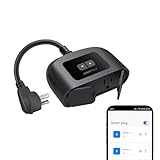
6. EIGHTREE Outdoor Smart Plug Waterproof IP44, Smart Outlet Plug with 2 Independently Controlled Outlets, Compatible with Alexa and Google Assistant, Voice & Remote Control, Timer&Schedule, 2.4GHz Only
Overview:
The EIGHTREE Outdoor Smart Plug is a dual-outlet solution designed for weather-exposed areas, offering independent control for devices like holiday lights or irrigation systems. Its IP44 rating ensures basic splash resistance, targeting users seeking affordable outdoor automation.
What Makes It Stand Out:
Dual independently controlled outlets provide exceptional flexibility for managing multiple devices simultaneously. The extended 300-foot Wi-Fi range (in open spaces) and seamless voice integration with Alexa/Google Assistant enhance usability. The dedicated timer/scheduling feature allows precise automation without manual intervention.
Value for Money:
Priced competitively, it delivers robust functionality for light outdoor use. While lacking advanced weatherproofing (IP44 vs. higher ratings), it outperforms single-outlet budget plugs. The 2.4GHz-only limitation may deter some, but the dual-outlet design justifies the cost for basic setups.
Strengths and Weaknesses:
Strengths: True independent outlet control; reliable splash resistance for light rain; intuitive app scheduling; strong Wi-Fi range.
Weaknesses: Only IP44-rated (not for heavy rain/submersion); 2.4GHz Wi-Fi requirement excludes dual-band users; no Matter protocol support.
Bottom Line:
Ideal for covered patios or sheltered areas needing dual-device control on a budget. Avoid in exposed locations with heavy rain, but excellent for basic automation where independent outlets add significant value.
7. Kasa Matter Smart Outdoor Plug, Dual Outlet, IP64 Weather Resistance, Works with Apple HomeKit, Amazon Alexa, Google Home, SmartThings, 15A/1800W Max, ETL Certified, 2.4G Wi-Fi Only, EP40M

Overview:
Kasa’s EP40M is a premium dual-outlet smart plug engineered for harsh outdoor conditions. With IP64 weatherproofing and Matter protocol support, it bridges multiple ecosystems (Apple HomeKit, Alexa, Google) for reliable, future-proof outdoor automation.
What Makes It Stand Out:
Matter compatibility ensures seamless integration across major platforms, a rarity in outdoor plugs. Its IP64 rating withstands rain, snow, and dust (-4°F to 122°F), while dual independent outlets support high-wattage devices (1800W). ETL certification adds safety credibility.
Value for Money:
Priced higher than basic models, it’s justified by Matter support and superior durability. Competitors lack this ecosystem flexibility, making it a long-term investment. The 2.4GHz limitation is offset by robust build quality and cross-platform reliability.
Strengths and Weaknesses:
Strengths: Unmatched Matter protocol compatibility; excellent IP64 weather resistance; high 1800W capacity; precise per-outlet scheduling.
Weaknesses: 2.4GHz Wi-Fi only; slightly bulkier design; no dimming functionality.
Bottom Line:
A top-tier choice for smart home enthusiasts prioritizing ecosystem flexibility and all-weather reliability. Worth the premium for seamless integration and durability, though overkill for simple setups.
8. Kasa Outdoor Smart Dimmer Plug, IP64 Plug- in Dimmer for Outdoor String Lights, Compatible with Alexa, Google Assistant & SmartThings, Long Wi-Fi Range 2.4Ghz, No Hub Required, ETL Certified(KP405)

Overview:
The Kasa KP405 is a specialized dimmer plug exclusively for outdoor string lights, featuring IP64 weather resistance and app-based brightness control. It targets users wanting ambiance adjustment for patio or holiday lighting.
What Makes It Stand Out:
True dimming capability (rare in outdoor plugs) paired with IP64 protection sets it apart. Group control for multiple dimmers via the Kasa app enables synchronized lighting scenes. The 300-foot Wi-Fi range ensures stable connectivity for sprawling yards.
Value for Money:
Slightly pricier than standard plugs, but the dimming feature justifies cost for lighting-centric users. Competitors often lack dedicated dimming, and Kasa’s reliability (7M+ users) supports the price. Max 300W LED limit suits string lights but not high-draw devices.
Strengths and Weaknesses:
Strengths: Smooth dimming for ambiance; IP64 dust/water resistance; sunrise/sunset scheduling; easy grouping.
Weaknesses: Dimming requires compatible lights; low 300W max for incandescent; 2.4GHz Wi-Fi only.
Bottom Line:
Essential for dimmable outdoor lighting setups. If you need adjustable brightness for strings or landscape lights, this is the best-in-class solution despite power limitations.
9. GE Cync Smart Plug, Outdoor Bluetooth and Wi-Fi Outlet Socket, Weather Resistant Plug, Works with Alexa and Google, Black (1 Pack)

Overview:
GE’s Cync outdoor plug combines Bluetooth and Wi-Fi for basic outdoor automation, featuring weather-resistant design for lights or fountains. It’s a straightforward entry-level option for voice-controlled convenience.
What Makes It Stand Out:
Dual connectivity (Bluetooth + Wi-Fi) allows local control without internet, useful during outages. The weatherproof cover and 3-prong design enhance outdoor safety. Savant-powered app adds reliability for scheduling dusk-to-dawn lighting.
Value for Money:
Budget-friendly but limited by single-outlet design. Bluetooth fallback is a plus, yet lacks dual-outlet flexibility or advanced protocols like Matter. Comparable to basic plugs but GE’s brand trust may sway cautious buyers.
Strengths and Weaknesses:
Strengths: Bluetooth backup for local control; simple dusk/dawn scheduling; robust weatherproof cover.
Weaknesses: Single outlet only; no Matter/HomeKit support; Wi-Fi range unverified; limited scheduling depth.
Bottom Line:
A functional starter plug for simple tasks like lamp control, but outshone by dual-outlet or Matter-enabled rivals. Choose only if Bluetooth fallback is critical and dual control isn’t needed.
10. ELEGRP PQR20 Outdoor Smart Plug Waterproof IP66, WiFi Plug with 2 Individually Sockets, Compatible with Alexa & Google Assistant, Smart Outdoor Outlet for String Lights, UL Certified, 1 Pack, Black

Overview:
The ELEGRP PQR20 boasts an industry-leading IP66 rating for extreme weather resistance, featuring dual independently controlled outlets. It’s built for demanding environments like uncovered patios or garden ponds.
What Makes It Stand Out:
IP66 certification (vs. common IP44/IP64) guarantees protection against heavy rain and dust. UL/FCC certification ensures safety, while -20°C to 50°C tolerance handles extreme climates. Sunset/sunrise offset scheduling adapts to seasonal changes intelligently.
Value for Money:
Mid-range pricing for top-tier weatherproofing. Competitors rarely match IP66 at this cost, making it exceptional value for exposed locations. The dual-outlet design and stable 300-ft Wi-Fi range further enhance ROI for harsh conditions.
Strengths and Weaknesses:
Strengths: Unbeatable IP66 rating; UL safety certification; precise seasonal scheduling; independent outlet indicators.
Weaknesses: App less polished than Kasa/TP-Link; 2.4GHz Wi-Fi dependency; no Matter support.
Bottom Line:
The go-to plug for storm-prone or uncovered areas. If weather resilience is non-negotiable, its IP66 rating and dual outlets make it indispensable despite minor app flaws.
Essential Features for Reliable Outdoor Smart Plugs
Weatherproofing Demystified: Beyond the IP Rating
Understanding IP (Ingress Protection) ratings is crucial, but it’s only the starting point. While IP65 or IP66 signifies dust-tight and powerful water jet resistance, real-world durability depends on additional factors like UV-stable materials and thermal management. Look for plugs explicitly designed for continuous outdoor exposure, not just “weather-resistant” indoor models marketed for patios. Sealed outlets, recessed ports, and corrosion-resistant internal components prevent moisture ingress during heavy rain or high humidity, ensuring long-term reliability where cheaper units fail.
Power Handling and Surge Protection Essentials
Outdoor devices often draw significant power—think string lights, pumps, or seasonal heaters. Verify the plug’s maximum wattage and amperage (typically 15A/1800W) aligns with your heaviest connected load, plus a 20% safety margin. Built-in surge protection is non-negotiable; outdoor circuits are vulnerable to lightning-induced spikes. Opt for plugs with joule ratings of at least 1000+ and automatic shutdown during voltage irregularities to shield your entire connected ecosystem.
Compatibility Across Smart Home Ecosystems
A plug only works if it talks to your existing system. Confirm seamless integration with your primary hub (like Apple HomeKit, Google Home, or Amazon Alexa) and support for Matter over Thread. This future-proofs against platform changes and ensures local processing for faster, more reliable responses—even during internet outages. Avoid plugs locked into proprietary apps requiring constant cloud connectivity.
Advanced Scheduling and Geofencing Capabilities
Basic scheduling isn’t enough for dynamic outdoor environments. Seek plugs enabling complex routines: “Turn on pond pump 30 minutes after sunrise, off at 10 PM, but skip if temperature drops below freezing.” Geofencing should trigger actions based on multiple household members’ locations (e.g., “Activate pathway lights when any family phone is within 1 mile”). Precision timing prevents wasted energy and adapts to seasonal daylight shifts.
Installation and Safety Critical Factors
GFCI Integration: A Non-Negotiable Safety Layer
Outdoor circuits legally require GFCI (Ground Fault Circuit Interrupter) protection in most regions to prevent electrocution. Your smart plug must either be GFCI-compliant itself or plug into a GFCI-protected outlet. Never bypass this—water exposure risks are too severe. Verify certification marks (UL, ETL) confirming GFCI functionality meets electrical code standards.
Physical Placement and Environmental Stressors
Location matters as much as the plug itself. Avoid direct soil contact or standing water zones; elevate plugs slightly using mounting brackets. Consider thermal stress: full sun can overheat electronics, while shaded, damp areas accelerate corrosion. Ensure adequate airflow around the unit and shield it from sprinkler overspray or hose runoff, common causes of premature failure.
Cord Management and Strain Relief
Outdoor cords face wind, foot traffic, and critters. Choose plugs with robust strain relief clamps securing the power cord to prevent internal wire damage from tugging or vibration. Route cords away from walkways using covered channels, and avoid sharp bends near the plug body. UV-resistant jacketing on the plug’s own cord prevents cracking in prolonged sunlight.
Child and Tamper Resistance Features
If accessible to children or guests, look for plugs with shuttered outlets or recessed sockets meeting tamper-resistant (TR) standards. Some models include physical lockouts preventing manual override of scheduled settings—a small detail that avoids accidental disconnections during critical operations like holiday displays.
Performance and Longevity Considerations
Real-World Temperature Tolerance Ranges
Spec sheets often claim “wide temperature ranges,” but verify tested limits. Reliable outdoor plugs should operate consistently from -22°F (-30°C) to 140°F (60°C). Units failing at mild frost or summer heatwaves disrupt automation and shorten lifespans. Prioritize models with thermal runaway protection that safely cuts power during extreme overheating.
Wireless Signal Strength and Range Optimization
Outdoor placements often challenge Wi-Fi reliability. Plugs with dual-band support (2.4GHz for range, 5GHz for speed) and strong antennas maintain connections farther from routers. For large yards, ensure compatibility with mesh extenders or Thread border routers to eliminate dead zones where signals drop during critical operations.
Moisture Detection and Self-Diagnostics
Advanced units include internal sensors monitoring humidity levels and temperature fluctuations. They proactively alert you via app before moisture causes damage—like “Outlet humidity at 95%, recommend inspection”—or automatically shut down during detected water ingress. Self-diagnostics also track power consumption anomalies indicating failing connected devices.
Material Durability and UV Resistance
Housings made from polycarbonate or ASA plastic resist yellowing and brittleness under UV exposure far better than standard ABS. Check for UV-stabilized additives in product descriptions. Metal components (like screws) should be stainless steel or brass to prevent rust. A premium feel isn’t just aesthetic; it signals resilience against decade-long sun and rain exposure.
Future-Proofing Your Investment
Over-the-Air (OTA) Update Capabilities
Firmware updates fix bugs, boost security, and add features post-purchase. Ensure the plug supports silent, automatic OTA updates without requiring manual resets. Brands neglecting updates leave devices vulnerable to exploits or incompatible with new smart home protocols—a silent death sentence for outdoor automation.
Energy Monitoring Accuracy
Precise real-time and historical energy tracking (measured in kWh) helps identify inefficient devices and calculate true operating costs. Look for plugs with ±3% accuracy and granular data per device—critical for diagnosing power-hungry pumps or faulty lighting strands before they inflate bills.
Local Control Versus Cloud Dependency
Plugs relying solely on cloud processing become useless during internet outages. Prioritize models with local execution for core routines (schedules, geofencing). This ensures your holiday lights or security lights activate on time regardless of Wi-Fi status, using your home hub as the local brain.
Frequently Asked Questions
Frequently Asked Questions
Can I use an indoor-rated smart plug outside if I cover it with a weatherproof box?
No. Enclosures trap heat and moisture, creating condensation that damages electronics. Only plugs with certified outdoor IP ratings are safe for permanent outdoor use.
How do I know if my outdoor circuit is GFCI-protected?
Test existing outlets with a GFCI tester (available at hardware stores). If unprotected, install a GFCI outlet before the smart plug location—do not rely solely on the plug’s internal GFCI if local code requires upstream protection.
Will extreme cold drain the plug’s functionality?
Quality outdoor plugs maintain operation below freezing, but lithium components in some models may temporarily reduce responsiveness in sub-zero temps. Verify low-temperature specs; true outdoor units function reliably down to -22°F.
Can I plug high-wattage devices like space heaters into outdoor smart plugs?
Only if the plug explicitly supports the heater’s wattage (typically 1500W+). Never exceed 80% of the plug’s max rating. Many heaters require dedicated circuits—consult an electrician first.
Why does my outdoor smart plug keep disconnecting from Wi-Fi?
Distance from the router, physical obstructions (walls, metal), or 2.4GHz interference are common culprits. Reposition the plug, add a mesh node, or switch to a Thread/Zigbee model for better range.
Do outdoor smart plugs work during power outages?
Standard plugs lose functionality when power cuts. For backup operation (e.g., sump pumps), pair them with a UPS—though the plug itself won’t restore power to devices.
How often should I inspect or maintain outdoor smart plugs?
Check quarterly for cracks, corrosion, or debris buildup. Wipe clean with a damp cloth; never use solvents. Test GFCI buttons monthly per electrical safety codes.
Can pets or wildlife damage outdoor smart plugs?
Rodents may chew cords—use conduit for protection. Choose plugs with smooth, seamless housings lacking crevices where insects nest. Mount units away from ground level if squirrels are prevalent.
Will sunlight degrade the plug’s plastic housing over time?
UV-resistant materials prevent yellowing and brittleness. Non-UV-stabilized plastics become fragile within 1-2 seasons. Always confirm UV protection in product specifications.
What’s the average lifespan of a quality outdoor smart plug?
With proper installation and weather exposure within spec, expect 3-5 years. Units failing sooner often lacked sufficient IP rating, surge protection, or were overloaded beyond capacity.