Imagine glancing at your phone while sipping coffee miles from home and seeing your garden receiving the perfect morning soak, automatically adjusted because yesterday’s unexpected downpour saturated the soil. Or receiving an instant alert that a burst pipe is flooding your landscape, allowing you to shut off water remotely before thousands of gallons are wasted. This isn’t science fiction; it’s the tangible reality offered by modern Wi-Fi irrigation controllers, transforming how we care for our outdoor spaces with unprecedented precision and peace of mind. As water conservation becomes increasingly critical and our lives grow more mobile, the ability to manage your sprinkler system from anywhere isn’t just a luxury—it’s an essential tool for responsible land stewardship and effortless home management.
Gone are the days of rigid, inflexible schedules dictated solely by a timer you physically adjust once a month. Today’s connected irrigation technology leverages hyperlocal weather data, soil conditions, and even plant types to deliver water only when and where it’s genuinely needed. This shift from simple automation to intelligent, responsive watering represents a significant leap forward, saving valuable resources, protecting your landscape investment, and freeing you from the constant worry of remembering to tweak the system after a storm. Understanding what truly matters in these sophisticated devices is key to selecting a solution that delivers real, long-term benefits without the frustration of compromised features or unreliable performance.
Top 10 Wi-Fi Irrigation Controllers
Detailed Product Reviews
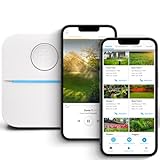
1. Rachio WiFi Smart Sprinkler Controller (8-Zone Irrigation Remote Control) – App-Based Scheduling, Local Weather Intelligence, Rain Skips, Easy DIY Install
Overview:
The Rachio 8-Zone Smart Sprinkler Controller modernizes irrigation with app-based control and hyperlocal weather intelligence, eliminating manual dial adjustments for precise, efficient watering.
What Makes It Stand Out:
Rachio’s patented Weather Intelligence+ is its crown jewel, automatically skipping watering for rain, wind, or freeze using hyperlocal forecasts—not just ZIP codes. Its adaptive scheduling learns your landscape’s needs through “grow-in” periods, while the intuitive app offers real-time usage tracking and flexible scheduling (manual or fully automatic). DIY installation is notably straightforward.
Value for Money:
Priced mid-to-high for 8 zones, it justifies cost through significant water savings (up to 50% annually) and reduced plant stress. Competitors often lack Rachio’s refined weather algorithms or user experience, making it a premium yet cost-effective long-term investment for eco-conscious homeowners.
Strengths and Weaknesses:
Strengths: Exceptional weather adaptation, user-friendly app, robust water-saving analytics, reliable performance, and seamless DIY install. Weaknesses: Indoor-only placement limits versatility; subscription required for advanced features like historical data; higher upfront cost than basic smart controllers.
Bottom Line:
Ideal for homeowners prioritizing precision watering and sustainability. Despite the premium price, its water savings, reliability, and intelligent features make it a top-tier 8-zone choice for serious landscape management.
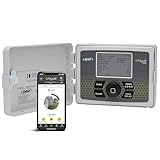
2. Orbit 57950 B-hyve 12-Zone Smart Indoor/Outdoor Sprinkler Controller
Overview:
Orbit’s B-hyve 12-Zone Controller offers versatile smart irrigation with indoor/outdoor placement flexibility, targeting users needing extensive zone coverage and weather-responsive automation.
What Makes It Stand Out:
Its standout feature is true indoor/outdoor compatibility—unlike many competitors requiring sheltered indoor mounting. The B-hyve app integrates weather data for automatic adjustments, supports drip irrigation management, and enables multi-user access for shared property control, enhancing practicality for larger landscapes.
Value for Money:
Competitively priced for 12 zones, it delivers strong value through water efficiency (EPA WaterSense certified) and placement flexibility. While slightly less polished than Rachio’s app, it offers comparable weather intelligence at a lower cost, especially beneficial for expansive yards needing many zones.
Strengths and Weaknesses:
Strengths: 12-zone capacity, indoor/outdoor installation, solid weather adaptation, drip irrigation support, and multi-user sharing. Weaknesses: App interface can be less intuitive; occasional connectivity hiccups reported; weather data less hyperlocal than Rachio’s.
Bottom Line:
A compelling option for larger properties needing 12 zones and flexible placement. It balances affordability with robust smart features, though Rachio edges it out for premium weather precision.
3. Smart Sprinklers Controller 2.4GHz WiFi, Irrigation Controller Easy Use App Enabled, 4 Zone + 16 Plans, Save Water Auto Skip Rain, Freeze & Wind, 10 Minutes Install (Deep Grey)

Overview:
This budget-friendly 4-zone controller from Hioazo delivers essential smart irrigation features—app control, weather skips, and rapid setup—at an accessible price point for small-yard owners.
What Makes It Stand Out:
The standout is its 10-minute DIY installation, claiming 99% compatibility with existing systems. It offers dual irrigation modes (Standard/Soak) for soil optimization and 16 customizable plans across 4 zones, all managed via a simple app with automatic rain/freeze/wind skipping.
Value for Money:
Exceptional value under $50. It matches premium features like weather skipping and app control at half the cost of Rachio/Orbit, though with fewer zones. Perfect for renters or small gardens where high zone count isn’t critical—maximizing savings without sacrificing core functionality.
Strengths and Weaknesses:
Strengths: Ultra-fast setup, affordable price, dual irrigation modes, 16 scheduling plans, and solid weather adaptation. Weaknesses: Limited to 4 zones; app reliability inconsistent; lacks brand reputation for long-term support; 2.4GHz Wi-Fi only.
Bottom Line:
A no-frills, cost-effective solution for compact landscapes. Choose this for simplicity and savings if you need ≤4 zones and prioritize quick installation over advanced analytics.
4. Rachio WiFi Smart Sprinkler Controller (16-Zone Irrigation Remote Control) – App-Based Scheduling, Local Weather Intelligence, Rain Skips, Easy DIY Install

Overview:
Rachio’s 16-Zone model scales up their proven smart irrigation platform, targeting larger properties with complex watering needs while retaining their signature weather intelligence and ease of use.
What Makes It Stand Out:
It inherits Rachio’s industry-leading Weather Intelligence+ for hyperlocal rain/wind/freeze skips and adaptive scheduling, now supporting double the zones of the 8-port model. The app’s detailed water usage tracking and “grow-in” scheduling for new landscapes remain unmatched, alongside effortless DIY installation.
Value for Money:
Justifies its premium price (typically $100+ more than 8-zone) for estates or commercial lots needing 16 zones. Water savings and reduced maintenance costs offset the investment faster than competitors at this capacity, though overkill for small yards.
Strengths and Weaknesses:
Strengths: Unrivaled weather precision, scalable for large properties, intuitive app, reliable performance, and strong water conservation. Weaknesses: Highest price in class; indoor-only mounting; no significant feature upgrades over 8-zone model beyond capacity.
Bottom Line:
The definitive choice for large properties requiring 16 zones. Pay the premium for Rachio’s reliability and intelligence—it’s worth it for complex landscapes where water waste is costly.
5. Rain Bird ARC6 App-Based Indoor Smart WiFi Irrigation Sprinkler Timer/Controller, 6-Zone/Station, EPA WaterSense Certified, Compatible with Alexa, Indoor 6-Station

Overview:
Rain Bird’s ARC6 merges traditional irrigation expertise with smart tech, offering a 6-zone indoor controller focused on water efficiency, voice control, and user-friendly scheduling via a dedicated app.
What Makes It Stand Out:
EPA WaterSense certification validates its water-saving claims (up to 30%), while ZIP-code-based weather adjustment and Alexa/Google Assistant compatibility enhance accessibility. The app excels in sharing controls with landscapers and provides local weather integration alongside manual override options.
Value for Money:
Priced mid-range for 6 zones, it competes strongly with Rachio’s entry model. WaterSense certification and professional sharing features offer tangible savings and convenience, though weather data isn’t as granular as Rachio’s hyperlocal approach.
Strengths and Weaknesses:
Strengths: WaterSense certified, voice assistant support, easy professional sharing, reliable Rain Bird build quality, and clear water-savings focus. Weaknesses: Weather adaptation less precise (ZIP-based vs. hyperlocal); limited to 6 zones; app less feature-rich than Rachio’s.
Bottom Line:
A trustworthy, water-efficient choice for medium yards prioritizing certification and voice control. Opt for this over Rachio if you value professional collaboration tools and EPA validation over cutting-edge weather intelligence.
6. Orbit 57925 B-hyve 8-Zone Smart Indoor Sprinkler Controller

Overview:
The Orbit B-hyve is an indoor-focused smart sprinkler controller offering Wi-Fi and Bluetooth connectivity for remote irrigation management. Designed for both DIY users and professionals, it integrates with apps to automate watering schedules while emphasizing water efficiency through precise zone control and weather-responsive features. Its indoor-rated build suits garages or basements but lacks outdoor durability.
What Makes It Stand Out:
Seamless app integration allows real-time adjustments from anywhere, while automatic weather-based skipping (rain, freeze, wind) prevents overwatering. It uniquely supports hybrid Wi-Fi/Bluetooth operation for reliable connectivity during outages and pairs effortlessly with drip irrigation systems. The intuitive interface simplifies programming complex schedules without technical expertise.
Value for Money:
Priced mid-range, it justifies cost through robust water-saving algorithms and a 5-year warranty. Though indoor-only (limiting placement), it outperforms basic timers and avoids the Rain Bird TRU8O’s extra fee for Wi-Fi modules. Ideal for urban/suburban users prioritizing convenience over rugged outdoor use.
Strengths and Weaknesses:
Strengths: Excellent app experience; reliable weather adaptation; simple DIY installation; strong water conservation; 8-zone capacity.
Weaknesses: Indoor-only housing (not weatherproof); Bluetooth dependency for initial setup; occasional app sync delays; no voice control.
Bottom Line:
A top choice for indoor installations seeking hassle-free smart watering. Its precision and app reliability make it worth the investment for eco-conscious homeowners, though outdoor exposure requires shelter.
7. Rain Bird TRU8O Program-Based Indoor/Outdoor Irrigation Controller/Timer, WiFi Ready, 8-Zone/Station

Overview:
The Rain Bird TRU8O is a versatile program-based controller built for indoor or outdoor use, featuring an 8-zone capacity and weatherproof housing. It operates standalone with advanced scheduling but requires a separate LNK2 Wi-Fi module for smart functionality. Its rugged design targets users needing reliability in extreme conditions without immediate app integration.
What Makes It Stand Out:
Heavy-duty outdoor construction withstands harsh elements, while the program-based system offers exceptional flexibility: 12 start times per zone, cyclic scheduling, and odd/even day watering. Power outage memory retention and 1-minute minimum run times cater to intricate landscaping needs, outperforming simpler app-reliant models.
Value for Money:
Competitively priced for its durability and program depth, but Wi-Fi capability adds $30–$40. Better value than Orbit for harsh climates or users avoiding apps, yet less convenient than all-in-one smart controllers. Essential for contractors prioritizing reliability over automation.
Strengths and Weaknesses:
Strengths: Military-grade weatherproofing; extensive scheduling options; retains settings during outages; intuitive dial interface; solid 8-zone control.
Weaknesses: Wi-Fi module sold separately; no built-in weather adaptation; app experience less polished; complex programming for beginners.
Bottom Line:
Optimal for outdoor installations demanding ruggedness and granular scheduling. Skip if you want out-of-box smart features; choose for no-nonsense reliability in challenging environments.
8. Smart Sprinklers Controller WiFi, Irrigation Controller Easy Use App Enabled, 6 Zone + 16 Plans, Save Water Auto Skip Rain, Freeze & Wind, 10 Minutes Install

Overview:
This Hioazo-branded controller delivers app-enabled irrigation with 6 zones and 16 customizable plans, emphasizing quick installation (<10 minutes) and weather-responsive automation. It targets beginners with promises of water savings via auto-skipping during rain, freeze, or wind, all backed by a 5-year warranty and dual irrigation modes.
What Makes It Stand Out:
The standout “Soak Irrigation” mode optimizes absorption in dense soils, while 16 flexible plans per zone accommodate diverse plant needs. Aggressive marketing highlights ultra-fast setup and comprehensive weather adaptation—rare at this price point—making it ideal for novice gardeners seeking simplicity.
Value for Money:
Budget-friendly with a strong warranty, it undercuts Orbit and Hunter by 20–30%. However, unverified “50% water savings” claims and limited 6-zone capacity reduce value for larger properties. Best for small yards where ease-of-use outweighs scalability.
Strengths and Weaknesses:
Strengths: Exceptionally fast setup; intuitive app; effective weather-skipping; dual irrigation modes; affordable.
Weaknesses: Only 6 zones; unproven water-saving metrics; app occasionally crashes; no voice assistant support; build quality feels lightweight.
Bottom Line:
A compelling entry-level option for compact gardens prioritizing simplicity and weather intelligence. Avoid for expansive lawns; ideal for renters or beginners needing fuss-free automation.
9. Hunter Hydrawise HPC400 Smart WiFi Irrigation Controller for Lawns and Gardens, 4 Zone, Expandable to 32 Zones, Weather Based, App Controlled Sprinkler System

Overview:
Hunter’s HPC400 starts as a 4-zone smart controller with expandability to 32 zones, leveraging Hydrawise’s acclaimed weather-based platform. It boasts outdoor-rated durability, touchscreen setup, and direct app control without extra modules, targeting homeowners with evolving landscape needs.
What Makes It Stand Out:
True plug-and-play Wi-Fi with no add-ons, plus industry-leading weather integration that adjusts schedules using hyperlocal forecasts. The unique expandability (via separate modules) future-proofs the system, while the outdoor rating eliminates indoor placement hassles—unlike Orbit’s indoor-only design.
Value for Money:
Higher upfront cost is justified by WaterSense certification, 32-zone scalability, and proven 30–50% water savings. More expensive than Rain Bird TRU8O but includes Wi-Fi and weather intelligence out-of-box. Premium pricing pays off for large properties seeking long-term adaptability.
Strengths and Weaknesses:
Strengths: Seamless weather adaptation; expandable architecture; rugged outdoor housing; intuitive touchscreen; reliable Hydrawise app.
Weaknesses: Base unit limited to 4 zones; expansion modules cost extra; app subscription for advanced features; slower initial Wi-Fi pairing.
Bottom Line:
The premier choice for serious gardeners with growing landscapes. Its scalability and precision watering justify the investment for water-conscious homeowners with medium to large yards.
10. Rain Bird ST8I-2.0 Smart Indoor WiFi Sprinkler/Irrigation System Timer/Controller, WaterSense Certified, 8-Zone/Station, Compatible with Amazon Alexa

Overview:
Rain Bird’s ST8I-2.0 merges WaterSense certification with 8-zone smart control, featuring indoor placement, Alexa/Google compatibility, and automatic seasonal adjustments. It emphasizes regulatory-compliant water efficiency while offering global remote access via app or voice commands.
What Makes It Stand Out:
WaterSense certification validates EPA-backed water savings, while dynamic scheduling adjusts for temperature, humidity, and local forecasts without manual input. Voice control integration (Alexa/Google) and multi-access programming (app, panel, or mobile) provide unmatched convenience for tech-savvy users.
Value for Money:
Priced near Orbit but with stronger eco-credentials, it’s ideal for regions with water restrictions. WaterSense certification may qualify for local rebates, offsetting cost. Less flexible than Hunter’s expandability but superior to Rain Bird TRU8O for out-of-box smart features.
Strengths and Weaknesses:
Strengths: WaterSense certified; excellent voice/app integration; automatic seasonal adjustments; 8-zone capacity; reliable Rain Bird build.
Weaknesses: Indoor-only housing; limited customization vs. Hunter; app lacks advanced analytics; no weather-skipping details.
Bottom Line:
A stellar pick for eco-focused users needing certified efficiency and voice control. Choose over Orbit for regulatory compliance; avoid if outdoor installation is essential.
Understanding the Core Value of Wi-Fi Irrigation Control
Why Remote Management Transforms Watering Practices
The fundamental shift Wi-Fi controllers enable is moving from reactive to proactive landscape management. Instead of adhering to fixed schedules that often overwater or underwater based on seasonal changes, remote access allows you to instantly respond to real-world conditions. Forgot to skip watering after a heavy rain? Adjust the schedule from your office. Heading home late and want the lawn cooled down before the kids play? Trigger a cycle with a tap on your phone. This immediacy prevents water waste and plant stress, directly translating to healthier lawns and lower utility bills. The convenience of managing your system from anywhere eliminates the guesswork and manual intervention that plagued older timers.
The Critical Link Between Connectivity and Water Conservation
True water efficiency isn’t just about when you water, but how intelligently the system adapts. Wi-Fi connectivity is the essential conduit that brings real-time environmental data into your irrigation decisions. Controllers without this link are fundamentally limited, operating on historical averages rather than current reality. By integrating live weather forecasts, local rainfall measurements, and even historical evapotranspiration rates, these systems dynamically calculate precise water requirements. This data-driven approach is the cornerstone of modern water-wise landscaping, turning your irrigation from a potential source of waste into a highly optimized resource management tool that actively contributes to sustainability goals.
Essential Features to Prioritize in Your Selection
Scheduling Flexibility Beyond Basic Timers
Look for controllers offering granular control over watering programs, far exceeding simple “water every Tuesday” settings. The ability to create multiple independent schedules for different zones (e.g., sunny lawn areas vs. shaded garden beds) is non-negotiable. Advanced features include seasonal adjustment sliders that automatically scale run times based on changing weather patterns, customizable cycle-and-soak settings to prevent runoff on sloped or clay-heavy soils, and the option for odd/even day watering restrictions compliance. True flexibility means the system adapts to your landscape’s unique needs, not the other way around.
Intuitive Remote Access and User Interface
The quality of the companion mobile app is paramount—it’s your primary control panel. Evaluate app reviews for ease of navigation, clarity of the watering status dashboard, and speed of response when sending commands. Can you quickly see which zone is active, its remaining runtime, and recent watering history? Does the app provide clear, actionable alerts for issues like flow violations or weather skips? A clunky, confusing interface undermines the entire benefit of remote control. Also, consider web portal access for management via computer, which can be crucial for initial complex setup or detailed historical analysis.
Integrated Flow Monitoring and Leak Detection
This is arguably the most valuable water-saving and damage-prevention feature. Controllers with integrated flow sensors measure actual water usage in real-time. They learn your system’s normal flow patterns and can instantly detect anomalies—like a sudden, sustained high flow indicating a broken mainline or a sprinkler head sheared off, or a trickle suggesting a slow leak. The system can then automatically shut off the water and send you an urgent alert, potentially saving thousands of gallons and preventing costly landscape or property damage. Ensure the flow monitoring is precise and the alert system is robust and customizable.
Connectivity and Weather Intelligence Capabilities
Hyperlocal Weather Integration Depth
Not all “weather-based” controllers are equal. Superficial integration might just skip watering if rain is forecasted for your entire region. Truly intelligent systems leverage hyperlocal data, often pulling from personal weather stations nearby or highly granular forecasting services. They factor in real-time temperature, humidity, wind speed, solar radiation, and historical ET (evapotranspiration) data specific to your exact zip code or even neighborhood. This precision ensures adjustments are based on the actual conditions your landscape experiences, not broad regional averages that might be inaccurate for your microclimate.
Cellular Backup: Ensuring Reliability Off the Grid
Your home Wi-Fi going down shouldn’t mean your irrigation system reverts to wasteful default settings or becomes uncontrollable. Controllers with optional or built-in cellular backup (using LTE-M or similar low-power networks) maintain critical functionality during internet outages. This ensures weather-based adjustments continue, leak detection remains active, and you retain remote access to manage the system. While often an additional cost, cellular backup is a significant reliability upgrade, especially in areas prone to frequent internet disruptions or for properties where consistent remote oversight is essential.
Forecast Accuracy and Adjustment Logic
How a controller interprets weather data is as important as the data itself. Look for systems that don’t just react to past rain but intelligently use multi-day forecasts. Sophisticated algorithms consider soil type, plant type, sun exposure, and recent watering history to determine not just if to skip watering, but how much to adjust the next scheduled run. Does it factor in forecasted temperature spikes after rain? Does it understand that heavy clay soil retains moisture longer than sandy soil? The depth of this logic directly impacts water savings and landscape health.
Installation and System Compatibility Considerations
Matching Controller Capacity to Your Valve Count
Controllers are designed for specific maximum numbers of irrigation valves (zones). Crucially, you must select a model that supports more zones than you currently have, allowing for future landscape expansion. Installing a controller maxed out at your current 8 zones means a costly replacement if you add a 9th zone later. Factor in potential future needs—adding a drip zone for a new garden bed, or sprinklers for an expanded lawn area—to ensure your investment remains viable for years. Oversizing capacity slightly is far cheaper than replacing the entire unit later.
Compatibility with Existing Wiring and Valves
Most modern Wi-Fi controllers are designed as direct replacements for traditional 24V AC irrigation timers, utilizing the same common and zone wires. However, it’s vital to confirm compatibility with your specific valve type (typically 24V AC solenoid valves) and transformer. Pay attention to voltage requirements; some controllers have specific transformer wattage minimums. If your system uses a master valve or pump start circuit, ensure the new controller has dedicated terminals for these components. Compatibility issues are the most common installation headache, so verify specifications carefully before purchasing.
Ease of Physical Installation and Wiring
While replacing an old timer is often DIY-friendly, the complexity varies. Look for controllers with clear terminal labeling, spring-loaded wire connectors (easier than screw terminals for many), and straightforward mounting hardware. Detailed, well-illustrated instructions specific to irrigation (not just generic smart home setup) are a major plus. Consider the physical size – will it fit neatly in your existing outdoor enclosure? Controllers designed with irrigation installers in mind typically have more user-friendly wiring setups than those adapted from general smart home platforms.
User Experience and Long-Term Management
Notification Customization and Alert Effectiveness
Being notified is useless if you’re bombarded with irrelevant alerts or miss critical ones. A top-tier controller allows deep customization of notifications: choose exactly which events trigger alerts (e.g., only major leaks, not minor flow fluctuations), set quiet hours to avoid middle-of-the-night pings, and select delivery methods (push notification, email, SMS). Most importantly, critical alerts like sustained high flow (indicating a major break) must be persistent and impossible to easily dismiss, ensuring you take immediate action to prevent disaster.
Historical Data and Water Usage Reporting
The true value of smart irrigation emerges over time through data. A robust system provides clear, accessible historical reports showing water usage per zone, per day, per month, and per season. Visual graphs comparing usage against weather patterns or previous periods are incredibly insightful. This data isn’t just for curiosity; it’s vital for verifying water savings, identifying potential inefficiencies (like a zone using significantly more water than others), and making informed decisions about landscape adjustments or system repairs. Look for easy export options for deeper analysis.
Firmware Updates and Long-Term Platform Support
This is a critical but often overlooked aspect. Smart irrigation is an evolving field. A controller that receives regular, seamless firmware updates gains new features, improved weather algorithms, enhanced security patches, and better compatibility with other smart home ecosystems over time. Research the manufacturer’s track record: how frequently do they release updates? Is the process automatic and user-friendly? A controller abandoned after 1-2 years loses much of its “smart” value and may become vulnerable to security issues. Prioritize brands with a strong history of ongoing software development.
Ensuring Security and Future-Proofing
Robust Data Privacy and Security Protocols
Your irrigation system is part of your home network. Ensure the manufacturer employs strong security practices: end-to-end encryption for data transmission, secure cloud storage with clear privacy policies, and regular security audits. Check if they support strong, unique passwords and offer two-factor authentication (2FA) for the mobile app account. Avoid controllers with known security vulnerabilities or histories of data breaches. Your home network’s integrity depends on every connected device being secure.
Integration with Broader Smart Home Ecosystems
While not essential for core functionality, compatibility with platforms like Apple HomeKit, Google Home, Amazon Alexa, or Samsung SmartThings adds significant convenience layers. Voice control for “water the front yard for 10 minutes” or creating automation routines (e.g., “If pollen count is high, water the garden beds for 5 extra minutes”) enhances usability. More importantly, integration with other environmental sensors (like weather stations or soil moisture probes) can feed even more precise data into the irrigation logic, though direct Wi-Fi controller integration with these is less common than app-based coordination.
Scalability for Future Landscape or Technology Changes
Consider how easily the system can grow with your needs. Can you add more zones later via expansion modules, or are you locked into the base unit’s capacity? Does the platform support adding future accessories like additional flow meters for multi-valve lines or soil moisture sensors for specific high-value planting areas? Also, evaluate the manufacturer’s commitment to open standards; a system relying on proprietary, closed protocols is more likely to become obsolete than one supporting common communication standards, ensuring longevity as smart home tech evolves.
Evaluating Cost and Value
Beyond the Initial Purchase Price
The upfront cost of the controller is just the beginning. Factor in potential installation costs if you’re not DIY-ing, the price of a necessary flow sensor kit (often sold separately), cellular backup subscription fees (if applicable), and any required expansion modules for additional zones. While some features seem like add-ons, flow monitoring, for instance, often pays for itself rapidly through prevented water waste and damage. Consider the total cost of ownership over a 5-10 year period, not just the box price.
Quantifying Water and Time Savings
Calculate the potential return on investment. If your current system wastes 20% of its water through inefficiency (a common estimate for non-smart systems), and you use 10,000 gallons monthly during peak season, a smart controller saving 1,500 gallons per month could save 9,000 gallons over a typical 6-month season. Multiply that by your local water cost. Factor in the value of your time saved from manual adjustments and the peace of mind from leak alerts. For many users, the savings and benefits quickly offset the controller’s cost, making it a financially sound investment alongside its environmental benefits.
Frequently Asked Questions
How difficult is it to install a Wi-Fi irrigation controller myself?
Most replacements for existing 24V systems are DIY-friendly for those comfortable with basic wiring, similar to replacing a thermostat. You disconnect old wires, connect them to the new controller’s labeled terminals, mount it, and follow the app setup. Complex systems with pumps, master valves, or many zones may require a professional. Always turn off power at the breaker first.
Do I need a separate rain sensor with a Wi-Fi controller?
While built-in weather intelligence often makes traditional wired rain sensors redundant (as the controller uses actual forecast data), some municipalities still mandate them by law regardless of smart features. Check local regulations. The smart controller’s data is generally more comprehensive than a simple bucket sensor.
Can these controllers work with soil moisture sensors?
Some higher-end models offer direct terminals to connect wired soil moisture probes, allowing watering to be triggered only when soil moisture drops below a set threshold. More commonly, soil sensor data is integrated via the app ecosystem (e.g., a separate sensor brand syncing with the irrigation app), requiring compatible third-party devices.
What happens if my Wi-Fi goes out?
Basic scheduling usually continues locally. However, weather-based adjustments, remote access, and leak detection relying on cloud connectivity will be disabled until Wi-Fi is restored. Controllers with cellular backup maintain full functionality during Wi-Fi outages, a key feature for reliability.
Are there monthly fees for using a Wi-Fi irrigation controller?
Most core features (scheduling, basic remote access, weather skipping) are included with no subscription. Fees typically only apply for cellular backup service (if equipped) or very advanced premium features like hyper-detailed water analytics or certain third-party integrations. Always verify the subscription model before purchasing.
How much water can I realistically expect to save?
Savings vary significantly based on climate, landscape, and previous system efficiency. Well-calibrated smart controllers typically reduce outdoor water use by 15-30% compared to traditional timers. The most significant savings come from eliminating watering after rain and optimizing schedules based on actual conditions, not fixed calendars.
Can I control multiple irrigation systems (e.g., front and back yard on different controllers) from one app?
This depends entirely on the specific brand and platform. Some manufacturers allow a single app account to manage multiple controller units at the same property or even different locations. Others require separate app logins for each physical controller. Check the manufacturer’s multi-controller support details.
How accurate are the weather-based adjustments?
Accuracy depends on the data sources and algorithms used. Systems using hyperlocal forecasts and ET data tailored to your specific location and landscape factors (soil, sun, plant type) are significantly more accurate than those using broad regional forecasts. Reputable brands continuously refine their algorithms for better precision.
Is a flow sensor really necessary?
While not strictly mandatory for basic operation, a flow sensor is highly recommended. It’s the single most effective tool for detecting leaks (major and minor) and preventing catastrophic water waste and property damage. The potential savings from avoided leaks and water waste often justify the sensor’s cost quickly.
Will a Wi-Fi controller work with my old sprinkler system?
In the vast majority of cases, yes. If your existing system uses standard 24V AC solenoid valves controlled by a timer (not a battery-operated or hydraulic system), a modern Wi-Fi controller is a direct replacement. Verify compatibility with your transformer’s voltage/wattage and ensure it supports your number of zones plus future expansion.