Imagine walking into a dark room and realizing your standard light switch just became the weakest link in your otherwise sophisticated home security setup. It’s a scenario many_smart_ homeowners dread: basic switches that lack encryption, fail during power fluctuations, or create glaring vulnerabilities hackers could exploit to disable your entire system. When every connected device is a potential entry point, your wall switches shouldn’t be an afterthought—they need to be fortified gatekeepers. Premium Z-Wave wall switches transform these everyday fixtures from simple on/off toggles into critical security assets, actively protecting your home’s digital perimeter while seamlessly controlling your environment.
Gone are the days when “smart switch” meant merely remote control. Today’s advanced security-conscious homeowners demand switches that prioritize resilience, encryption, and intelligence at the hardware level. Investing in high-end Z-Wave models means choosing devices engineered with military-grade security protocols, redundant fail-safes, and deep integration capabilities that work with your security ecosystem—not against it. These aren’t just switches; they’re silent sentinels that monitor for tampering, maintain operation during grid instability, and communicate securely to prevent unauthorized access. Understanding what truly separates a security-grade switch from a basic smart switch is essential for building a home that’s genuinely protected, not just automated.
Top 10 Z-Wave Wall Switches
Detailed Product Reviews
1. Leviton Decora Smart Switch Z-Wave 800 Series, ZW15S-1RW

Overview: The Leviton ZW15S-1RW is a robust Z-Wave Plus certified smart switch designed for reliable integration into modern smart homes. It requires a compatible Z-Wave hub but delivers core functionality for controlling lights and appliances remotely or via schedules. Its focus is on foundational smart home reliability and security. What Makes It Stand Out: This switch leverages the latest Z-Wave 800 Series chip, featuring SmartStart enrollment for easier setup, mandatory S2 Security for encrypted communication, and Over-the-Air firmware updates. Its standout capability is handling diverse loads (up to 15A/3/4 HP), making it suitable for lights, fans, pumps, and motors, not just standard lighting. Value for Money: Positioned as a premium single-pole switch, its price reflects the cutting-edge 800 Series technology and broad load compatibility. While slightly pricier than older Z-Wave models, the enhanced security, future-proofing via OTA updates, and versatile load support justify the cost for users building a secure, long-term smart home ecosystem. Strengths and Weaknesses: Strengths: Exceptional load versatility, top-tier S2 security, SmartStart simplifies setup, OTA updates ensure longevity, reliable Z-Wave 800 mesh performance. Weaknesses: Requires a neutral wire (limiting installation in older homes), single-pole only (no native 3-way support), hub sold separately adds to total cost. Bottom Line: An excellent, future-proof choice for single-pole installations demanding high reliability, security, and the ability to control non-lighting loads. Essential for users prioritizing the latest Z-Wave standards and comprehensive load support within a secure hub-based system.
2. Leviton Decora Smart Switch with Z-Wave Technology, DZ15S-R52, White with Ivory and Light Almond Faceplates

Overview: This Leviton Decora switch offers reliable Z-Wave Plus control for standard lighting circuits, bundled with multiple faceplate options. It requires a Z-Wave hub and neutral wire, targeting users wanting seamless integration with hubs like SmartThings or Wink and Alexa voice control. What Makes It Stand Out: The inclusion of white, ivory, and light almond faceplates provides immediate aesthetic flexibility, matching common decora styles. Its key technical differentiator is facilitating true multi-location (3-way) switching when paired with Leviton’s specific coordinating remotes (DD0SR-1LZ or DD0SR-DLZ), avoiding complex wiring changes. Value for Money: The bundled faceplates add perceived value, saving an extra purchase. Its price is competitive within the Z-Wave switch market. The value shines for users needing a straightforward 3-way solution using Leviton’s ecosystem, though the requirement for specific (and separate) remotes for multi-location use slightly offsets the base switch’s cost. Strengths and Weaknesses: Strengths: High compatibility with major hubs/Alexa, included color-matched faceplates, clear multi-location path using Leviton remotes, strong load ratings (600W LED/CFL, 1800W incandescent). Weaknesses: Neutral wire mandatory, true 3-way requires purchasing additional Leviton remotes, no Z-Wave 800 Series features like OTA updates or SmartStart. Bottom Line: A solid, well-priced Z-Wave switch ideal for standard single-pole setups or Leviton-centric 3-way installations, especially valued for the included faceplates. Best for users already invested in Leviton ecosystem components for multi-switch control.
3. Zooz 800 Series Z-Wave Long Range S2 On Off Switch ZEN76 800LR, White | Simple Direct 3-Way and 4-Way Solution (Works with Regular Switches, No Aux Switch Needed) | Z-Wave Hub Required

Overview: The Zooz ZEN76 revolutionizes multi-way Z-Wave switching with its unique “direct” 3-way/4-way solution, eliminating the need for proprietary add-on switches. Built on the advanced 800 Series chip with Long Range (LR) capability, it requires a Z-Wave hub but simplifies complex installations significantly. What Makes It Stand Out: Its game-changing feature is working with existing standard mechanical switches in 3-way/4-way setups – no special remotes or rewiring other boxes needed. The 800 Series foundation provides Z-Wave LR readiness (for ultra-reliable direct hub communication), faster mesh speeds, a built-in range test tool, and scene control. The slim 1.16" depth eases installation in tight boxes. Value for Money: While priced competitively with premium Z-Wave switches, its value is exceptional for multi-way installations. Eliminating the cost and complexity of add-on switches (often $20-$30+ each) for standard 3-way setups represents significant savings and labor reduction, making complex smart home upgrades far more accessible. Strengths and Weaknesses: Strengths: Revolutionary simple 3-way/4-way wiring, Z-Wave 800 LR capability, slim profile, built-in range tester, scene control, replaceable paddles. Weaknesses: Requires neutral wire, hub mandatory (no direct voice), Z-Wave LR benefits depend on hub support, mechanical switch must be standard (non-dimming). Bottom Line: An indispensable upgrade for multi-switch locations, offering unparalleled installation simplicity and future-proof Z-Wave 800 tech. Highly recommended for anyone tackling 3-way/4-way smart switch projects; the labor and cost savings on add-ons are transformative.
4. UltraPro 800 Series Z-Wave On/Off Switch, Long Range 800LR, Direct 3-Way (No Add-On Switch Needed), Smart Hub Required, Compatible with Alexa, Google Home, 76601
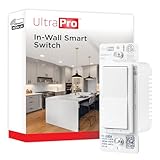
Overview: The UltraPro 76601 delivers 800 Series Z-Wave Long Range performance with a focus on DIY-friendly installation and flexible multi-switch control. It offers voice compatibility via hubs, a unique QuickFit design, and versatile multi-location options, requiring a Z-Wave hub for full functionality. What Makes It Stand Out: Its standout features are the “Direct 3-Way” capability (using one standard switch, no add-on needed) and the QuickFit design, which reduces depth by 20% and uses color-coded wires for easier installs. The customizable 8-color LED indicator and support for both Z-Wave LR (1300ft) and Classic (150ft) modes provide significant flexibility in network setup and aesthetics. Value for Money: Positioned as a mid-to-high tier switch, its value lies in the combination of LR capability, simplified 3-way solution, and extensive personalization (LED colors/modes). The QuickFit design potentially saves installation time and frustration, justifying the price for DIYers over bulkier or less flexible alternatives. Strengths and Weaknesses: Strengths: True direct 3-way using standard switches, Z-Wave LR/Classic dual-mode, highly customizable LED, QuickFit slim design with color-coded wires, broad hub compatibility. Weaknesses: Neutral wire required, hub essential for voice/scheduling, Z-Wave LR benefits contingent on hub support, limited add-on switch flexibility compared to Zooz (uses standard switches only for basic ON/OFF). Bottom Line: A compelling choice for DIYers wanting Z-Wave LR performance, easier installation, and a clean direct 3-way solution with personalized feedback. Excellent value if the LED customization and QuickFit design align with your priorities and hub supports LR.
5. Enbrighten Almond Z-Wave Plus Smart Light Switch with QuickFit and SimpleWire, 3-Way Ready, Compatible with Alexa, Google Assistant, ZWave Hub Required, Repeater/Range Extender, Toggle, 14293

Overview: The Enbrighten 14293 is a versatile Z-Wave Plus switch emphasizing easy installation (“SimpleWire”), robust hub compatibility, and network extension capabilities. Designed for standard single-pole or 3-way setups (with required add-on switches), it requires a neutral wire and Z-Wave hub for full smart features. What Makes It Stand Out: Its key strengths are being a Z-Wave Plus repeater/extender (boosting network range by up to 150ft), the “QuickFit” design for easier mounting, and broad compatibility with numerous hubs and voice assistants. It excels at seamlessly integrating into larger Z-Wave networks and extending coverage, particularly beneficial for larger homes. Value for Money: Priced competitively within the Z-Wave Plus market, its value is enhanced by the reliable repeater functionality and wide hub support. While requiring separate add-on switches (models 12728/46200) for full 3-way functionality adds cost, the network extension capability provides tangible value for expanding smart home coverage. Strengths and Weaknesses: Strengths: Excellent Z-Wave repeater/extender, wide hub/voice assistant compatibility, QuickFit design aids installation, works with all major bulb types, reliable Z-Wave Plus performance. Weaknesses: Neutral wire mandatory, true 3-way requires purchasing specific (separate) add-on switches, no Z-Wave 800 Series features (OTA, SmartStart, LR), limited aesthetic customization. Bottom Line: A dependable, network-boosting workhorse ideal for expanding Z-Wave coverage or adding reliable smart control to standard circuits. Best recommended for users prioritizing network robustness and broad compatibility over the latest 800 Series features or simplified 3-way wiring.
6. Minoston 800 Series Z-Wave Scene Controller, 4 ZWave Button, Zwave Plus Wall Switch Remote Control, Support Long Range, Work with Z Wave Hubs (MR40Z)

Overview:
The Minoston 800 Series is a battery-powered, magnetic Z-Wave scene controller designed for flexible placement. It leverages the newer Z-Wave 800 Series chip for improved signal reliability and security, requiring a compatible hub (sold separately) to trigger scenes or control smart devices via its four customizable buttons.
What Makes It Stand Out:
Its standout features include true portability—no wiring or electrician needed—and magnetic mounting for placement on walls, appliances, or metal surfaces. With S2 security, SmartStart compatibility, and support for 16 unique scenes (4 per button), it excels at creating complex automations. The long-range Z-Wave Plus signal ensures robust communication across larger homes.
Value for Money:
Priced competitively for a dedicated scene controller, it eliminates costly wiring installations. While hubs are extra, its versatility as a multi-scene trigger justifies the cost compared to basic remotes. It’s a smarter investment than single-purpose switches for users needing extensive scene control without permanent modifications.
Strengths and Weaknesses:
Strengths: Zero installation hassle; exceptional placement flexibility; robust 800-series security; supports 16 scenes; works with major hubs like SmartThings. Weaknesses: Requires separate hub; limited physical feedback (no status LEDs); SmartThings users need manual setup for full scene control; battery replacement needed long-term.
Bottom Line:
Ideal for DIYers seeking flexible, wire-free scene control, the Minoston 800 Series delivers exceptional versatility and modern Z-Wave features. A top recommendation for expanding smart home automation without rewiring, despite hub dependency.
7. Z-Wave Plus Wireless Switch

Overview:
This Z-Wave Plus wireless switch is a hardwired in-wall solution for voice-controlled lighting. It integrates with hubs to enable remote and voice commands via Alexa or Google Assistant, offering basic smart functionality for traditional light circuits requiring a neutral wire.
What Makes It Stand Out:
The dimmable blue LED indicator provides clear visual feedback, while its 3-way control capability (with accessory switch RF9642) simplifies multi-location setups. Supporting associations with up to five Z-Wave devices, it enables local automation without cloud reliance, enhancing responsiveness and privacy.
Value for Money:
As a budget-friendly entry into Z-Wave lighting control, it undercuts premium brands while delivering core functionality. The need for a neutral wire and accessory switch for 3-way setups adds minor costs, but its reliability and hub compatibility make it a cost-effective staple for foundational smart lighting.
Strengths and Weaknesses:
Strengths: Simple voice/app control; responsive local associations; useful status LED; affordable; 3-way ready with add-on. Weaknesses: Neutral wire mandatory (excludes older homes); no dimming capability; accessory switch sold separately; basic design lacks modern aesthetics or advanced features like scene control.
Bottom Line:
A solid, no-frills Z-Wave switch for neutral-wire installations, offering reliable voice control and essential automation. Best for budget-conscious users prioritizing functionality over flair, though limited by wiring requirements.
8. Enbrighten 700 Series Z-Wave Light Dimmer with QuickFit & SimpleWire, 3-Way Ready, Works with Alexa, Google Assistant, Z Wave Hub Required, Repeater/Range Extender, Smart Switch, White & Almond, 58438

Overview:
The Enbrighten 700 Series dimmer combines advanced Z-Wave Plus functionality with user-friendly installation tech. Compatible with all major hubs and voice assistants, it offers full-range dimming, multi-switch support, and acts as a signal repeater for extended network coverage.
What Makes It Stand Out:
QuickFit reduces depth by 20% for tight boxes, while SimpleWire auto-detects wiring—eliminating guesswork. Its 0-100% dimming works flawlessly in multi-switch setups (with add-ons), and eight customizable LED colors enhance usability. As a repeater, it boosts Z-Wave range by up to 150ft.
Value for Money:
Priced mid-range, it justifies cost through exceptional ease of installation and robust features. The included almond/white paddles, multi-scene support, and universal bulb compatibility (LED/CFL/incandescent) offer versatility unmatched by cheaper dimmers, especially for complex wiring scenarios.
Strengths and Weaknesses:
Strengths: Hassle-free wiring (SimpleWire); space-saving QuickFit design; seamless multi-location dimming; strong repeater function; extensive voice/app control; neutral wire required but standard. Weaknesses: Hub mandatory; add-on switches sold separately; no physical scene buttons; slightly bulkier than non-smart switches.
Bottom Line:
A premium, installer-friendly dimmer that excels in reliability and convenience. Highly recommended for DIYers and pros tackling multi-switch dimming, though hub dependency is non-negotiable.
9. Enbrighten Almond Z-Wave Plus Smart Light Switch with QuickFit and SimpleWire, 3-Way Ready, Compatible with Alexa, Google Assistant, ZWave Hub Required, Repeater/Range Extender, Toggle, 2 Pack, 81174

Overview:
This Enbrighten toggle switch pack delivers reliable on/off control with Z-Wave Plus intelligence. Designed for neutral-wire installations, it enables voice/app control, scene automation, and extends Z-Wave range as a repeater, supporting both single-pole and 3-way setups.
What Makes It Stand Out:
QuickFit and SimpleWire streamline installation in cramped boxes, while the toggle design offers classic aesthetics. Its standout repeater capability extends network range by 150ft, and compatibility with up to four add-on switches (models 12728/46200) enables multi-location control without complex programming.
Value for Money:
The 2-pack provides excellent value for whole-home deployment. QuickFit/SimpleWire reduce professional installation costs, and broad hub compatibility (SmartThings, Ring, etc.) future-proofs your setup. It’s a cost-efficient upgrade over basic switches, especially for multi-gang configurations.
Strengths and Weaknesses:
Strengths: Intuitive toggle interface; effortless wiring; strong repeater function; supports multi-switch setups; works with all bulb types; neutral wire standard. Weaknesses: No dimming; add-on switches sold separately; hub required; wallplate not included; toggle mechanism may feel less premium than rockers.
Bottom Line:
A dependable, easy-install switch ideal for neutral-wire homes needing reliable on/off control and network expansion. The 2-pack is a smart buy for foundational Z-Wave coverage, though dimming seekers should opt for the dimmer variant.
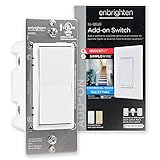
10. Enbrighten Add-On Switch QuickFit and SimpleWire, In-Wall Rocker Paddle, Z-Wave ZigBee Wireless Smart Lighting Controls, NOT A STANDALONE Switch, 46199 , White and Light Almond
Overview:
This Enbrighten add-on switch is a companion unit for multi-location control, requiring pairing with a primary smart switch/dimmer. It enables traditional 3-way functionality for Z-Wave or Zigbee systems, featuring QuickFit and SimpleWire for simplified installation in space-constrained boxes.
What Makes It Stand Out:
QuickFit’s 20% reduced depth solves installation headaches in older homes, while SimpleWire auto-detection removes wiring confusion. Its dual-voltage (120/277V) rating suits both residential and light-commercial use, and it mirrors full functionality of the primary switch—unlike basic mechanical add-ons.
Value for Money:
As a specialized component, it delivers exceptional value when expanding multi-switch setups. The included white/almond paddles and universal compatibility with Enbrighten/UltraPro primary switches justify its price, especially compared to professional rewiring costs for smart 3-way conversions.
Strengths and Weaknesses:
Strengths: Effortless pairing with primary switches; space-saving QuickFit design; versatile voltage support; maintains full smart features (dimming/scenes) from all locations; SimpleWire simplifies wiring. Weaknesses: Useless without primary smart switch; sold individually (multi-location requires multiple units); no standalone functionality; hub still required for automation.
Bottom Line:
An indispensable, easy-install add-on for creating seamless multi-location smart lighting. Essential for upgrading 3-way circuits, but only valuable as part of an existing Enbrighten/Z-Wave ecosystem.
Understanding Z-Wave’s Role in Security-Centric Automation
Z-Wave technology provides the backbone for reliable, secure home automation, especially critical for security-focused implementations. Unlike Wi-Fi devices that congest your main network and suffer from signal dropouts, Z-Wave operates on a dedicated low-frequency mesh network. This creates a resilient communication layer specifically designed for mission-critical devices like security sensors and lighting controls. Each Z-Wave switch acts as a repeater, strengthening the network’s reach and ensuring commands reach their destination even if one path fails—vital when every second counts during a security event.
The Mesh Network Advantage for Reliability
The true power of Z-Wave lies in its mesh topology. When you install multiple Z-Wave devices, they form interconnected pathways for data. If a window sensor detects an intrusion, the signal can hop through wall switches, plugs, and other devices to reach your hub instantly, bypassing any single point of failure. This redundancy is non-negotiable for security systems; a dropped signal could mean the difference between an alarm triggering and a silent breach. Premium switches enhance this by featuring superior radios and optimized firmware to maintain strong, consistent network participation.
Security Protocol Evolution: S2 Framework Explained
Not all Z-Wave is created equal, especially regarding security. Older devices used the less secure S0 framework, but modern security-grade switches exclusively implement Z-Wave’s S2 Security Framework. S2 provides robust, bank-level encryption during device pairing and ongoing communication, preventing eavesdropping and “man-in-the-middle” attacks. Crucially, S2 offers three distinct security classes (Access Control, Authenticated, Unauthenticated), allowing hubs to manage device permissions granularly—ensuring a light switch can’t impersonate a door lock. Verify S2 certification is a baseline requirement for any switch integrated into a security system.
Local Processing vs. Cloud Dependency
A critical vulnerability in many smart devices is reliance on the cloud. If your internet goes down, cloud-dependent switches become unresponsive bricks—a major flaw during emergencies when local control is essential. Premium Z-Wave security switches prioritize local processing. They execute core functions (like physical toggle actions or basic scene triggers) directly through the hub without needing internet access. This ensures lights can still be controlled manually or via local automations during outages, maintaining safety and security even when connectivity is compromised.
Key Security Features to Demand in Premium Switches
Choosing a switch solely for remote control misses the point for security applications. True security-grade switches incorporate hardware and firmware features specifically designed to thwart tampering and unauthorized access, turning a mundane fixture into a protective element.
Hardware Tamper Detection Mechanisms
Look for switches with physical tamper switches built into the mounting mechanism. If an intruder attempts to remove the faceplate or disconnect the switch from the wall box, this sensor triggers an immediate alarm event sent directly to your security hub. This transforms the switch itself into an active intrusion detector, providing an extra layer of awareness beyond traditional motion sensors or contact switches.
Power Failure Resilience and Backup
Power disruptions are common during storms or deliberate attacks. Premium security switches include features like supercapacitors or small internal batteries. These allow the switch to remain powered long enough to send a critical “power loss” alert to your hub and maintain basic functionality (like preserving the last light state or enabling emergency lighting sequences) for several minutes. This ensures your lighting layout doesn’t become a liability during an outage.
Secure Firmware Updates and Rollback Protection
Hackers constantly probe for devices running outdated, vulnerable firmware. Security-focused switches support secure, encrypted over-the-air (OTA) updates directly from the hub. Crucially, they also implement rollback protection—preventing attackers from forcing the device back to an older, insecure firmware version. Regular, seamless security patches are non-negotiable for long-term protection.
Compatibility and Integration for Holistic Security
A switch is only as strong as its integration within your broader security ecosystem. Premium models excel through deep compatibility and intelligent interaction with other security components, creating a unified defense strategy.
Hub Certification and Security Profile Support
Not all Z-Wave hubs treat devices equally. Ensure your switch is certified for your specific security hub (like those from major security panel manufacturers) and explicitly supports the Z-Wave Security 2 (S2) profiles required by that hub. Some hubs require switches to be in the “Access Control” security class for full integration into armed/disarmed routines. Check compatibility matrices thoroughly—generic Z-Wave certification isn’t sufficient for advanced security workflows.
Advanced Association Capabilities Beyond Basic Groups
While basic switches use simple “association groups” to control other devices, security-grade models offer sophisticated association capabilities. This includes supporting multiple, independent association groups with different security classes, enabling complex scenarios like: “When the front door lock is unlocked and the system is disarmed, turn on the hallway light only if motion is detected.” This granular control prevents unnecessary lighting that could signal occupancy to outsiders.
Native Integration with Security Automation Logic
The best switches seamlessly plug into your hub’s security automation engine. This means they can trigger or be triggered by security states: lights flashing red during an alarm, automatically illuminating escape routes when smoke detectors activate, or dimming to “night mode” levels only when the system is armed in “Stay” mode. Verify the switch exposes the necessary parameters to your hub’s rule engine for these critical security-based automations.
Installation and Physical Design Considerations
Security isn’t just digital; the physical installation and construction of the switch impact its reliability and resilience. Premium models address these often-overlooked aspects crucial for long-term security operation.
Robust Build Quality and Heat Management
Cheap plastic switches can warp, discolor, or overheat under constant load—especially when controlling high-wattage LED loads or multiple fixtures. Security-grade switches use high-temp thermoplastics, robust internal components, and efficient heat sinks. This ensures stable operation for years, preventing failures that could leave areas dark or create fire hazards, both significant security risks.
Professional-Grade Wiring and Load Specifications
Pay close attention to wiring requirements and supported loads. Higher-end switches often include neutral wires (essential for stable power to the radio and features like status LEDs) and support a wider range of compatible bulbs (including low-wattage LEDs that can cause flickering in cheaper models). Verify the switch handles the total connected load of your circuit, not just individual fixtures, to prevent nuisance tripping or radio interference that could disrupt security communications.
Discreet Status Indicators for Security Awareness
While status LEDs are useful, visible lights can reveal occupancy patterns to outsiders. Premium security switches offer adjustable or completely disableable status LEDs. Some even feature subtle, directional indicators only visible from specific angles (like when standing at the switch), providing user feedback without broadcasting your presence through windows at night.
Future-Proofing Your Security Lighting Infrastructure
Technology evolves, and your security infrastructure should adapt without constant replacement. Investing in forward-thinking switches protects your security investment long-term.
Over-the-Air (OTA) Update Readiness
Ensure the switch hardware is designed to receive future firmware enhancements. This isn’t just about new features; critical security patches will emerge. Switches with sufficient memory and processing headroom can implement these updates, extending their secure lifespan. Avoid models known for being “closed” or lacking OTA support.
Support for Emerging Z-Wave Features (Long Range, etc.)
Z-Wave technology continues to advance, with features like Z-Wave Long Range (LR) offering vastly extended distances and larger network capacities. While not all current hubs support LR, premium switches are often designed with the necessary radio hardware to be firmware-upgraded for future compatibility. This future-proofs your investment against network scalability limitations.
Interoperability with Next-Generation Security Platforms
The smart home landscape shifts rapidly. Prioritize switches certified under the latest Z-Wave Alliance specifications (like 800 or 900 series chips) which emphasize stricter security and broader interoperability. These are far more likely to integrate smoothly with next-generation security panels and platforms emerging in the coming years, avoiding obsolescence.
Frequently Asked Questions
Frequently Asked Questions
Can Z-Wave wall switches work during a total internet outage?
Yes, premium Z-Wave security switches rely on the local Z-Wave mesh network, not your internet. Core functions like physical toggle operation, local scene activation, and communication with your primary security hub continue working normally during internet outages.
Do I need a neutral wire for security-grade Z-Wave switches?
While some switches operate without a neutral, a neutral wire is highly recommended for security applications. It provides stable power for the radio, enables reliable status indicators, supports advanced features like energy monitoring, and prevents flickering issues—critical for consistent security system performance.
How do Z-Wave security switches prevent hacking?
They utilize the Z-Wave S2 Security Framework with bank-level encryption for all communications and during pairing. Features like secure boot, encrypted firmware updates, rollback protection, and hardware-based tamper detection create multiple layers of defense against unauthorized access.
Can these switches integrate with professional security alarm systems?
Yes, many premium Z-Wave switches are specifically certified to work with major professional security panel brands. They integrate directly into the panel’s automation logic, allowing lights to react to alarm states (e.g., flashing during an intrusion alert) without requiring a separate smart home hub.
What happens if someone tries to physically remove the switch?
Security-grade switches often include a built-in tamper switch. If the faceplate is forcibly removed or the switch is detached from the electrical box, it immediately sends a tamper alarm signal to your security hub, triggering an alert just like a forced window or door.
Are Z-Wave switches vulnerable to Wi-Fi network breaches?
No. Z-Wave operates on its own dedicated, low-frequency radio band (908/868 MHz) separate from your home Wi-Fi. A breach of your Wi-Fi network does not compromise your Z-Wave security devices, as they communicate exclusively over the isolated Z-Wave mesh.
How do they handle power surges or brownouts?
High-end security switches incorporate robust surge protection circuitry and often include supercapacitors. These components absorb minor surges and provide brief backup power, allowing the switch to send a “power loss” alert to your hub and maintain basic function momentarily during voltage fluctuations.
Can they control lights based on security system arming states?**
Absolutely. This is a key security feature. Premium switches integrate deeply with the hub, enabling automations like automatically turning on all lights if the system enters alarm mode, dimming lights when armed “Away,” or illuminating paths only when disarmed at night.
Do they work with voice assistants without compromising security?
Yes, but securely. Voice control typically routes through your secure Z-Wave hub. Premium switches maintain end-to-end S2 encryption between the switch and hub; voice commands are authenticated by the hub before executing, preventing direct voice assistant access to the switch itself.
How often do firmware security updates occur?
Frequency varies by manufacturer, but reputable brands issue critical security patches promptly when vulnerabilities are discovered. Premium switches with OTA update support ensure you can apply these patches easily through your hub, often automatically, without physical intervention.