Ever snapped a photo only to spot that pesky photobomber lurking just outside the frame? Now imagine that frustrating gap in coverage happening around your actual home—the spot where packages vanish, where shadows deepen unnaturally, or where an intruder could stand completely unseen by your security system. Blind spots aren’t just inconvenient; they’re critical vulnerabilities that transform your otherwise robust security setup into a sieve. Traditional fixed cameras, while reliable for specific zones, often leave dangerous gaps in surveillance, especially around complex property layouts, large yards, or multi-level entrances. The peace of mind you seek hinges on eliminating these unseen zones, and that’s where dynamic camera technology steps in to fundamentally reshape your defensive perimeter.
Pan-tilt security cameras represent a quantum leap beyond static observation, actively sweeping your environment like a vigilant security guard. Instead of hoping an event occurs within a narrow fixed view, these intelligent devices proactively scan, track, and adjust to cover every angle—turning potential blind spots into fully monitored territory. As we move deeper into the era of smart home integration and AI-driven analytics, the ability to command a camera to physically move and focus on threats in real-time becomes non-negotiable for comprehensive protection. Forget hoping for the best; with the right pan-tilt system, you gain the power to see everything, transforming uncertainty into actionable awareness and ensuring no corner of your property remains hidden from view.
Top 10 Pan-Tilt Security Cameras
Detailed Product Reviews
1. Tapo 2K Pan/Tilt Security Camera for Baby Monitor, Dog Camera w/Motion Detection, 2-Way Audio Siren, Night Vision, Cloud&SD Card Storage, Works w/Alexa & Google Assistant, 2-Pack (Tapo C210P2)

Overview: The Tapo C210P2 2-Pack delivers versatile indoor monitoring with 2K resolution, catering specifically to baby and pet owners. These corded cameras offer pan/tilt functionality, night vision, and seamless integration with Alexa and Google Assistant for hands-free viewing on compatible displays, all operating on 2.4GHz Wi-Fi. What Makes It Stand Out: Its 360° horizontal and 114° vertical coverage ensures comprehensive room monitoring, while intelligent detection (motion, person, baby crying) minimizes false alerts. The inclusion of a built-in siren for security and true 2-way audio for remote interaction with pets or family are significant differentiators. The 2-pack provides exceptional coverage value. Value for Money: Priced competitively for a dual-camera set, it eliminates per-camera costs for whole-home monitoring. The flexibility of free local SD card storage (no mandatory subscription) alongside optional Tapo Care cloud services offers adaptable budgeting, making it highly cost-effective compared to single-cam competitors with similar features. Strengths and Weaknesses: Strengths: Excellent 2K clarity, wide pan/tilt range, versatile detection modes, no-cost SD storage, siren for deterrence, and reliable voice assistant support. Weaknesses: Requires constant power, limited to 2.4GHz Wi-Fi, and cloud features necessitate a subscription. The app can occasionally lag during live streaming. Bottom Line: An outstanding value-packed 2-pack ideal for multi-room baby or pet monitoring, offering pro-level features like crying detection and siren without forcing subscriptions. Highly recommended for families needing broad, intelligent coverage without breaking the bank.
2. Kasa 1080p Indoor Pan/Tilt Wired Security Camera - Works as a Baby & Pet Monitor, Motion Detection & Tracking, 2-Way Audio, Night Vision, Subscription-Free Local Storage or Optional Cloud, EC70

Overview: The Kasa EC70 is a reliable, subscription-free indoor security camera designed for baby, pet, or nanny monitoring. It provides 1080p Full HD video, pan/tilt movement, night vision, and flexible storage options via microSD card or optional Kasa Care cloud plans, all managed through the user-friendly Kasa app on 2.4GHz Wi-Fi. What Makes It Stand Out: Its standout feature is truly subscription-free local storage, allowing continuous recording on a microSD card (up to 256GB, sold separately) with no mandatory fees. Smart Actions enable automation, like turning on Kasa lights when motion is detected, creating an integrated smart home response system beyond basic monitoring. Value for Money: Excellent value for users prioritizing privacy and avoiding recurring costs. The upfront price is reasonable for 1080p pan/tilt functionality, and the absence of required subscriptions makes long-term ownership significantly cheaper than many cloud-reliant competitors, especially for basic monitoring needs. Strengths and Weaknesses: Strengths: Truly free local storage, intuitive Smart Actions for home automation, solid 1080p video, reliable motion/sound alerts, and strong app integration. Weaknesses: Resolution is lower than newer 2K models, requires constant power, limited to 2.4GHz Wi-Fi, and lacks advanced AI detection like specific person or baby crying recognition out-of-the-box. Bottom Line: A top choice for budget-conscious users seeking dependable, subscription-free monitoring with smart home integration. While 1080p is adequate, those needing higher resolution or advanced AI detection should consider alternatives, but its local storage focus is a major plus.
3. Cloarks 2K Pan/Tilt Security Camera, WiFi Indoor Cameras for Home Security with AI Motion Detection, Pet/Dog/Baby Camera with Phone App, 2-Way Audio, 24/7, Siren, TF/Cloud Storage
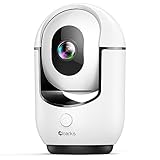
Overview: The Cloarks 2K camera offers continuous indoor monitoring with 2K resolution, color night vision, and pan/tilt capabilities. Designed for baby, pet, or general home security, it provides 24/7 live streaming, two-way audio with one-click calling, AI motion detection, and storage via microSD (TF) card or cloud, operating solely on 2.4GHz Wi-Fi with constant power. What Makes It Stand Out: Its color night vision provides clearer low-light footage than standard infrared, enhancing detail recognition at night. The one-click call function simplifies initiating real-time conversations through the camera, a useful feature for quick check-ins with family or pets. The 355° horizontal rotation offers extensive coverage flexibility. Value for Money: Positioned as a mid-range option, it delivers solid 2K quality and color night vision at a competitive price point. The inclusion of a siren and versatile storage options (local SD or cloud) adds value, though the mandatory constant power and lack of detailed AI specifics compared to Tapo/Kasa slightly temper the value proposition. Strengths and Weaknesses: Strengths: Color night vision, responsive pan/tilt (355°H/90°V), one-click calling feature, built-in siren, and 24/7 recording capability. Weaknesses: Requires constant power, limited to 2.4GHz Wi-Fi, AI detection claims lack specificity compared to leaders, and brand reliability/performance consistency may be less proven than Tapo or Kasa. Bottom Line: A capable camera with appealing color night vision and user-friendly calling, suitable for basic home or pet monitoring. However, established brands offer more refined AI and potentially better reliability, making this a secondary choice unless color night vision is the absolute priority.
4. Kasa 2K+ Indoor Pan/Tilt Wired Security Camera - Works as a Baby Monitor & Pet Camera, Motion Detection & Tracking, 2-Way Audio, Night Vision, Subscription-Free Local Storage or Optional Cloud, KC410S

Overview: The Kasa KC410S elevates indoor monitoring with enhanced 2K+ resolution, advanced AI detection, and flexible storage. It functions effectively as a baby/pet monitor or security camera, featuring pan/tilt, night vision, 2-way audio, and seamless integration with Alexa/Google Assistant via the Kasa app, requiring 2.4GHz Wi-Fi and constant power. What Makes It Stand Out: Its cutting-edge AI enables precise person, motion, and sound detection with customizable activity zones (up to 4), significantly reducing false alarms. Secure local microSD storage (up to 256GB) is truly subscription-free, while optional cloud storage uses robust AWS infrastructure with end-to-end encryption, a major security advantage. Value for Money: Offers premium features like 2K+ resolution, sophisticated AI, and secure AWS cloud options at a price point competitive with other high-end indoor cams. The combination of free local storage and reliable, encrypted cloud alternatives provides excellent long-term value and peace of mind regarding data security. Strengths and Weaknesses: Strengths: Superior AI detection with activity zones, high 2K+ clarity, secure AWS cloud option, truly free local storage, effective Smart Actions, and reliable voice assistant control. Weaknesses: Requires constant power and 2.4GHz Wi-Fi, microSD card sold separately, and initial setup can be slightly more complex than basic models. Bottom Line: A top-tier choice for users seeking advanced AI detection, excellent video quality, and secure, flexible storage options. The robust feature set and data security focus justify its price, making it highly recommended for those wanting a future-proof, intelligent monitoring solution.
5. Tapo 2K Indoor Pan/Tilt Wired Security Camera - Works as a Baby Monitor & Pet Camera, Motion Detection, 2-Way Audio, Siren, Night Vision, No-Subscription Local Storage or Optional Cloud, C211 (2-Pack)

Overview: The Tapo C211 2-Pack provides comprehensive 2K indoor monitoring for babies, pets, or security. These corded cameras feature full pan/tilt coverage, night vision, 2-way audio with siren, intelligent detection (including baby crying), and dual storage paths (local SD or cloud), all controllable via Alexa/Google Assistant over 2.4GHz Wi-Fi. What Makes It Stand Out: The standout feature is support for larger microSD cards (up to 512GB) for extensive local storage without subscription fees, offering exceptional capacity for continuous recording. Baby crying detection is a key differentiator for parental monitoring, and the built-in siren adds active security beyond passive observation. Value for Money: The 2-pack format delivers exceptional room coverage value. Supporting 512GB SD cards significantly increases free local storage duration compared to competitors capped at 256GB, making long-term recording vastly more economical. The inclusion of baby-specific features enhances its value for families. Strengths and Weaknesses: Strengths: High 2K resolution, expansive 512GB SD support (no sub), baby crying detection, wide 360° pan/tilt coverage, effective siren, and reliable voice assistant compatibility. Weaknesses: Requires constant power, limited to 2.4GHz Wi-Fi, cloud features need Tapo Care subscription, and SD card compatibility requires pre-checking TP-Link’s FAQ. Bottom Line: An outstanding 2-pack solution for families needing extensive, high-quality monitoring with a focus on baby safety and maximum free local storage. The 512GB SD support and crying detection make it a compelling, value-dense recommendation for multi-room home coverage.
6. TP-Link Tapo Pan/Tilt Security Camera for Baby Monitor, Pet Camera w/Motion Detection, 1080P, 2-Way Audio, Night Vision, Cloud & SD Card Storage, Works with Alexa & Google Home (Tapo C200)

Overview: The Tapo C200 is a versatile 1080p indoor pan/tilt Wi-Fi camera designed for monitoring babies, pets, or homes. It offers remote viewing via the Tapo app, featuring motion detection, two-way audio, and infrared night vision up to 30 feet, connecting via 2.4GHz Wi-Fi. What Makes It Stand Out: Its 360° horizontal and 114° vertical pan/tilt range provides exceptional coverage of entire rooms. The standout feature is subscription-free local storage via microSD card (up to 512GB), eliminating recurring cloud fees. Seamless integration with Alexa and Google Home enhances smart home convenience, while reliable motion alerts and clear night vision add practical security value. Value for Money: Priced competitively, the C200 delivers excellent value by avoiding mandatory cloud subscriptions. The included local storage option saves long-term costs compared to rivals requiring monthly fees. While a microSD card is sold separately, the camera’s robust feature set—pan/tilt, HD video, and smart integrations—makes it a cost-effective choice for budget-conscious users. Strengths and Weaknesses: Strengths: Free local storage, wide pan/tilt range, easy smart assistant setup, reliable motion alerts, and solid night vision. Weaknesses: Lacks advanced AI detection (e.g., person vs. pet), requires 2.4GHz Wi-Fi only, and microSD card not included. Audio quality can be slightly muffled during two-way talk. Bottom Line: An ideal entry-level camera for home monitoring, especially for parents and pet owners seeking affordable, subscription-free security with reliable core features. Highly recommended for its value and ease of use.
7. Tapo 1080P Indoor Pan/Tilt Wired Security Camera - Works as a Baby & Pet Monitor, Motion Detection, 2-Way Audio, Siren, Night Vision, Subscription-Free Local Storage or Optional Cloud, Black, C201

Overview: The Tapo C201 is a wired indoor pan/tilt camera offering 1080p HD video, motion detection, and two-way audio. Designed for baby/pet monitoring or home security, it connects via Ethernet for stable performance and includes both local SD card storage and optional cloud backup. What Makes It Stand Out: Unlike its Wi-Fi-only sibling (C200), the C201’s wired connection ensures consistent reliability, crucial for uninterrupted monitoring. It adds unique features like baby-crying detection and a built-in siren to deter intruders. Local storage remains subscription-free (up to 512GB SD card), while Tapo Care cloud offers 30-day history with advanced analytics. Value for Money: The C201 justifies its slightly higher price with superior stability from wired connectivity and specialized features like crying detection. Avoiding mandatory cloud fees enhances long-term savings. Though the SD card is extra, the camera’s durability and added security tools make it a smarter investment than basic wireless models for critical monitoring. Strengths and Weaknesses: Strengths: Wired reliability, baby-crying detection, free local storage, strong night vision (30 ft), and effective siren. Weaknesses: Requires Ethernet installation (less flexible), no 5GHz Wi-Fi, and cloud features need a subscription. Setup may intimidate less tech-savvy users. Bottom Line: A top pick for users prioritizing stable, feature-rich indoor monitoring—especially parents needing crying alerts. Its wired design and intelligent tools offer premium value, warranting a strong recommendation for dedicated home security.
8. ANNKE 2Pack 1080P 2MP AHD CCTV Home Surveillance Dome Wired PT Camera with 350° pan and 90° tilt, 100ft IR Night Vision, IP65 Weatherproof Security Add–On Cam for Outdoor, Wide Compatibility - APT200

Overview: The ANNKE APT200 is a 2-camera wired AHD system designed for indoor/outdoor surveillance. Each dome camera delivers 1080p video, 350° pan/90° tilt control, and 100ft night vision, built to withstand harsh weather with an IP65 rating. What Makes It Stand Out: Its rugged outdoor readiness sets it apart: IP65 weatherproofing handles extreme temperatures (-40°F to 140°F), and 100ft IR night vision outperforms most indoor-focused competitors. The 350° pan/90° tilt offers near-360° coverage, while broad AHD compatibility ensures it works with most 1080p+ DVRs, including non-ANNKE systems. Value for Money: The 2-pack provides exceptional bang for buck, covering multiple outdoor zones at a mid-range price. No subscriptions are needed—footage saves directly to a compatible DVR. Though a DVR and SD cards are sold separately, the cameras’ durability and long-range night vision make them a cost-efficient solution for comprehensive property security. Strengths and Weaknesses: Strengths: Outstanding outdoor durability, exceptional 100ft night vision, wide pan/tilt range, and broad DVR compatibility. Weaknesses: Requires a separate AHD DVR system, analog (not IP) limiting smart features, and no built-in audio. Installation is more complex than plug-and-play Wi-Fi cameras. Bottom Line: A compelling choice for users seeking reliable, weatherproof outdoor surveillance without recurring fees. Best paired with an ANNKE DVR; highly recommended for homes or businesses needing robust, no-nonsense coverage.
9. WYZE Cam Pan v3, Indoor/Outdoor IP65-Rated 1080p Pan/Tilt/Zoom Wi-Fi Smart Home Security Camera with Color Night Vision, 2-Way Audio, Compatible with Alexa & Google Assistant, Free Expert Setup

Overview: The Wyze Cam Pan v3 is a versatile indoor/outdoor 1080p camera featuring pan/tilt/zoom, color night vision, and IP65 weather resistance. It supports Wi-Fi connectivity (2.4GHz), two-way audio, and integrates with Alexa/Google Assistant for smart home use. What Makes It Stand Out: Revolutionary color night vision—rare at this price—allows vivid low-light monitoring without IR glare. Its IP65 rating enables true outdoor deployment, while customizable auto-patrol waypoints automate coverage. Free cloud storage (12-second clips) and AI motion tracking for people/pets enhance functionality without mandatory subscriptions. Value for Money: Exceptionally affordable, the Pan v3 offers premium features like color night vision and outdoor durability typically found in pricier models. The free basic cloud tier and no-fee local SD storage (via Wyze Cam Plus trial) maximize savings. Despite optional add-ons, core security is robust and subscription-light. Strengths and Weaknesses: Strengths: Color night vision, IP65 outdoor rating, smooth auto-patrol, free cloud clips, and strong audio clarity. Weaknesses: Requires outdoor power adapter (sold separately), no 5GHz Wi-Fi, and advanced features need Cam Plus subscription. Zoom is digital (not optical), reducing clarity. Bottom Line: A standout budget outdoor camera with unique color night vision. Ideal for cost-conscious users needing reliable, feature-rich security—highly recommended for its innovation and value.
10. Blink Mini Pan-Tilt Camera (newest model), Rotating indoor plug-in smart security camera, two-way audio, HD video, motion detection, Works with Alexa (White)
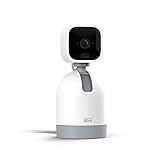
Overview: The Blink Mini Pan-Tilt is a compact indoor camera offering HD video, 360° coverage via pan/tilt, two-way audio, and motion alerts. It integrates with Alexa devices and requires plug-in power, connecting via 2.4GHz Wi-Fi. What Makes It Stand Out: Its minimalist design and seamless Alexa compatibility allow effortless voice control and viewing on Echo Show devices. The pan/tilt mechanism provides flexible room monitoring from a single unit, while infrared night vision ensures low-light visibility. Blink’s reputation for long battery life (in other models) translates to reliable plug-in performance here. Value for Money: Priced accessibly, it delivers core features well but faces value limitations. The free 30-day cloud trial ends with mandatory subscription ($3/month) for video history, and local storage requires a separate Sync Module 2. Competitors like Tapo offer free local storage, making Blink’s long-term costs higher despite the low upfront price. Strengths and Weaknesses: Strengths: Sleek design, smooth pan/tilt control, Alexa integration, and responsive motion alerts. Weaknesses: No free cloud storage beyond trial, local storage needs extra hardware, and night vision is monochrome only. Audio quality during two-way talk is average. Bottom Line: A convenient Alexa-centric indoor camera for basic monitoring, but recurring costs diminish value. Recommended only for existing Blink/Alexa ecosystems; otherwise, Tapo models offer better long-term savings.
Understanding the Critical Threat of Blind Spots
Blind spots are more than just inconvenient gaps—they’re exploitable weaknesses that compromise your entire security strategy. Criminals actively seek out these unseen areas, knowing fixed cameras create predictable zones of invisibility near fences, under eaves, or alongside large landscaping features. A single unmonitored entry point can render even multiple cameras ineffective, as intruders simply navigate through the shadows. Recognizing where these vulnerabilities exist on your property is the essential first step toward building a truly resilient surveillance network that leaves no room for evasion.
Identifying Common Blind Spot Locations
Begin by physically walking your property perimeter at different times of day, noting areas where sightlines are obstructed by trees, sheds, parked vehicles, or architectural elements like alcoves and bay windows. Pay special attention to transitional zones between properties, side gates, and the space immediately beneath first-floor windows—prime locations for unnoticed activity. Don’t forget vertical blind spots; cameras mounted too high might miss close-range ground activity, while poorly angled units create dangerous “cone of silence” zones directly beneath them.
The Hidden Cost of Unmonitored Zones
The financial and emotional toll of unaddressed blind spots extends far beyond potential theft. Insurance claims may be denied if negligence in coverage is proven, and the psychological impact of knowing your family isn’t fully protected creates persistent anxiety. More critically, delayed detection due to blind spots gives intruders valuable time to commit crimes or escape, significantly reducing the chances of evidence capture or intervention. Proactive blind spot elimination isn’t an expense—it’s an investment in tangible safety and verified peace of mind.
How Pan-Tilt Technology Eradicates Coverage Gaps
Unlike their stationary counterparts, pan-tilt cameras function as active sentinels, dynamically adjusting their field of view to eliminate static coverage limitations. Through precise horizontal (pan) and vertical (tilt) motorized movements, these units can sweep expansive areas—sometimes spanning 360 degrees horizontally and 90+ degrees vertically—transforming fragmented snapshots into continuous, fluid surveillance. This mechanical agility ensures that as conditions change or events unfold, your camera actively repositions to maintain optimal visual contact, turning potential blind spots into actively patrolled zones.
The Mechanics of Seamless Motion
High-quality pan-tilt mechanisms rely on precision stepper motors and durable gear systems engineered for thousands of movement cycles without degradation. Look for units specifying near-silent operation (under 35dB) to avoid drawing attention during nighttime patrols, and verify smooth motion profiles that prevent jerky movements which could miss critical moments. The synergy between motor responsiveness and software control dictates how quickly and accurately the camera can react to detected motion, making hardware quality as crucial as feature sets.
Calculating Effective Coverage Area
Understanding your camera’s true coverage potential requires more than just advertised rotation angles. Multiply the horizontal sweep range by the vertical tilt capacity and factor in the lens’s field of view (FOV) to determine the actual cubic footage monitored. For example, a camera with 355° horizontal rotation, 90° vertical tilt, and a 100° diagonal FOV creates a vastly larger effective sphere than one with similar rotation specs but a narrower 70° lens. Always prioritize models where the combined pan/tilt range and optical capabilities align with your specific property dimensions and layout challenges.
Essential Features for Maximum Blind Spot Elimination
Selecting a pan-tilt camera demands careful evaluation beyond basic movement capabilities. The most effective units integrate motion intelligence with physical agility, ensuring the camera doesn’t just move—but moves purposefully. Critical features transform passive rotation into strategic surveillance, directing attention precisely where and when it matters most, while maintaining visibility through diverse environmental conditions that would cripple lesser systems.
Intelligent Motion Tracking Capabilities
Advanced AI-powered tracking goes beyond simple motion detection by distinguishing between relevant threats (humans, vehicles) and routine occurrences (swaying branches, passing animals). The best systems employ multi-object recognition, maintaining visual lock on multiple targets simultaneously while prioritizing human forms. Crucially, verify that tracking works seamlessly during pan-tilt movement—some cheaper models pause rotation when tracking begins, creating dangerous repositioning delays during critical events.
Optical Performance in Dynamic Conditions
Pan-tilt cameras face unique optical challenges as they constantly adjust angles relative to light sources. Prioritize units with true Wide Dynamic Range (WDR) technology that balances bright skies and shadowed areas in real-time, not just basic backlight compensation. Equally vital is consistent low-light performance across all tilt positions; a camera that delivers clear night vision when pointed downward but washes out when tilted upward toward streetlights creates new blind spots. Look for models with adaptive IR illumination that adjusts intensity based on subject distance to prevent overexposure of close objects.
Weather and Environmental Resilience
Since pan-tilt cameras constantly expose new surfaces to the elements during operation, their weatherproofing must exceed standard IP67 ratings. Seek units with sealed motor housings and corrosion-resistant internal components specifically tested for continuous movement in rain, snow, or dust. Temperature tolerance ranges should extend well beyond your local climate extremes—motors can seize in sub-zero cold or overheat in desert summers if not properly engineered. Remember: a camera that stops moving in bad weather creates instant, catastrophic blind spots.
Optimizing Placement and Configuration
Strategic placement is non-negotiable for pan-tilt effectiveness. Mounting a unit too high sacrifices detail on ground-level activity, while positioning it too low restricts vertical coverage and increases vulnerability to tampering. The optimal height (typically 8-10 feet) balances field of view with facial recognition capability, but must be adjusted for your specific property lines and potential obstruction points. Always conduct a “sweep test” post-installation: manually rotate the camera through its full range to verify no new blind spots emerge behind gutters, signage, or seasonal foliage.
Creating Intelligent Patrol Patterns
Don’t rely solely on reactive motion tracking. Proactively program custom patrol routes that methodically sweep high-risk zones at scheduled intervals, such as the side gate every 15 minutes between midnight and 5 AM. Effective patrol scheduling involves creating multiple focused paths—perhaps a tight loop around the back door combined with a broader yard perimeter sweep—ensuring critical areas receive disproportionate attention without exhausting the motor. Some advanced systems allow geofenced patrols that activate only when your smartphone leaves the property, maximizing battery life for wireless models.
Integrating with Your Broader Security Ecosystem
Pan-tilt cameras deliver maximum value when synchronized with other security layers. Ensure compatibility with your existing alarm system so that triggered sensors (like a door contact) automatically direct the camera to that location. Voice assistant integration allows verbal commands like “Show me the front gate,” while smart lighting联动 can illuminate dark zones as the camera pans toward motion. This ecosystem approach transforms the camera from a standalone device into the eyes of a coordinated defense network, dynamically adjusting all components to eliminate emerging blind spots.
Future-Proofing Your Investment
As security technology evolves, today’s cutting-edge features become tomorrow’s baseline expectations. Prioritize cameras built on upgradable platforms with modular firmware that can incorporate emerging AI capabilities like predictive movement analysis—where systems anticipate potential threat vectors based on historical patterns. Hardware should support evolving connectivity standards (like upcoming Wi-Fi 7 or Matter protocol integration) to avoid obsolescence as your smart home ecosystem expands over the coming years.
Anticipating 2026 Advancements
Expect significant leaps in autonomous operation by 2026, with cameras capable of distinguishing between routine package deliveries and suspicious loitering through contextual awareness. Enhanced edge processing will enable real-time analysis without constant cloud dependence, crucial for maintaining functionality during internet outages. Battery technology improvements will also extend wireless pan-tilt operation to months per charge, making strategic placement in power-scarce areas finally practical—eliminating one of the last major installation constraints for comprehensive coverage.
Evaluating Long-Term Support and Updates
Manufacturer commitment to ongoing software support is as critical as hardware specs. Research how frequently firmware updates are released for potential models and verify minimum support timelines (aim for 5+ years). Brands that treat cameras as disposable hardware often abandon update cycles within 18 months, leaving security vulnerabilities unpatched and new feature opportunities unrealized. A robust update history signals a partner invested in your long-term security evolution, not just a one-time sale.
Maintenance Practices for Continuous Coverage
Even the most advanced pan-tilt system degrades without proper care. Establish a monthly maintenance routine: gently wipe lenses with microfiber cloths to remove pollen or dust buildup that degrades image quality, and inspect motor housings for insect nests or debris accumulation that could impede movement. For outdoor units, check mounting hardware tightness seasonally—thermal expansion and wind vibration can gradually loosen fixtures, altering the camera’s critical sightlines and creating accidental blind spots over time.
Diagnosing and Resolving Movement Issues
If rotation becomes sluggish or noisy, first verify power stability—a weak adapter or battery can’t deliver the surge current needed for smooth motor operation. Clean any visible debris from rotation tracks using compressed air, avoiding liquids that might seep into mechanisms. Persistent issues often stem from firmware glitches; perform a factory reset followed by reconfiguration. If mechanical resistance remains, contact support immediately—a seizing motor not only creates blind spots but can permanently damage internal components if forced.
Calibrating for Precision Coverage
Over time, minor impacts or temperature shifts can misalign your camera’s positional awareness. Most units include a recalibration function in settings—activate this whenever you notice tracking inaccuracies or patrol routes missing targets. During calibration, ensure the camera has unobstructed movement room in all directions. Proper calibration maintains the critical link between software commands and physical movement, guaranteeing that when your system directs “look at backyard gate,” the lens lands precisely on target every time.
Frequently Asked Questions
How do pan-tilt cameras handle heavy rain or snow without creating blind spots?
Quality outdoor-rated models feature heated lens elements and hydrophobic coatings that prevent water accumulation, while robust motor housings maintain operation in extreme precipitation. Continuous gentle movement also discourages snow buildup that could obstruct stationary cameras.
Can pan-tilt cameras follow multiple threats simultaneously across different blind spots?
Advanced systems with multi-object AI tracking can prioritize and sequentially monitor several moving subjects, dynamically shifting focus between them based on threat algorithms—ensuring no single blind spot forms while tracking multiple events.
Do pan-tilt movements drain battery life significantly faster than fixed cameras?
While movement consumes more power, modern units optimize energy use through scheduled patrols and motion-activated tracking. With efficient sleep modes and solar charging options, battery life remains practical for most residential applications without constant recharging.
How quickly can a pan-tilt camera reposition to cover a newly detected blind spot?
High-end models achieve full rotation in under 5 seconds with predictive AI that begins moving toward probable threat vectors before motion is fully confirmed, minimizing coverage gaps during critical response windows.
Will frequent panning and tilting cause the camera to wear out prematurely?
Industrial-grade stepper motors in reputable units withstand 10,000+ hours of operation. Proper installation avoiding extreme angles and routine debris cleaning ensure longevity far exceeding typical security system lifespans.
Can I manually control the camera to check blind spots remotely in real-time?
Yes, all quality systems include intuitive mobile app controls allowing instant manual panning/tilting from anywhere, with low-latency streaming ensuring your remote commands translate to immediate physical movement.
How do pan-tilt cameras prevent creating new blind spots while moving?
Strategic placement combined with overlapping coverage from secondary fixed cameras creates redundancy. Advanced models also feature “position memory” that instantly returns to critical vantage points after investigating distractions.
Are there any legal restrictions on pan-tilt camera movement I should know about?
Laws generally permit movement within your property boundaries, but avoid programming patrols that intentionally capture neighboring private spaces. Always check local ordinances regarding camera motion and field of view limitations.
Do pets or wildlife trigger excessive movement that creates temporary blind spots?
Modern AI filtering distinguishes animal movement from human threats with high accuracy, preventing unnecessary repositioning. Adjustable sensitivity settings let you fine-tune responses to common local wildlife activity.
How does two-way audio integrate with pan-tilt functionality during blind spot monitoring?
When motion is detected in a blind zone, the camera can automatically pan toward the sound source while activating audio—allowing you to both see and communicate with whoever is in that previously hidden area instantly.