Is your lawn drowning in unnecessary showers while your water bill skyrockets? Overwatering is the silent killer of beautiful landscapes, wasting billions of gallons annually and suffocating plant roots with excess moisture. Many homeowners don’t realize their traditional sprinkler timers operate like broken clocks—watering on rigid schedules regardless of recent rainfall or scorching heat. This outdated approach doesn’t just inflate expenses; it erodes soil health, promotes disease, and contributes to runoff pollution. But what if your irrigation system could actually respond to the weather instead of fighting against it?
Enter the intelligent evolution of watering technology: weather-based sprinkler controllers. These aren’t just timers with Wi-Fi—they’re adaptive irrigation brains that transform how we nurture landscapes. By harnessing hyperlocal weather data, soil conditions, and predictive forecasting, these systems eliminate the guesswork that leads to waterlogged lawns and parched flowerbeds. In an era where water conservation isn’t optional but essential, understanding how to leverage this technology becomes the difference between thriving greenery and a soggy mess. Let’s explore how modern controllers solve overwatering at its root—without a single drop wasted.
Top 10 Weather-Based Sprinkler Controllers
Detailed Product Reviews
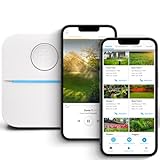
1. Rachio WiFi Smart Sprinkler Controller (8-Zone Irrigation Remote Control) – App-Based Scheduling, Local Weather Intelligence, Rain Skips, Easy DIY Install
Overview:
The Rachio 8-Zone Smart Sprinkler Controller modernizes irrigation with intuitive app control and hyperlocal weather integration. Designed for DIY installation, it replaces traditional timers to automate watering while conserving resources, ideal for standard residential yards.
What Makes It Stand Out:
Rachio’s patented Weather Intelligence+ is its crown jewel, automatically skipping watering during rain, freeze, or high winds using precise local data—not just forecasts. The adaptive scheduling learns your landscape’s needs seasonally, while the clean app interface offers zone-specific control, usage tracking, and “Seasonal Shift” for effortless climate adjustments.
Value for Money:
Priced mid-range, it justifies cost through significant water savings (up to 30% annually) and prevents overwatering damage. Though pricier than basic timers, its ROI shines versus manual systems or less sophisticated smart controllers, especially in drought-prone areas.
Strengths and Weaknesses:
Strengths: Seamless DIY install; best-in-class weather adaptation; detailed water usage analytics; reliable app.
Weaknesses: Requires stable Wi-Fi (no offline mode); no built-in display; subscription needed for advanced features like historical data.
Bottom Line:
A top-tier investment for eco-conscious homeowners seeking effortless water savings and precise control—ideal for 8-zone systems where weather responsiveness is non-negotiable.
2. Rachio WiFi Smart Sprinkler Controller (16-Zone Irrigation Remote Control) – App-Based Scheduling, Local Weather Intelligence, Rain Skips, Easy DIY Install

Overview:
This 16-zone Rachio model scales the brand’s smart irrigation prowess for larger properties. It delivers the same intelligent weather-based automation as its 8-zone sibling but accommodates complex landscapes, from expansive lawns to multi-zone gardens, without subscription fees for core features.
What Makes It Stand Out:
Beyond the signature Weather Intelligence+ that skips watering for rain or extreme conditions, it excels with true scalability. Manage up to 16 zones independently via the app, with adaptive scheduling that adjusts for soil type, slope, and plant types—plus “Grow-In” mode for new landscaping.
Value for Money:
While costing more than the 8-zone version, it’s economical for large yards needing extensive zoning. Avoids pricey professional controllers by offering enterprise-grade features (like remote diagnostics) at a consumer price, with water savings offsetting the premium quickly.
Strengths and Weaknesses:
Strengths: Handles complex setups flawlessly; industry-leading weather integration; no monthly fees; robust app.
Weaknesses: Bulky for small spaces; installation complexity increases with zones; limited third-party smart home compatibility.
Bottom Line:
The definitive choice for large-property owners needing 16-zone precision and weather-smart conservation—skip if your yard uses fewer than 12 zones.
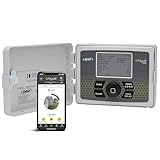
3. Orbit 57946 B-hyve 6-Zone Smart Indoor/Outdoor Sprinkler Controller
Overview:
Orbit’s B-hyve 6-Zone controller merges affordability with smart features for modest-sized yards. Its dual indoor/outdoor design and weather-based automation target homeowners wanting simplicity without sacrificing water efficiency or remote access.
What Makes It Stand Out:
Unique dual-placement flexibility lets you install it indoors (garage) or outdoors, protected by its weather-resistant casing. The app leverages local weather and soil data for automatic adjustments, while “Seasonal Adjust” simplifies schedule tweaks—no technical expertise required.
Value for Money:
The most budget-friendly option here, it delivers solid smart functionality at nearly half the cost of premium brands. Savings are maximized for small yards (under 6 zones), though advanced features like freeze detection lag behind Rachio.
Strengths and Weaknesses:
Strengths: Lowest price point; versatile indoor/outdoor use; straightforward app; good basic weather adaptation.
Weaknesses: Less accurate rain-skip than competitors; app can be glitchy; limited customization for complex landscapes.
Bottom Line:
A practical, cost-effective entry into smart irrigation for small yards—prioritize if budget constraints outweigh desires for elite weather intelligence.
4. Orbit 57985 B-hyve XR 8-Zone Smart Indoor/Outdoor Sprinkler Controller

Overview:
The B-hyve XR 8-Zone expands Orbit’s smart irrigation to medium-sized properties, emphasizing water efficiency and installation flexibility. It builds on the 6-zone model with enhanced weather integration, targeting users needing more zones without Rachio’s price tag.
What Makes It Stand Out:
Its standout feature is the “XR” (eXtended Range) Wi-Fi, ensuring reliable connectivity even in remote yard corners. Weather adjustments factor in evapotranspiration data for hyper-precise watering, while the app’s “Water Budget” tool fine-tunes usage by zone—ideal for mixed-plant landscapes.
Value for Money:
Offers the best zone-per-dollar ratio here, especially for properties needing 7–8 zones. Though slightly pricier than the 6-zone B-hyve, it undercuts Rachio significantly while delivering 90% of its core functionality for most users.
Strengths and Weaknesses:
Strengths: Excellent Wi-Fi range; intuitive water-budgeting tools; weatherproof indoor/outdoor design; strong value.
Weaknesses: Weather intelligence less refined than Rachio; app notifications occasionally delayed; no built-in diagnostics.
Bottom Line:
The smart pick for mid-sized yards prioritizing affordability and reliable connectivity—opt for this over Rachio if advanced weather analytics aren’t critical.
5. Hunter Hydrawise HPC400 Smart WiFi Irrigation Controller for Lawns and Gardens, 4 Zone, Expandable to 32 Zones, Weather Based, App Controlled Sprinkler System

Overview:
Hunter’s HPC400 is a modular smart controller built for scalability, starting at 4 zones and expanding to 32. It merges professional-grade durability with user-friendly app control, targeting homeowners with evolving landscaping needs.
What Makes It Stand Out:
True expandability sets it apart—add modules as your garden grows, avoiding full-replacement costs. The weather-based “Smart Watering” uses global data for up to 50% water savings, while the outdoor-rated touchscreen simplifies on-the-go adjustments without a phone.
Value for Money:
Higher upfront cost is justified by long-term flexibility. Starting small saves initial investment, and expansion modules (sold separately) cost less than new controllers. Durability ensures 10+ years of use, outlasting cheaper alternatives.
Strengths and Weaknesses:
Strengths: Unmatched expandability; weather-resistant outdoor build; no subscription fees; intuitive touchscreen.
Weaknesses: Base model limited to 4 zones; expansion adds expense; app less polished than Rachio’s.
Bottom Line:
The ultimate choice for future-proofing your irrigation—invest here if you anticipate landscape growth or demand rugged, professional reliability.
6. Orbit 57925 B-hyve 8-Zone Smart Indoor Sprinkler Controller

Overview: The Orbit B-hyve 8-Zone is a Wi-Fi-enabled indoor sprinkler controller designed for effortless remote management of residential irrigation systems. It targets homeowners seeking precision watering through smart technology while supporting indoor plant care routines.
What Makes It Stand Out: Its standout feature is seamless integration with water-saving technologies like drip irrigation and multipoint rotators, ensuring targeted distribution. The dual Wi-Fi/Bluetooth connectivity allows flexible setup and real-time adjustments via an intuitive app, even when away from home.
Value for Money: Priced competitively for an 8-zone indoor unit, it justifies cost through robust DIY installation, durability, and significant water savings via weather-based automation. It outperforms basic timers but lacks advanced diagnostics found in premium outdoor models.
Strengths and Weaknesses: Strengths: User-friendly app, reliable indoor build, easy installation, strong water-efficiency features. Weaknesses: Limited to indoor use only, no native smart-home voice assistant support (e.g., Alexa), occasional app connectivity hiccups reported.
Bottom Line: An excellent choice for indoor-focused homeowners wanting reliable, app-controlled watering; ideal for beginners but less suited for complex outdoor landscapes requiring voice integration.
7. Rain Bird ARC6 App-Based Indoor Smart WiFi Irrigation Sprinkler Timer/Controller, 6-Zone/Station, EPA WaterSense Certified, Compatible with Alexa, Indoor 6-Station

Overview: The Rain Bird ARC6 is a 6-zone indoor Wi-Fi sprinkler controller emphasizing water conservation and user convenience. EPA WaterSense certified, it automates irrigation using hyperlocal weather data while offering robust app and voice control.
What Makes It Stand Out: Its standout trait is EPA WaterSense certification, guaranteeing up to 30% water savings via automatic weather-based schedule adjustments. Full Alexa/Google Assistant compatibility and effortless family/professional access sharing via the app enhance usability.
Value for Money: Justifies its mid-range price with certified efficiency, reliable performance, and broad compatibility (iOS/Android). It’s a cost-effective upgrade from non-smart timers but offers fewer zones than competing 8-zone models at similar prices.
Strengths and Weaknesses: Strengths: Trusted water savings, intuitive app, strong voice assistant integration, easy scheduling. Weaknesses: Limited to 6 zones (less flexible for larger yards), indoor-only design, no Ethernet backup for connectivity.
Bottom Line: Highly recommended for eco-conscious users with smaller lawns seeking certified water savings and seamless smart-home integration; skip if you need >6 zones or outdoor durability.
8. Hunter Hydrawise X2 8 Zone Sprinkler Controller, Outdoor Irrigation Timer for Lawn and Garden, Weather Based Scheduling, Cycle and Soak, Smart Controller Ready with Optional WiFi Module
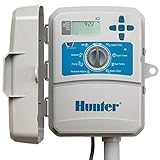
Overview: The Hunter Hydrawise X2 is an outdoor 8-zone irrigation controller built for durability and scalability. It operates as a standalone unit but unlocks advanced smart features via an optional Wi-Fi module, catering to both DIYers and professionals.
What Makes It Stand Out: Its modular design—featuring an optional Hydrawise Wi-Fi module—is unique, allowing future-proofing without upfront smart costs. Built-in Cycle & Soak mode prevents runoff, while QuickCheck diagnostics and weather-resistant outdoor housing ensure reliability.
Value for Money: Offers exceptional long-term value: the base unit excels as a rugged outdoor timer, and the optional module adds smart capabilities only when needed. More cost-effective than all-in-one smart controllers for users prioritizing durability over immediate app access.
Strengths and Weaknesses: Strengths: Weatherproof outdoor build, professional-grade diagnostics, flexible scheduling, Cycle & Soak standard. Weaknesses: Wi-Fi module sold separately (adds $50+), app less polished than competitors, steeper learning curve.
Bottom Line: The top pick for outdoor resilience and scalability; ideal for larger properties or pros. Avoid if you demand out-of-box smart features without extra purchases.
9. HiOazo Smart Sprinkler Controller WiFi, 8 Zone Irrigation Controller Indoor with Automatic Weather-Based Watering (2025 New Version)

Overview: The HiOazo 8-Zone is a budget-friendly indoor smart controller featuring hyperlocal weather adaptation and extensive scheduling flexibility. Its 2025 update focuses on ease of installation and responsive app management for residential users.
What Makes It Stand Out: Standout features include automatic weather skips for rain/frost/wind and a versatile Cycle & Soak mode to prevent runoff. The app supports 16 schedules per zone and sunrise/sunset triggers, offering exceptional customization for its price.
Value for Money: Delivers premium features (8 zones, advanced scheduling) at an entry-level cost. Undercuts competitors by $20–$40 while matching core functionality, though build quality and app stability occasionally lag behind premium brands.
Strengths and Weaknesses: Strengths: Affordable, 15-minute DIY setup, 16-schedule flexibility, strong weather adaptation. Weaknesses: Indoor-only (less durable), app interface can be glitchy, limited smart-home integrations (no native HomeKit/Alexa).
Bottom Line: Best for budget-focused users needing robust scheduling and weather adaptation; excellent value but not for those prioritizing app polish or outdoor use.
10. Yardian Pro Smart Sprinkler Controller (6-Zone) – Easy DIY Install, Apple HomeKit, Ethernet & Wi-Fi, Manual Buttons, Weather-Based Scheduling

Overview: The Yardian Pro is a 6-zone controller engineered for reliability and pro-grade connectivity, featuring Ethernet support, native HomeKit integration, and real-time flow monitoring to prevent water damage.
What Makes It Stand Out: Unique RJ45 Ethernet port ensures rock-solid connectivity in Wi-Fi-dead zones (e.g., garages), while native Apple HomeKit support is unmatched. Physical on-device buttons and flow-sensor leak alerts provide critical fail-safes absent in competitors.
Value for Money: Priced at a premium, it’s justified by Ethernet stability, HomeKit exclusivity, and leak protection—features typically found in commercial systems. Overkill for basic needs but invaluable for tech-integrated homes or water-damage prevention.
Strengths and Weaknesses: Strengths: Ethernet + Wi-Fi dual connectivity, HomeKit/Alexa/Google support, leak monitoring, manual override buttons. Weaknesses: Only 6 zones, higher cost than average, flow sensor sold separately.
Bottom Line: Essential for Apple ecosystem users or those in connectivity-challenged areas; the smart choice for reliability and safety, but consider zone limits and sensor costs.
Understanding the Overwatering Crisis
Why Traditional Timers Fail Your Landscape
Fixed-schedule irrigation systems operate blindly, drenching your yard on predetermined days regardless of recent rainfall or humidity levels. This inflexibility ignores critical environmental cues, like a 2-inch downpour followed by an automatic watering cycle. The result? Saturated soil that drowns beneficial microbes, leaches nutrients, and creates breeding grounds for root rot and fungal diseases. Homeowners often compound the problem by manually overriding schedules during dry spells, creating uneven moisture patterns that stress plants.
Hidden Financial and Environmental Costs
Excess watering drains more than just your wallet—it depletes community water reserves and strains aging infrastructure. Municipalities report landscape irrigation accounts for 30-60% of residential water use in dry regions, with over 50% wasted through inefficient practices. Financially, studies show households using smart controllers save 15-30% on water bills annually. Environmentally, runoff from overwatered lawns carries fertilizers and pesticides into waterways, fueling toxic algal blooms. Every gallon squandered represents missed conservation opportunities in drought-prone areas where restrictions loom.
Plant Health Signals You’re Overwatering
Yellowing leaves, wilting despite wet soil, and unexpected mold growth are nature’s distress signals. Overwatering suffocates roots by filling soil pores with water instead of oxygen, causing root systems to decay. Turfgrass develops shallow roots that can’t withstand heat stress, while perennials become prone to crown rot. Contrary to intuition, many “thirsty” plants showing drought symptoms actually suffer from waterlogged roots unable to absorb moisture. Recognizing these signs early prevents irreversible landscape damage.
Core Technology of Weather-Based Controllers
How Real-Time Weather Integration Works
These systems connect to local weather stations or satellite networks, pulling hyperlocal data on temperature, humidity, wind speed, and solar radiation multiple times daily. Unlike basic rain sensors that only pause cycles during precipitation, advanced controllers analyze forecasted evapotranspiration (ET) rates—the scientific measure of water loss from soil and plants. This allows them to dynamically calculate precise watering durations based on actual atmospheric demand rather than arbitrary schedules.
The Role of Soil Moisture Sensors
While weather data guides big-picture decisions, in-ground sensors provide ground-truth verification. These probes measure moisture levels at root depth, ensuring controllers don’t activate when soil is already saturated. Dual-sensor systems cross-reference weather forecasts with actual soil conditions, preventing overcorrection during unexpected dry spells. Proper sensor placement in representative zones—avoiding shady spots or heat-reflective surfaces—is critical for accuracy.
Predictive Algorithms and Machine Learning
Next-generation controllers use historical climate patterns combined with real-time data to anticipate needs. For example, if high winds and low humidity are forecasted for tomorrow, the system might apply extra water tonight when evaporation rates are lower. Some units learn from homeowner adjustments over time, refining schedules based on observed landscape responses. This predictive capability transforms irrigation from reactive to proactive water management.
Essential Features for Optimal Performance
Hyperlocal Weather Data Sources
Controllers sourcing data from neighborhood weather stations or personal on-site sensors outperform those relying solely on airport reports miles away. Microclimates matter—a south-facing slope may need 20% more water than a shaded backyard. Look for systems accessing dense networks like Weather Underground or integrating with personal weather stations for yard-specific accuracy.
Zone-Specific Customization Capabilities
Not all areas of your property have identical needs. Advanced units allow setting individual soil types (clay vs. sand), sun exposure levels, and plant species per zone. A north-facing flowerbed with dense shrubs requires fundamentally different moisture than a sunny vegetable patch. Controllers that adjust run times per zone based on these variables prevent blanket overwatering in diverse landscapes.
Rain Skip and Seasonal Adjust Logic
True intelligence shines in how controllers handle weather deviations. Beyond pausing during rain, sophisticated models calculate soil absorption rates to determine how long to skip cycles post-storm. Similarly, seasonal adjustment features don’t just reduce watering in winter—they factor in cooler temperatures, shorter days, and dormant plant states to deliver precisely what’s needed.
Installation and Setup Best Practices
Compatibility with Existing Systems
Most weather-based controllers retrofit existing irrigation setups, but compatibility checks are crucial. Verify valve count limits (some older systems have more zones than entry-level smart controllers support) and voltage requirements. Wired systems typically integrate more seamlessly than battery-operated timers, though wireless adapters now bridge many gaps. Professional assessments prevent costly mid-installation surprises.
Strategic Sensor Placement Guidelines
Soil moisture sensors should be installed in representative areas—not near downspouts or heat-radiating walls. For multi-zone systems, prioritize placement in the sunniest, driest zone as the “canary in the coal mine.” Weather sensors require unobstructed sky views but need shading to avoid solar heating errors. Incorrect placement causes controllers to misread conditions, triggering unnecessary watering.
Initial Calibration for Your Climate Zone
Controllers require baseline configuration: ZIP code entry for local climate data, soil type selection, and plant water-use coefficients. Skipping this step leaves systems guessing your needs. Take time to input slope grades, sun exposure maps, and even mulch coverage—details that significantly impact evaporation rates. Initial calibration sets the foundation for all future automated decisions.
Maximizing Water Conservation Benefits
Calculating Your Potential Savings
Estimate savings by comparing your historical water usage (available on utility bills) against regional evapotranspiration rates. Many municipalities offer free water audits that identify inefficiencies. Controllers typically pay for themselves in 1-3 years through reduced bills and avoided landscape replacement costs. Track usage via your utility’s online portal to measure real-world impact post-installation.
Drought Response Protocols
During water restrictions, these systems excel by automatically tightening schedules based on mandatory cutbacks. Unlike manual adjustments that homeowners forget to reverse, smart controllers maintain compliance while protecting plant health. Some integrate directly with municipal drought-alert systems, receiving official restriction updates to adjust watering legally and ethically.
Synergy with Water-Smart Landscaping
Controllers amplify the impact of xeriscaping or native plantings. By pairing drought-tolerant species with precise watering, you create resilient landscapes requiring minimal intervention. Use zone customization to group plants with similar needs—preventing water-hungry zones from drowning low-water varieties. This holistic approach transforms irrigation from a chore into sustainable ecosystem management.
Troubleshooting Common Challenges
Handling Data Connectivity Gaps
Wi-Fi outages or weather service interruptions can trigger fallback modes. Choose controllers with cellular backup options or robust offline algorithms that estimate ET rates using historical data. Regularly check signal strength at the controller location—extending networks with mesh systems prevents disconnections during critical watering windows.
Correcting Oversaturation After Heavy Rain
If your system waters post-storm, verify rain skip settings aren’t disabled and sensor thresholds aren’t set too low. Some units require manual override to extend skip durations beyond default periods. Adjust soil moisture sensor sensitivity if it consistently misreads saturation levels—clay soils may need higher “wet” thresholds than sandy mixes.
Microclimate Management Strategies
Address yard variations by creating “virtual zones” within your controller’s programming. For instance, assign a +10% watering adjustment to west-facing slopes experiencing afternoon sun. Use physical barriers like burlap screens temporarily on exposed zones during heatwaves. Document microclimate quirks through seasonal observation to refine settings annually.
Future Innovations to Watch
AI-Powered Plant Health Monitoring
Emerging systems integrate camera technology to analyze leaf color and texture, detecting stress before visible damage occurs. Paired with soil data, this allows preemptive watering adjustments—like reducing cycles when early fungal spots appear. While still evolving, this tech promises truly plant-centric irrigation.
Municipal Water Management Integration
Forward-thinking cities are developing APIs that let controllers receive real-time reservoir levels and infrastructure alerts. During pipeline repairs or low-storage periods, systems could automatically implement temporary 10% reductions across neighborhoods—creating community-wide conservation without individual action.
Renewable Energy Integration
Solar-powered controllers with battery backups are gaining traction, especially in remote areas. Future models may coordinate with home solar production, running pumps during peak generation hours to reduce grid strain. This synergy supports broader energy-smart home ecosystems.
Frequently Asked Questions
How do weather-based controllers differ from basic rain sensors?
Basic rain sensors only pause watering during active precipitation, while weather-based systems analyze comprehensive data (humidity, temperature, forecasted ET rates) to adjust schedules proactively before and after storms.
Can these controllers work in regions with infrequent internet access?
Yes—many offer offline modes using historical weather patterns and onboard sensors. However, internet connectivity enables hyperlocal forecasts and remote adjustments, maximizing water savings.
Do I still need to manually adjust my system during extreme weather?
Advanced units handle most conditions automatically, but major events like prolonged freezes may require manual overrides for pipe protection. Regular monitoring ensures optimal performance.
How accurate are the weather data sources used by these controllers?
Accuracy depends on data density—systems using neighborhood stations or personal sensors achieve 85-90% precision versus 60-70% for airport-based forecasts. Always verify local station availability before purchasing.
Will a weather-based controller work with my drip irrigation system?
Absolutely. These controllers manage all valve types, but drip zones often require separate programming due to slower application rates—ensuring deep, infrequent watering ideal for root development.
How long does installation typically take for a DIY homeowner?
Most retrofits take 1-3 hours with basic electrical skills. Complexity increases with multi-zone systems or when adding soil sensors, where professional installation may be advisable.
Can these systems help during drought restrictions?
Yes—they automatically implement required cutbacks and often exceed compliance by optimizing watering based on actual conditions, potentially avoiding fines while protecting landscapes.
What’s the average payback period for investing in this technology?
Most homeowners recoup costs in 12-24 months through water savings, with additional ROI from reduced plant replacement and lawn care expenses.
Do soil moisture sensors require frequent maintenance?
Minimal upkeep is needed—typically cleaning probes annually and checking battery levels. Avoid disturbing sensor placement, as soil compaction around probes affects readings.
Can I control multiple controllers from one app if I have separate properties?
Many modern systems support multi-property management within a single account, allowing centralized monitoring and adjustments for vacation homes or rental properties.