Have you ever settled in for a movie night, lights dimmed and snacks ready, only to discover the dialogue trailing behind the action like a laggy video call? Or maybe you’re hosting a gathering where music spills from room to room, but the beat feels disjointed, throwing off the entire vibe? That frustrating disconnect between sight and sound—or between speakers in different zones—isn’t just annoying; it breaks the immersion and undermines the whole purpose of a seamless multi-room audio experience. Poor audio sync transforms what should be effortless enjoyment into a technical headache, making you question whether the convenience of whole-home sound is worth the hassle. You’re not alone, and more importantly, it’s rarely a permanent flaw—it’s usually a solvable puzzle.
Understanding why sync issues happen is the first step toward fixing them. Multi-room systems face unique challenges because they’re juggling multiple speakers across varying distances, connected through complex networks, all trying to play the same signal at the exact same moment. Unlike a single stereo pair where timing is controlled internally, distributed audio introduces variables like network latency, signal processing delays, and even the physical speed of sound. The good news? Modern technology offers robust solutions; you just need to know where to look and what adjustments to make. This guide cuts through the jargon to give you practical, actionable strategies—no matter which ecosystem you use—to achieve that elusive, perfectly synchronized sound throughout your home.
Top 10 Multi-Room Speakers
Detailed Product Reviews
1. Avantree Harmony 2 – Multi-Room Wireless Speaker System with Bluetooth & Wired Inputs, Easy Setup, Expandable, 30ms Low-Latency Sync for Whole-Home, Meeting Rooms & Small Indoor Events

Overview: The Avantree Harmony 2 is a specialized wireless speaker system engineered for synchronized multi-room audio in controlled indoor environments like homes, offices, and classrooms. It prioritizes seamless coverage for background music, TV sound, and spoken content across connected rooms.
What Makes It Stand Out: Its standout feature is the ultra-low latency (under 30ms), ensuring perfectly synced audio without echo—critical for video or meetings. The app-free setup is remarkably simple: connect the transmitter via optical, AUX, or Bluetooth, and speakers auto-pair. Its expandable nature allows building a cohesive audio network, ideal for consistent coverage where timing matters.
Value for Money: Priced competitively for its niche, it offers exceptional value for users needing reliable room-to-room sync without complex configurations. While not the cheapest basic Bluetooth speaker, its professional-grade latency performance and ease of use justify the cost compared to DIY solutions that often suffer from sync issues.
Strengths and Weaknesses: Strengths: Flawless low-latency sync; intuitive setup; expandable system; versatile wired/wireless inputs. Weaknesses: Limited volume for large or noisy spaces; incompatible with USB/XLR mics (requires line-level input); strictly for indoor use.
Bottom Line: Highly recommended for homes, offices, or classrooms needing reliable, echo-free multi-room audio for speech or TV. Avoid for loud environments or advanced microphone setups.
2. Bluetooth Speaker Set: Wireless Stereo Dual Pairing Portable Twin TWS System With Big Rich Bass Hi-Fi Multi-Room Indoor Outdoor Use Home Deck Pool Work Travel Party Camping Gift Decor Idea (Chrome)

Overview: This budget-friendly TWS speaker set delivers portable stereo sound with unlimited daisy-chaining capability. Designed for flexibility, it suits indoor/outdoor use—from parties to multi-room setups—with a focus on affordability and ease of expansion.
What Makes It Stand Out: The ability to pair unlimited speakers (2, 4, 6+) via a simple button press enables customizable surround sound or whole-home coverage. It offers triple connectivity (Bluetooth TWS, TF/SD card, AUX) and includes free stands. Its miniature size, shockproof build, and rich bass from larger drivers punch above its price point.
Value for Money: Exceptional value, costing “less than half” of premium brands while offering more pairing flexibility and features. The inclusion of stands and robust construction makes it a compelling budget alternative, though audio fidelity may not match high-end models at extreme volumes.
Strengths and Weaknesses: Strengths: Unlimited speaker pairing; versatile inputs; portable/durable; includes stands; strong value. Weaknesses: Prone to interference in crowded wireless areas; volume may disappoint in large spaces; basic audio quality at max volume.
Bottom Line: An excellent budget pick for casual users seeking expandable, portable sound for parties or multi-room use. Ideal for gifts but manage expectations for critical listening.
3. Avantree Harmony A1 – Auracast Multi-Room Wireless Speaker with 100 m Coverage, 3 EQ Stereo Sound, Expandable System, Easy Setup, Bluetooth/Opt/AUX Input for Music, Parties & House Gatherings

Overview: The Avantree Harmony A1 leverages Auracast technology to create a scalable, synchronized multi-room audio system. Targeted at indoor gatherings in homes, restaurants, or stores, it emphasizes wide coverage and flexible connectivity for shared listening experiences.
What Makes It Stand Out: Its standout feature is 100m wireless transmission range (ideal for large homes), Auracast compatibility for effortless device sharing, and triple input options (Bluetooth, Optical, AUX). Each speaker doubles as a standalone Bluetooth unit, and the system supports multiple EQ presets for tailored sound.
Value for Money: Priced fairly for its Auracast capability and range, it offers solid value for users prioritizing easy expansion and wide indoor coverage. However, the need for a firmware update to prevent auto-shutdown slightly undermines the “easy setup” claim versus simpler competitors.
Strengths and Weaknesses: Strengths: Long 100m range; Auracast scalability; versatile inputs; independent speaker use; good EQ options. Weaknesses: Not for outdoors/loud spaces; auto-power-off quirk requires firmware fix; Bluetooth range limited to 15m.
Bottom Line: A strong choice for tech-savvy users wanting an expandable, Auracast-powered indoor audio network, though casual buyers might prefer plug-and-play simplicity.
4. Dual Bluetooth Speaker Set with Magnetic Base & Phone Stand - TWS Stereo Sound, 10H Playtime, 3H with RGB Music Lights On- Bluetooth Wireless Speaker for Home Theater, Outdoor,TV Watching, Multi Room

Overview: This dual-speaker set combines TWS stereo pairing with innovative magnetic design and RGB lighting. Targeted at versatile use cases—from movie nights to parties—it integrates phone stands and metal-surface mounting for unique flexibility.
What Makes It Stand Out: The magnetic bases (with hidden phone stands), 360° sound via Bluetooth 5.4, and dynamic RGB lights that sync to music set it apart. Dual charging options (magnetic dock/Type-C), 10-hour battery life (2.5H with lights), and dialogue enhancement for seniors add practical value.
Value for Money: Justifies its price with multifunctional design: the magnetic mounting/phone stand solves real usability pain points, and RGB lights enhance ambiance. While not audiophile-grade, the rich bass and clarity suit casual entertainment well versus similarly priced rivals.
Strengths and Weaknesses: Strengths: Clever magnetic/phone stand design; long battery life; vibrant RGB lights; dialogue clarity; dual charging. Weaknesses: RGB cuts runtime significantly; magnetic base limits placement; outdoor volume may be insufficient.
Bottom Line: Highly recommended for users seeking a stylish, versatile set for movies, parties, or decor. The magnetic utility and lights make it a standout gift, despite modest outdoor performance.
5. Emerson EAS-3006-BK Sound Blox – Wireless Magnetic Stackable Bluetooth Speakers, Instant Connect, Multi-Room Audio, USB-C Charging, Built-in Subwoofer
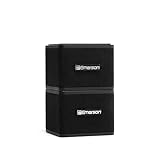
Overview: The Emerson Sound Blox features stackable magnetic speakers with built-in subwoofers, targeting immersive multi-room audio. Designed for simplicity, it emphasizes instant connectivity and scalable setups for homes or events.
What Makes It Stand Out: The magnetic stacking (up to 4 units) triggers auto-power and instant TWS pairing, while supporting massive networks (100 speakers within 300 feet). USB-C daisy-charging for multiple units and the integrated subwoofer for deep bass in compact form are key differentiators.
Value for Money: Offers good value for its unique stacking ecosystem and subwoofer inclusion. The ability to charge 4 speakers simultaneously via USB-C adds convenience, though battery life (unspecified beyond “extended”) may lag behind dedicated portable speakers.
Strengths and Weaknesses: Strengths: Effortless magnetic stacking/pairing; massive multi-room capacity; built-in subwoofer; convenient USB-C charging chain. Weaknesses: Limited battery details; stacking may compromise portability; subwoofer output constrained by size.
Bottom Line: Ideal for users wanting a modular, stackable system for layered room audio. Best for homes prioritizing expandability over ultra-portability or thunderous bass.
6. Sonos PLAY:1 Multi-Room Digital Music System Bundle (4 - PLAY:1 Speakers) - Black (Renewed)

Overview:
This renewed bundle delivers four Sonos PLAY:1 speakers, enabling a comprehensive multi-room audio setup. Designed to leverage your existing Wi-Fi, it streams music from services like Spotify and Pandora via the intuitive Sonos app, requiring no bridge or batteries since each unit plugs directly into power.
What Makes It Stand Out:
Its seamless multi-room orchestration is unmatched—play identical tracks across all speakers or different songs in separate zones. The plug-and-play setup bypasses the need for a Sonos Bridge, and the renewed units retain full functionality, making premium whole-home audio accessible without new-equipment costs.
Value for Money:
Purchasing four renewed PLAY:1 speakers significantly undercuts buying new equivalents, offering enterprise-grade multi-room audio at near-midrange pricing. While newer Sonos models exist, this bundle provides exceptional entry-point value for expansive setups, especially given its reliability and app ecosystem.
Strengths and Weaknesses:
Strengths: Effortless room grouping, robust app control, consistent sound quality, and no battery limitations. Weaknesses: Renewed units carry minor cosmetic wear risks; lacks modern Bluetooth (Wi-Fi only); bass output is modest for large spaces compared to newer subs.
Bottom Line:
Ideal for budget-conscious buyers seeking a reliable, scalable multi-room system, this renewed bundle delivers Sonos’s signature ecosystem at a steal. Despite minor age-related limitations, it remains a top-tier choice for whole-home audio on a value-focused budget.
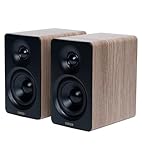
7. Edifier M60 Multimedia Speaker Bluetooth 5.3, 66W RMS, Hi-Res Audio & Hi-Res Wireless Audio, LDAC,3" Mid Bass & 1" Tweeter, USB-C & Aux Inputs, Compact Desktop Speaker – Classic Oak
Overview:
The Edifier M60 is a compact, high-fidelity desktop speaker pair blending minimalist oak styling with robust audio engineering. Targeting space-conscious users, it packs 66W RMS output, Hi-Res certification, and versatile connectivity into a footprint barely larger than a smartphone.
What Makes It Stand Out:
LDAC Bluetooth 5.3 support enables near-lossless 24-bit/96kHz streaming from Android devices—a rarity in this class. Its dual 3" aluminum mid-bass drivers and silk-dome tweeters, coupled with a built-in DSP for dynamic range control, deliver surprising depth and clarity from such a diminutive chassis.
Value for Money:
Competitively priced against basic bookshelf speakers, the M60 justifies its cost with premium features like USB-C input, Hi-Res wireless audio, and Class-D amplification. It outperforms similarly sized rivals in fidelity, making it a stellar investment for audiophiles needing compact, high-quality desktop sound.
Strengths and Weaknesses:
Strengths: Exceptional wireless Hi-Res audio via LDAC, elegant compact design, rich 66W output, and versatile wired/wireless inputs. Weaknesses: Bass lacks physical impact for electronic genres; no multi-room capability; oak finish may not suit all decors.
Bottom Line:
A near-perfect desktop solution for critical listeners, the M60 merges audiophile-grade wireless performance with unobtrusive elegance. Its LDAC support and balanced output make it a standout value for discerning users prioritizing fidelity in tight spaces.
8. Inwa Upgraded 200W Outdoor Bluetooth Speakers Pair - IPX5 Waterproof Wall Mount Stereo Speaker, Wireless Multi-Speaker Connection with Auracast, Sound System w/Aux for Porch, Patio, Garage, Home

Overview:
Engineered for rugged outdoor use, this IPX5-rated speaker pair combines 200W peak power (20W RMS) with Auracast Bluetooth technology. Designed for patios, garages, or yards, it features dual drivers, passive radiators, and flexible mounting options for weather-exposed environments.
What Makes It Stand Out:
Auracast enables effortless wireless syncing of multiple speakers without apps—simply pair via Bluetooth 6.0. The customizable stereo/mono modes and included remote allow tailored soundscapes across large areas, while IPX5 protection ensures resilience against rain and dust.
Value for Money:
Priced accessibly for outdoor audio, it delivers robust features rarely found together: true stereo separation, Auracast compatibility, and weatherproofing. Though RMS power is modest, the value shines for casual listeners needing reliable, scalable sound for gatherings without premium pricing.
Strengths and Weaknesses:
Strengths: Hassle-free Auracast multi-speaker pairing, excellent weather resistance, intuitive remote control, and versatile mounting. Weaknesses: 20W RMS limits bass depth for larger spaces; AUX input adds latency; remote lacks backlighting.
Bottom Line:
A practical, durable choice for backyard setups, this pair excels in ease of expansion and weather resilience. While not for bass enthusiasts, it offers exceptional convenience and value for affordable, multi-zone outdoor audio.
9. WiiM Sound Lite Smart Speaker, Hi‑Res 24‑bit/192 kHz, AI RoomFit™ Room Correction, 100W Peak, Wi‑Fi 6E/Bluetooth 5.3, Multi‑Room & Stereo Pairing, Black

Overview:
The WiiM Sound Lite merges high-resolution audio with smart home integration, featuring AI-driven room correction and 100W peak power. This compact speaker targets audiophiles seeking premium sound quality with seamless multi-room and streaming service compatibility.
What Makes It Stand Out:
Proprietary AI RoomFit™ technology dynamically optimizes audio based on placement—critical for avoiding “dead zones” in irregular rooms. Hi-Res 24-bit/192kHz support via Wi-Fi 6E, coupled with multi-room grouping across platforms (Google Cast, Alexa, Roon), creates a future-proof ecosystem.
Value for Money:
Competing with higher-priced smart speakers, it justifies cost through unmatched room adaptation and lossless streaming versatility. The inclusion of stereo pairing and home-theater expansion (with sub/surrounds) adds long-term value for evolving setups.
Strengths and Weaknesses:
Strengths: Revolutionary AI room correction, exceptional Hi-Res fidelity, extensive service/app support, and clean modern design. Weaknesses: Bass lacks subwoofer depth; physical controls are minimal; setup requires app proficiency.
Bottom Line:
A top-tier smart speaker for detail-oriented listeners, the Sound Lite’s AI optimization and high-resolution prowess make it a compelling investment. Ideal for those prioritizing adaptive sound quality over raw bass power or ultra-simple operation.
10. Air Audio The Worlds First Pull-Apart Wireless Bluetooth Speaker Portable Surround Sound and Multi-Room Use, Black

Overview:
Air Audio’s innovative speaker splits magnetically into two units for true portable stereo or multi-room use. With 24W output (combined), IPX4 waterproofing, and a cylindrical design, it targets users seeking flexible, social audio experiences indoors or outdoors.
What Makes It Stand Out:
The magnetic “pull-apart” mechanism is revolutionary—separating units instantly creates stereo channels or independent speakers, syncing automatically without apps. This intuitive hardware-driven approach eliminates complex pairing, enabling instant surround sound or room-to-room streaming.
Value for Money:
Its unique form factor commands a slight premium over single-unit portables but delivers dual functionality rarely seen. The convenience of app-free multi-room expansion and waterproof versatility offers strong justification for those valuing spontaneous, adaptable audio.
Strengths and Weaknesses:
Strengths: Effortless magnetic separation for stereo/multi-room; compact portability; IPX4 splash resistance; simple Bluetooth controls. Weaknesses: 24W output feels thin for large spaces; limited bass depth; specs ambiguity (e.g., RMS vs. peak power).
Bottom Line:
A niche but brilliant solution for social settings, the Air Audio speaker excels in spontaneous flexibility. While not for bass-heavy listening, its ingenious design makes it a standout for travelers or casual users craving instant stereo without technical fuss.
Understanding Audio Sync: Why It Matters More Than You Think
The Science Behind Lip-Sync and Beat Matching
Audio sync, often called lip-sync in video contexts, refers to the precise alignment of sound with its visual counterpart or with other audio sources. When sync is off, even by milliseconds, our brains detect the discrepancy. In multi-room setups, this manifests as echoes, overlapping beats, or dialogue that feels “behind” the action. This isn’t just subjective; studies show delays as small as 15-20ms can disrupt perception. For music, sync errors create a muddy, unfocused soundstage where rhythm collapses—critical when bass from one room hits your ears before the treble from another.
How Multi-Room Systems Amplify Sync Challenges
Distributed audio systems inherently fight physics and engineering constraints. Each speaker processes the digital signal independently, introducing tiny variations in decoding time. Wi-Fi networks add another layer: data packets travel at light speed, but router congestion, interference, or distance can cause uneven delivery times to different speakers. Bluetooth systems struggle even more with range and interference. Proprietary mesh networks (like those using dedicated radio frequencies) often handle timing better, but no wireless system is immune to environmental hiccups like thick walls or competing smart devices.
The Real-World Impact on Your Listening Experience
Beyond technical specs, poor sync erodes enjoyment. Imagine watching a thriller where a door slam after the visual impact—it kills suspense. During parties, mismatched beats make dancing feel awkward, as if the music is fighting itself. Over time, this inconsistency trains listeners to tolerate “good enough” sound, missing out on the emotional depth and spatial precision high-quality audio delivers. Fixing sync isn’t just about accuracy; it’s about restoring the emotional connection to your music and movies.
Diagnosing the Root Causes of Sync Issues
Network Latency: The Invisible Culprit
Your home network is the backbone of multi-room audio, and latency—delay in data transmission—is its most common sync saboteur. Wi-Fi congestion from streaming devices, smartphones, or even microwaves can cause packets to arrive late or out of order at individual speakers. Older routers using 2.4GHz bands are particularly vulnerable to interference. Even with a strong signal, network topology matters: a speaker connected via a mesh satellite node might experience higher latency than one hardwired to the main router.
Speaker Processing Delays: Not All Devices Are Equal
Every speaker applies its own digital signal processing (DSP) for equalization, bass enhancement, or room correction. These operations take time—sometimes 50ms or more—and if speakers in your system use different processing levels (e.g., a soundbar with heavy bass vs. slim wall speakers), their outputs won’t align. Firmware variations between older and newer models in the same ecosystem can also create timing mismatches, as updates might optimize processing speeds unevenly.
Source and Codec Compatibility Headaches
The device feeding audio to your system—a TV, phone, or streaming box—can introduce delays. TVs often add significant latency for video processing (up to 100ms+), especially in “game mode” which minimizes it but rarely eliminates it. Audio codecs matter too: lossless formats like FLAC require more processing than compressed streams like MP3, and Bluetooth codecs (AAC, aptX) handle timing differently. Mismatched codecs across sources can confuse the system’s timing coordination.
Physical Distance and Wireless Interference
Sound travels at about 1 foot per millisecond. In large homes, speakers 30 feet apart naturally have a 30ms delay—but multi-room systems should compensate for this. When they don’t, physics compounds digital delays. Wireless interference from neighboring networks, baby monitors, or even LED lights can cause packet loss, forcing speakers to buffer and resync, creating audible hiccups. Metal structures or concrete walls worsen this by blocking signals, increasing retry attempts.
Practical Solutions to Achieve Perfect Sync
Optimizing Your Network Infrastructure
Start by upgrading your router to a modern Wi-Fi 6 (802.11ax) model, which handles multiple streams more efficiently and reduces latency. Prioritize wired connections (Ethernet) for critical components like the main hub or TV-connected speakers—this bypasses Wi-Fi delays entirely. If wiring isn’t feasible, use a mesh system with dedicated backhaul channels to keep speaker traffic separate from general internet use. Disable bandwidth-hogging features like automatic updates during listening sessions.
Leveraging System Calibration Tools
Most quality multi-room platforms include auto-calibration features using a microphone. Run these in every room where speakers are placed, as they measure not just volume levels but also timing offsets due to distance and processing. Some systems allow manual latency adjustment (e.g., +20ms for the TV zone to match video processing). For video sync, enable “audio delay” settings on your TV or receiver—many have presets for common soundbar models.
Strategic Speaker Placement and Grouping
Avoid grouping speakers with vastly different capabilities (e.g., a high-end floorstander with a compact satellite). Instead, create zones based on similar speaker types. Place routers or access points centrally to minimize signal hops, and keep speakers away from metal objects or large appliances. For large open spaces, stagger speaker positions slightly toward the listening area rather than symmetrical placement—this helps sound arrive more cohesively.
Firmware and Source Device Tweaks
Always ensure all speakers and hubs run the latest firmware; manufacturers frequently refine timing algorithms. On source devices, disable unnecessary audio enhancements (like Dolby Atmos upmixing on non-Atmos content) that add processing layers. For TV audio, force PCM output instead of passthrough formats when possible—it’s less taxing on decoding. If using Bluetooth, keep sources within 15 feet and limit other active Bluetooth devices.
When to Use Dedicated Audio Cables
For critical zones like home theaters, ditch wireless for the main listening area. Run HDMI ARC/eARC cables from your TV to an AV receiver, which handles lip-sync correction internally. Optical cables can also bypass TV processing delays. While not “multi-room” per se, this hybrid approach ensures your primary zone is flawless, letting wireless handle background music elsewhere with less pressure for pixel-perfect sync.
Building a Future-Proof Sync-Ready System
Prioritizing Low-Latency Technology During Setup
When expanding your system, seek platforms advertising “near-zero latency” or “synchronous streaming.” These often use proprietary mesh protocols (not standard Wi-Fi) for tighter timing control. Look for support of aptX Low Latency or similar codecs if Bluetooth is unavoidable. Systems with centralized processing—where one hub decodes audio and sends ready-to-play signals—tend to sync better than peer-to-peer setups.
The Role of Wired Backbones in Wireless Ecosystems
Even wireless systems benefit from wired elements. Connecting key speakers via Ethernet creates stable anchor points that reduce reliance on error-prone wireless hops. Many high-end hubs support Ethernet bridging, letting wireless speakers sync to a wired master. In new constructions, running Cat6 cables to likely speaker locations is a small investment that pays massive dividends in reliability.
Customizing Zones for Realistic Expectations
Not every zone needs military-grade sync. Background music in hallways or bathrooms rarely suffers from minor delays. Reserve your most precise calibration efforts for primary living areas and home theaters. Use “party mode” grouping sparingly—it stresses sync across diverse locations; instead, create smaller, logically grouped zones (e.g., kitchen/dining) for tighter cohesion. Adjust volume levels per room to mask tiny timing gaps psychoacoustically.
Maintaining Sync Performance Over Time
Regular Network Health Checks
Schedule monthly router reboots to clear memory leaks. Use apps like Wi-Fi Analyzer to spot channel congestion and manually switch to less crowded bands. Test speaker response times by clapping near one speaker and listening for echoes in others—if delays exceed 30ms, investigate network bottlenecks. Update router firmware quarterly, just as you would speaker software.
Proactive Speaker Management
Dust speaker grilles and ports monthly; debris can affect internal components. Re-run calibration after major room changes (new furniture, renovations). If adding a new speaker model, test it individually before integrating it into groups—older devices might not sync perfectly with newer firmware. Monitor system logs through your app for repeated “reconnection” errors, indicating Wi-Fi dead zones.
Adapting to Environmental Shifts
Seasonal changes impact sync: humid summer air slows sound travel slightly, while winter static electricity can disrupt wireless signals. During renovations or holiday setups with extra devices, temporarily simplify your system (fewer active speakers) to reduce network load. Keep a “sync test playlist” of sharp percussive tracks to quickly diagnose emerging issues before they ruin your weekend movie.
Frequently Asked Questions
How can I test if my audio is out of sync?
Play content with sharp, distinct sounds (like finger snaps or castanets) while moving between rooms. If the sound appears to “follow” you or echoes, sync is off. For video, observe scenes with clear mouth movements and impacts—delayed dialogue is obvious.
Does Wi-Fi 6 really improve audio sync?
Yes. Wi-Fi 6’s OFDMA and BSS Coloring reduce interference and packet collisions, leading to more consistent delivery times. While not a magic fix, it significantly lowers the variability of latency that causes sync drift.
Can Bluetooth ever work for whole-home sync?
Rarely for more than two speakers. Bluetooth’s inherent latency (100-200ms) and point-to-point limitations make it unsuitable for multi-room sync. Some systems use Bluetooth only for initial setup, switching to Wi-Fi for playback.
Why does sync drift worsen over time during playback?
Buffering issues often cause this. If network congestion increases mid-stream, some speakers buffer more data than others, creating growing offsets. Restarting the stream or rebooting the router usually resets buffer levels.
Do expensive systems sync better than budget ones?
Generally yes, but not solely due to price. Higher-end systems invest in dedicated timing protocols (like proprietary mesh networks) and more consistent DSP across models. However, a well-configured mid-tier system can outperform a neglected premium one.
How does video processing affect audio sync?
TVs apply frame interpolation, motion smoothing, or upscaling that delays video relative to audio. This creates lip-sync errors. Always enable “Game Mode” or “Audio Sync” settings on your TV to minimize video processing lag.
Can I fix sync without technical knowledge?
Absolutely. Start with auto-calibration tools in your app, ensure firmware is updated, and simplify your network (remove non-essential devices). Most modern systems self-correct minor issues with these steps.
Does speaker distance from the router matter for sync?
Indirectly. Greater distance often means weaker signals, leading to more packet retries and variable latency. A speaker 30 feet from the router might sync worse than one 10 feet away, even if both show “full bars.”
Why do sync problems spike during video calls?
Video calls prioritize video stability over audio, causing apps to buffer audio excessively. Use “audio-only” mode for background music during calls, or pause multi-room audio entirely to free up bandwidth.
Will 5Ghz Wi-Fi solve my sync issues?
It helps by reducing interference (5GHz has more channels), but doesn’t eliminate latency. The real benefit is less congestion. For best results, combine 5GHz for speakers with a wired backbone where possible.