Plugging in your Tesla after a long day feels like magic—silent, seamless, and satisfying. But behind that effortless charge lies a complex dance of electrons that can significantly impact your monthly utility bill. Most Tesla owners are shocked to discover just how much energy their Wall Connector actually consumes, especially when phantom loads, charging inefficiencies, and suboptimal timing silently drain both power and wallet. Electrical usage monitoring transforms this invisible process into actionable intelligence, turning your garage into a data-driven command center where every kilowatt tells a story.
Understanding your Tesla charging patterns isn’t just about cost savings—though those can be substantial. It’s about gaining granular control over your energy footprint, optimizing for solar production windows, participating in utility demand response programs, and even diagnosing potential electrical issues before they become expensive problems. Whether you’re a data enthusiast who loves poring over metrics or simply someone who wants to stop utility bill surprises, monitoring your Tesla Wall Charger’s electrical usage is the gateway to smarter, more efficient EV ownership.
Top 10 Tesla Wall Chargers with Electrical Usage Monitoring
Detailed Product Reviews
1. Tesla Wall Connector - Electric Vehicle (EV) Charger - Level 2 - up to 48A with 24’ Cable

Overview: The Tesla Wall Connector represents the gold standard for home charging among Tesla owners. This hardwired Level 2 charger delivers up to 48 amps of power, adding approximately 44 miles of range per hour. Designed specifically for Tesla’s North American Charging Standard (NACS), it features a 24-foot cable and supports both indoor and outdoor installations. The unit connects via Wi-Fi for firmware updates and remote monitoring through the Tesla app, integrating seamlessly with your vehicle’s ecosystem.
What Makes It Stand Out: Power-share capability sets this apart, allowing up to six units to intelligently distribute power across multiple Teslas—perfect for multi-car households or small businesses. The variable amperage settings (48A down to 12A) provide flexibility for different electrical panel capacities. Over-the-air updates ensure your charger stays current with the latest features and improvements. The sleek, minimalist design matches Tesla’s aesthetic and built-in cable management keeps installations tidy.
Value for Money: At $450, it sits in the mid-to-premium range. While more expensive than third-party alternatives, you’re paying for official Tesla engineering, seamless software integration, and future-proofing. For Tesla-only households, it’s more cost-effective than the $600 Universal version. Professional installation adds $300-500 but is required for the full 48A output.
Strengths and Weaknesses: Pros: Maximum charging speed for Teslas; official manufacturer support; robust build quality; smart power management; OTA updates Cons: Tesla-only compatibility; requires professional installation; no J1772 adapter included; premium pricing
Bottom Line: For dedicated Tesla owners seeking the fastest, most integrated home charging experience, the Tesla Wall Connector is the definitive choice. Its smart features and build quality justify the investment if you plan to stay within the Tesla ecosystem.
2. Tesla Universal Wall Connector - Electric Vehicle (EV) Charger with Dual Plug Type - Compatible for All North American EVs - Level 2 - up to 48A with 24’ Cable

Overview: The Tesla Universal Wall Connector builds upon the standard model by adding compatibility with all North American EVs. This dual-connector system automatically switches between Tesla’s NACS plug and the standard J1772 connector, making it the only official Tesla charger for non-Tesla vehicles. It maintains the same 48A maximum output and 24-foot cable length as its sibling, delivering up to 44 miles of range per hour for Teslas and comparable speeds for other EVs.
What Makes It Stand Out: The seamless transition between connector types is revolutionary—no manual adapter swapping required. This future-proofs your garage as the industry gradually adopts NACS. It retains all premium features: Wi-Fi connectivity, Power-share for six units, variable amperage settings, and weatherproof construction. Tesla’s network of 1,400+ certified electricians ensures proper installation.
Value for Money: At $600, it’s $150 more than the Tesla-only version. For households with mixed EV brands or those planning to switch from Tesla, this premium eliminates the need for separate chargers or $200+ adapters. However, for Tesla-exclusive owners, it’s unnecessary expense.
Strengths and Weaknesses: Pros: Universal compatibility; automatic connector switching; full Tesla feature set; professional installation network; forward-looking investment Cons: Highest price point; overkill for single-brand households; still requires hardwiring; limited advantage if you only own Teslas
Bottom Line: The Universal Wall Connector is the ultimate charging solution for multi-EV households or Tesla owners who want maximum flexibility. The premium is justified if you need J1772 compatibility, but Tesla-only drivers should save $150 with the standard version.
3. ELEGRP Tesla Level 2 EV Charger, 40A ETL Certified 9.6kW NACS Home & Wall Electric Car Charger with NEMA 14-50 Plug, PBE & LCR Tech, 25FT Cable for Tesla Model Y/3/X/S

Overview: The ELEGRP Tesla Level 2 EV Charger offers a compelling third-party alternative at nearly half the price of Tesla’s official unit. This 40-amp charger delivers 9.6kW output, providing approximately 37 miles of range per hour through a convenient NEMA 14-50 plug. The 25-foot cable exceeds Tesla’s length, and the unit boasts IP67 waterproofing for reliable outdoor use. It works with all Tesla models without requiring adapters.
What Makes It Stand Out: Exclusive PBE (Prevention of Backfeed Energy) and LCR (Leakage Current Reduction) technologies provide advanced safety monitoring not found in budget chargers. Real-time temperature monitoring and surge protection offer peace of mind. The plug-and-play design means no electrician required if you have a 240V outlet, though hardwiring is optional. Five adjustable current settings and a delay timer add flexibility.
Value for Money: At $270, this represents exceptional value. You sacrifice 8 amps of maximum power compared to the official Tesla charger but gain a longer cable and premium safety features for $180 less. Installation costs drop to zero for those with existing NEMA 14-50 outlets.
Strengths and Weaknesses: Pros: Affordable price; longer 25-foot cable; IP67 weatherproofing; advanced safety tech; easy installation; ETL certified Cons: 40A max vs 48A; no Wi-Fi connectivity; no Power-share capability; third-party support; limited smart features
Bottom Line: The ELEGRP charger is a smart choice for budget-conscious Tesla owners who prioritize safety and convenience over maximum speed. It’s perfect for renters or those wanting a quality charger without the Tesla tax, though it lacks the smart ecosystem integration.
4. AIMILER Level 1/2 Tesla Charger(WIFI APP/Plug-play), 16A, 25ft Cable ETL Certified, 240V NEMA 6-20P Plug & 120V 5-15P Adapter, NACS Connector, Portable Electric Car EV Charger for Tesla Models Y/X/3/S

Overview: The AIMILER Level 1/2 Tesla Charger is the most affordable and portable option in this lineup. This compact unit delivers up to 16 amps (3.84kW) on a 240V NEMA 6-20 circuit or Level 1 charging via a standard 120V adapter. The 25-foot cable provides flexibility, while Wi-Fi app control offers surprising smart features for the price point. It’s designed for Tesla’s NACS connector and works with all models.
What Makes It Stand Out: Unmatched portability and dual-voltage capability make this ideal for travelers or renters. The smart touch screen displays real-time charging data, while the app enables scheduling, cost tracking, and notifications. Adjustable amperage from 8-16A protects against circuit overloads. At under $170, it’s a fraction of premium charger costs.
Value for Money: Exceptional value for specific use cases. As a primary charger, its 16A limit means slow charging (9-12 miles/hour at Level 2). However, as a portable unit for travel, apartment dwellers, or emergency backup, it’s unbeatable. No installation costs if using existing outlets.
Strengths and Weaknesses: Pros: Extremely affordable; highly portable; Wi-Fi app control; dual voltage support; adjustable amperage; ETL certified Cons: Slow 16A maximum charging; requires correct outlet types; not ideal for permanent installation; limited power for daily use
Bottom Line: The AIMILER excels as a secondary or travel charger rather than a primary home solution. It’s perfect for renters, road trippers, or Tesla owners wanting a backup. For daily charging, invest in a higher-amperage unit, but keep this in your trunk for versatility.
5. Lectron Level 1/2 (8A - 40A) Tesla NACS Portable EV Charger - Dual-Level Electric Vehicle Charging Station with NEMA 14-50/5-15 Plug - Compatible with All NACS Electric Vehicles
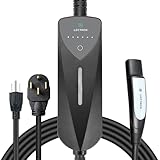
Overview: The Lectron Level 1/2 Portable EV Charger bridges the gap between budget and premium options with impressive flexibility. This versatile unit adjusts from 8 to 40 amps, delivering up to 9.6kW through its NEMA 14-50 plug or standard Level 1 charging via NEMA 5-15. The 20-foot cable and included wall mount provide both portability and semi-permanent installation options. It’s compatible with all Tesla models and NACS-equipped vehicles.
What Makes It Stand Out: The wide amperage range is the key differentiator, allowing users to match available power sources from standard outlets to full 240V circuits. This adaptability makes it suitable for home use, travel, or rental properties. Real-time LED monitoring provides basic status updates, while ETL certification ensures safety standards are met.
Value for Money: At $353, it positions itself as a mid-tier option. You get more power than budget 16A chargers but pay less than Tesla’s official units. The dual-plug design eliminates adapter purchases, and portability adds value for those who move frequently.
Strengths and Weaknesses: Pros: Adjustable 8-40A output; dual plug types included; portable with wall mount; ETL certified; NACS compatible; no installation required Cons: Shorter 20-foot cable; no Wi-Fi/app connectivity; bulkier than permanent units; less elegant than Tesla’s design
Bottom Line: The Lectron charger is an excellent compromise for users wanting flexibility without breaking the bank. It’s powerful enough for daily home charging yet portable for travel. Choose this if you value versatility over smart features, but skip it if you need app-based monitoring or have multiple EVs requiring Power-share.
6. Lectron Level 1 Tesla Charger (WiFi) with App Control - 12 Amp, 120V, NEMA 5-15 Plug, 16ft Extension Cable NACS Connector, Portable Home Electric Car EV Charger for All Tesla/NACS Evs
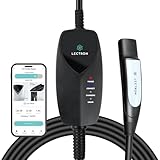
Overview:
The Lectron Level 1 Tesla Charger delivers WiFi-enabled smart charging in a highly portable package. Operating at 12 amps from any standard 120V outlet, this NACS-compatible unit provides overnight charging for all Tesla models and NACS-equipped EVs. The 16-foot cable and compact control box make it ideal for renters, travelers, or anyone needing a flexible charging solution without permanent installation.
What Makes It Stand Out:
Smart connectivity at this price point is the key differentiator. The IP67-rated control box surpasses typical water resistance standards, ensuring durability in harsh conditions. The included carrying case enhances portability, while the Lectron app offers real-time monitoring, scheduled charging sessions, and kWh-limit controls—features usually reserved for premium Level 2 units. This combination of intelligence and portability is rare in the Level 1 category.
Value for Money:
At $139.99, it undercuts many non-smart chargers while delivering modern app-based controls. For apartment dwellers or those without access to 240V outlets, it provides Tesla-level sophistication without installation costs. The 1.44 kW output yields 30-40 miles overnight—adequate for most daily commutes. While not the fastest option, the smart features and safety protections deliver exceptional utility for the price.
Strengths and Weaknesses:
Pros include WiFi/app integration, robust IP67 weatherproofing, comprehensive safety protections (overvoltage, overcurrent, short-circuit), portable design with carrying case, and competitive pricing. Cons are the 12-amp limit (slower than 15-amp alternatives), Level 1-only operation, and modest 16-foot cable length. Heavy users may find the charging speed limiting for multiple vehicles or long trips.
Bottom Line:
This charger excels for budget-conscious Tesla owners wanting smart features without installation headaches. Perfect as a primary solution for renters or a reliable backup for homeowners, though those needing faster charging should eventually consider Level 2 alternatives.
7. Lectron Level 1 Tesla Charger (WiFi) - 110V, 15A, NEMA 5-15 Plug, 16 ft Cord - Portable Electric Car Charger for Tesla & NACS Evs

Overview:
Marketed as the most affordable native Tesla Level 1 charger, this Lectron unit delivers 15 amps through standard 110V/120V outlets. The WiFi-enabled device adds approximately 40-50 miles of range overnight while providing remote monitoring and control via the Lectron app. Its native NACS compatibility ensures seamless connection to all Tesla models without adapters.
What Makes It Stand Out:
The “most affordable” claim holds true for a branded, smart-enabled Tesla charger. The 15-amp output provides a noticeable speed advantage over typical 12-amp models, while IP65 dust and water resistance ensures reliable outdoor operation. Native NACS compatibility eliminates adapter hassles, and the compact design prioritizes true portability for workplace or travel charging.
Value for Money:
At $158.99, it costs slightly more than Lectron’s 12-amp version but delivers 25% faster charging—a worthwhile upgrade for daily drivers. No installation costs and universal outlet compatibility keep total ownership expenses minimal. While pricier than generic Level 1 chargers, the WiFi features and Tesla-specific optimization justify the premium for brand-conscious buyers.
Strengths and Weaknesses:
Pros include genuine affordability, enhanced 15-amp charging speed, WiFi/app controls, broad Tesla/NACS compatibility, and portable design. Cons are Level 1 limitations (no 240V support), absence of a carrying case, and IP65 rating (lower than some rivals). The 16-foot cable may prove restrictive for challenging parking configurations, and the unit lacks the dual-voltage flexibility of some competitors.
Bottom Line:
An excellent entry point for Tesla owners prioritizing value and convenience. Ideal for overnight home charging or workplace top-offs, though families with multiple EVs or long commutes will eventually crave Level 2 speed. A solid, no-frills smart charger that delivers on its core promises.
8. EVDANCE Level 1 & 2 EV Charger for Tesla 16A, Portable Electric Vehicle Charger with 25FT Cable, Adjustable Current & Timer Delay, NACS Connector Compatible with All Tesla Models S/3/X/Y/Cybertruck
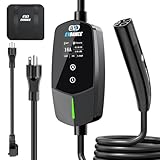
Overview:
The EVDANCE charger distinguishes itself through exceptional dual-voltage flexibility, supporting both Level 1 (110V) and Level 2 (240V) charging from a single unit. This 16-amp portable charger includes a NEMA 6-20 to 5-15 adapter, enabling use across diverse outlets without electrician assistance. The 25-foot cable provides outstanding reach for challenging parking situations.
What Makes It Stand Out:
Versatility defines this product. The extra-long cable exceeds industry standards, while adjustable amperage (8A/10A/13A/16A) prevents circuit overloads on any outlet. The built-in delay timer (1-12 hours) enables off-peak charging savings without app dependency, and the real-time LED display shows current, voltage, power, and status—transparency rarely seen at this price point.
Value for Money:
At $159.00, this charger delivers extraordinary flexibility. Competing single-voltage Level 2 chargers cost more while offering less adaptability. The included adapter and long cable eliminate additional purchases, making it ideal for renters, travelers, or homeowners not ready for permanent installation. The manual smart features provide 80% of WiFi-enabled functionality at 60% of the cost.
Strengths and Weaknesses:
Pros include dual-voltage capability, 25-foot cable, adjustable amperage, delay timer, comprehensive LED display, and exceptional value. The primary con is lack of WiFi/app connectivity—scheduling requires manual programming. The 16-amp maximum limits Level 2 speed compared to 32-amp+ models, and the plastic housing may not match premium build quality.
Bottom Line:
Perfect for Tesla owners wanting maximum charging flexibility without hardwiring. The manual smart features work reliably, though tech enthusiasts may miss app integration. A practical, travel-friendly workhorse that adapts to virtually any charging scenario.
9. AWESAFE Level 2 EV Charger for Tesla, 48 Amp Wall Charger Hardwired WiFi Enabled, Smart APP Control Electric Vehicle Charging Stations - Home Use
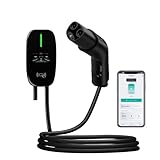
Overview:
The AWESAFE Level 2 charger is a hardwired wall unit designed for permanent home installation, delivering up to 48 amps for rapid Tesla charging. WiFi-enabled and app-controlled, it provides a dedicated charging station that adds up to 46 miles of range per hour. The hardwired design ensures consistent high-power delivery without plug degradation or overheating risks.
What Makes It Stand Out:
This charger prioritizes speed and customization. Adjustable amperage (8A-50A) accommodates various circuit breakers (20A to 50A), protecting against costly electrical upgrades. Smart scheduling via 2.4GHz WiFi optimizes utility rates, while the permanent installation eliminates the inconvenience of portable units. LED indicators provide intuitive at-a-glance status monitoring.
Value for Money:
At $223.19, it significantly undercuts Tesla’s Wall Connector while delivering comparable performance. Professional installation adds $200-500, but the long-term reliability and speed justify the investment for homeowners. The adjustable output ensures compatibility with existing electrical panels, potentially saving thousands in service upgrades.
Strengths and Weaknesses:
Pros include high-speed charging, WiFi/app control, broad amperage adjustability, permanent reliable installation, and competitive pricing. Cons are hardwired limitation (zero portability), installation expense, and restriction to 2.4GHz WiFi networks. The unit lacks a display screen, relying solely on app and LEDs. It’s overkill for drivers with short commutes or single-EV households.
Bottom Line:
An excellent Tesla Wall Connector alternative for homeowners wanting fast, permanent charging. The smart features and adjustable power make it a future-proof choice, provided you’re ready for professional installation. Delivers premium performance without the premium brand tax.
10. FlowGo Level 2 Charger for Tesla 50A Smart Home Charger NACS 240V Tesla Charger 50 Apms Large Motion-Activate Display Screen One-Piece Housing Metal Case 25 FT Cable NEMA 14-50 Plug
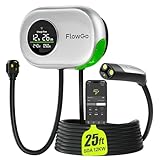
Overview:
The FlowGo Level 2 charger positions itself as a premium smart charging solution with a striking motion-activated display. Delivering 50 amps through a NEMA 14-50 plug, this metal-encased unit adds 40-50 miles of range per hour while offering advanced app-based controls. The 25-foot cable and IP65-rated metal housing ensure durability and flexibility in any installation.
What Makes It Stand Out:
The motion-activated screen creates a futuristic user experience, illuminating as you approach with charging status. Wireless charging port opening specifically for Teslas adds seamless convenience. The solid metal one-piece housing provides robust protection against impacts and weather, while the 50-amp output represents the practical maximum for home use. A 3-year warranty with ETL certification backs the premium build.
Value for Money:
At $389.99, this is a premium investment competing with ChargePoint and Wallbox. However, the build quality, unique display, high power output, and comprehensive warranty justify the cost for discerning buyers. The motion sensor and Tesla-specific features add genuine value for enthusiasts wanting more than basic charging.
Strengths and Weaknesses:
Pros include powerful 50A charging, motion-activated display, robust metal construction, smart app control, 25-foot cable, and industry-leading warranty. Cons are the high price point, requirement for NEMA 14-50 outlet (or hardwire option), and potential overkill for casual users. The premium features may not justify the cost for budget-focused buyers or those with lower-amperage electrical service.
Bottom Line:
For Tesla owners seeking a premium, durable charging experience with cutting-edge features, the FlowGo delivers. The motion display and solid build quality make it a standout, though value shoppers should consider more basic Level 2 options. A statement piece that performs as impressively as it looks.
Why Monitoring Your Tesla Wall Charger Matters
The average Tesla Model 3 consumes roughly 25-30 kWh per 100 miles, but what appears on your utility bill often tells a different story. Charging losses, standby consumption, and vampire drain can inflate actual energy use by 10-15% above what your vehicle reports. Without dedicated monitoring, you’re essentially flying blind, estimating costs while your electrical panel hides the real truth.
Monitoring reveals the delta between what your Tesla’s screen displays and what you’re actually paying for. It exposes standby power draw that occurs when the charger sits idle but remains energized, and it quantifies efficiency losses during AC-to-DC conversion. This data becomes particularly crucial for households with time-of-use (TOU) rates, where charging during peak hours can cost three times more than off-peak rates. The difference between informed and uninformed charging habits can easily exceed $500 annually for high-mileage drivers.
Understanding the Basics of EV Charging Energy Consumption
The Physics Behind AC to DC Conversion
Your Tesla Wall Connector delivers alternating current (AC) to your vehicle, where the onboard charger converts it to direct current (DC) for battery storage. This conversion process inherently wastes energy as heat—typically 5-10% depending on ambient temperature, charging speed, and battery state of charge. Monitoring systems measure AC consumption at the panel, while your Tesla reports DC delivery to the battery, creating a permanent discrepancy that only independent monitoring can quantify.
Standby Power Draw and Vampire Loads
Even when not actively charging, your Wall Connector maintains communication with your vehicle and home network, drawing 2-5 watts continuously. Your Tesla itself may draw additional power while parked for sentry mode, cabin overheat protection, or battery thermal management. A comprehensive monitoring solution tracks these phantom loads separately from active charging sessions, helping you understand whether that 50 kWh monthly baseline is justified or indicative of inefficiencies.
Key Metrics You Should Be Tracking
Effective monitoring extends far beyond simple kilowatt-hour counting. The most valuable systems provide a multi-dimensional view of your charging ecosystem:
Energy consumption forms the foundation—measuring total kWh per session, day, month, and year. But raw consumption without context is just a number. Charging duration and power curves reveal whether your vehicle is charging at the expected amperage and how charging speed tapers as the battery fills. Cost per kilowatt-hour calculations must incorporate your utility rate structure, including baseline allowances, tiered pricing, and seasonal variations.
Advanced metrics include power quality indicators like voltage stability and total harmonic distortion, which can affect charging efficiency and long-term battery health. Load factor analysis shows how your EV charging interacts with other major appliances, potentially revealing opportunities for load shifting. The holy grail is cost-per-mile data that translates electrical consumption into real-world driving economics.
Types of Electrical Usage Monitoring Solutions
Whole-Home Energy Monitors with EV Sub-Circuit Tracking
These systems install in your main electrical panel and use current transformers (CTs) to monitor individual circuits, including your Tesla Wall Connector’s dedicated breaker. They provide context by showing how EV charging fits into your total home consumption patterns, which is invaluable for solar-equipped homes or those on demand charges. The downside is they require panel space and professional installation.
Dedicated EV Circuit Monitors
Purpose-built for single-circuit monitoring, these devices offer plug-and-play simplicity for your Tesla Wall Connector’s circuit. They’re typically less expensive than whole-home systems and provide EV-specific analytics, but lack the broader context of home energy use. For renters or those planning to move, these offer the easiest removal and reinstallation.
Smart Electrical Panel Integrations
Emerging smart panels like Span and Lumin include built-in monitoring for every circuit, eliminating separate hardware. While representing the premium option, they provide unmatched granularity and can automatically manage loads to prevent panel overload. This becomes relevant if you’re considering adding multiple EVs or battery storage.
Tesla API-Based Software Solutions
Some monitoring platforms pull data directly from Tesla’s API, showing what the vehicle reports rather than actual electrical consumption. While convenient and wireless, this approach misses charging losses and standby draw, providing an incomplete picture. The most robust setups combine API data with direct electrical monitoring for true reconciliation.
Hardwired vs. Plug-in Monitoring Systems
Installation Complexity and Safety Considerations
Hardwired monitors connect directly inside your electrical panel, requiring you to work near live bus bars. While DIY-savvy homeowners can manage this with proper safety precautions, most jurisdictions require licensed electricians for panel modifications. Plug-in systems that install at the outlet level offer safer DIY installation but are incompatible with hardwired Wall Connectors, which most Tesla owners prefer for higher amperage charging.
Accuracy and Reliability Trade-offs
Hardwired systems with properly sized CTs offer accuracy within 1-2% of utility-grade metering. They’re unaffected by external factors and provide continuous monitoring even during internet outages. Plug-in monitors, while convenient, can introduce small measurement errors due to contact resistance and may be limited to lower amperage circuits. For Tesla’s 48-amp or 60-amp Wall Connector configurations, hardwired monitoring is the only reliable option.
Essential Features to Look For
Real-Time Data Visualization
The best monitoring systems update power draw every second, allowing you to watch charging ramp-up and taper in real-time. This granularity helps identify anomalies like voltage sag when your HVAC kicks on or unexpected charging interruptions. Look for apps that display live waveforms, not just static numbers.
Historical Analysis and Trending
Raw data becomes intelligence through pattern recognition. Your system should store at least 12 months of historical data, enabling year-over-year comparisons and seasonal analysis. Advanced platforms use machine learning to identify your charging habits and suggest optimization strategies, like shifting to off-peak hours or reducing charge current during high-cost periods.
Customizable Alerts and Notifications
Set threshold alerts for unusual consumption—like charging sessions exceeding expected duration or drawing higher amperage than normal. Voltage drop alerts can warn of loose connections before they become fire hazards. The ability to create custom rules, such as “notify me if charging costs exceed $10 per session,” transforms monitoring from passive observation to active management.
Installation Considerations for Monitoring Systems
Electrical Panel Accessibility and Space Constraints
Your panel must have sufficient physical space for CTs, which range from 1-4 inches in diameter. Tesla Wall Connectors typically use 6 AWG or larger wire requiring appropriately sized CTs. Crowded panels may need creative positioning or remote mounting of CTs. Consider whether your panel has a knockout available for running monitor power and communication cables.
Professional vs. DIY Installation Realities
While many monitoring systems market themselves as DIY-friendly, Tesla’s high-amperage circuits demand precision. Improper CT installation can create dangerous hot spots, and miswired voltage references produce inaccurate data. Professional installation typically costs $150-400 but includes proper calibration, safety verification, and often a warranty. Factor this into your total cost analysis.
Code Compliance and Permit Requirements
Most jurisdictions don’t require permits for monitoring equipment that doesn’t modify circuit protection, but some treat monitor installation as panel modification. Check local electrical codes before purchasing. Utilities may have specific requirements if you’re participating in EV rate programs or demand response initiatives. Documentation from a licensed installer often satisfies these requirements.
Smart Home Integration Capabilities
Compatibility with Home Automation Platforms
The true power of monitoring emerges when your Tesla charger communicates with your broader smart home ecosystem. Systems that integrate with platforms like Home Assistant, Hubitat, or SmartThings can orchestrate complex automations: pausing charging when your water heater activates to avoid demand charges, or ramping up charging when your solar production exceeds home consumption.
Voice Assistant and Remote Access
While asking Alexa for your charging status feels gimmicky, voice integration becomes valuable when combined with routines. “Alexa, start charging” can trigger not just the Tesla but also adjust thermostat setpoints to manage total household load. More importantly, robust mobile apps with secure remote access let you monitor and control charging from anywhere—essential for those on variable time-of-use rates.
API Access and Data Portability
Open APIs allow you to export data to third-party analytics tools or build custom dashboards. This is crucial for solar owners who want to correlate EV charging with PV production or for businesses tracking charging costs for reimbursement. Avoid closed ecosystems that lock your data behind proprietary platforms; the ability to download raw CSV data ensures your investment remains valuable even if the manufacturer discontinues support.
Data Accuracy and Calibration Factors
Current Transformer Sizing and Placement
CT accuracy depends on matching the sensor to your circuit’s amperage. A 50A CT on a 60A Tesla circuit will saturate and underreport consumption, while an oversized 200A CT loses resolution at low currents. Split-core CTs offer easier installation but slightly lower accuracy than solid-core models. Position CTs as close to the breaker as possible, away from other conductors that could induce measurement errors.
Voltage Reference and Phase Alignment
Most monitoring systems derive power calculations from a single voltage reference, assuming balanced phases. In reality, residential voltage fluctuates 3-5% throughout the day, and your Tesla Wall Connector may load one phase more heavily. Advanced systems monitor both voltage legs independently and allow phase correction calibration. Without proper voltage reference, power factor errors can skew your data by 5-10%.
Calibration Best Practices
Even premium monitors require calibration against a known reference. Use your utility meter’s pulse output or a calibrated portable power analyzer to verify accuracy across the charging curve. Calibrate at multiple power levels—Tesla’s onboard charger draws different currents during wake-up, constant-current charging, and taper phases. Annual recalibration accounts for CT drift and ensures your data remains trustworthy for tax deductions or business expense reporting.
Cost vs. Value Analysis
Initial Investment Breakdown
Entry-level single-circuit monitors start around $50-100 but often lack sophisticated analytics. Mid-range systems with robust apps and cloud storage run $150-300, plus $150-250 for professional installation. Premium whole-home monitors with EV-specific features range from $300-500, with smart panel integrations exceeding $3,500 including installation. Consider not just hardware cost but subscription fees—some platforms charge $5-10 monthly for data storage and advanced features.
Long-Term Savings Potential
For drivers covering 15,000 miles annually, optimizing charging to off-peak rates can save $400-600 per year. Solar self-consumption strategies add another $200-300 in avoided utility export credits. Perhaps more valuable is the ability to participate in utility demand response programs, which can pay $100-300 annually simply for allowing brief charging interruptions during grid stress. The monitor often pays for itself within 12-18 months.
Intangible Benefits Worth Considering
Accurate charging data simplifies tax preparation for business use—no more estimating percentages. It provides documentation for home resale, demonstrating your EV infrastructure’s efficiency to potential buyers. Perhaps most importantly, it offers peace of mind: knowing your charger isn’t silently failing, your wiring remains sound, and you’re maximizing the value of every electron.
Privacy and Data Security Considerations
Local vs. Cloud Data Storage
Cloud-based platforms offer convenience but require sending granular energy data to third-party servers. This reveals when you’re home, your driving patterns, and even your economic status. Locally-hosted solutions like Home Assistant integrations keep data on your network, eliminating exposure. If you choose cloud storage, verify the provider’s data retention policy and whether they anonymize or sell usage patterns.
Encryption and Authentication Standards
Your monitoring system should use TLS 1.3 encryption for data transmission and offer two-factor authentication for account access. Be wary of systems that transmit data unencrypted or store passwords in plain text. For API-based monitoring, use Tesla’s official API with OAuth 2.0 authentication; avoid services that require your Tesla account credentials, as they violate Tesla’s terms of service and create security vulnerabilities.
Third-Party Access and Data Portability
Read privacy policies carefully—some providers reserve rights to share anonymized data with utilities or grid operators. While this can enable beneficial programs, it should be opt-in, not default. Ensure you can delete your data upon request and export it in standard formats. Your charging data is valuable; treat it as personal information deserving strong protection.
Troubleshooting Common Monitoring Issues
Inaccurate Readings and Calibration Drift
If your monitor reports 10% less consumption than your utility bill, first verify CT orientation—they have directionality arrows that must point toward the load. Check for loose CT clamps causing intermittent contact. Voltage reference errors often manifest as consistent underreporting across all circuits. Use a multimeter to verify your monitor’s voltage reading matches actual panel voltage; discrepancies over 2V indicate reference wiring problems.
Connectivity and Data Gaps
Wi-Fi-enabled monitors placed inside metal electrical panels suffer from severe signal attenuation. Consider monitors with external antennas or Ethernet connectivity. If data stops during charging, your monitor may be rebooting due to voltage sags when the Tesla first connects. Adding a small UPS to the monitor’s power supply maintains operation during these micro-interruptions. For persistent gaps, increase your Wi-Fi router’s 2.4 GHz signal strength or install a mesh node near the panel.
Synchronization Errors with Tesla’s App
Your monitor shows 75 kWh consumed while Tesla reports 68 kWh delivered. This 10% difference is normal—it represents charging losses. However, if the gap exceeds 15%, investigate. High ambient temperatures increase cooling losses; extremely cold weather triggers battery heating that consumes power without adding range. Misaligned time zones can cause session mismatches. The most sophisticated monitoring platforms reconcile these differences automatically, showing both AC consumption and estimated DC delivery.
Maximizing Savings with Usage Data
Time-of-Use Rate Optimization
Most utilities offer EV-specific TOU rates with super off-peak windows midnight to 6 AM. Your monitoring data reveals whether you’re actually charging within these windows. Set up automation to start charging at 12:05 AM, not midnight, to avoid the initial demand spike when rates change. Analyze your data to determine the minimum amperage needed to complete charging before 6 AM—reducing from 48A to 32A might shift 20% of consumption to lower-rate hours without extending charging time into peak rates.
Solar Self-Consumption Strategies
If you have solar panels, your goal is charging only when production exceeds home load. Monitoring data helps identify your “solar surplus” threshold—typically 3-8 kW depending on system size. Configure your Tesla to charge at the exact amperage that consumes this surplus, maximizing self-consumption without importing grid power. Advanced systems create dynamic charging schedules that adjust amperage every 15 minutes based on real-time solar production, potentially increasing self-consumption from 60% to 85%.
Load Balancing and Demand Charge Management
For households with multiple EVs or on demand-charge rates, stagger charging to avoid simultaneous high draws. Use monitoring data to identify your home’s baseline load and available capacity. Smart panels can automatically pause one EV when the water heater cycles on, keeping total demand below 8 kW. This strategy can reduce demand charges by $30-50 monthly, far exceeding the monitor’s cost.
Future-Proofing Your Monitoring Setup
Scalability for Multi-EV Households
Your monitoring solution should accommodate at least two 60A circuits without requiring hardware upgrades. Look for systems supporting 16+ CT inputs or modular expansion. Consider whether the software can differentiate between multiple Teslas and create separate profiles for each vehicle. This becomes crucial as second EVs often have different charging needs and rate optimizations.
Emerging Standards and Protocols
The Matter smart home standard promises seamless integration of EV chargers and energy monitors by 2025. While current Tesla Wall Connectors don’t support Matter, your monitoring system should have firmware-updateable bridges or hubs that can adopt new protocols. Support for IEEE 2030.5 (Smart Energy Profile 2) ensures compatibility with utility demand response programs that will become mandatory in some jurisdictions.
Firmware Update and Longevity Considerations
Choose monitoring hardware from established companies with 5+ year track records of firmware updates. Your Tesla will receive over-the-air updates that could change charging behavior; your monitor needs corresponding updates to maintain accuracy. Open-source platforms offer community-driven updates but require technical expertise. Commercial systems with paid subscriptions fund ongoing development—factor this into long-term ownership costs.
Frequently Asked Questions
How much does electrical usage monitoring for a Tesla Wall Connector typically cost?
Entry-level single-circuit monitors start around $50-100, while professional-grade whole-home systems with EV tracking range from $200-500 plus installation. Most homeowners spend $250-400 total for a quality monitoring solution that provides actionable data without monthly subscriptions.
Will monitoring my Tesla charger void its warranty?
No. Monitoring devices are non-invasive—they simply measure current flow without modifying the charger’s wiring or operation. Tesla’s warranty covers manufacturing defects, not external measurement equipment. However, any modifications inside your electrical panel should comply with local codes to maintain your home insurance coverage.
What’s the difference between monitoring AC consumption and DC delivery?
AC consumption is what you pay for—the total electricity drawn from your panel. DC delivery is what reaches your battery, typically 5-15% less due to conversion losses. Tesla’s app shows DC delivery; good monitoring systems show both, helping you understand true charging efficiency and cost per mile.
Can I monitor my Tesla charger if I rent my home?
Yes. Plug-in monitors work if you have a NEMA 14-50 outlet, but most Tesla Wall Connectors are hardwired. In that case, use a battery-powered CT clamp that clips around the charger’s conduit without electrical contact, paired with a wireless transmitter. Always obtain landlord permission before accessing electrical panels.
How accurate are consumer-grade energy monitors compared to my utility meter?
Quality monitors using properly sized CTs achieve 1-3% accuracy, comparable to utility-grade metering. Accuracy degrades at very low currents (<5% of CT rating) and during rapid power fluctuations. Annual calibration against your utility meter maintains precision. Avoid cheap monitors claiming unrealistic accuracy without specifying CT quality.
Do I need monitoring if Tesla’s app already shows charging data?
Absolutely. Tesla’s app shows only DC delivery to the battery, missing charging losses, standby consumption, and power quality issues. It also lacks cost analysis, solar correlation, and whole-home context. Independent monitoring provides the financial and efficiency data needed for true optimization.
Can monitoring help me qualify for utility EV rebates?
Many utilities require separate EV metering to qualify for time-of-use rates or charging incentives. Some monitoring systems provide utility-grade data that satisfies these requirements without installing a second utility meter. Check with your provider—PG&E, for example, accepts certain monitor brands for their EV2-A rate plan.
What happens to my data if the monitoring company goes out of business?
If you choose a cloud-dependent system, you could lose historical data and remote access. Opt for systems offering local data logging and export capabilities. Some platforms allow you to host their software on your own server (NAS or Raspberry Pi), ensuring perpetual access regardless of the company’s fate.
How do I calculate true cost per mile using monitor data?
Divide total AC kWh consumed (from your monitor) by DC kWh delivered (from Tesla’s app) to get charging efficiency. Then: (AC kWh × your average $/kWh) ÷ miles driven = true cost per mile. Don’t forget to amortize charging equipment costs and account for free public charging to get a complete picture.
Is it worth monitoring a 120V travel charger or only the Wall Connector?
While 120V charging is inefficient (typically 70-75% vs. 90-95% for 240V), monitoring can still reveal valuable data about emergency charging costs and help you avoid exceeding circuit ratings. However, the ROI is lower. Focus your monitoring budget on the primary 240V Wall Connector circuit, where 90% of your charging occurs and optimization yields the greatest savings.