Picture this: It’s the peak of summer, your air conditioner is working overtime, and yet certain rooms in your home still feel like a sauna. Your energy bill arrives, and it’s enough to make you break into a cold sweat. Meanwhile, in winter, precious heat escapes through your windows, forcing your heating system to compensate for the constant thermal loss. What if your curtains could think for themselves—automatically opening and closing to block scorching sun when you need cooling, and trapping warmth inside when you need heating? Welcome to the world of smart curtain motors designed specifically for sun-blocking climate gain, where automated window treatments become your home’s first line of defense against energy waste.
This comprehensive guide dives deep into everything you need to know about selecting, installing, and optimizing smart curtain motors for maximum climate control. We’ll explore how these intelligent systems transform passive fabric into active climate management tools, the technical specifications that matter most for energy efficiency, and the automation strategies that can reduce your HVAC workload by up to 30%. Whether you’re building a new smart home ecosystem or retrofitting existing treatments, this guide equips you with expert-level knowledge to make informed decisions that benefit both your comfort and your wallet.
Top 10 Smart Curtain Motors for Sun-Blocking
Detailed Product Reviews
1. SwitchBot 2025 Automatic Curtain Opener 3 Rod, Bluetooth Remote Control Smart Curtain, WiFi & App Control, Add Hub to Compatible with Alexa, Google Home, HomeKit
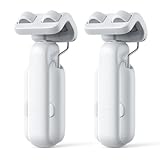
Overview: The SwitchBot 2025 Automatic Curtain Opener represents the latest evolution in retrofit smart curtain solutions, delivering premium automation without permanent installation. This third-generation device clips onto existing rods in minutes, transforming manual curtains into app-controlled smart window treatments ideal for bedrooms, living rooms, and offices.
What Makes It Stand Out: The enlarged main guide wheel effortlessly navigates 4mm bumps while handling curtains up to 15kg (33lbs), doubling previous motor strength. Positioning magnets eliminate calibration drift and light gaps—a common frustration with lesser models. The sub-25dB Silent Mode operates quieter than a whisper, perfect for sound-sensitive sleepers. With Matter support via Hub 2/3, it integrates seamlessly into Apple HomeKit, enabling Siri voice control and HomePod automation.
Value for Money: At $144.48, this premium opener justifies its cost through meaningful 2025 upgrades: superior load capacity, whisper-quiet operation, and future-proof Matter compatibility. Compared to $300+ professional installations, it offers comparable performance at half the price while preserving your existing curtains.
Strengths and Weaknesses: Pros include true no-tool installation, exceptional quiet operation, precise magnetic positioning, and robust smart home integration. Cons require separate hub purchase for voice control, and incompatibility with thin extendable rods under 16mm diameter.
Bottom Line: For discerning users seeking the quietest, most reliable retrofit solution with broad ecosystem support, the SwitchBot 2025 delivers unmatched performance. The premium price translates to tangible quality-of-life improvements worth every dollar.
2. SwitchBot Automatic Curtain Opener - Bluetooth Remote Control Smart Curtain with App/Timer, Upgraded High-Performance Motor, Add SwitchBot Hub to Work with Alexa, Google Home, HomeKit

Overview: SwitchBot’s standard Automatic Curtain Opener offers accessible smart curtain automation with its hallmark tool-free installation. This versatile device retrofits existing rods in three simple steps, bringing scheduled and remote-controlled operation to any room without permanent modifications.
What Makes It Stand Out: The 2025 upgrade introduces an enlarged guide wheel that smoothly overcomes 4mm obstacles while supporting 8kg loads. Silent Mode keeps operation under 25dB, ensuring undisturbed sleep. Multiple control methods—including app percentage control, timers, and voice commands via optional hub—provide flexible automation. Matter support through Hub 2 enables Apple HomeKit integration.
Value for Money: At $74.99, this mid-range opener strikes an excellent balance between capability and affordability. While requiring a separate hub for advanced features, the core functionality outperforms budget alternatives. However, dual-panel setups need two units, increasing total investment.
Strengths and Weaknesses: Strengths include effortless installation, whisper-quiet operation, versatile scheduling, and expandable smart home compatibility. Weaknesses involve mandatory hub purchase for voice control, ambiguous compatibility details for non-standard rods, and the necessity of buying two units for most curtain configurations.
Bottom Line: This SwitchBot model serves as the sweet spot for cost-conscious shoppers wanting reliable brand-name performance. It’s ideal for single-panel windows or those already invested in the SwitchBot ecosystem, offering genuine convenience without premium pricing.
3. Takkicept Automatic Curtain Opener 2 Pack: Smart Electric Curtains Closer Robot with Remote Control|No Drill Quiet Motor|Compatible for Roman Rods, T & U Tracks|Long-Lasting Battery for Bedroom & Home
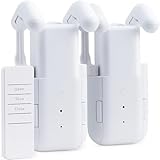
Overview: The Takkicept 2-Pack delivers heavy-duty curtain automation with remarkable versatility across track types. This value-oriented bundle supports Roman rods (8-40mm), T-tracks, and U-tracks, making it suitable for diverse window configurations from bedrooms to commercial spaces.
What Makes It Stand Out: A robust 20W motor generating 20kg torque effortlessly moves blackout curtains and multi-layer drapes. The 4000mAh battery provides six months of operation per charge—competitive with pricier alternatives. The 20-meter Bluetooth remote offers simple operation for elderly users or medical facilities. Dual-mode operation toggles between Silent Mode (25dB) and Power Mode for different scenarios.
Value for Money: At $128 for two units, Takkicept presents exceptional value for multi-window installations. The included adapters for multiple track systems eliminate additional purchase costs. However, the absence of WiFi or voice assistant support limits integration with modern smart homes.
Strengths and Weaknesses: Pros include two-motor value, impressive 20kg capacity, extensive track compatibility, long battery life, and straightforward remote operation. Cons are Bluetooth-only control, no smartphone app or voice commands, and potentially confusing mode-switching procedures.
Bottom Line: Perfect for users prioritizing raw power and simplicity over advanced connectivity. The Takkicept excels in commercial settings, rental properties, or for those wanting reliable automation without complex smart home ecosystems. It trades app-driven features for dependable performance.
4. Aqara Smart Curtain Motor E1(Track Version, 1 Pack), Requires AQARA Zigbee 3.0 HUB, Electric Curtain Driver for Remote Control and Home Automation, Support HomeKit, Alexa, Google Assistant and IFTTT

Overview: The Aqara Curtain Motor E1 Track Version integrates sophisticated automation into existing U- and I-rail systems. Designed for discreet operation behind curtains, this Zigbee-based driver requires Aqara’s Hub but rewards users with advanced scheduling and sensor-based triggers for true set-and-forget convenience.
What Makes It Stand Out: The massive 6400mAh battery delivers up to one year of operation—far exceeding competitors. A built-in light sensor enables automatic adjustments based on sunlight intensity, closing curtains during harsh afternoon glare. The powerful motor handles 26.4-pound loads with adjustable three-speed operation for whisper-quiet morning routines. Grouping capability synchronizes dual-motor installations.
Value for Money: At $89.99 plus a required hub, total investment approaches $130-150. While pricier than hub-free options, the year-long battery life and intelligent light sensor create tangible value. It’s most economical for existing Aqara ecosystem users.
Strengths and Weaknesses: Strengths include exceptional battery longevity, light-sensor automation, quiet adjustable speeds, and robust smart home integration. Weaknesses are mandatory hub purchase, limited track compatibility (U/I rails only), and restrictions on certain U-rail glider types.
Bottom Line: Ideal for Aqara ecosystem devotees seeking maintenance-free operation. The E1’s intelligent automation and marathon battery life justify the hub requirement. It’s a premium choice for those wanting curtains that adapt automatically to environmental conditions without monthly charging hassle.
5. Smart Curtain Opener with Remote Control - High-Performance Motor for Roman, T/U-Shaped Tracks - Automated Opening/Closing (WiFi)

Overview: This budget-friendly WiFi-enabled curtain opener democratizes smart window treatments with surprising capabilities at an entry-level price. Supporting Roman, T, and U-shaped tracks, it delivers app-based control and voice integration without professional installation costs.
What Makes It Stand Out: Despite the $57.77 price point, it includes WiFi connectivity, Matter support (via optional hub), and a robust motor managing 33-pound curtains. Silent Mode operates below 25dB, while positioning magnets ensure precise light-gap prevention. Compatibility with Smartlife, Alexa, Google Home, and Siri Shortcuts provides rare flexibility for the price.
Value for Money: Unbeatable affordability makes this the gateway drug to smart curtains. WiFi inclusion at this price is unprecedented, though build quality and long-term reliability remain unproven. The hub requirement for Matter/HomeKit adds hidden costs, but core functionality works hub-free.
Strengths and Weaknesses: Pros include incredible price, WiFi connectivity, strong motor, silent operation, and broad platform support. Cons involve unknown brand reputation, vague compatibility specifications, mandatory dual-unit purchase for center-opening curtains, and potential firmware update uncertainties.
Bottom Line: A compelling experiment for tech-savvy bargain hunters. While not matching premium brands in refinement, it delivers genuine smart features at a fraction of the cost. Recommended for secondary rooms, rentals, or as an introduction to automated curtains before investing in pricier ecosystems.
6. Tripvyantic Automatic Curtain Opener Smart Motorized: 2-Pack Heavy Duty 20KG Load Electric Curtain Robot with Remote for Bedroom Living Room│6-Month Battery for Home/Office/Nursery│No WiFi Needed

Overview: The Tripvyantic 2-Pack delivers straightforward curtain automation for users prioritizing simplicity over smart home integration. This heavy-duty system handles substantial curtains up to 44 pounds without requiring WiFi connectivity, using a dedicated remote that works up to 65 feet away. Designed for universal compatibility across Roman rods, T-track, and U-track systems, it offers a versatile solution for bedrooms, living rooms, and offices where basic automation suffices.
What Makes It Stand Out: Universal compatibility across three track types with multiple included adapters eliminates fit concerns. The six-month battery life on a single charge is exceptional, while dual-mode operation offers both power mode (0.1m/s) for heavy drapes and silent mode (25dB) for noise-sensitive environments. Tool-free clip-on installation makes it accessible for elderly users and first-time installers. The bidirectional anti-error connectors prevent common installation mistakes.
Value for Money: At $129 for two complete units, this package undercuts buying individual motors by 30-40%. The comprehensive accessory bundle includes all adapters, cables, and support clips, eliminating hidden costs. The absence of WiFi reduces security vulnerabilities and eliminates the need for expensive hubs. For two windows, this represents mid-range pricing with premium load capacity and battery performance that rivals systems costing twice as much.
Strengths and Weaknesses: Pros: Exceptional battery longevity; true plug-and-play operation; robust 44-pound weight capacity; near-silent 25dB performance; no internet dependency; complete two-window solution; tool-free installation. Cons: Lacks smartphone/voice control; no scheduling automation; remote requires line-of-sight; limited 65-foot range; no smart home ecosystem integration.
Bottom Line: Perfect for those seeking reliable, no-fuss curtain automation without smart home complexity. The Tripvyantic excels in bedrooms, nurseries, and offices where silence and simplicity trump connectivity. The 2-pack bundle delivers professional-grade load handling and battery life at a compelling price point for the connectivity-averse user.
7. Smart Curtain Tracks WiFi Control by Phone, Support Voice Control for Alexa, Google Home, Tuya App Remote Automated Curtain Smart Curtains Opener Motorized Curtains Rods with Remote Control (125’’)

Overview: This comprehensive ceiling-mounted system transforms standard and curved windows into fully integrated smart home elements. The 125-inch track supports up to 133 pounds of curtain weight while offering complete WiFi control through the Tuya ecosystem. With native support for Alexa and Google Home, plus a physical remote, it provides multiple control layers for tech-savvy homeowners seeking whole-home automation.
What Makes It Stand Out: Ultra-quiet operation at ≤10dB rivals premium brands costing significantly more. Intelligent safety features include resistance-based auto-stop that protects children and pets, plus a pull-to-start function for manual override convenience. The system handles both straight and curved window configurations, a rarity at this price point. Overloading protection prevents motor burnout, ensuring longevity.
Value for Money: At $179.95, this system delivers $250-300 value by including WiFi, voice control, remote capabilities, and curved-track compatibility. The 133-pound capacity eliminates need for commercial-grade alternatives costing twice as much. Safety features and quiet operation add premium value without subscription fees. For architecturally unique spaces, the curved-window support alone justifies the investment.
Strengths and Weaknesses: Pros: Full smart home integration; whisper-quiet ≤10dB operation; robust safety mechanisms; exceptional 133-pound capacity; curved window compatibility; manual hand-pull backup; overloading protection. Cons: Requires Tuya app ecosystem; ceiling installation more complex than rod-mounted; WiFi dependency creates potential connectivity issues; track length may need customization for smaller windows.
Bottom Line: An outstanding choice for smart home enthusiasts wanting professional-grade features without premium pricing. The combination of near-silent operation, comprehensive safety features, and multi-platform support makes this ideal for whole-home automation projects. The curved-window capability addresses a market gap that competitors ignore.
8. Smart Curtain Track System with Mini Wifi Motor, Automatic Ceiling Curtain Opener, Motorized Curtains Rod 126’’(3.2m) with App, Voice, Remote Control, Compatible with Alexa,Google and Siri

Overview: This system emphasizes aesthetic minimalism with a palm-sized motor that discreetly integrates into J-track configurations. The 126-inch ceiling-mounted track serves standard windows while maintaining clean visual lines. Supporting Alexa, Google, and crucially Siri, it offers rare tri-platform compatibility. The minimalist design appeals to homeowners where motor visibility is a concern, hiding sophisticated automation behind a compact footprint.
What Makes It Stand Out: The mini motor solves installation height restrictions common in modern apartments with low ceilings. Rubber-lined aluminum tracks achieve physical noise reduction of 90%, delivering 33dB operation without premium pricing. Siri support alongside Alexa and Google enables seamless Apple HomeKit integration. IFTTT compatibility allows complex automations that competitors often gate behind subscriptions. Push-button motor release simplifies maintenance.
Value for Money: At $129 including track and motor, this matches basic smart motors while adding tri-platform voice support and physical noise dampening. The J-track limitation is offset by superior aesthetics and IFTTT integration enabling free complex automations. For Apple-centric households, Siri support at this price point is unmatched. The compact motor design eliminates costly custom valances to hide bulky equipment.
Strengths and Weaknesses: Pros: Discreet palm-sized motor; triple voice assistant support; IFTTT compatibility; physical noise dampening; affordable full-system pricing; easy motor-track separation; minimalist aesthetic. Cons: J-track exclusivity limits compatibility; 33dB slightly louder than premium competitors; no battery backup option; track customization may be needed for non-standard windows.
Bottom Line: Ideal for Apple-centric smart homes seeking affordable automation without visual clutter. The mini motor design and Siri support make this a standout choice for design-conscious users, provided your windows use J-track systems. Aesthetic appeal meets functional smart features at a compelling price point that undercuts ecosystem-specific alternatives.
9. [Upgraded Version] Aqara Smart Curtain Motor E1 (Rod Version, 1 Pack), Requires AQARA Zigbee 3.0 HUB, Not Support Hubs from Other Brands, Support HomeKit, Alexa and IFTTT
![[Upgraded Version] Aqara Smart Curtain Motor E1 (Rod Version, 1 Pack), Requires AQARA Zigbee 3.0 HUB, Not Support Hubs from Other Brands, Support HomeKit, Alexa and IFTTT](https://m.media-amazon.com/images/I/31MqqXJMVEL._SL160_.jpg)
Overview: Aqara’s Zigbee-based motor targets Apple HomeKit users seeking reliable, hub-integrated curtain automation. The rod-mounted design preserves existing decor while adding sophisticated scheduling through the Aqara ecosystem. Operating behind the curtain, it maintains aesthetic integrity while delivering enterprise-grade reliability. The system requires an Aqara hub but rewards users with stable, low-power performance superior to WiFi alternatives.
What Makes It Stand Out: The year-long battery life on a single charge sets an industry benchmark for convenience. Zigbee connectivity provides stable, low-power operation without congesting WiFi networks. Native HomeKit support enables seamless Siri control and complex scenes without workarounds. The tool-free installation respects your home’s aesthetics, mounting directly to existing uniform rods. Proximity detection ensures reliable hub communication within 400 inches.
Value for Money: At $99.99 plus required $30-60 hub, total investment approaches $140-160. However, this unlocks rock-solid HomeKit integration and battery performance that eliminates quarterly charging. For Apple households, native HomeKit support justifies the ecosystem lock-in. The one-year battery freedom delivers premium value compared to monthly-charging competitors, offsetting hub costs within the first year.
Strengths and Weaknesses: Pros: Exceptional 1-year battery life; rock-solid HomeKit integration; Zigbee reliability; seamless existing rod installation; comprehensive automation options; no WiFi congestion; low-power operation. Cons: Requires Aqara hub (additional cost); limited to uniform rods (0.99-1.25 inches); single-motor package; ecosystem lock-in; no included remote control.
Bottom Line: The definitive choice for Apple HomeKit households prioritizing reliability and battery life over universal compatibility. While hub requirements increase initial cost, the seamless integration and year-long battery freedom deliver premium value for ecosystem-committed users. For HomeKit purists, this is the most reliable curtain automation available under $150 total investment.
10. Yoolax Motorized Curtain Electric Rods & Texture Thermal Insulated Drapes Smart Curtain Compatible with Alexa and Google Home Customized, Fabric Sample (Dark Color)

Overview: Yoolax offers fabric samples for their custom motorized curtain system, enabling material evaluation before committing to full orders. This $5.99 dark-color sample serves as the critical first step in creating tailored smart window treatments. The program addresses the primary risk in custom curtain purchases: color, texture, and thermal performance mismatches. For buyers investing $200-500 in motorized drapes, this sample prevents expensive mistakes.
What Makes It Stand Out: The sample program demonstrates uncommon confidence in product quality, offering eight premium polyester colors with documented thermal insulation properties. The included measuring guide and worksheet transform a simple swatch into a comprehensive planning tool. This systematic approach reduces customization errors and ensures the final motorized installation meets aesthetic and functional expectations. Compatibility with Yoolax’s WiFi motor system is explicitly documented.
Value for Money: While $5.99 seems premium for a single swatch, it prevents costly custom curtain mistakes. The ability to verify thermal insulation and light-blocking properties before ordering justifies the cost. For smart home projects where aesthetics and energy efficiency must align, this sample eliminates guesswork. The dark color option specifically showcases stain resistance and opacity—critical factors for bedroom media rooms.
Strengths and Weaknesses: Pros: Accurate color representation; premium polyester quality assessment; thermal insulation verification; comprehensive measuring system; prevents expensive customization errors; ecosystem compatibility documentation. Cons: Single swatch limits side-by-side comparison; dark color may not suit all decors; requires separate motor purchase; no smart functionality in sample itself; shipping cost may exceed item price.
Bottom Line: Essential for anyone considering Yoolax’s custom motorized curtains. The small upfront investment safeguards against expensive mismatches in color, texture, or thermal performance. For meticulous planners, this sample transforms curtain shopping from risky guesswork into informed decision-making, ensuring your smart home investment delivers both technological and aesthetic satisfaction.
Understanding Sun-Blocking Climate Gain
The Science Behind Solar Heat Gain
Solar heat gain coefficient (SHGC) measures how much solar radiation passes through your windows and becomes heat inside your home. Standard glass windows can allow up to 85% of solar energy to enter, turning your living space into a greenhouse effect nightmare during warm months. Smart curtain motors combat this by precisely timing fabric deployment based on sun position, outdoor temperature, and indoor climate needs. The goal isn’t just blocking light—it’s strategically managing thermal energy transfer through radiation, convection, and conduction.
Why Traditional Curtains Fall Short
Manual curtains rely on human memory and effort, which means they’re often left open during peak heat hours or closed when passive solar heating would be beneficial. Studies show that manually operated window treatments are used effectively less than 20% of the time for climate control. Smart motors eliminate this human error, responding to environmental triggers within seconds rather than hours, creating a dynamic barrier that adapts to changing conditions throughout the day.
How Smart Curtain Motors Transform Energy Efficiency
Automated Timing vs. Manual Operation
The magic lies in micro-adjustments. A smart motor can close shades incrementally as the sun moves across the sky, maintaining consistent indoor temperatures without completely darkening rooms. This granular control prevents the temperature spikes that force HVAC systems into energy-intensive cooling cycles. Most systems allow programming in 1% increments, enabling you to block just enough sun to maintain comfort while preserving natural light and views.
Real-World Energy Savings Data
Department of Energy studies demonstrate that properly automated window coverings can reduce cooling loads by 20-30% in summer and cut heat loss by 10-15% in winter. In a typical 2,000-square-foot home, this translates to $250-$400 in annual energy savings depending on climate zone and utility rates. The key is consistency—smart motors deliver precise, repeatable performance that manual operation simply cannot match.
Key Motor Types and Their Climate Control Applications
Tubular Motors for Roller Shades
Tubular motors integrate directly into roller shade tubes, offering clean aesthetics and quiet operation. For climate applications, look for models with torque ratings appropriate for insulating fabrics, which tend to be heavier. Most tubular systems handle 8-15 pounds of fabric weight, but climate-blocking materials like cellular shades or layered drapes may require heavy-duty options rated for 20+ pounds. The compact design makes them ideal for inside-mount installations where window depth is limited.
Track-Based Systems for Drapes
Motorized curtain tracks excel with heavy, climate-control draperies that provide superior insulation. These systems use belt-drive or cable-drive mechanisms to move curtains along tracks, accommodating weights up to 100 pounds for substantial thermal barriers. For sun-blocking applications, consider tracks with slow-start and slow-stop functionality to prevent fabric sway that can create gaps along window edges, compromising the seal.
Retrofit Solutions for Existing Curtains
Not ready to replace your current climate-blocking curtains? Retrofit motor kits attach to existing curtain rods or tracks, transforming manual treatments into smart systems. While typically less powerful than dedicated motorized tracks, these solutions work well for medium-weight insulated curtains. Pay close attention to pull force ratings—most retrofit motors handle 6-10 pounds of draw weight, sufficient for standard thermal curtains but inadequate for heavy blackout drapes with additional insulation layers.
Essential Features for Maximum Climate Benefit
Light and Temperature Sensors
Integrated sensors transform reactive motors into proactive climate managers. Ambient light sensors detect lux levels and trigger closure when solar intensity exceeds your threshold. Temperature sensors monitor indoor conditions and can override light-based rules on overcast but hot days. Premium systems offer dual-sensor arrays that measure both conditions simultaneously, creating sophisticated if-then automation: “If lux > 50,000 AND indoor temp > 72°F, close to 80%.”
Scheduling and Geofencing Capabilities
Basic scheduling closes treatments during peak sun hours, but advanced geofencing adds another dimension. The system can detect when you’ve left for work and implement aggressive climate-blocking, then open as you return home. For climate gain optimization, look for astronomical clocks that calculate precise sunrise/sunset times and solar angles for your location, adjusting daily throughout the year without manual reprogramming.
Manual Override Functions
Even the smartest automation needs exceptions. Stormy summer days may warrant opening shades despite high outdoor temperatures, and winter cold snaps might require keeping drapes closed during daylight hours. Ensure your system offers easy manual control through wall switches, remote controls, or smartphone apps that temporarily suspend automation without disrupting your underlying programs.
Power Options and Energy Consumption
Hardwired vs. Battery-Powered Motors
Hardwired motors deliver consistent power for heavy climate-control fabrics and eliminate battery maintenance. They typically connect to 24V DC transformers and consume just 2-5 watts during operation, with minimal standby draw. Battery-powered options offer installation flexibility but require periodic recharging—every 3-6 months with typical use. For climate-critical applications, hardwired systems provide reliability during extreme weather events when battery performance may degrade.
Solar Charging Integration
Some manufacturers offer solar panel charging kits for battery motors, creating a self-sustaining climate control loop. A small 5-watt panel mounted near the window can maintain battery charge indefinitely in sunny climates. This approach works exceptionally well for south- and west-facing windows where sun exposure is highest—the very windows that need the most climate management. Just ensure the panel receives direct sunlight, not shaded by the curtains it’s meant to charge.
Standby Power Draw Considerations
The most energy-efficient smart motors draw less than 0.5 watts in standby mode. Over a year, this adds up to just 4.4 kWh—about $0.50 in electricity costs. Avoid older or budget models that may draw 2+ watts continuously, as this can negate some of your climate control savings through vampire power consumption. Modern systems with energy-harvesting technology can reduce standby draw to as little as 0.1 watts.
Integration with Smart Home Ecosystems
Compatibility with Climate Control Systems
True climate gain optimization requires your curtains to communicate with your thermostat and HVAC system. Look for motors compatible with platforms like HomeKit, SmartThings, or Hubitat that allow complex automation: “When AC is running AND outdoor temp > 85°F, close all south-facing shades.” This coordination prevents your curtains from working against your climate control rather than with it.
Voice Assistant Integration
Voice control offers convenience, but for climate applications, it’s most valuable for quick status checks and overrides. “Alexa, close all climate shades” instantly activates your sun-blocking protocol during unexpected heatwaves. Ensure your chosen system supports natural language commands for percentage-based control—crucial for fine-tuning light and heat levels without full closure.
API Access for Custom Automation
Power users can leverage API access to create hyper-local climate automation. For example, integrate with local weather station data to trigger shade closure when wind patterns suggest a hot afternoon, or connect to utility company APIs to close shades during peak pricing hours. Open APIs future-proof your investment, allowing adaptation to emerging climate management technologies.
Climate Sensors and Automation Triggers
Indoor vs. Outdoor Sensor Placement
Outdoor sensors provide early warning, detecting rising temperatures before they impact indoor comfort. However, they require weatherproof housing and may not reflect microclimates near windows. Indoor sensors offer more accurate feedback for occupied spaces but react slower to solar gain. The optimal setup uses both: outdoor sensors for prediction, indoor sensors for confirmation, creating a redundant and responsive system.
Creating Intelligent Automation Rules
Effective climate automation follows the “golden mean” principle—not too reactive, not too sluggish. Set temperature thresholds with 2-3°F hysteresis to prevent constant cycling. For light-based triggers, use 10-minute averaging to ignore passing clouds. Program seasonal modes: summer prioritizes heat rejection, winter maximizes passive solar gain, and shoulder seasons balance both objectives. Most advanced systems allow rule stacking with priority levels, ensuring critical climate commands override convenience-based automation.
Installation Considerations for Optimal Performance
Window Orientation and Solar Exposure
South-facing windows receive the most consistent solar exposure year-round, making them priority candidates for climate-control automation. West-facing windows contribute most to afternoon heat gain when outdoor temperatures peak. East-facing windows cause early morning overheating. For maximum climate benefit, install motors on all orientations but program them differentially—south windows need gradual adjustment, west windows require aggressive afternoon closure, and east windows benefit from morning timers.
Mounting Hardware and Structural Support
Climate-control fabrics are heavier than decorative curtains, often weighing 2-3 times more. Ensure your mounting brackets attach to wall studs or structural headers, not just drywall anchors. For retrofit installations, verify your existing rod can support the additional motor weight (typically 1-2 pounds) plus the dynamic load of moving heavy fabric. Inside-mount installations provide better seals for climate control but require minimum 2.5-inch window depth for most tubular motors.
Professional vs. DIY Installation
DIY installation saves money but risks suboptimal performance. Professional installers perform load calculations, ensure level mounting for proper fabric alignment, and calibrate motor limits to create tight seals along window edges. They also handle electrical connections for hardwired systems safely. For climate-critical applications, professional installation typically pays for itself within 18 months through improved energy performance and avoided motor damage from improper setup.
Fabric Selection and Pairing with Motor Systems
Solar Reflectance and Thermal Insulation Values
Your motor is only as effective as the fabric it controls. Look for materials with high solar reflectance (SR) values above 0.60 and low thermal transmittance (U-factors below 0.30). Cellular shades with double or triple cells offer the best insulation-to-weight ratio, making them ideal for battery-powered motors. For drapes, seek fabrics with acrylic foam backing that adds R-value without excessive weight. The combination of smart motor and high-performance fabric creates a dynamic insulation system that adapts to conditions.
Weight Considerations for Motor Capacity
Always choose a motor rated for at least 20% more weight than your actual fabric load. Climate-control materials absorb moisture, adding 5-10% weight on humid days. Dust accumulation over time also increases load. For layered systems—like sheer + blackout + insulating panels—calculate total weight including all layers, even if they operate independently. Overloaded motors run hot, reducing efficiency and lifespan while potentially creating safety hazards.
Layering Strategies for Maximum Efficiency
The ultimate climate control setup uses dual motorized layers: a reflective sheer for daytime glare and heat reduction, plus heavy insulating drapes for nighttime thermal retention. Program the sheer to close during peak sun hours, then automatically retract in late afternoon while closing the drapes as temperatures drop. This approach requires two motors per window but delivers 40% better performance than single-layer systems by addressing both solar gain and conductive heat loss.
Programming Strategies for Seasonal Climate Control
Summer Cooling Protocols
Implement a “solar tracking” schedule that closes shades progressively as the sun angle decreases. Start at 20% closure when the sun hits the window directly, increasing to 80% by mid-afternoon. Set indoor temperature triggers at 75°F to override light-based rules—close shades completely if AC is struggling. Don’t forget to program nighttime openings to release accumulated heat, especially for west-facing windows that retain thermal energy after sunset.
Winter Heat Retention Schedules
Winter programming inverts the summer logic. Open all shades during sunny days to capture passive solar heat, but close them 30 minutes before sunset to trap warmth. Set temperature triggers to close shades automatically if indoor temp drops below 68°F, even during daylight hours. For extremely cold climates, program shades to close during nighttime hours regardless of conditions, creating a static insulation barrier that complements your heating system.
Transitional Season Adjustments
Spring and fall require the most nuanced programming, as days can swing 30°F between morning and afternoon. Use weather forecast integration to implement “adaptive mode”—if tomorrow’s high exceeds 75°F, enable summer protocols; if it drops below 50°F, switch to winter mode. Create “partly cloudy” rules that adjust shade position based on real-time light levels, maximizing natural light when clouds provide passive shading.
Measuring Your Climate Impact and ROI
Energy Monitoring Integration
Connect your smart motors to whole-home energy monitors like Sense or Emporia Vue to correlate shade position with HVAC runtime. Create dashboards showing “shade savings hours”—time when shades were closed during peak sun, reducing AC cycles. Advanced systems can estimate BTU reduction based on fabric performance data and solar exposure. This quantification helps justify the investment and fine-tune automation for maximum financial return.
Calculating Payback Periods
A typical room with two windows costs $400-$600 to automate with quality motors and climate-control shades. With $150-$250 annual energy savings, payback occurs in 2-4 years. Factor in utility rebates—many companies offer $50-$100 per window for automated coverings that reduce peak demand. Include intangible benefits: reduced UV fading of furniture (saving replacement costs) and improved comfort that may allow thermostat setbacks, compounding savings.
Utility Rebate Opportunities
Contact your utility provider about demand response programs that incentivize automated window treatments. Some utilities offer upfront rebates of 25-50% of installation costs for systems that can be remotely controlled during peak load events. Participating in these programs can reduce payback periods to under two years while supporting grid stability. Keep all receipts and model numbers, as rebates often require ENERGY STAR certification or specific performance documentation.
Troubleshooting Common Climate Control Issues
Motor Strain and Overheating
If your motor struggles or stops mid-operation, check for fabric binding along the track or rod. Climate-control materials can swell in humidity, increasing friction. Lubricate tracks with silicone spray monthly during humid seasons. Ensure the fabric rolls evenly—uneven winding creates side-load stress that motors cannot overcome. Most systems include thermal protection that shuts down motors at 140°F; if this triggers frequently, reduce fabric weight or upgrade to a higher-torque model.
Sensor Calibration Problems
Light sensors can drift over time, requiring recalibration every 6-12 months. Use a lux meter app on your smartphone to compare readings and adjust sensor thresholds accordingly. Temperature sensors near windows may read artificially high due to solar heating of the sensor itself—install small radiation shields or position sensors 6-12 inches away from direct window light. If automation seems erratic, check for infrared interference from nearby electronics that can confuse light sensors.
Connectivity and Automation Failures
Wi-Fi-based systems may lose connection during power outages or router resets, defaulting to manual operation. For climate-critical applications, consider motors with local automation logic that continues operating even when cloud connectivity fails. Zigbee or Z-Wave systems offer mesh networking that remains functional during internet outages. Test your automation monthly by simulating trigger conditions—use a bright flashlight to test light sensors or a hairdryer to warm temperature sensors.
Maintenance Best Practices for Longevity
Battery Care and Replacement
Lithium-ion batteries in motorized shades last 3-5 years with proper care. Avoid complete discharge cycles; recharge when capacity drops to 20-30%. For rarely used rooms, exercise the motor monthly to prevent battery degradation from inactivity. Extreme temperatures accelerate battery aging—if your window gets direct sun, the battery compartment can reach 120°F, reducing lifespan by 50%. Consider relocating battery packs to shadier positions or choosing hardwired alternatives for hot climates.
Track and Roller Cleaning
Dust and debris increase friction, forcing motors to work harder and consume more power. Vacuum tracks monthly using a brush attachment, and wipe rollers with a damp cloth to remove grime. For coastal homes, salt air corrosion is a concern—apply a light coat of corrosion inhibitor to metal components quarterly. Climate-control fabrics often have textured surfaces that trap more dust; clean them every 3-4 months to maintain appearance and reduce weight load.
Software Updates and Recalibration
Manufacturers release firmware updates that improve automation algorithms and sensor accuracy. Update your motors every 6 months or enable automatic updates if available. After updates, recalibrate end limits to ensure proper sealing against window frames. Some updates reset automation rules to defaults—document your climate programs before updating and verify settings afterward. Keep a maintenance log to track battery replacement dates, cleaning schedules, and any performance issues.
Privacy and Security Considerations
Data Transmission and Cloud Dependencies
Smart curtain motors collect data about your home occupancy patterns, which could reveal when you’re away. Review privacy policies to understand data retention and sharing practices. For sensitive applications, choose systems offering local control hubs that process automation on-site without cloud transmission. This approach also ensures climate control continues functioning even if the manufacturer discontinues service—a real concern in the fast-evolving smart home market.
Local Control Options
Systems with physical remote controls or wall switches provide backup control when apps fail or guests need to adjust shades. For climate management, local control ensures you can quickly override automation during extreme weather events without fumbling with smartphone authentication. Look for motors that support both cloud and local APIs, allowing you to build redundant control methods that don’t depend on external services.
Physical Security Measures
Motorized shades that open and close on predictable schedules can signal occupancy patterns to observant individuals. Implement “vacation randomization” that varies operation times by ±30 minutes to simulate human behavior. For ground-floor windows, consider manual locks that prevent shades from being forced open, as the motor’s torque can be overcome with enough pressure. Some premium systems include tamper detection that alerts you if shades are moved manually while in automation mode.
Future Trends in Climate-Focused Automation
AI-Powered Predictive Control
Next-generation systems will leverage machine learning to predict thermal gain based on weather forecasts, historical performance, and even your personal comfort preferences. These AI models will optimize not just when shades close, but how far—perhaps 73% closure is perfect for tomorrow’s conditions based on predicted cloud cover and humidity. Early implementations show 15% better performance than rule-based automation by anticipating rather than reacting.
Integration with Renewable Energy Systems
As home solar becomes ubiquitous, smart shades will coordinate with battery storage and inverter output. During peak solar production, shades may open to reduce electric lighting load, then close as panels produce less energy. This holistic approach treats windows as dynamic energy portals rather than static openings. Expect native integration with solar monitoring platforms within the next 2-3 years, creating unified home energy management systems.
Building Code Evolution and Mandates
California’s Title 24 already mandates automated shading for large windows in new commercial construction. Residential codes will likely follow, especially in climate zones with high cooling loads. Forward-thinking homeowners who install compliant systems now may benefit from future tax incentives and avoid retrofitting costs. Look for motors pre-certified to emerging standards like ASHRAE 90.1, which quantifies energy performance of automated fenestration systems.
Frequently Asked Questions
How much can I realistically save on energy bills with smart curtain motors?
Most homeowners see 15-25% reductions in heating and cooling costs, translating to $150-$400 annually depending on climate, window size, and utility rates. The biggest savings come from reducing afternoon cooling loads in hot climates and retaining heat during cold nights. Your actual savings depend on factors like window orientation, existing insulation, and how aggressively you program automation.
Do smart curtain motors work during power outages?
Hardwired motors require electricity and won’t function during outages unless connected to battery backup systems. Battery-powered motors continue operating normally during outages, making them more reliable for climate control when you need it most. Some hybrid systems use small rechargeable batteries that charge from line power but operate independently, offering the best of both worlds.
Can I automate existing thermal curtains, or do I need to buy new ones?
Retrofit motor kits can automate most existing curtain rods and tracks, provided your curtains weigh less than the motor’s pull rating (typically 6-10 pounds). However, older thermal curtains may lack modern reflective coatings or cellular construction that maximize climate benefits. Consider upgrading at least your most sun-exposed windows to high-performance fabrics while automating others.
What’s the difference between light sensors and temperature sensors for climate control?
Light sensors measure solar intensity and are ideal for preventing glare and direct sun heating. Temperature sensors monitor indoor conditions and trigger shades based on actual room warmth. For comprehensive climate management, you need both: light sensors provide early intervention before heat builds up, while temperature sensors confirm the need for action and override light rules on overcast but hot days.
How difficult is DIY installation compared to hiring a professional?
DIY installation typically takes 2-3 hours per window for someone comfortable with basic tools and smartphone apps. The challenge lies in precise alignment and load balancing, which significantly impacts performance. Professional installation costs $100-$200 per window but includes load calculations, structural reinforcement, and automation programming. For climate-critical applications, professional installation ensures optimal sealing and energy performance.
Will smart curtain motors interfere with my Wi-Fi or other smart devices?
Most modern motors use low-power Zigbee or Z-Wave protocols that create mesh networks separate from Wi-Fi, actually improving smart home reliability. Wi-Fi direct motors can congest networks if you have many devices; limit these to 8-10 per router. For best performance, dedicate a separate 2.4GHz network for smart home devices or use a dedicated hub.
How often do batteries need charging in smart curtain motors?
With typical twice-daily operation, lithium-ion batteries last 3-6 months per charge. Heavy climate-control use with frequent adjustments may require charging every 2-3 months. Solar charging panels can eliminate manual charging for south-facing windows. Battery life shortens significantly in extreme temperatures—expect 30-50% reduction in lifespan if window temperatures regularly exceed 100°F.
Can smart curtain motors prevent UV damage to furniture and flooring?
Absolutely. UV-blocking fabrics paired with automated closure during peak sun hours can reduce fading by up to 90%. Program shades to close during the 4-6 hours when UV intensity is highest, typically 10 AM to 4 PM depending on orientation. This extends the life of hardwood floors, upholstered furniture, and artwork while providing climate benefits.
What happens to automation schedules when daylight saving time changes?
Quality systems automatically adjust for DST if connected to the internet or using astronomical clocks. However, verify that sunrise/sunset schedules update correctly, especially if you’ve created custom time-based rules. Some systems require manual confirmation of time changes. Geofencing and temperature-based automation remain unaffected by time changes, providing reliable backup triggers.
Are there any security risks with hackers controlling my curtains?
While theoretically possible, the risk is minimal with reputable brands that use encrypted communications. The greater concern is privacy—automation patterns revealing your schedule. Mitigate this by choosing systems with local control options, using strong unique passwords, enabling two-factor authentication, and regularly updating firmware. For maximum security, select motors that work with local smart home hubs rather than cloud-only platforms.