Imagine a silent sentinel gliding through your hallways at 2 AM, its sensors scanning for anything out of the ordinary while you sleep soundly upstairs. This isn’t science fiction—it’s the rapidly evolving reality of indoor security robots, autonomous guardians that are fundamentally reshaping how we protect our homes and loved ones. As traditional static cameras and motion sensors give way to intelligent mobile platforms, homeowners are discovering unprecedented peace of mind through technology that doesn’t just watch, but actively patrols, learns, and responds.
The transition from passive surveillance to active deterrence represents one of the most significant leaps in residential security since the invention of the deadbolt. These mobile sentinels combine artificial intelligence, advanced navigation systems, and sophisticated sensor arrays to create a dynamic security layer that adapts to your lifestyle rather than forcing you to adapt to it. Whether you’re concerned about package theft, checking in on pets, or ensuring elderly family members are safe, understanding this technology is crucial for making an informed investment in your home’s protection.
Top 10 Smart Security Robots for Home Protection
Detailed Product Reviews
1. Enabot EBO SE FamilyBot Home Camera Robot: 1080P Movable Pet Camera Indoor, Battery-Operated, Auto-Recharge, Night Vision, 2-Way Talk, Local Storage, APP Control

Overview: The Enabot EBO SE redefines home monitoring as a compact, wheeled security robot that delivers 1080P video to your smartphone. Unlike static cameras, this mobile unit patrols your entire home on demand, reaching under furniture and into corners traditional devices miss. Controlled via the ROLA App, it offers real-time viewing, two-way communication, and automatic recharging for continuous operation.
What Makes It Stand Out: Its standout feature is true mobility—manually steer this robot anywhere for 360° coverage. The compact 3.9-inch design navigates tight spaces effortlessly, while infrared-guided auto-recharge ensures it’s always ready. Enhanced night vision provides clear footage even in complete darkness, and local storage keeps your data private without subscription fees.
Value for Money: At $129.99, the EBO SE sits in the sweet spot between basic static cameras and premium robots. You get mobile monitoring, auto-recharge, and night vision for less than half the cost of advanced competitors. While it lacks autonomous patrol, the manual control offers purposeful inspection that static cameras simply cannot match.
Strengths and Weaknesses: Pros: Compact mobile design reaches difficult areas; reliable auto-recharge system; sharp 1080P with night vision; two-way audio; no cloud subscription required.
Cons: Manual steering only (no automatic patrol); charging dock placement is sensitive to reflective objects; 2.4GHz WiFi only; battery life limited to 2-3 hours of active use.
Bottom Line: The EBO SE is ideal for pet owners and families wanting flexible mobile monitoring without breaking the bank. It won’t autonomously guard your home, but its ability to investigate on command makes it more useful than multiple static cameras.
2. Crigge Magic S1 Indoor Security Robot Camera 1080P Movable Pet Camera with App Control, 2-Way Audio, Motion Detection, Night Vision, Auto-Recharge, Smart Home Cam for Pet/Elderly/Baby (White)

Overview: The Crigge Magic S1 positions itself as a premium indoor security robot designed for comprehensive home monitoring. This 1080P mobile camera moves freely on wheels, offering remote-controlled patrols via smartphone app. Marketed for pets, babies, and elderly care, it combines surveillance with interactive features to stand apart from simpler devices in a crowded market.
What Makes It Stand Out: Unlike competitors, the Magic S1 supports dual-band 2.4/5GHz WiFi for more reliable connectivity. Its interactive pet games and motion-triggered alerts transform it from passive observer to active companion. The smart infrared scanning enables autonomous return-to-dock charging, while 360° rotation and 4.33-inch height allow thorough room coverage without blind spots.
Value for Money: Priced at $229.99, this is a significant investment—nearly double the EBO SE. You’re paying for enhanced connectivity, smarter automation, and interactive capabilities. For users needing reliable streaming without bandwidth conflicts or wanting to engage pets remotely, the premium is justified. For basic monitoring, it’s likely overkill.
Strengths and Weaknesses: Pros: Dual-band WiFi reduces interference; interactive features ease pet anxiety; motion detection with app alerts; automatic recharging; versatile multi-scenario use.
Cons: Expensive for casual users; interactive features may not interest all pets; larger size limits under-furniture access; still requires manual control for directed patrol.
Bottom Line: The Magic S1 suits tech-savvy pet owners and caregivers wanting maximum connectivity and interaction. If your budget allows, its dual-band stability and smart alerts make it superior to budget options, though its core monitoring remains similar to less expensive models.
3. BNZ Smart Window Cleaning Robot, Twin Turbo & Dual Auto-Spray Window Cleaner with Multiple Safety System, AI Path Planning, Frameless Edge Detection, K1 (Matt Black)

Overview: The BNZ K1 is a specialized window-cleaning robot, not a security camera—a crucial distinction. This $97.06 device automates the dangerous chore of washing windows using twin turbo motors, AI path planning, and dual auto-spray technology. It’s designed for high-rise apartments, offices, and homes where manual cleaning is risky or physically difficult.
What Makes It Stand Out: Its AI Path Planning ensures efficient, streak-free cleaning without redundant passes, while Frameless Edge Detection prevents falls on modern windows. The Twin Turbo system provides powerful suction for safety, and multiple security protections address the unique risks of vertical operation. This is purpose-built hardware for a specific job.
Value for Money: For under $100, the K1 offers remarkable value compared to professional cleaning services or competing robots costing twice as much. It pays for itself after 2-3 uses for high-rise dwellers. However, it’s a single-purpose appliance—unlike camera robots, it won’t monitor your home or entertain pets.
Strengths and Weaknesses: Pros: Automates hazardous window cleaning; excellent safety features; AI ensures thorough coverage; eco-friendly water usage; compact design stores easily.
Cons: Not a security device; limited to glass surfaces; requires power cord; performance depends on window condition; cannot replace deep cleaning.
Bottom Line: Buy the BNZ K1 if you need safer, easier window cleaning—not home monitoring. It excels at its intended task but serves a completely different purpose than the other products listed. For apartment dwellers with hard-to-reach windows, it’s a worthwhile investment.
4. Pet Camera, 1080P Movable Robot Pet Cam Indoor with Phone APP, Security Camera for Home, Upgrade Wireless Dog/Cat/Baby Monitor WiFi Version & 32G SD Card, 2-Way Talk, Night Vision, Motion Detection
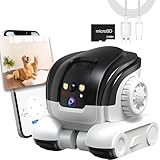
Overview: This budget-friendly mobile pet camera delivers surprising features for just $41.98. The wheeled robot streams 1080P video through dual lenses, capturing front and rear views simultaneously while patrolling your home via app control. Designed for pet interaction, it includes a laser toy and two-way audio to engage animals remotely when home alone.
What Makes It Stand Out: The dual-lens setup is unique in this price range, eliminating blind spots during patrols. A 5200mAh battery provides extended runtime, while color night vision up to 32 feet surpasses typical black-and-white footage. The included 32GB SD card and laser pointer are bonuses rarely seen at this price point.
Value for Money: At $41.98, this is the value champion—offering mobile monitoring for one-third the cost of premium brands. The feature set rivals $150+ devices: dual lenses, laser toy, color night vision, and local storage. The main trade-off is brand recognition and potential app quality concerns.
Strengths and Weaknesses: Pros: Incredible price; dual 1080P lenses; color night vision; long battery life; laser toy for pet play; includes 32GB card.
Cons: 2.4GHz WiFi only; unknown brand reliability; app may contain ads; build quality concerns; limited customer support.
Bottom Line: This is the perfect entry-level mobile pet camera for budget-conscious buyers. While it lacks premium polish, its features and performance far exceed expectations for the price. Ideal for testing mobile monitoring before investing in a more expensive model.
5. litokam 2K Indoor Security Camera, 360° Cameras for Home Security Indoor with Motion Detection, Pet Cam with Phone App, Baby Monitor-Night Vision
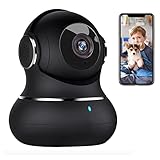
Overview: The litokam camera is a stationary pan/tilt device, not a mobile robot—this is critical to understand. For $19.99, it offers impressive 2K resolution with 360° horizontal rotation and 110° vertical tilt, controlled via smartphone app. It’s designed for fixed-location monitoring of pets, babies, or general security without the complexity of wheels.
What Makes It Stand Out: Its 2K resolution exceeds the 1080P standard of most competitors, delivering sharper detail. The motion tracking feature automatically follows movement within its range, and unlimited multi-user access lets families share viewing without restrictions. At this price point, these are exceptional features for a static camera.
Value for Money: This is the cheapest option by far, yet offers higher resolution than many pricier models. However, it’s not comparable to mobile robots—it requires constant power and cannot patrol rooms. Think of it as an advanced static camera, not a robot companion, and the value becomes clear.
Strengths and Weaknesses: Pros: Ultra-affordable; sharp 2K video; effective motion tracking; unlimited user sharing; no battery charging needed.
Cons: NOT battery-powered or mobile; requires proximity to outlet; limited to pan/tilt range; 2.4GHz WiFi only; 33ft night vision is shorter than some.
Bottom Line: Choose litokam for high-quality static monitoring on a minimal budget. It’s excellent for watching a specific room but cannot replace mobile robots for whole-home coverage. Perfect for renters or as a supplementary camera, but don’t expect it to follow your pets around the house.
6. SIYZHOP Indoor Home Security Camera,Pet Dog Camera,Two Way Video Camera with 4.3inch Big Screen,Nanny cam, Monitor for Baby/Elder/Nanny/Dog/pet with Phone App Dome Camera(Button Calling Version)

Overview: The SIYZHOP Indoor Camera redefines home monitoring by combining surveillance with seamless family communication. This versatile device features a built-in 4.3-inch screen and one-button calling, making it ideal for children, elderly parents, or pet sitters to instantly connect with you. It functions as a security camera, nanny cam, and pet monitor while doubling as an intercom system for your household.
What Makes It Stand Out: The standout feature is the integrated screen with one-touch calling—no smartphone required for family members to reach you. Smart alarm reminders display custom text notifications directly on the screen for medication, feeding times, or schedules. Device-to-device video calling between units creates a whole-home intercom system. The ultra-HD camera with night vision ensures clear footage around the clock, while multi-user sharing supports up to 10 people viewing simultaneously.
Value for Money: At $42.47, this camera delivers exceptional value by merging multiple devices into one. Comparable cameras with screens often cost $60-80, and adding a separate intercom system would increase expenses further. The feature set justifies every penny for families needing both monitoring and communication.
Strengths and Weaknesses: Strengths include the intuitive calling function, versatile monitoring capabilities, smart reminders, and affordable multi-user access. Weaknesses are the 2.4GHz WiFi limitation (no 5GHz support) and the lack of an included SD card for local storage. The screen resolution could also be sharper for the size.
Bottom Line: This is an excellent choice for families wanting more than basic monitoring. The calling feature transforms it from a passive camera into an active communication hub, making it particularly valuable for households with elderly members or young children.
7. PGST Home Alarm System,Smart Home Security Systems with Instant Tuya App Alerts,8 Pieces Door Alarm Kits Siren Hub with Motion and Door Sensors,Remote,Work with Alexa for Villa,Apartment,Kids Safety
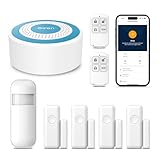
Overview: The PGST Home Alarm System offers a comprehensive 8-piece security solution designed for immediate deterrence and smartphone monitoring. This kit includes a siren hub, door/window sensors, motion detectors, and remote control, all managed through the Tuya app with Alexa compatibility. It’s engineered for straightforward DIY installation in apartments, villas, or family homes.
What Makes It Stand Out: The system’s primary differentiator is its powerful deterrence approach—an ear-piercing siren activates instantly when triggered, creating an immediate intruder deterrent. The advanced magnetic field technology in door sensors provides precise opening/closing detection, while the PIR motion detector offers 10-meter range with pet-sensitive calibration. Tuya app integration delivers instant alerts and remote arming/disarming from anywhere.
Value for Money: Priced at $39.99, this kit represents outstanding value. Individual components would typically cost $80-120 separately. The inclusion of a loud siren hub, multiple sensors, and smart app control at this price point makes it one of the most budget-friendly complete systems available.
Strengths and Weaknesses: Strengths include the aggressive pricing, loud deterrent siren, easy installation, reliable detection technology, and seamless app integration. Weaknesses involve the basic sensor count (may need expansion for larger homes), potential for false alarms if not positioned carefully, and dependence on WiFi stability for app alerts. The one-year warranty provides limited long-term assurance.
Bottom Line: This is an ideal starter security system for budget-conscious homeowners or renters. While not as sophisticated as premium systems, it delivers essential protection with effective deterrence. Perfect for apartments or small homes where simple, reliable security is the priority.
8. Sanpyl Indoor Camera, 1080P Robot Camera for Home Security, Pet Camera Baby Monitor with APP, Smart Rotatable Camera with Motion Detection, 2 Way Talk, Night Vision

Overview: The Sanpyl Indoor Camera distinguishes itself through its space-themed robot design that functions as both a security device and modern home decor. This 1080P camera offers comprehensive monitoring with 355-degree horizontal rotation, 90-degree vertical tilt, and intelligent motion detection. It serves as a pet camera, baby monitor, and general security solution with two-way audio and night vision capabilities.
What Makes It Stand Out: The unique aesthetic sets it apart from generic security cameras—it’s designed to blend as an interesting decorative piece rather than an obvious surveillance device. The intelligent detection chip significantly reduces false alarms by distinguishing between picture changes and actual human movement. Its impressive rotation range eliminates blind spots, while 6X digital zoom provides detailed viewing when needed.
Value for Money: At $32.50, this camera is remarkably affordable. Competing 1080P pan-tilt-zoom cameras typically start at $50-70. You’re getting premium movement capabilities, smart detection, and unique design for roughly half the market price, making it an exceptional budget option.
Strengths and Weaknesses: Strengths include the distinctive design, extensive rotation range, intelligent motion detection, strong app compatibility for both iOS and Android, and family sharing features. Weaknesses include unknown brand reliability, potentially less polished app experience compared to major brands, and the space theme may not suit all decor styles. The 5-meter motion detection range is shorter than some competitors.
Bottom Line: For style-conscious buyers seeking functionality on a tight budget, this camera delivers impressive features without the typical price tag. While brand recognition is limited, the specifications and design make it a compelling value proposition for apartments, nurseries, or pet monitoring where aesthetics matter.
9. YoLink Smart Water Leak Protection System Kit: Bulldog Valve Robot, Smart Valve Controller 2, 3 Water Leak Sensors, Hub

Overview: The YoLink Water Leak Protection System is a premium solution that goes beyond detection to active prevention. This comprehensive kit includes an automatic shut-off valve (Bulldog Robot), valve controller, three water leak sensors, and a hub. Using proprietary LoRa technology, it provides unmatched wireless range and reliability, automatically shutting off your water supply when leaks are detected—even during internet or power outages.
What Makes It Stand Out: The system’s ability to function offline through Control-D2D device-to-device pairing is revolutionary—your home stays protected even when WiFi fails. LoRa technology delivers a quarter-mile open-air range with superior penetration through metal and concrete, far exceeding WiFi limitations. The DIY installation requires no plumber, and sensors can be placed in detached garages or outbuildings where traditional smart devices can’t reach.
Value for Money: At $279.76, this is a significant investment, but it pales compared to the $10,000+ average cost of water damage restoration. For homes in flood-prone areas or with expensive furnishings, this system pays for itself by preventing a single incident. The technology and comprehensive protection justify the premium pricing.
Strengths and Weaknesses: Strengths include automatic shut-off capability, exceptional wireless range, offline operation, extreme battery life, and multi-channel alerts (text, email, push). Weaknesses are the high upfront cost, requirement for DIY installation comfort, and limited free SMS alerts (25 per month with hub and three sensors). The system also requires space near your main water line.
Bottom Line: This is a must-have for homeowners serious about water damage prevention. The combination of automatic shut-off and LoRa reliability makes it superior to WiFi-only alternatives. If you have a valuable property or live where water damage is a risk, this investment delivers peace of mind that cheaper detectors simply cannot match.
10. BNZ Smart Window Cleaning Robot, Twin Turbo & Dual Auto-Spray Window Cleaner with Multiple Safety System, AI Path Planning, Frameless Edge Detection, K1 (Ruby Red)

Overview: The BNZ K1 Window Cleaning Robot automates one of the most tedious household chores using advanced robotics. This ruby-red device features Twin Turbo motors, AI Path Planning, and Dual Auto-Spray technology to deliver streak-free results on various window types. Multiple safety systems and frameless edge detection make it suitable for high-rise apartments and frameless windows, eliminating the risks associated with manual cleaning.
What Makes It Stand Out: The AI Path Planning ensures systematic, efficient cleaning without missed spots or redundant passes, while dual auto-spray precisely distributes cleaning solution for optimal results. The multiple safety protections—including high suction power and edge detection—allow safe operation on frameless windows where competitors fail. Its compact design stores easily, and the eco-friendly water usage minimizes waste while maximizing cleaning effectiveness.
Value for Money: Priced at $96.89, this robot sits in the mid-range for window cleaners. Manual professional cleaning costs $5-10 per window per session, so it pays for itself after 10-20 uses. Compared to premium models at $200-300, it offers core smart features at an accessible price point.
Strengths and Weaknesses: Strengths include intelligent path planning, frameless window compatibility, strong safety systems, efficient spray technology, and time-saving automation. Weaknesses include limitations on extremely dirty windows (may require pre-cleaning), potential noise during operation, and the need for power cord management. Effectiveness can vary based on window size and frame type.
Bottom Line: For anyone dreading window cleaning, especially in high-rise buildings or with hard-to-reach windows, this robot is a worthwhile investment. It delivers consistent results with minimal effort and superior safety features. While not a complete replacement for deep cleaning, it excels at regular maintenance and is ideal for busy households or elderly users.
What Are Indoor Security Robots and How Do They Work?
Indoor security robots are autonomous mobile platforms designed to patrol residential interiors, providing real-time monitoring, threat detection, and interactive response capabilities. Unlike stationary security cameras that capture footage from fixed angles, these systems navigate your home’s floor plan on wheels or treads, creating a comprehensive security presence that eliminates blind spots and static vulnerabilities.
At their core, these devices operate through a sophisticated integration of simultaneous localization and mapping (SLAM) technology, computer vision, and edge computing. They continuously build and update internal maps of your home, recognize family members versus strangers, and make split-second decisions about what constitutes normal activity versus potential threats. Most units process data locally to protect privacy, sending encrypted alerts to your smartphone only when specific triggers are met, such as unrecognized movement, unusual sounds, or environmental changes like smoke detection.
The Evolution from Static Cameras to Mobile Patrols
The security industry’s transformation from wall-mounted cameras to roving robots mirrors the broader shift from reactive to proactive home protection. Early home security systems were essentially alarm boxes that screamed after a breach occurred. Then came CCTV and IP cameras that let you watch what already happened. Mobile patrol robots represent the third wave—they actively prevent incidents through presence and immediate intervention.
This evolution addresses a critical flaw in traditional systems: predictability. Burglars quickly learn where cameras are positioned and how to avoid them. A mobile robot’s random patrol patterns and ability to investigate anomalies in real-time create uncertainty for potential intruders. The psychological deterrent of an active, responsive device cannot be overstated; it’s the difference between a recorded crime and a prevented one.
Core Technologies Powering Modern Security Robots
Understanding the technical foundation helps you evaluate options intelligently. The most capable systems deploy a multi-sensor fusion approach, combining several technologies for redundancy and accuracy.
Vision Systems: High-resolution RGB cameras with night vision capabilities (typically 1080p to 4K) work alongside infrared sensors for low-light navigation. Some advanced models incorporate thermal imaging to detect heat signatures through obstacles or in complete darkness.
Navigation Sensors: LiDAR (Light Detection and Ranging) creates precise 3D maps by measuring distance with laser pulses. Supplementary sensors include ultrasonic sensors for close-range obstacle avoidance, cliff sensors to prevent stair falls, and inertial measurement units (IMUs) for balance and orientation.
Audio Processing: Far-field microphone arrays can detect and locate sounds like breaking glass, smoke alarms, or distress calls. Two-way audio allows you to communicate through the robot, while some systems can even recognize specific acoustic signatures.
Edge AI Processing: Onboard neural networks analyze data in real-time without constant cloud dependency. This reduces latency, preserves bandwidth, and critically, keeps sensitive footage within your home’s local network.
Essential Features to Evaluate Before Buying
When comparing indoor security robots, prioritize features that align with your specific security gaps rather than getting dazzled by specifications. Autonomy is paramount—look for devices that can operate for at least 2-3 hours on a single charge and automatically return to their docking station when batteries run low. The docking process should be reliable; a robot that can’t find its charger is just an expensive paperweight.
Investigate the alert system’s granularity. The best platforms offer customizable alert zones, person/pet/package detection filters, and adjustable sensitivity levels. You don’t want your phone buzzing every time your cat walks past, but you do want immediate notification if someone enters your home office at midnight. Privacy modes that automatically disable recording when recognized family members are present are essential for maintaining trust and compliance with household privacy expectations.
Navigation and Mapping Capabilities
A robot’s effectiveness directly correlates with its navigation sophistication. Simple bumper-and-go systems that randomly bounce around walls provide minimal security value. Instead, seek out devices with visual SLAM or LiDAR-based mapping that creates detailed, persistent floor plans you can view and edit through the companion app.
The mapping process should allow you to designate no-go zones (like bathrooms or children’s bedrooms), create patrol routes, and set priority areas that receive more frequent checks. Advanced systems learn traffic patterns over time—if your family typically gathers in the living room between 6-8 PM, the robot might automatically adjust its patrol schedule to monitor less-trafficked areas during that window. Multi-floor mapping capability is crucial for two-story homes, though most robots require manual carrying between levels.
Privacy Features and Data Security
Privacy concerns represent the biggest barrier to adoption for many homeowners, and rightfully so. A mobile camera with internet connectivity could theoretically become a surveillance nightmare. Reputable manufacturers address this through hardware and software safeguards that put you in control.
Look for physical privacy shutters that cover the camera lens when the robot is docked or in privacy mode. Local storage options (encrypted SD cards or onboard SSDs) prevent footage from ever leaving your home. If cloud backup is offered, ensure it’s end-to-end encrypted with keys that only you possess. GDPR-compliant or SOC 2 Type II certified manufacturers demonstrate serious commitment to data protection. The ability to schedule automatic “off” periods and geofencing that disables recording when your smartphone is home provide additional layers of privacy control.
Integration with Your Smart Home Ecosystem
A security robot operating in isolation is useful; one that orchestrates with your existing smart home devices is transformative. Deep integration allows your robot to respond to triggers from other sensors—if a window sensor detects opening, the robot can immediately navigate to that room and begin recording.
Check for compatibility with major platforms like Amazon Alexa, Google Home, Apple HomeKit, or Samsung SmartThings. Matter protocol support ensures future-proof interoperability. The most sophisticated integrations enable conditional logic: “If motion is detected AND all family members’ phones are away AND it’s after 10 PM, then patrol the main floor and turn on all smart lights.” API availability for power users who want to create custom automations is a strong indicator of a truly open ecosystem.
Power Management and Charging Solutions
Battery performance determines operational continuity. Most residential security robots use lithium-ion batteries providing 90-180 minutes of active patrol time. However, battery life varies dramatically based on patrol speed, frequency of camera activation, and environmental factors like carpet versus hardwood.
Intelligent charging systems matter more than raw battery capacity. The robot should monitor its own power levels and return to the dock before depletion, typically at 15-20% remaining charge. Fast-charging capabilities that restore 80% capacity in under two hours minimize downtime. Some premium systems offer “opportunistic charging”—topping off for 15 minutes between short patrols rather than waiting for a full discharge cycle, which extends battery lifespan. Consider models with swappable batteries if you need 24/7 coverage without charging gaps.
Audio and Visual Monitoring Specifications
Camera quality specifications go beyond megapixels. A 4K sensor is worthless without quality optics and proper low-light performance. Look for cameras with wide dynamic range (WDR) to handle backlighting from windows, and starlight sensors that produce color images in near-darkness. The field of view should be at least 120 degrees horizontally, with mechanical pan/tilt providing 360-degree coverage when stationary.
Audio monitoring requires sensitivity without generating false alerts. The system should filter out background noise like HVAC systems and focus on distinct, relevant sounds. Two-way audio quality matters for deterrence—clear, loud speaker output (minimum 80dB) ensures intruders hear warnings. Some systems offer pre-recorded messages in multiple languages or customizable alert tones that sound like a professional security service.
AI-Powered Detection and Alert Systems
The true intelligence of a security robot lies in its ability to distinguish between benign and suspicious activity. Modern systems employ convolutional neural networks trained on millions of hours of footage to recognize humans, pets, vehicles, and packages. This reduces false positives by over 95% compared to simple motion detection.
Facial recognition capabilities allow the robot to identify family members, frequent visitors, and authorized service personnel. Behavior analysis algorithms detect anomalies—someone lingering near a window for an extended period, movement patterns inconsistent with normal traffic flow, or a person moving through the house without triggering any door sensors. The best systems learn your household’s unique patterns within 2-3 weeks of deployment.
Real-World Use Cases and Home Layout Considerations
Security robots excel in specific scenarios that static systems struggle with. Large open-plan homes with multiple entry points benefit from mobile patrols that can investigate any zone within minutes. Multi-level residences can use a robot on the main floor while traditional sensors cover upstairs bedrooms. Homes with valuable collections, gun safes, or home offices gain an active guardian for specific high-value areas.
Consider your floor plan’s complexity. Open layouts with minimal obstacles are ideal, but cluttered homes with narrow hallways challenge navigation. Thresholds between rooms thicker than 0.75 inches may stop some robots. High-pile carpets (over 1 inch) significantly reduce battery life and mobility. Measure your narrowest doorways and hallway widths—most robots require at least 24 inches of clearance. Homes with pets should evaluate robots with animal-friendly navigation that won’t corner or stress furry family members.
Installation and Setup Best Practices
Proper setup determines long-term success. Begin by fully charging the robot and placing its dock in a central location with strong Wi-Fi signal. Avoid putting the dock in high-traffic areas where the robot might be blocked when trying to return home. The dock should face an open area, not a wall, allowing the robot to approach from multiple angles.
The initial mapping run should occur during quiet hours when family members and pets are minimal. Walk alongside the robot during its first patrol to identify problem areas—mirrors that confuse sensors, dark carpets that appear as cliffs, or glass doors that seem invisible. Create your no-go zones before enabling automatic patrols. Test alert delivery by simulating a security event; verify that notifications arrive on all family members’ phones within 10 seconds. Schedule a brief daily patrol initially, gradually increasing frequency as you confirm reliable operation.
Maintenance and Long-Term Care
Security robots require regular maintenance that differs from traditional systems. Clean the camera lens weekly with a microfiber cloth—smudges from docking or pet interactions degrade image quality. Sensors need monthly cleaning; use compressed air for LiDAR windows and a soft brush for cliff sensors. Wheels and treads collect hair and debris; check them bi-weekly and remove entanglements before they damage motors.
Software updates arrive frequently for security patches and feature improvements. Enable automatic updates but schedule them for times when the robot isn’t needed. Battery health degrades over 12-18 months; most manufacturers offer replacement battery packs. Plan for an annual deep clean, including disassembling the charging contacts and cleaning them with isopropyl alcohol. Keep firmware logs and export them quarterly—this data helps diagnose intermittent issues before they become failures.
Cost Analysis and Value Assessment
Indoor security robots represent a significant investment, typically ranging from $300 to $1,500 depending on capabilities. However, the total cost of ownership extends beyond the purchase price. Factor in subscription fees for cloud storage or advanced AI features ($5-$30 monthly), replacement batteries every 18-24 months ($50-$100), and potential Wi-Fi upgrades if your network can’t handle the bandwidth.
Evaluate value through the lens of risk reduction. If you travel frequently, the ability to remotely investigate alerts rather than paying for false alarm dispatch fees can save hundreds annually. For homes with valuable assets, insurance premium reductions of 5-10% may apply. Consider opportunity cost—what’s the value of preventing a single burglary versus the system’s price? Most homeowners find the investment worthwhile when the robot replaces 3-4 static cameras while providing superior coverage.
Limitations and Realistic Expectations
No technology is perfect, and security robots have distinct limitations. They cannot climb stairs, so multi-story homes require multiple units or hybrid approaches. Battery constraints mean gaps in coverage during charging cycles, typically 2-4 hours daily. Environmental factors like thick carpeting, high thresholds, or cluttered floors can restrict mobility to 60-70% of some homes.
Detection accuracy drops in complete darkness even with night vision—shadows and reflections can trigger false alerts. Audio detection struggles with ambient noise from TVs, music, or loud appliances. Most importantly, these are deterrent and monitoring devices, not physical security barriers. They can’t stop an intruder, only document and alert. Set expectations accordingly: they’re force multipliers for your security strategy, not standalone solutions.
The Future of Indoor Security Robotics
The next generation of security robots is already emerging from labs into early adoption. Predictive patrol algorithms will analyze your calendar, weather forecasts, and local crime data to optimize routes before threats materialize. Collaborative robotics will see multiple units share a single map and coordinate coverage, handing off patrol zones seamlessly. Advanced manipulation capabilities will allow robots to check door locks, adjust smart thermostats, or even retrieve small objects.
Emotion recognition AI may detect distress in family members’ voices or movements, automatically calling for help. Integration with smart door locks could enable the robot to verify visitors and grant access remotely. As 5G and edge computing mature, expect lighter, faster robots with real-time professional monitoring integration. The line between consumer and professional security systems will blur, with robots serving as on-site agents for remote security operations centers.
Frequently Asked Questions
1. Can indoor security robots really replace my existing alarm system?
They complement rather than replace traditional alarm systems. Robots excel at verification and active deterrence, but lack physical barriers and 24/7 monitoring center integration. The optimal setup combines door/window sensors with a mobile robot for investigation, creating a hybrid approach that minimizes false alarms while maximizing coverage.
2. How do these robots handle homes with pets?
Quality systems include pet recognition AI trained on thousands of animal images. You can typically set size thresholds—ignore animals under 40 pounds, for example. The robot’s navigation avoids running into pets, and you can schedule patrols during pet nap times. Some models even dispense treats or play with pets, doubling as interactive companions.
3. What happens if my Wi-Fi goes down during a patrol?
Most robots store footage locally and continue patrolling using their internal maps. They’ll queue alerts and upload them once connectivity restores. However, live streaming and remote control become unavailable. Premium models with cellular backup maintain limited cloud connectivity during internet outages, ensuring critical alerts still reach you.
4. Are these devices vulnerable to hacking?
Any connected device carries risk, but reputable manufacturers implement multiple security layers: encrypted communications, regular security audits, two-factor authentication, and local processing that keeps footage off the internet. Disable features you don’t use, keep firmware updated, and place the robot on a separate IoT network segment for maximum security.
5. How long does it take to train the AI to recognize my family?
Facial recognition typically requires 5-10 encounters per person over 2-3 days. The system captures faces from multiple angles during normal patrols. You’ll need to manually tag faces in the app initially. Full behavior pattern learning takes 2-3 weeks of regular patrolling to establish baseline activity and reduce false alerts effectively.
6. Can they detect environmental hazards like smoke or gas leaks?
Many models include air quality sensors that detect smoke, carbon monoxide, and natural gas. Audio sensors can recognize the specific frequency of smoke alarms. However, they shouldn’t replace dedicated, hardwired safety detectors required by building codes. Think of them as mobile supplements that can verify alarms and provide visual confirmation of hazards.
7. What’s the typical lifespan of an indoor security robot?
With proper maintenance, expect 3-5 years of reliable operation. The battery is usually the first component to degrade, requiring replacement after 18-24 months. Motors and sensors can last longer, but software support typically ends after 4-5 years as manufacturers focus on newer models. Extended warranties covering accidental damage and battery replacement offer good value.
8. Do they work on all floor types?
Performance varies significantly. Hardwood, tile, and low-pile carpet (under 0.5 inches) present minimal issues. High-pile carpet, thick area rugs, and transitions over 0.75 inches can stop some models. Wet floors are problematic—most robots detect moisture and avoid those areas. Check manufacturer specifications for maximum threshold height and carpet depth ratings before purchasing.
9. How much data do these robots consume monthly?
Data usage ranges from 2GB to 20GB monthly depending on activity. Local storage models use minimal data—only for alerts and remote check-ins. Continuous cloud recording consumes the most bandwidth. A typical 5-minute daily patrol with motion-activated uploads uses about 3-5GB. If you have data caps, prioritize robots with local storage and efficient compression codecs like H.265.
10. Can I use multiple robots together for larger homes?
Yes, and this is increasingly common in homes over 3,000 square feet. Most apps support multiple units on a single account, though true coordination is still emerging. You can assign each robot to a specific floor or zone. Future software updates promise shared mapping and handoff capabilities where robots pass patrol responsibilities between each other for seamless coverage.