There’s nothing quite like stepping out of a steamy shower onto a warm, toasty floor—it’s one of those small luxuries that transforms your daily routine into a spa-like experience. Radiant floor heating has evolved from an extravagant upgrade to a practical, energy-efficient solution that bathroom remodelers consistently rank as their most satisfying investment. Unlike forced-air systems that blast heat from vents, radiant warmth rises gently from beneath your flooring, eliminating cold spots and creating consistent comfort where you need it most.
But navigating the world of radiant heating can feel overwhelming. Electric mats, hydronic tubes, thermal mass, wattage calculations—it’s enough to make any homeowner’s head spin. This comprehensive guide cuts through the complexity, giving you the expert knowledge to choose, install, and optimize the perfect system for your bathroom sanctuary. Whether you’re planning a full renovation or a simple retrofit, you’ll discover how to match technology to your specific needs, budget, and lifestyle.
Top 10 Radiant Floor Heating Systems for Bathrooms
Detailed Product Reviews
1. LuxHeat 20sqft Floor Heating Mat Kit - 120v in Floor Heating System - Complete Electric Radiant Heated Flooring System Includes Alarm, UDG Programmable Thermostat w/GFCI & Flooring Sensor

Overview:
The LuxHeat 20sqft kit delivers targeted electric radiant heating for small spaces like bathrooms or entryways. This comprehensive package includes a self-adhesive heating mat, cable monitor, programmable thermostat with GFCI protection, and floor sensor—everything needed for a safe, professional-grade installation under tile or laminate flooring.
What Makes It Stand Out:
The pre-spaced 3-inch self-adhesive mat simplifies DIY installation significantly, allowing cuts and rotations while maintaining wire spacing integrity. LuxHeat’s dual-wire technology with aluminum shielding minimizes EMF exposure to ultra-low levels. The included OJ Microline UDG-4999 thermostat offers dual sensing, power logging, and a 7-day programmable schedule for optimal efficiency.
Value for Money:
At $189 ($9.45 per square foot), this kit offers exceptional value for small-scale projects. The 25-year limited warranty and UL certification for wet locations provide long-term peace of mind that far exceeds the initial investment. DIY installation eliminates professional labor costs, which can run $10-15 per square foot.
Strengths and Weaknesses:
Strengths include straightforward installation, comprehensive safety features (built-in GFCI, cable alarm), ultra-low EMF design, and extensive warranty coverage. The 240-watt output efficiently heats small areas. Weaknesses: the 20sqft coverage limits applications to compact spaces, and the heating wires must be embedded in mortar or self-leveling underlayment, adding material costs and installation complexity.
Bottom Line:
Ideal for DIY enthusiasts tackling small bathroom or kitchen renovations, the LuxHeat 20sqft kit combines safety, simplicity, and reliability. The robust warranty and ultra-low EMF design make it a smart investment for targeted radiant heating projects where professional installation isn’t feasible.
2. LuxHeat 40sqft Electric Radiant Floor Heating System - 120v Underfloor Heating System - Includes UDG4 Programmable Thermostat w/GFCI, Heat Cable, Uncoupling Membrane for Under Tile, Sensor & Alarm

Overview:
The LuxHeat 40sqft system represents a premium upgrade from standard mat kits, incorporating an uncoupling membrane for enhanced floor protection. Designed for tiled spaces, this comprehensive package includes heating cable, Prova Flex-Heat membrane, touchscreen thermostat, installation tools, and safety monitoring equipment for professional-grade results.
What Makes It Stand Out:
The innovative 3-in-1 Prova membrane provides crack isolation, waterproofing, and load support while serving as the heating cable substrate. This integration prevents tile damage and extends floor longevity. The UDG4-4999 touchscreen thermostat features self-learning capabilities and power logging for intelligent energy management. Combined with dual-wire EMF reduction technology, this system prioritizes both performance and health.
Value for Money:
At $515 ($12.88 per square foot), this kit commands a premium but delivers substantial added value through the 50-year Prova membrane warranty and multi-functional capabilities. The membrane alone justifies the cost difference versus standard mats, eliminating the need for separate underlayment products and preventing costly tile failures.
Strengths and Weaknesses:
Strengths include superior floor protection, design flexibility for custom layouts, comprehensive warranties (25-year heating, 50-year membrane), and advanced thermostat features. The system achieves an extra-heavy performance rating per ASTM C627. Weaknesses: higher upfront cost, more complex installation requiring membrane embedding, and the 40sqft cable length may leave membrane partially uncovered.
Bottom Line:
Perfect for tile installations where crack prevention is paramount, this premium system justifies its price through integrated waterproofing and uncoupling benefits. Recommended for homeowners prioritizing long-term floor integrity over initial cost savings.
3. BLARALA Electric Radiant Floor Heating System, 100 Sq.ft Electric Heated Floor Mats for Bathroom, Includes Programmable Thermostat, Heat Mat, Installation Monitor, and Temperature Sensors

Overview:
The BLARALA 100sqft heating system offers expansive coverage for larger rooms at a competitive price point. This comprehensive kit includes a substantial heating mat, programmable thermostat with GFCI protection, installation monitor, and dual temperature sensors—providing whole-room comfort under tile, laminate, or other approved floor coverings.
What Makes It Stand Out:
The generous 100-square-foot coverage area addresses medium to large spaces efficiently, eliminating the need for multiple kits. The thermostat features four operating modes, overheat protection, and dual air/floor sensors for precise temperature management. CSA certification ensures safety compliance for wet locations like bathrooms and showers.
Value for Money:
At $399.99 ($4.00 per square foot), this system delivers exceptional economy of scale, significantly undercutting competitors on price-per-square-foot. The extensive coverage area makes it ideal for master bathrooms, kitchens, or open-concept areas where consistent heating across a large floor plane is desired.
Strengths and Weaknesses:
Strengths include outstanding coverage value, versatile installation options (cuttable, flippable mat), robust safety features (GFCI, child lock, overheat protection), and comprehensive certification. The 1,200-watt output provides ample heating capacity. Weaknesses: the single mat size may prove unwieldy in irregularly shaped rooms, and the brand lacks the long-term track record of premium competitors. Installation requires careful wire embedding.
Bottom Line:
An excellent choice for budget-conscious homeowners needing extensive coverage. The BLARALA 100sqft system offers professional features and safety certifications at a fraction of the typical cost, making whole-room radiant heating accessible for larger renovation projects.
4. BLARALA Electric Radiant Floor Heating System, 40 Sq.ft Electric Heated Floor Mats for Bathroom, Includes Programmable Thermostat, Heat Mat, Installation Monitor, and Temperature Sensors
Overview:
The BLARALA 40sqft heating system scales down the brand’s value proposition for smaller applications. This complete kit includes a 40-square-foot heating mat, programmable thermostat with integrated GFCI, installation monitor, and temperature sensors—delivering targeted warmth for compact bathrooms, kitchens, or mudrooms under various floor types.
What Makes It Stand Out:
The system maintains the same feature set as its larger counterpart, including four thermostat operating modes, dual air/floor sensors, child lock, and overheat protection. The cuttable, rotatable mat design with adhesive backing ensures secure installation in tight or irregular spaces. CSA certification for wet locations provides confidence for bathroom and shower installations.
Value for Money:
At $249.99 ($6.25 per square foot), this kit offers solid mid-range value, though the per-square-foot cost is higher than the 100sqft version. Still, it undercuts premium brands like LuxHeat’s comparable 50sqft kit, making it attractive for budget-focused DIYers seeking certified safety features without premium pricing.
Strengths and Weaknesses:
Strengths include comprehensive safety features, flexible installation, CSA wet-location certification, and a competitive price point for the feature set. The 480-watt output suits small spaces efficiently. Weaknesses: higher cost-per-square-foot than larger kits, brand recognition limitations, and the requirement to embed heating cables in mortar or leveler adds installation complexity and material expense.
Bottom Line:
A smart option for smaller-scale projects where budget and safety certifications are priorities. The BLARALA 40sqft system delivers reliable performance and essential features, though savvy shoppers might consider the 100sqft version for better long-term value if space allows.
5. LuxHeat 50sqft Floor Heating Mat Kit - 120v Electric Heating Mat System - Complete Electric Radiant Heated Flooring System Includes Alarm, UDG4 Programmable Thermostat w/GFCI & Floor Sensor

Overview:
The LuxHeat 50sqft mat kit bridges the gap between entry-level and premium radiant heating systems. This expanded package includes a self-adhesive heating mat, cable monitor, advanced touchscreen thermostat, and floor sensor—providing comprehensive heating for medium-sized spaces like master bathrooms or kitchens with professional-grade components.
What Makes It Stand Out:
The UDG4-4999 touchscreen thermostat introduces self-learning capabilities that adapt to your schedule, optimizing comfort while minimizing energy costs. LuxHeat’s dual-wire technology with aluminum shielding reduces EMF to negligible levels. The generous 50sqft coverage accommodates larger layouts while maintaining the convenient pre-spaced mat design that simplifies installation.
Value for Money:
At $369 ($7.38 per square foot), this kit offers better scalability than the 20sqft version while maintaining premium features. The 25-year warranty and UL certification validate the investment. Compared to the 20sqft kit’s $9.45/sqft, the larger size provides improved economies of scale without sacrificing quality or safety features.
Strengths and Weaknesses:
Strengths include expanded coverage, advanced thermostat with self-learning, ultra-low EMF design, comprehensive safety features (GFCI, cable alarm), and robust warranty coverage. The 600-watt output efficiently heats medium spaces. Weaknesses: higher upfront cost than budget competitors, mat width limitations in irregular rooms, and mandatory wire embedding in underlayment requires additional materials and skill.
Bottom Line:
An excellent mid-range choice for homeowners seeking premium features and larger coverage. The LuxHeat 50sqft kit balances advanced functionality, safety, and warranty protection, making it ideal for medium-sized tile or laminate installations where long-term reliability matters.
6. BLARALA Electric Radiant Floor Heating System, 20 Sq.ft Electric Heated Floor Mats for Bathroom, Includes Programmable Thermostat, Heat Mat, Installation Monitor, and Temperature Sensors
Overview: The BLARALA 20-square-foot electric floor heating system provides comprehensive warmth for bathrooms and small spaces. This 120V kit includes a heating mat (19.69" x 13.12’), programmable thermostat with dual sensors, installation monitor, and temperature sensors. Operating at 12W/sq ft with CSA-certified cables safe for wet locations, the adhesive-backed mat installs under tile or laminate. The system delivers consistent radiant heat while the installation monitor alerts users to cable damage during setup, preventing costly mistakes.
What Makes It Stand Out: This system’s cuttable and rotatable mat design offers superior layout flexibility, allowing precise heat placement without damaging the heating cable. The programmable thermostat includes built-in GFCI detection, four operating modes, dual floor/air sensors, child lock, and overheat protection—features typically reserved for premium systems. The adhesive backing ensures the mat stays flat during installation, eliminating shifting that can cause hot spots. Combined with the damage-detection monitor, these features create a safety-focused, installer-friendly package.
Value for Money: Priced at $199.99, BLARALA delivers mid-tier value with premium safety features. The programmable thermostat with GFCI and dual sensors alone justifies the cost over basic kits. The cuttable mat design reduces waste in irregular spaces, saving material costs. While not the cheapest option, its comprehensive feature set and CSA certification offer better long-term value than entry-level alternatives lacking installation monitors or advanced controls.
Strengths and Weaknesses: Strengths include flexible mat positioning, comprehensive safety features, adhesive backing for stable installation, and the damage-detection monitor. The dual-sensor thermostat provides accurate temperature control. Weaknesses are the lesser-known brand reputation and mat format’s limited flexibility compared to cable systems for complex layouts. The 20 sq ft coverage may require multiple kits for larger areas.
Bottom Line: Perfect for DIYers prioritizing safety and installation confidence, the BLARALA system excels in small bathroom projects where its cuttable design and monitoring features prevent expensive errors. It’s a smart middle-ground choice between basic and premium systems.
7. Warming Systems - 20 Sqft 120V Electric Radiant Floor Heating Mat – Includes Heating Mat, Programmable Thermostat, Thermostat Floor Sensor, Installation Monitor and Under Tile Heater

Overview: Warming Systems delivers a Made-in-USA 20-square-foot electric floor heating mat designed for straightforward installation under tile and laminate. This 120V kit includes a heating mat (20" x 12’), programmable thermostat TH115-AF-120S, floor sensor, and installation monitor. Operating at 12W/sq ft with UL-listed cables safe for wet areas, the mat features double-sided tape for secure placement. The company offers direct-from-factory pricing and engineering support from their Illinois facility.
What Makes It Stand Out: The standout feature is genuine American manufacturing with a 25-year warranty, providing long-term confidence rarely matched by imported competitors. The double-sided tape on both mat surfaces ensures exceptional adhesion to any subfloor, preventing movement during installation. Factory-direct pricing eliminates middleman markups, while free engineering support offers expert guidance for DIY installers. The TH115-AF-120S thermostat, though basic, is reliable and easy to operate with precise floor temperature control.
Value for Money: At $179.00, this system offers excellent value for a USA-made product with a 25-year warranty. The price undercuts many imported alternatives while delivering comparable specifications. The inclusion of an installation monitor and programmable thermostat at this price point is impressive. While lacking advanced features like touchscreen controls or GFCI integration, the core components are high-quality and backed by domestic manufacturing and support, making it a cost-effective long-term investment.
Strengths and Weaknesses: Strengths include American manufacturing, 25-year warranty, factory-direct pricing, double-sided adhesive, and free engineering support. The UL listing and wet-area safety provide code compliance. Weaknesses are the basic thermostat lacking GFCI protection and advanced programming features. The mat format limits flexibility for irregular spaces compared to cable systems, and the brand’s marketing is less flashy than competitors despite solid fundamentals.
Bottom Line: This is the go-to choice for budget-conscious buyers wanting American-made quality and warranty support. Ideal for standard rectangular spaces where mat convenience outweighs cable flexibility, and for those who value domestic manufacturing and long-term reliability over cutting-edge features.
8. LuxHeat 15sqft Electric Radiant Floor Heating System - 120v Heated Floor System Includes UDG4 Programmable Thermostat w/GFCI, Heater Cable, Uncoupling Membrane for Tile, Flooring Sensor & Alarm

Overview: LuxHeat’s 15-square-foot system takes a premium approach by combining electric heating cable with an uncoupling membrane for tile installations. This 120V kit includes 60 feet of heating cable, 25 sq ft of Prova Flex-Heat membrane, touchscreen thermostat UDG4-4999 with integrated GFCI, installation alarm, floor sensor, and wood float. The membrane provides crack isolation, waterproofing, and load support while housing the cable at 3-inch spacing. Operating at 12W/sq ft, it’s cULus certified for wet locations and features dual-wire EMF reduction technology.
What Makes It Stand Out: The integrated uncoupling membrane delivers three critical functions: heated floor, crack prevention, and waterproofing—eliminating the need for separate underlayment. The UDG4 touchscreen thermostat offers modern convenience with Class A GFCI, dual sensing, power logging, self-learning capability, and a 7-day programmable schedule. LuxHeat’s dual-wire technology with aluminum shielding reduces electromagnetic fields to ultra-low levels, addressing health concerns. The Prova membrane’s Extra Heavy ASTM C627 rating ensures durability under demanding conditions, while the 25-year cable and 50-year membrane warranties are industry-leading.
Value for Money: At $349.00, this premium kit costs significantly more than basic mat systems but includes the uncoupling membrane ($100+ value separately) and advanced thermostat. For tile installations, the membrane’s crack isolation and waterproofing provide substantial value by preventing costly tile failures. The EMF reduction technology and comprehensive warranties justify the price for health-conscious buyers and those wanting maximum longevity. It’s expensive for small spaces but delivers professional-grade components that outperform entry-level alternatives.
Strengths and Weaknesses: Strengths include the 3-in-1 membrane solution, advanced touchscreen thermostat with GFCI, EMF reduction technology, exceptional warranties, and professional-grade components. The system addresses tile-specific challenges like cracking and moisture. Weaknesses are the high price point, smaller 15 sq ft coverage, and more complex installation requiring self-leveler or thinset over the cable. The membrane adds material cost and installation time that may be unnecessary for non-tile flooring.
Bottom Line: Best suited for premium tile installations where crack prevention and waterproofing are priorities. The LuxHeat system is ideal for homeowners wanting top-tier technology, health-conscious EMF reduction, and industry-leading warranties, accepting higher cost and complexity for superior performance and longevity.
9. LuxHeat 30sqft Electric Radiant Floor Heating System - 120v In Floor Heating System Includes UDG4 Programmable Thermostat w/GFCI, Heater Cable, Uncoupling Membrane, Flooring Sensor & Alarm
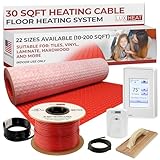
Overview: LuxHeat’s 30-square-foot system scales up their premium cable-and-membrane approach for larger spaces. This 120V kit includes 120 feet of heating cable, 45 sq ft of Prova Flex-Heat uncoupling membrane, touchscreen thermostat UDG4-4999 with integrated GFCI, installation alarm, floor sensor, and wood float. The membrane provides crack isolation, waterproofing, and load support while accommodating the cable at 3-inch spacing. Operating at 12W/sq ft with cULus certification, it features dual-wire EMF reduction technology and the same advanced controls as the smaller kit.
What Makes It Stand Out: This system maintains all premium features of the 15 sq ft version while doubling coverage, making it practical for full bathrooms rather than just small areas. The uncoupling membrane’s three-in-one functionality remains the key differentiator, eliminating separate underlayment while providing Extra Heavy ASTM C627-rated protection. The UDG4 thermostat’s intuitive touchscreen, Class A GFCI, dual sensing, power logging, and 7-day programming deliver professional-level control. LuxHeat’s dual-wire EMF shielding technology and the comprehensive 25-year cable/50-year membrane warranties provide unmatched long-term assurance for larger investments.
Value for Money: At $445.00, the price scales proportionally with coverage while including the same premium thermostat and membrane technology. For 30 sq ft of heated tile floor, this represents solid value compared to buying components separately. The membrane alone would cost $150+ retail, making the bundled price attractive for tile projects. While significantly more expensive than basic mat systems, the crack prevention and waterproofing protect your tile investment, potentially saving thousands in repairs. The advanced features and warranties justify the premium for full-room applications.
Strengths and Weaknesses: Strengths include expanded 30 sq ft coverage, comprehensive membrane protection, advanced thermostat features, EMF reduction technology, and exceptional warranties. The system excels in tile environments where crack prevention is critical. Weaknesses are the high overall cost and complex installation requiring careful cable placement and self-leveler application. The cable system’s flexibility requires more planning than mat alternatives, and the membrane adds installation time and material thickness that may affect transitions.
Bottom Line: Ideal for larger bathroom tile projects where premium performance and longevity justify the investment. The LuxHeat 30 sq ft system suits homeowners wanting maximum protection for their tile investment, advanced control features, and industry-leading warranties, accepting higher cost and installation complexity for professional-grade results.
10. Warming Systems - 20 Sqft 120V Electric Radiant Floor Heating Kit – Includes Heating Cable, Programmable Thermostat, Sensor, Cable Guides, Installation Monitor and Under Tile Heated Floors

Overview: Warming Systems offers a flexible cable-based alternative to their mat system, providing 20 square feet of heating coverage through 80 linear feet of cable. This Made-in-USA 120V kit includes heating cable, touchscreen thermostat UWG5-4999 with GFCI and WiFi/Bluetooth connectivity, floor sensor, plastic cable guides, and installation monitor. Operating at 12W/sq ft with UL-listed cables safe for wet areas, the cable system allows custom layouts for any shaped area by running the wire back and forth at 3-inch spacing using the included guides.
What Makes It Stand Out: The cable system’s ability to heat any shape—including odd angles, curves, and obstacles—provides unparalleled layout flexibility compared to mats. The UWG5-4999 thermostat stands out with modern connectivity: built-in GFCI, WiFi and Bluetooth compatibility, and voice control integration for smart home setups. Made-in-USA manufacturing with a 25-year warranty continues Warming Systems’ commitment to quality. The cable guides simplify installation by maintaining consistent spacing without custom fabrication. This combination of flexibility, smart features, and domestic production is unique in this price range.
Value for Money: At $229.00, this kit offers excellent value for those needing custom layouts and smart home integration. The WiFi-enabled thermostat alone would cost $100+ separately, making the bundle attractive. While pricier than Warming Systems’ basic mat, the cable flexibility prevents wasted material in irregular spaces, potentially saving money overall. The 25-year warranty on USA-made components ensures long-term value. For rooms with angles or fixtures, this system avoids buying excess mat material you’ll never use.
Strengths and Weaknesses: Strengths include unlimited layout flexibility for complex spaces, advanced WiFi/Bluetooth thermostat with voice control, Made-in-USA quality, 25-year warranty, and cable guides that simplify spacing. The UL listing and installation monitor provide safety assurance. Weaknesses are the more labor-intensive installation compared to mats, requiring careful cable placement and securing. The cable system needs more planning and is less forgiving for beginners. Some may find the smart features unnecessary, preferring a simpler thermostat.
Bottom Line: Perfect for DIYers with irregularly shaped rooms who want smart home integration and American-made reliability. The Warming Systems cable kit excels in spaces where mats can’t fit efficiently, offering modern connectivity and warranty support that justify the moderate price premium over basic systems.
What Is Radiant Floor Heating and How Does It Work?
Radiant floor heating operates on a beautifully simple principle: heat naturally rises. These systems install beneath your flooring material, warming the floor surface which then radiates heat upward into the room. The result is an even distribution of warmth that eliminates the stratification you get with traditional heating—no more hot ceilings and cold floors.
The technology works through either electric resistance cables or hydronic tubing that circulates hot water. Both methods create thermal mass within your floor assembly, storing and releasing heat gradually. This thermal inertia means the system cycles less frequently than forced-air furnaces, maintaining consistent temperatures with minimal energy fluctuations. Understanding this fundamental mechanism helps you appreciate why bathroom applications are so effective—the relatively small space allows for rapid warm-up times while the thermal mass prevents temperature swings.
Why Bathrooms Are Perfect for Radiant Heat
Bathrooms present the ideal environment for radiant floor heating systems. The typically small square footage means lower installation costs and faster heating response times compared to whole-home applications. Most bathrooms range from 40 to 100 square feet, allowing even modest systems to achieve comfortable temperatures within 30-60 minutes.
The psychological impact is profound—cold tile on bare feet triggers a visceral discomfort that undermines the entire purpose of a warm, relaxing bathroom environment. Radiant heat eliminates this shock entirely. Additionally, bathrooms often have minimal window area and high moisture levels, making them poorly suited for forced-air systems that can circulate humidity and create drafts. Radiant heat’s silent, dust-free operation maintains air quality while reducing mold-promoting moisture on floor surfaces.
Electric vs. Hydronic Systems: The Fundamental Choice
Your first major decision involves selecting between electric and hydronic (water-based) systems. This choice influences everything from installation complexity to operating costs and long-term maintenance. Neither option is universally superior—each excels in specific scenarios that depend on your bathroom size, existing infrastructure, and heating priorities.
Electric systems use resistance wires or mesh mats that convert electricity directly into heat. Hydronic systems circulate heated water through flexible tubing, requiring a boiler or water heater connection. The fundamental difference extends beyond energy source: electric systems offer simplicity and lower upfront costs, while hydronic systems provide superior efficiency for larger spaces but demand more complex installation.
Electric Radiant Heating: Pros and Cons
Electric radiant heating shines in bathroom applications due to its straightforward installation and rapid response time. These systems typically come as pre-configured mats or loose cables with spacing guides, allowing installation directly onto your subfloor before tile application. Most systems draw between 12-15 watts per square foot, making them perfect for supplemental heating rather than whole-room solutions.
The advantages include minimal floor height buildup (often less than 1/8 inch), no maintenance requirements, and compatibility with smart thermostats for precise scheduling. However, electricity costs can be higher than hydronic operation, especially in regions with expensive utility rates. Electric systems also struggle with heat retention once turned off, cooling down faster than their hydronic counterparts. For bathrooms under 150 square feet, though, these drawbacks rarely outweigh the convenience and lower installation investment.
Hydronic Radiant Heating: Pros and Cons
Hydronic systems represent the gold standard for efficiency and whole-home integration. By circulating water heated to 90-120°F through PEX tubing, these systems leverage the superior thermal properties of water to maintain consistent temperatures with minimal energy input. Once warm, the thermal mass continues radiating heat for hours after the circulator pump stops.
The primary advantage lies in operating costs—natural gas or propane boilers cost significantly less to run than electric resistance heating, especially in larger bathrooms or when extending the system to adjacent rooms. The downside? Installation complexity requires connection to your home’s mechanical system, meaning professional installation is mandatory. Floor height becomes a consideration too, as the tubing, insulation, and concrete overlay can add 1-2 inches. For new construction or major renovations where you can access joists from below, hydronic systems offer unmatched long-term value.
Key Factors to Consider When Choosing Your System
Selecting the right system requires evaluating multiple interconnected variables. Start by honestly assessing your technical comfort level, budget constraints, and timeline. A weekend DIY warrior might handle electric mat installation but should steer clear of hydronic boiler connections. Your local climate matters too—Minnesota winters demand different solutions than California mornings.
Consider your home’s electrical capacity. Electric systems for a typical 60-square-foot bathroom draw roughly 6-9 amps—manageable for most circuits. But if your electrical panel is already maxed out, the cost of upgrading service could exceed the price difference between electric and hydronic options. Conversely, if you’re already planning a boiler replacement or have easy access to hot water lines, hydronic becomes more attractive.
Bathroom Size and Layout Considerations
Accurate square footage calculation determines system sizing and placement strategy. Measure only the exposed floor area—don’t include space under vanities, toilets, or bathtubs where heating is unnecessary and potentially problematic. Most designers recommend heating 85-90% of the open floor space, leaving a 6-inch perimeter buffer against walls.
Layout complexity affects both cost and performance. A simple rectangular powder room accommodates standard mat sizes perfectly, while an L-shaped master bath with multiple nooks might require custom cable spacing or multiple thermostats. Pay special attention to shower areas—heating the shower floor is luxurious but requires waterproofing diligence and may need a separate thermostat due to different heating demands. Curbless showers integrate beautifully with radiant systems, creating a seamless warm surface throughout the entire bathroom.
Flooring Compatibility: What Works Best?
Your flooring choice directly impacts system efficiency and heat-up time. Tile and stone are the undisputed champions for radiant heat—their thermal conductivity transfers warmth quickly while their thermal mass retains it effectively. Porcelain and ceramic tiles typically reach comfortable temperatures within 30-45 minutes, while natural stone may take slightly longer but holds heat beautifully.
Luxury vinyl plank (LVP) and laminate flooring work with both electric and hydronic systems, but require lower temperature limits (typically 80-85°F surface temperature) to prevent warping or delamination. Engineered wood performs better than solid hardwood, which can expand and contract excessively. Carpet is generally discouraged in bathrooms due to moisture issues, but low-pile options with appropriate padding can work with hydronic systems. Always verify your flooring manufacturer’s maximum temperature rating and ensure your thermostat includes a floor sensor to prevent overheating.
Installation Complexity and Timeline
Electric systems offer the shortest path from demolition to warm floors. A competent DIYer can install a mat system in a small bathroom over a weekend, with thin-set curing adding 1-2 days before grouting. Professional installation typically completes in one day, making electric ideal for quick renovations.
Hydronic installations span multiple trades and weeks. Rough-in involves running tubing and insulation, pressure testing (a critical 24-48 hour process), then pouring a lightweight concrete or gypsum overlay that requires several days to cure. Connecting to your mechanical system adds another day, and floor covering installation must wait until the assembly is completely dry. Plan for 2-3 weeks from start to finish, with your bathroom out of commission for most of that time. This timeline makes hydronic systems best suited for new construction or major remodels where disruption is already factored in.
Understanding Heat Output and Efficiency Ratings
System performance metrics can be confusing, but two numbers matter most: wattage (for electric) or BTU output (for hydronic), and efficiency rating. Electric systems typically deliver 12-15 watts per square foot, which translates to roughly 41-51 BTUs per square foot. This is ample for bathroom comfort heating, especially when supplemented by your home’s primary heating system.
Efficiency for electric systems is straightforward—nearly 100% of the electricity converts to heat at the cable. However, source-to-site efficiency considers power generation, making hydronic systems potentially greener depending on your boiler’s fuel source. Look for electric systems with minimal electromagnetic field (EMF) emissions, indicated by dual-conductor designs that cancel out fields. For hydronic systems, condensing boilers operating at 95%+ efficiency dramatically reduce operating costs, and variable-speed circulator pumps optimize energy use by adjusting flow to demand.
Smart Controls and Thermostat Options
Modern radiant heating has evolved far beyond simple on/off switches. Programmable thermostats with floor and air temperature sensors allow precise scheduling—imagine your bathroom floor warming to 82°F by 6:30 AM on weekdays, then dropping to 68°F during work hours to save energy. WiFi-enabled models integrate with smart home ecosystems, allowing voice control and remote activation via smartphone.
Advanced features include adaptive learning that anticipates warm-up times based on outdoor temperature and usage patterns. Some systems offer zoned control, letting you heat only the main bathroom floor while keeping the shower area cooler. Look for thermostats with vacation modes that maintain minimum temperatures to prevent freezing while maximizing savings. For hydronic systems, outdoor reset controls modulate water temperature based on weather conditions, improving efficiency by 10-15%.
Cost Analysis: Upfront Investment vs. Long-Term Savings
The financial equation extends far beyond initial purchase price. Electric systems typically cost $8-$15 per square foot for materials, while hydronic systems run $12-$20 per square foot plus boiler infrastructure. However, operating costs tell a different story—electric systems in a 60-square-foot bathroom might add $15-$30 monthly to your electric bill, while hydronic systems using natural gas could cost half that.
Consider the “cost per comfortable morning” metric. If you use your bathroom for one hour daily, an electric system heating 50 square feet costs pennies per use. The real savings come from whole-home efficiency gains—radiant bathrooms allow you to lower your central thermostat by 2-3 degrees, as warm feet make you feel comfortable at lower air temperatures. This cascade effect can reduce whole-home heating costs by 5-10% during winter months.
Installation Costs Breakdown
Electric installation breaks down into three components: materials ($500-$1,200 for an average bathroom), electrical work ($200-$500 if a dedicated circuit is needed), and flooring installation (which you’d be doing anyway). DIY installation eliminates labor costs entirely, making electric systems remarkably affordable.
Hydronic installation involves more variables: tubing and manifolds ($800-$1,500), insulation and overlay materials ($600-$1,200), boiler connection or zone addition ($1,500-$3,000), and professional labor ($2,000-$4,000). Access matters significantly—installing from above during a remodel costs less than retrofitting beneath existing floors. For new construction, hydronic costs drop substantially as installation integrates with other trades.
Operating Costs: What to Expect Monthly
Your monthly operating cost depends on local utility rates, insulation quality, and usage patterns. In an average climate, heating a 60-square-foot bathroom to 80°F for four hours daily costs approximately $20-$35 monthly with electricity at $0.13/kWh. Hydronic systems using natural gas at $1.20/therm typically cost $8-$15 monthly for the same usage.
Insulation dramatically affects these numbers. A properly insulated subfloor with R-10 rigid foam beneath the heating assembly reduces heat loss by 40%, cutting operating costs proportionally. Programmable thermostats save another 20-30% by avoiding continuous operation. Calculate your specific costs using this formula: (wattage × hours × days × rate) ÷ 1000 = monthly cost. For hydronic systems, factor in pump electricity (about 60 watts continuous) plus fuel costs.
Maintenance Requirements and System Longevity
One of radiant heating’s greatest appeals is its near-zero maintenance profile. Electric systems have no moving parts and typically carry 25-year warranties when properly installed. The only maintenance involves occasionally checking thermostat batteries and ensuring floor sensors remain connected. If a cable fails, specialized contractors can locate breaks with thermal imaging and repair them through small floor penetrations.
Hydronic systems require annual boiler maintenance and occasional circulator pump servicing. The tubing itself is virtually indestructible—PEX tubing carries 50-year warranties and can withstand freezing if properly installed with antifreeze solutions. However, system complexity means more potential failure points. Air purging, pressure monitoring, and water quality management become routine tasks. Budget $150-$300 annually for professional hydronic system maintenance, though diligent homeowners can handle many tasks themselves.
Safety Features and Building Codes
Safety considerations start with electrical protection. Electric systems require GFCI protection either at the breaker or thermostat, preventing shock hazards in wet environments. All connections must be waterproof, and the heating element must maintain proper grounding. Never install electric heating beneath permanently fixed fixtures like toilets or tubs where heat cannot dissipate.
Building codes vary by jurisdiction but generally require permits for both electric and hydronic installations. Electric systems must comply with NEC Article 424 (Fixed Electric Space-Heating Equipment), including proper circuit sizing and disconnect locations. Hydronic systems fall under plumbing and mechanical codes, requiring pressure tests, backflow prevention, and proper venting for boilers. Always install a dedicated shutoff for bathroom zones, and ensure your thermostat includes an emergency cutoff. Some areas require floor temperature limiting to 85°F for safety, particularly in healthcare settings or homes with elderly residents.
DIY vs. Professional Installation: Making the Right Choice
Your skill level and project scope determine the best installation path. Electric mat installation is genuinely DIY-friendly if you’re comfortable with tile work and basic electrical connections. The process involves cleaning the subfloor, laying the mat, embedding it in thin-set, and connecting to a thermostat. The critical step is measuring resistance with a multimeter before, during, and after installation to ensure cable integrity. One puncture from a misplaced tile chip can destroy the entire system.
Hydronic installation demands professional expertise. Connecting to your boiler requires plumbing knowledge, pressure calculations, and system balancing skills. Improperly purged air locks can render zones inoperative, and inadequate insulation wastes energy. Even confident DIYers should hire professionals for the mechanical connections while potentially handling tubing layout themselves. The cost of professional installation pays for itself in avoided mistakes—replacing a tiled floor to access a failed cable or leaking tubing runs into thousands of dollars.
Preparing Your Bathroom for Installation
Proper preparation prevents poor performance. Start by evaluating your subfloor—concrete slabs require insulation boards to prevent heat loss downward, while wood subfloors need cement backer board for tile installations. Test for moisture issues; excessive subfloor moisture can damage heating elements and void warranties. Conduct a calcium chloride test or use a moisture meter to verify readings below 4% for wood subfloors.
Plan your layout meticulously. Create a detailed drawing showing vanity footprints, toilet flanges, and shower curbs. Mark “no-heat” zones with painter’s tape during installation. For electric systems, ensure your electrical panel has space for a dedicated 15-20 amp circuit. For hydronic systems, map your tubing runs to the manifold location, keeping loops under 300 feet for even heating. Install insulation with a minimum R-10 value beneath the heating assembly, and consider a thermal break at exterior walls to prevent heat loss.
Maximizing Comfort: Design Tips for Heated Bathroom Floors
Strategic design amplifies radiant heating benefits. Extend heating elements 6-12 inches up shower walls (called a “curb-to-ceiling” application) for luxurious warm tiles that eliminate cold shocks when leaning against walls. In curbless showers, continue the same heating system through the transition for seamless comfort. Consider heating your shower bench seat for the ultimate spa experience—it’s a small addition that delivers disproportionate satisfaction.
Layer your heating strategy. Combine radiant floors with radiant towel warmers or mirror defoggers connected to the same thermostat circuit. This creates a cohesive warm environment while simplifying electrical work. For master suites, extend heating into the closet area adjacent to the bathroom—warm feet make morning routines infinitely more pleasant. Use programmable thermostats with occupancy sensors that pre-warm the floor when you enter the room, ensuring comfort without wasteful continuous operation.
Troubleshooting Common Issues
Even quality systems encounter problems. Cold spots in electric systems usually indicate a broken cable or poor installation technique. Use a thermal imaging camera or resistance meter to identify breaks—most occur at connection points or where cables cross expansion joints. If your system won’t turn on, check the GFCI breaker first, then thermostat connections, then floor sensor integrity.
Hydronic systems suffering from uneven heating often have air locks or imbalanced flow. Purge air through manifold bleeder valves and adjust flow meters to ensure each loop receives proper circulation. Gurgling noises indicate air in the system, while continuous pump operation suggests insufficient insulation or an undersized boiler. Slow heating response may mean your water temperature is set too low—most bathrooms need 110-120°F supply water. Always keep installation manuals and resistance readings; this baseline data proves invaluable when diagnosing issues years later.
Frequently Asked Questions
How long do radiant floor heating systems typically last?
Electric systems commonly last 30-50 years with zero maintenance, while hydronic tubing carries 50-year warranties. The limiting factor is usually the thermostat (10-15 years) or boiler (15-25 years), not the floor heating components themselves.
Can I install radiant heating under existing bathroom floors?
Retrofitting is possible but challenging. Electric systems can install over existing tile using self-leveling compound, adding approximately ½ inch height. Hydronic retrofits from below (between floor joists) are feasible but less efficient without concrete overlay. Both methods work best during full renovations.
Will radiant floor heating increase my home’s resale value?
Real estate studies show radiant bathroom floors provide 70-80% return on investment, making them one of the highest-value luxury upgrades. Buyers consistently rank heated floors as a desirable feature, particularly in primary bathrooms and cold climates.
How warm do the floors actually get?
Properly designed systems maintain floor temperatures between 75-85°F—warm to the touch but never hot. Thermostats with floor sensors prevent overheating and ensure consistent comfort. Most people find 80°F ideal for bare feet.
Can heated floors serve as the primary heat source for my bathroom?
In well-insulated bathrooms under 120 square feet, radiant floors can be the sole heat source. Larger bathrooms or those with significant window area benefit from supplemental heating. Heat loss calculations determine if your system can handle the full load.
Are heated floors safe for children and elderly family members?
Radiant floors are actually safer than traditional heating—no hot surfaces, no sharp edges, and no air circulation of dust or allergens. The gentle, even heat is particularly beneficial for those with mobility issues or arthritis, eliminating cold spots that can cause discomfort.
What happens if the heating cable or tube gets damaged during installation?
Electric cables can be repaired using splice kits that maintain warranty coverage, though the repair area will have a slight cold spot. Hydronic tubing leaks are extremely rare but require accessing the damaged section. Pressure testing before covering is mandatory to catch issues early.
Do heated floors work during power outages?
Electric systems shut down without power. Hydronic systems with gas boilers continue operating if they have electronic ignition overrides, though circulator pumps won’t run. Battery backup systems for pumps exist but are uncommon in residential bathrooms.
How much height will radiant heating add to my bathroom floor?
Electric systems add as little as 1/8 inch with ultra-thin mats, while standard installations add 3/16-1/4 inch. Hydronic systems add 1-2 inches including insulation and overlay. Low-profile electric systems are ideal for renovations with height constraints.
Can I control multiple bathroom zones independently?
Absolutely. Multi-zone thermostats allow separate control of master bathroom, guest bath, and even shower areas. Each zone requires its own heating circuit and thermostat sensor, enabling customized schedules and temperatures for different spaces and usage patterns.