Navigating medication management for a loved one with dementia can feel like walking a tightrope without a safety net. Between memory loss, confusion about time, and the sheer complexity of modern pharmaceutical regimens, even the most dedicated caregivers find themselves overwhelmed. Missed doses, double-dosing, and medication errors aren’t just inconveniences—they’re emergencies waiting to happen. Smart pill dispensers have emerged as game-changing allies in this battle, but here’s the truth most buying guides won’t tell you: not every device labeled “smart” is actually intelligent enough for the unique challenges of cognitive decline.
As we look toward 2026, the technology has evolved far beyond simple alarms and rotating compartments. Today’s dementia-friendly dispensers are sophisticated medical companions designed with neuropsychological principles in mind. They don’t just store pills—they actively participate in the care ecosystem, bridging the gap between patient independence and caregiver peace of mind. Whether you’re a family member exploring options for the first time or a professional caregiver upgrading your toolkit, understanding what separates a truly effective device from a flashy gadget could mean the difference between successful medication adherence and a preventable hospitalization.
Top 10 Smart Pill Dispensers for Dementia Care
Detailed Product Reviews
1. Med-Q Digital Pill Box with Alarms – Pill Organizer with Flashing Lights & Beeping Reminders – Monthly Pill Dispenser for Seniors, Dementia, Alzheimer’s, Medication & Vitamin Management

Overview: The Med-Q Digital Pill Box is an electronic medication organizer designed specifically for seniors and individuals with cognitive challenges. This $78 device combines bright LED alerts with persistent audio reminders to ensure medications aren’t missed. With 14 spacious compartments holding up to 23 pills each, it accommodates two-week AM/PM dosing schedules or one-week multi-dose regimens. The system features easy-open finger tabs and removable compartments for portability, making it practical for daily use.
What Makes It Stand Out: The cascading alarm system distinguishes this device, starting with gentle prompts before escalating to more insistent alerts every 25-30 minutes until pills are dispensed. This persistent notification prevents both missed doses and accidental double-dosing—a critical feature for dementia and Alzheimer’s patients. The dual visual and auditory alerts work together to grab attention even when hearing or vision is impaired.
Value for Money: At $78, this represents excellent value for caregivers seeking reliable medication management without recurring subscription fees. While lacking WiFi connectivity, it delivers core functionality at a fraction of smart dispenser prices. The build quality and specialized senior-focused design justify the cost compared to basic plastic organizers.
Strengths and Weaknesses: Pros: Persistent escalating alarms prevent missed doses; large compartments accommodate multiple pills; no app or WiFi needed for basic operation; senior-friendly easy-open design; versatile 7-14 day configuration. Cons: No remote monitoring for caregivers; alarms may become annoying if user is away; plastic construction feels less premium; no lock mechanism for medication security.
Bottom Line: Ideal for seniors living independently who need reminder assistance but don’t require remote caregiver oversight. The Med-Q offers reliable, straightforward medication management at an accessible price point.
2. Ideerfit 42-Day Automatic Pill Dispenser – App & On-Device Setup by Family, LCD Display, Digital Lock, Sound & Light Alerts – Safe Medication Organizer Management for Seniors (3-Tray, White)

Overview: The Ideerfit 42-Day Automatic Pill Dispenser is a premium smart medication management system designed for remote caregiving. At $329.99, this three-tray device offers app-controlled scheduling and monitoring, allowing families to manage medications from anywhere. Each tray contains 14 slots, providing a 42-day supply for once-daily dosing, 14 days for twice-daily, or 14 days for three-times-daily regimens. The LCD display and on-device voice guidance make it accessible for seniors while enabling remote caregiver oversight.
What Makes It Stand Out: The dual setup capability is revolutionary—seniors can configure doses directly on the device with voice prompts, while caregivers gain full remote control via the app. This flexibility bridges the gap between user independence and family peace of mind. The three-tray design eliminates manual rotation, automatically dispensing from the correct morning, noon, or night tray. Real-time adherence logging and moisture-safe storage with built-in desiccant packs add professional-grade features.
Value for Money: While significantly more expensive than basic dispensers, the $330 price is justified for families managing complex medication regimens from a distance. Comparable medical-grade systems cost $400-600, making this a mid-range option. The elimination of subscription fees and inclusion of app monitoring represents long-term value for chronic condition management.
Strengths and Weaknesses: Pros: Remote app monitoring and control; voice-guided on-device setup; three-tray automatic dispensing; real-time adherence logs; moisture protection; no subscription required. Cons: High upfront cost; steep learning curve for non-tech-savvy seniors; requires consistent WiFi; larger footprint on countertop; battery life concerns during power outages.
Bottom Line: Perfect for long-distance caregivers who need reliable remote medication management. The investment pays dividends in safety and peace of mind, making it worth the premium for families managing dementia or complex prescriptions.
3. 28-Day Automatic Pill Dispenser – One-Press Daily Dispense, Easy-to-Use Slide-Door Cup, Sound & Light Alerts, Moisture-Proof Dual Desiccants, Large Compartments for Tablets & Capsules

Overview: This 28-Day Automatic Pill Dispenser prioritizes simplicity and hygiene for seniors with limited dexterity. Priced at $159.99, it features a unique one-press dispensing mechanism that releases medication directly into a cup without requiring tray lifting or rotation. The slide-door tray design ensures clean, hands-free delivery, ideal for users with arthritis or tremors. With 28 large compartments and flexible alert options, it balances automation with ease of use.
What Makes It Stand Out: The innovative slide-door delivery system sets this apart from traditional rotating dispensers. Instead of tipping or shaking pills out, users simply press a button and medication drops hygienically into the cup. The generous 15-minute early/30-minute late window reduces scheduling stress while maintaining routine. Dual desiccant slots provide superior moisture protection, proven effective for over a week in humid conditions—critical for bathroom storage.
Value for Money: At $160, this mid-range dispenser offers premium features without the $300+ price tag of fully connected models. The one-press mechanism and moisture protection justify the cost over basic $80 units, while avoiding subscription fees common in smart devices. For seniors needing physical assistance but not remote monitoring, this hits the sweet spot of functionality and affordability.
Strengths and Weaknesses: Pros: Effortless one-press dispensing; hygienic slide-door design; excellent moisture protection; flexible alert settings (sound/light/both); large compartment capacity; no complicated setup. Cons: No remote monitoring capabilities; limited to 28-day cycles; slide mechanism may jam with irregularly shaped pills; no locking feature; alerts aren’t persistent like some competitors.
Bottom Line: An excellent choice for seniors prioritizing ease of use over connectivity. The hands-free dispensing and moisture protection make it particularly valuable for those with dexterity issues or in humid climates.
4. Adamson TimelyMed Smart Pill Dispenser Machine with Alarm + WiFi App Monitoring + 28 Day Medicine Dispenser + Automatic Pill Dispenser for Elderly with Alarm & Alzheimers Care + Lock Key + White Green

Overview: The Adamson TimelyMed Smart Pill Dispenser delivers WiFi-connected medication management at an aggressive $79.97 price point. This 28-day automatic dispenser combines audio-visual reminders with app-based remote monitoring, offering features typically found in $200+ devices. Caregivers can track lid openings, confirm dose adherence, and receive notifications worldwide. The included lock and keys provide security against unauthorized access, while nine interchangeable dosage rings accommodate various prescription schedules.
What Makes It Stand Out: The dual-band WiFi connectivity (2.4 & 5 GHz) ensures reliable performance where competitors struggle with Bluetooth range issues. The free app provides comprehensive monitoring without subscription fees—a rare value proposition. The physical lock mechanism adds a critical safety layer for households with children or cognitively impaired adults, preventing accidental overdose while allowing emergency access.
Value for Money: Exceptional value. Comparable WiFi-enabled dispensers start at $150, making this sub-$80 option remarkable. The inclusion of a locking mechanism, multiple dosage rings, and free app support eliminates hidden costs. While build quality may not match premium brands, the feature-to-price ratio is unmatched for budget-conscious families needing remote oversight.
Strengths and Weaknesses: Pros: Affordable WiFi connectivity; free app with remote monitoring; physical lock for safety; dual-band WiFi reliability; nine dosage rings included; no subscription fees. Cons: App interface less polished than premium brands; limited battery backup; plastic construction; smaller compartments than some competitors; setup may challenge less tech-savvy users.
Bottom Line: The best budget-friendly smart dispenser available. For families needing remote monitoring without breaking the bank, the TimelyMed offers an impressive feature set that punches well above its price class.
5. Colorwing® 2025 Smart Pill Dispenser for Seniors - 31-Slot Automatic Medication Organizer with Bluetooth Alarms, Fingerprint & Mechanical Dual Lock, Daily Timed Dispenser (Elderly-Friendly Design)

Overview: The Colorwing 2025 Smart Pill Dispenser introduces biometric security to medication management for seniors. At $129.97, this 31-slot automatic organizer features fingerprint scanning combined with a mechanical backup lock, preventing both accidental overdose and unauthorized access. The patented one-touch, palm-activated release system requires no lifting, making it ideal for arthritis sufferers. Bluetooth 5.0 connectivity enables app-based scheduling without WiFi dependency, while custom voice reminders allow family members to record personalized alerts.
What Makes It Stand Out: The dual-lock system—fingerprint plus physical key—addresses critical safety concerns for dementia patients and households with children. The arthritis-friendly press-release technology demonstrates genuine ergonomic design consideration. Custom voice reminders significantly improve adherence, with 92% of users responding better to familiar voices than generic alarms. The 31-slot capacity exceeds standard 28-day cycles, and seven reversible dose rings offer unmatched scheduling flexibility.
Value for Money: Positioned between basic electronic and premium WiFi models, the $130 price reflects innovative security features and user-centered design. The rechargeable battery (30+ days life) eliminates ongoing power costs, while the absence of subscription fees adds long-term value. For families managing complex regimens with safety concerns, this mid-range option outperforms many higher-priced alternatives.
Strengths and Weaknesses: Pros: Biometric fingerprint security; dual-lock protection; arthritis-friendly one-touch access; custom voice reminders; 31-day capacity; rechargeable long-life battery; Bluetooth app control. Cons: Bluetooth range limits remote monitoring; fingerprint sensor may frustrate some seniors; app less robust than WiFi competitors; higher price than non-locking dispensers; setup complexity for non-tech users.
Bottom Line: An outstanding choice for safety-conscious families managing medications for cognitively impaired or arthritis-limited seniors. The innovative locking system and ergonomic design justify the moderate premium over basic models.
6. JULOS 28-Day Bluetooth Automatic Pill Dispenser for Seniors & Alzheimer’s Care, Sound/Light/App Alerts, up to 9 Alarms/Day, Locked Frosted Lid Medication Dispenser for Protecting Pills Privacy
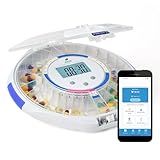
Overview: The JULOS 28-Day Bluetooth Automatic Pill Dispenser is a smart medication management system designed for seniors and Alzheimer’s patients. It combines traditional organization with modern app-controlled monitoring, offering up to nine daily alarms through its SmartLife companion app.
What Makes It Stand Out: This dispenser excels with its 360° LED halo that syncs with audio alerts, providing visual cues for up to 30 minutes until pills are retrieved. The high-capacity design holds 672 aspirin-sized pills across 28 compartments with nine interchangeable dosing rings—30% more storage than standard models. Its three beep patterns and volume levels accommodate both hearing-impaired and noise-sensitive users.
Value for Money: At $79.99, the JULOS sits in the mid-range price bracket. It delivers premium features like app connectivity and caregiver tracking without subscription fees, making it more cost-effective than higher-end Wi-Fi models while offering significantly more functionality than basic $40-50 units.
Strengths and Weaknesses: Strengths include exceptional pill capacity, customizable multi-sensory alerts, secure locking mechanism, and zero subscription costs. The Bluetooth connectivity allows real-time monitoring for caregivers. Weaknesses include reliance on smartphone technology that may challenge less tech-savvy seniors, limited range compared to Wi-Fi devices, and potential app compatibility issues with older phones.
Bottom Line: The JULOS is ideal for tech-comfortable seniors or caregivers managing complex medication regimens. Its high capacity and thoughtful alert system justify the price, though it requires a learning curve for optimal use.
7. Med-Q Digital Pill Box with Alarms – Pill Organizer with Flashing Lights & Beeping Reminders – Monthly Pill Dispenser for Seniors, Dementia, Alzheimer’s, Medication & Vitamin Management

Overview: The Med-Q Digital Pill Box offers a straightforward approach to medication management with its triple-alarm system. Designed by ER nurses specifically for seniors with dementia and Alzheimer’s, this device prioritizes simplicity and error prevention through its unique lighting system that guides users directly to the correct dose.
What Makes It Stand Out: The Med-Q’s standout feature is its ability to light up only the exact compartment needed for each dose, eliminating confusion. The triple alarm combines flashing lights, escalating beeps, and visual cues that repeat every 30 minutes until medication is taken. Its oversized lettering and easy-open compartments address common senior mobility and vision challenges.
Value for Money: Priced at $77.00, the Med-Q competes directly with the JULOS model but focuses on on-device functionality rather than app connectivity. It offers excellent value for caregivers seeking a reliable, no-frills solution without ongoing subscription costs or complex setup requirements.
Strengths and Weaknesses: Strengths include foolproof compartment lighting, nurse-informed design, loud escalating alarms, and simple operation without smartphone dependency. The 14-day capacity suits most regimens. Weaknesses include limited capacity compared to 28-day models, lack of remote monitoring capabilities, and fewer customization options for complex dosing schedules.
Bottom Line: The Med-Q is perfect for seniors who need clear, simple reminders without technological complexity. It’s a dependable, affordably-priced choice for in-home dementia care where direct supervision is available.
8. VEXA VitaMate Pro 21 Smart Pill Dispenser with Automatic Rotation, Rising Pill Containers, Sound & Light Alerts, App-Controlled Medication Reminder and Tracker for Tablets, Capsules & Supplements
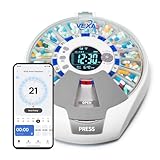
Overview: The VEXA VitaMate Pro 21 represents the premium tier of smart pill dispensers with Wi-Fi connectivity and patented automation. Designed for complex medical routines, this device offers professional-grade features with enterprise-level data security and US-based support for peace of mind.
What Makes It Stand Out: The patented rising pod mechanism automatically presents the correct medication at the scheduled time, eliminating manual rotation. With 21 independent compartments and up to 21 daily alarms, it handles intricate dosing schedules. The VEXA app provides real-time caregiver alerts, family sharing features, and utilizes the secure Tuya cloud infrastructure.
Value for Money: At $197.99, this is a significant investment. However, it justifies the premium price through unique automation, Wi-Fi reliability, professional customer support, and robust data privacy compliance. For those managing multiple daily medications or providing remote care, the cost is offset by peace of mind.
Strengths and Weaknesses: Strengths include automatic rotation and rising pods, superior app experience, enterprise-grade encryption, multi-user monitoring, and excellent US-based support. The high-definition LCD screen enhances visibility. Weaknesses include the steep price point, complexity that may overwhelm some seniors, and smaller capacity (21 vs 28 compartments) compared to competitors.
Bottom Line: The VEXA VitaMate Pro 21 is worth the investment for tech-savvy users managing complex regimens or caregivers providing remote support. Its automation and security features set it apart from budget alternatives.
9. SenyerKare 28-Day Automatic Pill Dispenser with Alarm & Alzheimer’s Care, Medication Organizer w/Easy-Read LCD Display, Sound & Light & Key Alerts for Medication, Vitamins, Supplements, Clear Lid

Overview: The SenyerKare 28-Day Automatic Pill Dispenser balances affordability with essential smart features. This device focuses on ease of use for independent seniors while providing caregivers with basic monitoring capabilities through its straightforward design and transparent construction that allows quick visual checks.
What Makes It Stand Out: Like the JULOS, it offers impressive 672-pill capacity across 28 compartments, but at a lower price point. The transparent lid allows visual monitoring without opening, while the integrated mini-magnifier aids those with vision impairments. It supports 1-6 daily alarms with six interchangeable dosage rings for flexible scheduling.
Value for Money: At $70.99, this is one of the most affordable 28-day automatic dispensers available. It provides core functionality—alerts, locking mechanism, and large capacity—without app connectivity costs. For budget-conscious buyers, it delivers essential features without compromising safety.
Strengths and Weaknesses: Strengths include exceptional value, large capacity, clear LCD display, locking cover with keys, and visual pill verification through the transparent lid. The mini-magnifier is a thoughtful addition. Weaknesses include lack of smartphone connectivity for remote monitoring, limited to six daily alarms, and no caregiver tracking features, requiring physical check-ins.
Bottom Line: The SenyerKare is an excellent entry-level automatic dispenser for seniors living independently or with nearby caregiver support. Its affordability and high capacity make it a practical choice when advanced connectivity features aren’t necessary for effective medication management.
10. 28-Day Automatic Pill Dispenser – App & On-Device Setup by Family, LCD Display, Digital Lock, Sound & Light Alerts – Safe Medication Organizer Management for Seniors (2-Tray, White)

Overview: This premium 28-Day Automatic Pill Dispenser focuses on remote caregiving with dual setup options and voice guidance. Its innovative two-tray design simplifies complex dosing schedules while enabling family members to manage medications from anywhere through comprehensive app control and monitoring.
What Makes It Stand Out: The unique two-tray system automatically handles dosing—one tray for morning, one for evening—without manual rotation or interchangeable rings. Voice-guided on-device setup makes it accessible for seniors, while the app enables remote configuration and monitoring. Real-time adherence logs can be shared with healthcare providers for better coordination.
Value for Money: At $299.99, this is the most expensive option reviewed. The price reflects its dual-tray automation, voice guidance, moisture protection, and comprehensive remote monitoring capabilities. For long-distance caregivers, the investment provides unparalleled oversight and reduces emergency visits.
Strengths and Weaknesses: Strengths include innovative tray design, voice-guided setup, flexible alert options, moisture protection with desiccant, and robust app-based monitoring. The ability to share logs with doctors is invaluable. Weaknesses include the prohibitive cost for many families, potential over-engineering for simple regimens, and reliance on stable internet for remote features.
Bottom Line: This dispenser is ideal for long-distance caregivers managing complex medication schedules for seniors with limited tech skills. The voice guidance and remote capabilities justify the premium price for those who can afford this advanced level of support and monitoring.
Understanding the Unique Medication Challenges in Dementia Care
Dementia doesn’t just affect memory—it fundamentally alters how a person perceives time, processes instructions, and interacts with everyday objects. A standard pill organizer, even one with electronic reminders, often fails because it doesn’t account for the cognitive barriers specific to Alzheimer’s and related disorders. Patients may forget what the alarm means, become confused by multiple buttons, or develop new anxieties around unfamiliar technology.
The statistics paint a sobering picture: medication non-adherence rates among dementia patients can exceed 60%, compared to roughly 50% in the general elderly population. This isn’t about willful non-compliance; it’s about the progressive deterioration of executive function—the mental skills that help us plan, focus attention, and juggle multiple tasks. A truly effective smart dispenser must compensate for these deficits while preserving dignity and autonomy.
What Makes a Smart Pill Dispenser “Dementia-Friendly”?
The term “dementia-friendly” gets thrown around loosely in marketing materials, but genuine dementia-friendly design rests on three pillars: cognitive accessibility, safety redundancy, and caregiver integration. Cognitive accessibility means the device speaks the language of someone whose short-term memory might reset every few minutes. Safety redundancy acknowledges that when one system fails—say, the patient ignores an alarm—backup protocols activate automatically. Caregiver integration ensures that the device functions as a communication bridge, not just a medication vault.
Look beyond the buzzwords like “AI-powered” or “IoT-enabled.” The real question is whether the technology reduces cognitive load rather than adding to it. Does it guide the user through a single, clear action? Does it eliminate decision points that could cause paralysis? The best devices for dementia care often have fewer features than their consumer-grade counterparts, but those features are hyper-focused on the specific failure points of cognitive decline.
Essential Safety Features to Prioritize
When evaluating smart pill dispensers for dementia care, safety isn’t a feature—it’s the foundation. The consequences of a medication error can be catastrophic for an elderly person with compromised health. Here’s what demands your scrutiny:
Locked Compartments and Tamper-Evident Design
Forget simple latch mechanisms. Modern dementia-grade dispensers employ electronic locks that only release the exact dose at the exact time. Look for devices with tamper-evident logging that records every attempt to access compartments outside of scheduled times. Some advanced models use biometric verification or require a caregiver’s remote authorization for early access. The lock should be robust enough to resist curious fingers but not so complex that it frustrates legitimate use.
Overdose Prevention Mechanisms
This is non-negotiable. The device must physically prevent access to multiple doses simultaneously. Rotating carousel designs excel here because they only present one compartment at a time. Avoid devices where all compartments remain visible but “locked”—visual temptation can trigger agitation in dementia patients. The mechanism should also detect if a dose was removed but not consumed within a reasonable timeframe, prompting a re-locking protocol.
Missed Dose Alerts and Escalation Protocols
A simple beep isn’t enough. The system should initiate a graduated response: first, gentle visual and auditory cues directly to the patient; then, after a preset interval, notifications to the primary caregiver; finally, escalation to backup contacts or healthcare providers if the dose remains untaken. The timing of these escalations must be customizable—what works for morning medications may be inappropriate for bedtime doses.
User Interface Considerations for Cognitive Impairment
The interface is where most smart dispensers fail for dementia patients. A screen cluttered with icons, text menus, or multiple buttons creates immediate cognitive overload. The golden rule: the patient-facing side should require zero learning and minimal decision-making.
Visual and Auditory Cue Systems
Effective cue systems work like traffic lights: universally understood and impossible to ignore. Look for dispensers with large, color-coded lights that signal different states—steady blue for “time to take medication,” flashing red for “missed dose,” green for “successfully completed.” Auditory alerts should be customizable in volume and tone. Some devices allow you to record a familiar voice (a spouse or child) giving instructions, which can be more effective than generic beeps. The sound should be distinguishable from doorbells, phones, and other household noises to avoid confusion.
Simplified Button Design and Navigation
Ideally, the patient interacts with one large, obvious button—press to dispense, press to confirm. Touchscreens are problematic for seniors with dexterity issues or those who can’t process the abstract concept of “swipe” or “tap.” Physical buttons should have tactile feedback and be spaced to prevent accidental double-pressing. The device should never require the patient to navigate menus, input passwords, or make choices beyond “take medication now.”
Connectivity and Remote Monitoring Capabilities
The true power of smart dispensers in dementia care lies in their ability to keep caregivers informed without being physically present. This isn’t about surveillance—it’s about creating a safety net that respects both parties’ autonomy.
Real-Time Caregiver Notifications
The notification system should be sophisticated enough to reduce false alarms while catching genuine concerns. You want granular control: alerts for missed doses, early access attempts, low medication supply, and device malfunctions. But you also want the ability to set “quiet hours” and customize who receives which alerts. The best systems offer a caregiver dashboard accessible via smartphone, tablet, and web browser, with role-based permissions for family members, professional caregivers, and healthcare providers.
Integration with Telehealth Platforms
As virtual healthcare becomes standard, your dispenser should speak the same language as your doctor’s office. Look for devices that can generate adherence reports, export data to electronic health records (EHRs), and even allow pharmacists to remotely adjust dosing schedules. In 2026, FHIR (Fast Healthcare Interoperability Resources) compliance is becoming the gold standard for medical device integration. This connectivity transforms your dispenser from a passive container into an active participant in medication therapy management.
Power Supply Reliability and Backup Systems
A dead dispenser is a dangerous dispenser. For dementia care, power reliability goes far beyond a simple battery backup. Evaluate devices with dual power sources—AC adapter with battery failover—but dig deeper. How long does the battery last in real-world use? Does the device send low-battery warnings to caregivers days in advance, not hours?
Consider models with built-in UPS (uninterruptible power supply) systems that maintain full functionality during outages. Some cutting-edge dispensers in 2026 incorporate small solar panels for trickle charging, ideal for patients in sun-rich climates. The device should also maintain its internal clock and all scheduled doses during power failures, resuming normal operation automatically when power returns without requiring manual reprogramming.
Medication Capacity and Flexibility
Dementia patients often take multiple medications with different dosing frequencies—some daily, others twice daily, some as-needed. Your dispenser must accommodate this complexity without forcing you to choose between oversimplifying the regimen or managing multiple devices.
Look for modular systems where you can add or remove compartments as needs change. Capacity isn’t just about the number of pills; it’s about the variety of pill sizes. Can the device handle large vitamins alongside tiny tablets? Does it support liquid medications or inhalers? The best designs use adjustable dividers within compartments. For 2026, consider devices with “flex slots” that can be programmed for variable dosing—perfect for medications like warfarin where doses change weekly.
Setup and Programming Complexity
Here’s a paradox: the most technologically advanced dispenser is worthless if the caregiver can’t program it. Many family caregivers are themselves seniors who may not be tech-savvy. The setup process should be guided, intuitive, and offer multiple pathways to success.
Prioritize devices that offer phone-based setup assistance from the manufacturer, especially for the first configuration. Cloud-based programming is a game-changer—set up the entire medication schedule on your computer and push it to the device wirelessly. Look for systems with medication libraries that auto-populate drug names, strengths, and common dosing schedules, reducing manual entry errors. The interface should allow you to make temporary changes (like holding a dose for a doctor’s appointment) without disrupting the entire schedule.
Durability and Build Quality
Dementia care environments are tough on electronics. Devices get knocked off tables, exposed to spills, and handled with less-than-gentle touch. A dispenser that breaks in six months is a poor investment.
Examine the materials: medical-grade plastics that resist cracking, weighted bases that prevent tipping, and spill-resistant seals around electronic components. The moving parts—motors, gears, locking mechanisms—should be rated for tens of thousands of cycles. Check the warranty terms carefully. A one-year warranty is standard; three years indicates manufacturer confidence. Some companies now offer “dementia care” warranties that cover accidental damage, recognizing the unique risks of the use case.
Cost Analysis and Insurance Considerations
Smart pill dispensers range from $100 to over $1,000, but the sticker price tells only part of the story. Factor in subscription fees for cellular connectivity, premium caregiver dashboard features, and replacement parts. Some manufacturers subsidize hardware costs with mandatory monthly subscriptions—calculate the total cost of ownership over three years.
Here’s promising news for 2026: Medicare Advantage plans are increasingly covering smart dispensers as supplemental benefits under “chronic care management.” Some state Medicaid programs now reimburse for these devices for qualified dementia patients. Check if the manufacturer provides documentation for insurance claims, including HCPCS codes and letters of medical necessity. Flexible Spending Accounts (FSAs) and Health Savings Accounts (HSAs) typically cover these purchases with a doctor’s prescription.
Privacy and Data Security
Your dispenser knows intimate details about health conditions, medication regimens, and daily routines. In an age of data breaches, security isn’t optional. Investigate the manufacturer’s data policies: Do they sell anonymized data to pharmaceutical companies? Where are servers located? What encryption standards do they use?
For 2026, look for devices with end-to-end encryption, two-factor authentication for caregiver accounts, and GDPR/CCPA compliance even if you’re not in those jurisdictions—it signals a higher privacy standard. The device should store minimal data locally and transmit only encrypted, essential information. Be wary of dispensers that require social media accounts for login or share data with third-party analytics platforms without explicit consent.
Future Trends in 2026 and Beyond
The smart dispenser landscape is evolving rapidly. Voice-first interfaces powered by conversational AI are emerging, allowing patients to ask “What pill is this?” or “When is my next dose?” in natural language. Computer vision technology can now verify that a pill was actually swallowed, not just removed from the compartment—addressing a major gap in adherence tracking.
Biometric integration is another frontier. Some prototype devices monitor heart rate variability or sleep patterns through built-in sensors, correlating medication timing with physiological responses. While these features sound futuristic, they raise important questions about consent and autonomy in dementia care. The most ethical manufacturers are focusing on “explainable AI” that helps caregivers understand why a patient might be missing doses rather than simply reporting the missed dose.
How to Evaluate Your Specific Care Situation
No device is perfect for everyone. Start by honestly assessing your loved one’s stage of cognitive decline. Someone in early-stage Alzheimer’s may benefit from a dispenser that promotes independence with subtle prompts. A person in mid-to-late stage dementia needs a fortress of safety features where the caregiver controls virtually everything.
Consider the living situation. Is the patient alone for extended periods, or is there a live-in caregiver? Solo dwellers need more robust remote monitoring and emergency escalation. In multi-person households, the dispenser should distinguish between the dementia patient and others who might interact with it. Map out the entire medication regimen—number of medications, dosing frequencies, special requirements—and use this as your screening checklist. A device that excels at once-daily dosing might falter with complex PRN (as-needed) medications.
Implementation Strategies for Success
Buying the dispenser is just the beginning. A thoughtful rollout plan determines success. Start with a “shadow mode” where the device operates alongside your current system for one to two weeks, allowing you to identify programming errors without risking medication access.
Introduce the device gradually. For the first week, have the caregiver present at dose times to provide reassurance and demonstrate the simple action required. Record a familiar voice giving instructions—hearing a trusted voice can reduce anxiety and resistance. Create a visual cue in the environment: a large sign saying “When the blue light flashes, press the big button” placed near the dispenser.
Establish a routine for checking the device: weekly supply refills, battery checks, and reviewing adherence data. Most importantly, treat the dispenser as a tool that supports your relationship, not replaces your involvement. The goal is reducing stress and errors, not eliminating human connection from the medication process.
Frequently Asked Questions
1. Will my loved one with mid-stage dementia be able to operate a smart pill dispenser independently?
Success depends more on interface simplicity than cognitive stage. Look for devices with single-button operation and familiar voice prompts. Many patients who can’t operate a smartphone can successfully use a well-designed dispenser because the muscle memory of “press button when light flashes” remains intact longer than complex reasoning skills. Start with supervised use and gradually increase independence as comfort grows.
2. What happens during a power outage or internet disruption?
Quality devices maintain all scheduled doses internally and continue operating on battery power for 24-72 hours. They store adherence data locally and sync it when connectivity resumes. The best systems send “offline” alerts to caregivers immediately, so you know the remote monitoring is temporarily suspended and can arrange check-in calls.
3. How much should I budget for a reliable dementia-specific smart dispenser?
Expect to spend $250-$600 for the hardware, plus $10-$30 monthly for cellular connectivity and premium features. While cheaper options exist, they often lack critical safety features like overdose prevention and graduated alert escalation. Consider the cost relative to a single emergency room visit from a medication error—most families find the investment pays for itself within the first year.
4. Are these devices covered by Medicare or private insurance?
As of 2026, original Medicare doesn’t routinely cover smart dispensers, but many Medicare Advantage plans offer them as supplemental benefits for chronic conditions. Medicaid coverage varies by state. Private insurance is increasingly recognizing these as durable medical equipment. Always obtain a doctor’s prescription and letter of medical necessity to strengthen your claim.
5. Can smart dispensers handle liquid medications, inhalers, or eye drops?
Most traditional dispensers are designed for solid pills only. However, 2026 models increasingly offer separate, temperature-controlled modules for liquids and dedicated slots for inhalers. These often require manual acknowledgment from the patient. For complex regimens mixing multiple forms, consider a hybrid approach: smart dispenser for pills plus a connected reminder system for other medication types.
6. How do I prevent my loved one from becoming agitated or scared by the alarms?
Customization is key. Start with a soft, familiar voice recording at low volume during calm times of day. Use warm lighting instead of harsh flashes. Some advanced devices monitor ambient noise and adjust alert volume accordingly. Most importantly, introduce the device during a period of stability, not during a health crisis when anxiety is already elevated.
7. What data security measures protect my loved one’s health information?
Reputable manufacturers employ end-to-end encryption, two-factor authentication, and store data on HIPAA-compliant servers. In 2026, look for devices certified under the new FDA cybersecurity guidelines for medical devices. Read privacy policies carefully—avoid companies that reserve the right to sell data to third parties. Your dispenser should be a medical device, not a data collection tool.
8. How loud are the alarms, and will they disturb neighbors in an apartment setting?
Volume typically ranges from 50-90 decibels and should be adjustable. Many devices now offer “vibrate then escalate” modes, starting with a soft pulse and increasing gradually. For shared walls, place the dispenser away from common walls and use the lowest effective volume. Some models can send silent alerts to a wearable device on the patient’s wrist, ideal for noise-sensitive environments.
9. Can multiple family members and professional caregivers receive different types of alerts?
Yes, modern systems support role-based notifications. You can configure the system so a spouse receives all alerts, adult children only get emergency notifications, and professional caregivers receive adherence reports. This prevents alert fatigue while ensuring the right person gets the right information at the right time. Look for systems with unlimited caregiver accounts to avoid per-user fees.
10. What if my loved one simply refuses to take medication even when the dispenser releases it?
Technology can’t override human autonomy, and that’s actually a good thing. The best dispensers document the refusal—recording that the dose was released but not taken—rather than trying to force compliance. This data helps healthcare providers identify patterns and adjust strategies. Some devices integrate with video calling, allowing a remote caregiver to provide gentle encouragement. Ultimately, the dispenser supports but doesn’t replace the nuanced human judgment needed in dementia care.