The kitchen of 2026 looks nothing like it did just five years ago. As our homes get smarter and our schedules more demanding, the humble pressure cooker has undergone a remarkable transformation. No longer just a stovetop whistle-blower, today’s smart pressure cookers with app control have become the command centers of modern meal preparation, seamlessly blending culinary tradition with cutting-edge technology. Whether you’re a busy professional juggling remote work or a home chef looking to perfect your technique, these intelligent appliances promise to revolutionize how you think about weeknight dinners and weekend meal prep.
But with connectivity becoming standard rather than premium, the market has exploded with options that all claim to be “smart.” The real question isn’t whether you should upgrade—it’s how to navigate the ecosystem of Wi-Fi chips, voice assistants, and subscription-based recipe platforms to find the pressure cooker that actually fits your lifestyle. This comprehensive guide cuts through the marketing noise to examine what truly matters when investing in an app-controlled pressure cooker in 2026.
Top 10 Smart Pressure Cookers with App Control
Detailed Product Reviews
1. CHEF iQ Smart Pressure Cooker with WiFi and Built-in Scale - Easy-to-Use 10-in-1 Multicooker with 500+ Guided Recipes - Rice Cooker, Slow Cooker, Instant Meals for Foodies - 6 Quart - Family Size

Overview: The CHEF iQ Smart Pressure Cooker redefines intelligent cooking with its integrated WiFi, Bluetooth connectivity, and unique built-in scale. This 10-in-1 multicooker targets tech-savvy home chefs who want precision without complexity. The 6-quart capacity suits families of four to six, while the companion app transforms meal preparation into a guided, interactive experience with video tutorials and remote monitoring capabilities.
What Makes It Stand Out: The built-in scale with four smart sensors eliminates measuring cups entirely, calculating exact liquid requirements based on ingredient weight—a game-changer for accuracy. The auto pressure release system offers three methods (quick, pulse, natural) for enhanced safety and convenience. With 500+ guided recipes and the ability to send precise cooking parameters directly from app to cooker, it removes guesswork entirely. The integrated scale and automated features create a seamless cooking workflow unmatched by competitors.
Value for Money: At $199.99, the CHEF iQ positions itself as a premium smart appliance. While pricier than basic multicookers, the built-in scale alone justifies the cost for serious cooks tired of manual measurements. Comparable WiFi-enabled alternatives lack this integrated weighing capability, making it unique in its price bracket. For those who value precision and connectivity, it delivers tangible utility beyond standard pressure cookers.
Strengths and Weaknesses: Pros: Innovative built-in scale; comprehensive app with video guidance; automatic pressure release enhances safety; WiFi/Bluetooth remote control; sleek interface. Cons: Smaller recipe database than some competitors; app dependency may intimidate traditional cooks; premium price point; WiFi setup can be finicky.
Bottom Line: The CHEF iQ is ideal for gadget-loving foodies who prioritize precision and guided cooking. Its integrated scale and smart features genuinely simplify meal prep, making the premium worthwhile for tech-comfortable users seeking a truly intelligent multicooker.
2. Instant Pot Pro Plus Wi-Fi Smart 10-in-1, Pressure Cooker, Slow Cooker, Rice Cooker, Steamer, Sauté Pan, Yogurt Maker, Warmer, Canning Pot, Sous Vide, Includes App with Over 800 Recipes, 6 Quart
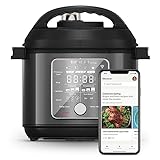
Overview: The Instant Pot Pro Plus represents the apex of multicooker technology, combining Wi-Fi connectivity with 10 cooking functions in a professional-grade package. This 6-quart powerhouse caters to ambitious home cooks who want maximum versatility and smart control. The companion app unlocks over 2,000 interactive recipes with real-time monitoring and adjustments, making it a comprehensive cooking ecosystem rather than just an appliance.
What Makes It Stand Out: NutriBoost technology pulses ingredients during cooking, extracting deeper flavors and improving texture—particularly transformative for rice, soups, and risottos. WhisperQuiet steam release minimizes kitchen noise dramatically, addressing a common pressure cooker complaint. The intuitive touchscreen interface and app-based control allow function switching mid-cook without physical interaction. With 2,000+ recipes and sous vide capability, it offers professional techniques in a user-friendly format.
Value for Money: Priced at $229.95, this is Instant Pot’s premium offering. The extensive recipe library, NutriBoost innovation, and whisper-quiet operation justify the cost over mid-range models. While significantly more expensive than basic 7-in-1 units, the Wi-Fi functionality, canning capability, and superior user experience deliver clear upgrades. For serious cooks, the price premium translates to measurable performance gains.
Strengths and Weaknesses: Pros: Massive recipe database; NutriBoost enhances food quality; WhisperQuiet operation; comprehensive 10-in-1 functionality; robust app control; sous vide and canning capabilities. Cons: Highest price in the lineup; complex features may overwhelm beginners; Wi-Fi dependency; larger footprint; some features overlap with cheaper models.
Bottom Line: The Pro Plus is worth every penny for dedicated cooks who’ll leverage its advanced features. If you’ll use Wi-Fi control, NutriBoost, and the extensive recipe library, it’s the best smart multicooker available. Beginners may find better value in simpler models.
3. Instant Pot Duo Plus 9-in-1 Multicooker, Pressure Cooker, Slow Cook, Rice Maker, Steamer, Sauté, Yogurt, Warmer & Sterilizer, Includes App With Over 800 Recipes, Stainless Steel, 6 Quarts

Overview: The Instant Pot Duo Plus hits the sweet spot between functionality and affordability, offering nine cooking modes in a reliable 6-quart package. This model appeals to practical families wanting versatility without premium smart features. The sterilizer function adds unexpected utility for baby bottles and utensils, while 15 customizable smart programs handle everything from soups to cakes with single-touch convenience. It’s a workhorse designed for daily use.
What Makes It Stand Out: The detachable power cord solves a common storage frustration, making it easier to tuck away in crowded kitchens. The sterilizer function distinguishes it from standard 7-in-1 models, providing genuine added value for parents or home fermenters. Real-time display indicators for pressure, temperature, and cooking progress offer transparency without app dependency. The anti-spin tri-ply stainless steel pot enables proper searing—a feature often compromised in budget multicookers.
Value for Money: At $139.99, the Duo Plus delivers exceptional mid-range value. You gain sterilization, sous vide, and better construction over the base Duo for a modest $60 premium. The tri-ply pot and detachable cord alone justify the upgrade. While lacking Wi-Fi, it retains core versatility with 800+ app recipes available. For most families, this represents the optimal balance of features versus cost.
Strengths and Weaknesses: Pros: Sterilizer function adds versatility; detachable cord aids storage; tri-ply pot for superior searing; 15 smart programs; excellent price-to-feature ratio; reliable performance. Cons: No Wi-Fi connectivity; fewer recipes than premium models; steam release louder than Pro Plus; display less intuitive than touchscreen versions.
Bottom Line: The Duo Plus is the best choice for value-conscious buyers who want maximum utility without smart premiums. Its sterilizer function and superior pot construction make it a practical upgrade from entry-level models. Perfect for families prioritizing function over connectivity.
4. Instant Pot Duo 7-in-1 Electric Pressure Cooker, Slow Cooker, Rice, Steamer, Sauté, Yogurt Maker, Warmer & Sterilizer, Includes App With Over 800 Recipes, Stainless Steel, 6 Quart

Overview: The Instant Pot Duo 7-in-1 is the classic that launched the multicooker revolution, delivering essential functionality at an accessible price point. This 6-quart model strips away complexity to focus on reliable performance across seven core cooking methods. With 13 customizable smart programs and access to 800+ app recipes, it provides a solid foundation for pressure cooking newcomers without overwhelming them with features they’ll rarely use.
What Makes It Stand Out: Its remarkable simplicity and proven reliability make it the perfect gateway appliance. The Easy-Release steam switch provides safe, straightforward pressure management without complicated mechanisms. At under $80, it democratizes pressure cooking, offering the same fundamental benefits as pricier models—70% faster cooking times, one-pot convenience, and energy efficiency. The stainless steel tri-ply pot delivers unexpected quality for this price tier.
Value for Money: Priced at $79.99, this represents outstanding entry-level value. You’re getting the core pressure cooking experience that made Instant Pot famous, plus yogurt making and sterilizing capabilities. While lacking sous vide or Wi-Fi, it handles 90% of typical cooking tasks effortlessly. For budget-conscious buyers or first-time users, the cost-to-utility ratio is unbeatable. It’s a genuine appliance workhorse that doesn’t punish you for skipping premium features.
Strengths and Weaknesses: Pros: Unbeatable price; proven reliability; essential 7-in-1 functionality; tri-ply stainless pot; simple operation; extensive recipe app; compact design. Cons: No advanced smart features; basic display; louder steam release; fewer cooking programs; no integrated scale or Wi-Fi; limited customization.
Bottom Line: The Duo 7-in-1 remains the smartest starting point for multicooker novices. If you’re unsure about pressure cooking or need a reliable backup, this delivers core performance at a no-risk price. Skip this only if you specifically need Wi-Fi, larger capacity, or sterilization features.
5. Instant Pot Duo 7-in-1 Electric Pressure Cooker, Slow Cooker, Rice Cooker, Steamer, Sauté, Yogurt Maker, Warmer & Sterilizer, Includes App with Over 800 Recipes, Stainless Steel, 8 Quart

Overview: This 8-quart version of the classic Duo 7-in-1 scales up the beloved entry-level formula for larger households. It retains the same seven core functions and 13 smart programs as its 6-quart sibling but adds 33% more capacity—perfect for batch cooking, meal prep, or families of six to eight. The expanded size transforms it from a daily dinner solution into a serious batch-cooking tool without adding complexity or premium pricing.
What Makes It Stand Out: The 8-quart capacity at $129.99 breaks price barriers for large-format multicookers. You get the same tri-ply stainless steel pot quality, Easy-Release steam switch safety, and 800+ recipe app access as smaller models, but with serious volume for stock, chili, or roasts. It’s the most affordable way to access this capacity from a trusted brand. The sterilizer function becomes more practical at this size, handling more bottles or jars per cycle.
Value for Money: At $129.99, you’re paying just $50 more for 33% additional capacity compared to the 6-quart Duo—excellent scaling. Large-format alternatives typically command $180+ premiums. For big families or meal preppers, this capacity upgrade pays dividends immediately. While lacking advanced features, the price-to-volume ratio is exceptional. It delivers the same reliable performance as the smaller version, just more of it.
Strengths and Weaknesses: Pros: Generous 8-quart capacity; maintains budget pricing; tri-ply stainless pot; proven 7-in-1 functionality; sterilizer included; ideal for batch cooking. Cons: Bulky footprint; no Wi-Fi or smart features; basic display; louder operation; longer preheating times; may be oversized for smaller households.
Bottom Line: Choose this 8-quart Duo if you regularly cook for six or more people. It offers unmatched capacity value, making it perfect for batch cooks, large families, and entertainers. The modest price premium over the 6-quart makes upsizing a no-brainer if you have the counter space and need the volume.
6. Instant Pot, 8-Quart Whisper Quiet 9-in-1 Electric Pressure Cooker, Slow Rice Cooker, Steamer, Sauté, Yogurt Maker, Warmer & Sterilizer, App With Over 800 Recipes, Stainless Steel, Duo Plus

Overview: The Instant Pot Duo Plus 9-in-1 delivers exceptional versatility in a spacious 8-quart capacity, making it ideal for families and meal preppers. This multi-cooker combines nine essential functions—pressure cooking, slow cooking, rice cooking, steaming, sautéing, yogurt making, warming, sterilizing, and sous vide—into one sleek stainless steel appliance. The intuitive dial control and guided cooking system with 25 presets simplify complex recipes, while the WhisperQuiet steam release ensures a peaceful kitchen environment.
What Makes It Stand Out: The WhisperQuiet technology is a game-changer for noise-sensitive households, eliminating the jarring steam release common with older pressure cookers. The angled control panel with a cooking progress bar provides at-a-glance monitoring, and the anti-spin stainless steel pot stays secure during sautéing—a frustration-saver when stirring vigorously. The integrated app with 800+ recipes extends your culinary repertoire exponentially.
Value for Money: At $145.72, this 8-quart model offers excellent value for large families. Competing brands charge $180+ for similar capacity and fewer functions. The tri-ply stainless steel pot outlasts non-stick alternatives, and the 70% faster cooking translates to meaningful energy savings over time. You’re essentially getting nine appliances for the price of one mid-range gadget.
Strengths and Weaknesses: Pros: Whisper-quiet operation, spacious capacity, durable stainless steel pot, excellent guided cooking system, secure anti-spin design. Cons: Large footprint requires substantial counter/storage space, 8-quart size may be excessive for couples, app connectivity can be spotty for some users.
Bottom Line: The Duo Plus 8-quart is a powerhouse for large households seeking quiet operation and versatility. Its thoughtful design touches and robust construction justify every dollar. Highly recommended for families ready to consolidate their countertop appliances.
7. Instant Pot PRO Max Wi-Fi Smart 10-in-1 Pressure Cooker, Steamer, Saute, Warmer, Rice Cooker, Yogurt Maker, Sous Vide, Baker, NutriBoost - Includes App with 2000+ Recipes - 6 Quart

Overview: The Instant Pot PRO Max represents the pinnacle of smart cooking technology, combining Wi-Fi connectivity with 10 versatile functions in a 6-quart package. This premium multi-cooker handles pressure cooking, slow cooking, sautéing, steaming, sous vide, baking, rice making, yogurt creation, warming, and features exclusive NutriBoost technology. The Instant Connect app transforms your smartphone into a remote culinary command center with over 2,000 interactive recipes.
What Makes It Stand Out: Wi-Fi smart functionality allows you to monitor and adjust cooking from anywhere—start dinner while commuting home. The proprietary NutriBoost technology pulses ingredients during cooking, dramatically improving texture in rice, soups, and risotto. The app integration goes beyond recipes, offering real-time notifications and remote setting adjustments that truly leverage the “smart” designation.
Value for Money: Priced at $229.99, this sits at the premium end of the multi-cooker spectrum. However, the Wi-Fi capability, NutriBoost feature, and extensive recipe database justify the $80 premium over standard models. For tech-savvy cooks who value convenience and precision, the time saved and enhanced results deliver solid ROI compared to buying separate smart appliances.
Strengths and Weaknesses: Pros: Exceptional smart features, NutriBoost technology genuinely improves results, remote monitoring capability, extensive recipe library, quiet steam release. Cons: Highest price point in the lineup, Wi-Fi setup can be finicky, 6-quart capacity may be small for large families, app dependency might not suit everyone.
Bottom Line: The PRO Max is perfect for connected kitchens and tech enthusiasts who want maximum control. While pricey, its smart features and NutriBoost technology create tangible improvements. Ideal for couples or small families prioritizing convenience and culinary precision.
8. Nuwave Duet Air Fryer, Electric Pressure Cooker & Grill Combo, 540 IN 1 Multicooker with 3 Removable Lids, Slow Cook, Sautés, Dehydrator, 18/10 SS Pot, Sure-Lock Safety Tech & 13 Deluxe Accessories

Overview: The Nuwave Duet boldly redefines multi-cooking by combining pressure cooking, air frying, and grilling in one innovative appliance with an unprecedented 540 presets. This 540-in-1 cooker includes three removable lids for specialized functions and features Dynamic Pressure Control Technology that makes 200 micro-adjustments per minute. The Tender&Crispy Combo Cook function seamlessly transitions from pressure cooking to air frying, delivering restaurant-quality results with 90% less oil.
What Makes It Stand Out: The three-lid system (pressure cooker, air fryer, grill) eliminates the lid-switching hassle of competitors. Dynamic Pressure Control Technology maintains continuous boiling for maximum flavor extraction, while 240 customizable memory slots let you save family recipes. The 18/10 stainless steel pot offers superior corrosion resistance, and Sure-Lock safety technology provides peace of mind.
Value for Money: At $184.37, the Duet undercuts many competitors while offering more functions. Comparable air fryer-pressure cooker combos cost $200+, and the addition of grilling capability, three dedicated lids, and 13 accessories make this exceptional value. The 70% faster cooking and energy efficiency further sweeten the deal for budget-conscious buyers.
Strengths and Weaknesses: Pros: Unmatched preset variety, three dedicated lids, superior Dynamic Pressure Control, Combo Cook functionality, extensive accessories included, robust safety features. Cons: Complex interface has steep learning curve, larger footprint with three lids to store, brand has smaller community than Instant Pot, instruction manual could be clearer.
Bottom Line: The Nuwave Duet is a feature-packed powerhouse for adventurous cooks wanting maximum versatility. The three-lid system and Combo Cook function deliver unique value. Despite a learning curve, it’s an outstanding choice for those seeking one appliance that truly does everything.
9. Instant Pot Duo Crisp 11-in-1 Air Fryer and Electric Pressure Cooker Combo with Multicooker Lids that Fries, Steams, Slow Cooks, Dehydrates,Free App With Over 800 Recipes, Black/Stainless Steel, 8QT

Overview: The Instant Pot Duo Crisp merges two essential appliances—pressure cooker and air fryer—into one space-saving 8-quart unit with 11 versatile functions. This combo device handles air frying, roasting, baking, dehydrating, pressure cooking, slow cooking, sautéing, steaming, sterilizing, warming, and rice cooking. EvenCrisp Technology delivers golden, crispy results using 95% less oil, while the customizable temperature range (70°F to 450°F) provides precision for everything from delicate yogurt to crispy chicken wings.
What Makes It Stand Out: The Duo Crisp’s single appliance, dual-function design eliminates the need for separate pressure cooker and air fryer, saving precious counter space. EvenCrisp Technology produces superior browning compared to standard air fryer lids, and the extensive 70°F-450°F range is unmatched for versatility. The 8-quart capacity handles whole chickens or large batches, while the two-lid system is more streamlined than competitors requiring three.
Value for Money: At $169.99, this combo unit costs less than buying an 8-quart Instant Pot ($145) and separate air fryer ($80+) separately. You’re essentially getting the air frying capability for just $25 more than the standard Duo Plus. For families wanting both functions without clutter, this represents exceptional value with minimal compromise.
Strengths and Weaknesses: Pros: Excellent price for combo functionality, spacious 8-quart capacity, superior EvenCrisp results, wide temperature range, streamlined two-lid system, quiet operation. Cons: Switching lids mid-cook can be cumbersome, air fryer lid is bulky to store, dehydrating function is slower than dedicated units, learning curve for combo cooking.
Bottom Line: The Duo Crisp is the smart compromise for families wanting pressure cooking and air frying without buying two appliances. Its performance, capacity, and price point create a compelling package. Highly recommended for space-conscious households that refuse to sacrifice functionality.
10. Instant Pot 7.5QT RIO Wide, 7-in-1 Electric Multi-Cooker, Pressure Cooker, Slow Cook, Rice, Steamer, Sauté, Yogurt & Warmer, Wide Base, Large Searing Base, WhisperQuiet Steam Release

Overview: The Instant Pot RIO Wide carves out a unique niche with its 7.5-quart capacity and intentionally wide, shallow pot design that maximizes searing surface area. This 7-in-1 multi-cooker handles pressure cooking, slow cooking, rice making, steaming, sautéing, yogurt creation, and warming. The wide base allows for superior browning of large batches of meat without crowding, while WhisperQuiet steam release maintains a tranquil kitchen environment. Status indicator lights provide intuitive cooking progress feedback.
What Makes It Stand Out: The wide-format pot is a revelation for dishes requiring substantial searing—think browning multiple pounds of stew meat or chicken thighs in a single batch. Traditional tall pots force overcrowding, but the RIO Wide’s searing base solves this common frustration. The shallow design also makes stirring and serving easier, reducing wrist strain. WhisperQuiet technology and status lights demonstrate thoughtful user experience design.
Value for Money: At $99.99, the RIO Wide is the most budget-friendly option in the lineup while maintaining core Instant Pot quality. The wide base design adds unique value typically found in premium models, and the $45 savings compared to the 8-quart Duo Plus is significant. For searing-focused cooks, this specialized design delivers premium features at an entry-level price point.
Strengths and Weaknesses: Pros: Excellent searing capability, wide base prevents overcrowding, shallow pot is easy to stir and clean, WhisperQuiet operation, outstanding price point, status lights are helpful. Cons: Fewer functions than competitors (no air fry, sous vide, or sterilize), 7.5-quart capacity is slightly less than standard 8-quart, wide shape requires more horizontal storage space.
Bottom Line: The RIO Wide is a specialized tool for cooks who prioritize searing and braising. Its unique design solves real problems at an unbeatable price. Perfect for budget-conscious buyers who want premium construction without paying for functions they’ll never use. An excellent entry point into the Instant Pot ecosystem.
The Evolution of Pressure Cooking in the Smart Home Era
Pressure cooking has existed for centuries, but the integration of smartphone technology represents a fundamental shift in functionality. Early electric models simply replaced the stovetop with a heating element, but 2026’s smart pressure cookers function as connected culinary computers. They don’t just cook food—they learn your preferences, sync with your calendar, adjust for altitude automatically, and even order groceries when you’re running low on staples. This evolution reflects broader trends in the Internet of Things (IoT), where appliances are no longer isolated tools but interconnected nodes in your home’s digital ecosystem.
How App-Controlled Pressure Cookers Transform Your Kitchen Workflow
The true magic happens when you move beyond the “set it and forget it” mentality. App control enables multi-stage cooking programs that would be impossible to manage manually. Imagine starting a yogurt fermentation cycle that automatically transitions to a chilling phase, or a brisket recipe that begins with pressure cooking, switches to slow cooking for tenderness, and then sends you a notification to add vegetables during the final 30 minutes. These workflows transform meal preparation from an active, time-consuming process into a series of strategic decisions made from your smartphone, whether you’re in the living room or on your commute home.
Key Benefits of Smart Pressure Cookers Beyond Basic Cooking
While speed and convenience remain the primary selling points, the benefits of app-controlled pressure cookers in 2026 extend far beyond faster pot roast. Remote monitoring eliminates the anxiety of wondering whether your beans are burning while you run errands. Precise temperature and pressure logging helps you replicate restaurant-quality results, while built-in sensors adjust cooking parameters based on ingredient weight and ambient conditions. Many models now integrate with nutrition tracking apps, automatically logging macros and calories for entire meals. The social features—sharing custom recipes with friends or joining community cooking challenges—turn solitary meal prep into a connected experience.
Essential Features to Evaluate in 2026 Models
Not all “smart” features deliver equal value. When comparing models, prioritize capabilities that enhance safety, consistency, and genuine convenience over gimmicky add-ons. Look for UL certification specifically for connected appliances, which ensures the pressure regulation system responds correctly to app commands. The interface should offer both quick-start presets for beginners and fully customizable parameters for advanced users. Pay attention to whether the app requires a subscription for core functionality—some manufacturers have moved toward freemium models that lock essential features behind paywalls.
Wi-Fi vs. Bluetooth Connectivity: What Matters Most
Bluetooth-only pressure cookers limit you to a 30-foot range, making them little more than remote controls with extra steps. In 2026, Wi-Fi connectivity is the baseline for true smart functionality. However, not all Wi-Fi implementations are equal. Dual-band support (2.4GHz and 5GHz) ensures reliable connections in crowded network environments. Look for models with offline mode capabilities—these will continue cooking even if your internet drops, syncing data once reconnected. Some premium units now feature Thread or Matter support, future-proofing them for next-generation smart home standards and enabling local control without cloud dependency.
Voice Assistant Integration: Alexa, Google, and Beyond
Voice control has matured from a novelty to a genuinely useful hands-free tool. The best implementations allow you to check cooking status, adjust temperatures, or release pressure using natural language commands. However, verify whether voice commands require specific phrasing or if the AI understands context—“Hey Google, add 10 minutes to my pressure cooker” should work without you needing to name the exact device. In 2026, look for models that support multiple ecosystems simultaneously, preventing lock-in as your smart home setup evolves. Privacy-conscious shoppers should note that some devices process voice commands locally, while others transmit everything to the cloud.
Safety Certifications and Pressure Regulation Standards
Smart features shouldn’t compromise safety. Reputable manufacturers subject their connected pressure cookers to additional testing beyond standard UL 1369 certification. The app should display real-time pressure levels, lock status, and temperature data, but more importantly, the physical safety mechanisms must operate independently of the software. Redundant pressure release valves, lid-lock sensors, and overheat protection should function even if the Wi-Fi chip fails. In 2026, look for models with ISO 17025 accredited testing for cybersecurity, ensuring the appliance can’t be hijacked by malicious actors to create dangerous pressure levels.
Understanding Capacity: Choosing the Right Size for Your Household
Capacity remains one of the most misunderstood specifications. Smart pressure cookers list both total volume and usable capacity—typically, you should never fill beyond two-thirds for most foods and half for foaming ingredients. The “smart” aspect can help here, with weight sensors that warn you if you’ve overloaded the pot. Consider not just your family size but your cooking style. A too-large cooker wastes energy for small meals, while an undersized unit forces you to cook in batches, negating the time-saving benefits.
Small Households (3-Quart Models)
For singles, couples, or small families, 3-quart models offer the best energy efficiency and fastest pressure build times. In 2026, these compact units pack the same processing power as their larger siblings, making them ideal for side dishes, grains, and small proteins. The app experience often shines here, with recipe scaling that automatically adjusts liquid ratios and cooking times for smaller volumes. However, the limited capacity makes them unsuitable for batch cooking or meal prep, and you won’t be able to cook a whole chicken or large roast.
Family-Sized Solutions (6-Quart Models)
The 6-quart capacity has become the sweet spot for most households, accommodating meals for 4-6 people while remaining manageable for smaller portions. Smart features in this category often include multi-tier cooking programs that coordinate proteins and sides simultaneously. Look for models with adjustable pressure levels—some ingredients like delicate fish or certain legumes benefit from lower pressure settings that preserve texture. The app should support recipe scaling in both directions, helping you adapt community-shared recipes for your specific model.
Batch Cooking & Meal Prep (8-Quart and Larger)
Serious meal preppers and large families should consider 8-quart or even 10-quart models. These behemoths require longer preheating and pressure release times, but the app can notify you when each phase completes, making the process less tedious. Advanced models feature dual-pressure sensors that ensure even cooking throughout the larger volume. The downside is storage and countertop footprint—these units demand significant kitchen real estate. Some manufacturers now offer modular designs where the smart base connects to different-sized pots, providing flexibility without requiring multiple complete units.
App Ecosystem Deep Dive: What Makes or Breaks the Experience
The hardware is only half the equation. A pressure cooker’s app can elevate it to an indispensable tool or render it a frustrating novelty. Evaluate the app’s user interface design, update frequency, and offline capabilities. In 2026, the best apps offer seamless integration with meal planning services, automatically generating shopping lists based on your scheduled recipes. Check app store reviews specifically for comments about bug fixes and developer responsiveness—an abandoned app means your smart cooker will become a dumb appliance within a year.
Recipe Libraries and Guided Cooking Programs
The size of the recipe database matters less than its quality and curation. Look for apps that offer step-by-step video guidance, ingredient substitution suggestions, and user-generated content with verified success rates. Some platforms now use AI to generate recipes based on what’s in your smart refrigerator, creating a truly integrated kitchen experience. The most valuable feature is customizable recipe creation—being able to save your own pressure, temperature, and time parameters, then share them with precise replication instructions. Beware of apps that require premium subscriptions to access basic recipes; the best models include extensive free libraries with optional paid content for specialized cuisines.
Remote Monitoring and Notifications
Effective remote monitoring goes beyond a simple “cooking complete” ping. The best apps provide granular updates: preheating progress, pressure achieved, cooking phase active, natural release countdown, and keep-warm status. They should also alert you to anomalies—if the lid isn’t sealed properly or the temperature drops unexpectedly. Customizable notification settings are crucial; you don’t want your phone buzzing every five minutes, but you do need critical alerts. In 2026, look for smartwatch integration that lets you glance at cooking status without pulling out your phone, especially useful when your hands are covered in raw ingredients.
Firmware Updates and Long-Term Support
Your pressure cooker should improve over time, not degrade. Manufacturers committed to long-term support release quarterly firmware updates that add features, refine algorithms, and patch security vulnerabilities. Check the company’s track record—do they support legacy devices for five years or more? Some brands have earned customer loyalty by adding new cooking modes to five-year-old models via updates. The app should handle firmware updates automatically during off-hours, with clear changelogs explaining what’s new. Avoid brands that haven’t updated their apps in months; it’s a red flag for future support.
Material Matters: Inner Pot Construction and Durability
The inner pot’s material affects everything from heat distribution to food safety and cleaning ease. Stainless steel remains the gold standard for durability and non-reactivity, but 2026’s premium models feature tri-ply bases with aluminum cores for superior heat conduction. Non-stick ceramic coatings have improved dramatically, offering genuine food release without PFAS chemicals, though they still require gentler utensil use. Some innovative designs feature interchangeable pots—stainless for pressure cooking, ceramic for slow cooking—snapping into the same smart base. The app can detect which pot is inserted and adjust cooking programs accordingly, preventing damage from mismatched settings.
Pressure Release Mechanisms: Automatic vs. Manual
Smart pressure cookers offer multiple release methods, and the app control adds layers of convenience and safety. Automatic quick release can be triggered remotely, but the best systems use staged release—brief bursts of steam followed by pauses—to prevent foamy foods from clogging valves. Natural release can be precisely timed in the app, with notifications when pressure fully drops. Some models now feature “smart release” that monitors internal temperature and pressure, automatically switching between release methods for optimal results. Manual release remains important as a backup; ensure the physical valve is easily accessible and clearly marked, even if you primarily use app controls.
Energy Efficiency and Sustainability Considerations
In an era of rising energy costs and environmental awareness, smart pressure cookers offer surprising efficiency gains. The app provides detailed energy usage reports, showing exactly how much electricity each cooking cycle consumes. Models with insulated outer shells retain heat better, reducing the energy needed to maintain pressure. Some units integrate with home energy management systems, delaying start times to off-peak hours when electricity is cheaper and greener. Look for manufacturers using recycled materials in construction and offering take-back programs for end-of-life recycling. The most forward-thinking brands now carbon-offset the manufacturing process and display the carbon footprint of each model in the product specifications.
Price vs. Value: Budgeting for Your Smart Pressure Cooker
Smart pressure cookers in 2026 range from $80 budget models to $400+ premium units. The sweet spot for most users lies between $150-$250, where you get reliable connectivity, robust safety features, and a well-supported app. Budget options often use older Wi-Fi chips that struggle with modern routers and may not receive firmware updates. Premium models justify their price with advanced sensors, modular designs, and integration with broader appliance ecosystems. Consider the total cost of ownership—some apps require $5-10 monthly subscriptions for full functionality, turning a $200 purchase into a $320 investment over two years. Factor in warranty length and replacement part availability; a cheaper unit that fails after 13 months with no available parts represents worse value than a $250 model with a three-year warranty.
Common Pitfalls to Avoid When Shopping
The smart appliance market has its share of marketing traps. “AI-powered cooking” often means little more than preset programs with fancy names. Be skeptical of claims about “unlimited recipes”—quantity doesn’t guarantee quality or compatibility with your specific model. Avoid first-generation products from established brands or crowdfunded units without proven safety certifications. Check whether the app requires location tracking or excessive permissions; reputable apps only need Wi-Fi access and notifications. Perhaps the biggest pitfall is buying based on launch-day reviews—smart appliances often show their true colors (and bugs) three to six months after release when the initial honeymoon period wears off and firmware updates have addressed early issues.
Setting Up Your Smart Pressure Cooker for Success
Proper setup determines whether your smart pressure cooker becomes a daily driver or a cabinet-dwelling regret. Start by placing it within strong Wi-Fi signal range—pressure cookers are often used on countertops far from routers. During initial configuration, test every safety feature manually before relying on app control. Spend time exploring the app’s settings, customizing notifications, and downloading offline recipe bundles. Join user communities for your specific model; these forums often reveal undocumented features and troubleshooting tips. Most importantly, run a water test cycle while monitoring through the app to understand how the remote interface reflects real-time status. This baseline experience will build confidence before you entrust an expensive roast to remote control.
Frequently Asked Questions
1. Do I need a subscription to use the app control features?
Most reputable manufacturers include core app functionality—remote start, monitoring, and basic recipes—at no extra cost. However, premium recipe libraries, AI-generated meal plans, and cloud storage for custom recipes often require subscriptions ranging from $3 to $10 monthly. Always verify what’s included before purchasing; the best models offer robust free features with optional paid upgrades.
2. Can I control my pressure cooker when I’m away from home?
Yes, provided your unit has Wi-Fi connectivity and your home internet is active. You can start, monitor, and adjust cooking cycles from anywhere with cellular data. However, for safety reasons, you typically cannot initiate a pressure cooking cycle remotely without physically confirming the lid is locked—most apps require you to start the process locally, then allow remote adjustments.
3. What happens if my Wi-Fi goes out during cooking?
Quality smart pressure cookers continue cooking uninterrupted during internet outages. The cooking program runs locally on the device’s processor. Once Wi-Fi reconnects, the cooker syncs the completed cycle data to the app and sends any pending notifications. Look for models with offline mode indicators in the app so you know when connectivity is lost.
4. Are smart pressure cookers safe from hacking?
Reputable brands implement multiple security layers, including encrypted communications and local safety mechanisms that cannot be overridden by software. Physical pressure release valves and lid locks operate independently of the Wi-Fi chip. Choose models with UL cybersecurity certification and regular firmware updates to protect against vulnerabilities.
5. How accurate are the cooking times compared to manual recipes?
Smart pressure cookers often cook faster and more consistently than manual methods because they maintain precise pressure and temperature. The app typically adjusts traditional recipes automatically, reducing times by 10-20%. However, factors like altitude, ingredient temperature, and voltage fluctuations still affect results—use the app’s built-in altitude adjustment for best accuracy.
6. Can I use my grandmother’s pressure cooker recipes in a smart model?
Absolutely. The best apps include custom program creation where you input pressure level, cooking time, and release method manually. Start with the traditional recipe timing, then use the app’s logging features to fine-tune based on results. Many users digitize family recipes this way, creating shareable, repeatable versions that preserve tradition while adding modern precision.
7. Do smart pressure cookers use more electricity than traditional models?
Actually, they often use less. Precise temperature control prevents energy waste from overheating, and the app provides data to optimize your usage patterns. Many users report 15-25% energy savings compared to stovetop pressure cooking. The smart features themselves consume minimal power—typically less than 2 watts in standby mode.
8. How long do these appliances typically last?
With proper care, the smart base unit should last 5-7 years, while inner pots may need replacement every 2-3 years depending on use. The longevity of app support varies by manufacturer—some support decade-old models, others abandon apps after 3 years. Check the company’s support policy and user forums for historical data before buying.
9. Can multiple family members control the same cooker?
Most apps support multiple user accounts with varying permission levels. Parents can restrict children’s accounts to monitoring only, while granting full control to other adults. Some models integrate with household management platforms, allowing you to assign cooking tasks through shared calendars that automatically sync with the pressure cooker.
10. What’s the learning curve for someone new to both pressure cooking and smart appliances?
Modern apps have become remarkably intuitive, with guided setup wizards and video tutorials. Most users become comfortable with basic functions within 2-3 cooking sessions. The app actually accelerates learning by providing visual feedback and safety prompts that traditional manuals cannot. Start with simple recipes like rice or hard-boiled eggs to build confidence before attempting complex multi-stage programs.