As we move deeper into the decade, the conversation around home energy management has shifted from “nice-to-have” to absolutely essential. By 2026, smart thermostats have evolved far beyond simple programmable devices into sophisticated energy command centers that actively learn, predict, and optimize your home’s climate while communicating directly with modern power grids. With utility rates climbing and climate consciousness reaching critical mass, these devices represent one of the highest-ROI investments you can make in your home.
The landscape has transformed dramatically—today’s energy management systems leverage predictive AI, integrate seamlessly with solar and battery storage systems, and participate in demand-response programs that actually pay you to reduce consumption during peak hours. Whether you’re building a new net-zero home or retrofitting a century-old house, understanding what separates a truly intelligent thermostat from a glorified app-controlled dial is crucial for maximizing both comfort and savings.
Top 10 Smart Thermostats for Energy Management
Detailed Product Reviews
1. ecobee Smart Thermostat Essential - Energy Star Certified programmable Wi-Fi Thermostat - Works with Siri, Alexa, and Google Assistant

Overview:
The ecobee Smart Thermostat Essential delivers core smart climate control at a mid-range price point. Designed for homeowners seeking energy savings without premium complexity, it automatically adjusts temperatures based on your schedule to reduce heating and cooling costs by up to 23% annually. The device works with 85% of HVAC systems and offers straightforward control via its color touchscreen or mobile app, making it accessible for everyday users.
What Makes It Stand Out:
Its broad smart home compatibility is a key differentiator—seamlessly integrating with Siri, Alexa, and Google Assistant ecosystems. The free software updates ensure longevity, while the optional Power Extender Kit (PEK) solves installation challenges in homes lacking a C-wire. The energy tracking features in the ecobee app provide actionable insights into consumption patterns, helping users optimize their settings over time.
Value for Money:
At $133.68, it sits between budget options and premium models. While not the cheapest, the multi-platform support and touchscreen interface justify the cost compared to similarly priced competitors that often lock you into a single ecosystem. The potential energy savings can offset the investment within the first year for many households.
Strengths and Weaknesses:
Strengths: Excellent cross-platform compatibility; intuitive touchscreen interface; robust energy reporting; flexible installation options.
Weaknesses: PEK sold separately adds $20-25 for C-wire-less homes; lacks advanced occupancy sensing; fewer customization options than higher-end ecobee models.
Bottom Line:
A solid choice for most homeowners wanting reliable smart climate control without brand loyalty. It balances features, compatibility, and price effectively, though those without C-wires should factor in the extra PEK cost.
2. Amazon Smart Thermostat – Save money and energy - Works with Alexa and Ring - C-wire required

Overview:
Amazon’s entry into smart thermostats offers a streamlined, budget-conscious path to energy savings. This ENERGY STAR certified device focuses on simplicity, promising average annual savings of $50 on utility bills through automated scheduling and Alexa-driven temperature adjustments. It’s designed specifically for households already invested in the Amazon ecosystem, providing straightforward smart upgrades for traditional HVAC systems.
What Makes It Stand Out:
The aggressive $79.99 pricing makes it one of the most accessible smart thermostats available. Its deep integration with Alexa enables voice control and automatic presence-based adjustments when paired with Echo devices or Ring cameras. Amazon proactively emails rebate information from local energy providers, potentially reducing the net cost to near zero in some regions—a unique value-add service.
Value for Money:
Unbeatable for Alexa-centric homes. While it requires a C-wire (limiting some installations), the sub-$80 price point undercuts most competitors by 30-50%. When combined with utility rebates, it often pays for itself within months. However, ecosystem lock-in means limited value for Google or Apple users.
Strengths and Weaknesses:
Strengths: Exceptional price; seamless Alexa integration; automatic rebate assistance; clean, simple interface.
Weaknesses: Requires C-wire; no native Google/Siri support; basic feature set lacks advanced sensors; dependent on Amazon ecosystem.
Bottom Line:
Perfect for Alexa households seeking no-fuss energy savings on a tight budget. If you have a C-wire and live in Amazon’s ecosystem, it’s the best value proposition available. Others should look elsewhere.
3. Sensi Smart Thermostat, 100 Years Of Expertise, Wi-Fi, Data Privacy, Programmable, Easy DIY Install, Works With Alexa, Energy Star Certified, Mobile App, ST55
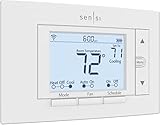
Overview:
Sensi positions itself as the privacy-first smart thermostat, backed by a century of HVAC heritage. The ST55 model emphasizes user data protection while delivering standard smart features like flexible scheduling and remote access. Its traditional button interface and compact design make it ideal for homeowners wanting smart functionality without radically changing their wall aesthetics or learning curves.
What Makes It Stand Out:
The explicit privacy commitment—promising not to sell personal data—addresses growing consumer concerns. Most notably, it doesn’t require a C-wire in most applications, eliminating the biggest installation hurdle. The built-in level and step-by-step app guidance simplify DIY setup, while smart maintenance alerts help prolong HVAC system life through timely filter reminders and performance reports.
Value for Money:
At $81.00, it competes directly with budget options while offering unique privacy guarantees and maintenance features typically found in pricier models. The 23% energy savings claim matches premium competitors, and the included installation aids reduce potential professional setup costs.
Strengths and Weaknesses:
Strengths: Strong privacy policy; C-wire flexibility; excellent DIY installation support; useful maintenance monitoring; familiar thermostat design.
Weaknesses: Less advanced automation than learning thermostats; buttons feel dated compared to touchscreens; limited smart home platform support.
Bottom Line:
The best choice for privacy-conscious buyers or those intimidated by complex installations. Its traditional design and maintenance features make it particularly appealing to hands-on homeowners who value data security over cutting-edge AI.
4. Honeywell Home RTH9585WF1004 Wi-Fi Smart Color Thermostat, 7 Day Programmable, Touch Screen, Energy Star, Alexa Ready, Gray

Overview:
Honeywell brings its thermostat legacy into the smart home era with a vibrant, customizable touchscreen model. The RTH9585WF1004 offers robust 7-day programming and flexible scheduling options while allowing users to personalize the display color to match their home décor. It targets homeowners who want advanced scheduling capabilities and utility integration without paying premium-tier prices.
What Makes It Stand Out:
The full-color touchscreen provides superior visual feedback and easier navigation than many competitors. Its compatibility with utility demand response programs stands out—enabling users to earn rewards for allowing slight temperature adjustments during peak demand. This feature can generate ongoing value beyond simple energy savings. The flexible programming accommodates both user schedules and time-of-use pricing from utilities.
Value for Money:
Priced at $141.00, it’s slightly above mid-range but justified by the brand’s reliability reputation and utility program integration. While it lacks multi-platform smart home support, the color display and demand response capabilities offer tangible benefits over cheaper alternatives. The potential utility rewards can provide long-term ROI that basic models can’t match.
Strengths and Weaknesses:
Strengths: Beautiful color touchscreen; utility demand response participation; flexible scheduling options; trusted brand reliability; décor customization.
Weaknesses: Requires C-wire; limited to Alexa (not native Siri/Google); higher price than functionally similar models; no occupancy sensing.
Bottom Line:
Ideal for users whose utility companies offer demand response incentives. The color display and Honeywell reliability make it worth the premium over basic models, but only if you can leverage the utility programs and have a C-wire.
5. ecobee Smart Thermostat Enhanced - Programmable Wifi Thermostat - Works with Siri, Alexa, Google Assistant - Energy Star Certified - Smart Home
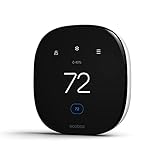
Overview:
The ecobee Enhanced represents the brand’s flagship offering, packing advanced sensors and AI-driven automation into a premium package. It promises up to 26% annual energy savings through intelligent occupancy detection, learning algorithms, and humidity-adjusted temperature control. With the Power Extender Kit and trim kit included, it addresses installation barriers while delivering sophisticated climate management for tech-savvy homeowners.
What Makes It Stand Out:
Built-in radar occupancy sensing pre-heats or cools your home before arrival, eliminating the “dumb” scheduling gaps of basic smart thermostats. The learning capability adapts to your preferences and schedule automatically, while humidity-aware adjustments optimize comfort beyond simple temperature. Including the PEK and trim kit in the box removes common installation pain points and hidden costs.
Value for Money:
At $199.99, it’s a significant investment but delivers features that cheaper alternatives simply can’t match. The included accessories ($40-50 value) and broader 90% system compatibility reduce total cost of ownership. For households with variable schedules, the occupancy sensing alone can deliver superior savings that justify the premium over the Essential model.
Strengths and Weaknesses:
Strengths: Advanced radar occupancy detection; comprehensive accessory bundle; learning algorithms; humidity control; excellent cross-platform support.
Weaknesses: Highest price in lineup; overkill for users with predictable schedules; setup complexity may overwhelm some users.
Bottom Line:
The top choice for technology enthusiasts and households with irregular schedules. If you want maximum automation, comfort, and energy savings with minimal manual intervention, the Enhanced’s premium is well worth paying. For predictable routines, the Essential offers better value.
6. Honeywell Home RTH9600WF Smart Color Thermostat ENERGY STAR Wi-Fi Programmable Touchscreen Alexa Ready - C-Wire Required
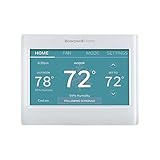
Overview: The Honeywell RTH9600WF sits at the premium end of smart thermostats, offering a vibrant color touchscreen that distinguishes it from competitors. This ENERGY STAR certified device delivers comprehensive remote access through its robust app and works seamlessly with major smart home ecosystems including Alexa, Google Assistant, and Cortana. The thermostat requires a C-wire for installation, which may necessitate professional help in some older homes.
What Makes It Stand Out: The customizable high-definition color display is the star feature, allowing you to match your wall décor or personal preference. The on-screen comfort information provides at-a-glance indoor/outdoor temperature and humidity data plus daily weather forecasts, eliminating the need to check your phone. Honeywell’s extensive utility rebate partnerships can significantly offset the initial investment, and the personalized energy-saving tips help maximize efficiency.
Value for Money: At $167.33, this is a premium investment, but the feature set justifies the cost. The color customization, superior display quality, and multi-platform smart home integration rival more expensive options. When factoring in potential energy rebates, the effective price drops considerably, making it competitive with mid-tier models.
Strengths and Weaknesses: Strengths: Stunning color display; comprehensive smart home compatibility; detailed comfort information; strong rebate incentives; personalized energy tips. Weaknesses: Requires C-wire; higher price point; installation may be complex for some users; app interface can feel dated.
Bottom Line: The Honeywell RTH9600WF is ideal for homeowners wanting a visually striking thermostat with robust features. If you value customization and have a C-wire, this delivers excellent long-term value despite the premium price.
7. Emerson Sensi Touch Wi-Fi Smart Thermostat with Touchscreen Color Display, Works with Alexa, Energy Star Certified, C-wire Required, ST75 Black 5.625" x 3.4" x 1.17"

Overview: The Emerson Sensi Touch balances privacy, performance, and price in a sleek package. This ENERGY STAR certified thermostat promises up to 23% HVAC energy savings and features a modern black finish with a responsive touchscreen. The built-in level and illuminated terminals simplify DIY installation, though the C-wire requirement remains. Its privacy-first approach ensures your data stays secure, a rare commitment in today’s connected home market.
What Makes It Stand Out: Sensi’s explicit privacy guarantee—never selling data to third parties—addresses growing consumer concerns. The installation experience is remarkably user-friendly, with clear app-guided instructions that make setup accessible even for novices. The large color display offers intuitive menu navigation, and the design comes in multiple finishes to complement any interior aesthetic.
Value for Money: At $109.79, it positions itself as a mid-range champion. The combination of privacy protection, solid energy savings, and premium build quality makes it a strong value proposition. It undercuts Honeywell’s premium model while delivering most core smart features, though it lacks color customization.
Strengths and Weaknesses: Strengths: Strong privacy policy; excellent DIY installation support; multiple color options; reliable app control; ENERGY STAR certified. Weaknesses: Requires C-wire; no display customization; smaller screen than premium competitors; limited smart home platform support.
Bottom Line: The Sensi Touch is perfect for privacy-conscious buyers seeking a straightforward, reliable smart thermostat. It delivers core smart functionality without sacrificing data security or breaking the bank.
8. Sensi Lite Smart Thermostat, Data Privacy, Programmable, Wi-Fi, Easy DIY, Works With Alexa, Energy Star Certified, ST25, Most Systems C-Wire Not Required, Except On Heat/Cool Only and Heat Pump System
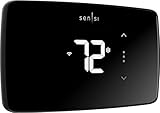
Overview: The Sensi Lite strips away non-essentials while preserving core smart functionality and privacy protection. This budget-friendly ENERGY STAR thermostat delivers the same 23% energy savings promise as its pricier sibling, with flexible scheduling, geofencing, and remote access. The key differentiator is its flexible C-wire requirement—most systems don’t need one, making installation accessible for older homes that lack modern wiring.
What Makes It Stand Out: The C-wire flexibility is a game-changer for many homeowners, eliminating the costly electrician visit that other thermostats demand. It maintains Sensi’s industry-leading privacy pledge, refusing to monetize your data or usage patterns. The geofencing feature automatically adjusts temperatures based on your smartphone location, providing effortless energy savings without constant manual programming.
Value for Money: At $65.98, this is exceptional value. You’re getting premium features like geofencing and robust privacy protection at a fraction of typical smart thermostat prices. The potential installation savings from avoiding C-wire work adds another $50-100 in value, making it even more attractive.
Strengths and Weaknesses: Strengths: No C-wire needed for most systems; unbeatable price; privacy protection; geofencing included; top-rated mobile app. Weaknesses: Basic display (no color touchscreen); fewer aesthetic options; limited advanced features; smaller screen size.
Bottom Line: The Sensi Lite is the smart choice for budget-savvy homeowners who prioritize function over form. If you want energy savings and privacy without premium costs, this delivers outstanding bang for your buck.
9. vine Smart Thermostat for House, WiFi Thermostats for Home Compatible with Alexa and Google Assistant, 7day x 8period Programmable, Energy Star Certified, C-Wire Required

Overview: The vine Smart Thermostat positions itself as the ultra-budget entry point to smart climate control at just $57.99. Despite the low price, it offers impressive compatibility with 90% of 24V systems and comprehensive 7-day, 8-period programming. The requirement for a C-wire across all systems may limit some installations, but the feature set rivals thermostats costing twice as much.
What Makes It Stand Out: The granular scheduling flexibility—eight periods per day—exceeds what many premium models offer, allowing precise temperature management throughout the day. The Auto Home/Away mode intelligently adjusts based on occupancy patterns, while practical features like filter change reminders and temperature alerts add genuine value. Compatibility with both Vine and Smart Life apps provides flexibility in ecosystem choice.
Value for Money: This is among the most affordable ENERGY STAR smart thermostats available. The combination of advanced scheduling, voice control, and energy-saving automation at this price point is remarkable. However, the universal C-wire requirement may offset savings if professional installation is needed, so verify compatibility first.
Strengths and Weaknesses: Strengths: Extremely affordable; highly flexible scheduling; broad system compatibility; dual app support; practical maintenance reminders. Weaknesses: C-wire mandatory for all systems; less established brand; basic display quality; limited customer support; requires compatibility check.
Bottom Line: The vine thermostat is ideal for tech-savvy buyers on tight budgets who have confirmed C-wire compatibility. It delivers advanced scheduling and smart features that defy its price, though brand reliability remains a question mark.
10. Google Nest Thermostat - Smart Thermostat for Home - Programmable Wifi Thermostat - Snow

Overview: Google’s Nest Thermostat brings intelligent automation to the mid-range market at $112.31. This ENERGY STAR device excels at learning your schedule and automatically adjusting when you’re away, eliminating manual programming for most users. The standout feature is its C-wire flexibility—it works without one in most homes, a significant advantage over competitors. The Savings Finder proactively suggests schedule optimizations, making energy efficiency effortless.
What Makes It Stand Out: The auto-away functionality uses presence sensing to reduce energy waste without any user input, a genuinely “smart” feature that sets it apart. The Google Home app integration provides seamless control and scheduling, while the Savings Finder acts like an energy advisor. The sleek snow finish and minimalist design embody Google’s aesthetic philosophy.
Value for Money: Competitively priced against the Sensi Touch, the Nest offers superior automation and broader C-wire compatibility. The potential energy savings from its intelligent features can pay back the investment within 1-2 years, and utility rebates further sweeten the deal for cost-conscious buyers.
Strengths and Weaknesses: Strengths: No C-wire needed for most systems; intelligent auto-away; proactive Savings Finder; excellent app integration; strong brand reputation. Weaknesses: Requires Google ecosystem for full features; limited display customization; no touchscreen; privacy concerns for some users; occasional over-aggressive adjustments.
Bottom Line: The Nest Thermostat is the best choice for those wanting a truly autonomous system. If you prefer set-it-and-forget-it convenience and have a Google-centric smart home, this delivers exceptional smart climate control.
Why Smart Thermostats Are Essential for 2026 Energy Management
The Evolution Beyond Simple Scheduling
Remember when “programmable” meant punching in four daily temperature periods and hoping for the best? Those days are firmly behind us. Modern energy management systems in 2026 operate on continuous learning loops that analyze everything from your sleep patterns to local grid stress signals. They don’t just follow schedules—they anticipate needs, adapt to behavioral changes, and make micro-adjustments that save 3-5% more energy than even the most diligent manual programming.
The real game-changer has been the shift from reactive to proactive climate control. Instead of waiting for you to get home and adjust the temperature, these systems pre-cool or pre-heat based on your location, traffic conditions, and even your calendar appointments. This predictive approach eliminates energy waste while ensuring optimal comfort the moment you walk through the door.
Energy Crisis and Grid Modernization Impact
The 2025 grid modernization initiatives have fundamentally changed how our homes interact with utility infrastructure. Smart thermostats now serve as critical nodes in distributed energy resource management, automatically adjusting consumption during peak demand events to prevent brownouts and earn you substantial credits. In many regions, participation in these programs is no longer optional for maximum savings—it’s the primary way to unlock the true financial potential of your device.
Time-of-use pricing has become the default billing structure across 78% of US markets, making intelligent load shifting a financial necessity rather than an eco-friendly bonus. Your thermostat’s ability to precool your home during cheap overnight rates and coast through expensive evening peaks can mean the difference between a $120 monthly bill and a $340 one.
Understanding Smart Thermostat Technology in 2026
AI-Powered Learning Algorithms
The artificial intelligence embedded in current-generation devices goes far beyond “learning” your schedule. These systems employ federated learning models that improve collectively while keeping your personal data private. They analyze hundreds of data points: how long your specific home takes to cool per degree, how outdoor humidity affects your indoor comfort, even which rooms you occupy during Netflix binges versus work-from-home days.
What matters for buyers is understanding the difference between first-generation machine learning (which simply detected patterns) and today’s contextual AI (which understands why those patterns exist). Look for systems that mention “reinforcement learning” or “predictive thermal modeling”—these indicate the thermostat can simulate multiple scenarios before choosing the most energy-efficient path to your desired comfort level.
Multi-Zone Climate Intelligence
True multi-zone control has finally become accessible to the average homeowner. Instead of requiring expensive dampers and dedicated HVAC zones, 2026’s smart thermostats leverage smart vents, individual room sensors, and mini-split integration to create dynamic microclimates. The key specification to evaluate is “occupancy-weighted climate balancing”—this means the system prioritizes comfort in occupied rooms while allowing unused spaces to drift further from setpoints, saving up to 30% compared to whole-home conditioning.
Integration with Renewable Energy Systems
If you have solar panels, battery storage, or are planning to install them, your thermostat must speak the same language. Modern devices integrate with inverter APIs to know exactly when you’re producing excess solar power versus drawing from the grid. The best systems feature “solar self-consumption maximization” modes that automatically run your HVAC harder during solar peaks, effectively using your roof as a free power plant to pre-condition your home. This capability alone can improve solar payback periods by 18-24 months.
Key Features That Define Next-Generation Energy Management
Predictive Energy Optimization
This is the crown jewel of 2026 thermostat technology. Predictive optimization combines weather forecasting, grid pricing data, home thermal modeling, and occupancy prediction to create a 48-hour energy strategy. The system knows a heatwave is coming Wednesday, so it precools Tuesday night when electricity is cheap and the grid is idle. It understands your home loses heat faster below 25°F, so it adjusts its strategy for arctic blasts.
When evaluating devices, examine the granularity of their predictive settings. Can you set comfort vs. savings aggressiveness? Does it allow manual overrides that the AI learns from? The most sophisticated systems provide transparent reasoning for their decisions: “Pre-cooling active: Tomorrow’s peak rate $0.47/kWh vs. current $0.09/kWh.”
Occupancy Sensing and Geofencing Advances
The geofencing of old that simply detected when you left a 3-mile radius now seems primitive. Current systems use mesh network presence detection, analyzing signals from your phone, smartwatch, and even your car’s Bluetooth to create a probability model of your arrival. Advanced ultrasonic and mmWave sensors detect movement through walls, distinguishing between pets and humans while counting how many people occupy each room.
Crucially, 2026’s best systems have solved the “geofencing roommate problem.” They create individual profiles for each household member, weighting comfort preferences based on who’s home and resolving conflicts through learned priority hierarchies. If you work from home but your partner arrives earlier, the system learns to maintain your office temperature while letting the rest of the house stay in eco-mode until they arrive.
Humidity and Air Quality Integration
Energy management isn’t just about temperature anymore. Devices now manage humidity as a primary control variable because dehumidification represents 15-20% of cooling costs in humid climates. Look for thermostats with integrated hygrometers that can run your AC in “dry mode” or control standalone dehumidifiers. Premium models connect to whole-home ventilation systems, using outdoor air quality sensors to determine when fresh air is cleaner than recirculated indoor air—a critical feature for wildfire-prone regions.
Weather Intelligence and Forecasting
Basic weather compensation is table stakes. What separates premium energy managers is their use of hyperlocal microclimate data—some systems even partner with neighborhood weather station networks for block-level forecasting. They track not just temperature but solar irradiance, wind speed, and barometric pressure to model your home’s thermal response with frightening accuracy.
The feature to demand is “weather-adjusted recovery.” Instead of starting your AC at 5 PM to reach 72°F by 6 PM, the system calculates exactly how much lead time is needed based on current conditions. On a cloudy, cool day, it might wait until 5:45 PM. On a sunny, 105°F day, it might start at 4 PM using cheap afternoon solar. This dynamic adjustment prevents the energy waste of fixed schedules.
Energy Usage Analytics and Reporting
Raw data is useless without actionable insights. Modern dashboards translate kilowatt-hours into dollars, carbon footprint, and comparative benchmarks. They identify anomalies: “Your upstairs unit used 40% more energy this week—consider checking air filters or window seals.” The most advanced systems use computer vision (via connected cameras) to detect open windows or poor insulation, correlating thermal imaging with energy loss.
Seek out devices offering appliance-level disaggregation through electrical signature analysis. While not true submetering, AI can detect when your HVAC is struggling against a clogged filter or low refrigerant based on power draw patterns, alerting you before a $300 emergency service call becomes necessary.
Compatibility Considerations for Modern Homes
HVAC System Compatibility in 2026
The HVAC industry has fragmented into traditional central air, heat pumps, mini-splits, geothermal, and hybrid systems—all requiring different control protocols. Before purchasing, verify your thermostat supports your specific equipment’s communication standard: conventional 24VAC, digital serial (DS) communication, or proprietary protocols like Mitsubishi’s M-NET or Daikin’s DIII-NET.
Heat pump owners should prioritize “intelligent defrost cycle management.” Poor defrost control can waste 10-15% of winter heating costs. The best thermostats monitor outdoor coil temperature and humidity to initiate defrosts only when necessary, not on fixed timers. They also optimize auxiliary heat staging, preventing expensive resistance heating from activating prematurely.
Whole-Home Integration Ecosystems
Your thermostat must play well with others. In 2026, Matter 2.0 has become the dominant interoperability standard, but legacy platforms still matter. Evaluate whether the device supports your existing ecosystem: HomeKit for Apple households, Google Home for Nest users, or Alexa for Amazon-centric homes. More importantly, check for “local control” capabilities—cloud-dependent devices become dumb thermostats during internet outages.
The real power comes from cross-platform automation. Does your thermostat integrate with your EV charger to pause charging during peak cooling loads? Can it communicate with your water heater to stagger high-draw appliances? These integrations create a holistic energy management system greater than the sum of its parts.
Wiring and Voltage Requirements
The C-wire (common wire) debate continues, but solutions have evolved. While battery-powered “no C-wire” thermostats exist, they can’t power advanced sensors or maintain Wi-Fi during HVAC cycles. The 2026 standard is “power stealing” combined with micro-capacitors that store enough juice for continuous connectivity. However, for multi-stage systems or homes with zone controllers, a dedicated C-wire remains non-negotiable.
Check your system voltage carefully. While most residential systems are 24VAC, high-efficiency systems and some mini-splits use 110-230VAC or DC control signals. Installing the wrong thermostat can fry your HVAC control board—a $400 mistake. Many manufacturers now include voltage auto-detection, but always verify compatibility with your specific model number.
Installation and Setup: What to Expect
DIY vs. Professional Installation
The installation decision hinges on three factors: your HVAC complexity, your comfort with electrical work, and warranty implications. For single-stage heating/cooling with existing C-wires, DIY takes 30-45 minutes. But multi-stage heat pumps, dual-fuel systems, or homes lacking a C-wire often require professional expertise. The hidden cost is time: a pro completes setup in 90 minutes; a DIYer might spend a weekend troubleshooting.
Consider professional installation if your system uses proprietary protocols or if you’re integrating with a whole-home automation hub. Many utilities offer free installation rebates, and manufacturers often extend warranties when pros handle the job. The peace of mind alone is worth the $150-250 cost for complex systems.
Configuration for Maximum Efficiency
The magic happens in the configuration, not the hardware. During setup, you’ll face critical decisions that impact efficiency for years. The “system type” selection must match your HVAC exactly—misidentifying a heat pump as conventional AC can double your energy bills. Advanced settings like “cycle rate,” “temperature swing,” and “adaptive recovery” require understanding your home’s thermal mass.
Spend time calibrating occupancy detection zones and comfort preferences. The initial learning period takes 1-2 weeks, but you can accelerate it by manually adjusting temperatures when uncomfortable. The AI learns faster from explicit feedback than from passive observation. Enable all energy-saving features immediately, even if they seem aggressive—you can always dial them back after monitoring comfort impact.
Energy Management Strategies and Best Practices
Creating Intelligent Temperature Schedules
Forget the old “68°F in winter, 78°F in summer” rule. Modern strategy involves “temperature floating”—allowing wider swings when unoccupied but recovering intelligently before return. The key is understanding your home’s “thermal time constant”—how long it takes to change 1°F. A well-insulated home might float 8-10°F without discomfort, while a drafty house struggles beyond 4°F.
Implement “sleep setback” aggressively. Most people sleep comfortably at 65°F in winter and 76°F in summer, but the system must learn your personal threshold. Use room sensors to maintain bedroom comfort while letting living areas drift further. This zoned approach can save 20-30% compared to whole-house setbacks.
Leveraging Utility Company Incentives
Utility demand response programs have become incredibly lucrative. Many offer $50-150 annual credits simply for enrolling, plus additional payments during peak events. The trick is finding a thermostat that supports multiple programs simultaneously—some can participate in three different utility initiatives, stacking rebates.
Time-of-use rate arbitrage is where real money is made. Configure your thermostat to “pre-condition” during super off-peak rates (often 2-6 AM). Some utilities even offer “free nights” plans—these are goldmines for smart thermostat owners who can shift 60% of daily cooling/heating to zero-cost periods. Just ensure your device supports rate schedule programming; some budget models only offer generic “peak” and “off-peak” settings.
Seasonal Optimization Techniques
Each season requires a different strategy. In spring/fall, enable “auto-changeover” mode but set wide deadbands (5-7°F) to prevent heating and cooling on the same day. Summer demands aggressive pre-cooling and humidity-focused control. Winter requires careful heat pump management to avoid auxiliary heat.
Perform seasonal “tune-ups” through your thermostat’s diagnostic menu. Run system tests, check temperature differentials across supply/return vents, and recalibrate sensors. Many devices now offer “seasonal efficiency reports” that identify filter changes, duct leaks, or insulation issues based on performance degradation. Acting on these insights can improve seasonal efficiency by 10-15%.
Privacy and Security in Connected Climate Control
Data Protection Standards
Your thermostat knows when you’re home, when you sleep, and even your daily routines—making it a prime target for hackers and data brokers. In 2026, look for devices certified under the new IoT Cybersecurity Improvement Act standards, requiring unique passwords, encrypted communications, and vulnerability disclosure programs.
Investigate the manufacturer’s data retention policy. The gold standard is “on-device processing” where AI runs locally, sending only anonymized usage statistics to the cloud. Avoid devices that require cloud accounts for basic functionality or that sell aggregated data to third parties. European GDPR compliance is a good indicator of strong privacy practices, even for US consumers.
Local vs. Cloud Processing
The local vs. cloud debate has matured into a hybrid model. Essential functions like basic scheduling and occupancy detection run locally, ensuring operation during internet outages. Advanced features like predictive optimization and utility integration require cloud connectivity but use encrypted, minimal data transfers.
The critical feature is “graceful degradation.” When the cloud connection drops, does your thermostat revert to dumb operation, or does it continue with its last-learned model? Premium devices store 7-14 days of predictive data locally, maintaining intelligence even when isolated. Test this by temporarily disconnecting your router during setup—observe whether the device continues optimizing or falls back to basic scheduling.
Cost Analysis and ROI Expectations
Initial Investment vs. Long-Term Savings
The price spread is dramatic: $80 buys a competent Wi-Fi thermostat, while $400+ gets a full energy management platform. The ROI calculation depends entirely on your current energy spend and utility rates. In high-cost markets like California or New England, a premium thermostat pays for itself in 8-14 months. In areas with cheap electricity, it might take 3 years.
Factor in hidden costs: subscription fees for advanced analytics (some charge $5-10/month), sensor purchases ($30-50 each), and potential C-wire installation ($100-200). The total cost of ownership over 5 years can be double the sticker price. However, the best devices save $200-400 annually in typical 2,000 sq ft homes, making even premium options financially compelling.
Rebates and Tax Incentives for 2026
The Inflation Reduction Act’s 30% tax credit (up to $600) for smart thermostats continues through 2026, but requirements have tightened. The device must be ENERGY STAR certified and demonstrate 10% energy savings through a connected home energy management system. Keep all documentation, as the IRS now requires model numbers and installation dates.
Utility rebates have become more sophisticated. Many offer instant discounts at purchase rather than mail-in rebates, but require enrollment in demand response programs for 12-24 months. The Database of State Incentives for Renewables & Efficiency (DSIRE) maintains an updated list, but check your utility’s website directly—hyperlocal programs often aren’t listed publicly.
Troubleshooting Common Smart Thermostat Issues
Connectivity Problems and Solutions
Wi-Fi connectivity remains the number one headache. The 2026 standard is Wi-Fi 6E, but many homes still run older routers. If your thermostat sits far from your router, consider a device with Thread or Zigbee mesh networking that can hop through other smart home devices. Disable Wi-Fi power saving modes on your router—these can disconnect thermostats that appear idle.
If your device constantly disconnects, the culprit is often mDNS flooding from too many IoT devices. Modern routers have IoT-specific networks that isolate multicast traffic. Alternatively, assign your thermostat a static IP address outside your DHCP range to prevent lease renewal conflicts. For persistent issues, powerline Ethernet adapters provide rock-solid connectivity for around $60.
Calibration and Sensor Accuracy
A thermostat that’s off by 2°F can waste 8% on energy costs. Verify accuracy with a calibrated thermometer placed adjacent to the device for 30 minutes. Most quality thermostats allow manual temperature offset adjustments, but this is a band-aid. Persistent drift indicates a failing thermistor—contact support for replacement.
Room sensors can develop biases over time. Rotate them between rooms and compare readings after 24 hours in each location. If one sensor consistently reads 3°F different, it’s defective. Clean sensors quarterly with compressed air; dust buildup insulates them, causing slow response times. For homes with radiant heating, ensure sensors aren’t mounted on exterior walls or near heat sources, which creates false readings.
Future-Proofing Your Smart Home Climate System
Emerging Standards and Protocols
The smart home landscape is consolidating around Matter 2.0, but new protocols are emerging. Keep an eye on “Energy Harmonization Interface” (EHI), a developing standard for direct grid-to-device communication that bypasses cloud latency. Devices with upgradable firmware and modular radios (replaceable communication modules) will adapt to new standards without requiring full replacement.
Thread border routers are becoming ubiquitous in smart speakers and TVs. Ensure your thermostat supports Thread as a fallback—it’s more reliable than Wi-Fi and continues working during internet outages. For maximum longevity, choose devices with “over-the-air” firmware updates and a history of long-term support. Some manufacturers abandon updates after 3 years; others commit to 10+ year lifecycles.
Upgrade Pathways and Scalability
Your needs will evolve. Perhaps you’ll add a heat pump, install solar, or build an ADU. The thermostat you buy today should accommodate tomorrow’s changes. Look for devices with expandable sensor networks (supporting 20+ sensors), auxiliary relay outputs for controlling ventilation or humidifiers, and API access for custom integrations.
Consider the manufacturer’s ecosystem roadmap. Do they regularly release new sensors and accessories? Have they committed to supporting legacy devices when new models launch? The best brands offer trade-in programs and backward compatibility, ensuring your investment isn’t obsoleted by next year’s model. A modular design where the display, base, and radio can be upgraded separately extends useful life dramatically.
Frequently Asked Questions
1. How much can I realistically save on energy bills with a 2026 smart thermostat?
In a typical 2,000 square foot home with central HVAC, expect 15-25% reductions in heating and cooling costs, translating to $200-400 annually depending on your climate and utility rates. Homes with time-of-use pricing or demand response participation can see savings exceed 35%. The key is leveraging all features—occupancy detection, weather intelligence, and utility integration—not just basic scheduling.
2. Will a smart thermostat work with my old HVAC system from the 1990s?
Most likely, yes, but with caveats. Systems from the 1990s typically use conventional 24VAC control, which is universally compatible. However, you may lack a C-wire, requiring a power adapter or battery-powered model. More importantly, older systems have slower response times and less precise control, so advanced features like short-cycle prevention become critical to avoid damaging your compressor.
3. Do I need multiple thermostats for a multi-story home?
Not necessarily. A single smart thermostat with 4-6 room sensors can effectively manage a multi-story home up to 3,000 sq ft by creating virtual zones. However, if you have a true zoned HVAC system with motorized dampers, you’ll need a thermostat for each physical zone. For homes with mini-splits on each floor, look for a master controller that can coordinate multiple heads from one interface.
4. What happens to my smart thermostat when the internet goes down?
Quality devices continue operating on their last-learned schedule with full local control via the onboard display. Advanced features like predictive optimization, remote access, and utility program participation will pause until connectivity returns. Premium models store 7-14 days of intelligence locally, maintaining sophisticated operation during extended outages. Avoid cloud-dependent models that revert to basic hold temperatures without internet.
5. Are there monthly subscription fees for smart thermostat features?
Most core features remain free, but manufacturers increasingly charge $5-10/month for premium analytics, advanced reporting, and AI-driven insights. These subscriptions are optional but can enhance savings by 5-8% through more sophisticated optimization. Some utility-sponsored programs provide these premium features at no cost when you enroll in demand response, so check with your provider before paying out-of-pocket.
6. How do smart thermostats integrate with solar panels and home batteries?
Through direct API connections to inverter systems (like Enphase, SolarEdge, or Tesla), modern thermostats know your real-time solar production and battery state of charge. They automatically increase HVAC output during solar peaks to store thermal energy in your home’s mass, then coast during cloudy periods. With batteries, they can pre-cool using stored energy before peak rate periods, then switch to minimal operation when grid power is expensive.
7. Can a smart thermostat really detect HVAC problems before they become serious?
Yes, through electrical signature analysis and performance trend monitoring. By tracking how long your system runs to achieve temperature changes, these devices detect degrading performance indicative of low refrigerant, clogged filters, or failing capacitors. They’ll alert you with specifics: “Your cooling efficiency has dropped 18% over 30 days—check air filter and condenser coils.” This early warning prevents $200-500 emergency service calls.
8. What’s the difference between geofencing and presence detection?
Geofencing uses your phone’s location to trigger home/away modes when you cross a virtual boundary (typically 1-5 miles). Presence detection uses sensors in the home to identify actual occupancy. The best systems combine both: geofencing initiates pre-conditioning before arrival, while presence detection fine-tunes room-by-room comfort and confirms actual occupancy to avoid false away events when you forget your phone.
9. How long does it take for a smart thermostat to learn my preferences effectively?
Initial learning takes 1-2 weeks for basic schedules, but full optimization requires 4-6 weeks of seasonal data. The AI needs to experience how your home responds to different weather conditions, occupancy patterns, and temperature demands. You can accelerate learning by providing explicit feedback through the app (“too hot,” “too cold”) rather than just adjusting the temperature. The system learns intent faster than it infers discomfort from manual changes.
10. Will installing a smart thermostat void my HVAC warranty?
In most cases, no—proper installation cannot void warranties under the Magnuson-Moss Warranty Act. However, improper wiring or configuration that damages your system is not covered. Some HVAC manufacturers require their proprietary “communicating” thermostats to maintain full warranty coverage on high-end variable-speed equipment. Always check your HVAC warranty terms and consider professional installation for systems still under manufacturer warranty.