Your energy bill arrives and it’s somehow higher than last month—again. Sound familiar? As utility rates continue their stubborn climb and climate patterns grow increasingly unpredictable, homeowners are desperately seeking solutions that actually move the needle. Enter the next generation of climate intelligence: smart thermostats have evolved from simple programmable gadgets into sophisticated energy management systems that can cut your heating and cooling costs by 20-30% without sacrificing comfort. By 2026, these devices leverage predictive AI, multi-zone precision, and utility integration to transform how we interact with our homes, making them the single most cost-effective upgrade for slash-your-bill energy management.
But not all smart thermostats are created equal, and the difference between a modest 5% savings and a game-changing 30% reduction boils down to understanding which features genuinely impact your specific situation. This comprehensive guide cuts through marketing fluff to reveal what actually matters when selecting an energy-saving powerhouse for your home in 2026.
Top 10 Smart Thermostats for Energy Management
Detailed Product Reviews
1. ecobee Smart Thermostat Essential - Energy Star Certified programmable Wi-Fi Thermostat - Works with Siri, Alexa, and Google Assistant

Overview:
The ecobee Smart Thermostat Essential is a premium connected thermostat that promises up to 23% annual savings on heating and cooling costs. Compatible with 85% of HVAC systems and offering triple virtual assistant support (Siri, Alexa, Google), it’s designed for homeowners seeking comprehensive smart home integration. The color touchscreen and robust mobile app provide intuitive control, while free software updates ensure long-term value.
What Makes It Stand Out:
Unlike budget alternatives, the ecobee supports all three major voice platforms, making it ideal for mixed-ecosystem homes. The Power Extender Kit (sold separately) solves the common C-wire problem without invasive rewiring. Its ability to learn your schedule and automatically optimize energy usage when you’re away demonstrates sophisticated automation that cheaper models lack.
Value for Money:
At $134.99, it sits in the mid-to-high range, but justifies the cost through broader compatibility and superior software support. While Amazon’s thermostat costs less, ecobee’s multi-platform flexibility and inclusion of a physical touchscreen offer tangible benefits. The potential 23% energy savings can offset the premium within the first year for many households.
Strengths and Weaknesses:
Pros: Triple assistant compatibility, 85% system support, intuitive touchscreen, automatic scheduling, PEK for C-wire issues, free software updates
Cons: Higher price point, PEK and trim kit sold separately, requires compatibility check
Bottom Line:
The ecobee Smart Thermostat Essential is an excellent choice for tech-savvy homeowners who prioritize ecosystem flexibility and long-term support. The premium is worthwhile if you need Siri integration or lack a C-wire.
2. Amazon Smart Thermostat – Save money and energy - Works with Alexa and Ring - C-wire required

Overview:
The Amazon Smart Thermostat offers a no-frills entry into smart climate control at an aggressive price point. Designed for Alexa-centric households, it helps reduce energy usage through automatic scheduling and presence-based adjustments. The ENERGY STAR certification promises average savings of $50 annually, while Amazon facilitates rebate programs through energy providers to further sweeten the deal.
What Makes It Stand Out:
Its seamless integration with Echo devices and the Ring ecosystem enables unique features like presence detection and multi-zone comfort adjustments without additional sensors. Amazon’s rebate assistance is genuinely helpful, potentially reducing the already low $79.99 price tag. The automatic switching between home, away, and sleep temperatures requires minimal user configuration.
Value for Money:
This is the value champion. At $79.99, it undercuts most competitors while delivering core smart thermostat benefits. The EPA-estimated $50 yearly savings means it pays for itself in under two years. However, the C-wire requirement and Alexa-only limitation restrict its appeal compared to more versatile options.
Strengths and Weaknesses:
Pros: Excellent price, Alexa ecosystem integration, rebate assistance, ENERGY STAR certified, automatic scheduling
Cons: C-wire mandatory, limited to Alexa/Google (no Siri), fewer advanced features, no touchscreen
Bottom Line:
Perfect for Alexa households on a budget who have a C-wire. If you’re already invested in Amazon’s ecosystem and want reliable energy savings without premium frills, this is the smart buy.
3. Sensi Smart Thermostat, 100 Years Of Expertise, Wi-Fi, Data Privacy, Programmable, Easy DIY Install, Works With Alexa, Energy Star Certified, Mobile App, ST55
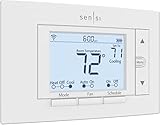
Overview:
The Sensi ST55 balances smart features with privacy protection and traditional design. Developed by a company with century-long HVAC expertise, it promises 23% energy savings through flexible scheduling and remote access. The thermostat maintains a familiar button-based interface while offering modern app control, making it ideal for users transitioning from conventional models.
What Makes It Stand Out:
Sensi’s explicit privacy commitment—never selling data to third parties—addresses growing consumer concerns. The built-in level and clear app instructions streamline DIY installation, while the no-C-wire requirement for most systems removes a major installation barrier. Smart maintenance alerts and usage reports add professional-grade monitoring typically found in higher-priced models.
Value for Money:
At $81.00, it competes directly with Amazon’s offering while providing broader appeal. The privacy guarantee and traditional form factor justify the slight premium over the Amazon model. Energy savings of 23% can deliver rapid ROI, and the maintenance features may extend HVAC system life, adding hidden value.
Strengths and Weaknesses:
Pros: Strong privacy protection, no C-wire needed (most systems), built-in level for install, maintenance alerts, traditional design, 23% energy savings
Cons: No touchscreen, limited voice assistant integration, less sleek than premium models
Bottom Line:
The Sensi ST55 is ideal for privacy-conscious buyers seeking straightforward smart features without ecosystem lock-in. Its blend of old-school design and modern capabilities makes it a versatile middle-ground choice.
4. Sensi Lite Smart Thermostat, Data Privacy, Programmable, Wi-Fi, Easy DIY, Works With Alexa, Energy Star Certified, ST25, Most Systems C-Wire Not Required, Except On Heat/Cool Only and Heat Pump System
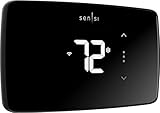
Overview:
The Sensi Lite trims features to deliver core smart thermostat functionality at a budget-friendly price. It retains Sensi’s privacy pledge and DIY-friendly design while focusing on essential energy-saving capabilities. Compatible with most HVAC systems and controllable via a top-rated mobile app, it provides remote access and scheduling without premium complexity.
What Makes It Stand Out:
At $65.98, it’s one of the most affordable smart thermostats from a reputable brand. The privacy protection remains intact—no data selling or targeted advertising—which is rare in budget tech. The installation process is simplified with a built-in level and clear instructions, while geofencing capabilities automatically adjust temperatures based on your location.
Value for Money:
This is Sensi’s answer to ultra-budget competitors. It sacrifices some advanced features but maintains the 23% energy savings claim and core smart functionality. For homes without heat pumps or heat/cool-only systems, the no-C-wire requirement eliminates professional installation costs. The price-to-privacy ratio is unmatched.
Strengths and Weaknesses:
Pros: Very affordable, strong privacy policy, geofencing, built-in level, no C-wire (most systems), top-rated app
Cons: C-wire required for heat pumps/heat-cool only, no touchscreen, fewer advanced features, limited voice integration
Bottom Line:
The Sensi Lite is perfect for cost-conscious shoppers who refuse to compromise on privacy. Choose it for straightforward energy savings in standard HVAC setups, but verify C-wire needs for heat pump systems.
5. Honeywell Home RTH9585WF1004 Wi-Fi Smart Color Thermostat, 7 Day Programmable, Touch Screen, Energy Star, Alexa Ready, Gray

Overview:
The Honeywell Home RTH9585WF1004 brings customizable aesthetics to smart climate control with its color touchscreen display. This 7-day programmable thermostat offers flexible scheduling and utility company demand response programs that can earn you additional rewards. Compatible with most conventional systems and heat pumps, it combines Honeywell’s reliability with modern connectivity.
What Makes It Stand Out:
The ability to personalize the thermostat’s color scheme to match home décor is a unique touch in this category. The demand response program integration is more advanced than competitors, potentially generating income beyond just energy savings. The bright, intuitive touchscreen provides local control that feels premium and responsive.
Value for Money:
Priced at $123.84, it competes with ecobee while offering different strengths. The color customization and demand response capabilities justify the premium over budget options. While it lacks multi-platform voice support, the robust scheduling and utility integration create value for users in areas with peak pricing or demand response incentives.
Strengths and Weaknesses:
Pros: Customizable color display, demand response program eligibility, 7-day programming, bright touchscreen, flexible scheduling, reliable brand
Cons: C-wire required, no Siri support, limited voice assistant integration, higher price than budget options
Bottom Line:
The Honeywell RTH9585WF1004 suits homeowners who want visual customization and live in regions with utility demand response programs. It’s a solid mid-range choice for those prioritizing local control and energy incentives over ecosystem flexibility.
6. ecobee Smart Thermostat Enhanced - Programmable Wifi Thermostat - Works with Siri, Alexa, Google Assistant - Energy Star Certified - Smart Home
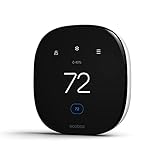
Overview: The ecobee Smart Thermostat Enhanced represents the cutting edge of climate control technology, designed for homeowners seeking maximum efficiency and convenience. This programmable WiFi thermostat works seamlessly with Siri, Alexa, and Google Assistant while promising up to 26% annual savings on heating and cooling costs. Its sleek design houses advanced sensors and intelligent software that adapt to your lifestyle.
What Makes It Stand Out: The built-in radar occupancy sensor is a game-changer, pre-heating or pre-cooling your home before arrival. Unlike competitors, it learns both your temperature preferences and schedule while automatically adjusting for humidity levels. The included Power Extender Kit ensures compatibility with 90% of HVAC systems, making installation straightforward even without a C-wire.
Value for Money: At $199.99, this premium device justifies its price through superior energy savings and advanced features. The 26% cost reduction potential means it pays for itself within two years for most households. When compared to basic smart thermostats, the occupancy sensing and multi-platform support add significant value that translates to real comfort and savings.
Strengths and Weaknesses: Strengths include exceptional occupancy detection, comprehensive smart home integration, and intelligent learning capabilities. The DIY-friendly installation and included PEK kit are major advantages. Weaknesses include the premium price point and potentially complex setup for non-tech-savvy users. Some may find the learning curve steeper than simpler alternatives.
Bottom Line: The ecobee Enhanced is ideal for tech enthusiasts wanting the most advanced features. If you prioritize automation, multi-platform support, and maximum energy savings, this thermostat delivers exceptional performance despite its higher cost.
7. Emerson Sensi Touch Wi-Fi Smart Thermostat with Touchscreen Color Display, Works with Alexa, Energy Star Certified, C-wire Required, ST75 Black 5.625" x 3.4" x 1.17"

Overview: The Emerson Sensi Touch Wi-Fi Smart Thermostat positions itself as the privacy-conscious choice in smart climate control. This Energy Star-certified device features a sleek touchscreen display and promises approximately 23% energy savings while explicitly protecting user data. It balances modern convenience with traditional privacy values.
What Makes It Stand Out: Privacy protection is the headline feature—Emerson guarantees they won’t sell personal information to third parties, addressing growing consumer concerns. The built-in level and illuminated easy-click terminals simplify DIY installation, while the modern design with color options complements any décor. The large, intuitive touchscreen provides clear temperature readings and easy navigation.
Value for Money: At $110.00, the Sensi Touch offers compelling mid-range value. While it lacks some advanced features of premium competitors, the privacy guarantee and solid energy savings make it attractive. The requirement for a C-wire may add installation costs for some users, potentially offsetting the initial savings. However, the peace of mind regarding data protection is priceless for many.
Strengths and Weaknesses: Strengths include robust privacy policies, attractive design, straightforward installation, and reliable performance. The touchscreen is responsive and user-friendly. Weaknesses include mandatory C-wire requirement, limited learning capabilities compared to Nest or ecobee, and fewer smart home platform integrations. It doesn’t offer geofencing or occupancy sensing.
Bottom Line: The Sensi Touch excels for privacy-focused homeowners wanting smart functionality without surveillance concerns. It’s a solid, straightforward choice that balances features, price, and data protection admirably.
8. Honeywell Home RTH9600WF Smart Color Thermostat ENERGY STAR Wi-Fi Programmable Touchscreen Alexa Ready - C-Wire Required
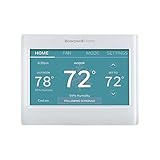
Overview: The Honeywell Home RTH9600WF combines customization with connectivity in a feature-rich smart thermostat. This Energy Star-certified device offers WiFi programming and works with Alexa, Google Assistant, and Microsoft Cortana while allowing users to personalize their display. It targets homeowners who want both performance and aesthetics.
What Makes It Stand Out: The customizable high-definition color screen sets it apart, letting users match their thermostat to home décor or personal preference. On-screen comfort information displays indoor/outdoor temperature and humidity alongside daily weather forecasts, eliminating the need to check separate apps. The rebate finder tool helps identify utility incentives, potentially reducing the purchase price significantly.
Value for Money: Priced at $167.23, it sits in the competitive mid-premium range. The potential for utility rebates can substantially lower the effective cost. While not the cheapest option, the combination of display customization, broad compatibility, and energy tracking features provides strong value for homeowners wanting both function and form. The display alone justifies the premium over basic models.
Strengths and Weaknesses: Strengths include the vibrant customizable display, comprehensive smart home compatibility, on-screen weather data, and robust energy reporting. The DIY installation is straightforward for those with a C-wire. Weaknesses include the mandatory C-wire requirement, a less intuitive app experience compared to Nest or ecobee, and absence of advanced occupancy sensing or learning algorithms.
Bottom Line: The RTH9600WF is perfect for users who prioritize aesthetics and display customization alongside smart functionality. It’s a reliable, well-connected thermostat that adds visual flair to energy savings.
9. Google Nest Thermostat - Smart Thermostat for Home - Programmable Wifi Thermostat - Snow

Overview: The Google Nest Thermostat offers premium smart climate control at an accessible price point. This Energy Star-certified device helps reduce energy waste by automatically adjusting temperatures when you’re away and provides intelligent scheduling suggestions through the Google Home app. It democratizes smart home technology.
What Makes It Stand Out: Its ability to work without a C-wire in most homes dramatically simplifies installation, removing the biggest barrier for many users. The Savings Finder feature actively analyzes your schedule and suggests optimizations, going beyond basic programming. Seamless integration with the Google ecosystem makes it ideal for Android users and those already invested in Google Home devices.
Value for Money: At $109.85, this is exceptional value—offering flagship features at a budget-friendly price. The potential for utility rebates further sweetens the deal. The combination of easy installation, intelligent features, and strong brand reliability makes it one of the best price-to-performance ratios available. It challenges premium competitors at half the cost.
Strengths and Weaknesses: Strengths include simple installation (no C-wire needed in most cases), proactive energy-saving suggestions, affordable pricing, and excellent Google integration. The auto-away feature works reliably. Weaknesses include limited compatibility with some HVAC systems (heat pumps may need C-wire), lack of Apple HomeKit support, and dependence on the Google ecosystem. The learning curve can be steep for those unfamiliar with smart home technology.
Bottom Line: The Google Nest Thermostat is the best choice for most homeowners, offering an unbeatable combination of price, features, and ease of use. It’s particularly ideal for Google ecosystem users.
10. Honeywell Home RTH8800WF2022, T5 WiFi Smart Thermostat, 7 Day-Programmable Touchscreen, Alexa Ready, Geofencing Technology, Energy Star, C-Wire Required
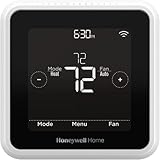
Overview: The Honeywell Home T5 is a budget-conscious smart thermostat that doesn’t sacrifice core functionality. This 7-day programmable device uses geofencing technology to optimize heating and cooling based on your location, promising 8-16% savings on energy bills. It proves smart home technology doesn’t require premium pricing.
What Makes It Stand Out: The flexible control options stand out—you can choose between traditional 7-day scheduling or location-based geofencing. The demand response program enrollment allows utility companies to make minor adjustments during peak usage, potentially earning you additional rewards. Auto Home and Away modes provide seamless transitions between comfort and savings without manual intervention.
Value for Money: At $97.50, this is the most affordable option in the lineup. While energy savings (8-16%) are more modest than premium alternatives, the lower upfront cost means a faster return on investment. The availability of utility rebates can make this an even smarter financial choice for budget-minded consumers. The value proposition is undeniable for entry-level users.
Strengths and Weaknesses: Strengths include the lowest price point, flexible scheduling options, reliable geofencing, and Energy Star certification. The demand response capability is unique in this price range. Weaknesses include the basic non-color display, mandatory C-wire requirement, and less advanced learning capabilities. The app interface feels dated compared to competitors.
Bottom Line: The T5 is an excellent entry-level smart thermostat for cost-conscious buyers. If you want core smart features without premium pricing, this reliable Honeywell offering delivers solid performance and genuine savings.
Why Smart Thermostats Are Non-Negotiable for Energy Management in 2026
The energy landscape has fundamentally shifted. With time-of-use pricing becoming the default in most regions and carbon reduction mandates tightening, your thermostat is no longer just a temperature dial—it’s your primary interface with the grid. Modern units function as energy arbitrage tools, automatically pre-cooling your home when solar production peaks and precooling when rates plummet. They communicate directly with utility demand response programs, earning you bill credits for reducing consumption during peak strain periods. In 2026, choosing a non-smart thermostat is like using a flip phone in the 5G era: technically functional but economically irrational.
How Smart Thermostats Actually Slash Your Energy Bills
The magic happens through a symphony of optimizations that human scheduling simply can’t replicate. These systems monitor outdoor weather forecasts, indoor humidity levels, your home’s thermal mass characteristics, and occupancy patterns to make micro-adjustments that compound into massive savings. They learn that your south-facing living room warms 4°F by 3 PM on sunny winter days, automatically dialing back furnace output. They detect when you’re running late and delay heating until your phone’s GPS signals you’re actually heading home. This isn’t just automation—it’s predictive climate economics that treats your HVAC system as a dynamic asset rather than an on-off switch.
Key Features That Define Next-Gen Energy Savings
Adaptive Learning Algorithms
The 2026 standard moves far beyond basic pattern recognition. Today’s advanced thermostats employ deep learning models that factor in dozens of variables: your home’s insulation performance, local energy market pricing, even your calendar appointments. They distinguish between your Tuesday yoga class (when you’ll arrive home sweaty and want cooler temps) and your Friday dinner out (when the house can stay in eco-mode for hours). Look for systems that specifically mention “predictive thermal modeling” rather than generic “learning” capabilities.
Multi-Zone Climate Control
Single-zone thinking is energy suicide for multi-story homes. Modern systems support up to 20 independent zones, using motorized dampers and wireless sensors to deliver precise heating and cooling exactly where needed. This means no more overheating unused guest rooms or battling the “upstairs sauna” effect. The most efficient setups create dynamic zones that automatically merge or split based on occupancy, potentially reducing HVAC runtime by 40% in larger homes.
Geofencing and Occupancy Detection
GPS-based geofencing has matured significantly. Advanced systems now use multi-user geofencing with variable radius settings—perhaps a 5-mile radius for weekdays but a 2-mile radius on weekends when you’re more likely to pop home unexpectedly. They’ve also integrated毫米波雷达 (mmWave radar) sensors that detect human presence through walls, eliminating false “away” modes when you’re simply being quiet in your home office.
Energy Consumption Analytics
Raw data is useless without actionable insights. Premium thermostats now provide dollar-cost averaging reports that show exactly which habits cost you most, simulate how bill changes would affect your payback period, and even benchmark your efficiency against similar homes in your zip code. The key metric to demand is “cost-per-degree-hour” tracking, which reveals the true financial impact of every temperature adjustment.
Compatibility: The Make-or-Break Factor
HVAC System Compatibility
Before falling in love with any features, verify support for your specific HVAC type. Heat pump owners need thermostats with native multi-stage compressor control and auxiliary heat lockout temperatures to prevent expensive resistance heating. Dual-fuel systems require algorithms that intelligently switch between gas and electric based on real-time fuel costs. For homes with radiant floor heating, look for units with slow-response learning that understands the 3-hour lag between command and comfort.
Home Automation Ecosystem Integration
A thermostat that doesn’t play nice with your existing smart home is just a pretty wall ornament. Matter 1.2 compatibility is now the baseline standard, ensuring seamless communication across Apple HomeKit, Google Home, and Amazon Alexa ecosystems. But dig deeper: does it support local control via Home Assistant for cloud-free operation? Can it trigger your smart blinds based on solar gain calculations? The most powerful integrations let your thermostat orchestrate your entire home’s energy envelope.
Wiring Requirements
The C-wire debate continues, but 2026 solutions have evolved. While power stealing (drawing phantom power from HVAC wires) remains problematic for some systems, many premium units now include integrated rechargeable battery packs that last 6-12 months between charges. For true wireless freedom, look for battery-powered models with energy-harvesting from ambient light. However, hardwired installations still deliver the most reliable power for feature-rich operation.
Installation: DIY vs. Professional
When to Call a Pro
If your system involves high-voltage line voltage (common in baseboard heating), lacks a C-wire and you don’t want battery-powered options, or integrates with whole-home humidifiers/ventilators, professional installation is worth the $150-300 investment. Complex multi-zone setups with damper installation absolutely require an HVAC technician. Botched DIY jobs can fry your new $250 thermostat or, worse, your $5,000 HVAC control board.
Pre-Installation Checklist
Before unboxing, photograph your existing wiring from multiple angles, locate your HVAC system’s model number, and verify your Wi-Fi signal strength at the thermostat location (aim for -65 dBm or better). Download the manufacturer’s compatibility checker app and input your system details. Most returns happen because homeowners skip this 10-minute prep work, discovering incompatible systems only after mounting the new unit.
Understanding Energy Star Certification and Beyond
Energy Star certification remains the baseline efficiency standard, but 2026 introduces the new “Energy Star Most Efficient” tier specifically for smart thermostats. This designation requires proven 20% savings in real-world field studies, not just lab conditions. More importantly, look for UL 2900-2-2 cybersecurity certification—a critical but often overlooked standard that ensures your thermostat won’t become a ransomware gateway into your home network. The gold standard is simultaneous certification from both programs.
The Role of AI and Machine Learning in 2026 Models
Today’s AI goes beyond learning your schedule—it predicts your schedule. By analyzing your smartphone usage, vehicle location data (with permission), and even local event calendars, these systems can anticipate irregular patterns. Heading to the airport for a week-long trip? Your thermostat detects the calendar entry and flight confirmation email, automatically switching to vacation mode. Hosting a party? It cross-references your social media event and pre-cools based on expected guest heat load. This contextual awareness transforms savings from reactive to predictive.
Sensor Technology: The Unsung Hero of Efficiency
Room Sensors
The latest remote sensors measure not just temperature but occupancy, humidity, and light levels. Place them in problem rooms and the system weights their data based on time-of-day priorities—your bedroom sensor matters most at 6 AM, while the living room sensor takes precedence during evening hours. Advanced models use mesh networking, allowing sensors to relay data through each other, eliminating dead zones in large homes.
Humidity and Air Quality Sensors
Dehumidification costs can rival heating expenses in humid climates. Smart thermostats with integrated humidity sensors optimize cooling to maintain 45-55% relative humidity, preventing overcooling. The newest models add VOC and CO2 sensors, adjusting ventilation to maintain air quality without wasting energy on unnecessary air exchanges. This is particularly valuable for tightly sealed modern homes where air quality management is critical.
Zoning Systems: The Ultimate Energy Hack
True zoning transforms your HVAC from a blunt instrument into a surgical tool. Each zone operates with its own schedule and temperature setpoints, but the real magic is in dynamic balancing. When only one zone calls for cooling, the system modulates to minimum capacity and adjusts duct dampers to direct all airflow there, reducing short-cycling inefficiency. For retrofits without ductwork, look for thermostat systems that control ductless mini-split heads individually, creating zones without invasive construction.
Energy Reporting: Turning Data into Dollars
Monthly reports are table stakes; 2026 leaders provide real-time energy rate optimization. They monitor wholesale electricity prices and automatically pre-condition your home during price dips, then coast through price spikes. The most sophisticated systems integrate with your utility’s demand response API, showing live bill credits as you reduce consumption. Demand weekly reports that include “avoided costs”—the specific dollars saved through each smart feature—to understand what’s actually working.
Rebates, Incentives, and ROI Calculations
Federal and State Programs
The 2026 Inflation Reduction Act extensions provide up to $175 for ENERGY STAR certified smart thermostats, but many states have layered additional incentives. California’s TECH Clean California initiative offers $250 for heat pump-compatible models. New York’s NYSERDA program adds $150 for units with demand response capability. Check the DSIRE database for current programs, and note that many rebates require professional installation and documented proof of HVAC system type.
Utility Company Offers
Over 200 utilities now provide instant rebates at checkout through partnerships with major retailers. Some go further: Austin Energy offers a $85 annual bill credit for enrolling in their Power Saver Day program, while Con Edison provides a free thermostat plus $50/year for demand response participation. These programs often require allowing the utility to make minor temperature adjustments during peak events—typically just 2-4°F for a few hours.
Calculating Your Payback Period
The real ROI formula: (Annual Energy Savings + Rebates) ÷ (Thermostat Cost + Installation). A typical $250 thermostat saving $300/year with $125 in rebates pays for itself in under 5 months. But factor in intangible value: extended HVAC lifespan from reduced cycling (add 20% to savings) and increased home resale value (appraisers now credit smart thermostats at 50% of installed cost).
Privacy and Security in the Connected Home
Your thermostat knows when you’re home, when you’re away, and your temperature preferences—data points that create a detailed lifestyle fingerprint. In 2026, insist on local data processing options that keep sensitive information on-device. Review the manufacturer’s data retention policy: the best providers anonymize data after 30 days and delete it entirely after 90 days. Enable two-factor authentication and regularly check for firmware updates, as thermostat botnets remain a popular target for DDoS attacks.
Common Buying Mistakes That Nullify Savings
Oversizing Features
That $400 flagship model with 20-zone support is wasted money if you live in a 1,200 sq ft ranch. Match features to your actual home complexity. A $150 unit with strong dual-zone support and robust learning algorithms often outperforms premium models in modest homes because you’re paying for capabilities you’ll never activate.
Ignoring Compatibility
The most expensive thermostat is the one that can’t control your system properly. Heat pump owners who buy thermostats without native multi-stage support often see their auxiliary heat activate unnecessarily, increasing costs by 15-20%. Always use the manufacturer’s online compatibility tool and, when in doubt, email them your HVAC model number for confirmation.
Neglecting Software Updates
A thermostat that doesn’t receive regular firmware updates is a security liability and efficiency dead-end. Check the manufacturer’s update history—reputable brands release updates quarterly. Avoid no-name brands that haven’t updated their firmware in over a year, as they likely won’t support new utility programs or security patches.
Maintenance Tips to Sustain Peak Performance
Software Updates
Enable automatic updates but schedule them for 2 AM to avoid mid-day disruptions. After each major update, review your energy reports for two weeks to ensure the new algorithms are performing optimally. Occasionally, updates reset learned patterns, requiring a brief re-training period.
Sensor Calibration
Remote sensors drift over time. Every six months, place all sensors together in one room for an hour, then compare readings. Most apps have a calibration offset feature to correct drift. Clean sensor vents quarterly with compressed air to ensure accurate occupancy detection.
Seasonal Optimization
Run the system’s built-in seasonal setup wizard at each equinox. This recalibrates your home’s thermal model based on changing sun angles and typical weather patterns. In spring, adjust your away temperature setpoints based on actual occupancy changes—many homeowners forget to tighten the schedule after kids leave for summer break, wasting energy cooling empty rooms.
Future-Proofing: What to Expect Beyond 2026
The next frontier is vehicle-to-home (V2H) integration. As EVs become home batteries, thermostats will coordinate climate control with available vehicle power, running heat pumps from your car’s battery during peak rate hours. Blockchain-based energy trading will let your thermostat sell excess solar power to neighbors, crediting your account. When shopping now, prioritize models with over-the-air update capability and open API access—these will adapt to technologies that don’t even exist yet.
Frequently Asked Questions
How much can I realistically save with a smart thermostat in 2026? Most households save 20-30% on heating and cooling costs, translating to $300-$500 annually. Homes with inconsistent schedules or multi-zone systems often exceed 35% savings. Your actual results depend on climate, HVAC efficiency, and how aggressively you optimize settings.
Do smart thermostats work without Wi-Fi? Basic temperature control continues, but all smart features—learning, remote access, energy reports, and utility programs—require internet. Some premium models store 7 days of schedule locally and include cellular backup for critical demand response events.
Will a smart thermostat work with my old HVAC system? Most systems from 1990 onward are compatible, but verify specifics. Heat pumps need specialized control; millivolt systems (common in gas fireplaces) require adapters. When in doubt, consult an HVAC technician before purchasing.
Can my utility company really control my thermostat? Only if you enroll in voluntary demand response programs. You set the maximum adjustment limit (typically 2-4°F) and can override anytime. Participation is optional but often includes substantial bill credits.
How long does it take for learning algorithms to become effective? Expect 2-3 weeks for basic schedule learning, but full optimization takes 6-8 weeks as the system understands your home’s thermal characteristics. Manual programming of a basic schedule during this period accelerates the process significantly.
Are monthly subscription fees required? Reputable manufacturers offer full functionality without subscriptions. Some offer optional premium features like advanced analytics or extended warranties for $3-5/month, but core energy-saving features should be free.
What’s the difference between a $150 and $400 smart thermostat? Price differences reflect zone capacity, sensor support, display quality, and advanced AI features. For most homes under 2,500 sq ft, a $150-$200 model with strong fundamentals delivers 90% of the savings. Premium models excel in complex homes with multiple systems.
Do I need a C-wire for installation? Not necessarily. Many 2026 models include battery options or power adapters. However, C-wires provide the most reliable power for feature-rich operation. Use a voltage tester to check for unused wires in your wall before assuming you lack a C-wire.
How do smart thermostats handle multi-story temperature differences? They don’t fix physics, but they optimize around it. By using remote sensors and learning which floors heat/cool faster, they minimize temperature swings and reduce overcompensation. For true multi-story comfort, pair with zoning dampers or separate systems.
Can a smart thermostat extend my HVAC system’s lifespan? Absolutely. By reducing short-cycling, optimizing cycle lengths, and preventing extreme temperature differentials, well-managed systems experience 15-25% less wear. This can add 3-5 years to a typical HVAC system’s life, saving thousands in premature replacement costs.