Gone are the days when home automation required a professional installer and a four-figure budget. In 2026, motion-based automation has democratized smart living, putting sophisticated sensor-driven control into the hands of weekend warriors and tech-curious homeowners alike. With fierce competition among manufacturers and rapid advancements in micro-sensor technology, the sub-$100 category now offers surprising capability—if you know what to look for.
This guide cuts through the marketing noise to equip you with the knowledge to evaluate budget motion automation kits like a seasoned integrator. We’ll explore the essential components that separate reliable systems from frustrating toys, decode the connectivity standards that determine real-world performance, and reveal the hidden costs that can turn a bargain into a budget-buster. Whether you’re automating a single room or planning a whole-home expansion, understanding these fundamentals will ensure your investment delivers genuine convenience without compromising security or reliability.
Top 10 Motion-Based Automation Kits Under $100
Detailed Product Reviews
1. Aqara Zigbee Motion Sensor P1 3 Pack, Smart Motion Detector for Alarm System and Home Automations, 5-Year Battery Life, Pet Friendly, Compatible with HomeKit, Alexa, HomeKit, IFTTT, Requires Aqara Hub

Overview: The Aqara Motion Sensor P1 three-pack delivers professional-grade occupancy detection for comprehensive smart home coverage. These compact Zigbee 3.0 sensors integrate with Aqara’s ecosystem to trigger automations, security alerts, and lighting controls across HomeKit, Alexa, and IFTTT platforms. Designed for discreet placement anywhere within 10 meters of an Aqara hub, each unit provides customizable detection zones and sensitivity levels suitable for homes with pets.
What Makes It Stand Out: The five-year battery life sets a new benchmark for wireless sensors, eliminating maintenance headaches for years. Unlike fixed-timeout sensors, the P1 offers software-configurable detection intervals from 1-200 seconds through the Aqara Home app—no hardware tweaks needed. The 170° wide-angle lens covers up to 7 meters with three sensitivity tiers, while the included 360° stand enables precise aiming to avoid false triggers from pets under 30 pounds. The Zigbee 3.0 protocol ensures reliable mesh networking and local automation execution.
Value for Money: At $62.99 for three sensors ($21 each), this pack undercuts many premium competitors while delivering superior battery longevity and flexibility. Individual comparable sensors from brands like Eve or Philips Hue cost $30-40 and require more frequent battery changes. The requirement of an Aqara hub (sold separately) adds initial cost, but for existing Aqara users, this represents exceptional value for whole-home coverage.
Strengths and Weaknesses: Pros: Industry-leading 5-year battery life; highly configurable detection timeout; pet-friendly sensitivity adjustments; wide compatibility with major smart home platforms; compact, adjustable design with versatile mounting.
Cons: Requires proprietary Aqara hub (not cross-compatible with other Zigbee hubs); limited functionality in HomeKit/Alexa (no light sensitivity); setup complexity for smart home novices; not officially supported by Zigbee2MQTT.
Bottom Line: Ideal for Aqara ecosystem users seeking reliable, long-term motion detection for security and automation. The five-year battery life and pet-friendly design justify the hub requirement, making this a smart investment for serious smart home enthusiasts who prioritize set-it-and-forget-it convenience.
2. Tapo Door Sensor Starter KIT, Matter Compatible, 3X Smart Door Window Contact Sensor and 1x Smart Hub with Built-in Chime, Smart Automation, Real-Time Notification, T31 KIT

Overview: Tapo’s T31 KIT provides a complete entry-monitoring solution with three door/window sensors and a centralized hub featuring a built-in chime. Designed for whole-home security coverage, this kit leverages Sub-G wireless protocol for extended range and 10x better battery efficiency than Wi-Fi alternatives. The included H100 hub connects up to 64 devices while delivering real-time notifications and a 90dB siren for intrusion deterrence, all managed through the intuitive Tapo App.
What Makes It Stand Out: Matter compatibility future-proofs this kit across emerging smart home standards, ensuring seamless integration with Apple, Google, and Amazon ecosystems. The Sub-G protocol penetrates walls more effectively than Zigbee or Wi-Fi, making it ideal for large homes. The hub’s integrated chime eliminates the need for separate alert devices, while camera synchronization triggers recording when sensors activate. The three-sensor bundle provides immediate comprehensive coverage for main entry points out of the box.
Value for Money: At $54.73 for three sensors plus hub, this kit costs less than many standalone hubs alone. Comparable systems from Ring or Samsung SmartThings typically run $70-100 for similar configurations. The extended battery life reduces long-term ownership costs, and Matter support prevents ecosystem lock-in. For budget-conscious homeowners starting their security journey, this offers professional features without subscription fees.
Strengths and Weaknesses: Pros: Excellent price for hub-plus-sensors bundle; Matter compatibility ensures broad future support; Sub-G protocol delivers superior range and battery life; loud 90dB customizable alarm; seamless camera integration; no monthly fees.
Cons: Limited to Tapo ecosystem for full functionality; 2.4 GHz Wi-Fi only for hub; fewer third-party integrations than established platforms; sensor design is bulkier than premium alternatives; activity history only available in Tapo App.
Bottom Line: A compelling entry-level security kit that punches above its weight class. The Matter support and Sub-G reliability make it perfect for homeowners wanting expandable, subscription-free monitoring. While ecosystem-dependent, the value proposition is undeniable for those starting fresh with Tapo products.
3. Wireless Motion Sensor Switch Kit with Split Sensor & Switch, PIR Motion Activated Power Switch with Timer, Indoor Motion Detector for Lights & Exhaust Fan (110V-120V) of Bathroom, Garage

Overview: This split-design motion sensor kit solves a common problem: adding automation to existing circuits without rewiring. The PIR sensor wirelessly controls an in-line power switch rated for 110V-120V devices, making it perfect for bathrooms, garages, and laundry rooms. With adjustable detection up to 39 feet and RF transmission through walls up to 130 feet, the system installs in minutes without replacing existing wall switches. The rotary timer dial offers nine timeout settings from 3 seconds to 1 hour.
What Makes It Stand Out: The separated sensor and switch design preserves your existing wall controls while adding smart functionality—ideal for renters or older homes. The 1500mAh CR123A battery powers the sensor for over two years, outperforming many hardwired alternatives. Three light-sensor modes and three distance levels provide intelligent adaptation for varied spaces. The power-off memory function retains settings after outages, while the 360° magnetic adjustment enables ceiling, wall, or corner mounting without tools.
Value for Money: Priced at $33.99, this kit costs significantly less than hiring an electrician to install hardwired motion switches ($150-300 per room). It delivers comparable functionality to $50-70 smart switches but works with any existing fixture. The two-year battery life minimizes maintenance costs, and the DIY installation eliminates professional fees. For targeted automation in 1-2 rooms, this offers exceptional ROI.
Strengths and Weaknesses: Pros: No neutral wire required; preserves existing switches; extensive timer options; long battery life; easy DIY installation; strong RF penetration; adjustable sensitivity and light modes; cost-effective for small projects.
Cons: Not suitable for dimming; basic aesthetic design; no smart home integration; sensor battery requires eventual replacement; limited to 120V loads; no remote app control.
Bottom Line: An ingenious solution for budget-conscious homeowners wanting motion automation without electrical work. Perfect for bathrooms, garages, and utility rooms where simple on/off control suffices. While lacking smart home connectivity, its reliability and ease of installation make it a practical choice for specific use cases.
4. Wireless Motion Sensor Outlet Kit, 2 Sensor & 1 Outlet, Plug-N-Play PIR Motion Activated Switch with Timer, Indoor Motion Detector for Lights & Exhaust Fan of Bathroom, Garage, Laundry Room

Overview: This plug-and-play kit includes two PIR sensors and one receiver outlet, delivering instant motion-activated control for any plug-in device. Simply plug the receiver into a standard outlet, then connect lights, fans, or appliances. The sensors detect movement up to 39 feet away and transmit RF signals through walls up to 130 feet, automatically powering connected devices on and off based on occupancy. With adjustable timers from 3 seconds to 1 hour, it provides hands-free convenience for bathrooms, garages, and pantries.
What Makes It Stand Out: True plug-and-play installation requires zero wiring or electrical knowledge—just mount sensors with adhesive or screws and plug in the receiver. The dual-sensor configuration covers two zones simultaneously, ideal for L-shaped rooms or monitoring both entry and primary areas. The 1500mAh CR123A battery lasts over two years, while the 360° tilt adjustment ensures optimal positioning. Three light-sensor modes prevent daytime activation, and three sensitivity levels fine-tune detection range for spaces of any size.
Value for Money: At $49.99 for two sensors and a receiver outlet, this kit costs less than most single smart outlets with motion detection. Comparable systems from Lutron or Leviton require hub investments and cost $60-80 per room. The included second sensor effectively halves the per-zone cost, making it economical for multi-area coverage. The energy savings from automated shutoff typically recoup the investment within 12-18 months.
Strengths and Weaknesses: Pros: Effortless installation; no wiring required; dual sensors provide flexible coverage; extensive timer options; long battery life; strong RF signal penetration; adjustable light and sensitivity settings; works with any plug-in device.
Cons: No integration with smart home platforms; receiver outlet occupies space; sensors require battery replacement; limited to 120V plug-in devices; basic design aesthetic; no remote monitoring or app control.
Bottom Line: Excellent for renters and DIYers seeking immediate motion control without complexity. The dual-sensor flexibility and plug-and-play design make it perfect for utility spaces where smart home connectivity isn’t essential. A practical, affordable automation solution that delivers on its core promise with minimal fuss.
5. RAYZEEK Wireless Motion Sensor Controller Kit - No Wiring Mini PIR Sensor Switch 12/24VDC RF Wireless Control Led Strip Lights with Dimmable, Timer for Stairway

Overview: This low-voltage kit specializes in controlling LED strip lighting for stairways, cabinets, and accent lighting. The RZ016A controller handles 12-24VDC loads up to 5 amps, while the RZ016W sensor detects motion via infrared and transmits wireless signals to trigger on/off, dimming, and timing functions. Designed for discreet installation, the mini sensor runs on two AAA batteries for over a year and detects movement within 5-8 meters. The controller offers manual override and adjustable light levels from 20-100%.
What Makes It Stand Out: The dimming capability distinguishes this from most motion kits, allowing smooth LED brightness adjustment rather than simple on/off control. Three operational modes (Auto/On/Off) provide flexibility for manual or automated operation. The ultra-low-power sensor technology extends battery life despite using standard AAA cells. Compact dimensions enable hidden mounting under stairs or inside cabinets. The light sensor function (35Lux threshold) prevents daytime activation, while six timer delays from 15 seconds to 15 minutes accommodate varied usage patterns.
Value for Money: At $19.08, this is the most affordable specialized LED controller available. Comparable low-voltage motion controllers cost $30-45 and often lack dimming features. The AAA battery power eliminates expensive CR123A replacements, reducing long-term costs. For DIY LED strip projects, it avoids purchasing separate dimmers and timers, delivering three functions in one package. The price point makes multi-zone stair lighting economically feasible.
Strengths and Weaknesses: Pros: Integrated dimming control; low-voltage compatibility; very low price point; long AAA battery life; compact, hideable sensor; multiple timer options; light sensor prevents false triggers; simple button-based configuration.
Cons: Limited to 12-24VDC LED strips; no smart home integration; shorter detection range (5-8m); AAA batteries not included; basic RF reliability; not suitable for high-voltage applications; minimal documentation.
Bottom Line: An unbeatable value for low-voltage LED projects requiring motion activation and dimming. Perfect for stairways, under-cabinet lighting, and accent applications where smart features aren’t needed. While limited in scope, it executes its specialized function effectively at a price that encourages creative lighting installations. Ideal for DIY enthusiasts working with LED strips.
6. 150W Wireless Security System for House, WiFi Door/Window Sensors Alarm System kit, Motion Detectors with Instant App Alerts NO Monthly Fees
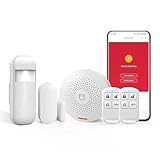
Overview: This 5-piece wireless security kit offers an affordable entry point into home protection without recurring costs. The system includes a base station with siren, one motion detector, one door/window sensor, and two remote controls, all manageable through a smartphone app.
What Makes It Stand Out: The zero-monthly-fee model is the headline feature, eliminating the subscription burden that plagues most security systems. Installation takes minutes with plug-and-play setup and adhesive mounting. Voice control via Alexa and Google Assistant adds modern convenience, while expandability to 99 wireless accessories provides room for growth. The ability to set silent alerts for private areas demonstrates thoughtful customization.
Value for Money: At $35.99, this is a one-time investment that undercuts subscription-based alternatives within just 2-3 months. Comparable starter kits from brands like Ring or SimpliSafe require monthly fees exceeding $10, making this system pay for itself quickly for budget-conscious users.
Strengths and Weaknesses: Strengths include truly fee-free operation, effortless installation suitable for renters, robust expandability, and intuitive app controls accessible to seniors. Weaknesses involve the minimal sensor count in the base kit, limited range compared to mesh systems, and potential reliability concerns typical of budget electronics. The “150W” specification seems misplaced for a security system.
Bottom Line: Ideal for apartment dwellers, renters, or homeowners seeking basic deterrence without financial commitment. While it won’t replace professional monitoring, it delivers impressive value as a self-monitored starter system.
7. Kano Motion Sensor Kit – Learn to code with movement

Overview: Designed for children ages 6 and up, this educational kit transforms coding into a tangible, interactive experience. Users build their own infrared motion sensor then program it to create art, games, and music controlled by hand gestures.
What Makes It Stand Out: The hands-on assembly process demystifies technology before the coding even begins. With 30+ step-by-step challenges, learners progress from basics to complex projects. Integration with Kano World provides access to half a million community creations, fostering inspiration and collaboration. Cross-platform compatibility ensures it works with virtually any computer.
Value for Money: At $20.95, this kit offers exceptional STEM education value. It combines hardware assembly, programming fundamentals, and creative applications at a price point lower than many coding-only software subscriptions.
Strengths and Weaknesses: Strengths include the engaging build-and-code approach, age-appropriate instruction, vibrant community support, and multi-platform flexibility. The kit excels at making abstract concepts concrete. Weaknesses are its narrow focus on motion sensing, which limits project scope, and the requirement for a separate computer. Advanced young programmers may outgrow it quickly.
Bottom Line: An outstanding introduction to computational thinking for elementary-aged learners. It successfully bridges the gap between digital and physical worlds, making it a worthwhile investment for parents and educators nurturing future innovators.
8. TP-Link Tapo Sensor Starer Kit: “1 x Hub H100” + “1 x Motion Sensor T100” + “1 x Contact Sensor T110”

Overview: This entry-level smart home kit from networking giant TP-Link includes the H100 hub, one motion sensor, and one contact sensor. It forms the foundation of a expandable sensor network designed to integrate seamlessly with other Tapo devices.
What Makes It Stand Out: The proprietary low-power wireless protocol delivers up to 10x battery life compared to Wi-Fi alternatives, while providing reliable 30-meter range with minimal interference. Smart Actions allow sensors to trigger other Tapo devices like lights and plugs, creating true automation scenarios. The contact sensor’s versatility extends beyond doors to refrigerators, mailboxes, and cabinets.
Value for Money: Priced at $47.44, the kit positions itself competitively against brands like Aqara and Samsung SmartThings. The hub’s ability to support multiple sensors while extending battery life justifies the investment for users committed to the Tapo ecosystem.
Strengths and Weaknesses: Strengths include TP-Link’s reputation for stable connectivity, impressive power efficiency, broad sensor applicability, and seamless ecosystem integration. The hub’s lower frequency reduces wireless congestion. Weaknesses involve ecosystem lock-in—the hub won’t work with non-Tapo devices—and the kit’s minimal sensor count requiring additional purchases for whole-home coverage.
Bottom Line: A solid choice for homeowners already using or planning to adopt TP-Link’s smart home products. The superior battery life and reliable connectivity make it a practical foundation, though ecosystem limitations may deter users seeking broader interoperability.
9. KEYESTUDIO IOT ESP32 Smart Home Starter Kit for Arduino and Python,Electronics Home Automation Coding Kit, Wooden House DIY Sensor Kit,STEM Educational Set for Adults Teens 15+

Overview: This comprehensive STEM kit targets older teens and adults ready to dive deep into IoT and home automation. Centered around an ESP32 board, it includes components to build a wooden model house with 13 different sensor-based projects using either Arduino C or MicroPython.
What Makes It Stand Out: The dual-programming-language support accommodates diverse learning preferences and career paths. The wooden house framework provides a cohesive, real-world context for learning sensor integration. Projects cover practical applications including motion detection, gas alarms, temperature monitoring, and even Morse code communication. Online tutorials replace paper manuals, ensuring updated content.
Value for Money: At $49.99, this kit delivers exceptional depth for serious learners. Comparable ESP32 learning platforms often cost more while offering fewer integrated projects or lacking the unified smart home theme.
Strengths and Weaknesses: Strengths include comprehensive curriculum covering multiple sensors, dual-language programming options, practical home automation focus, and quality wooden housing that enhances engagement. Weaknesses involve the steep learning curve for absolute beginners, lack of pre-assembly, and absence of required 6 AA batteries. The 15+ age rating is appropriate given the complexity.
Bottom Line: Perfect for motivated learners seeking more than superficial coding exposure. This kit bridges the gap between beginner boards and professional IoT development, making it an excellent investment for aspiring engineers and tech enthusiasts ready for a challenge.
10. 12V Linear Actuator 3000N/660lbs - 18 Inch Stroke, 5mm/s Speed | Waterproof Heavy Duty Linear Motion Actuator with Controller for Industrial, Home Automation

Overview: This industrial-grade linear actuator delivers substantial power in a compact package, generating 660 pounds of force across an 18-inch stroke. Designed for demanding applications from equipment lifting to furniture automation, it includes mounting brackets and polarity switch for straightforward integration.
What Makes It Stand Out: The 3000N force rating positions this unit among the most powerful in its price class. Remarkably quiet operation at ≤50dB makes it suitable for indoor residential use where noise is a concern. Built-in limit switches and safety lock functionality prevent damage and enable precise positioning. The included mounting hardware eliminates common installation frustrations.
Value for Money: At $61.99, this actuator offers professional-grade specifications at a DIY-friendly price. Comparable units with similar force ratings typically cost 30-50% more, making it an exceptional value for makers and small-scale industrial applications.
Strengths and Weaknesses: Strengths include exceptional force capacity, quiet operation, comprehensive safety features, durable aluminum construction, and ready-to-install packaging. The 5mm/s speed provides controlled, stable movement. Weaknesses involve the relatively slow travel speed for time-sensitive applications and the “waterproof” claim, which the manufacturer clarifies as water-resistant only—prolonged outdoor exposure risks short circuits.
Bottom Line: An outstanding choice for DIY automation projects requiring reliable, powerful linear motion. While not suitable for high-speed applications or harsh outdoor environments without additional protection, it delivers professional performance at a fraction of industrial costs.
Understanding Motion-Based Automation Kits
Motion-based automation kits transform physical movement—whether it’s a hand wave, door opening, or presence in a room—into digital triggers that control lights, appliances, security systems, and climate controls. These self-contained ecosystems typically bundle sensors, controllers, and actuators into a unified package that communicates through your home network.
What Makes a Kit “Budget-Friendly” in 2026?
The $100 threshold in 2026 represents a sweet spot where manufacturers balance component quality with accessible pricing. Budget-friendly doesn’t mean cheaply made; rather, it indicates strategic decisions like using standardized protocols instead of proprietary tech, offering modular expandability rather than all-in-one premium builds, and leveraging cloud-free local processing to reduce subscription costs. The best kits in this range prioritize core functionality over flashy features, giving you reliable motion detection and basic automation logic without the luxury finishes of enterprise-grade equipment.
The Evolution of Affordable Automation
Three years ago, sub-$100 kits were limited to basic PIR sensors and single-room control. Today’s budget offerings integrate millimeter-wave radar for precision detection, support multi-protocol hubs, and include smartphone apps with visual programming interfaces. This evolution stems from mass-produced IoT chipsets and open-source firmware adaptations that have slashed development costs. Understanding this progression helps you spot legacy products masquerading as modern solutions—look for 2025-2026 manufacturing dates and firmware update policies as telltale signs of current-generation technology.
Key Components Every Kit Should Include
A legitimate automation kit ships with three non-negotiable elements: sensors to detect motion, a controller to process signals, and actuators (or relays) to execute commands. Be wary of “starter packs” that only include sensors—you’ll face immediate compatibility headaches hunting for compatible control hardware.
Sensors: The Eyes and Ears of Your System
Budget kits typically offer PIR (passive infrared) or microwave radar sensors. PIR units detect heat signatures and work reliably for large movements but struggle with fine gestures or stationary presence. Microwave sensors emit low-power radar waves, offering superior sensitivity through obstacles and better detection of micro-movements like breathing. In 2026, hybrid sensors combining both technologies have entered the budget category, providing pet-immune detection and false-trigger reduction that was previously premium-only. Always verify the detection angle (aim for 120°+) and range (at least 30 feet) specifications.
Actuators: Where Motion Meets Action
Actuators are the workhorses that physically control devices—relay switches for hardwired lights, smart plugs for appliances, or motorized controllers for blinds. Sub-$100 kits usually include one or two basic actuators, but the real value lies in the controller’s capacity to support additional units. Check the maximum load rating (15A for switches is standard) and whether the kit uses dry-contact relays (versatile for any voltage) versus line-voltage-only models that limit flexibility.
Controllers: The Brain Behind the Operation
The controller hub determines your system’s intelligence and expandability. Modern budget controllers feature local processing chips that execute automations without internet latency, typically offering 8-16 device connections out of the box. Scan for RAM specifications—32MB is the 2026 minimum for smooth operation—and storage capacity for automation rules. Some advanced budget hubs now include Zigbee Thread border router functionality, future-proofing them for Matter ecosystem integration without requiring a separate bridge.
Essential Features to Prioritize Under $100
When every dollar counts, focus on features that deliver immediate utility while preserving upgrade paths. Flashy companion apps and color-changing LEDs mean nothing if the core detection logic is unreliable.
Connectivity Standards That Matter
Wi-Fi-only kits simplify setup but congest your network and often lack mesh resilience. In 2026, the smart money demands Zigbee 3.0 or Thread compatibility at minimum—these mesh protocols create self-healing networks where each powered device strengthens the whole system. Bluetooth LE presence is a bonus for proximity-based triggers but shouldn’t be the primary backbone. Avoid kits locked to proprietary RF frequencies; they become paperweights if the manufacturer discontinues support.
Power Requirements and Efficiency
Battery life separates frustrating from fantastic automation. Quality PIR sensors should deliver 18-24 months on two AA batteries; microwave sensors consume more power but should still exceed 12 months. Check if the kit includes low-battery notifications and whether sensors use standard batteries (preferable) versus coin cells (expensive replacements). For hardwired components, verify standby power draw—inefficient actuators can waste $5-10 annually in phantom load, eroding your budget savings.
Software Compatibility and Ease of Programming
The best budget kits offer visual, block-based programming interfaces that don’t require coding knowledge. Look for “if-this-then-that” logic builders with time conditions, device grouping, and scene creation. Test the app’s offline functionality—some budget apps become useless without internet, preventing local control when you need it most. Open-source firmware support (like ESPHome or Tasmota compatibility) is a hidden gem in this price range, unlocking advanced features without premium costs.
Compatibility Considerations for Your Smart Home Ecosystem
A $100 kit becomes an expensive mistake if it refuses to play nice with your existing devices. Compatibility isn’t just about brand names—it’s about protocol support and API openness.
Voice Assistant Integration
Alexa and Google Assistant support is table stakes in 2026, but the depth matters. Basic integration allows simple on/off voice commands, while advanced setups enable queries like “Is there motion in the garage?” and conditional routines. Siri Shortcuts support through HomeKit bridges has finally reached budget kits, but requires verifying HomeKit certification—not just “works with” marketing claims. Test the lag time: voice commands should trigger responses within 1-2 seconds; longer delays indicate cloud dependency issues.
Cross-Platform Compatibility
True flexibility means your motion kit can trigger non-native devices. Look for MQTT support, which acts as a universal translator between automation platforms. IFTTT integration expands possibilities but watch for subscription fees that negate budget benefits. The gold standard is Matter certification—2026’s emerging protocol ensures your kit will work with any Matter-compliant ecosystem for the next decade. If Matter isn’t advertised, Thread support is the next best indicator of future compatibility.
Installation and Setup: What to Expect
Budget kits reward DIY enthusiasm but punish sloppy installation. Understanding the typical workflow prevents mid-project frustration and ensures reliable long-term operation.
DIY vs. Professional Installation
Sub-$100 kits are engineered for self-installation, with adhesive mounts, wire-free designs, and QR-code-based pairing. However, electrical actuators involving mains voltage demand respect. If you’re uncomfortable working inside a junction box, hire an electrician for the final connection—budget $50-75 for a professional to install a single switch, still keeping total project costs under $150. Most sensor placements require only a screwdriver and sensible positioning away from HVAC vents and direct sunlight.
Common Setup Pitfalls to Avoid
The number one mistake is mounting motion sensors too high or facing windows, causing false triggers from passing cars or heat reflections. Optimal mounting height is 7-8 feet with sensors angled slightly downward. Second, failing to update firmware during initial setup leaves known bugs unresolved. Always connect the hub via Ethernet for the first update, not Wi-Fi, to prevent bricking from interrupted downloads. Finally, test automations during different times of day—afternoon sunlight can blind sensors that work perfectly at night.
Real-World Applications for Budget Kits
Think beyond simple light switches. A strategically placed motion sensor can trigger a smart plug to start a coffee maker when you enter the kitchen in the morning, activate a fan when a room reaches occupancy temperature, or send smartphone alerts when a rarely-used door opens. Pet owners can create “pet corridors” that ignore animal movement while securing perimeter doors. The key is chaining multiple automations: motion detected → light turns on → after 5 minutes of no motion → light dims to 20% → after 2 more minutes → light off. This layered approach feels premium while using basic components.
Security and Privacy in Motion Automation
Budget kits sometimes cut corners on encryption, broadcasting unencrypted motion events that savvy neighbors could intercept. Verify WPA3 support for Wi-Fi components and AES-128 encryption for Zigbee/Thread networks. More concerning is cloud data handling—read the privacy policy to confirm motion logs aren’t sold to third parties. The most secure budget kits offer local-only modes that disable cloud connectivity entirely, storing automation rules on-device. Disable any “improvement programs” that upload usage data; these are rarely opt-in by default and can reveal intimate details about your daily routines.
Troubleshooting Your Motion Automation System
When automations fail, systematically isolate variables. First, check sensor battery voltage—even “new” kits can include depleted batteries from long warehouse storage. Second, verify network congestion; temporarily disable streaming devices to see if automation responsiveness improves. False triggers often stem from environmental factors—install a cheap thermometer/hygrometer near problematic sensors to correlate temperature swings with misfires. If the hub becomes unresponsive, perform a soft reset before factory resetting—many budget controllers include a “reboot” option in advanced settings that preserves your configurations while clearing memory leaks.
Future-Proofing Your $100 Investment
Maximize longevity by choosing kits with over-the-air firmware update capabilities and documented API access. Even if the manufacturer abandons the product, community developers often maintain open-source alternatives. Purchase one extra sensor when buying your kit—discontinued models become scarce within 18 months, and having a spare prevents ecosystem obsolescence. Document your automation rules with screenshots; app updates can occasionally erase configurations, and rebuilding from memory is frustrating. Finally, select kits with micro-USB or USB-C power for the hub—proprietary power adapters become irreplaceable when standards inevitably shift.
Frequently Asked Questions
1. Can a sub-$100 motion kit really handle outdoor installation?
Yes, but only if explicitly rated IP65 or higher. Budget indoor sensors will fail within weeks due to moisture and temperature extremes. Look for kits advertising “weather-resistant” sensors with operating ranges from -4°F to 120°F. Even then, mount sensors under eaves to protect from direct rain and sun exposure.
2. How many devices can I realistically control with a budget hub?
Most $100 hubs support 12-16 devices out of the box, but performance degrades beyond 10 active automations. For whole-home coverage, plan on using multiple hubs segmented by floor or zone. Thread-based systems scale better, as each powered device extends the mesh, effectively increasing capacity without hub upgrades.
3. Will pets constantly trigger my motion automations?
Modern budget kits include pet-immune settings that ignore animals under 40-80 pounds, but this requires correct sensor placement. Mount sensors at chest height (4-5 feet) facing across pet traffic patterns rather than down hallways. Microwave sensors generally offer better pet discrimination than basic PIR units.
4. What’s the real battery cost over a year of operation?
Expect to replace two AA batteries per sensor every 18-24 months, costing roughly $3-5 annually per device. Kits using coin cells (CR2032) cost twice as much to maintain. Solar-powered sensors are emerging in the budget category but currently add $15-20 per unit—only cost-effective for hard-to-reach installations.
5. Can I integrate these kits with my existing security system?
Limited integration is possible through IFTTT or MQTT if your security panel supports those protocols. However, most budget motion kits lack the UL certification required for professional alarm monitoring. Treat them as convenience automations, not life-safety devices. For true security integration, you’ll need a certified alarm bridge, which typically exceeds the $100 kit budget.
6. Why does my motion light turn off while I’m still in the room?
This “occupancy blindness” occurs when sensors can’t detect micro-movements. Increase the timeout delay to 15-20 minutes, or add a second sensor positioned to catch different movement angles. For desk work, consider adding a cheap pressure mat under your chair that keeps lights active regardless of motion sensor limitations.
7. Are there hidden subscription fees with budget automation kits?
Reputable 2026 budget kits avoid mandatory subscriptions, but some apps lock advanced features like conditional logic or cloud storage behind $2-5 monthly fees. Read app store reviews mentioning “paywalls” before purchasing. Open-source firmware alternatives like ESPHome completely eliminate subscription risks for technically inclined users.
8. How do I prevent motion sensors from interfering with each other?
Space sensors at least 15 feet apart and avoid overlapping detection zones. If overlap is unavoidable, use automation logic that requires “Sensor A AND Sensor B” triggered within 30 seconds to confirm true occupancy. This two-factor approach eliminates false triggers while improving detection reliability in large rooms.
9. Will these kits work during a power outage?
Hubs and actuators lose power without a UPS backup, but battery-powered sensors continue logging events. When power returns, most hubs sync missed events and execute backlogged automations. For critical functions like pathway lighting, add a $30 mini UPS to the hub—still keeping total system costs under $150.
10. Can I take my automation kit when I move?
Absolutely. Document all sensor locations and automation rules before uninstalling. Reset devices to factory defaults, remove adhesive mounts with dental floss (to avoid wall damage), and update the hub’s Wi-Fi credentials at your new location. The only sunk cost is any custom wiring for actuators, which you can replace with wireless smart plugs in the new home.