Imagine walking into your home and having your lighting instantly adapt to your mood, the time of day, and even the weather outside—without worrying whether your iPhone can talk to your Android partner’s device, or if that new bulb will work with your existing smart speaker. For years, this seamless smart home experience has been promised but rarely delivered, as incompatible ecosystems created a fragmented landscape of hubs, protocols, and frustrating workarounds. Enter Matter, the revolutionary connectivity standard that’s finally making true interoperability a reality, and 2026 is the year it moves from early adoption to mainstream dominance.
As you consider upgrading your lighting infrastructure, you’re not just buying bulbs—you’re investing in a future-proof ecosystem that will serve your home for the next decade. Matter-ready smart bulbs represent more than incremental improvements; they’re the foundation of a unified smart home that puts you in control rather than locking you into a single brand’s walled garden. This comprehensive guide dives deep into the technical specifications, critical features, and strategic considerations that separate genuinely future-proof lighting from yesterday’s obsolete technology.
Top 10 Smart Bulbs Matter-Ready
Detailed Product Reviews
1. Linkind Matter Smart Light Bulb, Smart Bulbs Work with Apple Home, Siri, Alexa, Google, SmartThings, LED RGBTW Color Changing Bulbs Music Sync,A19 E26 60W 800LM, 2.4GHz WiFi Only, 4 Pack

Overview: The Linkind 4-pack delivers Matter-certified smart lighting with extensive platform support including Apple Home, Alexa, Google, and SmartThings. These A19 bulbs produce 800 lumens at 9W (60W equivalent), offering millions of colors from 1800K-6500K. The set includes music synchronization and unique wellness-focused features designed for whole-home automation.
What Makes It Stand Out: The standout feature is the 24-hour wake-up mode that simulates natural sunlight patterns, gradually transitioning from dusk to dawn to support healthy circadian rhythms. This makes it particularly valuable for households with elderly family members or children. The music sync function responds to ambient sound through your phone’s microphone, creating dynamic lighting scenes for parties or relaxation. Linkind emphasizes eye safety with a 60Hz refresh rate and no blue-ray hazard, addressing concerns about LED-related visual fatigue.
Value for Money: At $8.25 per bulb, this 4-pack sits in the mid-range for Matter-certified bulbs. The price is justified by health-centric features, multi-platform compatibility, and the convenience of hub-free operation through the AiDot app. While requiring a Matter hub for some platforms, the direct app control provides flexibility. The 15-year lifespan (4 hours daily use) and 2-year warranty enhance long-term value.
Strengths and Weaknesses: Strengths include excellent platform compatibility, unique wake-up/sun simulation mode, music sync capability, group control, and health-focused design with flicker-free operation. The 2-year warranty and energy efficiency are additional pluses. Weaknesses include 2.4GHz-only connectivity (no 5GHz support), requiring a Matter hub for full platform integration, and potential complexity for users wanting simple plug-and-play operation.
Bottom Line: Ideal for health-conscious users seeking advanced automation features beyond basic color-changing. The wake-up mode and eye-safety considerations make it worth the slight premium, though those wanting simpler setups might find the hub requirements and app dependency cumbersome.
2. Linkind Matter Smart Light Bulb, WiFi Smart Bulbs, Work with Apple Home, Siri, Alexa, Google, SmartThings, RGBTW Color Changing Bulbs Mood Lighting, Music Sync, A19 E26 60W, 2.4Ghz WiFi 6 Pack

Overview: This 6-pack from Linkind provides Matter-enabled smart bulbs with comprehensive ecosystem support for Apple Home, Alexa, Google, and SmartThings. Delivering 800 lumens at 9W, these RGBTW bulbs offer millions of colors (1800K-6500K) and dynamic scene settings. The set emphasizes remote accessibility and energy efficiency for larger home installations.
What Makes It Stand Out: The six-bulb configuration offers exceptional value for whole-room or multi-room setups, allowing simultaneous control of multiple zones through group commands. The remote access capability lets you manage lighting from anywhere via the AiDot app, enhancing security and convenience. Music synchronization transforms audio into visual ambiance, while the Matter protocol ensures seamless interoperability across platforms without cloud dependency, improving privacy and reliability.
Value for Money: At $7.16 per bulb, this 6-pack represents excellent bulk value, undercutting most competitors while maintaining Matter certification. The claimed 22-year lifespan (3 hours daily) and 80% energy savings provide substantial long-term cost benefits. The 2-year warranty adds confidence. For users needing multiple bulbs, this offers one of the lowest per-unit prices for Matter-compatible, feature-rich smart lighting.
Strengths and Weaknesses: Strengths include outstanding bulk pricing, robust remote control capabilities, multi-platform voice control, music sync, energy efficiency, and Matter’s local network reliability. The extended lifespan rating is impressive. Weaknesses are 2.4GHz-only WiFi limitation, potential need for Matter hub depending on platform, incompatibility with dimmer switches, and IPv6 router requirement that may confuse some users.
Bottom Line: Perfect for budget-conscious buyers outfitting multiple rooms. The per-bulb cost is hard to beat for Matter-certified bulbs with full color range and music sync. Just ensure your network meets the 2.4GHz/IPv6 requirements and you have a Matter hub if needed for your preferred platform.
3. OREiN Matter Smart Light Bulb, Smart Light Bulbs Work with Apple Home, Alexa, Google Home, SmartThings, A19 Color Changing Light Bulbs 2.4Ghz WiFi, 800 Lumens Equivalent 60W 4Pack

Overview: OREiN’s 4-pack delivers Matter-certified smart bulbs prioritizing network stability and security. Compatible with Apple Home, Alexa, Google Home, and SmartThings, these A19 bulbs produce 800 lumens. The product emphasizes reliable local network operation and streamlined setup, targeting users frustrated with connectivity issues common in smart home devices.
What Makes It Stand Out: The key differentiator is robust LAN-based operation that maintains functionality even during internet outages, addressing a major pain point for smart home users. Setup is remarkably simple via Matter QR code scanning, eliminating complex pairing processes. Security is paramount, with standard cryptographic algorithms protecting every message and unlimited OTA updates creating a secure firewall. The explicit warning about dimmer switch incompatibility demonstrates unusual transparency.
Value for Money: At $7.50 per bulb, OREiN offers competitive pricing slightly below Linkind’s 4-pack while emphasizing reliability and security. The focus on stable local control and cybersecurity features provides value beyond raw specs. The 4-pack quantity suits most room configurations. While lacking some advanced features like music sync, the core Matter implementation appears more robust, justifying the cost for stability-focused buyers.
Strengths and Weaknesses: Strengths include exceptional network stability via LAN operation, simple QR code setup, strong security architecture, multi-platform interoperability, and honest communication about limitations. Weaknesses include 2.4GHz-only connectivity, absence of music synchronization or wake-up modes, no explicit lifespan claims, and potential compatibility issues with dimmer switches that novice users might overlook.
Bottom Line: Excellent choice for users prioritizing reliability and security over flashy features. The offline functionality and straightforward setup make it ideal for smart home newcomers or those in areas with unstable internet. If you want proven stability rather than gimmicks, this delivers strong value.
4. Sengled Matter LED Smart Light Bulb (A19), Multicolor, Compatible with Alexa, 60W Equivalent, 800LM, Instant Pairing, 1-Pack

Overview: Sengled’s single Matter-certified bulb offers an entry point into smart lighting with award-winning engineering. Compatible with Alexa, Apple HomeKit, Google Assistant, and SmartThings, this 9W A19 bulb delivers 800 lumens of multicolor light. The product leverages Sengled’s extensive patent portfolio and industry recognition to promise reliable performance.
What Makes It Stand Out: Sengled’s reputation sets it apart, with 17 industry awards including multiple CES Innovation Awards and 1,100 global patents backing the technology. The “instant pairing” via Matter protocol simplifies what traditionally frustrated smart bulb users. Energy efficiency is exceptional, claiming 85% savings while maintaining brightness and color quality. As a single-pack, it allows risk-free trial before committing to whole-home deployment.
Value for Money: At $9.05 for a single bulb, the per-unit cost is reasonable for a premium-brand Matter device. While more expensive than bulk packs on a per-bulb basis, it eliminates upfront investment for users wanting to test Matter compatibility. The 2-year warranty and Sengled’s established track record reduce risk. For those uncertain about smart lighting, this trial-sized option prevents expensive mistakes.
Strengths and Weaknesses: Strengths include award-winning brand reliability, instant pairing simplicity, excellent energy efficiency, broad platform support, and strong intellectual property backing. The single-pack flexibility is ideal for testing. Weaknesses include higher per-bulb cost versus multi-packs, 2.4GHz-only limitation, 800-lumen brightness that may feel inadequate for larger spaces, and lack of advanced features like music sync found in competitor offerings.
Bottom Line: Best for smart home newcomers wanting a low-risk entry into Matter ecosystem from a trusted brand. The single-bulb packaging and award-winning pedigree justify the modest premium. Buy this to test compatibility before investing in larger quantities, or for smaller spaces where reliability trumps advanced features.
5. TP-Link Tapo Smart Light Bulbs, 1100 Lumens High Brightness (75W Equivalent), Matter-Certified, 16M Colors WiFi Light Bulb, Dimmable, Works w/Siri, Alexa & Google Home, A19 E26, Tapo L535E(2-Pack)

Overview: TP-Link’s Tapo L535E 2-pack delivers superior brightness in the Matter smart bulb category, offering 1100 lumens (75W equivalent) versus the standard 800 lumens. Compatible with Siri, Alexa, and Google Home, these bulbs provide 16 million colors with enhanced color rendering. The product targets users needing brighter illumination without sacrificing smart functionality.
What Makes It Stand Out: The 1100-lumen output is a significant differentiator, making these bulbs suitable for primary lighting in larger rooms or task-oriented spaces where standard smart bulbs fall short. The higher Color Rendering Index (CRI) produces more vibrant, accurate colors across the 2500K-6500K tunable white range. Matter Multi-Admin support allows secure device sharing with family members. The Tapo app provides granular 1-100% dimming control unmatched by many competitors.
Value for Money: At $12.50 per bulb, these command a premium justified by superior brightness and color quality. The 2-pack configuration suits bedrooms, offices, or paired fixtures. While pricier than 800-lumen alternatives, the 75W-equivalent output eliminates need for multiple bulbs in one fixture. Energy efficiency remains strong despite higher output. For spaces requiring serious illumination, the cost premium delivers tangible performance benefits.
Strengths and Weaknesses: Strengths include exceptional 1100-lumen brightness, high CRI for accurate colors, precise dimming control, Matter Multi-Admin sharing, offline LAN operation, and robust platform compatibility. Weaknesses include premium pricing, 2-pack limitation for whole-home projects, 2.4GHz-only connectivity, and potential overkill for ambient lighting where 800 lumens suffices. The higher wattage may reduce lifespan compared to lower-lumen competitors.
Bottom Line: Ideal for primary lighting applications where brightness matters. The 1100-lumen output and high CRI justify the premium for kitchens, offices, or reading areas. If you’re replacing main light sources rather than adding accent lighting, this is your best Matter option. For closets or hallways, cheaper 800-lumen alternatives suffice.
6. Govee E12 Led Bulb, Smart Light Bulbs Work with Matter, Alexa, Google Assistant, WiFi Candelabra Bulbs 40 Watt Equivalent, RGBWW Color Changing Light Bulb, 2.4Ghz Only, 450 LM, 4 Pack

Overview: The Govee E12 Smart Light Bulb 4-pack brings intelligent lighting to candelabra fixtures. These 40W equivalent bulbs deliver 450 lumens with full RGBWW capabilities and Matter certification for broad smart home compatibility. Designed for decorative fixtures, they offer millions of colors and 50+ preset scenes to transform any space.
What Makes It Stand Out: This is one of the few candelabra-form smart bulbs with comprehensive Matter support. The music sync feature allows colors to pulse with ambient sound, while advanced scheduling includes sunrise/sunset modes. The adjustable color temperature (2700K-6500K) spans from warm candlelight to cool daylight, making it versatile for mood setting or task lighting.
Value for Money: At $8.74 per bulb, these are competitively priced for specialty candelabra smart bulbs. While standard A19 smart bulbs can be cheaper, the E12 base commands a premium. The feature set—particularly Matter support and music sync—matches or exceeds pricier alternatives from Philips Hue or LIFX.
Strengths and Weaknesses: Strengths include the rare candelabra smart bulb design, robust color options, Matter compatibility, and intuitive scheduling. Weaknesses are the 2.4GHz-only connectivity, incompatibility with physical dimmer switches, and modest 450-lumen output limiting them to accent or decorative use rather than primary illumination.
Bottom Line: Perfect for chandeliers, sconces, and decorative fixtures where standard bulbs won’t fit. The Matter support ensures future-proof compatibility, making this an excellent choice for smart home enthusiasts with candelabra lighting needs.
7. Linkind Matter Smart Light Bulb, ST19 (ST58) Smart Edison Bulbs, 2700K-6500K E26 LED Bulb 8W 60W, 800LM Edison Light Bulb, Work with Alexa, Google Home, Apple Home, SmartThings, 2.4GHz WiFi, 4-Pack
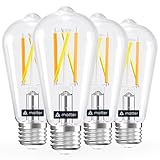
Overview: The Linkind ST19 Edison Smart Bulb 4-pack combines vintage aesthetics with modern Matter-enabled technology. These 60W equivalent bulbs produce 800 lumens with tunable white light (2700K-6500K) in a classic Edison filament design. Compatible with all major smart platforms, they eliminate app clutter through unified Matter control.
What Makes It Stand Out: The vintage ST19 Edison style sets these apart from generic smart bulbs, making them ideal for exposed fixtures. Matter certification enables seamless integration across Apple Home, Alexa, Google Home, and SmartThings without multiple apps. The simple QR code setup streamlines installation, while the AiDot app provides deep customization.
Value for Money: At $9.50 per bulb, you’re paying a slight premium for the Edison design versus standard A19 smart bulbs. However, the Matter support and 800-lumen brightness justify the cost. Traditional Edison LED bulbs without smart features cost $5-7 each, making the smart upgrade reasonable.
Strengths and Weaknesses: Strengths include the attractive vintage design, broad Matter compatibility, easy setup, and reliable performance. Weaknesses are the lack of RGB color changing, 2.4GHz Wi-Fi limitation, and incompatibility with physical dimmer switches. The ST19 shape may not fit all enclosed fixtures.
Bottom Line: An excellent choice for style-conscious smart home users wanting Edison bulbs with modern connectivity. The Matter support ensures long-term compatibility, making it worth the modest premium for exposed lighting fixtures.
8. Linkind Matter Smart Light Bulb, Soft White to Daylight Tunable Alexa Light Bulbs, Smart Bulbs Work with Apple Home, Alexa, Google Home, SmartThings, 2.4GHz Wi-Fi LED, A19 E26, 800LM, 60W (4-Pack)

Overview: The Linkind A19 Matter Smart Bulb 4-pack delivers reliable smart lighting with dual connectivity options. These 60W equivalent bulbs produce 800 lumens with tunable white light from warm (2700K) to cool daylight (6500K). Matter certification ensures compatibility across Apple Home, Alexa, Google Home, and SmartThings.
What Makes It Stand Out: The Wi-Fi and Bluetooth dual connection provides flexibility—control locally via Bluetooth when Wi-Fi is down, or remotely through the AiDot app. Out-of-home control and group management allow you to orchestrate multiple bulbs from anywhere. The CRI>90 rating ensures excellent color accuracy for tasks requiring true color rendering.
Value for Money: At $8.25 per bulb, this 4-pack offers strong value. The dual connectivity and Matter support typically command higher prices. Compared to single-protocol bulbs, the versatility justifies the cost, especially for users wanting both local and remote control options.
Strengths and Weaknesses: Strengths include dual Wi-Fi/Bluetooth connectivity, Matter compatibility, excellent CRI, group control, and out-of-home access. Weaknesses are 2.4GHz-only Wi-Fi, no RGB color changing, and incompatibility with traditional dimmer switches. Initial setup requires both Wi-Fi and Bluetooth.
Bottom Line: A versatile, future-proof smart bulb perfect for users wanting flexible connectivity. The dual-connection feature provides reliability that single-protocol bulbs lack, making it ideal for whole-home smart lighting installations.
9. OREiN Matter Smart Light Bulb, 1600 Lumens 100W Equivalent Smart Light Bulbs, Color Changing Light Bulbs Work with Apple Home, Alexa, Google Home, SmartThings, A21 Smart Bulbs 2.4Ghz WiFi, 4Pack

Overview: The OREiN A21 Matter Smart Bulb 4-pack delivers exceptional brightness at 1600 lumens (100W equivalent) while consuming just 9W. These powerful bulbs support 16 million colors and tunable white (1800K-6500K) with Matter certification for universal smart home integration. Ideal for large spaces requiring serious illumination.
What Makes It Stand Out: The 1600-lumen output dwarfs standard 800-lumen bulbs, making these suitable for kitchens, garages, and home offices. Matter certification enables simultaneous operation across multiple platforms—control via Apple Home, Alexa, Google Home, and SmartThings without conflicts. The music sync feature with four rhythm modes creates dynamic lighting for entertainment.
Value for Money: At $13.75 per bulb, these command a premium but deliver unmatched brightness. Standard 100W-equivalent smart bulbs cost $12-15 each, making this 4-pack competitively priced. The energy savings (85% less power) and 25,000-hour lifespan offset the initial investment.
Strengths and Weaknesses: Strengths include exceptional brightness, RGBTW color changing, Matter multi-platform support, music sync, and high CRI 90+ rating. Weaknesses are the larger A21 size (may not fit all fixtures), 2.4GHz-only connectivity, and higher per-bulb cost. Requires Matter hub for some platforms.
Bottom Line: The go-to choice for brightly lit smart spaces. If you need serious illumination with smart features, these outperform standard bulbs. The Matter support and multi-platform compatibility make them ideal for comprehensive smart home setups.
10. Linkind Matter Smart Light Bulb, Smart Bulbs Work with Apple Home/Siri/Alexa/Google Home/SmartThings, LED Color Changing Light Music Sync RGTBW, Smart Home, 60W 800LM A19 E26 2.4Ghz WiFi Only, 2 Pack

Overview: The Linkind A19 Matter Smart Bulb 2-pack offers color-changing capabilities with health-conscious features. These 60W equivalent bulbs deliver 800 lumens with RGBTW support (16 million colors, 1800K-6500K). Matter compatibility ensures integration with Apple Home, Alexa, Google Home, and SmartThings, with hub-free control via the AiDot app.
What Makes It Stand Out: The health-focused design claims no blue-ray hazard and reduced eye strain, addressing concerns about LED exposure. The wake-up mode simulates natural sunlight over 24 hours, gradually brightening for gentle mornings. Music sync allows colors to dance with sound, while the 22-year lifespan claim (3 hours/day) suggests exceptional durability.
Value for Money: At $10.00 per bulb in a 2-pack, pricing is mid-range. The health features and color changing justify the cost over basic white smart bulbs. While 4-packs offer better per-unit value, this 2-pack is ideal for testing or smaller spaces. The 2-year warranty provides peace of mind.
Strengths and Weaknesses: Strengths include RGBTW color changing, health-conscious design, wake-up mode, music sync, and Matter support. Weaknesses are the 2-pack sizing (less economical), 2.4GHz-only Wi-Fi, and requirement of a Matter hub for some platforms. The health claims lack independent verification.
Bottom Line: A solid choice for users prioritizing color options and potential eye comfort. The wake-up mode and music sync add lifestyle value, making it suitable for bedrooms and living spaces where ambiance and health considerations matter.
Understanding Matter: The Foundation of Future-Proof Smart Lighting
Matter isn’t just another wireless protocol—it’s a universal language that allows smart home devices from different manufacturers to communicate natively. Developed by the Connectivity Standards Alliance (CSA) with backing from Apple, Google, Amazon, Samsung, and hundreds of other companies, Matter operates over existing IP-based networks like Thread, Wi-Fi, and Ethernet. For smart bulbs specifically, this means a single device can respond to commands from Siri, Google Assistant, Alexa, and SmartThings simultaneously without cloud translation layers that introduce latency and potential failure points.
The standard’s true genius lies in its local control architecture. Unlike legacy smart bulbs that route commands through distant servers, Matter devices communicate directly with your home network hub. This design reduces response times from seconds to milliseconds while ensuring your lights still function even during internet outages. In 2026, we’re seeing second-generation Matter implementations that have resolved early adoption quirks, making this the ideal time to commit to the ecosystem.
Why 2026 Represents a Paradigm Shift for Smart Home Lighting
The smart lighting market has reached a critical inflection point. By 2026, Matter certification has become a baseline expectation rather than a premium feature, with major manufacturers completing their product line transitions. This widespread adoption creates a buyer’s market where competition drives innovation while keeping prices accessible. More importantly, the Thread protocol—Matter’s preferred mesh networking technology—has achieved sufficient density in homes to create robust, self-healing networks that eliminate dead zones.
Firmware maturity is another crucial factor. Early Matter bulbs occasionally struggled with commissioning and multi-admin setup, but 2026’s devices benefit from two years of real-world testing and refinement. The certification process has also evolved to address edge cases, ensuring more consistent performance across brands. Additionally, utility companies are beginning to offer rebates specifically for Matter-certified devices, recognizing their superior energy management capabilities and grid responsiveness.
Essential Features to Demand in Matter-Ready Smart Bulbs
When evaluating Matter-ready bulbs, certain capabilities separate premium options from basic compliance. Beyond simple on/off functionality, you should prioritize devices that leverage Matter’s full potential. Look for bulbs that support multiple administrative controllers—this allows simultaneous pairing with your phone, smart display, and hub without reconfiguration. Advanced scene persistence ensures your carefully crafted lighting scenes survive power outages and hub changes.
Dynamic brightness curves represent another differentiator. Quality bulbs implement smooth, logarithmic dimming that matches human eye perception rather than linear stepped adjustments. Power-on behavior configuration is essential; you want bulbs that remember their last state or default to a specific brightness rather than blinding you at 100% after a power flicker. Finally, true multi-platform support means the bulb’s full feature set is accessible through any Matter-compatible app, not just the manufacturer’s proprietary software.
Brightness Metrics: Navigating Lumens, Watts, and Usable Light
Traditional wattage ratings have become meaningless in the LED era, yet many consumers still use them as a mental model. For Matter-ready bulbs in 2026, focus on lumens as your primary brightness indicator, but understand the nuance. A bulb advertised at 800 lumens might deliver that output only at full power in cool white mode, while color-saturated states could drop to 60% of that brightness. Premium manufacturers now provide “maintained lumens” specifications that guarantee minimum brightness across all color modes.
Beam angle dramatically impacts perceived brightness. A narrow 40-degree spotlight concentrates those lumens into a small area, creating intense illumination, while a wide 120-degree flood spreads the same output thinly. For general room lighting, aim for 110-120 degrees; for task lighting, consider 60-90 degrees. The most sophisticated bulbs include beam angle specifications in their Matter device descriptors, allowing smart home platforms to calculate room lux levels accurately for automation triggers.
Dynamic Color Range: Beyond Basic RGB to Advanced Spectrums
First-generation color bulbs combined red, green, and blue LEDs to approximate white light, resulting in poor color accuracy and dim, muddy tones when mixing colors. Modern Matter-ready bulbs in 2026 employ advanced LED architectures with dedicated white channels plus multiple color channels. The gold standard is RGBCCT (Red, Green, Blue, Cool White, Warm White), but premium models now add amber and cyan channels for true full-spectrum reproduction.
This expanded gamut matters because it enables circadian rhythm lighting that precisely mimics natural daylight progression. Look for bulbs advertising a color temperature range of at least 1,800K to 7,000K with high fidelity at the extremes. Deep dimming performance in warm modes is particularly telling—quality bulbs maintain rich amber tones at 5% brightness while cheaper models shift toward pink or orange. Matter’s Color Control cluster supports XY color space coordinates, allowing precise selection of any color within the bulb’s gamut rather than relying on limited preset palettes.
Color Accuracy: The Critical Importance of High CRI Ratings
Color Rendering Index (CRI) measures how accurately a light source reveals colors compared to natural sunlight, yet it’s often overlooked in smart bulb specifications. A bulb with CRI below 80 will make your home feel flat and lifeless, while premium Matter-ready bulbs now achieve CRI 90+ across all color temperatures. In 2026, some manufacturers are advertising TM-30 fidelity indexes, which provide more granular color accuracy data than traditional CRI.
For spaces where color matters—kitchens, bathrooms, art displays—prioritize bulbs with R9 values above 50. The R9 metric specifically measures red rendering, which is crucial for skin tones and food appearance. Matter’s specification includes optional CRI reporting in device attributes, allowing smart home platforms to automatically select high-CRI bulbs for vanity mirrors or kitchen counters while using standard bulbs for utility spaces. This granular control wasn’t possible with proprietary ecosystems.
Connectivity Protocols Decoded: Thread, Wi-Fi, and Bluetooth LE
Matter’s flexibility means bulbs can connect via multiple underlying protocols, each with distinct trade-offs. Thread creates a self-healing mesh network where each powered device extends coverage, making it ideal for whole-home installations. It operates on low power, provides sub-100ms response times, and continues functioning even if individual nodes fail. However, Thread requires a border router—often built into smart speakers, displays, or dedicated hubs—to bridge to your home network.
Wi-Fi Matter bulbs connect directly to your router, eliminating hub requirements but potentially congesting crowded 2.4GHz bands. In 2026, we’re seeing more dual-band Wi-Fi 6E bulbs that use 6GHz spectrum for cleaner channels, though these command premium pricing. Bluetooth LE serves primarily for initial commissioning rather than continuous operation, though some battery-powered bulbs use it exclusively. The smartest approach is hybrid connectivity: Thread for primary control with Bluetooth LE for easy setup and fallback during network issues.
The Hub Debate: When You Need One and When You Don’t
The Matter promise of “no hub required” is technically true but practically nuanced. Wi-Fi Matter bulbs connect directly to your router and work immediately with phone-based control, but this approach scales poorly beyond 15-20 devices. Each bulb becomes a separate IP client, consuming router resources and potentially creating management headaches. For apartments or single-room solutions, hub-free Wi-Fi Matter bulbs offer simplicity and cost savings.
Thread-based systems fundamentally require a border router, but in 2026, you likely own several already. Apple TV 4K, HomePod mini, Google Nest Hub Max, Amazon Echo (4th gen+), and Samsung SmartThings hubs all integrate Thread border routing. The key is ensuring your border router supports the latest Thread 1.3 specification with Matter over Thread optimizations. Multiple border routers create redundancy—if you unplug your kitchen display, your bedroom speaker seamlessly takes over routing duties. This distributed architecture is far more resilient than proprietary single-hub systems.
Energy Efficiency in 2026: Understanding New Rating Standards
The familiar ENERGY STAR certification has evolved for smart lighting. Matter-ready bulbs now carry “Smart ENERGY STAR” badges that account not just for luminous efficacy (lumens per watt) but also standby power consumption and network efficiency. A color bulb in standby should draw less than 0.5 watts; anything higher indicates poor power management that will cost you over the bulb’s 15+ year lifespan.
New regulations in California and the EU require smart bulbs to report their energy consumption via Matter’s Power Source cluster, enabling real-time monitoring through any compatible app. This transparency reveals that some “efficient” bulbs consume 2-3 watts simply maintaining mesh network connections. Premium models implement adaptive polling intervals that reduce power draw during inactive periods. For whole-home installations, these small differences compound into measurable utility bill impacts.
Dimming Technology: Eliminating Flicker and Compatibility Issues
Invisible flicker from poor LED drivers causes eye strain, headaches, and even disrupts sleep patterns. Quality Matter-ready bulbs in 2026 implement high-frequency PWM (pulse-width modulation) dimming above 2,000Hz, well beyond human perception. Cheaper bulbs often dim at 200-500Hz, creating subtle but harmful flicker that’s detectable by smartphone cameras. Matter’s Level Control cluster supports configurable dimming curves, but implementation quality varies dramatically.
Physical dimmer switch compatibility remains a challenge. While Matter enables digital dimming, many users want to retain wall switch functionality. Leading bulbs now include “smart dimmer” modes that detect traditional TRIAC dimmers and adapt their internal drivers accordingly. This hybrid approach maintains responsiveness to wall dimmers while preserving smart features. Look for bulbs advertising “flicker-free certification” from the IEEE 1789 standard, which sets strict flicker percentage limits at various dimming levels.
Advanced Grouping Strategies for Whole-Home Lighting Control
Matter’s Group Messaging protocol revolutionizes multi-bulb control by allowing simultaneous commands to entire zones without individual addressing. This reduces network congestion and ensures perfectly synchronized lighting changes across large installations. Create groups hierarchically: a “Kitchen” group containing “Kitchen Ceiling” and “Kitchen Under-Cabinet” subgroups. This structure enables both whole-room scenes and granular task lighting control.
The real power emerges from cross-manufacturer grouping. Mix bulbs from different brands within the same zone, and Matter ensures they respond identically to commands. However, be aware that color consistency between brands varies—even with identical XY coordinates. Premium bulbs include factory calibration data in their Matter descriptors, allowing platforms to compensate for manufacturing variations automatically. For color-critical applications, stick to single manufacturers within visual fields.
Building Intelligent Automation: Scenes, Schedules, and Triggers
Matter’s Scene cluster enables storing complete bulb states—power, brightness, color, transition time—directly on the device. This local storage means scenes execute instantly without cloud round-trips. In 2026, advanced bulbs support up to 16 stored scenes per device, with scene tables synchronized across your Matter fabric. Create a “Movie Night” scene that dims specific zones to 10% warm amber over 3 seconds, then trigger it via voice, schedule, or occupancy sensor.
Time-of-day automation has evolved beyond simple on/off schedules. Matter supports astronomical time calculations, allowing rules like “30 minutes after sunset” that automatically adjust with seasons. Combine this with color temperature transitions that follow circadian rhythms—cool blue-rich light in morning, gradually warming to amber by evening. The most sophisticated implementations integrate with utility demand-response programs, automatically dimming non-essential lights during peak grid load in exchange for bill credits.
Security Architecture: How Matter Protects Your Smart Lighting
Every Matter device uses cryptographic certificates provisioned during manufacturing, creating a hardware root of trust unique to each bulb. Commissioning involves QR codes or numeric codes that prove physical possession, preventing remote hijacking attempts. All communications are encrypted using AES-128 CCM, with session keys rotated regularly. In 2026, we’re seeing mandatory support for Distributed Compliance Ledger (DCL), a blockchain-like system that verifies device authenticity and firmware integrity.
Network segmentation is crucial. Matter operates on your main LAN by default, but advanced setups should create a dedicated IoT VLAN. Matter’s Multi-Admin feature allows sharing devices across different home members’ clouds while maintaining separate access controls. This means your housemate can control lights through their Google Home while you use Apple HomeKit, each with independent permission levels. Review your border router’s Matter access logs monthly to detect unusual command patterns that might indicate compromised devices.
Firmware Management: Ensuring Long-Term Compatibility
Matter’s OTA (Over-The-Air) update cluster standardizes firmware delivery, but manufacturer commitment varies. Research update policies before purchasing: premium brands guarantee security updates for at least 7 years from product launch, while budget options may abandon support within 2-3 years. In 2026, Matter 1.3 introduces differential updates that reduce download sizes by 70%, making frequent updates less burdensome on network bandwidth.
Automatic updates can be a double-edged sword. While essential for security, they’ve occasionally introduced bugs. The best approach is enabling automatic updates for security patches while manually reviewing feature updates. Matter’s Update Description field now includes changelogs and user impact ratings, helping you make informed decisions. Keep one bulb as a “canary” device, updating it first and testing for a week before rolling out changes to your entire installation.
Design and Aesthetics: Form Factors for Every Fixture
Matter-ready bulbs in 2026 extend beyond traditional A19 shapes. BR30 floods for recessed lighting, GU10 spots for track fixtures, candelabra bases for chandeliers, and even linear LED strips with Matter controllers provide comprehensive coverage. Pay attention to physical dimensions: some bulbs run larger than incandescent equivalents, causing fit issues in tight enclosures. Thermal design is critical; bulbs that run cooler last longer and maintain brightness better.
Specialized form factors now include “invisible” bulbs designed for fixture concealment, with matte diffusers that eliminate point-source glare. Outdoor-rated bulbs carry IP65 or higher ratings and operate reliably from -20°C to 45°C. For exposed fixtures, consider filament-style LED bulbs that combine vintage aesthetics with Matter control—these use micro-driver technology to hide electronics in the base while maintaining classic bulb appearance.
Lifespan and Warranty: What to Expect from Premium Bulbs
LED lifespan is measured in L70—the hours until brightness degrades to 70% of original output. Quality Matter-ready bulbs achieve 25,000 to 50,000 hours L70, translating to 15-25 years of typical use. However, this assumes ideal operating conditions. Bulbs in enclosed fixtures without ventilation may see lifespans halved due to heat stress. Premium manufacturers now include thermal foldback circuits that automatically dim bulbs when temperatures exceed safe thresholds, preserving longevity.
Warranty terms reveal manufacturer confidence. Five-year warranties have become standard for Matter-certified bulbs, with some brands offering 7-10 year coverage. Read the fine print: many warranties require registration within 30 days of purchase and proof of proper installation. Keep digital receipts and photos of installations. Matter’s device logs can actually help warranty claims by providing objective usage data that proves you didn’t exceed rated operating hours.
Installation Mastery: Optimizing Your Matter Network
Proper installation begins before screwing in the bulb. Use your phone’s Wi-Fi analyzer app to map signal strength throughout your home. Thread networks require particular attention: place your first few Thread bulbs within 30 feet of the border router to establish a strong backbone. Subsequent bulbs automatically mesh outward. Avoid physical barriers like metal fixtures or mirrors that block wireless signals.
Commissioning sequence impacts performance. Pair bulbs in order of proximity to your border router, allowing each to establish stable routes before adding the next. During setup, bulbs broadcast at maximum power; once commissioned, they drop to normal levels to reduce network congestion. Name bulbs systematically: “Room_Location_Type” (e.g., “LivingRoom_Ceiling_Main”) creates logical groups automatically. Test each bulb’s full feature set immediately after pairing—discovering a defective color channel on day one prevents weeks of troubleshooting later.
Troubleshooting Your Matter Lighting Ecosystem
Even mature Matter networks encounter issues. The most common problem is bulbs falling offline due to IP address conflicts. Assign static IP reservations for Wi-Fi bulbs in your router settings, or enable IPv6 with stable addressing for Thread devices. If a bulb becomes unresponsive, power-cycle it three times rapidly—this triggers a factory reset without deleting it from your Matter fabric, allowing clean re-commissioning.
Inter-brand color mismatches plague multi-manufacturer setups. Use your hub’s calibration tools: most platforms now include “color matching wizards” that display reference colors and let you adjust individual bulb offsets. For persistent connectivity drops, check your border router’s Thread network topology. Bulbs with marginal connections show high “parent change” counts. Physically relocate a stable bulb between the problem device and router to create a stronger mesh path. Matter’s diagnostic clusters provide detailed RSSI and packet loss data accessible through advanced apps like MMB Tools for technical users.
Frequently Asked Questions
Will Matter-ready bulbs work with my existing smart home setup? Yes, if you have a Matter-compatible platform like Apple HomeKit, Google Home, Amazon Alexa, or Samsung SmartThings updated to 2026 standards. Most ecosystems automatically detect Matter devices on your network, though you may need to enable Matter support in settings. Legacy hubs without Thread support can still control Wi-Fi Matter bulbs, but Thread devices will require a separate border router.
Do I need to replace all my bulbs at once to benefit from Matter? Absolutely not. Matter’s greatest strength is interoperability with existing ecosystems. Start with high-priority areas like living rooms or bedrooms, mixing Matter bulbs with older devices. Use your platform’s bridging features to control non-Matter bulbs through Matter-compatible hubs. Gradual migration lets you spread costs while building expertise with the new standard.
How does Thread connectivity affect my home Wi-Fi performance? Thread operates on separate 2.4GHz channels using IEEE 802.15.4, creating minimal interference with Wi-Fi. In fact, offloading smart bulbs from Wi-Fi to Thread reduces congestion on your main network, improving performance for laptops and streaming devices. Thread’s mesh design also extends coverage to Wi-Fi dead zones without requiring additional routers.
Can Matter bulbs function during internet outages? Yes, local control is Matter’s core advantage. Once commissioned, bulbs respond to commands from your phone, switches, and sensors directly over your local network. However, voice control through cloud-dependent assistants like Alexa will fail without internet. Consider adding local voice processing devices like HomePod or Nest Hub Max for full offline functionality.
What happens if the manufacturer discontinues my bulb model? Matter’s standardized nature means discontinued bulbs continue functioning indefinitely. You lose manufacturer-specific app features, but core Matter functionality remains fully supported by your smart home platform. Firmware updates may cease, but the CSA’s security requirements mandate critical patches for at least 5 years post-discontinuation. Keep bulbs updated while supported, and they should last a decade or more.
Are Matter bulbs more secure than previous smart bulbs? Significantly. Matter mandates hardware-based encryption, certificate-based authentication, and local-only control options. Unlike early Wi-Fi bulbs with hardcoded passwords and unencrypted traffic, Matter devices undergo rigorous security certification. The DCL blockchain ensures you’re installing genuine firmware, not malware. However, security is only as strong as your home network—use strong Wi-Fi passwords and consider IoT VLANs for maximum protection.
How do I choose between Thread and Wi-Fi Matter bulbs? Choose Thread for whole-home installations with 10+ bulbs, especially in larger homes where mesh networking extends coverage. Thread’s lower power consumption and superior reliability make it ideal for permanent fixtures. Opt for Wi-Fi bulbs for rentals, small apartments, or isolated installations where purchasing a border router isn’t economical. Many users successfully hybridize—Thread for main living areas, Wi-Fi for garages or outdoor fixtures.
Will Matter bulbs work with my old dimmer switches? Some will, but compatibility varies widely. Look for bulbs specifically advertising “smart dimmer compatibility” or “TRIAC dimmer support.” These include circuitry to detect traditional dimmers and adjust their internal drivers accordingly. However, for best performance, replace old dimmers with Matter-compatible smart switches that communicate digitally with bulbs, eliminating analog dimming artifacts entirely.
How many bulbs can I realistically add to my Matter network? Matter specifications support thousands of devices per fabric, but practical limits depend on your border router capacity. Consumer-grade Thread border routers typically handle 50-100 devices comfortably before performance degrades. Wi-Fi networks can support hundreds, but router quality becomes critical. For large installations, distribute devices across multiple border routers or invest in commercial-grade networking equipment.
What should I do if my Matter bulbs won’t connect during setup? First, ensure your phone’s Bluetooth and Wi-Fi are enabled and you’re within 10 feet of the bulb. Disable VPNs that might block local network discovery. If commissioning fails, verify your border router has Thread enabled and isn’t at device capacity. For stubborn bulbs, use a dedicated Matter commissioning app like the CSA’s reference implementation rather than platform-specific apps, which sometimes have stricter compatibility checks.