If you’ve ever been jolted awake at 3 AM by a security alert—only to discover your Great Dane merely stretched in the hallway—you know the struggle. Standard motion detectors don’t discriminate between an intruder and an 80-pound fur missile launching onto the couch. For owners of large breeds, the quest for reliable home security becomes a delicate balancing act: protecting your property without turning your dog’s daily routine into a symphony of false alarms.
The good news? 2026’s pet-immune motion detection technology has evolved far beyond simple weight thresholds. Today’s systems leverage artificial intelligence, dual-sensor fusion, and sophisticated pattern recognition to understand the difference between your German Shepherd’s patrol route and an actual threat. But not all “pet-immune” detectors are created equal, especially when your four-legged family member weighs more than some adults. This guide cuts through marketing fluff to arm you with the technical knowledge and strategic insights needed to build a truly large-dog-proof security system.
Top 10 Pet-Immune Motion Detectors for Large Dogs
Detailed Product Reviews
1. Ecolink Z-Wave PIR Motion Detector Pet Immune, White (PIRZWAVE2.5-ECO)

Overview: The Ecolink Z-Wave PIR Motion Detector delivers reliable smart home integration with a focus on pet-friendly operation. Designed for seamless connectivity with major Z-Wave hubs including SmartThings, Vera, and Hubitat, this sensor provides professional-grade motion detection for both security and automation scenarios. Its discrete white housing blends into most decors while offering robust performance.
What Makes It Stand Out: This detector’s 55-pound pet immunity sets it apart from standard motion sensors, significantly reducing false triggers from medium-sized animals. The five-year battery life is exceptional, minimizing maintenance requirements. Corner or flush mounting options require no tools, making DIY installation straightforward. Manufacturer-certified compatibility with leading Z-Wave Plus hubs ensures reliable performance, unlike generic alternatives that may suffer from connectivity issues.
Value for Money: At $34.99, this sensor sits in the mid-range for Z-Wave motion detectors. The premium is justified by guaranteed hub compatibility and extended battery life. Cheaper alternatives often require battery replacements within 1-2 years and may lack certified integration. For SmartThings or Vera users seeking reliable, pet-immune detection without recurring fees, this offers excellent long-term value.
Strengths and Weaknesses: Strengths:
- Certified Z-Wave Plus compatibility with major hubs
- Impressive 5-year battery life
- True 55-pound pet immunity
- Tool-free installation
- Compact, discrete design
Weaknesses:
- Limited to Z-Wave ecosystems
- Cannot guarantee compatibility with unlisted hubs
- Pet immunity may not suffice for larger dogs
Bottom Line: Ideal for Z-Wave smart home enthusiasts with pets under 55 pounds. The Ecolink PIRZWAVE2.5-ECO delivers reliable, long-lasting performance that justifies its price through reduced maintenance and certified compatibility. A solid investment for serious home automation.
2. Ecolink Intelligent Technology Z-Wave Pet Immunity Motion Detector with Pet Immunity, White (PIRZWAVE2-ECO)
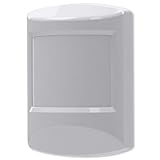
Overview: The Ecolink PIRZWAVE2-ECO represents a slightly earlier generation of the brand’s popular Z-Wave motion detection line. This pet-immune sensor targets the same smart home security market with broad hub compatibility and a focus on reducing false alarms. It offers a balance of performance and affordability for Z-Wave ecosystem users.
What Makes It Stand Out: Featuring premium components for accurate detection, this model achieves the same 55-pound pet immunity as its newer sibling. The dual mounting brackets provide installation flexibility without additional purchases. Immediate auto-learning upon battery insertion simplifies setup. Its discrete profile keeps it unobtrusive while delivering five years of maintenance-free operation.
Value for Money: Priced at $33.99, this offers nearly identical features to the 2.5 version at a slight discount. The cost savings make it attractive for multi-room deployments. While lacking the “certified” compatibility badge of the newer model, real-world performance remains solid with major hubs. The value proposition strengthens for users needing multiple sensors.
Strengths and Weaknesses: Strengths:
- Slightly lower cost than updated model
- Five-year battery lifespan
- Includes both flush and corner mounts
- Broad Z-wave hub support
- Immediate auto-learning feature
Weaknesses:
- Not manufacturer-certified for specific hubs
- Older firmware may lack latest optimizations
- White color only
- Limited documentation for advanced features
Bottom Line: A cost-effective alternative to the 2.5-ECO for budget-conscious Z-Wave users. The Ecolink PIRZWAVE2-ECO delivers core functionality without premium certification. Perfect for secondary zones or users comfortable with manual hub configuration.
3. Bosch BDL2-WP12G TriTech Motion Detector Pet Immune

Overview: The Bosch BDL2-WP12G TriTech Motion Detector brings professional-grade security technology to residential applications. Bosch’s reputation for reliability in commercial security translates into a robust device designed for demanding environments. The “TriTech” designation indicates multiple detection technologies working in concert for superior accuracy.
What Makes It Stand Out: TriTech technology combines passive infrared, microwave, and advanced signal processing to virtually eliminate false alarms. This professional approach differs from consumer-grade single-technology sensors. Bosch’s build quality ensures durability in varied conditions. The pet immunity algorithm is sophisticated, adapting to animal behavior patterns rather than using simple weight thresholds.
Value for Money: At $49.95, this commands a premium over consumer Z-Wave sensors. The price reflects commercial-grade components and dual-technology accuracy. For users prioritizing reliability over smart home integration, it delivers exceptional value. However, lack of Z-Wave connectivity limits its appeal to traditional alarm panel installations. Professional installation may add costs.
Strengths and Weaknesses: Strengths:
- TriTech multi-sensor accuracy
- Commercial-grade construction
- Advanced pet immunity algorithms
- Professional security pedigree
- Superior false alarm rejection
Weaknesses:
- No Z-Wave/smart home integration
- Higher upfront cost
- May require professional installation
- Limited consumer documentation
- No battery life specifications provided
Bottom Line: Best suited for traditional hardwired security systems where accuracy is paramount. The Bosch BDL2-WP12G excels in false alarm prevention but lacks modern connectivity. Choose this for professional installations, not DIY smart homes.
4. 1 Pack Wireless Motion Detector Alarm for Indoor Use, PIR Motion Sensor with Sound Player for Pets, Dogs & Animal Deterrent, Intruder Alert & Remote Safety System, Noise Maker Sensor de Movimiento
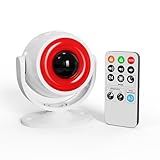
Overview: This versatile standalone motion detector alarm addresses multiple use cases from intruder deterrence to pet management. Unlike Z-Wave sensors requiring hubs, this all-in-one unit features built-in sirens and welcome chimes with remote control operation. Its dual-mode design serves both security and visitor notification purposes in residential settings.
What Makes It Stand Out: The alarm’s unique dual-personality system offers both aggressive intrusion deterrence and polite visitor alerts. Three operational modes (24/7, Day, Night) provide contextual awareness, while adjustable sensitivity fine-tunes detection. The inclusion of both battery and Type-C power options ensures continuous operation. Remote control functionality adds convenience for arming/disarming.
Value for Money: Priced at $28.99, this delivers exceptional versatility for budget-conscious users. The combination of siren, chime, and remote eliminates need for separate devices. While lacking smart home integration, it provides immediate local alerts without subscription fees. Battery-powered portability allows temporary deployment where needed. Competing products often cost more while offering fewer modes.
Strengths and Weaknesses: Strengths:
- Dual alarm/welcome modes
- Three smart operational schedules
- Dual power options (battery/USB-C)
- Included remote control (16ft range)
- 110° wide detection angle
- 1-year warranty
Weaknesses:
- No smart home connectivity
- AAA batteries not included
- Plastic construction feels less durable
- Remote range limited to 16 feet
- May trigger from smaller pets despite claims
Bottom Line: An excellent standalone solution for targeted security or pet deterrence without smart home complexity. This sensor alarm shines in garages, sheds, or entryways where immediate audible alerts suffice. Perfect for renters or temporary installations requiring flexibility.
5. TOWODE Motion Detector Alarm Indoor Motion Sensor Alarm with Remote Control 110dB 4 Volume Levels Motion Detector Alert for Home Shop Store (1 Motion Detector, 1 Remote Control)

Overview: The TOWODE Motion Detector Alarm delivers straightforward motion-activated alerts at an aggressive price point. This indoor sensor combines loud audible alarms with visual flash notifications for basic security needs. Designed for shops, homes, and offices, it prioritizes simplicity and immediate deterrence over advanced features.
What Makes It Stand Out: Seventeen voice options across eleven languages provide unprecedented customization for welcome messages. Four volume levels from subtle 25dB to piercing 110dB offer precise control. Smart Mode automatically switches between welcome and alarm functions based on time. The low-battery reminder prevents unexpected failures. USB power option alongside batteries adds flexibility.
Value for Money: At $20.25, this represents the best budget value in the comparison. It undercuts competitors while offering more voice options and volume control. While build quality reflects the price, core functionality remains solid. The included remote and mounting hardware eliminate hidden costs. For basic deterrent needs, it outperforms expectations.
Strengths and Weaknesses: Strengths:
- Unbeatable price point
- 17 multilingual voice options
- Four adjustable volume levels
- USB or battery power
- Low-battery indicator
- Easy installation
Weaknesses:
- No pet immunity specification
- Limited remote range (8m)
- Basic PIR technology only
- No smart home integration
- Shorter expected lifespan than premium brands
Bottom Line: The go-to choice for cost-effective basic security. TOWODE delivers surprising customization at a budget price. Ideal for small businesses or homeowners needing simple deterrents without smart features. Don’t expect premium durability, but functionality exceeds its modest cost.
6. Solar Outdoor Motion Sensor Alarm-Dog Barking or Gunshot Sound, 130dB Noise, 13 Sounds & 360° Motion Detector Alarm Support Recording, with Remote Controller for Home, Villa,Yard,Chicken coop
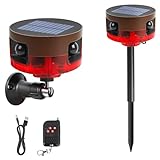
Overview: This solar-powered outdoor alarm delivers a formidable 130dB siren paired with a bright strobe light to deter intruders and wildlife from your property. Designed for perimeter security, it offers 13 pre-loaded sounds—including dog barking and gunshot effects—plus custom 15-second recording capability. The 360° motion detection eliminates blind spots, while remote operation allows mode adjustments from anywhere on your property.
What Makes It Stand Out: The combination of extreme volume and visual deterrent creates a multi-sensory defense that startles both animals and potential trespassers. The ability to rotate through sounds or lock a specific one prevents target habituation. Three motion sensors provide complete circular coverage without complex positioning. The solar panel with USB backup ensures continuous operation with zero maintenance, and the remote control eliminates the need to physically access the device when adjusting sensitivity or switching between day and night modes.
Value for Money: At $29.99, this alarm punches well above its weight class. Comparable standalone sirens cost $20-25 without solar charging, multiple sounds, or 360° detection. The inclusion of a remote and dual power options adds significant value for property owners needing reliable, unattended operation. For chicken coops, gardens, or rural properties, it replaces more expensive electric fencing or chemical deterrents.
Strengths and Weaknesses: Strengths include the deafening 130dB output, versatile sound library, comprehensive detection coverage, and maintenance-free solar operation. The remote control offers genuine convenience for large properties. Weaknesses involve potential neighbor disturbance from false triggers, dependence on adequate sunlight, and the artificial quality of recorded sounds that may not fool all animals. The plastic housing may degrade under prolonged UV exposure.
Bottom Line: An exceptional budget-friendly security solution for outdoor spaces requiring aggressive deterrence. Ideal for farms, yards, and remote properties where wiring is impractical. Just position it thoughtfully to avoid disturbing neighbors and ensure adequate solar exposure.
7. Honeywell AURORA Pir Motion Sensor
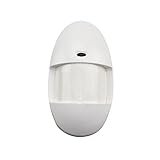
Overview: The Honeywell AURORA is a professional-grade passive infrared motion sensor engineered for reliable indoor security integration. Designed with pet immunity up to 40 pounds, it uses advanced Split-Zone Optics technology to distinguish between human intruders and smaller animals. Its entirely silent relay operation and low current draw make it ideal for discreet, energy-efficient monitoring in homes with pets.
What Makes It Stand Out: Honeywell’s Split-Zone Optics creates multiple detection zones that analyze target size and movement patterns, dramatically reducing false alarms from pets while maintaining human detection sensitivity. The 40-pound immunity threshold covers most cats and small-to-medium dogs—superior to many budget sensors. The silent relay ensures no audible clicking when triggered, maintaining stealth. Its very low power consumption extends battery life in wireless systems and reduces energy costs in wired installations.
Value for Money: Priced at $15.99, the AURORA sits in the sweet spot for branded, reliable PIR sensors. Generic alternatives cost $8-12 but lack Honeywell’s proven optics and quality control. For existing security system upgrades or DIY installations requiring pet immunity, it offers professional reliability without the $25-35 cost of premium commercial-grade units. The durability and accuracy justify the modest premium over no-name brands.
Strengths and Weaknesses: Strengths include trusted brand reputation, effective pet discrimination, silent operation, and excellent energy efficiency. The technology effectively filters out most pet-induced false triggers. Weaknesses are its indoor-only design, lack of built-in siren (requires external panel), and the 40-pound limit may not suit households with larger dogs. Installation requires basic wiring knowledge, and it offers no tamper protection.
Bottom Line: A solid, no-nonsense motion sensor for pet owners integrating into an existing alarm system. Delivers reliable performance and false alarm reduction at a reasonable price. Choose this for indoor security where professional-grade detection matters more than flashy features.
8. QXMH Solar Outdoor Motion Sensor Alarm: Dog Barking&Gunshot Sound, 129db Loud Siren,Support Recording, 13 Kinds of Sound Strobe Light

Overview: The QXMH solar alarm provides robust perimeter protection with a 129dB siren, strobe light, and extensive sound library designed to scare off intruders and nuisance animals. Like its competitors, it features 13 built-in sounds, custom recording, and 360° motion detection. Its dual installation options and two operational modes offer flexibility for various outdoor environments, from farms to residential yards.
What Makes It Stand Out: The distinct advantage lies in its two-mode operation: 24-hour continuous monitoring or night-only activation, allowing users to tailor activation times to specific threats. The ability to mount on the ground or elevate on a table expands placement options beyond wall-mounting. The recording function captures phone audio at close range (0.4-1.9 inches), enabling personalized messages. Three motion detectors ensure no approach angle goes unnoticed, making it particularly effective for open properties.
Value for Money: At $32.36, it’s slightly pricier than similar solar alarms but justifies the cost through mode flexibility and installation versatility. While the 129dB output is marginally lower than some rivals, the feature set remains competitive. For agricultural users needing both daytime wildlife deterrence and nighttime security, the mode switching prevents unnecessary daytime activations. The included USB charging cable adds value for regions with frequent overcast weather.
Strengths and Weaknesses: Strengths include flexible operating modes, versatile mounting, comprehensive detection, and dual power options. The ability to limit nighttime operation reduces disturbances. Weaknesses include the slightly lower volume, less established brand reputation, and the finicky recording distance requirement that may frustrate users. Sound quality can be tinny at maximum volume, potentially reducing deterrence effectiveness.
Bottom Line: A versatile alternative for property owners wanting customizable operation schedules. The mode flexibility makes it ideal for farms and gardens where threats vary by time of day. A worthy contender if you prioritize operational control over maximum decibels.
9. Pet Immune Wired Alarm with Infrared Motion Sensor Dual Infrared Detector Immune with Anti Tamper Alarm Function Suitable for pet Owners who Need Detection

Overview: This wired dual-PIR motion detector targets budget-conscious pet owners needing reliable indoor/outdoor detection without false alarms. Utilizing MCU technology and dual infrared sensors, it ignores pets under 15 kilograms while monitoring an 110° wide-angle zone up to 11 meters. Anti-tamper and anti-interference features provide professional-grade security at an entry-level price point.
What Makes It Stand Out: The dual-sensor design with MCU processing delivers superior false alarm prevention compared to single-sensor units. Anti-EMI/RFI shielding ensures stable operation near electronics, while the anti-tamper alarm triggers if someone attempts to disable the unit. Automatic temperature compensation and adjustable pulse counting adapt to environmental changes, maintaining accuracy across seasons. The 15kg pet immunity suits most cats and small dogs, and the 11m×11m coverage handles large rooms effectively.
Value for Money: At $12.69, this sensor dramatically undercuts competitors while offering features typically found in $30+ units. The anti-tamper function alone justifies the price for security-conscious buyers. While wired installation requires more effort than wireless, it eliminates battery costs and connectivity issues. For DIY security systems, it provides commercial-grade reliability at a fraction of professional installation costs.
Strengths and Weaknesses: Strengths include exceptional affordability, dual-sensor accuracy, comprehensive anti-interference protection, anti-tamper security, and wide coverage area. The intelligent adjustment features maintain performance across temperature fluctuations. Weaknesses involve the 15kg pet limit (lower than some alternatives), mandatory wiring that complicates installation, and lack of integrated siren requiring external panel connection. The housing’s weather resistance is unspecified for outdoor use.
Bottom Line: The best budget wired option for pet owners comfortable with basic installation. Delivers professional features at a hobbyist price. Ideal for expanding existing wired systems or building new ones where reliability trumps convenience.
10. eufy Motion Sensor E20, Pet-Friendly Detection to Reduce False Alarms, Extended 5-Year Battery Life, Easy and Versatile Installation, Compatible with HomeBase 2, 3, Mini, and Pro

Overview: The eufy Motion Sensor E20 represents the premium wireless option for smart home security, offering an industry-leading 5-year battery life and sophisticated pet detection that ignores animals up to 80 pounds. Designed exclusively for the eufy ecosystem, it provides expansive 656-foot wireless range and effortless installation. This sensor prioritizes convenience and longevity for modern smart homes.
What Makes It Stand Out: The 5-year battery life eliminates maintenance headaches, running on a single CR123A cell that outlasts competitors by 3-4 years. The 80-pound pet immunity threshold is among the highest available, accommodating large dogs that would trigger lesser sensors. Installation requires no wiring or complex adjustments—simply mount at the recommended height. The 656-foot open-air range provides flexibility for large properties, and seamless HomeBase integration enables smartphone alerts and automation.
Value for Money: At $39.99, this sensor commands a premium but delivers tangible long-term savings. Eliminating annual battery replacements saves $5-10 yearly, while the robust eufy ecosystem adds value through centralized management. Compared to $15-25 wireless sensors needing yearly battery changes, the total cost of ownership over five years is lower. However, the HomeBase requirement (sold separately) increases initial investment for non-eufy users.
Strengths and Weaknesses: Strengths include exceptional battery longevity, high pet immunity threshold, effortless installation, outstanding wireless range, and reliable brand reputation. The sensor’s integration with eufy’s ecosystem enables smart notifications and automation. Weaknesses are its ecosystem lock-in (requires HomeBase), higher upfront cost, and incompatibility with third-party systems. The 80-pound limit still won’t suit households with very large breeds.
Bottom Line: The premium choice for eufy ecosystem users seeking maintenance-free, pet-friendly detection. The 5-year battery life and superior pet immunity justify the cost for smart home enthusiasts. Only purchase if you’re invested in or planning to adopt eufy’s HomeBase platform.
Why Standard Motion Detectors Fail with Large Dogs
Traditional passive infrared (PIR) sensors operate on a simple principle: detect heat signatures moving across detection zones. Your 100-pound Malamute generates a thermal footprint larger than many humans, triggering the same alarm sequence as a would-be burglar. The problem intensifies with larger breeds that move faster, generate more body heat, and can activate sensors from greater distances.
The Science Behind False Alarms
PIR sensors detect infrared radiation emitted by warm bodies. A large dog’s surface area creates a substantial heat signature, especially when moving perpendicular to the sensor’s field of view. The sensor’s Fresnel lens divides the detection area into zones; crossing multiple zones rapidly signals “alarm.” A Mastiff sauntering across a living room can trigger 3-4 zones simultaneously, overwhelming basic immunity algorithms designed for cats or small dogs.
Weight-Based Immunity vs. Behavioral Immunity
Early pet-immune detectors relied solely on weight thresholds—typically 40-80 pounds—ignoring movement patterns. Modern 2026 systems employ behavioral immunity, analyzing speed, gait, height, and even directional patterns. A 90-pound dog moving at 5 mph toward its food bowl reads differently than a 150-pound human moving deliberately toward a window. Understanding this distinction is crucial for large dog owners, as weight alone tells an incomplete story.
Understanding Pet-Immune Technology in 2026
The landscape has shifted dramatically from single-sensor solutions to multi-layered detection ecosystems. Manufacturers now recognize that large breeds require sophisticated filtering mechanisms that go beyond basic heat signature analysis.
Advanced PIR Sensors Explained
Next-generation PIR sensors feature segmented detection zones with independent sensitivity controls. Instead of treating the entire room as one canvas, these systems create a digital map where specific quadrants can be calibrated for pet immunity while maintaining high sensitivity in others. Look for sensors offering at least 20+ individually adjustable zones, allowing you to create “safe corridors” where your dog typically travels.
Dual-Technology Detection Systems
The gold standard for large dog households combines PIR with microwave Doppler radar. Microwave sensors detect motion through frequency shifts, providing distance and velocity data. When both sensors trigger simultaneously, the system applies stricter analysis algorithms. A large dog moving close to the floor might trigger the PIR but not the microwave sensor, preventing false alarms while still catching upright human intruders.
AI-Powered Pet Recognition
2026’s breakthrough feature involves on-device machine learning that studies your dog’s unique movement signature over 7-10 days. These systems build a behavioral profile—learning your Newfoundland’s lumbering gait, your Greyhound’s sprinting patterns, and even your dog’s favorite resting spots. The AI distinguishes between routine patrols and anomalous activity, reducing false alarms by up to 94% in multi-dog households.
Key Features to Prioritize for Large Dog Households
Not every pet-immune detector deserves a spot in your home. Focus on specifications that address the unique challenges posed by breeds exceeding 60 pounds.
Weight Threshold Specifications
Disregard vague “pet-friendly” labels. Seek detectors explicitly rated for 80+ pounds, but dig deeper into the fine print. The effective weight limit decreases as installation height drops. A sensor rated for 100 pounds at 7.5 feet might only handle 60 pounds at 6 feet. Always verify the height-adjusted weight rating, not just the marketing headline.
Installation Height and Angle Optimization
Mounting height dramatically impacts performance. For large dogs, position sensors 7.5-8 feet high with a downward angle of 5-10 degrees. This elevation increases the distance between your dog’s thermal signature and the sensor’s primary detection beam. Some 2026 models include integrated laser leveling tools and angle indicators, removing guesswork from installation.
Sensitivity Adjustment Capabilities
Look for systems offering at least three sensitivity tiers: low (for 80-100 pound dogs), medium (60-80 pounds), and high (under 60 pounds). More importantly, ensure you can adjust sensitivity independently for different times of day. Your 85-pound Ridgeback’s midnight zoomies require different parameters than daytime lounging.
Multi-Level Detection Zones
Premium detectors now feature vertical zone discrimination, distinguishing between floor-level motion (your dog) and mid-to-upper-level motion (humans). This is achieved through stacked sensor arrays that create a 3D detection matrix. For large dogs that jump or stand on hind legs, ensure the system can mask lower zones while maintaining upper-zone vigilance.
The 50-Pound Rule and Why It Matters
The security industry’s dirty secret: most “pet-immune” detectors are engineered for animals under 50 pounds. Large dog owners operate in a different reality where 50 pounds represents a medium-sized adolescent, not the finished product.
When “Pet-Immune” Doesn’t Mean Large-Dog-Proof
Manufacturers test pet immunity using standardized robotic targets moving at predictable speeds. Your 120-pound Saint Bernard’s unpredictable bursts of energy, combined with a higher body temperature and larger surface area, can overwhelm these baseline tests. Always request third-party testing data specifically for dogs exceeding 80 pounds, not just generic “pet” certifications.
Breed-Specific Considerations
A 70-pound Greyhound moves differently than a 70-pound Bulldog. Sighthounds trigger alarms with sheer speed; brachycephalic breeds with their lumbering, low-to-ground mass. Deep-chested breeds like Danes present larger lateral profiles, while fluffy breeds like Samoyeds have insulated heat signatures that can confuse sensors. The best 2026 systems allow breed-specific calibration profiles in their companion apps.
Installation Strategies for Maximum Effectiveness
Even the most advanced detector fails with poor placement. Large dogs create unique environmental challenges that demand strategic thinking beyond the instruction manual.
Strategic Placement in High-Traffic Dog Areas
Map your dog’s superhighways—paths between bed, food, water, and door. Position sensors perpendicular to these routes rather than parallel. A sensor facing a hallway where your dog runs directly toward or away from it is less likely to trigger than one monitoring cross-traffic. Use corner mounting to create triangular detection patterns that naturally filter out floor-level movement.
Avoiding Staircases and Furniture Launch Pads
Large dogs generate maximum heat signatures when launching from furniture or bounding down stairs. These areas create vertical motion that mimics human intruders. Exclude staircase landings from coverage zones when possible. If you must protect these areas, install dedicated break-beam sensors at knee height to create a dog-proof barrier while allowing human detection above.
The “Dog Zone” vs “Security Zone” Mapping Technique
Divide your home into overlapping zones. Dog Zones include areas your pet routinely accesses—hallways, kitchen, living room. Security Zones protect entry points, windows, and vulnerable areas. Program your system to apply maximum pet immunity in Dog Zones while maintaining standard sensitivity in Security Zones. This layered approach prevents your dog from triggering whole-house alarms while keeping critical perimeter areas secure.
Advanced Calibration Techniques
Out-of-the-box settings rarely suffice for large breeds. Proper calibration transforms a mediocre system into a reliable guardian.
The Treat-and-Walk Testing Method
After installation, spend 30 minutes conducting controlled tests. Have a partner walk your dog through detection areas at various speeds while you monitor sensor feedback in real-time. Use high-value treats to simulate excited running, then calm walking. Note exactly where false triggers occur and adjust zone sensitivity accordingly. This empirical approach beats generic setup wizards every time.
Fine-Tuning Sensitivity During Peak Activity Hours
Dogs exhibit different behaviors throughout the day. Program time-based sensitivity profiles: lower sensitivity during dawn/dusk patrols, higher sensitivity during typical sleep hours. Some 2026 systems integrate with smart collars to automatically adjust based on your dog’s activity level, creating a dynamic security envelope that adapts to real-time behavior.
Seasonal Adjustments for Coat Changes
A Husky’s summer coat versus winter undercoat changes thermal emission patterns. Schedule quarterly recalibration sessions, especially during spring and fall shedding seasons. Increased insulation can delay heat signature detection, while a thinner coat may trigger sensors more easily. Document your dog’s coat condition and adjust sensitivity by 10-15% accordingly.
Integration with Smart Home Ecosystems
Standalone detectors are obsolete. Modern security thrives on interoperability, especially in pet-centric households.
Pet-Aware Automation Rules
Link motion detectors to smart lighting, HVAC, and door locks. Create rules that pause security monitoring when your smart dog door activates, or when your dog’s GPS collar enters the geofenced yard. Program “dog home alone” modes that increase immunity thresholds while you’re at work, then automatically tighten security when your phone’s presence indicates you’ve returned.
Geofencing and Occupancy Mode Switching
Use multi-user geofencing that tracks both human and pet locations. When your dog walker arrives, the system should recognize their authorized smartphone and temporarily adjust immunity to prevent alerts during their visit. Advanced systems can distinguish between family members, dog walkers, and unknown individuals, applying different security protocols to each scenario.
Beyond PIR: Alternative Detection Methods
Sometimes the best solution isn’t a better PIR sensor—it’s a completely different technology stack.
Video Analytics with Pet Filtering
AI-powered cameras now offer 3D skeletal mapping that identifies species in real-time. These systems analyze body proportions, gait mechanics, and even tail position. A video sensor can differentiate your Doberman from a human intruder with 99.2% accuracy, regardless of size. The key is local processing—cloud-based analysis introduces latency and privacy concerns.
Radar-Based Motion Detection
Millimeter-wave radar sensors detect motion through micro-Doppler signature analysis. Your dog’s unique movement pattern—four legs, specific rhythm, lower profile—creates a distinct radar fingerprint. These systems excel in low-light conditions and through obstacles, making them ideal for monitoring large yards where your dog roams freely.
Break-Beam Sensors for Doorway Protection
Instead of monitoring entire rooms, install infrared break-beam sensors across doorways and windowsills. Positioned at 3-4 feet high, these create an invisible barrier that large dogs can’t reach but humans must cross. Pair with pressure mats that recognize your dog’s paw print distribution, creating a two-factor authentication system for alarms.
Power and Connectivity Considerations
Large dog households stress security systems differently than quiet homes. Your power and connectivity choices impact reliability.
Battery Life Expectations in Active Households
Frequent false alarm testing and recalibration drain batteries faster than manufacturer estimates. In homes with multiple large dogs, expect 20-30% shorter battery life. Lithium batteries outperform alkaline in temperature fluctuations near pet doors. Consider hardwired options for high-traffic areas, reserving battery power for remote zones.
Wi-Fi vs. Proprietary Wireless Protocols
Standard Wi-Fi struggles in homes with metal crates, water bowls, and thick walls—common in large dog households. Proprietary mesh networks like Z-Wave Long Range or Zigbee 3.0 offer better penetration and lower latency. These protocols also reduce interference from smart pet feeders, cameras, and collars operating on crowded 2.4GHz bands.
Maintenance and Long-Term Performance
Pet hair isn’t just a cleaning issue—it’s a security vulnerability. Maintenance schedules must account for the unique wear and tear dogs inflict.
Cleaning Schedules for Pet-Filled Environments
PIR sensors accumulate dander, hair, and dust that insulate the detection element, reducing sensitivity by up to 40% over six months. Clean sensor lenses monthly with compressed air and quarterly with isopropyl alcohol wipes. Check mounting stability weekly—large dogs can vibrate walls and loosen screws, subtly shifting detection zones.
Firmware Updates and Algorithm Improvements
Manufacturers continuously refine AI models based on aggregated pet behavior data. Enable automatic firmware updates but schedule them during low-activity periods. After updates, recalibrate your dog’s profile—the algorithm may have learned new patterns from thousands of large dogs worldwide, improving accuracy but requiring retraining for your specific environment.
Cost vs. Value Analysis
Budget constraints are real, but under-spec’d systems cost more in false alarm fees and frustration.
Understanding Price Tiers Without Compromising Safety
Entry-level pet-immune detectors ($30-50) typically support up to 60 pounds with basic PIR. Mid-tier systems ($80-120) offer dual-tech detection and 80-pound ratings. Premium solutions ($150-250) include AI profiling, multi-zone mapping, and 100+ pound immunity. For dogs over 80 pounds, mid-tier is the absolute minimum; premium systems pay for themselves within a year by eliminating false alarm monitoring fees.
When to Invest in Professional Installation
DIY installation works for single-dog homes under 70 pounds. Multi-dog households, dogs over 90 pounds, or homes with complex layouts benefit from professional assessment. Certified pet-immune installers use thermal imaging cameras to map your dog’s actual heat signature and motion paths, positioning sensors with precision impossible through trial-and-error. Expect to pay $100-200 for assessment and installation, but the accuracy improvement is dramatic.
Common Mistakes Large Dog Owners Make
Even knowledgeable owners fall into predictable traps that compromise security.
Overlooking the “Running Leap” Factor
Your 75-pound dog sprinting and launching onto a couch generates upward motion vectors that mimic a standing human. Test sensors during your dog’s most exuberant moments, not just calm walks. If your dog jumps, ensure detectors have vertical zone masking or install them in rooms where furniture launching is impossible.
Ignoring Vertical Motion Detection Patterns
Large dogs on stairs create diagonal heat signatures that confuse sensors calibrated for horizontal movement. Staircase sensors should be mounted at the top, facing downward, never at the bottom looking up. This orientation makes it harder to detect your dog’s head and shoulders while still capturing an upright intruder’s full profile.
Misjudging Puppy-to-Adult Transitions
That 40-pound puppy will become an 85-pound adult faster than you expect. Install sensors rated for your dog’s projected adult weight plus 20%. Recalibrate monthly during the first year, as rapid growth changes gait, speed, and heat signature. Many owners forget to update settings, rendering their system useless when the adolescent growth spurt hits.
Professional Assessment and Custom Solutions
Sometimes the standard playbook isn’t enough. Custom solutions separate robust security from constant frustration.
When DIY Installation Falls Short
If you’ve tried three detectors and still get false alarms, stop guessing. Professional security consultants use doppler radar guns to measure your dog’s actual speed, thermal cameras to map heat signatures, and motion capture to analyze gait. This data-driven approach identifies why generic solutions fail and specifies equipment configured for your exact scenario.
Working with Security Consultants Who Understand Large Breeds
Not all installers grasp large dog behavior. Seek professionals certified in “pet-immune” installations who own or specialize in large breeds. They understand that your Bernese Mountain Dog’s “slow walk” still moves more mass than a human sprint. Ask for case studies from homes with dogs over 80 pounds and request a trial period with money-back guarantee if false alarms exceed one per month.
The Future of Pet-Immune Technology
The next wave of innovation promises even tighter integration between pet and home security ecosystems.
Machine Learning Adaptation to Your Specific Dog
Emerging systems will move beyond generic breed profiles to continuous learning. Your detector will recognize your dog’s unique micro-movements—the way they shake after a bath, their specific scratching pattern, even their breathing rhythm while sleeping. This hyper-personalization will enable sensitivity settings so precise that a 150-pound dog can sleep beneath a sensor without triggering it, while a 120-pound intruder crossing the room instantly alerts.
Integration with Pet Wearables for Enhanced Accuracy
Imagine your dog’s smart collar broadcasting an “I’m home” signal that dynamically adjusts motion immunity within a 10-foot radius. As your dog moves through the house, the security system creates a moving bubble of reduced sensitivity, tightening immediately when the collar signal disappears. This two-way communication eliminates the guesswork, creating a security perimeter that literally follows your pet.
Frequently Asked Questions
Can a motion detector really tell the difference between my 100-pound dog and an adult human?
Yes, but only advanced 2026 systems with dual-technology detection and AI profiling. Basic pet-immune detectors rely on weight thresholds that become unreliable above 80 pounds. Look for systems that analyze gait, speed, and heat signature patterns, not just mass.
What’s the ideal installation height for homes with large dogs?
Mount sensors between 7.5 and 8 feet high with a slight downward angle. This height increases the distance between your dog’s body heat and the primary detection beam while maintaining optimal coverage for upright intruders. Always verify the manufacturer’s height-adjusted weight rating, as immunity decreases at lower installations.
How long does AI training take to recognize my dog’s movement patterns?
Most systems require 7-10 days of continuous learning to build an accurate profile. During this period, expect some false alarms as the algorithm studies your dog’s routines. Accelerate training by conducting controlled walk-throughs at different speeds and times of day, ensuring the AI captures a comprehensive behavior sample.
Will my dog’s winter coat affect motion detector performance?
Absolutely. Thicker coats insulate body heat, potentially delaying or reducing detection sensitivity. Recalibrate sensors during seasonal coat transitions, increasing sensitivity by 10-15% when your dog has a full winter coat. Some premium systems automatically adjust for temperature fluctuations, but manual verification is still recommended.
Can multiple large dogs in one home be distinguished from each other?
Advanced AI systems can differentiate between multiple pets based on size, speed, and movement patterns. However, the system’s accuracy depends on significant variation between dogs. Two 80-pound dogs of similar breed may be indistinguishable, but an 80-pound Greyhound and a 90-pound Mastiff create unique signatures the AI can separate.
Are wireless sensors reliable in homes with metal dog crates and gates?
Metal obstacles can interfere with wireless signals. Opt for Z-Wave Long Range or Zigbee 3.0 protocols, which offer better penetration than standard Wi-Fi. Position sensors away from large metal objects when possible, and use mesh network extenders to maintain reliable connectivity in crate-heavy areas.
What’s the best way to test a sensor after installation?
Use the “treat-and-walk” method: have someone walk your dog through detection zones at various speeds while you monitor real-time sensor feedback via the app. Test during your dog’s most active moments, including running and jumping. Also test with a human walking the same path to confirm intruder detection still works.
Should I disable motion detectors when I’m home with my dog?
Never fully disable them. Instead, use “stay” or “home” modes that maintain perimeter protection while increasing immunity in interior zones. Program geofencing rules that automatically switch modes based on whose smartphone is present, ensuring security adapts to occupancy without leaving gaps.
How often do pet-immune motion detectors need maintenance in homes with large dogs?
Clean sensor lenses monthly with compressed air and quarterly with alcohol wipes. Check mounting screws weekly for looseness caused by vibrations. Recalibrate sensitivity settings every three months, or whenever you notice changes in your dog’s behavior, weight, or coat condition.
Can I use break-beam sensors as a complete replacement for PIR detectors?
Break-beam sensors excel at protecting specific entry points but can’t monitor entire rooms. The best approach is hybrid: use break-beams for doorways, windows, and hallways, and AI-enhanced PIR sensors for open living areas. This creates layered protection that respects your dog’s movement while eliminating coverage gaps.