Gone are the days of hunting for the remote or getting up to manually adjust your air conditioner. Voice-controlled smart air conditioners have revolutionized home climate management, transforming simple voice commands into precise temperature adjustments, energy savings, and seamless smart home integration. As we move deeper into the era of connected living, the ability to say “Alexa, cool down the living room” or “Hey Google, set the bedroom to 72 degrees” has shifted from luxury convenience to expected functionality.
But not all voice-compatible air conditioners are created equal. The market is flooded with options ranging from true AI-powered HVAC systems to basic units with a smart plug slapped on. Understanding the nuanced differences between voice assistant platforms, connectivity standards, and smart features can mean the difference between a transformative cooling experience and a frustrating series of misunderstood commands. Whether you’re retrofitting an existing system or investing in a brand-new installation, this comprehensive guide will equip you with the expertise to navigate the voice-controlled cooling landscape.
Top 10 Smart Air Conditioners with Voice Control
Detailed Product Reviews
1. TCL H8W35W 8,000 8000 BTU Smart Window Air Conditioner, Fan & Dehumidifier, 350 Sq. Ft, Remote Control, Compatible with Alexa/Google Assistant, White

Overview: The TCL H8W35W delivers 8,000 BTU of cooling power for spaces up to 350 square feet, combining affordability with smart functionality. This 3-in-1 unit functions as an air conditioner, fan, and dehumidifier, offering versatile climate control for bedrooms, offices, and small living areas. Its clean white design integrates seamlessly into most window frames while providing modern convenience.
What Makes It Stand Out: This unit excels with its triple control system—app, remote, and voice commands via Alexa, Google Assistant, or Siri. The inclusion of Sleep and Eco modes demonstrates thoughtful energy management, while multiple fan speeds provide customized comfort. The TCL Home App enables scheduling and remote operation, a rare feature at this price point that puts full climate control in your pocket.
Value for Money: At $199, this represents exceptional value for a smart window AC. Comparable non-smart units cost similarly, making the intelligent features essentially free. The energy-saving modes help recoup the investment through lower utility bills, positioning it as a budget-friendly entry into home automation without sacrificing core cooling performance.
Strengths and Weaknesses: Strengths:
- Unbeatable price for smart capabilities
- Triple functionality (AC, fan, dehumidifier)
- Multi-platform voice control
- Energy-efficient operation modes
- Simple LED display and remote
Weaknesses:
- Basic aesthetic design
- Potentially louder than premium models
- Limited advanced scheduling features
- 8,000 BTU may struggle in extreme heat
Bottom Line: The TCL H8W35W is the ideal choice for budget-conscious buyers seeking smart climate control without sacrificing core performance. It delivers reliable cooling with modern convenience at an entry-level price.
2. Dreo Portable Air Conditioners, 8000 BTU ASHRAE (5000 BTU DOE) Smart AC Unit for Bedroom with Drainage-free Cooling, 45dB Quiet, APP/Voice/Remote, Portable AC for Room Indoors, AC318S

Overview: The Dreo AC318S portable air conditioner offers 8,000 BTU ASHRAE (5,000 BTU DOE) cooling capacity with unprecedented flexibility. Designed for bedrooms and indoor spaces, this unit delivers powerful airflow up to 14 feet away while maintaining a whisper-quiet 45dB operation. Its compact form factor eliminates permanent installation requirements, making it perfect for renters.
What Makes It Stand Out: Dreo’s patented drainage-free system automatically evaporates condensate in humidity under 90%, removing the hassle of manual emptying. The Noise Isolation System compresses compressor and turbulence sounds to bedroom-friendly levels. Combined with three-mode versatility (Cool, Fan, Dry) and smart controls, it redefines portable cooling convenience for modern users.
Value for Money: At $439.99, this premium portable commands a higher price than window units, but justifies it through true mobility, innovative drainage technology, and exceptional quietness. Renters and those seeking flexible cooling will find the investment worthwhile compared to competing portables lacking smart features or requiring constant maintenance.
Strengths and Weaknesses: Strengths:
- Revolutionary drainage-free operation
- Ultra-quiet 45dB performance
- True portability between rooms
- Comprehensive smart control options
- Powerful 14-foot airflow projection
Weaknesses:
- High price point
- Lower effective cooling (5,000 BTU DOE)
- Requires drain hose above 90% humidity
- Takes up valuable floor space
Bottom Line: Perfect for renters and noise-sensitive users, the Dreo AC318S excels as a premium portable solution that eliminates traditional maintenance headaches while delivering smart, quiet cooling.
3. Windmill Window Air Conditioner - Quiet & Smart, Easy Install, Voice-Enabled, Remote & App Control AC Unit - 6,000 BTU

Overview: The Windmill 6,000 BTU window air conditioner prioritizes design and quiet operation for modern living spaces. Engineered with a unique 45° airflow angle, it delivers efficient room-wide cooling while maintaining conversation-friendly noise levels. This unit suits style-conscious consumers seeking smart functionality in bedrooms and home offices up to 250 square feet.
What Makes It Stand Out: Windmill’s signature design features double-insulating side panels that enhance efficiency while blocking external noise. The dual-filtration system with washable mesh and optional carbon filter improves air quality beyond standard units. Tool-free installation and auto-dimming LEDs demonstrate thoughtful engineering for user convenience and comfort.
Value for Money: Priced at $339, this mid-range unit commands a premium over basic 6,000 BTU models, but delivers justified value through superior aesthetics, quieter operation, and enhanced filtration. The design-forward approach and smart features make it competitive with utilitarian higher-BTU alternatives while elevating room appearance.
Strengths and Weaknesses: Strengths:
- Attractive, modern design
- Ultra-quiet operation
- Superior dual-filtration system
- Effortless installation
- Smart app and voice control
Weaknesses:
- Lower BTU-to-price ratio
- Limited to smaller spaces
- Premium cost for capacity
- 6,000 BTU may be insufficient for some climates
Bottom Line: The Windmill 6K BTU excels for design-conscious buyers prioritizing quiet operation and air quality in small to medium rooms, making it a stylish smart cooling solution that complements contemporary decor.
4. Midea 12,000 BTU U Shaped Smart Inverter Window Air Conditioner - Cools 550 Sq Ft, Ultra Quiet with Open Window Flexibility - Alexa/Google Assistant Compatible - 35% Energy Savings, Remote (Updated)

Overview: The Midea 12,000 BTU U-Shaped Smart Inverter Window AC revolutionizes window cooling with its innovative design and exceptional efficiency. Cooling up to 550 square feet at just 32 dBA, this ENERGY STAR certified unit uses advanced DC inverter technology to deliver over 35% energy savings while allowing the window to remain partially open for fresh air.
What Makes It Stand Out: The groundbreaking U-shape design positions the noisy compressor outside the window, creating library-quiet operation. This unique form factor enables flexible window opening—unheard of in window units—while an anti-theft mechanism ensures security. The combination of inverter technology and smart controls represents the pinnacle of window AC innovation.
Value for Money: At $454.16, this premium unit justifies its price through substantial energy savings, superior quietness, and unique functionality. The inverter system pays for itself over time, while the flexibility and large coverage area eliminate the need for multiple smaller units, making it economical for whole-room cooling.
Strengths and Weaknesses: Strengths:
- Exceptionally quiet 32 dBA operation
- Over 35% energy savings
- Allows window opening for ventilation
- Covers large 550 sq ft areas
- Advanced inverter technology
Weaknesses:
- Complex installation process
- High initial cost
- Requires specific window dimensions
- Heavier than traditional units
Bottom Line: For those seeking the quietest, most energy-efficient window solution for larger spaces, the Midea U-Shaped AC is unmatched, delivering premium performance that justifies its investment through innovation and savings.
5. Windmill Window Air Conditioner - Quiet & Smart, Easy Install, Voice-Enabled, Remote & App Control AC Unit - 5,000 BTU Lite
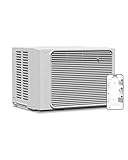
Overview: The Windmill 5,000 BTU Lite window air conditioner brings smart cooling to compact spaces up to 150 square feet. This award-winning unit combines efficient cooling with a sleek, minimalist design that complements rather than compromises room aesthetics. Operating at just 51 dB, it provides bedroom-appropriate quietness for uninterrupted sleep and work.
What Makes It Stand Out: Windmill’s design philosophy shines through the auto-dimming LED display and streamlined control panel, eliminating light pollution in dark rooms. The complete installation kit enables tool-free setup in minutes, while the washable filter ensures easy maintenance. Voice and app control provide modern convenience in a compact package designed for small-space living.
Value for Money: At $249, this unit sits at the higher end of the 5,000 BTU category, but delivers value through superior design, smart features, and quiet operation. For small space dwellers prioritizing aesthetics and convenience, it outperforms cheaper alternatives lacking intelligent controls and modern styling.
Strengths and Weaknesses: Strengths:
- Stylish, compact design
- Quiet 51 dB operation
- Simple installation
- Smart home integration
- Auto-dimming display
Weaknesses:
- Limited to 150 sq ft coverage
- Lower cooling capacity
- Premium price for BTU rating
- Not suitable for larger rooms
Bottom Line: The Windmill 5K BTU Lite is the perfect smart cooling solution for small bedrooms, dorm rooms, and home offices where design and quiet operation matter as much as performance, delivering premium features in a space-conscious package.
6. ROVSUN 8000 BTU Window Air Conditioner with Heat, Window AC Unit & Heater Combo with APP & Voice Smart Control, Timer Function & Easy Installation Kit, Work with Alexa/Google Assistant, 115V/60Hz

Overview: The ROVSUN 8000 BTU Window Air Conditioner delivers year-round climate control for spaces up to 350 square feet. This versatile unit combines cooling, heating (4000 BTU), dehumidifying, and fan functions in one affordable package. With modern smart capabilities and a 115V standard plug, it’s designed for apartments, offices, and small homes where permanent installation isn’t practical. The unit includes a comprehensive installation kit for windows 26" to 36" wide.
What Makes It Stand Out: This unit’s standout feature is its WiFi-enabled smart control system that integrates seamlessly with Alexa and Google Assistant, allowing remote temperature management via smartphone app. The 5-mode operation (Heat, Auto, Cool, Dry, Fan) with three speed settings provides exceptional flexibility. An ECO energy-saver mode and 24-hour timer help reduce electricity costs, while the washable filter and adjustable louvers ensure maintained performance and customized airflow direction.
Value for Money: At $399.99, this ROVSUN unit offers remarkable value for an all-season smart appliance. Comparable window units with heating capabilities typically start at $450+, making this an attractive entry-level option. The inclusion of voice control, app integration, and a complete installation kit eliminates additional purchases. While the 4000 BTU heating is modest, it’s sufficient for supplemental warmth during transitional seasons, justifying the price for year-round utility.
Strengths and Weaknesses: Strengths include affordable smart features, easy DIY installation, versatile 4-in-1 functionality, and energy-saving modes. The unit operates on standard 115V power, eliminating electrical upgrades. Weaknesses involve the relatively low heating output, limited 350 sq ft coverage, and lesser-known brand reputation compared to industry giants. The 4000 BTU heater won’t suffice as a primary heat source in winter.
Bottom Line: The ROVSUN 8000 BTU unit is an excellent choice for budget-conscious buyers seeking smart climate control in small spaces. Its combination of affordability, app connectivity, and all-season functionality makes it ideal for apartments or home offices. While heating capacity is limited, the cooling performance and convenience features deliver exceptional bang for your buck.
7. LG 23,000 BTU Smart Window Air Conditioner with Heat, 230V, Air Conditioner Cools Rooms up to 1,400 Sq.Ft., Smartphone & Voice Control works with Remote, White

Overview: LG’s 23,000 BTU powerhouse is engineered for expansive spaces up to 1,440 square feet, making it ideal for large living areas, open-concept homes, or commercial environments. This heavy-duty window unit delivers robust cooling with supplemental heating capability and integrates LG’s ThinQ smart technology. Operating on 230V power, it’s a permanent climate solution for serious cooling demands. The unit’s substantial 23K BTU output handles extreme temperatures efficiently.
What Makes It Stand Out: The exceptional cooling capacity sets this unit apart, capable of tackling spaces nearly four times larger than standard window units. LG’s ThinQ technology enables sophisticated smartphone control and voice commands through Alexa and Google Assistant. The Auto Restart feature provides peace of mind during power outages, automatically resuming previous settings. Multiple fan speeds for cooling and heating modes allow precise climate customization, while the trusted LG brand ensures reliability and warranty support.
Value for Money: At $799, this premium unit commands a higher price but delivers proportional value for large-space applications. Competitors with similar capacity often exceed $900, making LG’s offering competitively priced. The investment is justified by energy efficiency in cooling large areas versus multiple smaller units, plus the convenience of smart controls. For homeowners needing serious cooling power, the cost-per-BTU and brand reliability make this a sound long-term investment.
Strengths and Weaknesses: Strengths include massive coverage area, reputable brand backing, advanced smart features, and reliable Auto Restart functionality. The unit’s build quality and warranty support are superior. Weaknesses involve the 230V requirement necessitating specialized electrical work, substantial weight complicating installation, and higher upfront cost. The heating function is supplemental only, not a primary heat source.
Bottom Line: This LG unit is the definitive solution for cooling large spaces efficiently. Its powerful performance, smart capabilities, and brand reliability justify the premium price tag. Ideal for homeowners with 230V access needing to climate-control substantial areas, it’s a worthwhile investment that eliminates the need for multiple smaller units or complex HVAC systems.
8. Dreo Portable Air Conditioners, 12000 BTU ASHRAE (8000 BTU DOE) Smart AC Unit for Room with Drainage-free Cooling, APP/Voice/Remote, Fan & Dehumidifier, Quiet Standing AC for Bedroom, AC515S New

Overview: The Dreo AC515S portable air conditioner offers flexible cooling for bedrooms and small spaces up to 16 feet away. With 12,000 BTU ASHRAE rating (8,000 BTU DOE), this unit provides effective spot cooling without permanent installation. Its innovative drainage-free system eliminates water emptying hassles, while operating at a whisper-quiet 45dB. The standing design with smooth-rolling casters allows effortless repositioning between rooms, making it perfect for renters or those seeking temporary climate solutions.
What Makes It Stand Out: Dreo’s patented noise isolation system is revolutionary, reducing compressor noise to library-level 45dB—ideal for bedrooms and home offices. The true drainage-free technology automatically evaporates condensate in humidity up to 90%, a game-changer for maintenance-free operation. Smart climate control via the Dreo app offers temperature and humidity monitoring plus customizable sleep curves. Voice integration with Siri, Alexa, and Google Home provides unprecedented convenience for a portable unit.
Value for Money: Priced at $459.99, the Dreo sits in the premium portable category, but its unique features justify the cost. Comparable quiet portables start at $500+, and none offer Dreo’s sophisticated drainage-free system. The 3-in-1 versatility (cool, fan, dry) combined with smart controls and ultra-quiet operation delivers excellent value for bedroom-specific applications where noise and convenience are paramount.
Strengths and Weaknesses: Strengths include exceptional quiet operation, maintenance-free drainage, portability, comprehensive smart controls, and compact design. The unit’s sleep curve customization is excellent for overnight comfort. Weaknesses involve lower effective cooling capacity (DOE rating), higher energy consumption versus window units, and premium pricing. Portables inherently trade efficiency for flexibility.
Bottom Line: The Dreo AC515S is the ultimate portable air conditioner for noise-sensitive environments. Its drainage-free operation and whisper-quiet performance make it perfect for bedrooms and apartments. While pricier than basic portables, the convenience and advanced features justify the investment for those prioritizing quiet, smart operation over raw cooling power.
9. COSTWAY Portable Air Conditioner, 14000 BTU AC Unit with Cool, Fan, Heat & Dehumidifier, Alexa Voice-Enabled, with WiFi Smart App Control,Cools up to 700 Sq. Ft
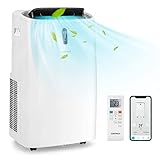
Overview: COSTWAY’s 14,000 BTU portable air conditioner delivers versatile 4-in-1 functionality for rooms up to 700 square feet. This unit combines cooling, heating, fan, and dehumidifying modes with smart WiFi connectivity at a budget-friendly price point. The 70° auto swing ensures even air distribution, while the compact design with casters facilitates easy mobility. Operating at ≤57dB, it provides reasonable quietness for bedrooms and living spaces, making it an attractive all-in-one climate solution.
What Makes It Stand Out: The 4-in-1 design with included heating function distinguishes this unit in the sub-$400 category, offering year-round utility rarely found at this price. Smart Life app integration and Alexa voice control provide modern convenience without premium cost. The dual drainage options (continuous and manual) offer flexibility for different humidity conditions. A 24-hour timer and sleep mode enhance energy efficiency and overnight comfort, while the included window kit supports easy setup.
Value for Money: At $378.97, this COSTWAY unit aggressively undercuts competitors while delivering comprehensive features. Comparable 4-in-1 smart portables typically exceed $450, making this exceptional value. The 14,000 BTU cooling capacity for under $400 is impressive, though actual performance may vary. For budget-conscious buyers wanting maximum features, this unit delivers remarkable bang-for-buck despite some trade-offs in build quality.
Strengths and Weaknesses: Strengths include outstanding affordability, versatile 4-in-1 operation, smart controls, and generous coverage. The heating function adds year-round value. Weaknesses involve higher noise levels than premium competitors, potential durability concerns with lesser-known brand, and typical portable AC efficiency limitations. The ≤57dB rating, while acceptable, isn’t whisper-quiet.
Bottom Line: COSTWAY’s portable AC is a feature-packed bargain for those prioritizing versatility and smart controls on a tight budget. Its 4-in-1 functionality and 700 sq ft coverage at this price point are unmatched. While not the quietest or most refined option, it delivers impressive value for renters and budget-minded homeowners seeking flexible, year-round climate control.
10. ROVSUN Smart 12000 BTU Through the Wall Air Conditioner with Heat, Wall AC Unit & Heater Combo with Remote, APP & Voice Control & Timer Function, Compatible with Alexa/Google Assistant, 230V/60Hz

Overview: ROVSUN’s through-the-wall unit provides permanent climate control for spaces up to 550 square feet with robust 12,000 BTU cooling and powerful 10,600 BTU heating. Designed for wall sleeve installation (not included), this unit offers superior sealing and security compared to window models. The 230V operation delivers professional-grade performance for year-round comfort in homes and offices. Through-wall installation eliminates window obstruction and reduces noise transmission, making it ideal for dedicated climate zones.
What Makes It Stand Out: The exceptional 10,600 BTU heating capacity stands out, providing genuine warmth rather than supplemental heat, suitable for primary heating in moderate climates. WiFi and voice control integration offers modern convenience in a permanent installation. The 5-mode operation with three fan speeds and 24-hour timer provides comprehensive climate management. A washable front-access filter and adjustable louvers ensure easy maintenance and customized airflow, while the included trim kit delivers a finished appearance.
Value for Money: At $499.99, this unit presents strong value for through-wall applications. Comparable through-wall units with similar heating capacity typically exceed $600. The smart features, powerful heating, and 550 sq ft coverage justify the investment for homeowners seeking permanent solutions. However, the required wall sleeve (sold separately) adds $50-100 to total cost, and 230V installation may require electrical upgrades.
Strengths and Weaknesses: Strengths include powerful heating output, permanent installation benefits, smart controls, and year-round functionality. The through-wall design enhances security and aesthetics. Weaknesses involve installation complexity, additional sleeve purchase, 230V power requirement, and brand recognition versus established competitors like Friedrich or Keystone.
Bottom Line: ROVSUN’s through-the-wall unit excels for homeowners wanting powerful, permanent climate control with modern smart features. Its robust heating capacity distinguishes it from window units, making it suitable for primary year-round use. While installation demands more effort and expense, the result is a secure, efficient, and feature-rich solution that justifies the investment for dedicated spaces.
Understanding Voice-Controlled Smart Air Conditioners
The Evolution from Remote to Voice Command
The journey from infrared remotes to voice-controlled climate systems represents a fundamental shift in how we interact with our home environments. Traditional AC units operated on simple on/off mechanisms with basic temperature settings. The introduction of Wi-Fi connectivity in the mid-2010s allowed smartphone app control, but voice integration has added a layer of intuitive interaction that apps alone couldn’t provide. Modern smart ACs now process natural language, understand context, and can even anticipate needs based on patterns and external data.
How Voice Control Technology Works in HVAC Systems
Voice control in air conditioning isn’t just about adding a microphone to a unit. The technology relies on a sophisticated ecosystem: the AC’s internal computer receives commands via cloud-based voice assistants, processes the request, and executes adjustments through variable-speed compressors, motorized louvers, and refrigerant flow controls. The system must maintain constant Wi-Fi connectivity, sync with multiple cloud services, and often includes local processing capabilities for when internet connectivity falters. This architecture determines responsiveness—premium systems react within seconds, while budget options might lag 5-10 seconds or fail during network hiccups.
Key Voice Assistant Platforms for Smart ACs
Amazon Alexa Integration Features
Alexa dominates the smart home space with the most extensive third-party device support. For air conditioners, Alexa offers nuanced commands beyond simple on/off functionality. You can request specific temperatures, adjust fan speeds, change modes (cool, dry, fan, auto), and even ask for status updates like “Alexa, what’s the temperature in the nursery?” Advanced integration includes Routines—imagine saying “Alexa, goodnight” to simultaneously lower the AC, dim lights, and lock doors. However, Alexa’s Achilles’ heel is its cloud dependency; commands won’t work during internet outages unless the device supports local control.
Google Assistant Capabilities
Google Assistant excels at contextual understanding and follow-up questions. You can ask, “Hey Google, what’s the living room temperature?” then follow with “Make it cooler” without repeating the room name. Its integration with Google’s ecosystem means it can factor in local weather, your calendar, and even traffic patterns to optimize cooling schedules. For instance, it might pre-cool your home when it detects you’re leaving work early. The platform supports complex queries like “Set the bedroom AC to 68 degrees for 3 hours, then return to auto mode.” Google Home’s Nest integration also provides deeper energy usage analytics.
Apple HomeKit Compatibility
HomeKit appeals to privacy-conscious users and those invested in the Apple ecosystem. Unlike competitors, HomeKit processes many commands locally through a HomePod or Apple TV, reducing cloud dependency and improving response times. Siri commands work seamlessly across iPhone, iPad, Apple Watch, and Mac. The Home app provides elegant scene creation, and you can use location-based automation without sharing data with third-party servers. The trade-off? Fewer AC models support HomeKit natively due to Apple’s stringent certification requirements, and setup often requires scanning QR codes or entering setup codes manually.
Samsung SmartThings Ecosystem
SmartThings functions as both a voice assistant gateway and a powerful automation hub. While Bixby voice commands are supported, SmartThings’ real strength lies in its ability to integrate AC control with hundreds of other devices using Zigbee and Z-Wave protocols. You can create sophisticated rules like “If motion isn’t detected in the home office for 30 minutes, raise the temperature 3 degrees.” SmartThings also supports multi-protocol bridging, meaning you can control a HomeKit-only AC through SmartThings with some configuration, though this requires technical expertise.
Other Emerging Voice Platforms
Beyond the big three, emerging platforms like Josh.ai cater to luxury smart homes with sophisticated natural language processing that understands compound commands: “Close the blinds, dim the lights to 30%, and set the temperature to 70 degrees.” Mycroft offers an open-source, privacy-focused alternative that processes everything locally. Some manufacturers are developing proprietary voice systems that work offline, though these typically offer limited third-party integration.
Essential Features Beyond Voice Control
True Smart vs. “Voice-Enabled” Differences
This distinction is crucial. True smart ACs feature built-in Wi-Fi, dedicated apps, and direct API integration with voice assistants. “Voice-enabled” units might simply be compatible with a smart plug or IR blaster that mimics remote commands. The latter can’t report status, temperature, or energy usage—you’re essentially voice-activating a remote control. True smart units provide two-way communication, allowing you to ask, “What’s the current room temperature?” and receive an accurate response. When shopping, verify the AC has native voice assistant support in the product specifications, not just “works with smart plugs.”
Geofencing and Location-Based Automation
Premium smart ACs leverage your smartphone’s location to automate cooling based on your proximity. Instead of rigid schedules, the system detects when you’re leaving work and begins cooling so your home is perfect upon arrival. Conversely, it can raise temperatures when you leave to save energy. The sophistication varies—basic geofencing uses simple radius triggers, while advanced systems integrate with multiple household members’ locations and can predict arrival times based on travel speed and traffic. This feature requires careful privacy consideration, as it means constant location tracking.
Learning Algorithms and Adaptive Cooling
The smartest units employ machine learning to understand your preferences, daily routines, and even sleep patterns. They analyze factors like outdoor temperature, humidity, room occupancy, and time of day to optimize cooling automatically. After 2-3 weeks of use, these ACs can predict when you’ll want the bedroom cooler for sleeping or when to enter energy-saving mode. Some models integrate with wearable devices to adjust temperature based on your body temperature or sleep stage. This intelligence separates gimmicky voice control from genuinely smart climate management.
Multi-Zone Control and Room Sensors
Whole-home smart AC systems often include individual room sensors that communicate with the main unit. These sensors detect temperature, humidity, and occupancy, allowing voice commands like “Cool only the occupied rooms” or “Make the kitchen 5 degrees cooler than the rest of the house.” This granular control eliminates hot spots and can reduce energy consumption by 30-40% compared to cooling empty rooms. Look for systems supporting at least 4-8 sensors with battery life exceeding one year.
Installation and Setup Considerations
Professional vs. DIY Installation
Window and portable smart ACs typically offer DIY installation, but mini-split and central systems require professional setup. The complexity isn’t just physical mounting—proper refrigerant charging, electrical connections, and system calibration directly impact voice control performance. An improperly installed unit may experience Wi-Fi interference, inaccurate temperature readings, or compressor issues that voice commands can’t fix. Professional installation often includes network setup and voice assistant pairing, ensuring optimal performance from day one.
Wi-Fi Requirements and Network Stability
Smart ACs are bandwidth-sensitive devices that require stable 2.4GHz Wi-Fi (some support 5GHz). A dedicated IoT network is recommended to prevent congestion from streaming devices. Signal strength at the installation location should exceed -65 dBm—use a Wi-Fi analyzer app to verify. Mesh networks excel here, ensuring consistent coverage. Consider that each AC may use 50-100MB of data daily uploading usage statistics and downloading firmware updates. During setup, ensure your router supports the required security protocols (WPA3 is becoming standard).
Calibration and Voice Training Process
Post-installation calibration ensures voice commands reflect actual room conditions. Most apps guide you through a process where you place the included temperature sensor in various locations while the system learns the space. Voice training involves speaking example commands so the system can associate your voice with specific permissions—preventing guests from adjusting your bedroom temperature. Some advanced systems support voice profiles for different family members, each with customized access levels and preferred settings.
Energy Efficiency and Smart Features
SEER Ratings and Smart Optimization
The Seasonal Energy Efficiency Ratio (SEER) measures cooling output versus energy consumption. Smart features can improve effective SEER by 15-20% beyond the rated number through intelligent scheduling, load shifting during peak hours, and predictive maintenance alerts. Voice-controlled ACs with variable-speed inverters modulate compressor speed rather than cycling on/off, maintaining consistent temperatures while using 40% less energy. When evaluating units, prioritize SEER ratings above 18 for window units and above 20 for mini-splits, then leverage smart features to maximize efficiency.
Energy Usage Monitoring Through Voice Commands
Sophisticated smart ACs provide granular energy tracking accessible via voice: “Alexa, how much energy did the living room AC use today?” or “Hey Google, compare this month’s usage to last month.” This data often includes cost projections, carbon footprint calculations, and efficiency scores. Some utilities offer rebates for sharing this data, and time-of-use rate plans can be integrated to automatically pre-cool during off-peak hours. The best systems break down usage by mode, showing exactly how much that “quick cool” burst cost you.
Eco Modes and Sustainable Cooling
Voice-activated eco modes do more than just raise the temperature setpoint. They optimize fan speed, adjust compressor cycling, and may integrate with smart window shades to reduce solar heat gain. Advanced eco modes respond to grid demand signals, automatically reducing consumption during peak load events (sometimes earning you utility credits). You can ask, “Activate eco mode until 6 PM” or “What’s the most efficient temperature for sleeping tonight?” Some units even provide voice feedback on eco mode effectiveness: “Eco mode saved $2.30 today by reducing runtime by 18%.”
Smart Home Integration and Ecosystem Compatibility
Matter Standard and Interoperability
Matter is the new industry standard promising seamless interoperability between smart home devices regardless of manufacturer. For smart ACs, Matter support means your unit will work with Alexa, Google, and Siri simultaneously without separate setups. It also ensures local network control when internet is down. As of 2024, Matter support is rolling out slowly to AC units, but it’s a must-have feature for future-proofing. Look for the Matter logo and verify which features are supported—some early implementations only support basic on/off and temperature, not advanced modes.
IFTTT and Advanced Automation
IFTTT (If This Then That) unlocks powerful cross-platform automation. Create applets like “If the outdoor temperature drops below 70°F, turn off the AC and open a notification” or “If my smart doorbell detects a visitor, temporarily increase fan speed to mask outside noise.” Advanced users chain multiple services: integrate with weather services for predictive cooling, with security systems for away-mode automation, or with sleep trackers for bedroom climate optimization. The possibilities are nearly limitless, though IFTTT’s free tier now limits applet complexity.
Hub-Based vs. Hub-Free Systems
Hub-free ACs connect directly to Wi-Fi and voice assistants—simpler setup but potentially less reliable. Hub-based systems (SmartThings, Hubitat, Home Assistant) offer local processing, offline automation, and unified control of diverse devices. A hub can bridge protocols, allowing a Zigbee-enabled AC to respond to voice commands without native Wi-Fi. The trade-off is complexity and cost. For apartments with one or two units, hub-free is fine. For whole-home systems with multiple zones, a hub provides superior reliability and advanced automation.
Privacy and Security Implications
Data Collection and Voice Recording Policies
Smart ACs collect data on usage patterns, room temperatures, occupancy, and voice commands. Review privacy policies carefully—some manufacturers anonymize and aggregate data, others sell it to third parties. Voice recordings are stored by assistants (Amazon, Google), not the AC manufacturer, but command metadata (time, temperature changes, frequency) often goes to the device maker. Look for certifications like TRUSTe or GDPR compliance, and check if you can opt out of data sharing without losing core functionality. Some premium brands now offer local-only modes that disable cloud features but maintain voice control through home hubs.
Securing Your Smart AC Network
Your voice-controlled AC is a network entry point that requires protection. Change default passwords immediately, enable two-factor authentication in the companion app, and regularly update firmware. Create a separate guest network for visitors to prevent unauthorized access. Advanced users should VLAN-isolate IoT devices or use a dedicated router for smart home gear. Check if the AC supports end-to-end encryption for commands—without it, a compromised network could allow temperature manipulation or reveal occupancy patterns. Some security research has shown ACs can be entry points for broader network attacks.
Local vs. Cloud-Based Processing
Cloud processing enables advanced features like weather integration and remote access but introduces latency and privacy concerns. Local processing (HomeKit, Hubitat, some SmartThings automations) executes commands instantly and keeps data in your home. The ideal system uses hybrid architecture: voice commands process locally when possible, falling back to cloud only for complex queries. Ask manufacturers about their local control capabilities—can you adjust temperature if the internet is down? Does the unit have onboard processing or rely entirely on external servers? This distinction is critical for reliability and privacy.
Troubleshooting Common Voice Control Issues
Connectivity Problems and Solutions
The most common issue is Wi-Fi dropout. If your AC stops responding to voice commands, first check if it’s still controllable via its native app. If not, the issue is network-related, not voice integration. Solutions include: assigning a static IP address, adjusting router channel width to 20MHz on 2.4GHz band, or adding a Wi-Fi extender. Some ACs have weak antennas—upgrading to a mesh system often resolves intermittent connectivity. Firmware bugs can also cause disconnections; enable auto-updates or check manufacturer forums for known issues.
Misinterpreted Commands and Voice Recognition
When “Set AC to 72” results in “Setting temperature to 80,” the problem could be accent interpretation, background noise, or command phrasing. Train your voice assistant with voice match profiles, reduce fan noise during setup, and use precise room names. Create custom routines for complex commands—instead of “Set the bedroom AC to cool mode, 68 degrees, high fan, swing on,” create a routine triggered by “Bedroom arctic blast.” For households with multiple ACs, ensure unique, distinguishable names like “Master Bedroom West” rather than “Bedroom AC.”
Firmware Updates and Maintenance
Smart ACs require regular firmware updates for security patches and feature improvements. Enable automatic updates but schedule them during non-critical times—some units restart after updating, temporarily losing cooling. Check update logs to see what changed; manufacturers sometimes remove features or change voice command structures. Maintenance alerts via voice (“Your AC filter needs cleaning”) are valuable but verify the detection method. Some use runtime hours, others measure airflow reduction. False positives are common, so cross-reference with physical inspection.
Cost Analysis and Value Proposition
Initial Investment vs. Long-Term Savings
Voice-controlled smart ACs cost 20-40% more than comparable non-smart units. A $400 window unit becomes $550-600 with smart features. However, the ROI comes through energy savings—typically 10-30% reduction in cooling costs, meaning a $600 smart unit pays for itself in 2-4 years for average users. Factor in utility rebates ($50-200 in many regions for smart thermostats/ACs) and potential increases in property value. For renters, portable smart ACs offer climate control benefits without permanent installation costs.
Subscription Fees and Hidden Costs
Beware of subscription models. Some manufacturers lock advanced features like energy reports, geofencing, or voice control behind monthly fees ($3-10/month). Verify what’s included free for the product’s lifetime. Cloud storage for usage history may have limits, and some apps display ads unless you pay for premium tiers. Factor in potential hub costs ($50-130) if you choose that route. Installation costs for mini-splits can add $500-2000 depending on complexity. Extended warranties covering smart components are often worthwhile given the electronics’ complexity.
Warranty and Support Considerations
Standard AC warranties (1-2 years) often exclude smart features and connectivity components. Look for extended warranties specifically covering Wi-Fi modules, sensors, and software. Manufacturer support quality varies dramatically—check community forums for responsiveness before purchasing. Some brands offer premium support tiers with dedicated smart home troubleshooting. Consider the company’s history of software updates; a brand that abandons app support after two years leaves you with an expensive dumb AC. European brands often provide longer smart feature support due to regulations.
Future Trends in Voice-Controlled Cooling
AI-Powered Predictive Cooling
Next-generation systems will integrate with weather forecasts, occupancy prediction algorithms, and even your calendar to pre-cool spaces before you realize you need it. Imagine your AC analyzing your sleep quality from wearable data and adjusting nighttime temperature to optimize REM cycles. Machine learning will soon predict component failures before they happen, scheduling maintenance automatically. Voice interactions will become conversational: “I’m feeling a bit stuffy” might trigger humidity analysis, filter status check, and subtle fan adjustment.
Integration with Renewable Energy Systems
Smart ACs are evolving to become grid-interactive loads. Future units will communicate directly with home solar systems and battery storage, running at maximum capacity when solar generation peaks and throttling down when drawing from the grid. Voice commands will reflect this: “Run only on solar power today” or “What’s my carbon-neutral cooling schedule?” Time-of-use rates will drive automatic load shifting, with voice assistants explaining trade-offs: “Pre-cooling now will save $4 versus cooling at 6 PM. Shall I proceed?”
Advanced Natural Language Processing
Soon, context-aware voice control will understand complex, multi-part instructions: “Cool the house to 72, but use eco mode in empty rooms, and make sure the nursery stays at 70 for the baby’s nap.” Emotion detection in voice patterns might trigger comfort adjustments—detecting stress in your voice could initiate a calming, cooler environment. Multi-language households will see seamless code-switching support. The line between voice assistant and HVAC system will blur as ACs develop onboard AI that understands home-specific thermal dynamics without cloud processing.
Frequently Asked Questions
1. Do I need a separate hub for voice-controlled air conditioners to work?
Not necessarily. Most modern smart ACs connect directly to Wi-Fi and communicate with voice assistants through the cloud. However, a hub like SmartThings or Hubitat provides local control, offline automation, and unified management of multiple devices. For single-unit setups, hub-free is simpler. For whole-home systems with mixed protocols, a hub offers superior reliability and advanced scene creation.
2. Will my smart AC work during a power outage or internet outage?
During power outages, no AC will operate without backup power. For internet outages, it depends on the system. Cloud-dependent units become manually controlled only. Systems with local processing (HomeKit via HomePod, some SmartThings automations) continue voice control within your home network. Look for “offline mode” or “local control” in specifications if this is a priority. Battery-powered portable units with 4G failover exist but are rare and expensive.
3. Can I control multiple air conditioners with different voice commands?
Absolutely. Assign unique, distinct names during setup—use room names or location descriptors like “Living Room West” and “Office Window Unit.” You can issue individual commands or group them: “Set all ACs to 75 degrees” or “Turn off upstairs air conditioners.” Create custom routines for complex multi-unit scenarios, like “Movie mode” that adjusts living room temperature, dims lights, and closes smart blinds simultaneously.
4. Are voice-controlled air conditioners more expensive to repair than traditional units?
Smart components (Wi-Fi modules, sensors, control boards) can increase repair costs by $50-150 per incident. However, predictive diagnostics often catch issues early, preventing catastrophic failures. Extended warranties covering electronics are recommended. Standard mechanical components (compressor, fan, coils) cost the same to repair as traditional units. DIY repairs are more complex due to integrated electronics, so factor in professional service costs.
5. How secure are voice-controlled air conditioners from hacking?
Security varies by manufacturer. Reputable brands use encryption, regular security patches, and secure boot processes. However, any internet-connected device presents risk. Mitigate threats by: using strong unique passwords, enabling two-factor authentication, keeping firmware updated, isolating IoT devices on a separate network, and disabling remote access if not needed. HomeKit and local-hub systems are generally more secure than cloud-only solutions.
6. Can renters install voice-controlled air conditioners?
Yes. Portable and window units are renter-friendly, requiring no permanent modifications. Many modern units are designed for easy installation and removal. For mini-splits, you need landlord approval as they require drilling and electrical work. Some property management companies now offer smart ACs as amenities. Always check lease agreements and consider that you’ll likely take the unit when moving, so choose models that fit various window sizes or offer flexible venting options.
7. Do voice assistants record conversations when I control my AC?
Voice assistants only record and transmit audio after hearing the wake word (“Alexa,” “Hey Google,” “Hey Siri”). However, accidental activations happen. Command metadata (time, temperature changes) is typically stored by both the assistant and AC manufacturer. You can review and delete voice recordings in assistant settings. For maximum privacy, use HomeKit’s local processing or systems with physical mute buttons and local-only modes that disable cloud features.
8. What happens to my smart AC if the manufacturer goes out of business?
The AC will continue operating manually and via its app as long as servers remain online, but cloud features and voice integration may eventually stop working. Some community-driven solutions might emerge, but no guarantees exist. This risk favors established brands or those using open standards like Matter. Hub-based systems (Home Assistant, Hubitat) can sometimes maintain voice control even after manufacturer support ends by using local APIs. Always research company stability and community support before purchasing.
9. Can voice-controlled ACs integrate with my existing smart home devices?
Most integrate with major platforms (Alexa, Google, HomeKit, SmartThings), allowing coordination with lights, locks, and sensors. Check for Matter support for maximum compatibility. IFTTT enables connections to thousands of devices regardless of brand. However, proprietary ecosystems (certain security systems, shades, or appliances) may require workarounds. Before buying, verify integration with your existing devices using the assistant’s app or compatibility checkers on manufacturer websites.
10. How accurate are voice-controlled temperature adjustments compared to manual controls?
Accuracy depends on sensor quality and placement. Premium smart ACs use multiple sensors and calibrate for accuracy within ±1°F. Voice commands execute the same digital adjustments as app controls, so precision matches manual input. The advantage is convenience and consistency—no more “is it at 72 or 73?” guesswork. However, ensure the AC’s temperature sensor isn’t near a heat source or in direct sunlight, as this affects accuracy regardless of control method. Some systems allow sensor averaging across multiple room sensors for whole-home precision.