Step into your bathroom after a hot shower and you’ll immediately understand why ventilation matters. That foggy mirror and damp walls aren’t just annoying—they’re invitations for mold, mildew, and long-term structural damage. While traditional bath fans have been fighting this battle for decades, they operate on a simple on/off switch, leaving you to guess how long to run them. Smart bath-fan controllers with humidity and timer triggers represent the next evolution, transforming your basic exhaust fan into an intelligent moisture management system that thinks for itself.
As we look toward 2026, these devices have moved far beyond simple automation. Today’s controllers leverage advanced sensor arrays, machine learning algorithms, and seamless smart home integration to create a bathroom environment that maintains perfect air quality automatically. Whether you’re renovating a master suite or upgrading a powder room, understanding what separates premium controllers from basic timers will help you make an investment that protects your home while delivering genuine convenience.
Top 10 Smart Bath-Fan Controllers with Humidity and Timer
Detailed Product Reviews
1. TOPGREENER Dual Tech Humidity Sensor Switch, Infrared PIR Motion & Air Moisture Detection, Bathroom Fan & Light Control, Adjustable Timing, Neutral Wire Required, UL Listed, TDHOS5, White

Overview: The TOPGREENER TDHOS5 is a sophisticated dual-tech wall switch that automates bathroom lighting and exhaust fans through passive infrared motion detection and humidity sensing. This UL-listed device offers hands-free operation for spaces up to 600 sq ft, with customizable settings for timing and moisture levels, requiring a neutral wire for installation.
What Makes It Stand Out: Unlike single-function sensors, this device combines occupancy detection with humidity monitoring, automatically illuminating rooms when you enter while independently controlling fan activation. It features four delay settings (15 seconds to 30 minutes) and three adjustable humidity thresholds. CA Title 24 compliance and potential 40% energy savings distinguish it as an environmentally conscious, code-compliant solution for comprehensive bathroom automation.
Value for Money: Priced at $49.51, this mid-range switch delivers premium dual functionality that would typically require two separate devices. Basic humidity sensors cost $30-40, while motion sensors add another $20-30. The UL certification, professional build quality, and energy savings justify the investment for those seeking robust automation without recurring smart home subscription fees.
Strengths and Weaknesses: Strengths:
- Dual PIR motion and humidity sensing capabilities
- Independent control of light and fan functions
- UL listed with CA Title 24 compliance
- Adjustable timing and humidity thresholds
- Significant energy savings potential
Weaknesses:
- Neutral wire required, limiting retrofit compatibility
- Professional installation recommended
- Wall plate sold separately
- Higher cost than basic single-function sensors
Bottom Line: The TOPGREENER TDHOS5 excels for homeowners wanting intelligent, code-compliant bathroom automation. Despite requiring electrical expertise for installation, its dual-sensor design and energy efficiency make it a smart long-term investment for modern homes.
2. ROJOSAN Bathroom Exhaust Fan with Heater, Smart Fan with Bluetooth Speaker, 2 Heat Levels, Humidity and Odor Sensor, RGB and 3CCT Lighting, Remote Control for Bathroom, Kitchen, Basement (White)
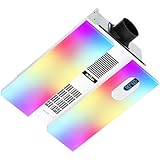
Overview: The ROJOSAN exhaust fan is a feature-rich all-in-one bathroom solution combining ventilation, heating, smart sensors, and entertainment. This $209.99 unit offers dual heat levels, humidity/odor detection, Bluetooth speaker functionality, and customizable RGB lighting. Designed for modern bathrooms, it provides comprehensive climate and ambiance control with remote operation.
What Makes It Stand Out: This unit transforms bathroom ventilation into a multi-sensory experience. The integrated Bluetooth speaker with microphone enables karaoke sessions, while three dynamic RGB modes sync with music. Smart humidity and odor sensors automatically activate ventilation, preventing mold and maintaining air quality. The dual heating system provides year-round comfort, making it far more than a standard exhaust fan.
Value for Money: At $209.99, this premium fan competes with high-end models but adds unique entertainment features. Comparable fan/heater combos cost $150-200 without smart sensors or Bluetooth. While pricier than basic models, the integrated speaker, RGB lighting, and intelligent automation eliminate separate device costs, offering reasonable value for tech-savvy homeowners seeking luxury amenities.
Strengths and Weaknesses: Strengths:
- All-in-one design with heater and Bluetooth speaker
- Smart humidity and odor sensors
- Dynamic RGB lighting with music sync
- Dual heating levels for year-round use
- Remote control convenience
Weaknesses:
- Premium price point
- Complex installation requiring ceiling clearance
- Potential reliability concerns with multi-function electronics
- May be overkill for minimalists
Bottom Line: The ROJOSAN fan is perfect for tech enthusiasts wanting a luxurious, entertainment-focused bathroom experience. While expensive and complex, its unique combination of features justifies the cost for those prioritizing ambiance and convenience over simplicity.
3. Ortis New 2024! Humidity Sensor Switch, in-Wall Bathroom Fan Automated Control Switch, Separate Sensor for Better Moisture Detection, 328ft Range, 110/220V, Keep Your Room Dry

Overview: The Ortis 2024 humidity sensor switch revolutionizes moisture control with its innovative separate wireless sensor design. At just $25.99, this second-generation controller offers a remarkable 328-foot range between sensor and switch. Supporting both dehumidification and humidification modes, it works with 110/220V systems and features an LCD display for real-time monitoring.
What Makes It Stand Out: The detachable sensor is a game-changer, allowing optimal placement for accurate humidity readings while the controller mounts conveniently elsewhere. This eliminates false readings from wall cavities. The dual-mode operation supports both exhaust fans and humidifiers, making it versatile across seasons. Data updates every five minutes, and lockable buttons prevent accidental setting changes—features rarely seen at this price point.
Value for Money: Exceptional value at $25.99. Competing wireless sensor systems typically cost $60-80. The Ortis delivers professional-grade range and dual-mode functionality for less than half the price. While build quality may not match premium brands, the feature set and performance make it arguably the best budget option for smart humidity management.
Strengths and Weaknesses: Strengths:
- Separate wireless sensor with 328ft range
- Dual dehumidification/humidification modes
- Excellent price-to-performance ratio
- Lockable buttons prevent accidental changes
- Wide voltage compatibility (110/220V)
Weaknesses:
- Requires neutral wire
- Newer brand with unproven long-term reliability
- Plastic construction feels less durable
- Sensor battery requires periodic replacement
Bottom Line: The Ortis sensor switch is a breakthrough budget option for precise humidity control. Its wireless sensor design and dual-mode operation offer unmatched versatility at this price, making it ideal for cost-conscious homeowners wanting smart functionality without premium costs.
4. Eaton HDFS3P1-W-L Humidity Sensor and Bath Fan Control Single Pole, White

Overview: The Eaton HDFS3P1-W-L is a straightforward, budget-friendly humidity sensor switch designed for simple bathroom fan automation. At $19.99, this single-pole replacement switch automatically activates exhaust fans when humidity exceeds preset levels between 45-80% RH. It features a fixed 30-minute delay and manual override for immediate ventilation needs.
What Makes It Stand Out: Simplicity is this device’s strongest suit. It does one job reliably without complex programming or installation headaches. The manual override button provides immediate control when automatic sensing isn’t needed. Eaton’s reputation for electrical components ensures dependable performance. Unlike feature-heavy alternatives, this no-frills design appeals to homeowners wanting set-it-and-forget-it moisture control without learning curves or wireless connectivity concerns.
Value for Money: Outstanding value at $19.99. It’s among the most affordable UL-recognized humidity sensors available, costing 50-70% less than multi-feature alternatives. While lacking adjustability, it delivers core functionality reliably. For budget renovations or rental properties, it provides essential moisture protection without premium pricing, though the fixed 30-minute delay may waste energy in some situations.
Strengths and Weaknesses: Strengths:
- Extremely affordable price point
- Simple, reliable operation
- Manual override for immediate use
- Reputable Eaton brand quality
- Easy installation for single-pole replacement
Weaknesses:
- Fixed 30-minute delay (non-adjustable)
- Limited humidity range (45-80% RH)
- No motion sensing or light control
- Basic functionality without customization
- No LCD display for current readings
Bottom Line: The Eaton sensor is perfect for budget-conscious buyers wanting reliable, basic humidity control. While feature-limited, its simplicity, brand reliability, and ultra-low price make it an excellent choice for straightforward moisture management in secondary bathrooms or rental properties.
5. VallisCo Bathroom Exhaust Fan with Light, Odor & Humidity Sensors, 230 CFM Quiet Ceiling Fan with Remote, Timer, 3 Dynamic RGB Lights, 2700K–6500K Dimmable, Wall/Ceiling Mount (Black-to-White)

Overview: The VallisCo exhaust fan delivers powerful 230 CFM ventilation with intelligent sensors and customizable lighting in a sleek package. Priced at $179.99, this quiet 1-sone unit features both humidity and odor detection, stepless dimmable white light (2700K-6500K), three dynamic RGB modes, remote control, and timer functionality for comprehensive bathroom climate management.
What Makes It Stand Out: This fan balances high-performance ventilation with ambiance. The dual humidity and odor sensors provide proactive air quality management, while stepless dimming offers precise lighting control. Three RGB modes create mood lighting, and the powerful yet quiet 230 CFM output exceeds standard bathroom fans. The combination of performance, sensors, and lighting customization at this price point is compelling.
Value for Money: At $179.99, it undercuts the ROJOSAN by $30 while delivering similar smart features and higher CFM. Comparable performance fans with sensors cost $150-180 without RGB lighting. The quiet operation and dual-sensor intelligence justify the premium over basic models. It offers strong value for those wanting smart features without the speaker premium.
Strengths and Weaknesses: Strengths:
- High 230 CFM with quiet 1-sone operation
- Dual humidity and odor sensors
- Stepless dimmable white light plus RGB
- Remote control and timer functionality
- Competitive pricing for feature set
Weaknesses:
- No built-in heater or Bluetooth speaker
- Installation requires adequate ceiling space
- Brand recognition lower than established competitors
- RGB may be unnecessary for some users
Bottom Line: The VallisCo fan excels for buyers prioritizing ventilation performance and smart sensors over entertainment features. It delivers powerful, quiet operation with intelligent automation and customizable lighting at a competitive price, making it a smart middle-ground choice.
6. GROWNEER Bathroom Fan Humidity Sensor Remote Control, Remote Control for Enhanced Comfort and Convenience

Overview: This is a simple remote control designed specifically for bathroom fans with humidity sensors. It’s a replacement or accessory device that allows you to control your fan’s humidity-sensing functions from a distance. The GROWNEER remote offers a maximum range of 19 feet, though the manufacturer recommends using it within 6 feet for optimal performance. At under $20, it’s positioned as an affordable convenience upgrade for compatible bathroom ventilation systems.
What Makes It Stand Out: The primary selling point is its specialized design for humidity sensor controls, which isn’t a universal feature in standard fan remotes. The 19-foot maximum range provides decent coverage for most bathroom sizes, allowing you to activate or adjust your fan without reaching for wall switches. The remote’s focused functionality means you’re not paying for unnecessary features—it’s a straightforward solution for a specific need.
Value for Money: At $19.99, this remote sits in the budget-friendly category. If you’ve already invested in a humidity-sensing bathroom fan, this remote adds meaningful convenience for a modest price. Compared to replacing an entire fan unit or upgrading to a smart system, this is a cost-effective way to enhance your existing setup. However, its value is entirely dependent on compatibility with your current fan model.
Strengths and Weaknesses: Strengths include its affordable price point, specialized humidity sensor compatibility, and adequate operational range. The compact design makes it easy to mount or store. Weaknesses are its limited functionality (no smart features or advanced controls), potential compatibility issues with non-GROWNEER fans, and the need to purchase batteries separately. The optimal 6-foot range is also somewhat restrictive for larger bathrooms.
Bottom Line: This remote is a practical addition for anyone with a compatible humidity-sensing bathroom fan who wants basic remote functionality without breaking the bank. While it lacks advanced features, it delivers exactly what it promises at a fair price. Just verify compatibility before purchasing.
7. Smart WiFi Fan Switch Ceiling Fan and Light Remote Control Kit, WiFi Controller Compatible with Alexa Google, Phone APP Control, No Hub Required, Universal Ceilingfan Light Remote Control

Overview: This Smart WiFi Fan Switch transforms ordinary ceiling fans into smart home devices. The kit enables remote operation via smartphone app or included RF remote, eliminating the need for pull chains or wall switches. Compatible with major brands like Hunter and Harbor Breeze, it supports both fan speed control and light on/off functions. The hub-free design connects directly to your home WiFi, making setup straightforward for most DIY enthusiasts.
What Makes It Stand Out: The universal compatibility is impressive, working with most ceiling fan brands without requiring proprietary systems. Voice control integration with Alexa and Google Assistant provides true hands-free convenience. The ability to share control with family members and create schedules adds practical automation value. At just $26.99, it’s one of the most affordable ways to smarten your ceiling fan without replacing the entire fixture.
Value for Money: This kit delivers exceptional value. Smart ceiling fans often cost $200+, but this $26.99 upgrade brings similar functionality to your existing fan. The included RF remote provides backup control if WiFi fails. While it doesn’t offer light dimming capabilities, the core features—speed control, scheduling, and voice commands—represent significant savings compared to purchasing a new smart fan.
Strengths and Weaknesses: Strengths include broad compatibility, easy installation, voice control, scheduling features, and excellent price point. The dual-control option (app + remote) ensures reliability. Weaknesses include no light dimming function, potential space constraints in smaller fan canopies (receiver measures 4.5x2x1 inches), and batteries not included for the remote. Some users may find the initial setup slightly technical.
Bottom Line: An outstanding budget-friendly smart home upgrade for ceiling fans. If your fan has sufficient canopy space and you don’t need dimming, this kit offers tremendous functionality for the price. Perfect for renters and homeowners alike seeking modern convenience without major investment.
8. ROJOSAN Smart Bathroom Exhaust Fan with Bluetooth Speaker and Light & Humidity Sensor, Powerful 230CFM Exhaust Fan with Alexa/App/Remote Control, Auto-On Humidity & Odor Sensor, 2.0 Sone (White-FBA)

Overview: The ROJOSAN Smart Bathroom Exhaust Fan reimagines bathroom ventilation as a multi-functional smart device. Delivering powerful 230 CFM airflow, it automatically activates via humidity and odor sensors. Beyond ventilation, it features a built-in Bluetooth speaker and customizable LED lighting with three color temperatures plus dynamic RGB modes. Operating at a whisper-quiet 2.0 sones, this unit combines performance, entertainment, and smart home integration in one sleek package.
What Makes It Stand Out: This isn’t just a fan—it’s a complete bathroom upgrade. The dual humidity and odor detection ensures optimal air quality without manual intervention. The integrated Bluetooth speaker eliminates the need for separate waterproof audio devices. Unique RGB lighting modes create ambiance for relaxation or party settings. Multiple control options (remote, app, Alexa/Google) provide unmatched flexibility, while the tool-free filter maintenance simplifies upkeep.
Value for Money: At $189.99, this premium fan costs significantly more than basic models, but justifies the price through multi-functionality. Purchasing separate components—high-CFM fan, smart humidity sensor, Bluetooth speaker, and customizable light—would easily exceed this cost. The installation is designed for standard 12-inch openings, reducing retrofitting expenses. For those seeking a luxury bathroom experience, the all-in-one convenience offers solid value.
Strengths and Weaknesses: Strengths include powerful 230 CFM performance, ultra-quiet operation, smart sensors, Bluetooth audio, versatile lighting, and multiple control methods. The tool-free filter cleaning is a practical bonus. Weaknesses include the high upfront cost, requirement of 11 inches vertical clearance (may not fit all spaces), and potential complexity for users wanting simple ventilation. The sliding cover design, while sleek, adds moving parts that could wear over time.
Bottom Line: An excellent choice for homeowners wanting a premium, feature-rich bathroom upgrade. If you value smart automation, audio entertainment, and customizable lighting alongside powerful ventilation, the ROJOSAN delivers. Just ensure your ceiling space meets the installation requirements before purchasing.
9. GROWNEER Bathroom Fan Bluetooth Speaker & Humidity Sensor Remote Control, Remote Control for Enhanced Comfort and Convenience

Overview: This GROWNEER remote control is designed for bathroom fans equipped with both Bluetooth speakers and humidity sensors. It offers convenient wireless operation with a maximum range of 19 feet, though optimal performance is recommended within 6 feet. At $29.99, it provides dual-function control for audio and ventilation features, allowing users to adjust fan settings and manage music playback from a distance without reaching for their phones or wall controls.
What Makes It Stand Out: The specialized dual-purpose design controls both ventilation and audio functions, which is rare in bathroom fan remotes. This eliminates the need to juggle multiple controllers or rely solely on smartphone apps for Bluetooth speaker operation. The 19-foot range covers most bathroom layouts comfortably. Its focused functionality means you’re getting exactly what you need for a multi-feature fan without paying for unnecessary smart home integrations.
Value for Money: Priced at $29.99, this remote sits in the mid-range bracket. For owners of compatible GROWNEER fans with Bluetooth speakers, it adds significant convenience over app-only control. However, the value is entirely contingent on having the matching fan model. Compared to universal smart switches that cost $20-40, this specialized remote offers less versatility but more targeted functionality for specific fan units.
Strengths and Weaknesses: Strengths include integrated control of fan and speaker functions, adequate operational range, and straightforward operation. It reduces reliance on phone apps in moisture-prone bathroom environments. Weaknesses are its limited compatibility (likely GROWNEER-specific), lack of advanced features like scheduling or voice control, and the need to purchase 2 AAA batteries separately. The 6-foot optimal range may feel restrictive in larger master bathrooms.
Bottom Line: A practical accessory for GROWNEER bathroom fan owners wanting simple, reliable control of both ventilation and audio features. While not a universal solution, it excels at its intended purpose. Verify compatibility with your specific fan model before purchasing to ensure proper functionality.
10. Tech Drive Very Quiet 80 CFM, 1.5 Sone No Attic access Needed Installation Bathroom Ventilation and Exhaust Fan with Humidity sensor
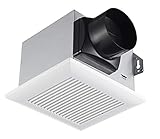
Overview: The Tech Drive bathroom exhaust fan addresses a common installation challenge by requiring no attic access. Delivering 80 CFM airflow at an ultra-quiet 1.5 sones, it’s suitable for bathrooms up to 85 square feet. The integrated humidity sensor automatically activates when levels exceed 60%, ensuring efficient moisture control. With Energy Star qualification and UL/HVI certification, this unit combines performance, efficiency, and safety in a compact design that installs entirely from the room side.
What Makes It Stand Out: The no-attic-access installation is a game-changer for condo owners and homes with finished ceilings. The housing is designed to fit existing standard openings, making retrofits straightforward. The humidity sensor’s 60% threshold hits the sweet spot for preventing mold without excessive runtime. At 1.5 sones, it’s significantly quieter than building-code minimums, providing discreet operation that won’t disrupt your morning routine.
Value for Money: At $63.99, this fan offers excellent value for its target market. The installation savings alone—no contractor fees for attic work—justify the price premium over basic $30 fans. The Energy Star rating ensures long-term energy savings, while the humidity sensor adds automation typically found in more expensive models. For DIYers or those with access constraints, it’s a cost-effective solution that doesn’t compromise on performance.
Strengths and Weaknesses: Strengths include innovative no-attic installation, whisper-quiet operation, reliable humidity sensing, energy efficiency certifications, and easy retrofit design. The manual mode provides continuous operation when needed. Weaknesses include the 80 CFM capacity, which may be insufficient for larger bathrooms, and the fixed 60% humidity threshold (not adjustable). The 6-inch housing height might not fit all shallow ceiling cavities, particularly when replacing 4-inch units.
Bottom Line: An ideal choice for anyone facing installation constraints or seeking a quiet, efficient upgrade. The Tech Drive fan excels in retrofits and situations where attic access is impossible. While not the most powerful option available, its thoughtful design and reliable performance make it a smart investment for standard-sized bathrooms.
Understanding Smart Bath-Fan Controllers
What Makes a Bath-Fan Controller “Smart”?
A smart controller doesn’t just turn your fan on and off—it orchestrates your bathroom’s entire ventilation strategy. Unlike manual switches or basic countdown timers, these devices continuously monitor environmental conditions and make real-time decisions based on actual need. The intelligence comes from a combination of high-precision humidity sensors, temperature compensation algorithms, and connectivity that allows for remote monitoring and control. In 2026’s models, you’ll find processors capable of analyzing humidity trends, predicting peak moisture events, and adjusting fan speed dynamically rather than operating at a single fixed rate.
The Science Behind Humidity Sensing
Modern humidity sensors in premium controllers use capacitive polymer elements that can detect relative humidity changes as small as 0.5% RH. But raw data means nothing without context. Advanced units employ temperature compensation formulas because warm air holds more moisture than cool air—a critical distinction in bathrooms where temperatures fluctuate rapidly. The best controllers don’t just react to hitting 60% RH; they calculate the dew point and vapor pressure differential to determine when condensation will actually form on surfaces. This prevents unnecessary fan operation during humid summer days while ensuring aggressive ventilation during steamy winter showers when condensation risk is highest.
Timer Triggers: Beyond Basic Countdowns
Forget the old 30-minute mechanical timer. 2026’s timer triggers operate on multiple sophisticated modes. Delayed-start timers wait for humidity to peak before beginning ventilation, maximizing efficiency. Run-on timers calculate optimal duration based on how long high humidity persisted, not just a fixed interval. Some units feature adaptive timers that learn your household patterns—if you consistently take 12-minute showers, the controller adjusts its baseline timing accordingly. The most advanced models incorporate occupancy sensors that extend timer duration if someone remains in the bathroom, preventing premature shutoff.
Key Features That Define 2026’s Market Leaders
Multi-Stage Humidity Thresholds
Entry-level controllers use a single humidity setpoint, but premium devices offer graduated response curves. You might configure 50% RH for gentle background ventilation, 65% for moderate shower steam, and 75% for aggressive moisture removal. Each threshold can trigger different fan speeds, run times, and even activate auxiliary dehumidifiers or air purifiers. This tiered approach prevents the jarring noise of a fan suddenly blasting at full speed while ensuring serious moisture events get maximum ventilation.
Adaptive Learning Algorithms
The standout feature in next-generation controllers is their ability to learn your home’s unique moisture signature. These algorithms analyze weeks of data to distinguish between a steamy shower, a hot bath, and ambient humidity from an open window. They recognize that a master bathroom with a jetted tub behaves differently than a compact powder room. Over time, the controller builds a predictive model that can pre-emptively increase ventilation before humidity spikes, based on time-of-day patterns or even calendar integration that knows when guests are visiting.
Multi-Fan Zone Control
Whole-home ventilation strategies are gaining traction, and 2026’s controllers reflect this shift. Advanced units can coordinate multiple fans—your primary exhaust fan, a secondary window fan, and even whole-house ventilation systems. When humidity peaks in the master bath, the controller might run that fan at high speed while activating a hallway fan at low speed to create negative pressure and draw dry air from adjacent rooms. This zone control prevents moisture migration to other parts of your home and creates more effective air exchange.
Silent Operation Modes
Noise reduction has become a priority as bathrooms increasingly serve as relaxation spaces. Smart controllers now feature PWM (Pulse Width Modulation) motor control that can run compatible fans at ultra-low speeds for nearly silent operation. Night modes drop fan speeds by 50% during quiet hours, relying on extended run times rather than high airflow. Some units even sync with smart thermostats to pause operation when the HVAC system is in a quiet cycle, preventing acoustic interference.
Smart Home Integration Ecosystems
Matter Protocol Compatibility
Matter has become the de facto standard for smart home devices in 2026, and bath-fan controllers are no exception. Matter-certified controllers offer seamless integration across Apple HomeKit, Google Home, Amazon Alexa, and Samsung SmartThings without brand-specific hubs. This interoperability means your humidity data can trigger actions in completely different ecosystems—like activating a dehumidifier in an adjacent laundry room or adjusting your smart thermostat’s fan circulation settings. Look for Thread radio support within Matter devices, which creates a mesh network with lower latency and better reliability than Wi-Fi alone.
Voice Assistant Integration
Beyond basic on/off commands, deep voice integration allows for natural language humidity queries and complex routines. You can ask “What’s the bathroom humidity?” and receive a precise answer, or create a “Post-Shower” routine that activates the fan, starts a bathroom speaker playlist, and gradually dims lights over 20 minutes. Advanced controllers support custom intents, letting you set humidity thresholds via voice: “Set bathroom humidity target to 55%.” The best implementations process commands locally for privacy, only cloud-syncing anonymized data.
API Access for Power Users
For home automation enthusiasts, RESTful APIs and MQTT support separate hobby-grade controllers from professional-grade equipment. These interfaces allow integration with platforms like Home Assistant, Hubitat, or custom Node-RED flows. You can create sophisticated logic: “If bathroom humidity exceeds 70% AND outdoor humidity is below 50%, run fan at maximum AND open smart window vent.” API access also enables data logging to InfluxDB or similar time-series databases, letting you visualize long-term trends and optimize settings based on seasonal patterns.
Installation and Wiring Considerations
Retrofit vs. New Construction
Installing a smart controller in an existing bathroom presents different challenges than new builds. Retrofit installations must work with existing fan wiring, which often lacks a neutral wire in the switch box. Many 2026 controllers offer battery-powered options that last 3-5 years, eliminating the need for new wiring. However, hardwired units provide more reliability and enable advanced features like fan speed control that requires neutral connections. New construction allows for low-voltage sensor wiring and dedicated communication cables, enabling multi-point humidity sensing and more sophisticated control strategies.
Neutral Wire Requirements
The presence of a neutral wire in your switch box is the single biggest factor in controller selection. Most smart controllers need a neutral to power their electronics while the fan is off. If your home predates NEC 2011 requirements, you may have a “switch loop” with no neutral. Some controllers use ground-wire leakage or phase-cut dimming to harvest power, but these methods can cause flickering lights or humming fans. The most reliable solution for neutral-less boxes is a ceiling-mounted controller that wires directly to the fan junction box, using wireless wall switches for control.
GFCI Protection Best Practices
Bathrooms require GFCI protection, but where to place it matters for smart controllers. Protecting the entire circuit at the breaker is ideal, as it prevents nuisance trips from controller leakage current. If using a GFCI receptacle or dead-front device, ensure it’s upstream of the controller and rated for the total load (fan plus controller). Some smart controllers include built-in GFCI monitoring that alerts you to ground faults before they trip the circuit, and can automatically exercise the GFCI monthly to ensure it’s functional—a requirement many homeowners forget.
Advanced Humidity Management Strategies
Seasonal Humidity Profiles
Your ventilation needs in July differ dramatically from January. Advanced controllers allow creating seasonal profiles that automatically adjust thresholds and fan behavior. Summer profiles might prioritize energy efficiency with higher setpoints and shorter run times, while winter profiles use lower setpoints and longer runs to combat condensation on cold windows. The most sophisticated units pull local weather data via API to automatically switch profiles based on outdoor conditions, or integrate with your smart thermostat to know when heating vs. cooling is active.
Bathroom Size Calibration
A 50-square-foot powder room needs different ventilation than a 200-square-foot spa bathroom with vaulted ceilings. Premium controllers include cubic footage calculators that consider room volume, not just floor area. They account for enclosed toilet rooms, separate tub and shower zones, and even factors like shower door type (enclosed showers trap more steam). Some models use acoustic sensing to measure fan performance—by analyzing motor noise reflections, they can detect if your ductwork is undersized or blocked, adjusting runtime calculations accordingly.
External Sensor Integration
While built-in sensors work for most situations, large or irregularly shaped bathrooms benefit from external sensors. 2026’s controllers support wireless humidity sensors that can be placed near the shower, by the vanity, or even inside ductwork. This multi-point sensing creates a humidity gradient map, allowing the controller to target ventilation where it’s needed most. External sensors are also useful in retrofit situations where the controller must be mounted outside the bathroom but you need accurate interior readings.
Energy Efficiency and Cost Savings
Phantom Load Optimization
Smart controllers consume power 24/7, but vampire draw varies wildly. Premium models use energy-harvesting capacitors and sleep modes that drop standby consumption below 0.5 watts—less than $1 per year in electricity. Cheaper units can draw 3-5 watts continuously, costing $5-8 annually and generating waste heat. Look for controllers with Energy Star certification and published standby power specs. Some models feature “vacation modes” that completely power down sensors and radios when you’re away, waking periodically to check for remote commands.
Energy Monitoring Capabilities
The most advanced controllers include current transformers (CTs) that monitor actual fan power consumption. This reveals not just runtime but whether your fan is working efficiently. A sudden increase in power draw might indicate a failing motor bearing or blocked duct—problems that waste energy and reduce ventilation effectiveness. Energy data integrates with whole-home monitoring systems like Sense or Emporia Vue, giving you a complete picture of your bathroom’s electrical footprint. Some utilities offer time-of-use rates, and these controllers can shift ventilation to off-peak hours when humidity levels permit.
Utility Rebate Eligibility
Many utilities now offer rebates for smart ventilation devices that demonstrate verifiable energy savings. Controllers with certified measurement and verification (M&V) protocols can qualify for $25-75 rebates. The key is choosing a model with documented ASHRAE 62.2 compliance for ventilation rates and IEC 62301 standby power testing. Some programs require controllers to participate in demand response events, temporarily reducing fan speed during grid peaks. While this sounds intrusive, the best implementations only participate when humidity is below safe thresholds and provide opt-out controls via app.
Maintenance and Longevity
Sensor Calibration Schedules
Humidity sensors drift over time—typically 1-3% RH per year. Premium controllers include automatic calibration routines that compare readings to a known reference (like outdoor weather station data) and self-correct. Manual calibration is still recommended annually using a calibrated reference hygrometer. Some models feature replaceable sensor modules that cost $10-15 and take seconds to swap, ensuring accuracy without replacing the entire controller. Neglecting calibration leads to over-ventilation (wasting energy) or under-ventilation (risking mold).
Firmware Update Management
Smart devices require updates for security and feature enhancements, but update policies vary significantly. Look for controllers with automatic security patches but manual feature updates, giving you control over changes. The best manufacturers guarantee 5-7 years of firmware support and provide changelogs detailing every modification. Avoid devices that require cloud accounts for updates—local OTA update capability via Bluetooth or Thread is more private and reliable. Some enterprise-grade controllers offer LTS (Long-Term Support) firmware branches that prioritize stability over new features, ideal for rental properties or elderly users.
Troubleshooting Common Issues
False Trigger Prevention
Humidity controllers can be fooled by non-shower moisture sources—like boiling water in a nearby kitchen or humid outdoor air entering through an open window. Advanced units combat this with rate-of-change detection: a shower creates a rapid humidity spike (5-10% RH per minute) while ambient changes are gradual. Some models integrate with contact sensors on windows to disable automatic triggers when windows are open. Machine learning helps too—after a few weeks, the controller learns that humidity spikes at 6 PM are likely cooking-related and won’t trigger the bathroom fan.
Network Connectivity Issues
Wi-Fi devices in bathrooms face signal challenges from tile and mirrors. Thread mesh networks solve this by relaying through nearby devices, but placement still matters. If your controller struggles with connectivity, look for models with external antenna connectors or powerline-backhaul options. Some units can operate in “offline mode” using local schedules and sensor data, only needing connectivity for remote access and updates. For rental properties, consider controllers with cellular backup that can alert you to humidity emergencies even if Wi-Fi credentials change.
Future-Proofing Your Investment
Scalability for Whole-Home Systems
Your bathroom controller shouldn’t exist in isolation. The best platforms allow adding sensors and controllers for laundry rooms, kitchens, and basements, all managed through a unified app. This scalability extends to HVAC integration—future software updates might enable your bath fan to work with ERV/HRV systems for balanced ventilation. Look for controllers with published roadmaps and a history of delivering promised features. Open-source firmware options like ESPHome or Tasmota compatibility ensure you can repurpose the hardware even if the manufacturer discontinues support.
Emerging Protocol Support
While Matter dominates 2026, new protocols are always emerging. Controllers with upgradeable radio modules—where the Wi-Fi/Thread/Zigbee card can be swapped—protect against obsolescence. Some premium units include experimental support for protocols like LoRaWAN for long-range monitoring or mmWave presence detection for more accurate occupancy sensing. USB expansion ports allow adding future radio dongles or sensors, essentially turning your controller into a ventilation-focused smart home hub.
Frequently Asked Questions
1. Will a smart bath-fan controller work with my existing exhaust fan?
Most controllers work with standard AC-powered exhaust fans rated up to 1/2 HP. However, variable-speed control requires compatible ECM motors. Check your fan’s specifications for “multi-speed” or “variable speed” capability. For basic on/off control, nearly any fan manufactured after 1995 will work.
2. How accurate are built-in humidity sensors compared to standalone hygrometers?
Quality controllers use sensors accurate to ±2% RH, comparable to mid-range standalone units. The difference is calibration—controller sensors drift over time while standalone units are often user-calibratable. For critical applications like preventing mold in humid climates, use the controller’s sensor for automation but verify quarterly with a calibrated reference hygrometer.
3. Can I install a smart controller myself or do I need an electrician?
If you’re comfortable with basic electrical work and your switch box has a neutral wire, most retrofit installations are DIY-friendly. However, ceiling-mounted controllers or any work in the fan junction box should be done by a licensed electrician due to shock risk and code compliance. Always turn off power at the breaker, not just the switch.
4. What’s the typical payback period for a smart controller’s energy savings?
Expect 2-4 years for payback in a frequently used family bathroom. Savings come from reduced HVAC load (less humid air is easier to heat/cool) and preventing mold remediation costs. In humid climates or homes with expensive electricity, payback can be under 18 months. The intangible value of never forgetting to run the fan is harder to quantify but significant.
5. Do these controllers work during power outages?
Hardwired controllers lose power with the rest of the circuit. Battery-powered wall-switch models continue monitoring humidity and can activate the fan if power returns while humidity is still elevated. Some premium units include supercapacitors that provide 2-3 minutes of operation to safely shut down and send outage alerts via cellular backup.
6. How do I prevent my smart controller from being hacked?
Choose controllers with local control options that don’t require cloud accounts. Use a separate IoT VLAN on your router, enable automatic security updates, and disable remote access if you don’t need it. Matter-certified devices with Thread use end-to-end encryption and have undergone third-party security audits—look for the CSA certification mark.
7. Can a smart controller help with bathroom odors as well as humidity?
While humidity sensors don’t detect odors, many controllers include programmable “boost” buttons that run the fan at maximum speed for 10-20 minutes. Advanced models integrate with air quality sensors (VOC sensors) that can detect odors and trigger ventilation automatically. For best results, pair your controller with a fan that has a charcoal filter option.
8. What’s the difference between a humidity trigger and a dew point trigger?
Humidity triggers react to relative humidity percentage, which varies with temperature. Dew point triggers react to the absolute moisture content in the air, which is what actually causes condensation. Dew point control is superior in bathrooms with temperature swings, preventing condensation on cold surfaces even when relative humidity seems moderate. Premium controllers calculate dew point automatically.
9. Will my smart controller interfere with other smart devices?
Properly designed controllers use low-power radios that shouldn’t cause interference. Wi-Fi devices on 2.4 GHz can conflict with baby monitors or microwaves; Thread and Zigbee are less prone to interference. If you experience issues, change your Wi-Fi channel or enable channel agility features. Controllers with external antennas can be positioned away from metal switch boxes to improve signal quality.
10. How long should I expect a smart bath-fan controller to last?
The electronics should last 10-15 years, but sensor accuracy degrades after 5-7 years. Look for controllers with replaceable sensor modules and a 5-year warranty. The weakest link is often the relay that switches the fan—electromechanical relays last about 50,000 cycles (roughly 10 years of average use), while solid-state relays last longer but generate more heat. Choose models with relay health monitoring that alerts you before failure.