Your packagedisappears from your porch. You check your doorbell footage, but all you see is a stranger walking away—what happened before they picked it up? That’s the maddening gap standard motion detection leaves behind. Enter pre-roll video capture, the technology that’s rewriting the rules of home surveillance in 2026. Instead of starting the recording after motion triggers the sensor, these intelligent devices continuously buffer footage, delivering the critical seconds before an event even occurs. It’s like having a time machine for your front door, and it’s quickly becoming non-negotiable for homeowners who want complete security narratives, not fragmented glimpses.
As artificial intelligence and edge computing capabilities accelerate, pre-roll is evolving from a premium add-on to a baseline expectation. But not all implementations are created equal. The landscape in 2026 is nuanced, with varying buffer lengths, storage methodologies, and power requirements that can dramatically impact your experience. Whether you’re upgrading from an older model or installing your first video doorbell, understanding these intricacies will determine whether you capture the full story—or just the disappointing ending.
Top 10 Smart Doorbell Cameras with Pre-Roll Video Capture
Detailed Product Reviews
1. Tapo by TP-Link Smart Video Doorbell Camera Wireless with Chime, 2K with Full Color Night Vision & Spotlights, No Monthly Fee, Ring Call, 160° Ultra-Wide View, Free AI Detection, Local Storage,D210

Overview: The Tapo D210 from TP-Link delivers impressive 2K resolution and a comprehensive 160° field of view at an aggressive price point. This wireless doorbell connects via 2.4GHz Wi-Fi and includes a chime unit, making it a complete package for budget-conscious homeowners seeking modern security features without recurring costs.
What Makes It Stand Out: The innovative Ring Call feature transforms your smartphone into a direct line to visitors, generating app-based calls without consuming cellular minutes. Free AI-powered person detection eliminates false alerts from passing cars or animals, while the massive 512GB microSD support (card not included) provides extensive local storage. The head-to-toe viewing angle ensures packages left at your doorstep remain visible.
Value for Money: At $47.48, this doorbell significantly undercuts competitors while offering premium features like 2K resolution and AI detection that rivals typically gate behind subscriptions. The absence of mandatory monthly fees means your investment pays for itself within months compared to subscription-based alternatives.
Strengths and Weaknesses: Strengths include exceptional video quality, intelligent activity zones, robust encryption (AES 128-bit and TLS 1.2), and the convenient call-answering feature. The ultra-wide lens captures comprehensive footage. However, limitations include 2.4GHz-only Wi-Fi connectivity, which may struggle on crowded networks, and the lack of an included microSD card. Battery life details are also sparse, suggesting it may require frequent charging.
Bottom Line: The Tapo D210 is an outstanding value proposition for those prioritizing video quality and smart features without ongoing costs, though network compatibility should be verified before purchase.
2. eufy Security Video Doorbell Camera C31,2K FHD,Battery/Wired Powered,Head-to-Toe View,Live Video Call,Wireless Doorbell,24/7Recording,Human and Motion Detection,HomeBase S380 Compatible,No Monthly Fee

Overview: The eufy C31 offers versatile installation with both battery and wired power options, delivering 2K FHD resolution through a 4:3 aspect ratio optimized for viewing visitors. Compatible with eufy’s ecosystem including HomeBase S380, this doorbell targets users seeking flexible deployment and continuous recording capabilities.
What Makes It Stand Out: Dual power options provide installation freedom—the 6,500mAh battery enables wire-free setup, while hardwiring unlocks 24/7 recording with a 5-second pre-roll buffer. The live video call interface allows instant pop-up communication, and quick-response messages streamline visitor interactions when you’re unavailable. Smart home integration with Alexa and Google Assistant enhances connectivity.
Value for Money: Priced at $79.99, the C31 sits in the mid-range tier but justifies its cost through power flexibility and premium features. The ability to upgrade to 24/7 recording without subscription fees adds long-term value, though maximizing potential requires additional eufy hardware purchases.
Strengths and Weaknesses: Strengths include excellent video quality, comprehensive power options, smart home compatibility, and free local storage. The pre-roll feature provides crucial context for motion events. Weaknesses involve the need to bypass existing chimes during hardwiring, potentially complex installation for novices, and limited functionality without HomeBase S380. Battery life under heavy use remains a concern, requiring periodic recharging.
Bottom Line: The eufy C31 excels for users wanting flexible power and continuous recording, making it ideal for tech-savvy homeowners already invested in the eufy ecosystem.
3. SproutSage X8 Smart Video Doorbell for Home Use with Display Screen, Wireless Intercom, and High-Definition Video Surveillance

Overview: The SproutSage X8 positions itself as an affordable all-in-one solution with an included 4.3-inch display screen and 64GB local storage. Operating on a proprietary 2.4GHz signal, it promises wire-free installation without requiring Wi-Fi, targeting users seeking simplicity over advanced connectivity.
What Makes It Stand Out: The bundled display monitor enables immediate viewing without smartphone dependency, while the included 64GB TF card provides out-of-box recording. The 100-foot wireless range offers flexibility in monitor placement, and the two-way intercom functions independently of internet service.
Value for Money: At $49.99, the X8 appears budget-friendly with its included accessories. However, the stated “300,000 high-definition pixels” translates to approximately 0.3MP resolution—far below modern standards and insufficient for identifying faces or details. This fundamental limitation severely compromises its security value regardless of price.
Strengths and Weaknesses: Strengths include the integrated display, generous included storage, simple setup, and dual-power options. The wireless intercom works reliably without network dependence. Critical weaknesses center on the subpar video resolution that fails to capture usable footage, extremely limited 2-hour battery life for the screen, and ambiguous specifications that suggest outdated technology. The 4.3-inch display is also significantly smaller than competitors.
Bottom Line: Despite its attractive price and included screen, the SproutSage X8’s unacceptable video quality makes it unsuitable for effective home security—spend slightly more for a genuinely useful doorbell.
4. ACEBELL Wireless Smart Video Doorbell Intercom System, WiFi 1080P Video Doorbell Camera with Monitor, Video Door Phone with 7’‘Touch Screen, Motion Detection, No Subscription, APP Control
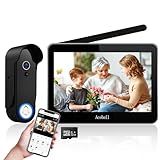
Overview: ACEBELL’s premium system distinguishes itself with a dedicated 7-inch touchscreen monitor, creating a comprehensive video intercom solution. This fully wireless system operates via proprietary protocol with optional Wi-Fi, offering dual-band connectivity and app control through TuyaSmart for remote access.
What Makes It Stand Out: The large HD touchscreen provides smartphone-like interaction without requiring your phone, while dual-band Wi-Fi support eliminates network compatibility issues. Storing footage on an indoor-mounted 32GB card (included) prevents data loss if the outdoor unit is stolen. The system functions independently or alongside the TuyaSmart app for family sharing.
Value for Money: At $189.99, this is a significant investment. The dedicated monitor justifies the premium for users wanting immediate, always-on access, though comparable app-based systems cost considerably less. The included storage and subscription-free model provide long-term savings.
Strengths and Weaknesses: Strengths include the generous 7-inch display, dual-band Wi-Fi flexibility, secure indoor storage, and comprehensive two-way communication. The 160° wide-angle lens and night vision perform adequately. Weaknesses involve signal penetration limitations (struggles with load-bearing walls), restriction against metal door installation, modest 5-8 hour battery life, and the 5-minute monitoring cap to conserve power. The 1080P resolution lags behind 2K competitors at this price.
Bottom Line: The ACEBELL system suits users prioritizing a dedicated monitor over smartphone reliance, but its high price and signal limitations require careful consideration of your home’s layout.
5. Doorbell Camera v2 + Wedge Kit, 2K Smart Video Doorbell with Motion Activated Voice Prompt, Night Vision, 2-Way Audio, Motion Detection, 24/7 Recording, IP65, Compatible with Alexa & Google, Wired

Overview: Wyze’s second-generation doorbell delivers 2K resolution with an included wedge kit for optimal angle adjustment, providing comprehensive coverage in a weatherproof package. The wired design ensures continuous operation while offering both cloud and local storage options for maximum flexibility.
What Makes It Stand Out: The versatile wedge kit (15° horizontal, dual 7.5° vertical adjustments) solves installation angle challenges out of the box. Color night vision via a starlight sensor captures vivid after-dark footage, while motion-activated voice prompts actively deter potential intruders. IP65 weatherproofing guarantees reliability in harsh conditions.
Value for Money: At $69.98, this doorbell offers premium features like 2K video, color night vision, and adjustable mounting at a competitive price. The flexible storage options—optional Cam Plus cloud service or local microSD up to 256GB (sold separately)—let users control ongoing costs while maintaining 24/7 recording capability.
Strengths and Weaknesses: Strengths include excellent video quality, innovative color night vision, robust weather resistance, smart home integration, and the practical wedge kit. The voice deterrence feature adds proactive security. Weaknesses center on its wired-only design limiting installation flexibility, lack of included local storage, and cloud features requiring subscription. The wired dependency means no battery backup during power outages.
Bottom Line: The Wyze Doorbell v2 is a feature-rich, weatherproof option ideal for users with existing doorbell wiring who want premium capabilities without premium pricing.
6. KyraNexo Smart 1080p Video Doorbell Camera with Doorbell Receiver, Live View, AI Human Detection, 2-Way Audio, Night Vision, Cloud Storage (Sold Separately), 2.4G WiFi

Overview: The KyraNexo Smart 1080p Video Doorbell Camera delivers reliable home security at an entry-level price point. This wireless doorbell combines essential smart features with straightforward installation, making it ideal for first-time smart home users or budget-conscious homeowners. The included doorbell receiver ensures you never miss a visitor, even without your phone nearby.
What Makes It Stand Out: The advanced AI human detection algorithm intelligently filters out irrelevant motion from pets and vehicles, significantly reducing notification fatigue. Unlike many competitors at this price, KyraNexo includes a dedicated indoor receiver that can be placed anywhere in your home and supports multiple units for comprehensive coverage. The stable 2.4GHz Wi-Fi optimization ensures consistent performance without the connectivity drops that plague some budget alternatives.
Value for Money: At just $24.99, this doorbell undercuts most competitors by 50-70% while retaining core functionality. The 30-day cloud storage trial lets you test premium features risk-free. Even without a subscription, the local alerts and live view provide solid baseline security. Compared to subscription-heavy brands like Ring, KyraNexo could save you hundreds over the product’s lifetime.
Strengths and Weaknesses: Strengths: Exceptional affordability; included wireless receiver; intelligent AI filtering; stable 2.4GHz connection; easy DIY installation Weaknesses: Cloud storage requires separate purchase; no 5GHz Wi-Fi support; 1080p resolution lags behind 2K alternatives; battery life not specified
Bottom Line: The KyraNexo is a compelling choice for budget-minded shoppers wanting AI-powered security without monthly fees. While it lacks premium resolution and integrated storage, its smart detection and included receiver make it an outstanding value for apartments and smaller homes. Consider this if you prioritize intelligent alerts over cutting-edge video quality.
7. 2-Wired video intercom system,Video Doorbell Camera with Monitor, 1080P 7-inch Touch Screen, video door phone,Night Vision, 130° Wide Angle, Tuya App Remote Unlock, Waterproof, No Monthly Fees

Overview: This wired video intercom system represents a professional-grade security solution for homeowners seeking reliability without recurring fees. The complete package includes a 1080p outdoor camera and a substantial 7-inch touchscreen monitor, creating a self-contained ecosystem that doesn’t depend on cloud services. Its robust construction and IP65 weatherproof rating ensure year-round performance.
What Makes It Stand Out: The hardwired connection eliminates lag and connectivity issues inherent in wireless systems, providing instant, real-time monitoring. The versatile entry options—including RFID keycards, NFC, Tuya app control, and monitor-based unlocking—offer unprecedented access flexibility. Unlike subscription-based competitors, all footage stores locally on microSD cards, giving you complete data ownership and zero monthly costs.
Value for Money: At $149, this system costs more upfront than wireless alternatives but pays for itself within 12-18 months compared to subscription models. The inclusion of a high-quality 7-inch display adds significant value, eliminating the need to purchase separate smart displays. For homeowners wanting enterprise-level reliability without SimpliSafe-level fees, this investment delivers substantial long-term savings.
Strengths and Weaknesses: Strengths: Ultra-stable wired connection; no monthly fees; multiple unlock methods; 7-inch touchscreen monitor; local microSD storage; 130° wide-angle lens Weaknesses: Complex installation requires wiring; higher initial cost; less flexibility for renters; limited to 1080p resolution
Bottom Line: Perfect for homeowners and small businesses prioritizing reliability and data privacy. The wired setup demands more installation effort but rewards you with unmatched stability and zero ongoing costs. Skip this if you’re renting or need quick wireless installation; choose it if you want a set-it-and-forget-it security solution that works offline.
8. Tapo by TP-Link Smart Video Doorbell Camera with Chime, Battery or Wired, 2K QHD Color Night Vison, No Monthly Fee, 180° Ultra-Wide Head-to-Toe View, Ring Call, Free AI Detection, Local Storage (D225)

Overview: The Tapo D225 by TP-Link redefines flexibility in video doorbells with its dual-power design and premium features at a mid-range price. This versatile device offers both battery and wired installation options, accommodating any home setup. The standout 2K QHD resolution and revolutionary 180° head-to-toe field of view ensure you capture every detail, from package deliveries to visitor faces, without blind spots.
What Makes It Stand Out: The ultra-wide 180° lens provides complete vertical coverage that traditional doorbells miss, showing packages left at your doorstep. Free AI detection for people, packages, and vehicles eliminates subscription requirements that competitors like Ring enforce. The innovative Ring Call feature generates phone-like calls through the app, letting you answer your door with one tap without navigating through software. Hardwiring enables 24/7 continuous recording—a rare feature in this price class.
Value for Money: At $84.98, the D225 slots between budget and premium options while outperforming both. You get 2K resolution typically found in $150+ models, free AI detection that Ring charges $4/month for, and flexible installation that adapts to your needs. The 10,000mAh battery delivering 8 months of life reduces maintenance hassles, adding significant convenience value.
Strengths and Weaknesses: Strengths: Dual power options; exceptional 2K QHD video; 180° vertical coverage; free AI detection; no monthly fees; long battery life; 24/7 recording when wired Weaknesses: microSD card required for local storage (not included); app dependency for Ring Call; larger form factor
Bottom Line: The Tapo D225 is arguably the best value in smart doorbells today. Its combination of premium video quality, flexible installation, and zero subscription costs makes it ideal for most homeowners. Choose this if you want high-end features without premium pricing or monthly fees.
9. WarmBot 1080p Smart Video Doorbell Camera with AI Motion Detection, Night Vision, Cloud Storage, 2 Way Audio, Battery Powered, 2.4GHz Wi-Fi Only

Overview: The WarmBot 1080p Smart Video Doorbell Camera enters the market as one of the most affordable AI-powered security solutions available. This battery-powered wireless doorbell delivers core smart features—including motion detection, night vision, and two-way audio—at a price point that makes home security accessible to virtually any budget. Its straightforward setup and 2.4GHz Wi-Fi connectivity cater to tech novices.
What Makes It Stand Out: Despite its bargain price, WarmBot includes sophisticated AI-powered motion intelligence that filters out non-human movement, a feature often reserved for premium models. The multi-user support allows family members to share access without additional fees, making it practical for households. Night vision extends up to 12 meters, providing reliable after-dark monitoring that exceeds many budget competitors.
Value for Money: At $19.99, this doorbell costs less than a dinner out while delivering legitimate smart security. The AI detection alone justifies the price, eliminating the constant false alarms that cheaper motion sensors trigger. While cloud storage requires a subscription, the free live view and notifications provide functional security without ongoing costs, making it perfect for testing smart doorbell utility.
Strengths and Weaknesses: Strengths: Unbeatable price; AI human detection; strong night vision (12m); multi-user support; easy wireless installation Weaknesses: Cloud storage requires paid subscription; no local storage option; unspecified battery life; 1080p resolution only; 2.4GHz Wi-Fi limited
Bottom Line: The WarmBot is a no-brainer for ultra-budget shoppers, renters, or anyone wanting to experiment with smart doorbells risk-free. While it lacks premium features and requires a subscription for recording, its AI detection and rock-bottom price deliver surprising value. Consider this for secondary entrances or temporary installations where affordability trumps advanced capabilities.
10. ElioVana 1080P Smart Video Doorbell Camera with Motion Detection, Night Vision, Cloud Storage, Two-Way Talk, Battery Powered, Home or Business Security, 2.4GHz Wi-Fi(Excluding Receiver)
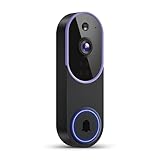
Overview: The ElioVana 1080P Smart Video Doorbell Camera positions itself as a feature-rich budget option that punches above its weight class. This battery-powered wireless doorbell combines AI-powered detection with a notable pre-capture recording feature, ensuring you don’t miss the crucial moments leading up to motion events. Its compact design and 2.4GHz connectivity make installation straightforward for most homes and apartments.
What Makes It Stand Out: The pre-capture recording functionality—available to cloud subscribers—records footage from before motion is detected, providing complete context that standard doorbells miss. The intelligent AI precisely identifies humans while ignoring vehicles and animals, delivering relevant alerts without the noise. Four powerful IR LEDs and an advanced sensor produce superior night vision that rivals more expensive competitors, ensuring 24/7 clarity.
Value for Money: Priced at $24.98, ElioVana competes directly with budget champions while offering premium features like pre-capture recording. The 30-day free cloud trial lets you experience advanced functionality before committing to a subscription. While it lacks an included receiver, the robust app-based notifications and two-way audio provide comprehensive security that justifies the modest investment.
Strengths and Weaknesses: Strengths: Pre-capture recording; accurate AI detection; excellent night vision; 30-day cloud trial; encrypted storage; affordable pricing Weaknesses: No included indoor receiver; requires subscription after trial; 1080p resolution; battery life not specified; 2.4GHz Wi-Fi only
Bottom Line: The ElioVana suits users wanting advanced features like pre-capture recording without premium pricing. It’s ideal for homeowners comfortable with app-based monitoring who prioritize intelligent alerts and night vision. Skip if you need an indoor chime included; choose if you want more sophisticated recording features than typical budget doorbells offer.
Understanding Pre-Roll Video Capture Technology
Pre-roll video capture represents a fundamental shift in how doorbell cameras process and store visual information. Unlike traditional models that wake from sleep mode when motion is detected, pre-roll-enabled devices maintain a continuous rolling buffer of footage in temporary memory. When the camera’s AI identifies a relevant event—be it a person approaching, a package delivery, or unusual movement—it permanently saves the buffered seconds leading up to that moment, appending them to the main recording.
This technology hinges on specialized low-power memory chips and sophisticated wake algorithms that balance constant recording with energy efficiency. In 2026, most premium models utilize dedicated AI accelerators that can parse visual data in real-time without fully activating the high-resolution sensor, preserving battery while maintaining vigilance. The buffer typically ranges from 3 to 8 seconds, though some advanced systems extend this to 15 seconds for commercial applications.
How Pre-Roll Differs from Standard Motion Detection
Standard motion detection operates like a digital tripwire: it waits for something to cross a threshold, then scrambles to start recording. This approach suffers from inherent latency—usually 1-3 seconds—during which the camera powers up, focuses, and begins writing data. You miss the approach, the context, and often the identifying details. Pre-roll eliminates this blind spot by treating recording as a continuous process rather than an event-triggered one.
The difference becomes stark when analyzing footage. A standard camera shows a delivery driver already at your door; a pre-roll camera reveals them parking, gathering packages, and walking up the path—potentially capturing license plates or accomplices that would otherwise remain invisible. In 2026, AI-powered pre-roll systems also analyze this buffered footage for predictive cues, distinguishing between casual passersby and purposeful approaches before the subject even reaches your doorstep.
The Technology Behind the Buffer: Memory vs. Cloud
Manufacturers implement pre-roll using two primary architectures: local memory buffering and cloud pre-caching. Local memory systems store the rolling footage directly on the device using dedicated RAM or fast flash storage. This method offers superior privacy and works reliably during internet outages, but requires more sophisticated hardware and can increase device cost by 15-25%. The footage remains encrypted on-device until an event triggers permanent storage.
Cloud pre-caching, conversely, maintains a low-bitrate stream to remote servers, which then upscale and save the footage upon event detection. This approach reduces hardware complexity but demands constant, stable bandwidth and raises valid privacy concerns about continuous data transmission. In 2026, we’re seeing a hybrid model emerge: local buffering for immediate privacy with optional cloud augmentation for enhanced AI analysis, giving users granular control over their data footprint.
Why Pre-Roll is a Game-Changer for Home Security
The security implications of pre-roll extend far beyond convenience. Law enforcement agencies report that footage with pre-roll increases suspect identification rates by up to 40%, as it captures approach vectors, getaway vehicles, and pre-attack surveillance behaviors that occur before the criminal act itself. For homeowners, this means your doorbell becomes a proactive security tool rather than a reactive one, documenting intent and planning—not just the crime itself.
Insurance companies have taken notice, with several major providers in 2026 offering premium discounts of 5-10% for homes equipped with certified pre-roll systems. The complete visual timeline reduces fraudulent claims and provides indisputable evidence in disputed incidents. More importantly, the psychological deterrent effect is amplified; savvy criminals recognize that pre-roll cameras eliminate their traditional advantage of approaching undetected.
Capturing the Complete Story
Human memory is fallible, and without visual context, even eyewitness accounts can be misleading. Pre-roll footage provides narrative continuity that transforms fragmented clips into coherent stories. When your teenager claims they were home before curfew, you see their car pulling into the driveway. When a neighbor reports suspicious activity, you can verify whether someone was casing your property or simply retrieving a lost ball.
This completeness proves invaluable for package delivery disputes. Rather than arguing with carriers about whether a delivery occurred, pre-roll shows the driver’s approach, the handoff, and their departure—including whether they hid the package sufficiently. In 2026, advanced systems automatically timestamp and geolocate these events, creating legally admissible documentation that’s already helped thousands of homeowners resolve disputes without costly litigation.
Reducing False Alarms and Missed Events
Paradoxically, pre-roll technology significantly reduces notification fatigue. Because the AI analyzes the buffered footage, it can make smarter decisions about what constitutes a real event. That shadow moving across your porch? The AI reviews the pre-roll, identifies it as a tree branch, and suppresses the alert. The delivery person who rings and immediately leaves? The system captures the full interaction, recognizing it as a single event rather than triggering separate motion and doorbell alerts.
This contextual awareness means fewer false alarms and fewer genuinely important events slipping through cracks. Traditional systems often miss fast-moving events entirely if they occur during the wake-up latency period. Pre-roll ensures that even a sprinting porch pirate is caught on camera, as the buffer captures their approach regardless of how quickly they strike.
Essential Features to Prioritize in 2026 Doorbell Cameras
While pre-roll capability should top your priority list, several complementary features determine overall performance. The synergy between these technologies defines whether your doorbell is a reliable security sentinel or a frustrating source of digital clutter. As we move through 2026, certain specifications have become baseline requirements for effective operation.
Video Quality and Resolution Standards
Don’t be seduced by inflated resolution numbers alone. In 2026, effective doorbell cameras balance resolution with dynamic range, frame rate, and low-light performance. A 2K sensor with HDR and 60fps recording often delivers more usable footage than a 4K sensor with poor contrast handling. For pre-roll specifically, ensure the buffered footage maintains the same resolution as the main recording—some budget models downgrade the buffer to 720p, negating many benefits.
Look for cameras with vertical aspect ratio optimization (typically 3:4 or 9:16) that captures head-to-toe views of visitors. This orientation proves crucial for pre-roll, as it maintains visual contact with subjects during their entire approach, rather than cutting off their heads or feet. Color night vision, now standard in mid-tier models, transforms pre-roll footage from murky grayscale to detailed, identifiable color video, even in minimal ambient light.
Advanced AI Person, Pet, and Package Recognition
Generic motion detection is obsolete. In 2026, you want on-device AI that can distinguish between people, animals, vehicles, and packages with over 95% accuracy. This intelligence should apply to pre-roll footage retroactively—meaning if a person appears in the buffer, the system tags and saves that segment appropriately. The best systems learn your household’s patterns, recognizing regular visitors and reducing unnecessary alerts.
Package recognition has evolved significantly, with AI now able to identify package sizes, estimate delivery times, and even read shipping labels (when legally permitted). Some systems integrate with delivery services, automatically granting temporary access codes to verified drivers and using pre-roll to verify secure placement. Pet recognition helps animal lovers monitor furry friends while filtering out squirrel-triggered alerts.
Night Vision Capabilities Beyond Infrared
Traditional infrared night vision creates that ghostly black-and-white footage that’s often unusable for identification. 2026’s premium doorbells employ starlight sensors that amplify available ambient light, producing full-color video in conditions as dim as 0.1 lux. For pre-roll, this means the approach is captured in color, not just the main event—a critical advantage when describing vehicles or clothing to authorities.
Some models now incorporate adaptive IR that adjusts intensity based on distance, preventing the “white-out” effect when subjects get close. Others use multispectral imaging, blending visible and near-infrared light for enhanced detail. When evaluating night vision, request sample pre-roll footage from the manufacturer; the quality difference between brands can be dramatic.
Power Solutions: Battery, Wired, or Hybrid?
Pre-roll’s continuous operation demands careful power management. Your choice between battery, wired, or hybrid systems impacts not just installation complexity but also the reliability and length of your pre-roll buffer. Each approach carries distinct trade-offs that must align with your home’s infrastructure and your tolerance for maintenance.
Understanding Battery Life with Pre-Roll
Battery-powered doorbells face their greatest challenge with pre-roll technology. Maintaining a constant buffer can reduce battery life by 30-50% compared to standard motion detection. In 2026, top-tier battery models use lithium iron phosphate (LiFePO4) cells that maintain performance in extreme temperatures and offer 1,000+ charge cycles. Expect realistic battery life of 2-4 months with moderate pre-roll usage, though heavy traffic areas may require monthly charging.
Look for intelligent power management that adjusts buffer length based on battery level—automatically reducing from 6 seconds to 3 seconds when charge drops below 20%. Solar charging accessories have become remarkably efficient, with some providing trickle charging even on overcast days. For true wireless freedom, consider models with removable battery packs, allowing you to hot-swap without downtime.
Hardwired Installations: What to Consider
Hardwired doorbells provide the most reliable pre-roll performance, drawing constant power to maintain maximum buffer length without compromise. However, 2026’s models require more than the traditional 16V transformer; many need 24V with at least 20VA capacity to support AI processing and continuous buffering. Before purchasing, verify your existing transformer’s specifications or budget for an upgrade.
Installation complexity varies dramatically. Some units simply replace existing doorbells using existing wiring; others require running new low-voltage lines or installing a power kit that bypasses your mechanical chime. Pay attention to wire gauge requirements—thinner wires can cause voltage drop, leading to inconsistent performance. Professional installation typically costs $100-200 but ensures optimal pre-roll functionality and preserves your warranty.
Storage Options: Local, Cloud, or Hybrid Models
Where your pre-roll footage lives determines your privacy, ongoing costs, and footage accessibility. The storage architecture directly impacts how quickly you can retrieve clips and how secure they remain from unauthorized access. In 2026, the market has matured to offer sophisticated options beyond the simple local-vs-cloud dichotomy.
Privacy Implications of Your Storage Choice
Local storage, typically via encrypted microSD cards or built-in eMMC memory, keeps your data physically on your property. This approach appeals to privacy-conscious users and those in areas with unreliable internet. However, it also means a stolen doorbell takes the evidence with it—unless you implement a separate NAS backup system. Look for devices with AES-256 encryption and tamper-proof storage modules that wipe data upon unauthorized removal.
Cloud storage offers convenience and theft-resilience, but raises legitimate concerns about data sovereignty and third-party access. In 2026, reputable providers have moved toward zero-knowledge encryption, where only you hold the decryption key. Investigate the provider’s data retention policies, jurisdictional compliance (GDPR, CCPA), and whether they’ve undergone third-party security audits. Some services now offer “privacy zones” that automatically exclude certain areas from cloud upload while still saving locally.
Subscription Models and Hidden Costs
The sticker price rarely tells the full story. Most pre-roll features are locked behind subscription tiers that cost $3-10 monthly. These plans typically include cloud storage, advanced AI features, and extended video history. Calculate the five-year total cost of ownership: a $200 doorbell with a $8/month subscription actually costs $680 over five years.
Watch for hidden limitations. Some plans only store pre-roll footage for 24 hours, while standard clips remain for 30 days. Others charge per camera, which adds up quickly for multi-camera setups. In 2026, a growing number of manufacturers offer “subscription-lite” models with local pre-roll storage and basic AI for free, charging only for cloud backup and premium features. Evaluate whether you truly need cloud storage or if local storage meets your needs.
Connectivity: Wi-Fi 6E and Beyond
Your doorbell is only as smart as its connection. Pre-roll footage, especially at higher resolutions, demands stable, low-latency bandwidth to ensure reliable performance. In 2026, Wi-Fi 6E has become the standard for premium doorbells, utilizing the 6GHz band for dedicated, interference-free communication.
The Role of Matter and Thread Protocols
The smart home landscape is undergoing a revolution with Matter, the universal connectivity standard. Doorbells supporting Matter over Thread can communicate directly with other smart devices without cloud dependence, enabling faster automations and improved reliability. A Matter-compatible doorbell can trigger your smart lights the moment its pre-roll AI detects a person, with latency under 200 milliseconds.
Thread’s mesh networking capabilities are particularly valuable for doorbells located far from your router. Each Thread device acts as a repeater, extending coverage throughout your home. However, verify that your chosen doorbell can simultaneously maintain its pre-roll buffer while acting as a Thread router—some budget models disable pre-roll when serving as network nodes.
Smart Home Integration in 2026
A standalone doorbell is a missed opportunity. The true power of pre-roll emerges when integrated into a cohesive smart home ecosystem, where footage triggers actions across multiple devices. Modern integration goes beyond simple notifications, creating intelligent, responsive environments.
Voice Assistant Compatibility
While Alexa and Google Assistant remain dominant, 2026 has seen Apple HomeKit Secure Video gain significant traction due to its privacy-first approach. HomeKit processes pre-roll footage locally on your Apple TV or HomePod, ensuring facial recognition data never leaves your network. When evaluating compatibility, check whether pre-roll clips are accessible via voice commands or if you’re limited to live view and standard recordings.
Multi-assistant support is increasingly common, allowing different household members to use their preferred ecosystem. However, features may be limited on secondary platforms. A doorbell fully featured on Alexa might only offer basic live view on HomeKit. Prioritize the ecosystem that aligns with your primary smart home hub, and verify pre-roll functionality is fully supported, not just advertised.
Automation and Scene Creation
The real magic happens with conditional automations. Your pre-roll AI detects a person approaching after dark? Trigger a “Welcome” scene that gradually brightens pathway lights, unlocking the door if facial recognition confirms a family member. Detect a lingering stranger? Activate “Deterrence” mode with flashing lights and an audible warning, while simultaneously locking smart deadbolts and alerting neighbors’ systems.
In 2026, advanced platforms support complex logic: “If pre-roll shows a person carrying a package AND it’s between 9am-5pm, unlock the package drop box and send a delivery confirmation.” These automations transform your doorbell from a passive observer into an active security manager. Ensure your chosen model exposes pre-roll metadata (person detected, package present, etc.) to your automation platform for maximum flexibility.
Installation and Placement Best Practices
Even the most advanced doorbell performs poorly if installed incorrectly. Pre-roll technology introduces specific placement considerations that differ from traditional cameras. The goal is maximizing the approach area visible in the buffer while maintaining optimal identification quality for the main event.
Optimal Height and Angle for Pre-Roll
Mount your doorbell 48-52 inches high, slightly higher than the traditional 45-inch recommendation. This elevation improves the camera’s view of approaching subjects, ensuring their face remains visible throughout the pre-roll sequence. Angle the unit 15-20 degrees toward the approach path, not directly perpendicular to the door. This orientation captures more of the subject’s approach and less of the wall beside your entrance.
Consider your property layout. If visitors approach via a long walkway, position the doorbell to capture this axis. For homes with steps, ensure the camera can see the top 3-4 steps where people first become visible. Some 2026 models include adjustable lenses or digital perspective correction, allowing you to fine-tune the field of view without physically repositioning the device.
Dealing with Extreme Weather Conditions
Pre-roll functionality can degrade in extreme temperatures as batteries struggle and processors throttle. In regions experiencing sub-zero winters, insist on an operating range down to -20°F. For desert climates, verify the unit functions at 120°F+. Look for IP65 or higher ratings, but understand that “weather-resistant” doesn’t mean “weatherproof”—direct sun exposure can cause overheating even within specified temperature ranges.
Consider installing a small awning or using a silicone skin to shield the doorbell from direct precipitation and sun. In 2026, some manufacturers offer active cooling systems in premium models—tiny fans that activate when internal temperatures rise, ensuring pre-roll buffering continues uninterrupted during heatwaves. For battery models in cold climates, lithium iron phosphate chemistry maintains capacity far better than traditional lithium-ion cells.
Privacy, Security, and Legal Considerations
With great surveillance capability comes great responsibility. Pre-roll cameras, by their nature, capture more of your neighborhood and visitors than traditional models, raising legitimate privacy questions. Understanding your rights and obligations is crucial to avoid legal entanglements and maintain neighborly relations.
Data Encryption and Two-Factor Authentication
Your pre-roll footage contains sensitive information—daily routines, visitor patterns, potentially embarrassing moments. Ensure your doorbell encrypts footage both at rest and in transit using AES-256 or equivalent standards. End-to-end encryption, where only you can decrypt the footage, is the gold standard, though it may limit some cloud AI features.
Two-factor authentication (2FA) is non-negotiable. In 2026, biometric 2FA using fingerprint or face ID on your smartphone provides the best balance of security and convenience. Avoid SMS-based 2FA, which is vulnerable to SIM-swapping attacks. Check whether the manufacturer supports hardware security keys like YubiKey for ultimate account protection. Regular security audits and bug bounty programs indicate a company takes your privacy seriously.
Understanding Local Recording Laws
Pre-roll’s continuous buffering exists in a legal gray area in some jurisdictions. While recording your own property is generally permitted, capturing audio of conversations on public sidewalks may violate wiretapping laws. In 2026, twelve US states require two-party consent for audio recording, forcing manufacturers to disable audio pre-roll by default in those regions.
Video recording faces fewer restrictions, but “reasonable expectation of privacy” remains a key legal standard. Pointing your pre-roll camera directly into a neighbor’s window could constitute harassment. Many 2026 models include privacy masking that blacks out designated zones in recordings while still allowing pre-roll to function in unmasked areas. Consult local ordinances and consider discussing installation plans with neighbors to avoid disputes.
Cost Analysis: Budgeting for Premium Features
Pre-roll technology commands a premium, but the price spread in 2026 is narrower than you might expect. Entry-level pre-roll doorbells start around $150, while premium models reach $400+. The real cost differentiation lies in AI sophistication, build quality, and storage flexibility. A $200 mid-range model with solid local storage often outperforms a $350 cloud-dependent unit over its lifetime.
Total Cost of Ownership Over Five Years
Create a realistic budget by calculating: device cost + (monthly subscription × 60 months) + installation + accessories. A $250 doorbell with $5/month subscription and $100 professional installation costs $650 total. Compare this to a $350 model with free local storage and DIY installation at $350 total. The “cheaper” option is actually 86% more expensive over five years.
Factor in replacement costs. Budget models typically last 3-4 years before battery degradation or software obsolescence. Premium models with replaceable components and guaranteed software updates for 5+ years offer better long-term value. In 2026, several manufacturers have introduced trade-in programs, offering discounts on new models when returning old units, partially offsetting upgrade costs.
Future-Proofing Your Investment
Technology moves fast, and doorbell cameras are no exception. A model that impresses in 2026 could feel dated by 2028. Smart purchasing decisions today can extend your device’s useful life and protect your investment from rapid obsolescence.
Modular Designs and Upgrade Paths
Seek out doorbells with modular components—cameras that allow you to upgrade the sensor module without replacing the entire unit. Some 2026 models feature swappable AI accelerator cards, enabling you to access newer recognition algorithms without a full replacement. This modularity typically adds 20-30% to initial cost but can double the device’s lifespan.
Software support is equally critical. Verify the manufacturer guarantees major updates for at least 4 years and security patches for 6 years. Open-source firmware projects are gaining traction, with some companies officially supporting community-developed features. This ecosystem approach ensures your doorbell improves over time rather than degrading. Check whether the device supports over-the-air updates for both firmware and AI models, keeping your pre-roll capabilities cutting-edge without hardware changes.
Troubleshooting Common Pre-Roll Issues
Even the best doorbells encounter problems. Pre-roll technology introduces unique failure modes that differ from standard cameras. Understanding these issues—and their solutions—saves frustration and ensures continuous protection.
If pre-roll footage appears choppy or incomplete, the buffer memory may be insufficient for your recording quality settings. Lower the resolution from 4K to 2K or reduce buffer length from 6 to 4 seconds. Battery models experiencing premature drain should check for firmware updates; many 2026 releases included power optimization patches. For Wi-Fi connectivity issues affecting pre-roll upload, enable QoS (Quality of Service) rules on your router to prioritize doorbell traffic, or install a dedicated 6GHz access point nearer to your entrance.
False negatives—where events are missed entirely—often stem from AI sensitivity settings being too aggressive. Adjust person detection confidence thresholds from 90% to 75% in busy areas. Conversely, if pre-roll triggers constantly, create activity zones that exclude high-traffic areas like sidewalks, focusing the buffer on your actual property. In extreme cold, remove the battery and charge it indoors monthly, even if the app reports adequate charge; lithium batteries can display inaccurate levels in freezing temperatures.
Frequently Asked Questions
What exactly is pre-roll video capture and how does it work?
Pre-roll is a continuous buffering system that records video into temporary memory 24/7. When the camera detects motion or someone presses the doorbell, it saves the previous 3-8 seconds from this buffer and appends it to the main recording. This happens through specialized low-power memory chips that constantly overwrite old footage, ensuring you never miss the critical moments before an event.
How much pre-roll time do I realistically need for effective security?
For most residential applications, 4-6 seconds provides optimal coverage, capturing the average person’s approach from 15-20 feet away. Longer buffers of 8-10 seconds benefit properties with long driveways or curved approaches where subjects remain out of view longer. Beyond 10 seconds offers diminishing returns and significantly increases power consumption and storage requirements.
Does pre-roll functionality drain battery life significantly faster?
Yes, expect 30-50% faster battery drain compared to standard motion detection. However, 2026’s battery technology has improved dramatically—lithium iron phosphate cells maintain capacity better and survive more charge cycles. Intelligent power management that adjusts buffer length based on battery level helps extend life. For heavy use, consider solar accessories or hardwired installation.
Is the pre-roll footage lower quality than the main recording?
On premium models, no—the buffer maintains full resolution and frame rate. However, some budget devices downgrade pre-roll to 720p or 15fps to reduce memory and bandwidth requirements. Always verify that pre-roll footage matches the main recording’s specifications in the technical details. The difference in evidentiary quality between full-quality and downgraded pre-roll is substantial.
Do I need a cloud subscription to use pre-roll features?
Not necessarily. Many 2026 models offer local pre-roll storage to microSD cards or built-in memory without any subscription. However, cloud subscriptions often unlock longer retention periods, advanced AI analysis, and remote access to pre-roll clips. Evaluate whether local storage meets your needs before committing to recurring fees.
Can pre-roll footage be accessed if my internet goes down?
With local storage, yes—pre-roll clips save directly to the device and can be retrieved once connectivity restores or via direct Wi-Fi connection to the doorbell. Cloud-dependent systems will lose pre-roll capability during outages, though some cache events locally and upload them later. For reliability-critical applications, choose a model with robust local storage and optional cloud backup.
Are there legal issues with recording audio in pre-roll mode?
Potentially. Twelve US states require two-party consent for audio recording, and pre-roll’s continuous nature complicates compliance. Most manufacturers disable audio pre-roll by default in these states or offer geofenced settings that automatically mute audio based on location. Video recording faces fewer restrictions, but always check local laws regarding recording public areas and audio surveillance.
How does pre-roll differ from continuous 24/7 recording?
Continuous recording saves everything permanently, consuming massive storage and bandwidth. Pre-roll only temporarily buffers footage, permanently saving just the few seconds before and during events. It’s a smart compromise that provides context without the overhead of full continuous recording. Think of it as an intelligent filter that keeps what matters and discards the rest.
Will pre-roll work with my existing mechanical doorbell chime?
It depends on your transformer’s voltage and amperage. Most pre-roll doorbells require 16-24V AC with at least 20VA capacity—higher than older 10VA transformers. Some models include power kits that bypass the chime during buffering to prevent humming or inadequate power. Check compatibility before purchase, and budget $50-100 for transformer upgrades if needed.
How much additional storage space does pre-roll footage consume?
Surprisingly little. Since pre-roll only saves a few seconds per event, it adds roughly 20-30% to your total storage needs compared to standard recording. A typical home might generate 2-3GB of pre-roll footage monthly versus 8-10GB of standard recordings. The bigger impact is on write cycles for local storage—choose high-endurance SD cards rated for continuous writing to ensure longevity.