Imagine approaching your front door with arms full of groceries, a sleeping toddler, or simply the mental fog of a long day. Instead of fumbling for keys or even pulling out your phone, your door recognizes your arrival and unlocks itself with a quiet, reassuring click. This isn’t science fiction—it’s the promise of geo-fencing auto-unlock technology, and in 2026, it’s finally living up to the hype.
Smart locks have evolved from clunky Bluetooth gadgets into sophisticated security ecosystems, but geo-fencing represents the most significant leap forward in true hands-free convenience. By creating a virtual perimeter around your home, these intelligent devices use your smartphone’s location to anticipate your arrival, preparing your entryway before you even reach for the handle. Yet with great convenience comes legitimate questions about security, privacy, and reliability. This comprehensive guide cuts through the marketing noise to help you understand what makes a geo-fencing smart lock truly worth your investment.
Top 10 Smart Locks with Geo-Fencing Auto-Unlock
Detailed Product Reviews
1. ULTRALOQ U-Bolt Smart Lock with WiFi Bridge, 6 in 1 Keyless Entry Door Lock with App Remote Control, Backlit Keypad, Auto Unlock, Smart Deadbolt Front Door, ANSI Grade 1, 1 Year Battery, Satin Nickel

Overview: The ULTRALOQ U-Bolt Smart Lock delivers six convenient keyless entry methods at an accessible price point, making it an excellent entry-level smart lock for homeowners seeking reliable automation. This satin nickel deadbolt replaces your existing lock in minutes with just a screwdriver, offering keypad, smartphone app, auto-unlock, smart watch compatibility, voice control via Alexa/Google Assistant, and traditional mechanical keys. The included WiFi Bridge enables full remote functionality without additional purchases.
What Makes It Stand Out: This lock’s comprehensive 6-in-1 access system stands out in the sub-$100 category, particularly with the bundled WiFi Bridge that competitors often sell separately. The ANSI Grade 1 certification provides commercial-grade security proven to be 35 times stronger than standard residential locks. The anti-peep password feature lets you add random digits before/after your code to prevent prying eyes, while the IP65 rating ensures reliable performance through extreme weather conditions.
Value for Money: At $99.99 with WiFi Bridge included, this represents exceptional value. Many comparable smart locks require separate hub purchases adding $30-50 to the total cost. The one-year battery life minimizes maintenance, and the commercial-grade construction delivers seven times the lifespan of standard locks, making this a cost-effective long-term investment for security-conscious homeowners.
Strengths and Weaknesses: Strengths include versatile entry options, robust weatherproofing, commercial-grade security certification, included WiFi Bridge, and straightforward DIY installation. The 2.4GHz WiFi limitation may affect some users, and fingerprint scanning is absent compared to higher-tier models. Auto-unlock reliability can vary depending on smartphone settings and Bluetooth range.
Bottom Line: This is the ideal smart lock for first-time users wanting maximum features at minimum cost. The included WiFi Bridge and ANSI Grade 1 security make it a no-brainer for renters and homeowners seeking reliable keyless entry without breaking the bank.
2. ULTRALOQ Bolt Fingerprint WiFi Smart Lock, Works with Apple Home, Siri, Alexa, 8-in-1 Keyless Entry with Fingerprint ID, App Remote Control, Keypad Deadbolt, BHMA Cert., Easy Install, 10 Mo. Battery

Overview: The ULTRALOQ Bolt Fingerprint lock targets Apple ecosystem enthusiasts with full HomeKit integration, offering eight entry methods including advanced biometric security. This $179.99 deadbolt lets you unlock with iPhone, Apple Watch, Siri commands, fingerprint scanning, keypad codes, smartphone app, auto-unlock, or backup keys. With BHMA certification and storage for 50 fingerprints and passcodes, it’s designed for tech-savvy households prioritizing both convenience and security.
What Makes It Stand Out: Native Apple Home support distinguishes this lock, enabling Siri voice control and seamless integration with HomePod/Apple TV automations without workarounds. The fingerprint scanner stores up to 50 prints with rapid recognition, while direct built-in WiFi eliminates hub requirements. Real-time alerts and detailed access logs provide comprehensive monitoring, making it perfect for Airbnb hosts and families wanting granular control over entry permissions.
Value for Money: Priced at $179.99, this lock commands a premium but justifies it through Apple ecosystem integration that competitors rarely match at this price. The eight entry methods, robust app controls, and BHMA certification offer professional-grade features. For Apple households, avoiding separate hub purchases and enjoying native Siri control creates significant value, though Android users may find better alternatives.
Strengths and Weaknesses: Strengths include flawless Apple Home integration, versatile 8-in-1 entry, built-in WiFi, strong security certifications, and excellent guest management features. The 10-month battery life is shorter than some rivals, and the fingerprint capacity (50) lags behind the U-Bolt Pro’s 100 prints. Android users miss out on key ecosystem benefits, and the price may deter budget-conscious buyers.
Bottom Line: This is the top choice for Apple-centric households wanting premium biometric security with native HomeKit support. The seamless ecosystem integration and robust feature set justify the higher price for iOS users, though Android households should consider more platform-agnostic alternatives.
3. ULTRALOQ U-Bolt Pro Smart Lock with WiFi Bridge, 7-in-1 Fingerprint Keyless Entry Door Lock, App Remote Control, Backlit Keypad, Auto Unlock, Front Door Smart Deadbolt, IP65 Waterproof, 1Year Battery

Overview: The U-Bolt Pro bridges the gap between budget and premium options, offering fingerprint scanning and seven entry methods for $119.99. This smart deadbolt includes the WiFi Bridge for full remote access, featuring touch-and-go fingerprint recognition, backlit keypad, smartphone app, auto-unlock, smart watch compatibility, voice control, and mechanical keys. The ANSI Grade 1 commercial certification and zinc alloy construction provide robust security for discerning homeowners.
What Makes It Stand Out: The standout feature is the responsive fingerprint scanner that unlocks in 0.3 seconds with 99.8% accuracy, storing up to 100 prints—double the capacity of the more expensive Bolt Fingerprint model. The included WiFi Bridge adds tremendous value, while the commercial-grade zinc alloy build exceeds residential standards. Anti-peep password protection and comprehensive access logs enhance both security and convenience.
Value for Money: At $119.99 with WiFi Bridge included, this offers the best price-to-performance ratio in ULTRALOQ’s lineup. You get premium biometric features and commercial-grade security for only $20 more than the base U-Bolt. The one-year battery life and seven times longer lifespan than standard locks make this a smart long-term investment. It undercuts competitors with similar fingerprint capabilities by $30-60.
Strengths and Weaknesses: Strengths include rapid fingerprint recognition, high print capacity, included WiFi Bridge, commercial-grade security, and excellent weatherproofing. The 2.4GHz-only WiFi may limit some users, and the design lacks the sleek lever handle of the Pro WiFi model. Auto-unlock can be temperamental with certain phone models, and initial fingerprint setup requires patience for optimal accuracy.
Bottom Line: This is the sweet spot for buyers wanting biometric security without premium pricing. The fingerprint performance, included WiFi Bridge, and commercial-grade construction make it the best value fingerprint smart lock on the market.
4. ULTRALOQ U-Bolt Pro WiFi Smart Lock with Handle, Fingerprint Keyless Entry Door Lock Set with Lever, Smart Deadbolt Locks for Front Door, Auto-Lock, Auto Unlock, App Remote Control, ANSI Grade 1
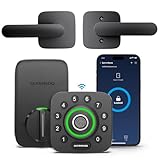
Overview: The U-Bolt Pro WiFi with Handle represents ULTRALOQ’s flagship offering at $199.99, combining a fingerprint smart deadbolt with integrated lever handle for a complete door solution. This 8-in-1 system features built-in WiFi, AI-powered fingerprint recognition, anti-peep keypad, auto-lock/unlock, voice control, and mechanical keys. The all-in-one design eliminates separate handle purchases while delivering premium security and convenience for main entryways.
What Makes It Stand Out: The integrated lever handle sets this apart from deadbolt-only models, providing a cohesive aesthetic and simplified installation. Built-in WiFi removes the need for external bridges, while AI-enhanced fingerprint recognition adapts to finger changes over time. The door status sensor alerts you to open doors, and comprehensive smart home integration includes Alexa, Google Home, SmartThings, and IFTTT for advanced automations.
Value for Money: While $199.99 is the highest price in this lineup, it’s justified for those needing both deadbolt and handle replacement. Purchasing separate components would cost $230-260. The built-in WiFi saves $30-40 in bridge costs, and the ANSI Grade 1 certification ensures decades of reliable security. For new installations or full entryway upgrades, this offers convenience worth the premium.
Strengths and Weaknesses: Strengths include the integrated handle design, built-in WiFi, AI fingerprint enhancement, comprehensive smart home support, door status sensing, and robust weatherproofing. The price may be excessive if you only need a deadbolt, and the lever style may not match all door aesthetics. Installation is slightly more complex than deadbolt-only models, and the fingerprint sensor placement requires ergonomic adjustment.
Bottom Line: Choose this for complete entryway modernization where both deadbolt and handle need upgrading. The integrated design, built-in WiFi, and premium features justify the cost for main entrances, though budget buyers should consider the U-Bolt Pro for better value.
5. ULTRALOQ U-Bolt Smart Lock, 5-in-1 Keyless Entry Door Lock with App Control, Keypad Deadbolt, Auto Unlock, Auto Lock, Smart Door Lock, Smart Locks for Front Door, ANSI Grade 1, Black

Overview: The ULTRALOQ U-Bolt 5-in-1 serves as the entry-level model at $99.99, stripping away some features to deliver core smart lock functionality in a sleek black finish. This deadbolt offers keypad, smartphone app, auto-unlock, smart watch compatibility, and mechanical keys. While it supports voice control via Alexa/Google Assistant and integrates with SmartThings/IFTTT, the WiFi Bridge is sold separately, limiting remote capabilities out of the box.
What Makes It Stand Out: This model provides ANSI Grade 1 security and IP65 weatherproofing at the lowest possible price point, making commercial-grade protection accessible to budget-conscious buyers. The black finish offers an alternative aesthetic to traditional silver, and the core 5-in-1 functionality covers essential keyless entry needs. Anti-peep password protection and backlit keypad maintain security conveniences found in pricier models.
Value for Money: At $99.99, this appears affordable, but the required WiFi Bridge ($30-40) makes the true cost $130-140, reducing its value proposition compared to the U-Bolt with Bridge included. However, for users needing only Bluetooth-range control or willing to add the bridge later, it provides the same robust hardware and security certification as more expensive models. The one-year battery life and durable construction ensure long-term value.
Strengths and Weaknesses: Strengths include commercial-grade security, weatherproofing, versatile entry methods, smart home compatibility, and attractive black finish. The mandatory separate WiFi Bridge purchase is a significant weakness, limiting out-of-box functionality. No fingerprint scanner, fewer entry methods than siblings, and the bridge requirement make it less compelling than the 6-in-1 U-Bolt with included bridge.
Bottom Line: Only consider this if you specifically need the black finish or plan to use Bluetooth-only initially. Most buyers should spend the same amount on the 6-in-1 U-Bolt with included WiFi Bridge for superior value and immediate remote access capabilities.
6. ULTRALOQ Bolt Fingerprint WiFi Smart Lock, Works with Apple Home, Siri, Alexa, Keyless Entry with Fingerprint ID, App Remote Control, Keypad Deadbolt, BHMA Cert., Easy Install, IP65, Black

Overview: The ULTRALOQ Bolt represents the brand’s first foray into Apple HomeKit integration, delivering a comprehensive keyless entry solution for iOS-centric households. This WiFi-enabled deadbolt eliminates the need for additional hubs while supporting fingerprint recognition, anti-peep keypad, smartphone app control, and voice commands through Siri or Alexa. Engineered with BHMA certification and IP65 weatherproofing, it withstands harsh outdoor conditions while maintaining commercial-grade security standards.
What Makes It Stand Out: True Apple Home integration sets this lock apart, allowing seamless unlocking via iPhone or Apple Watch and guest access sharing through Apple’s ecosystem. The versatility of six entry methods—including auto-unlock geofencing and mechanical backup keys—provides unprecedented flexibility. Its ability to trigger whole-home automations (like activating smart lights upon entry) through the U-Home app creates a cohesive smart home experience without requiring extra hardware.
Value for Money: At $179.99, the Bolt commands a premium but justifies it through native Apple Home support and built-in WiFi connectivity that competitors often require expensive add-ons to achieve. Comparable locks with similar certification and feature sets typically exceed $200, making this a compelling mid-range option for Apple users who prioritize ecosystem integration over bargain pricing.
Strengths and Weaknesses: Strengths include seamless Apple Home/Siri integration, robust IP65 weather resistance, versatile 6-in-1 entry methods, and no hub requirement. The BHMA certification ensures durability. Weaknesses involve 2.4GHz WiFi limitation (no 5GHz support), limited to 50 access codes versus competitors offering 100+, and the premium price may deter non-Apple users who can’t leverage its standout feature.
Bottom Line: The ULTRALOQ Bolt is an excellent choice for Apple households seeking deep ecosystem integration without sacrificing security or versatility. While the price reflects its specialized features, the convenience of Siri control and robust build quality make it worth the investment for iOS users. Android households should consider more platform-agnostic alternatives.
7. ULTRALOQ U-Bolt Pro Smart Lock with WiFi Bridge, Keyless Entry Door Lock with Fingerprint, App Remote Access, Share Code, Auto Unlock, Biometric Deadbolt, Smart Locks for Front Door, 1Year Battery

Overview: The ULTRALOQ U-Bolt Pro delivers a feature-rich smart locking solution centered around a 7-in-1 keyless entry system. This biometric deadbolt combines rapid fingerprint recognition with smartphone control, anti-peep keypad, and geofencing auto-unlock capabilities. The included WiFi bridge enables remote management without recurring fees, while ANSI Grade 1 certification provides commercial-level security for residential applications.
What Makes It Stand Out: The 0.3-second fingerprint recognition with 99.8% accuracy represents best-in-class biometric performance, storing up to 100 fingerprints—double many competitors. Its 7-in-1 versatility (including shake-to-open and Apple Watch compatibility) accommodates every conceivable entry preference. The commercial-grade zinc alloy construction withstands 35x standard residential lock strength, making it ideal for high-traffic entries or security-conscious homeowners.
Value for Money: Priced at $139.99 including the WiFi bridge, the U-Bolt Pro undercuts many premium competitors while exceeding their security ratings. Similar ANSI Grade 1 locks often cost $200+, making this an exceptional value. The one-year battery life and low-power alerts minimize maintenance costs, while free app-based code sharing eliminates subscription fees that plague other brands.
Strengths and Weaknesses: Strengths include blazing-fast fingerprint recognition, superior ANSI Grade 1 certification, 100-fingerprint capacity, and comprehensive 7-in-1 entry options. The sturdy zinc alloy build and IP65 rating ensure longevity. Weaknesses involve requiring a separate WiFi bridge (though included), potential Bluetooth connectivity issues in metal doors, and the auto-unlock feature may occasionally trigger prematurely in dense urban environments.
Bottom Line: The U-Bolt Pro offers outstanding security and versatility at a mid-range price point. Its commercial-grade certification and rapid biometric performance make it perfect for families or small businesses needing robust access control. While setup requires some technical patience, the feature set and build quality deliver exceptional long-term value.
8. Anona Holo Wi-Fi Smart Lock with Keypad, Keyless Entry Deadbolt Door Lock with App Remote Control, AutoLock & Anomaly Detection, Non-Destructive Installation, Supports Alexa, Apple Home

Overview: The Anona Holo provides an affordable retrofit solution that transforms existing single-cylinder deadbolts into smart locks without door modification. This WiFi-enabled device attaches to the interior side of your door, preserving your existing keys and exterior hardware. With Matter ecosystem support, auto-locking capabilities, and anomaly detection, it delivers core smart lock functionality at a fraction of the cost of replacement deadbolts.
What Makes It Stand Out: Non-destructive installation requiring only a screwdriver makes this ideal for renters or anyone reluctant to replace their entire lock assembly. The anomaly detection feature alerts users to jammed bolts or doors left ajar—a premium feature rarely seen at this price point. Matter compatibility ensures future-proof integration with Alexa, Apple Home, and other emerging smart home standards without brand lock-in.
Value for Money: At $84.99, the Holo dramatically undercuts full-replacement smart locks while delivering 80% of their functionality. The 4-6 month battery life on four AA batteries keeps operating costs low, and the included low-power travel mode extends usability during extended absences. For budget-conscious buyers or renters prohibited from permanent modifications, this represents unbeatable value.
Strengths and Weaknesses: Strengths include effortless installation, Matter ecosystem support, intelligent anomaly detection, and exceptional affordability. The auto-lock feature provides peace of mind, while remote code sharing eliminates key hiding. Weaknesses involve limited aesthetic integration (exterior remains unchanged), dependence on existing deadbolt quality, fewer entry methods (no fingerprint), and a relatively unknown brand with unproven long-term support compared to established competitors.
Bottom Line: The Anona Holo is a practical, budget-friendly entry into smart home security. Its retrofit design and Matter compatibility make it perfect for renters or first-time smart home adopters. While it lacks advanced biometrics, the core functionality and intelligent features deliver tremendous value. Consider this if installation flexibility outweighs premium features.
9. August Home Smart Lock - Keyless Home Entry with Your Smartphone - Dark Gray

Overview: The August Smart Lock pioneered the retrofit approach, preserving your existing deadbolt and keys while adding smartphone-controlled convenience. This dark gray unit installs over your existing interior thumb turn in under 10 minutes, making it a renter-friendly solution. Its signature Door Sense technology distinguishes between locked and merely closed doors, while auto-unlock detects your phone’s proximity for hands-free entry. Alexa integration enables voice control and battery monitoring.
What Makes It Stand Out: Door Sense remains August’s unique advantage, providing definitive status confirmation that competitors lack. The retrofit design maintains your exterior hardware and physical keys—a crucial feature for multi-unit dwellings or historic homes with aesthetic restrictions. Automatic unlocking as you approach eliminates fumbling, while the ability to grant temporary access via app makes it ideal for service providers and guests without permanent code creation.
Value for Money: At $128.24, August positions itself in the mid-range while requiring separate WiFi Connect modules for remote access (not included). This hidden cost diminishes its value proposition compared to integrated WiFi competitors. However, for renters or those valuing preservation of existing hardware, the specialized design justifies the price premium over budget options while remaining cheaper than high-end replacement deadbolts.
Strengths and Weaknesses: Strengths include foolproof installation, Door Sense technology, auto-unlock reliability, and maintaining existing keys. The retrofit design is uniquely renter-friendly. Weaknesses involve requiring additional purchase for remote access, bulky interior aesthetic, limited entry methods (no keypad or fingerprint), and potential compatibility issues with certain deadbolt configurations. Battery life is shorter than advertised in high-traffic scenarios.
Bottom Line: August’s retrofit design serves a specific niche perfectly: renters and homeowners who cannot or will not replace their existing deadbolt. While the total cost climbs with necessary WiFi accessories, Door Sense and effortless installation make it worthwhile for that audience. If you can replace your entire lock, newer integrated options offer better value and more features.
10. Philips Built-in WiFi Smart Lock, Keyless Entry Door Lock with App, Touchscreen, Indicator Light, Fingerprint Door Lock — Compatible with Alexa & Google, Splash-Proof Design, Includes 8 Batteries
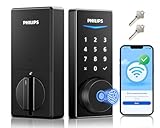
Overview: Philips enters the smart lock market with a WiFi-integrated deadbolt emphasizing rapid biometric access and multi-platform voice control. The 240X-1HW model features built-in WiFi eliminating hub requirements, 360° fingerprint recognition unlocking in 0.3 seconds, and a splash-proof design rated for outdoor exposure. Five entry methods—including PIN codes with advanced scheduling options—provide flexible access management for families, renters, and service providers.
What Makes It Stand Out: The 0.3-second fingerprint recognition matches industry leaders, while the included 8 batteries demonstrate Philips’ attention to out-of-box readiness. The lock’s ability to support permanent, one-time, scheduled, and recurring PIN codes offers sophisticated access scheduling rarely seen without subscription fees. Splash-proof construction and the hold-to-lock immediate securing feature cater to security-conscious users wanting manual confirmation.
Value for Money: Priced at $168.99 with batteries included, Philips positions this as a premium integrated solution. Built-in WiFi justifies the cost over bridge-dependent systems, though it lacks Apple Home support found in similarly priced competitors. The brand’s reputation for reliability and included accessories add value, but budget shoppers can find comparable features for less. It shines for Alexa/Google-centric homes prioritizing fingerprint speed.
Strengths and Weaknesses: Strengths include blazing 0.3-second fingerprint recognition, built-in WiFi, comprehensive PIN code scheduling, splash-proof durability, and trusted brand name. The included batteries and immediate lock function enhance user experience. Weaknesses involve limited smart home integration (no Apple Home), fewer entry methods than 7-in-1 competitors, and the premium price point without ANSI Grade 1 certification. The touchscreen may lag in extreme cold.
Bottom Line: Philips delivers a polished, reliable smart lock perfect for Alexa/Google households valuing biometric speed and sophisticated code management. While not the most versatile or budget-friendly option, the build quality and brand trust make it a solid investment. Consider this if you prioritize fingerprint performance and want a hassle-free WiFi setup without sacrificing PIN scheduling flexibility.
What Is Geo-Fencing Auto-Unlock and How Does It Work?
Geo-fencing auto-unlock creates a virtual boundary—typically 100 to 500 feet around your property—that triggers your smart lock to disengage when an authorized smartphone crosses it. Unlike Bluetooth proximity unlocking, which requires you to be within 30 feet and often fails through walls, geo-fencing uses GPS, Wi-Fi positioning, and cellular triangulation to track your location with remarkable precision.
The magic happens through a sophisticated dance between your phone’s location services and the lock’s cloud infrastructure. When you leave your workplace, your phone periodically updates its position. As you enter the configured radius, the system wakes from battery-saving mode and begins actively monitoring your approach. The lock itself doesn’t unlock immediately—it waits for additional verification like connecting to your home Wi-Fi or detecting Bluetooth proximity as final confirmation, creating a multi-layered security approach that prevents premature unlocking.
The Evolution from Bluetooth Proximity to GPS Precision
Early smart locks relied on Bluetooth Low Energy (BLE) beacons, which sounded great in theory but proved maddeningly inconsistent in practice. Users experienced locks that wouldn’t engage until they were standing at the door—or worse, would unlock randomly when they were simply relaxing in their living room. The technology struggled with range estimation through walls and often couldn’t distinguish between someone arriving home versus someone leaving.
The shift to GPS-based geo-fencing in 2026’s models represents a fundamental architectural change. Modern systems combine multiple location technologies: GPS for outdoor positioning, Wi-Fi fingerprinting for neighborhood-level accuracy, and Bluetooth for that final “at the door” confirmation. This hybrid approach reduces false positives by over 90% compared to first-generation systems. Manufacturers have also implemented machine learning algorithms that learn your daily patterns, distinguishing between your genuine homecoming and a quick trip to the corner store that doesn’t require unlocking.
Why 2026 Is the Breakthrough Year for Geo-Fencing Locks
Several converging factors make this the year geo-fencing finally delivers on its promise. Battery optimization in both smartphones and locks has reached a tipping point—what once drained your phone in hours now consumes less than 2% per day. The widespread adoption of Matter protocol means these locks integrate seamlessly across platforms, eliminating the ecosystem lock-in that previously frustrated consumers.
Perhaps most importantly, AI-driven predictive algorithms have matured. Your lock can now differentiate between you’re driving home from work versus you’re simply walking your dog around the block. Some advanced models even factor in traffic patterns, weather conditions, and your calendar appointments to anticipate your arrival time within a two-minute window. This contextual awareness transforms auto-unlock from a gimmick into a genuinely useful daily convenience.
Essential Features to Evaluate Before Buying
Not all geo-fencing smart locks are created equal. The difference between a frustrating experience and seamless convenience often lies in granular configuration options that many buyers overlook until it’s too late.
Location Accuracy and Adjustable Radius Settings
Look for locks offering radius customization from 100 to 1,000 feet in 50-foot increments. This flexibility proves crucial for apartment dwellers versus suburban homeowners. Urban environments with dense building may require tighter 150-foot radii to prevent accidental triggers when passing nearby, while rural properties benefit from 500-foot ranges that give the lock time to wake and authenticate before you reach the door.
Premium models include “accuracy thresholds” that require your phone’s location accuracy to be within a certain margin—say, 30 meters—before triggering. This prevents unlock attempts based on fuzzy location data that could indicate you’re still a block away. Some systems even let you draw custom polygonal boundaries instead of simple circles, perfect for L-shaped properties or homes near busy pedestrian paths.
Multi-User Management and Guest Access
Your lock should support individualized geo-fencing profiles for at least 20 users, each with customizable radius settings and time-based restrictions. The best systems allow you to create “arrival windows”—for example, your housekeeper’s code only triggers auto-unlock between 9 AM and 11 AM on Tuesdays. This prevents their presence from unlocking your door during off-hours.
Temporary guest access deserves special attention. Rather than granting permanent geo-fencing privileges to weekend visitors, advanced locks generate time-limited tokens that expire automatically. Some even require guests to manually confirm arrival through a notification tap, adding a consent layer that protects both parties’ privacy.
Battery Optimization and Power Consumption
Geo-fencing traditionally hammered battery life, but 2026’s models use intelligent wake patterns. Your phone enters a low-power monitoring state until you cross a city-level geofence, then gradually increases location polling frequency as you approach your neighborhood. The lock itself should last 8-12 months on four AA batteries despite constant Wi-Fi connectivity.
Solar-assisted models are emerging, with tiny photovoltaic panels that trickle-charge internal batteries. While not sufficient for primary power, they extend battery life by 40-60% in well-lit entryways. For hardwired locks, ensure they include battery backup that maintains geo-fencing functionality during power outages—some cheaper models disable smart features when running on backup power.
Security Protocols: Separating Innovation from Risk
The convenience of auto-unlock naturally raises security concerns. A lock that opens itself demands robust safeguards against exploitation.
Preventing Relay Attacks and Unauthorized Entry
Sophisticated thieves might attempt to relay your phone’s location signal to fake your presence. Top-tier locks counter this with “presence verification” requiring multiple data points: GPS location, Wi-Fi network connection, Bluetooth proximity, and even accelerometer data showing your phone is in motion toward the door. If any factor doesn’t align, the lock demands manual authentication.
Time-based throttling adds another layer. After three failed auto-unlock attempts within an hour, the system disables the feature for four hours and sends security alerts. Some locks integrate with security cameras, requiring visual confirmation of a person approaching before executing the unlock command.
End-to-End Encryption and Data Security Standards
Your location data represents a privacy goldmine that demands military-grade protection. Insist on AES-256 encryption for all communications between your phone, the lock, and the cloud. The lock’s firmware should support secure boot, preventing malicious software from hijacking the auto-unlock mechanism.
Investigate the manufacturer’s security track record. Have they undergone third-party penetration testing? Do they offer bug bounty programs? Reputable companies publish whitepapers detailing their security architecture. Avoid locks that store location history in plain text or transmit data without TLS 1.3 encryption.
Smart Home Integration: Building Your Connected Ecosystem
A geo-fencing lock becomes infinitely more powerful when it communicates with your broader smart home infrastructure. The trigger of your arrival can cascade through your entire house.
Matter Protocol and Cross-Platform Compatibility
Matter support is non-negotiable in 2026. This universal standard ensures your lock works with Apple HomeKit, Google Home, Amazon Alexa, and Samsung SmartThings simultaneously. Without Matter, you’re locked into a single ecosystem that may limit future expansion. Matter-enabled locks also support local execution, meaning your auto-unlock still works even if your internet connection is down, using your home’s Thread network.
Check for “Matter controller redundancy”—the ability for multiple hubs (an Apple TV, Google Nest Hub, and Echo) to all manage the lock. This prevents a single point of failure and ensures your geo-fencing works regardless of which platform your family prefers.
Voice Assistant and Automation Platform Support
Beyond basic integration, evaluate advanced automation capabilities. Can your lock trigger “Arrival” scenes that adjust thermostats, turn on lights, and disarm security systems? The best locks support conditional logic: “If I arrive home after sunset AND the security system is armed, THEN unlock the door and turn on the entryway lights to 70% brightness.”
Look for locks that expose geo-fencing status as a trigger in platforms like Home Assistant or Hubitat. This allows power users to create sophisticated rules, such as pausing auto-unlock when your VPN shows you’re connected from another country (a potential indicator of phone cloning).
Installation and Compatibility Factors
Even the most advanced geo-fencing lock is useless if it doesn’t physically fit your door or connect reliably to your network.
Assessing Your Existing Lock Mechanism
Measure your deadbolt’s backset (the distance from door edge to lock center), which is typically 2-3/8" or 2-3/4". Check the door thickness—most locks support 1-3/8" to 2" but older doors may require adapters. For mortise locks common in apartment buildings, you’ll need specialized retrofit kits that preserve the existing lock body while adding smart functionality.
Metal doors present unique challenges. They can block wireless signals, reducing geo-fencing reliability. Some manufacturers offer external antenna kits that mount on the door frame, maintaining connectivity without compromising security. For glass doors, consider locks that replace the entire locking mechanism rather than retrofitting, as adhesives often fail in temperature extremes.
Connectivity Requirements: Wi-Fi, Hub, or Hybrid?
Pure Wi-Fi locks offer simplest setup but may struggle with signal strength at your entryway. Test your Wi-Fi speed at the installation location—anything below 10 Mbps could cause delayed unlocking. Locks with Power over Ethernet (PoE) options provide unbeatable reliability for tech-heavy households.
Hub-based systems using Thread or Zigbee offer better battery life and more responsive geo-fencing, as the hub handles the heavy lifting. However, they add complexity and cost. Hybrid models that support both Wi-Fi and Thread provide the best of both worlds, automatically switching to the most reliable connection method. Ensure any hub you purchase includes Thread border router functionality—without it, you’ll miss out on Matter’s local execution benefits.
Privacy in the Age of Location-Aware Devices
Every time your lock tracks your location, it generates data that could theoretically be accessed, subpoenaed, or breached. Understanding a manufacturer’s privacy stance is as important as their security features.
Understanding Data Collection and Retention Policies
Read the privacy policy with a critical eye. Does the company store your precise GPS coordinates, or just anonymized “arrival events”? The gold standard is on-device processing where your phone calculates location and only sends a cryptographically signed “arrival token” to the lock, revealing nothing about where you’ve been.
Retention policies matter equally. Your location history should be automatically deleted after 24-48 hours, with options for immediate purging. Beware of companies that monetize user data—if the service is free or suspiciously cheap, you’re likely the product. Premium locks from security-focused brands often charge higher upfront costs but maintain strict no-data-selling policies.
Consider locks that support local-only geo-fencing through HomeKit Secure Video or similar frameworks. These systems keep all location data within your home network, never touching company servers. The trade-off is reduced remote management capability, but for privacy purists, it’s the only acceptable option.
Battery and Power Management Strategies
Geo-fencing’s constant location monitoring can devastate battery life without intelligent power management. Modern implementations use tiered location polling: city-level checks every 15 minutes, neighborhood-level every 2 minutes, and street-level every 30 seconds as you approach home.
Your lock itself should use lithium AA batteries rather than alkaline, as they maintain voltage better in temperature extremes and last 30% longer. Some models include battery monitoring that predicts failure 2-3 weeks in advance, sending escalating alerts rather than dying unexpectedly.
For ultimate reliability, consider locks with dual power sources: primary batteries plus a hardwire kit that connects to your doorbell transformer. This ensures geo-fencing remains active even during extended power outages. Solar models work best in southern exposures with at least 4 hours of direct sunlight daily—anything less provides negligible benefit.
Troubleshooting Geo-Fencing Reliability Issues
Even premium locks occasionally misfire. Understanding common failure modes helps you diagnose issues before they become daily frustrations.
Solving False Triggers and Missed Arrivals
False unlocks often stem from overlapping Wi-Fi networks or GPS drift in urban canyons. Combat this by enabling “Wi-Fi verification” that requires connection to your specific SSID before unlocking. For missed arrivals, check your phone’s battery optimization settings—Android and iOS aggressively kill background location services for apps they deem non-essential. Whitelist your lock’s app and disable adaptive battery for it.
Geofence accuracy degrades near tall buildings or in areas with poor GPS visibility. Consider switching to “network-only” location mode in your lock’s settings, which relies on cell tower triangulation and Wi-Fi positioning rather than GPS. While slightly less precise, it’s more consistent in challenging environments.
If problems persist, enable “debug mode” in advanced settings. This logs all location events, helping you identify whether the issue lies with your phone’s location reporting, cloud latency, or lock connectivity. Most manufacturers’ support teams can analyze these logs remotely, often resolving issues without a service visit.
Cost Analysis and Value Proposition
Geo-fencing locks command a $80-$150 premium over standard smart locks, with prices ranging from $220 to $400. Evaluate this cost against your daily usage—if you enter your home an average of four times daily, that’s 1,460 manual unlocks per year. At 5 seconds per unlock, you’re saving over 2 hours annually just on door operation.
Consider the intangible value: never fumbling for keys in the rain, securely letting in children who forgot their codes, or the peace of mind knowing your door automatically secures itself when you leave. For households with mobility challenges or disabilities, the accessibility benefits alone justify the investment.
Factor in subscription costs. Some manufacturers charge $3-$5 monthly for advanced geo-fencing features like multiple user profiles or detailed arrival logs. Others include these free for life. Over a 5-year lock lifespan, a subscription adds $180-$300 to your total cost—often exceeding the hardware price difference.
Looking Ahead: What’s Next After Geo-Fencing?
The technology pipeline hints at even more seamless authentication methods. Ultra-wideband (UWB) chips in phones enable spatial awareness accurate to centimeters, allowing locks to identify not just that you’re near, but which side of the door you’re on. This eliminates the risk of unlocking while you’re still in your backyard.
Biometric geo-fencing is emerging, combining location with gait analysis from your phone’s accelerometer. The lock learns how you walk, creating a behavioral signature that’s nearly impossible to spoof. Early implementations show 99.7% accuracy in distinguishing authorized users from strangers approaching the door.
Predictive AI is evolving from reactive (“you’ve arrived”) to proactive (“based on your calendar and traffic, you’ll arrive in 17 minutes; pre-heating the house and disarming the alarm now”). The lock becomes part of a predictive home management system that anticipates needs before you articulate them.
Frequently Asked Questions
How accurate is geo-fencing auto-unlock in dense urban environments?
Modern hybrid systems achieve 95% accuracy even in urban canyons by combining GPS, Wi-Fi positioning, and cell triangulation. You can improve reliability by setting a tighter 150-foot radius and enabling Wi-Fi verification, which requires your phone to connect to your home network before unlocking.
Will geo-fencing drain my smartphone battery?
Expect a 2-4% daily battery impact with 2026’s optimized systems. The lock’s app uses tiered location polling that minimizes GPS usage until you’re within a mile of home. Disable battery optimization for the lock app to prevent your OS from killing background location services.
What happens if I lose my phone or it’s stolen?
Immediately log into your lock’s web dashboard from any device to revoke that phone’s access credentials. All reputable systems allow remote deactivation within seconds. For added security, enable “theft mode” which requires manual unlocking and notifies you of any attempted access from the lost device.
Can hackers exploit geo-fencing to break into my home?
While theoretically possible, multi-factor verification makes practical attacks extremely difficult. The lock requires GPS location, Wi-Fi connection, and often Bluetooth proximity simultaneously. Look for locks with end-to-end encryption and hardware security modules that prevent firmware tampering.
Why does my lock sometimes unlock when I’m just walking the dog nearby?
This “false unlock” typically occurs with overly large geofence radii or GPS drift. Reduce your radius to 200 feet maximum and enable “arrival direction detection,” which only triggers when you’re moving toward your door. Drawing a custom polygonal boundary can also exclude the sidewalk area.
How many family members can use geo-fencing simultaneously?
Most premium locks support 20-50 individual geo-fencing profiles, each with custom settings. For larger households, look for enterprise-grade models that handle 100+ users. Each profile consumes minimal system resources, so performance doesn’t degrade with multiple users.
Does geo-fencing work for guests or service providers?
Temporary guest access is supported but typically requires manual confirmation. You can generate time-limited tokens that let guests use auto-unlock for their visit duration. For service providers, consider “scheduled geo-fencing” that only enables auto-unlock during their expected arrival window.
Do I need a strong internet connection for reliable auto-unlock?
Your phone needs mobile data to report location, but the lock itself can work with as little as 5 Mbps upload speed. For best results, use a lock with Thread/Matter support, which executes commands locally without cloud dependency. This ensures auto-unlock works even during internet outages.
What happens to geo-fencing during a power outage?
Battery-powered locks continue geo-fencing normally. Hardwired models should include battery backup that maintains all smart features for 24-48 hours. Some budget models disable Wi-Fi during outages to conserve power, falling back to Bluetooth only—which still works but with reduced range and reliability.
Is geo-fencing worth the premium over standard smart locks?
If you enter your home 3+ times daily or regularly carry items that make key/phone access difficult, the convenience justifies the cost. The value multiplies for households with children, elderly family members, or accessibility needs. For occasional users or security purists who prefer manual control, a standard smart lock may suffice.