Imagine approaching your front door with arms full of groceries, and before you can even shift your bags to reach for a key or phone, the deadbolt silently retracts. No tapping, no voice commands, no fingerprint scanning—just seamless, anticipatory access that knows you’re home before you do. This isn’t science fiction; it’s the promise of geo-fencing technology in next-generation smart locks, and by 2026, it’s becoming the gold standard for truly hands-free home entry.
Geo-fencing transforms your smartphone into a secure digital key that communicates with your lock based on your physical location, creating an invisible perimeter around your property that triggers automated actions. Unlike basic Bluetooth proximity unlocking that works only within a few feet, geo-fencing leverages GPS, Wi-Fi positioning, and cellular data to understand your approach from hundreds of yards away. As we dive into what makes these systems tick, you’ll discover why not all geo-fencing locks are created equal, which features separate the exceptional from the merely adequate, and how to evaluate this technology for your specific living situation.
Top 10 Smart Locks with Geo-Fencing
Detailed Product Reviews
1. August Home, Silver Wi-Fi Connected Smart Keyless Entry Door Lock, Electronic Door Lock Fits Your Existing Deadbolt in Minutes, AUG-SL05-M01-S01

Overview: The August Home Silver Wi-Fi Smart Lock offers a clever retrofit solution that transforms your existing deadbolt into a connected smart lock without replacing any exterior hardware. This approach preserves your current keys while adding modern convenience through built-in Wi-Fi connectivity and comprehensive smart home integration.
What Makes It Stand Out: This lock’s standout feature is its 10-minute installation that simply fits over your existing deadbolt thumbturn, making it perfect for renters or anyone hesitant about full lock replacement. The built-in Wi-Fi eliminates the need for additional hubs, while Auto-Unlock and DoorSense provide true hands-free operation. Its compatibility with all major platforms—Alexa, Google Assistant, Apple HomeKit, and SmartThings—ensures seamless smart home integration regardless of your ecosystem.
Value for Money: At $94.99, this lock sits in the sweet spot between budget Bluetooth-only models and premium full-replacement locks. You’re paying for convenience without sacrificing your existing security hardware, making it an economical choice for those wanting smart features without the cost of a complete lock system overhaul.
Strengths and Weaknesses: Strengths include incredibly simple installation, retention of existing keys, broad smart home compatibility, and reliable auto-lock/unlock features. Weaknesses involve dependency on your original deadbolt’s security level, potential Wi-Fi connectivity issues in areas with weak signal, and battery replacement costs over time. The retrofit design also means slightly bulkier interior hardware.
Bottom Line: Ideal for renters, apartment dwellers, or homeowners seeking hassle-free smart lock conversion. The August Wi-Fi Smart Lock delivers core smart features while preserving your existing hardware and keys. If you want maximum convenience with minimal installation fuss, this is your best bet.
2. ULTRALOQ Bolt Fingerprint WiFi Smart Lock, Works with Apple Home, Siri, Alexa, 8-in-1 Keyless Entry with Fingerprint ID, App Remote Control, Keypad Deadbolt, BHMA Cert., Easy Install, 10 Mo. Battery

Overview: The ULTRALOQ Bolt Fingerprint represents the premium tier of smart locks, offering eight different entry methods led by a sophisticated fingerprint scanner. Designed for the security-conscious smart home enthusiast, it combines biometric authentication with comprehensive Apple Home integration and commercial-grade certification.
What Makes It Stand Out: The fingerprint sensor stores up to 50 prints and provides instant access without fumbling for phones or keys. As ULTRALOQ’s first Apple Home-certified deadbolt, it enables unlocking via iPhone or Apple Watch alongside Siri voice commands. The BHMA certification guarantees commercial-grade security and durability, while the 10-month battery life with low-power alerts ensures reliable operation without constant maintenance.
Value for Money: At $179.99, this lock commands a premium price but delivers commensurate value. The fingerprint technology, Apple Home deep integration, and BHMA certification justify the cost compared to standard keypad locks. For Apple ecosystem users wanting biometric security, the price represents a worthwhile investment in convenience and peace of mind.
Strengths and Weaknesses: Strengths include versatile entry options, robust Apple Home support, strong security certification, and flexible access management through the U-Home app. Weaknesses center on the 2.4GHz Wi-Fi limitation, potential fingerprint sensor issues in extreme weather or with worn prints, and a higher price point that may exceed casual users’ budgets. Android users miss out on some ecosystem-specific features.
Bottom Line: Perfect for Apple-centric households prioritizing security and convenience. The ULTRALOQ Bolt Fingerprint justifies its premium price with biometric reliability and seamless HomeKit integration. If you want the fastest, most secure entry method and live in the Apple ecosystem, this lock delivers exceptional performance.
3. ULTRALOQ U-Bolt Smart Lock with WiFi Bridge, 6 in 1 Keyless Entry Door Lock with App Remote Control, Backlit Keypad, Auto Unlock, Smart Deadbolt Front Door, ANSI Grade 1, 1 Year Battery, Satin Nickel

Overview: The ULTRALOQ U-Bolt Smart Lock with WiFi Bridge offers a compelling balance of security, features, and affordability. This 6-in-1 keyless entry system provides multiple access methods while meeting the stringent ANSI Grade 1 security standard—the highest residential rating available, typically found in commercial hardware.
What Makes It Stand Out: The ANSI Grade 1 certification sets this apart, offering 35 times the strength of standard residential locks and a seven-times longer lifespan. The included WiFi Bridge enables remote access without built-in Wi-Fi, preserving battery life while maintaining connectivity. With support for keypad, smartphone app, auto-unlock, smartwatch, voice control, and mechanical keys, it covers every conceivable entry scenario while maintaining a sleek satin nickel finish.
Value for Money: At $99.99, this lock delivers exceptional value. Achieving ANSI Grade 1 certification at this price point is remarkable, typically found in commercial-grade hardware costing significantly more. The one-year battery life further enhances value by reducing maintenance costs and inconvenience, making it a smart long-term investment.
Strengths and Weaknesses: Strengths include top-tier security certification, versatile entry options, excellent battery longevity, and comprehensive remote management. The IP65 weatherproof rating ensures reliability in extreme conditions. Weaknesses include reliance on a separate WiFi Bridge component that adds slight installation complexity, 2.4GHz Wi-Fi limitation, and a less sleek design compared to premium models. The bridge also represents another potential point of failure.
Bottom Line: An outstanding choice for security-focused buyers seeking maximum protection without breaking the bank. The ULTRALOQ U-Bolt’s ANSI Grade 1 rating combined with its sub-$100 price makes it a standout value proposition. If security certification matters more than having the latest biometric gadgetry, this lock is unbeatable.
4. ULTRALOQ Bolt NFC, World’s First Smart Lock with Apple Home Key and Android NFC Tap to Unlock, Built in Wi-Fi Deadbolt, Remote Control, Works with HomeKit, Alexa, Google, 1 Year Battery, BHMA Cert.

Overview: The ULTRALOQ Bolt NFC claims the title of world’s first smart lock supporting both Apple Home Key and Android NFC tap-to-unlock functionality. This innovative deadbolt eliminates the need to wake your phone or open an app, offering truly instant access for mixed-device households while maintaining robust security standards.
What Makes It Stand Out: Universal NFC compatibility is the headline feature—simply tap your iPhone, Apple Watch, or Android device to unlock, even with a dead phone battery. The 8-in-1 entry methods provide ultimate flexibility, while BHMA certification ensures durability. Real-time notifications and remote access management through the U-Home app keep you connected wherever you are, and the one-year battery life minimizes maintenance.
Value for Money: Priced at $129.99, the Bolt NFC bridges the gap between budget and premium locks. You’re paying modestly more than basic keypad models for cutting-edge NFC technology that works across platforms. For households with both iOS and Android users, this eliminates the need for multiple lock systems or compromise, delivering strong value through universal compatibility.
Strengths and Weaknesses: Strengths include platform-agnostic NFC access, comprehensive smart home integration, robust entry options, and strong security certification. The ability to unlock with a dead phone battery is genuinely useful. Weaknesses involve potential NFC compatibility issues with older Android devices, the 2.4GHz Wi-Fi restriction, and limited real-world testing data as a newer technology. Some users may prefer fingerprint over NFC for primary access.
Bottom Line: The ideal solution for tech-savvy households using multiple mobile platforms. The ULTRALOQ Bolt NFC’s universal tap-to-unlock capability solves the cross-platform problem elegantly. If you want the convenience of keyless entry without committing to a single ecosystem, this forward-thinking lock delivers impressive versatility at a fair price.
5. August Home Smart Lock - Keyless Home Entry with Your Smartphone - Dark Gray

Overview: The August Home Smart Lock in Dark Gray provides the same retrofit convenience as its silver sibling, allowing you to upgrade your existing deadbolt without exterior modifications. This model emphasizes Alexa integration and includes August’s proprietary DoorSense technology for enhanced door status awareness in a sophisticated dark gray finish.
What Makes It Stand Out: DoorSense stands as the unique feature, providing real-time status of whether your door is securely closed or merely latched—critical information that most locks can’t provide. The retrofit design installs in under 10 minutes with just a screwdriver, preserving your existing keys and exterior aesthetics. Automatic unlocking as you approach and flexible timed auto-locking adapt to your lifestyle while integrating seamlessly with Alexa routines.
Value for Money: At $127.93, this lock sits slightly above the Wi-Fi model’s price point. The premium covers DoorSense technology and deeper Alexa integration, including battery status notifications and Dash Replenishment setup. For Alexa-centric households, these features justify the modest upcharge over basic smart locks, though the voltage requirement may limit installation flexibility.
Strengths and Weaknesses: Strengths include effortless installation, DoorSense door position detection, comprehensive Alexa integration, and retention of existing hardware. The dark gray finish offers aesthetic variety. Notable weaknesses include the requirement for 110-240 volts (unusual for battery-powered locks), dependency on your original deadbolt’s quality, and potential connectivity issues. Battery monitoring through Alexa is convenient but creates vendor lock-in.
Bottom Line: Tailored for Amazon Alexa users wanting maximum awareness of their door status. The August Dark Gray lock’s DoorSense feature provides peace of mind that competitors lack. If you’re invested in the Alexa ecosystem and want to keep your existing deadbolt while gaining intelligent monitoring, this lock warrants the premium over simpler retrofit options.
6. ULTRALOQ Bolt Fingerprint WiFi Smart Lock, Works with Apple Home, Siri, Alexa, Keyless Entry with Fingerprint ID, App Remote Control, Keypad Deadbolt, BHMA Cert., Easy Install, IP65, Black

Overview: The ULTRALOQ Bolt represents the brand’s first foray into Apple HomeKit integration, delivering a comprehensive keyless entry solution for iOS-centric households. This WiFi-enabled deadbolt eliminates the need for additional hubs while offering fingerprint recognition, anti-peep keypad, and remote app control. Engineered with BHMA certification and IP65 weather resistance, it promises robust performance across diverse conditions. The lock supports up to 50 access codes and integrates seamlessly with major smart home ecosystems including Alexa, Google Home, and SmartThings.
What Makes It Stand Out: True Apple Home compatibility sets this apart from most competitors, enabling Siri voice control and automation through HomePod, Apple TV, or iPad hubs. The intelligent auto-lock/unlock functionality uses a door sensor rather than just timers, providing smarter security that responds to actual door status. Remote management via U-home app requires no extra gateway, a significant advantage over Bluetooth-only models. The ability to create complex automation scenarios—like triggering lights when unlocking—makes it a genuine smart home centerpiece rather than just a standalone device.
Value for Money: At $179.99, this commands a premium price justified by its Apple integration and built-in WiFi. Competing locks often require $50-70 hubs for remote access, effectively making this competitively priced for Apple users. The BHMA certification and IP65 rating assure durability that cheaper alternatives lack. While ULTRALOQ’s non-Apple models offer similar features for less, the seamless iOS ecosystem integration delivers tangible value for iPhone and Apple Watch owners who prioritize convenience and reliability.
Strengths and Weaknesses: Strengths: Full Apple HomeKit support with Siri integration; built-in WiFi eliminates hub costs; intelligent auto-lock/unlock with door sensor; IP65 weatherproofing; versatile automation capabilities; BHMA certified security.
Weaknesses: Premium pricing limits appeal for non-Apple users; 50 fingerprint/code capacity lags behind some competitors; U-home app ecosystem less established than major brands; requires Apple hub for remote Siri control.
Bottom Line: The ULTRALOQ Bolt is the ideal smart lock for Apple ecosystem households seeking seamless integration without compromise. Its built-in WiFi, robust security certifications, and intelligent automation features justify the higher price tag. While Android users may find better value elsewhere, iOS households will appreciate the frictionless experience that finally brings smart locks into Apple’s unified home environment.
7. ULTRALOQ Smart Lock U-Bolt Pro, 7-in-1 Fingerprint Keyless Entry Door Lock with App Control, Anti-peep Keypad, Auto Lock, Smart Deadbolt Front Door, IP65 Waterproof, Easy Installation, 1 Year Battery

Overview: The U-Bolt Pro positions itself as a security-first smart lock with an impressive seven access methods including 360° fingerprint ID, anti-peep keypad, smartphone app, auto-unlock, watch app, and two mechanical keys. Engineered to ANSI Grade 1 commercial standards with a zinc alloy body, it withstands 35 times the force of standard residential locks. The lock stores 100 fingerprints and 50 customizable codes, making it suitable for busy households or small businesses. IP65 waterproofing ensures reliable operation in extreme temperatures.
What Makes It Stand Out: ANSI Grade 1 certification represents the highest residential security rating, a rarity in consumer smart locks. The AI-powered fingerprint reader learns and improves recognition over time, reducing false rejections. The “Touch and Go” feature enables instant unlocking with a single fingerprint touch. The watch app provides convenient wrist-based control without fishing for phones. One-touch locking via the keypad button offers immediate security when departing. The one-year battery life with low-power alerts minimizes maintenance concerns.
Value for Money: Priced at $149.99, this delivers exceptional value for security-conscious buyers. The Grade 1 certification alone justifies the cost compared to Grade 2-3 competitors. However, remote access requires the optional ULTRALOQ Bridge (sold separately), adding $50-70 for full functionality. For users primarily needing Bluetooth-range control, it’s a bargain. The robust construction and seven access methods provide flexibility that cheaper locks can’t match, though WiFi-enabled competitors offer similar convenience without add-on costs.
Strengths and Weaknesses: Strengths: ANSI Grade 1 commercial security rating; 100-fingerprint capacity; AI-enhanced recognition; seven versatile entry methods; exceptional durability (7x lifespan); IP65 weatherproofing; one-year battery life.
Weaknesses: No built-in WiFi (bridge sold separately); Bluetooth range limits remote features; watch app compatibility limited to specific models; bulkier design than some competitors; auto-lock uses timer rather than door sensor.
Bottom Line: The U-Bolt Pro is perfect for those prioritizing security over smart home flashiness. Its commercial-grade construction and extensive access options make it ideal for high-traffic entrances. While the separate WiFi bridge frustrates users wanting out-of-box remote access, the core lock’s performance and durability exceed most competitors. Choose this for robust protection that happens to be smart, not smart features that happen to lock your door.
8. Philips Built-in WiFi Smart Lock, Keyless Entry Door Lock with App, Touchscreen, Indicator Light, Fingerprint Door Lock — Compatible with Alexa & Google, Splash-Proof Design, Includes 8 Batteries
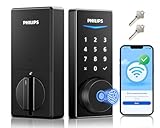
Overview: Philips enters the smart lock market with a WiFi-enabled deadbolt emphasizing speed and simplicity. The 240X-1HW model features 360° fingerprint recognition unlocking in 0.3 seconds, complemented by app control, PIN codes, voice assistants, and physical keys. Built-in WiFi eliminates hub requirements, while the splash-proof design handles moderate weather exposure. The package includes eight batteries and supports multiple PIN types including permanent, one-time, and scheduled codes. Real-time notifications keep users informed of all lock activity.
What Makes It Stand Out: The sub-second fingerprint recognition delivers genuine convenience when hands are full or rushing. Philips’ brand reputation for reliability provides confidence in long-term performance. The flexible PIN code system accommodates various access scenarios from dog walkers to Airbnb guests. Voice control integration with both Alexa and Google Assistant offers hands-free operation. The indicator light provides clear visual feedback on lock status, eliminating guesswork. Eight included batteries represent better value than competitors shipping with minimal power sources.
Value for Money: At $168.99, this sits in the mid-premium range, justified by built-in WiFi and the Philips brand name. It’s priced competitively against ULTRALOQ and Schlage models with similar features. The splash-proof designation (versus full IP65) suggests some weather resistance cost-cutting, though adequate for covered entrances. For users wanting trusted brand reliability without top-tier pricing, it strikes a solid balance. The fast fingerprint sensor and comprehensive app control match more expensive options, making it a smart value proposition.
Strengths and Weaknesses: Strengths: Lightning-fast 0.3-second fingerprint unlocking; built-in WiFi with no hub needed; flexible PIN code management; dual voice assistant support; trusted Philips brand; eight batteries included; intuitive indicator lights.
Weaknesses: Splash-proof only (no IP rating); fingerprint capacity not specified (likely 50-100); touchscreen may be less durable than physical buttons; limited automation features compared to Apple Home models; app ecosystem less mature than established smart lock brands.
Bottom Line: The Philips 240X-1HW excels as a fast, reliable keyless entry solution for Alexa/Google households. Its rapid fingerprint recognition and straightforward WiFi connectivity make daily use frictionless. While lacking the weatherproofing or advanced automation of premium competitors, it delivers core smart lock functions with brand credibility. Ideal for covered front doors where speed and voice control matter more than extreme weather resistance or complex smart home integration.
9. Philips Built-in WiFi Smart Lock + 2 Levels, Smart Locks for Front Door, Digital Keypad Deadbolt with Handle, Fingerprint, PIN Code, App Remote Control & Voice Unlock, Keyless Entry, Auto Locking
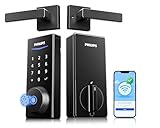
Overview: This Philips smart lock bundle includes both the deadbolt mechanism and a matching handle, providing a complete door hardware solution in one package. The built-in WiFi enables direct 2.4GHz connection for app-based remote control, user management, and real-time alerts. Fingerprint recognition unlocks in 0.3 seconds with 50-print capacity, while the backlit touchscreen supports permanent, one-time, periodic, and recurring PIN codes. Voice control via Alexa and Google Assistant adds hands-free convenience. The auto-lock timer ranges from 30-180 seconds for customizable security.
What Makes It Stand Out: The integrated handle eliminates the need to purchase separate matching hardware, ensuring aesthetic consistency and simplifying installation. Multiple PIN code types provide exceptional flexibility for managing different user categories—service people get one-time codes, family uses permanent access, and renters can have scheduled periods. The Philips Home Access App offers comprehensive control from user management to access history review. Hands-free voice control proves invaluable when carrying groceries or managing children. The 0.3-second fingerprint speed remains competitive with premium standalone scanners.
Value for Money: At $149.99 including the handle, this represents excellent value. Comparable deadbolt-handle combos typically cost $180-220 when purchased separately. Built-in WiFi avoids $50-70 hub expenses, making the effective price highly competitive. The feature set matches locks costing $30-50 more, with the added convenience of coordinated hardware. For renters or homeowners wanting a complete aesthetic solution without premium pricing, it’s a compelling package that doesn’t sacrifice core smart functionality.
Strengths and Weaknesses: Strengths: Complete lock and handle bundle; built-in WiFi with no hub required; versatile PIN code options (permanent, one-time, recurring); fast 0.3-second fingerprint access; dual voice assistant support; comprehensive app control; attractive price point.
Weaknesses: Only 50 fingerprint capacity (less than some competitors); unspecified IP rating (likely splash-proof only); handle style may not suit all door aesthetics; auto-lock timer less sophisticated than sensor-based systems; Philips smart lock ecosystem less proven than traditional lock brands.
Bottom Line: This Philips bundle offers the best value for anyone needing both deadbolt and handle replacement. The built-in WiFi and flexible access management rival premium standalone locks, while the coordinated hardware ensures professional appearance. Perfect for apartment upgrades or rental properties where complete hardware refresh is desired. While power users might want higher fingerprint capacity or rugged weatherproofing, most households will find this package delivers everything needed for modern keyless living at an unbeatable bundled price.
10. WiFi Smart Lock for Front Door – Firstriver Keyless Entry Electronic Deadbolt with Biometric Fingerprint & Digital Keypad Built-in Wi-Fi App Control Auto Lock Compatible with Alexa & Google Assistant
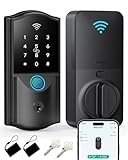
Overview: Firstriver’s budget-conscious smart lock delivers six unlock methods—app, fingerprint, passcode, IC card, mechanical key, and voice control—at an entry-level price point. Built-in WiFi connects directly to 2.4GHz networks without hubs, enabling remote management and code sharing. The fingerprint sensor detects prints in 0.3 seconds and unlocks in 1.5 seconds, while the auto-lock timer offers an exceptionally wide 5-900 second range. The app supports permanent, recurring, duration, and one-time passcodes, plus access logs and user management.
What Makes It Stand Out: The IC card access method provides a unique alternative for users uncomfortable with biometrics or codes, ideal for elderly family members or temporary workers. The expansive auto-lock customization (5-900 seconds) accommodates everything from immediate security to extended unloading periods. Six entry options exceed most competitors in this price range. The built-in WiFi at $139.99 undercuts major brands by $30-50 while maintaining core functionality. The “Normally Open Mode” suits situations requiring frequent access during parties or moving days.
Value for Money: At $139.99, this is the most affordable built-in WiFi smart lock with comprehensive features. Comparable functionality from established brands costs $170-200. While lacking premium certifications like ANSI Grade 1 or IP65, it covers essential smart lock needs. The IC card inclusion adds value for multi-generational households. For first-time smart lock buyers or rental property owners managing costs, it delivers professional features without brand-name markup. The trade-off comes in unproven long-term durability and potentially less refined app experience.
Strengths and Weaknesses: Strengths: Lowest price for built-in WiFi; six versatile unlock methods including IC cards; extremely flexible auto-lock timing; comprehensive app features; voice control support; fast fingerprint recognition; easy code sharing options.
Weaknesses: Unknown brand with limited track record; no specified security certifications (ANSI/BHMA); unspecified weatherproof rating; build quality concerns vs established brands; app reliability unproven at scale; customer support unknown.
Bottom Line: The Firstriver lock is the smart choice for budget-focused buyers wanting full WiFi functionality without compromises. It matches premium locks feature-for-feature while adding unique IC card access. Ideal for rental properties, side entrances, or testing smart lock convenience before investing in premium hardware. While security-conscious users should verify certifications, most homeowners will appreciate the comprehensive access options and remote management at a price that makes upgrading multiple doors financially feasible. A surprisingly capable disruptor in the smart lock market.
What Is Geo-Fencing and How Does It Transform Smart Locks?
Geo-fencing creates a virtual boundary around a real-world geographic area, using your smartphone’s location services to trigger pre-programmed actions when you cross that invisible threshold. In the context of smart locks, this means your door can automatically unlock as you arrive home and secure itself when you leave—no manual intervention required.
The Technology Behind Virtual Boundaries
Modern geo-fencing smart locks don’t rely on a single location technology. They triangulate data from multiple sources: GPS satellites for outdoor positioning, Wi-Fi network identification for neighborhood-level accuracy, and Bluetooth beacons for fine-tuned proximity confirmation. This multi-layered approach prevents the system from unlocking your door while you’re still at the corner store and ensures it responds promptly when you’re actually walking up your driveway.
From GPS to Multi-Technology Positioning
Early geo-fencing solutions struggled with accuracy, often confusing “nearby” with “arriving.” 2026’s advanced systems incorporate machine learning algorithms that understand your movement patterns. They recognize the difference between someone walking directly toward the entrance versus merely passing by on the sidewalk. This contextual intelligence reduces false triggers and enhances security by ensuring the lock only responds to genuine arrival scenarios.
The Mechanics of Hands-Free Entry
Understanding how geo-fencing enables seamless access requires looking beyond the simple “unlock when close” concept. The magic lies in sophisticated timing, verification protocols, and layered authentication that happens silently in the background.
Automatic Unlocking Protocols
When your phone crosses the geo-fence boundary—typically 200-500 feet from your door—the lock enters a “watchful” state. It doesn’t immediately unlock. Instead, it begins monitoring for additional confirmation signals: your phone’s Bluetooth signal strengthening, your Wi-Fi network coming into range, and your movement pattern indicating you’re heading toward the door. Only when these conditions align does the mechanism engage, usually when you’re 10-15 feet from the entrance.
Proximity Detection vs. True Geo-Fencing
Don’t confuse basic Bluetooth proximity unlocking with genuine geo-fencing. Proximity systems unlock when you’re within 30-50 feet, which means your door might disengage while you’re still in your car or visiting a neighbor. True geo-fencing uses geographic coordinates, not just signal strength, creating a much larger initial detection zone that allows for smarter, more deliberate unlocking sequences.
Critical Benefits Beyond Convenience
While hands-free entry is the headline feature, geo-fencing smart locks deliver advantages that fundamentally reshape home security and daily routines in ways you might not expect.
Enhanced Security Through Context Awareness
These locks understand context. They can differentiate between your regular 6 PM arrival home and an unusual 2 AM approach. Some systems integrate with your security cameras, automatically recording when someone crosses the geo-fence without triggering an unlock—potentially catching suspicious activity before it reaches your door. The lock becomes an active security participant, not just a passive barrier.
Accessibility Revolution
For individuals with mobility challenges, carrying difficulties, or disabilities that make traditional lock operation cumbersome, geo-fencing eliminates a daily barrier. The door simply opens as they approach. This technology also benefits parents with young children, eliminating the need to fumble for keys while managing strollers or sleeping toddlers.
Energy Efficiency Gains
Geo-fencing integrates with whole-home automation. When you leave the geo-fenced area, the lock can signal your thermostat to enter eco-mode, your lights to turn off, and your security system to arm. This creates a cascade of energy-saving actions triggered by a single event, potentially reducing utility bills by 15-20% through elimination of heating, cooling, and lighting empty homes.
Must-Have Features in 2026 Geo-Fencing Smart Locks
Not every geo-fencing lock delivers the same experience. Several features separate premium implementations from basic offerings, and understanding these distinctions helps you make an informed decision.
Multi-User Geo-Fencing Support
Your lock must support distinct geo-fences for each household member. If you and your partner arrive home together, the system should recognize both phones and unlock once—not twice. Advanced systems create family-level geo-fences that acknowledge multiple authorized devices within the same vehicle, preventing redundant unlocking attempts and potential security confusion.
Adjustable Radius Settings
One-size-fits-all geo-fencing doesn’t work. Urban dwellers need smaller radii (150-200 feet) to avoid triggering while walking the dog around the block. Suburban homeowners benefit from larger zones (500+ feet) that give the system time to prepare for arrival. Look for locks offering granular control, allowing you to set different radii for different users and even different times of day.
Delay Timers and Smart Activation
The best systems let you customize the delay between crossing the geo-fence and the actual unlock. Maybe you want a 30-second delay for security, or perhaps instant unlocking suits your gated property. Smart activation learns your walking speed and adjusts timing accordingly, so the lock doesn’t open too early (creating a security gap) or too late (defeating the purpose).
AI-Powered Learning Algorithms
2026’s standout locks incorporate artificial intelligence that studies your routines. They notice you always arrive home at 5:45 PM on weekdays and prepare the system accordingly. They recognize when you’re on vacation and disable geo-fencing to prevent accidental triggers from nearby activity. This predictive capability transforms the lock from a reactive device to a proactive home manager.
Precision Matters: Understanding Range and Accuracy
Geo-fencing effectiveness hinges on precision. A system that’s too sensitive creates security risks; one that’s not sensitive enough defeats the convenience purpose.
Minimum and Maximum Radius Options
Quality locks offer radius settings from as small as 100 feet to as large as 2,000 feet. The minimum matters as much as the maximum—some users want geo-fencing only for their immediate driveway, while others want coverage of their entire property. The lock should support both scenarios with consistent accuracy.
Urban vs. Suburban Performance
Skyscrapers and dense urban environments create GPS shadowing and Wi-Fi confusion that can degrade geo-fencing accuracy. Premium locks compensate by weighting cellular tower triangulation more heavily in cities and relying on GPS in open suburban areas. They also map local Wi-Fi networks to create a fingerprint of your neighborhood, improving recognition even when satellite signals are weak.
Dealing with Signal Interference
Metal doors, concrete walls, and certain insulation types can block or reflect signals, causing location drift. Advanced locks use predictive algorithms that account for these physical barriers. They learn that your phone’s signal typically drops for 15 seconds near your metal garage door and factor this into their decision-making, preventing false “departure” triggers.
Privacy and Security: The Non-Negotiables
Granting a lock access to your location data raises legitimate privacy concerns. 2026’s best systems treat your location information with bank-level security and give you complete control.
Data Encryption Standards
Your location data should be encrypted end-to-end, from your phone to the lock to the cloud servers. Look for AES-256 encryption and zero-knowledge architecture, meaning the manufacturer cannot access your location history even if compelled. The system should store location data locally on your device whenever possible, transmitting only anonymized, encrypted confirmation tokens to the lock.
Location Data Storage Policies
Understand how long your location data is retained. Reputable systems delete location logs within 24-48 hours, keeping only anonymized usage statistics for performance improvement. You should have the option to disable cloud storage entirely, though this may limit some advanced features. Read the privacy policy specifically for clauses about data sharing with third parties or law enforcement.
Guest Access and Temporary Boundaries
When you grant temporary access to dog walkers or house cleaners, they shouldn’t need to share their constant location. Advanced systems create temporary, time-bound geo-fences that activate only during scheduled visits. The guest’s location is tracked only within a small radius of your home during their access window, then deleted immediately after expiration.
Smart Home Integration Excellence
A geo-fencing lock shouldn’t operate in isolation. Its true power emerges when it becomes the trigger for your entire smart home ecosystem.
Matter Protocol Compatibility
Matter, the new smart home standard, ensures your lock works seamlessly with devices from different manufacturers. A Matter-certified geo-fencing lock can trigger your Philips Hue lights, ecobee thermostat, and Ring cameras simultaneously, regardless of brand allegiances. This interoperability is crucial for creating cohesive arrival and departure scenes.
Voice Assistant Synergy
While geo-fencing aims to eliminate voice commands, integration with Alexa, Google Assistant, and Siri remains valuable for status checks and manual overrides. Ask “Is my door locked?” while driving home, and the assistant can confirm geo-fencing status. The best locks let you create custom voice shortcuts that temporarily disable geo-fencing when you need manual control.
Scene Automation Possibilities
Your arrival should trigger more than just unlocking. Advanced systems support multi-action scenes: unlock door, disarm security, set thermostat to 72°F, turn on entryway lights, and start playing your “arrival” playlist. The geo-fence crossing becomes a master switch for your home’s welcome sequence, completely personalized to your preferences.
Power Management in an Always-On World
Geo-fencing requires constant location monitoring, which impacts battery life. 2026’s locks have evolved sophisticated power strategies to maintain functionality without weekly battery changes.
Battery Life Expectations
Expect 6-12 months of battery life with geo-fencing active, depending on usage frequency. Locks using lithium batteries outperform alkaline, especially in extreme temperatures. Some models now include solar charging panels that trickle-charge the battery, extending life indefinitely in well-lit exposures.
Low-Power Geo-Fencing Modes
Premium locks offer tiered geo-fencing that reduces power consumption. They use coarse location data (cell tower triangulation) while you’re far from home, switching to power-hungry GPS only when you enter the extended geo-fence zone. This can reduce battery drain by up to 40% compared to constant high-accuracy tracking.
Backup Power Solutions
What happens when the battery dies while you’re geo-fenced away from home? Top-tier systems include emergency power contacts where you can touch a 9V battery to temporarily energize the lock. Others send low-battery alerts to your phone with enough advance warning—typically 2-3 weeks—to ensure you’re never locked out due to power failure.
Installation and Setup Realities
Even the most advanced geo-fencing lock fails if installation is complex or calibration is finicky. Understanding the setup process helps set realistic expectations.
DIY vs. Professional Installation
Most geo-fencing locks install like standard smart locks, requiring only a screwdriver and 20-30 minutes. However, locks with advanced sensors or integrated doorbells may need professional installation, especially for multi-point locking systems common in European doors. Factor $100-200 for professional installation if your door requires modification.
Calibration Best Practices
Initial setup involves walking your property perimeter to define the geo-fence boundary. The best systems guide you through this with augmented reality overlays in their app, showing exactly where the virtual fence sits relative to your physical property. Plan to spend 30-45 minutes fine-tuning the radius and testing different approach angles to ensure consistent performance.
Multi-Point Lock Considerations
If you have a multi-point locking system (common in UPVC doors), ensure the geo-fencing lock is compatible. These systems require motorized lifting of multiple bolts simultaneously, demanding more power and precise timing. Some geo-fencing locks only work with single-cylinder deadbolts, limiting options for certain door types.
Mobile App Experience
The app is your command center for geo-fencing configuration. Its design and capabilities directly impact daily usability.
User Interface Design Trends
2026’s leading apps feature map-based geo-fence visualization where you can drag boundary points with your finger. They provide real-time feedback showing your location relative to the fence, helping you understand exactly when triggers will occur. Look for apps with intuitive slider controls for radius adjustment and clear status indicators showing whether you’re inside or outside the geo-fenced zone.
Customization Depth
The app should allow per-user, per-day, per-time customization. Maybe your teenager’s geo-fence only activates after school hours. Perhaps you want a larger radius on weekends when you often approach from the backyard. Advanced apps support unlimited profiles and conditional logic: “Unlock when I arrive, but only if my spouse isn’t already home.”
Offline Functionality
What if your phone loses data connection while approaching? The best systems cache your geo-fence data locally and use last-known location combined with Bluetooth proximity as a fallback. The lock should still function even when cellular service is spotty, ensuring you’re never stranded outside due to network issues.
Troubleshooting and Optimization
Even premium geo-fencing locks encounter hiccups. Knowing common issues and solutions prevents frustration.
False Trigger Prevention
If your lock unlocks when you’re just walking the dog, increase the geo-fence radius and add a longer delay. Enable “arrival confirmation” features that require your phone to remain within the inner proximity zone for 10-15 seconds before unlocking. This filters out momentary signal spikes that cause false triggers.
Location Drift Solutions
Phones sometimes report inaccurate locations, especially in dense urban areas. If you experience drift, calibrate your lock to use Wi-Fi network detection as a primary trigger rather than GPS. Most apps let you “weight” different location technologies, prioritizing the most reliable method for your environment.
Network Dependency Issues
Geo-fencing requires location services, but shouldn’t depend on constant cloud connectivity. If your lock frequently misses arrivals, check that the app is exempt from your phone’s battery optimization settings. Many phones aggressively kill background apps, preventing geo-fencing from working reliably. Whitelist the lock’s app to ensure it can always monitor location.
Future-Proofing Your Investment
Smart lock technology evolves rapidly. A lock purchased in 2026 should remain relevant through software updates and hardware expandability.
Over-the-Air Update Policies
Choose manufacturers with a proven track record of regular firmware updates. The lock’s geo-fencing algorithms should improve over time through machine learning updates. Check that the company commits to at least 5 years of security patches and feature updates, ensuring your investment doesn’t become obsolete.
Emerging Authentication Methods
While geo-fencing handles arrival, some 2026 locks integrate ultra-wideband (UWB) technology for precise indoor positioning. This allows the lock to recognize not just that you’re home, but that you’re standing at the door versus in the backyard. Ensure your lock’s hardware supports future UWB integration, even if it’s not active at purchase.
Scalability for Growing Needs
Your lock should support expanding your smart home without replacement. If you add a smart garage door opener, the geo-fence should extend to trigger it too. Modular systems that allow adding sensors or connecting to home hubs ensure your lock grows with your needs rather than requiring a complete replacement in two years.
Total Cost of Ownership Analysis
The sticker price tells only part of the story. Understanding long-term costs prevents budget surprises.
Initial Investment vs. Long-Term Value
Geo-fencing locks range from $200 to $500, with premium models commanding higher prices for advanced AI and better integration. However, factor in potential insurance discounts (5-10% for smart security devices) and energy savings from automated climate control. A $400 lock that saves $30 monthly on utilities pays for itself in just over a year.
Subscription Model Transparency
Some locks require monthly subscriptions for advanced geo-fencing features, cloud storage, or multi-user management. Others offer these features free for life. Calculate the 5-year total cost: a $250 lock with $5/month subscription costs $550 over five years, while a $400 lock with no subscription saves $150 long-term.
Warranty and Support Quality
Geo-fencing technology is complex; solid support matters. Look for at least a 2-year warranty and 24/7 customer support. Check online forums for responsiveness to geo-fencing-specific issues. A company that quickly addresses location accuracy bugs demonstrates commitment to the technology’s reliability.
Decision Framework: Matching Features to Lifestyle
The “best” geo-fencing lock depends entirely on your living situation, technical comfort, and daily routines.
For Apartment Dwellers
In multi-unit buildings, smaller geo-fences prevent unlocking when you’re in the lobby or elevator. Look for locks with strong Bluetooth backup, as GPS signals may be weak. Renter-friendly models that install without permanent modifications are essential, as is guest access for roommates and service providers.
For Single-Family Homes
Homeowners benefit from larger geo-fences that cover entire properties. Integration with existing security systems and whole-home automation platforms takes priority. Consider locks with built-in doorbell cameras to maximize entrance visibility, and ensure weather resistance for exposed installations.
For Rental Property Owners
Landlords need locks that support temporary, time-restricted geo-fencing for tenants. Remote management capabilities allow resetting geo-fences between leases. Look for audit trails that log when geo-fencing triggered versus manual entry, providing accountability without invading tenant privacy.
Frequently Asked Questions
How accurate is geo-fencing compared to Bluetooth proximity unlocking?
Geo-fencing is significantly more accurate for arrival detection because it uses geographic coordinates rather than just signal strength. While Bluetooth proximity can unlock when you’re still in your car or across the street, geo-fencing creates a precise virtual boundary around your property, typically accurate within 30-50 feet. The multi-technology approach—combining GPS, Wi-Fi, and cellular data—reduces false triggers and provides contextual awareness that Bluetooth alone cannot match.
Will geo-fencing drain my phone’s battery?
Modern geo-fencing uses efficient location APIs that consume minimal power. On iOS and Android, optimized location services reduce battery drain to 1-3% per day. The lock’s app uses low-power region monitoring while you’re far away, switching to high-accuracy mode only when you approach the geo-fence. Most users report no noticeable battery difference after the first week of use, as the system learns your patterns and reduces unnecessary location checks.
What happens if I lose my phone? Can someone access my home?
Your phone’s lock screen provides the first layer of security—someone must unlock your device to use its geo-fencing capability. Second, most systems require biometric authentication within the lock’s app to enable geo-fencing. If your phone is lost, immediately log into the lock’s web portal from any browser to disable your phone’s access and remove its geo-fencing privileges. You can also temporarily switch to manual entry codes until you replace your device.
Does geo-fencing work if my phone is in airplane mode?
No, geo-fencing requires active location services, which are disabled in airplane mode. However, premium locks include Bluetooth proximity as a fallback. If you regularly use airplane mode while commuting, you can set up a shortcut that automatically disables airplane mode when you reach a certain distance from home, or rely on alternative entry methods like keypad codes or NFC tags for those specific days.
Can multiple family members use geo-fencing simultaneously?
Yes, but implementation varies. Quality locks support at least 10-20 individual geo-fence profiles, each with customizable settings. The system intelligently handles simultaneous arrivals, unlocking once when the first authorized phone crosses the threshold. Some advanced systems create a “family geo-fence” that recognizes when multiple family phones are traveling together in the same vehicle, preventing redundant unlocking attempts and optimizing battery usage for all devices.
Is my location data stored permanently?
Reputable manufacturers store location data for no more than 24-48 hours, using it only for immediate lock operation and troubleshooting. The data is encrypted end-to-end, and you should have the option to disable cloud storage entirely, keeping all location information on your device. Always review the privacy policy for data retention clauses, and avoid locks that share location data with third-party advertisers or analytics companies.
What if the geo-fencing triggers while I’m just walking by my house?
This “walk-by” issue is solved through multi-factor confirmation. The system doesn’t unlock immediately when you cross the geo-fence; it waits for additional signals like Bluetooth proximity, Wi-Fi network detection, and sustained presence in the inner zone. You can adjust the geo-fence radius and add delay timers to prevent accidental unlocking. Setting a smaller radius (150-200 feet) in urban environments virtually eliminates walk-by triggers.
Do geo-fencing locks work in rural areas with poor cell service?
Surprisingly well, actually. Geo-fencing primarily uses GPS satellites, which work anywhere with clear sky visibility. In areas with weak cellular service, the lock relies more heavily on GPS and Wi-Fi network detection. Some rural users report even better performance than city dwellers because there are fewer competing signals to confuse the system. Just ensure your home Wi-Fi reaches the edge of your desired geo-fence zone for optimal reliability.
Can I temporarily disable geo-fencing for visitors or service workers?
Yes, advanced systems allow you to create temporary geo-fence profiles with expiration dates. For a one-day contractor, you can generate a 24-hour geo-fence that only works within a small radius and only during scheduled hours. Alternatively, you can disable your own geo-fencing temporarily and switch to keypad or app-based unlocking, ensuring the door remains secure while allowing manual access for guests.
Will my lock become obsolete as geo-fencing technology improves?
Choose locks with strong over-the-air update support and modular hardware design. Manufacturers committed to long-term support regularly update geo-fencing algorithms, improving accuracy and adding features. Some locks include upgradeable radio modules that can support future location technologies like ultra-wideband. A quality geo-fencing lock purchased in 2026 should remain current for at least 5-7 years through software updates alone, making it a worthwhile long-term investment.