Medication non-adherence isn’t just a personal health problem—it’s a $500 billion annual burden on the global healthcare system. As we move into 2026, the convergence of IoT sensor technology, AI-driven analytics, and patient-centered design has transformed pill dispensers from simple plastic boxes into sophisticated medical adherence tools. These smart devices don’t just remind you to take your medication; they verify consumption, predict missed doses before they happen, and create a digital safety net between patients, caregivers, and healthcare providers.
The evolution of sensor-equipped pill dispensers represents a paradigm shift in chronic disease management and independent aging. Unlike their basic electronic predecessors, modern units employ multi-modal sensing arrays, machine learning algorithms, and seamless telehealth integration to address the root causes of medication non-adherence—forgetfulness, complexity, and lack of accountability. Understanding what makes these devices truly “smart” in 2026 is essential for making an informed investment in your health or that of a loved one.
Top 10 Smart Pill Dispensers with Sensors
Detailed Product Reviews
1. Ideerfit 42-Day Automatic Pill Dispenser – App & On-Device Setup by Family, LCD Display, Digital Lock, Sound & Light Alerts – Safe Medication Organizer Management for Seniors (3-Tray, White)

Overview: The Ideerfit 42-Day Dispenser is a premium medication management system designed for seniors requiring remote caregiver support. Its three-tray design holds 42 daily doses, offering flexible scheduling for morning, noon, and night regimens. With both app and on-device voice-guided setup, it bridges technology and accessibility for elderly users.
What Makes It Stand Out: The dual-configuration approach sets it apart—families can manage settings remotely while seniors maintain autonomy via voice-prompted controls. Unique moisture protection with sealed lid and desiccant preserves pill potency. The quad-alert system (LED, voice, buzzer, melody) accommodates varying sensory abilities, while real-time adherence tracking enables medical provider collaboration.
Value for Money: At $329.99, this represents a significant but defensible investment. The 42-day capacity dramatically reduces refill burden compared to standard 7-day organizers. For seniors on critical medications or with cognitive impairment, the comprehensive remote monitoring and safety features justify the premium over cheaper, less capable alternatives.
Strengths and Weaknesses: Strengths include exceptional remote monitoring, flexible dosing options, moisture protection, and senior-friendly voice guidance. The robust build quality inspires confidence. Weaknesses are the high price point, large countertop footprint, and potentially complex features for tech-averse elderly users. The device requires consistent power, necessitating backup plans during outages.
Bottom Line: This is the premier choice for families managing senior medication adherence from afar. While expensive, its unparalleled feature set, 42-day capacity, and dual-setup flexibility provide peace of mind that cheaper alternatives cannot match. Ideal for high-stakes medication management scenarios.
2. Colorwing® 2025 Smart Pill Dispenser for Seniors - 31-Slot Automatic Medication Organizer with Bluetooth Alarms, Fingerprint & Mechanical Dual Lock, Daily Timed Dispenser (Elderly-Friendly Design)

Overview: The Colorwing 2025 dispenser targets seniors with arthritis and cognitive challenges through innovative accessibility features. Its 31-slot design accommodates monthly medication schedules, while the patented one-touch access eliminates lifting motions. Bluetooth connectivity enables app control without subscription fees, balancing modern convenience with budget-conscious design.
What Makes It Stand Out: The arthritis-friendly press-release mechanism is genuinely revolutionary, requiring only palm activation—no gripping or lifting. The dual-lock system combines fingerprint scanning for impulsive-access prevention with a mechanical backup, crucial for dementia safety. Custom voice recording capability leverages familial connection to boost adherence, with 92% user-reported improvement.
Value for Money: At $129.97, this hits the sweet spot for feature-rich affordability. The rechargeable 30-day battery eliminates ongoing costs, while the included 7 reversible dose rings offer flexibility unmatched at this price. Competing devices with fingerprint locks typically cost $200+, making this an exceptional value for security-conscious caregivers.
Strengths and Weaknesses: Strengths include groundbreaking arthritis accessibility, robust dual-lock security, rechargeable long-life battery, and subscription-free app. The custom voice reminder feature adds personal touch. Weaknesses include Bluetooth’s limited range versus WiFi, potentially confusing ring system for some users, and fingerprint scanner reliability concerns for seniors with worn prints.
Bottom Line: This is the top choice for seniors with arthritis or early-stage dementia. The innovative one-touch access and dual-lock security at a mid-range price make it a standout. While Bluetooth range limits remote monitoring, its accessibility focus and rechargeable convenience make it a practical, cost-effective solution.
3. Pill Dispenser with Alarm Medication Alert Smart Pill Organizer with Alarm 7-Day Weekly Case with Auto-Learning Habit Sensor, LCD Status Icons, Rechargeable, Portable
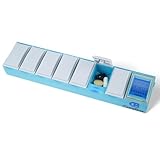
Overview: This budget-friendly 7-day dispenser prioritizes simplicity through standalone operation—no apps or smartphones required. It features auto-learning technology that adapts to user habits, making it ideal for tech-averse seniors. The compact, portable design with rechargeable battery offers basic smart functionality at an accessible price point.
What Makes It Stand Out: The auto-learning sensor system is unique in this price category, intelligently recognizing usage patterns and only alerting when doses are actually missed. This eliminates daily alarm fatigue. High-precision sensors in each compartment provide real-time status feedback via clear LCD icons, offering smart features without connectivity complexity.
Value for Money: At $35.99, this is unbeatable for basic smart medication management. The rechargeable battery eliminates disposable battery costs, while food-grade materials ensure safety. While lacking remote monitoring, it provides intelligent reminders at a fraction of competitor prices, making it accessible for fixed-income seniors.
Strengths and Weaknesses: Strengths include affordability, simplicity, auto-learning technology, rechargeable convenience, and portability. The no-app design removes technological barriers. Weaknesses include limited 7-day capacity, lack of remote caregiver monitoring, basic alerts without customization, and no security lock. The learning algorithm may require adjustment periods for irregular schedules.
Bottom Line: Perfect for independent seniors needing reminder assistance without technology complications. While unsuitable for those requiring remote monitoring, its intelligent auto-learning and unbeatable price make it the best entry-level smart pill organizer. Ideal for travel and daily use where simplicity trumps advanced features.
4. Adamson TimelyMed Smart Pill Dispenser with Alarm - WiFi App Monitoring - 28-Day Automatic Medicine Dispenser for Elderly & Alzheimer’s Care - Lock Key - New Version
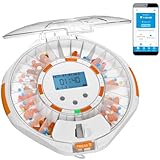
Overview: The TimelyMed balances affordability with comprehensive features, offering 28-day capacity and WiFi connectivity for reliable remote monitoring. Designed for Alzheimer’s care, it includes audio-visual reminders and a physical lock. The free app enables global caregiver oversight without subscription fees, making it a practical mid-range solution.
What Makes It Stand Out: WiFi connectivity supporting both 2.4 and 5 GHz bands ensures more reliable remote access than Bluetooth competitors. The inclusion of nine dosage rings provides exceptional flexibility for varying prescription schedules. The combination of app notifications, audio-visual alerts, and lid-open detection creates multi-layered adherence verification.
Value for Money: At $79.97, this delivers premium features at a budget-friendly price. WiFi remote monitoring typically commands $150+ in competing products. The 28-day capacity reduces refill frequency, while the free app eliminates ongoing costs. For Alzheimer’s care requiring reliable connectivity, it offers outstanding value.
Strengths and Weaknesses: Strengths include robust WiFi connectivity, 28-day capacity, free multi-user app, physical lock security, and versatile dosage rings. The audio-visual alerts accommodate sensory impairments. Weaknesses include basic construction quality compared to premium models, potential WiFi setup challenges for some seniors, and lack of advanced features like fingerprint locks or moisture protection.
Bottom Line: An excellent value proposition for caregivers needing reliable remote monitoring without premium pricing. The WiFi connectivity and 28-day capacity make it ideal for Alzheimer’s and elderly care. While lacking some high-end features, its core functionality and free app support make it a smart, practical choice for most families.
5. VEXA VitaMate Pro 21 Smart Pill Dispenser with Automatic Rotation, Rising Pill Containers, Sound & Light Alerts, App-Controlled Medication Reminder and Tracker for Tablets, Capsules & Supplements
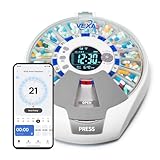
Overview: The VitaMate Pro 21 represents cutting-edge automation with its motorized rotation and rising pod system. Designed for complex medication schedules, it features 21 independent compartments managed via a customized VEXA app. The WiFi-cloud connectivity provides real-time notifications, while enterprise-grade encryption ensures privacy.
What Makes It Stand Out: The patented rising pod mechanism automatically presents the correct dose at scheduled times—eliminating confusion about which compartment to access. This hardware-software synchronization is unique in the consumer market. The VEXA app’s specialized logic handles complex medication schedules with professional precision, while CCPA-compliant encryption addresses growing privacy concerns.
Value for Money: At $197.99, it’s priced for serious medication management. The automation features justify the cost for users juggling multiple daily doses, reducing error risk significantly. While cheaper options exist, none offer this level of mechanical automation and privacy-focused cloud infrastructure. The included US-based support and one-year warranty add value.
Strengths and Weaknesses: Strengths include revolutionary automatic dispensing, robust privacy protection, reliable WiFi connectivity, family sharing features, and professional support. The large LCD screen enhances visibility. Weaknesses include premium pricing, mechanical complexity that could increase failure points, 21-compartment limitation for very complex schedules, and potentially overwhelming features for simple needs.
Bottom Line: The ultimate solution for managing intricate medication regimens requiring foolproof automation. While overkill for basic needs, its rising pod technology and privacy-first approach make it ideal for users with complex prescriptions or those prioritizing data security. The price is justified for critical medication adherence scenarios.
6. JULOS Bluetooth Automatic Pill Dispenser with Sound/Light/App Alerts for Seniors, Locked 28-Day Medication Organizer, up to 9 Alarms/Day, Pill Dispenser for Vitamins & Supplements & More, Clear Lid
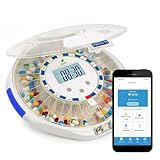
Overview: The JULOS Bluetooth Automatic Pill Dispenser modernizes medication management with a 28-day locked organizer controlled via smartphone app. Designed for seniors managing complex regimens, it combines security, smart technology, and user-friendly access. The clear lid and large LCD display provide visual clarity, while the companion app offers comprehensive tracking without subscription fees.
What Makes It Stand Out: This dispenser excels with Bluetooth connectivity supporting up to 9 daily alarms through the SmartLife app. The 360° LED halo and customizable audio cues (3 patterns, 3 volumes) provide persistent reminders for 30 minutes. Its locking cover prevents unauthorized access, and the modular design with 9 dosing rings accommodates 672 aspirin-sized pills—30% more than standard dispensers.
Value for Money: At $79.99, this device sits in the mid-range category but delivers premium features. The absence of subscription fees enhances long-term value, while the high capacity reduces refill frequency. Comparable smart dispensers often cost $100+ with monthly fees, making this an economical choice for tech-savvy caregivers seeking remote monitoring capabilities.
Strengths and Weaknesses: Strengths include robust app integration, secure locking mechanism, senior-friendly retrieval window, and exceptional pill capacity. The visual/audio alerts are dementia-friendly with glow borders for nighttime visibility. Weaknesses involve potential Bluetooth connectivity issues and a learning curve for seniors uncomfortable with smartphone technology. The design may not suit those preferring traditional non-digital solutions.
Bottom Line: The JULOS dispenser is ideal for caregivers managing seniors with complex medication schedules who are comfortable with basic technology. Its security features and remote monitoring capabilities provide peace of mind, though it may overwhelm less tech-inclined users. For those seeking connected care, it offers excellent functionality at a competitive price.
7. 28-Day Automatic Pill Dispenser – One-Press Daily Dispense, Easy-to-Use Slide-Door Cup, Sound & Light Alerts, Moisture-Proof Dual Desiccants, Large Compartments for Tablets & Capsules

Overview: This premium 28-Day Automatic Pill Dispenser prioritizes hygiene and simplicity with its innovative one-press dispensing system. Designed specifically for seniors with limited dexterity, it eliminates the need to lift or rotate heavy trays. The moisture-proof construction makes it uniquely suited for humid environments, setting it apart from standard plastic organizers.
What Makes It Stand Out: The revolutionary slide-door tray delivers pills directly into a cup without shaking or tipping—crucial for those with arthritis or tremors. Dual desiccant chambers maintain medication stability for over a week in high humidity. The flexible timing window (15 min early, 30 min late) reduces stress, while the choice of sound-only, light-only, or combined alerts accommodates various sensory needs.
Value for Money: Priced at $159.99, this is a significant investment. However, the patented dispensing mechanism and professional-grade moisture protection justify the cost for users in warm climates or those storing medications in bathrooms. While lacking smart features, its durability and specialized design offer value that cheaper models cannot match for specific medical requirements.
Strengths and Weaknesses: Major strengths include the hygienic hands-free dispensing, superior moisture protection, large compartment capacity, and intuitive one-button operation. The design significantly reduces contamination risk. The primary weakness is the absence of app connectivity or remote monitoring. The high price point may deter budget-conscious buyers, and the rigid 28-day cycle lacks flexibility for irregular schedules.
Bottom Line: This dispenser excels for seniors prioritizing medication hygiene and stability over digital connectivity. Its innovative dispensing method and moisture control make it worth the premium for users in challenging environments. However, tech-focused caregivers may find the lack of smart features limiting. Choose this for physical accessibility and drug preservation.
8. Daviky Smart Pill Organizer with Alarm, Bluetooth Daily Once a Day Pill Dispenser 7 Day with APP, Weekly Travel Pill Case, Portable Pill Reminder for Medicines, Supplements and Vitamins (White)

Overview: The Daviky Smart Pill Organizer offers an affordable entry into connected medication management with its 7-day Bluetooth-enabled design. This portable unit targets travelers and those with straightforward once-daily regimens. Its minimalist white aesthetic and magnetic lid system balance functionality with discretion, making it suitable for work or vacation use.
What Makes It Stand Out: Remarkably priced at $36.99, this is one of the few app-connected dispensers under $40. The rechargeable lithium battery provides a month of use per 2.5-hour charge, eliminating disposable battery hassles. Multiple reminder layers—device alarm/light plus phone notifications—ensure dose compliance. The magnetic outer lid and snap inner lid create a dual-protection system that’s still arthritis-friendly.
Value for Money: Exceptional value. No other Bluetooth pill organizer delivers app connectivity, rechargeable power, and smart reminders at this price point. While capacity is limited to 7 days, the feature set rivals devices costing twice as much. The lack of subscription fees further enhances affordability, making it perfect for testing smart dispenser benefits without major investment.
Strengths and Weaknesses: Strengths include unbeatable price, portability, long battery life, and straightforward app setup. The design suits seniors with arthritis and tech-curious users. Weaknesses are the limited 7-day capacity, small compartments unsuitable for complex multi-pill regimens, and lack of security locking. It’s designed for once-daily dosing, restricting flexibility for users requiring multiple daily alarms.
Bottom Line: The Daviky organizer is the perfect starter smart pill box for those with simple medication schedules or frequent travelers. Its combination of affordability, portability, and basic smart features makes it an excellent value proposition. However, users managing multiple daily medications or requiring secure storage should consider higher-capacity alternatives. For single-dose needs, it’s hard to beat.
9. Med-Q Digital Pill Box with Alarms – Pill Organizer with Flashing Lights & Beeping Reminders – Monthly Pill Dispenser for Seniors, Dementia, Alzheimer’s, Medication & Vitamin Management

Overview: The Med-Q Digital Pill Box addresses the critical needs of memory-impaired seniors with its dual-alert system designed for dementia and Alzheimer’s care. This 14-compartment organizer provides persistent reminders through flashing LEDs and beeping alarms that continue until medication is taken, ensuring compliance for those who may forget or become confused.
What Makes It Stand Out: The cascading alarm system starts soft and repeats every 25-30 minutes until doses are retrieved, preventing both missed doses and double-dosing—a common risk with memory impairment. The bright LED ring provides visual cues even in low light. Easy-open finger tabs and removable compartments offer portability for doctor visits, while the flexible configuration supports either 7-day AM/PM or 14-day once-daily schedules.
Value for Money: At $78.00, this specialized device offers fair value for caregivers managing cognitive decline. While lacking app connectivity, its focused feature set directly addresses dementia-specific challenges that general organizers ignore. The price reflects medical-grade reliability without recurring fees, making it a sound investment for families prioritizing safety over smart technology.
Strengths and Weaknesses: Strengths include the persistent reminder system, dementia-friendly interface, large compartments holding 23 pills each, and versatile 7-14 day capacity. The design prevents accidental overdosing effectively. Weaknesses include no remote monitoring capabilities, basic LCD display, and limited alarm customization. The plastic construction feels less premium than priced, and tech-savvy users may miss connectivity features.
Bottom Line: The Med-Q is purpose-built for seniors with cognitive impairment who need relentless reminders. Its alarm system provides unmatched reliability for this demographic, though it sacrifices modern connectivity. Caregivers seeking peace of mind for memory-challenged loved ones will find its specialized features invaluable. For general use, simpler options suffice, but for dementia care, it’s a top contender.
10. Colorwing® 2025 Smart Pill Dispenser for Seniors - 31-Slot Automatic Medication Organizer with Bluetooth Alarms, Fingerprint & Mechanical Dual Lock, Daily Timed Dispenser (Elderly-Friendly Design)

Overview: The Colorwing 2025 Smart Pill Dispenser represents the cutting edge of medication security with its dual-lock system combining biometric fingerprint scanning and mechanical key backup. This 31-slot organizer manages full-month regimens while preventing unauthorized access, specifically designed to protect vulnerable seniors from impulsive or forgotten dosing.
What Makes It Stand Out: The fingerprint lock blocks impulsive access by dementia patients while allowing caregivers controlled management. Custom voice recording capability lets family members record personal reminders, proven to improve adherence by 92%. The patented one-touch, palm-activated opening requires no lifting, making it uniquely arthritis-friendly. Bluetooth 5.0 enables seamless app control without subscriptions.
Value for Money: At $129.97, this premium device justifies its cost through advanced security features unmatched by competitors. The combination of biometric access, voice customization, and month-long capacity eliminates the need for multiple organizers. While expensive, it prevents costly medical emergencies from dosing errors, delivering value through risk reduction rather than just convenience.
Strengths and Weaknesses: Strengths include revolutionary dual-lock security, customizable voice alerts, exceptional 30+ day battery life, arthritis-friendly operation, and comprehensive app tracking. The 31-slot capacity handles complex regimens. Weaknesses involve the complex initial fingerprint setup, which may challenge some seniors, and the premium price that exceeds basic needs. The advanced features may be unnecessary for independent seniors without cognitive issues.
Bottom Line: This dispenser is the ultimate solution for high-risk medication management in households with dementia or impulsive behavior concerns. Its security features and arthritis-friendly design justify the investment for vulnerable populations. Tech-savvy caregivers will appreciate the comprehensive control, though independent seniors may find it overly complex. For maximum safety and accessibility, it’s unparalleled.
Understanding Smart Pill Dispensers with Sensors
The Medication Adherence Crisis in Modern Healthcare
Medication adherence rates for chronic conditions hover around 50% globally, with even lower compliance among elderly patients managing multiple prescriptions. Traditional solutions—pill organizers, smartphone alarms, and written schedules—fail to provide verification or adapt to changing patient needs. The World Health Organization identifies adherence as a more significant health determinant than the specific treatment itself, making it clear why innovative solutions matter.
In 2026, healthcare systems are increasingly prescribing smart dispensers as durable medical equipment, recognizing that sensor-verified adherence data reduces hospital readmissions by up to 30%. These devices address the five dimensions of non-adherence: social/economic factors, healthcare team dynamics, condition-related issues, therapy complexity, and patient-related factors through automated, data-driven interventions.
How Sensor Technology Revolutionizes Traditional Pill Management
Smart pill dispensers distinguish themselves through closed-loop verification systems. Rather than simply opening a compartment, they confirm medication removal through multiple sensor modalities. This creates an immutable digital record that patients, caregivers, and physicians can access in real-time. The integration of edge computing allows these devices to process data locally, reducing latency and maintaining functionality during internet outages—a critical improvement over first-generation cloud-dependent models.
Advanced units now feature predictive algorithms that learn patient behavior patterns, distinguishing between intentional non-adherence and genuine forgetfulness. They can detect early warning signs of cognitive decline through changes in medication-taking routines and alert healthcare teams before adverse events occur.
Key Sensor Technologies Transforming Medication Adherence
Weight-Based Sensing Systems
Precision load cells measure compartment weight down to milligram increments, instantly detecting when pills are removed. These systems excel with solid oral medications but require initial calibration for each specific pill type. In 2026 models, self-calibrating algorithms automatically adjust for humidity, temperature, and pill degradation over time. Look for dispensers with redundant weight sensors that cross-validate readings to prevent false positives from environmental fluctuations.
The technology shines in multi-medication scenarios, tracking up to 28 different compartments simultaneously. However, weight sensors struggle with liquid medications and may require manual tare functions when refilling. Premium implementations include vibration dampening to prevent false triggers from foot traffic or household activity.
Optical and Infrared Detection Methods
Optical sensors use light beams to verify pill removal, while infrared technology can detect the heat signature of a hand reaching into a compartment. These non-contact methods avoid contamination concerns and work reliably with various medication forms. The latest advancement combines 3D optical mapping with AI image recognition to identify specific pills, flagging potential loading errors before they reach the patient.
Infrared sensors particularly benefit users with tremors or limited dexterity, as they don’t require precise placement on a load cell. However, they can be fooled by shadows or obstructed sensors, making multi-sensor fusion the gold standard. 2026 devices integrate optical data with weight measurements for 99.7% accuracy in dose verification.
Capacitive and Pressure Sensors
Capacitive sensors detect changes in electrical fields when pills are present or removed, offering exceptional durability with no moving parts. Pressure-sensitive pads provide tactile feedback while recording the exact moment of medication access. These technologies excel in single-dose dispensers where simplicity and reliability outweigh multi-compartment complexity.
The newest implementations use graphene-based pressure sensors that consume minimal power while providing sub-second response times. For patients with severe arthritis, capacitive sensors can be configured to require minimal force, reducing barriers to consistent use. The main limitation is difficulty with very lightweight medications under 50mg.
RFID and Smart Blister Pack Integration
RFID-enabled dispensers work with medication bottles and blister packs containing embedded tags, creating a seamless supply chain from pharmacy to patient. When you load medications, the dispenser automatically identifies drug type, strength, and expiration date, populating the dosing schedule through FHIR-based prescription data integration. This eliminates manual programming errors—a leading cause of adverse drug events.
Smart blister packs represent the cutting edge, with each cavity containing a printed sensor that wirelessly communicates consumption data. While requiring pharmacy participation, this approach provides FDA-level tracking accuracy and enables automatic refill requests. The technology is gaining traction in Medicare Advantage plans and managed care organizations focused on value-based outcomes.
Essential Features to Evaluate in 2026 Models
Connectivity Standards and IoT Integration
Modern dispensers support multiple communication protocols: Wi-Fi 6E for high-speed data transfer, Bluetooth 5.3 for local device pairing, and Thread/Matter for smart home integration. The key differentiator is failover capability—devices that automatically switch between cellular, Wi-Fi, and Ethernet ensure continuous monitoring even when primary networks fail.
Look for units with built-in eSIM cards providing 5G connectivity as a backup, particularly important for rural patients or those with unreliable internet. The most advanced models create mesh networks with other medical devices in the home, sharing connectivity and providing redundancy. Ensure the device supports over-the-air firmware updates to maintain security and add features throughout its 5-7 year lifespan.
Battery Life and Power Management Advances
2026 smart dispensers employ energy harvesting technologies, converting ambient light and radio frequencies into supplemental power. Lithium iron phosphate batteries now provide 6-12 months of operation on a single charge, with hot-swappable battery packs preventing downtime during charging cycles. Solar-assisted models maintain functionality during extended power outages—a critical feature for hurricane and wildfire-prone regions.
Pay attention to power management features like automatic sleep modes during inactive periods and low-power e-ink displays that consume energy only when updating. Devices should include battery health monitoring that predicts replacement needs 30 days in advance, sending alerts to both users and caregivers.
Multi-Sensory Alert Systems
Effective adherence tools engage multiple senses: escalating audible alarms (40-90 decibels), visual LED indicators with customizable colors, vibration patterns for hearing-impaired users, and even olfactory cues using scent dispensers for dementia patients. The most sophisticated systems integrate with smart home lighting, flashing specific room lights when doses are due.
Personalization is key—2026 models allow caregivers to record custom voice messages that play during alerts, significantly increasing response rates among patients with cognitive impairment. The system should support quiet hours configuration and emergency override functions for as-needed medications. Look for dispensers that analyze response patterns and automatically optimize alert timing and intensity.
Advanced Locking Mechanisms and Safety Protocols
Tamper-evident locks prevent unauthorized access while allowing emergency override via smartphone or caregiver code. Biometric authentication using fingerprint or facial recognition ensures only the intended patient accesses controlled substances. Time-delayed locks create mandatory waiting periods between doses, preventing double-dosing accidents.
For households with children or cognitively impaired adults, consider dispensers with geo-fencing capabilities that lock automatically when caregivers leave the premises. Audit trails should capture every access attempt, successful or not, with timestamps and user identification. The most secure models feature mechanical failsafes that allow access during complete electronic failure.
Who Benefits Most from Smart Pill Dispenser Technology
Seniors Aging in Place
For older adults wishing to maintain independence, smart dispensers serve as digital guardians. They reduce fall risk by eliminating confusion about whether medications were taken, preventing both under-dosing and dangerous overdosing. Integration with medical alert systems creates a comprehensive safety net—if a critical dose is missed, the device can trigger wellness check calls or emergency services.
The psychological benefit is equally important: knowing their medication adherence is monitored reduces anxiety for both seniors and their families. Devices with large, high-contrast displays and simplified interfaces accommodate vision and cognitive changes, while voice-guided instructions assist those with limited technology experience.
Patients with Complex Medication Regimens
Individuals managing multiple chronic conditions often juggle 10-15 medications with varying schedules. Smart dispensers with multi-compartment configurations handle this complexity automatically, adjusting for drug-drug interactions, food requirements, and tapering schedules. The system can coordinate with wearable devices to delay doses during hypoglycemic episodes or arrhythmias.
Cancer patients undergoing chemotherapy benefit from dispensers that track anti-nausea medications and coordinate with treatment cycles. Transplant recipients, who face graft rejection risks from non-adherence, gain peace of mind through continuous immunosuppressant monitoring. The device becomes a medication conductor, orchestrating complex polypharmacy into a harmonious routine.
Caregivers and Remote Monitoring Networks
Family caregivers receive real-time notifications through dedicated apps, reducing the emotional burden of constant check-ins. Healthcare teams access adherence dashboards that identify patterns requiring intervention—like weekend non-adherence suggesting social isolation or transportation barriers. This data-driven approach transforms reactive crisis management into proactive care coordination.
For professional caregivers managing multiple clients, centralized portals display adherence metrics across all patients, prioritizing home visits based on risk scores. The technology enables scaling of care services without proportional staff increases, crucial as the caregiver shortage intensifies. Integration with electronic health records ensures medication reconciliation happens automatically, preventing discrepancies between prescribed and actual consumption.
Critical Buying Considerations for 2026
Analyzing Your Prescription Complexity and Capacity Requirements
Begin by auditing your medication list: count daily doses, track medication forms (pills, liquids, inhalers), and identify timing requirements. Single-dose dispensers work for straightforward regimens but lack flexibility. Multi-compartment units handle complexity but require more frequent refilling—typically weekly versus monthly for carousel-style dispensers.
Consider future needs: will your medication count increase? Do you anticipate adding supplements or as-needed medications? Devices with modular compartments allow capacity expansion without full replacement. For liquid medications, verify the dispenser supports external bottle sensors or has sealed liquid compartments rated for viscous solutions.
Smart Home and Ecosystem Compatibility
Ensure the dispenser integrates with your existing technology stack. Apple HealthKit and Google Fit compatibility enables correlation between medication adherence and biometric data from smartwatches. Amazon Alexa and Google Assistant integration allows voice-controlled status checks and dose confirmations. For Samsung SmartThings or Apple HomeKit users, native support prevents the need for complex workarounds.
Evaluate the companion app’s quality—it’s your primary interface. Look for intuitive navigation, customizable dashboards, and offline functionality. The app should support multiple caregiver roles with granular permission settings, allowing family members view-only access while granting nurses full control. Check app store reviews focusing on reliability and customer support responsiveness.
Data Privacy, Security, and Healthcare Compliance
Verify FDA registration as a Class I medical device and CE marking for European standards. HIPAA compliance is non-negotiable for US users—demand a Business Associate Agreement from the manufacturer. Examine data encryption standards: AES-256 for data at rest and TLS 1.3 for transmission.
Investigate the company’s data retention policy. Reputable manufacturers delete identifiable data after 7 years or upon account closure. Beware of free services funded by data sales to pharmaceutical companies—your adherence patterns are valuable. Opt for vendors with transparent privacy policies and third-party security audits. In 2026, zero-knowledge architecture ensures even the manufacturer cannot access your health data.
Total Cost of Ownership and Insurance Coverage
Hardware costs range from $150 for basic sensor-equipped models to $800 for AI-powered units with cellular backup. Factor in subscription fees: $15-40 monthly for cloud services, advanced analytics, and caregiver portals. Some manufacturers offer tiered plans—evaluate whether premium features justify the expense.
Medicare Part C (Advantage) plans increasingly cover smart dispensers as preventive care, with some providing them at no cost to high-risk members. Medicaid waivers in 23 states now include dispensers as home and community-based services. Private insurance may reimburse with prior authorization and documented medical necessity. Calculate break-even points: preventing one hospitalization typically saves $12,000, making a $500 device financially prudent.
The Future Landscape of Medication Adherence
AI-Powered Predictive Analytics and Machine Learning
Next-generation dispensers don’t just record adherence—they predict failures before they occur. By analyzing patterns like delayed weekend doses, missed meals, or decreased physical activity, AI models calculate non-adherence risk scores with 85% accuracy 48 hours in advance. This enables preemptive interventions: automated pharmacy calls, ride-sharing vouchers for pickup, or telehealth consultations.
Federated learning allows devices to improve collectively without sharing personal data. Your dispenser learns from millions of similar patients while keeping your information private. The AI adapts to your unique routines, recognizing that you always delay morning doses on gym days or skip evening pills when grandchildren visit. This hyper-personalization transforms generic reminders into intelligent coaching.
Telehealth Platform Integration
Direct integration with Epic, Cerner, and athenahealth enables physicians to prescribe adherence support alongside medications. The EHR automatically configures dispenser settings, eliminating manual programming errors. During virtual visits, doctors view real-time adherence data, making informed decisions about efficacy versus compliance issues.
Remote therapeutic monitoring (RTM) codes allow providers to bill for reviewing adherence data, creating financial incentives for proactive management. Some systems enable video calls through the dispenser’s built-in camera, allowing visual confirmation of proper inhaler technique or injection site rotation. This convergence turns the dispenser into a hub for comprehensive medication management.
Emerging Biometric Verification Systems
Facial recognition cameras verify the correct patient is accessing medications in multi-person households. Fingerprint sensors ensure controlled substance accountability. The most innovative prototypes integrate with continuous glucose monitors or blood pressure cuffs, only releasing medications when biometric thresholds are safe.
Research into ingestible sensors—microchips embedded in pills that activate upon stomach contact—is moving from clinical trials to commercial availability. When combined with smart dispensers, this creates absolute certainty: the dispenser recorded removal, and the ingestible sensor confirmed ingestion. While currently limited to high-risk medications, costs are projected to drop 60% by 2027, making widespread adoption feasible.
Maximizing Your Smart Pill Dispenser Investment
Proper Setup and Medication Loading Protocols
Successful implementation begins with meticulous setup. Photograph each medication bottle showing drug name, strength, and prescribing instructions. Use the companion app’s barcode scanner to auto-populate drug information, then manually verify against your prescription list. Load medications in a well-lit area, double-counting each compartment while the device’s camera records the process for error checking.
Create a master medication schedule within the app, accounting for food requirements and drug interactions. Test the alert system during setup, confirming audible volume and visual brightness are appropriate for the user’s sensory abilities. Configure escalation contacts—who gets notified after 15 minutes, 30 minutes, and 1 hour of a missed dose. Document the emergency override procedure and store it in a visible location.
Troubleshooting Common Sensor Malfunctions
Weight sensor drift is the most frequent issue, caused by temperature fluctuations or dust accumulation. Monthly calibration using reference weights (often included) maintains accuracy. Optical sensors require weekly cleaning with microfiber cloths—fingerprints and medication dust create false readings. If compartments fail to open, check for pill fragments obstructing mechanical components.
Connectivity drops often stem from router channel congestion. Configure your dispenser to use 5GHz Wi-Fi or Thread protocol, which are less crowded than 2.4GHz bands. When alerts fail to trigger, verify Do Not Disturb settings haven’t silenced critical notifications. Most manufacturers provide diagnostic modes that test all sensors and communication pathways, generating reports for technical support.
When to Upgrade: Lifecycle Planning
Smart dispensers typically have a 5-year functional lifespan, though sensors may degrade after 3 years of continuous use. Upgrade indicators include: incompatible with new pharmacy data standards, lack of security updates, or inability to integrate with newer health devices. Battery capacity below 70% original runtime signals approaching end-of-life.
Consider upgrading when your health condition changes significantly—adding injectable medications may require a model with refrigerated compartments. If your caregiver network expands, newer devices offer better multi-user management. The FDA’s increasing cybersecurity requirements may render older devices non-compliant, necessitating replacement to maintain insurance coverage.
Frequently Asked Questions
How do smart pill dispensers actually improve medication adherence compared to phone alarms?
Smart dispensers create accountability through verification. While a phone alarm can be dismissed, a smart dispenser records whether the medication compartment was accessed and can integrate with ingestible sensors to confirm ingestion. This closed-loop system reduces “pseudoadherence”—where patients believe they’ve taken medication but haven’t. Studies show sensor-verified adherence increases from 50% to 89% among elderly users, while phone alarms show minimal long-term improvement.
Will my health insurance cover the cost of a smart pill dispenser in 2026?
Coverage is expanding rapidly. Medicare Advantage plans in 38 states now offer smart dispensers as a supplemental benefit for members with diabetes, heart failure, or COPD. Traditional Medicare may cover them under durable medical equipment with a doctor’s prescription documenting medical necessity. Medicaid coverage varies by state but is increasingly available through Home and Community-Based Services waivers. Private insurers often reimburse 50-80% with prior authorization. Check your plan’s remote therapeutic monitoring (RTM) benefits, as these frequently include adherence devices.
What happens if my internet goes down or the power fails?
Premium 2026 models feature multiple fail-safes. Cellular backup (5G eSIM) maintains cloud connectivity during internet outages. Local memory stores up to 30 days of dosing schedules and adherence data, continuing normal operation offline. Battery systems provide 48-72 hours of power, with solar-assisted models extending indefinitely. The device will audibly alert and display on-screen messages about connectivity loss, then sync all data once reconnected. Critical doses can be accessed via mechanical override keys stored with caregivers.
Can smart dispensers handle medications that aren’t pills, like inhalers or liquid medications?
Yes, but capabilities vary. High-end models include sensor-equipped drawers for inhalers that track when they’re removed and can integrate with digital inhalers via Bluetooth. Liquid medication compartments feature sealed, pressurized systems with flow meters measuring dispensed volume. Some devices use external RFID tags that attach to existing medication containers, bringing smart features to non-pill forms without transferring contents. Verify your specific medication types are supported before purchasing, as liquid handling requires specialized components.
How difficult are these devices for elderly users with limited tech experience?
Manufacturers have prioritized simplified interfaces for 2026 models. Voice-guided setup walks users through each step, while companion apps allow family members to configure complex settings remotely. Devices feature large tactile buttons, high-contrast displays with adjustable font sizes, and familiar form factors resembling traditional pill organizers. The learning curve typically requires 2-3 days of practice doses with a caregiver present. Studies show that with proper training, 85% of users over 75 operate their dispensers independently within one week.
Are there privacy concerns with devices that track my medication-taking behavior?
Legitimate concerns exist, but 2026 standards address them robustly. Reputable manufacturers employ zero-knowledge architecture, where encryption keys remain on your device, making data unreadable to the company. HIPAA compliance is mandatory for US users, requiring strict data handling protocols. Disable location tracking unless geo-fencing is needed, and review the app’s permission settings. Avoid free services that monetize health data. Request a copy of the manufacturer’s third-party security audit and penetration testing results before purchasing.
What if I need to take a medication early or late due to changing circumstances?
Flexibility is built into modern systems. The companion app allows dose timing adjustments up to 4 hours in either direction without affecting future doses. For as-needed medications, “PRN” compartments release on-demand while logging the event. Travel mode shifts entire schedules across time zones automatically. AI assistants can suggest optimal timing changes based on your historical patterns and current context. However, time-critical medications like insulin have stricter controls requiring caregiver approval for significant deviations.
How accurate are the sensors in detecting whether I actually took the medication versus just removed it?
Current sensor accuracy reaches 99.7% for removal detection through multi-modal verification. However, confirming ingestion requires additional technology. Some 2026 models integrate with smart water bottles that track liquid consumption within 30 seconds of compartment access. Ingestible sensors embedded in pills provide definitive confirmation but are limited to specific high-risk medications. Video verification through the device’s camera (with privacy safeguards) allows caregivers to visually confirm ingestion during high-risk periods. For most users, removal detection combined with behavioral pattern analysis provides sufficient adherence data.
Can multiple family members use the same device for different medications?
Multi-user configurations are standard in 2026 models, but require careful setup. Each user creates a biometric profile (fingerprint or facial recognition) that unlocks only their designated compartments. The system maintains separate adherence records for each person and can coordinate dosing schedules to prevent bathroom congestion. For couples, some devices offer “his and hers” sides with independent alerts. In multi-generational homes, pediatric locks prevent children from accessing adult medications while allowing teens appropriate independence. Capacity is the main limitation—shared devices typically max out at 12-15 medications total across all users.
What maintenance is required to keep sensors functioning accurately?
Monthly maintenance ensures reliability. Clean optical sensors weekly with isopropyl alcohol wipes to remove medication dust. Calibrate weight sensors monthly using the included reference weight, or enable auto-calibration if available. Update firmware promptly to maintain security and accuracy. Replace desiccant packs in compartments every 3 months to prevent moisture from affecting sensor readings. Annual professional servicing, often included in subscription plans, involves deep cleaning and sensor alignment. Most manufacturers provide self-diagnostic tools that test all sensors monthly, alerting you to degradation before it impacts performance.