Gone are the days of squinting at color-changing test strips and playing chemist with dropper bottles. As we dive into 2026, smart pool chemical monitors have evolved from niche gadgets into essential tools that transform pool ownership from a chore into a truly automated experience. These intelligent devices don’t just tell you when your pH is off—they predict chemical needs before problems arise, integrate seamlessly with your smart home ecosystem, and save hundreds of dollars annually in wasted chemicals and preventable equipment damage.
But here’s the reality: not all smart monitors are created equal. The market has exploded with options ranging from $50 floating gadgets to $2,000+ professional-grade systems, each promising to be your pool’s guardian angel. Understanding the technology beneath the marketing hype, the hidden costs lurking in subscription models, and the specific features that match your pool’s unique chemistry profile is critical. Whether you’re managing a 15,000-gallon saltwater paradise or a compact chlorine spa, this guide will equip you with the knowledge to choose a system that delivers on its promises without drowning you in technical jargon.
Top 10 Smart Pool Chemical Monitors
Detailed Product Reviews
1. Crystal Smart Water Monitor for Chlorine & Bromine Pools, Hot Tubs & Swim Spas - 24/7 Continuous Digital Water Testing with App Notifications & Customized Chemical Dosing (New Model)

Overview: The Crystal Smart Water Monitor represents a premium approach to pool maintenance, delivering laboratory-grade precision through continuous digital testing. Designed for chlorine and bromine systems, this device eliminates the guesswork traditionally associated with test strips and weekly manual sampling by automatically analyzing your water 144 times daily—totaling 1,000 tests per week.
What Makes It Stand Out: Unlike competitors that sample once daily, Crystal’s 24/7 monitoring captures rapid chemical fluctuations that occur after heavy usage or storms. The barcode scanning feature is particularly innovative; simply scan your preferred chemical brand once, and the app generates precise dosing instructions tailored to that specific product. The system supports all major chemical brands, freeing you from proprietary ecosystems and costly monthly cartridges required by alternatives like WaterGuru.
Value for Money: At $449, the upfront investment is substantial but economically sound when compared to subscription-based monitors. Eliminating $30-50 monthly cartridge fees pays for the unit within a year. The time saved from frequent pool store visits and the prevention of chemical imbalances that damage equipment justify the premium price for serious pool owners.
Strengths and Weaknesses: Strengths include unparalleled testing frequency, universal chemical brand compatibility, robust Android/iOS app integration, and zero recurring costs. The main weakness is the initial price barrier for casual pool owners. Setup requires stable Wi-Fi near the pool area, which may necessitate a range extender.
Bottom Line: For dedicated pool and hot tub owners seeking maximum precision and long-term savings, the Crystal Smart Water Monitor is the definitive choice. Its continuous monitoring and brand-agnostic approach make it superior to subscription-based alternatives.
2. WaterGuru Sense S2 Smart Pool Monitor – Digital Pool & Spa Water Tester for Chlorine, pH, CYA & Alkalinity – Wi-Fi Enabled – Includes C5 Cassette, Float Ring & Batteries

Overview: The WaterGuru Sense S2 positions itself as a reliable, skimmer-installed smart monitor for pool owners who prefer an established brand with dedicated support. This system measures chlorine, pH, cyanuric acid, and alkalinity, delivering daily readings through your home Wi-Fi network. The included C5 Cassette provides one month of measurements, with C2 options extending to two months.
What Makes It Stand Out: Its skimmer-based installation ensures consistent water flow and accurate sampling,不同于 floating designs that can drift to pool edges. The US-based manufacturer support program offers direct assistance for setup and troubleshooting—a significant advantage over imported alternatives. The device fits most round skimmers (8.25"-9.4") without adapters, with square and larger round options available separately.
Value for Money: At $399 plus recurring cassette costs ($15-25 monthly), the total cost of ownership exceeds the Crystal monitor within two years. However, the WaterGuru brand’s track record and support infrastructure provide peace of mind that budget options lack. For pool owners prioritizing reliability over cutting-edge features, this represents fair value.
Strengths and Weaknesses: Strengths include professional skimmer placement, proven accuracy, excellent customer support, and straightforward daily reporting. Weaknesses are the mandatory cassette subscription model, limited to daily rather than continuous testing, and additional adapter costs for non-standard skimmers.
Bottom Line: The WaterGuru Sense S2 suits pool owners who value brand reputation and human support over maximum technical specs. Accept the ongoing cassette costs for a dependable, professionally-oriented monitoring solution.
3. UIUZMAR Smart Pool Monitor, Floating Salt and pH Meter 5 in 1 pH Salinity TDS EC Temp Meter for Saltwater Pool Hot Tub Spa Solar Charged Floating Salt Monitor
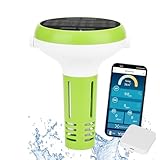
Overview: The UIUZMAR Smart Pool Monitor offers an accessible entry point into digital water testing for saltwater pool and hot tub owners. This floating 5-in-1 device tracks pH, salinity, electrical conductivity (EC), total dissolved solids (TDS), and temperature in real-time. At $139.99, it democratizes smart pool care for budget-conscious consumers.
What Makes It Stand Out: The solar-powered design with USB backup eliminates battery replacement hassles, a common pain point with electronic pool accessories. Its floating form factor requires no installation—simply place it in the water. The included calibration solutions (pH 7.00, 10.01, and 12.88mS) ensure accuracy without additional purchases, and the device arrives pre-calibrated for immediate use.
Value for Money: Exceptional value. This monitor costs 70% less than premium alternatives while covering the essential parameters for saltwater systems. The absence of subscription fees and battery costs enhances long-term affordability. For pool owners comfortable interpreting data and making manual adjustments, it delivers professional-grade measurements at a fraction of the cost.
Strengths and Weaknesses: Strengths include affordability, solar/USB charging, comprehensive saltwater parameters, easy setup, and included calibration solutions. Weaknesses are the lack of automated chemical dosing recommendations, potential Wi-Fi connectivity limitations for some users, and absence of cyanuric acid or ORP testing.
Bottom Line: The UIUZMAR monitor is ideal for hands-on pool owners seeking accurate data without premium pricing. It provides the measurements; you provide the chemistry knowledge. An unbeatable value proposition for saltwater systems.
4. Digital Pool Water Tester, 7-in-1 Smart Floating Meter, WiFi Enabled, Tests pH, Chlorine, Salinity, ORP, EC, TDS, Temperature

Overview: This 7-in-1 Digital Pool Water Tester bridges the gap between basic monitors and premium systems, offering comprehensive parameter tracking at a mid-range $189.70 price point. The floating device measures pH, free chlorine, salinity, oxidation-reduction potential (ORP), EC, TDS, and temperature, syncing data via Wi-Fi to the Tuya Smart Life app for real-time monitoring.
What Makes It Stand Out: The seven-parameter coverage exceeds most competitors in this price tier, particularly the inclusion of ORP, which indicates sanitizer effectiveness. Multi-user functionality allows family members and pool service professionals simultaneous access to data. The dual solar/USB power system ensures uninterrupted operation, while the Tuya app ecosystem integrates with broader smart home setups.
Value for Money: Strong mid-range value. It costs $250 less than the Crystal monitor while testing more parameters than the UIUZMAR. The absence of subscription fees and proprietary chemical requirements keeps ongoing costs minimal. For tech-savvy pool owners wanting comprehensive data without premium pricing, this hits the sweet spot.
Strengths and Weaknesses: Strengths include extensive parameter testing, Wi-Fi connectivity, solar/USB power, multi-user access, and affordable pricing. Weaknesses involve the requirement to manually seal USB/power ports before each use (risk of water damage if forgotten), potential Tuya app reliability issues, and lack of automated dosing guidance.
Bottom Line: A feature-rich, cost-effective floating monitor for detail-oriented pool owners. The 7-in-1 capability and smart connectivity make it a compelling alternative to both budget and premium options, provided you remember to seal ports properly.
5. Crystal Smart Water Monitor for Salt Water Pools & Hot Tubs - 24/7 Continuous Digital Water Testing with App Notifications & Customized Chemical Dosing (New Model)
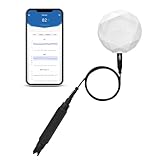
Overview: The saltwater-optimized Crystal Smart Water Monitor applies the same advanced continuous testing technology as its chlorine/bromine sibling, specifically calibrated for saltwater pool and hot tub chemistry. At $479, it’s the most expensive consumer monitor reviewed, but delivers 1,000 weekly tests (144 daily) with personalized dosing recommendations tailored to saltwater systems’ unique requirements.
What Makes It Stand Out: This is the only monitor offering true 24/7 continuous testing specifically for saltwater pools. The system’s ability to integrate with any chemical brand via barcode scanning proves especially valuable for saltwater owners, who often use specialized pH reducers and stabilizers. By eliminating proprietary cartridge subscriptions, it saves owners $360-600 annually compared to competitors.
Value for Money: Premium price, premium value. While $479 exceeds the chlorine version by $30, saltwater equipment demands precise chemistry to protect salt cells and surfaces. The rapid ROI through eliminated subscription costs, combined with prevention of salt cell damage from imbalances, justifies the investment for dedicated saltwater pool owners.
Strengths and Weaknesses: Strengths include unmatched testing frequency, saltwater-specific algorithms, universal brand compatibility, robust app with dosing calculations, and zero ongoing costs. Weaknesses are the highest upfront cost in the category and requirement for strong Wi-Fi signal at the pool.
Bottom Line: The definitive choice for saltwater pool owners who demand precision and long-term economy. Its continuous monitoring prevents the subtle chemistry drift that degrades salt cells, making it worth every penny for protecting your investment.
6. Kactoily Smart Pool Monitor All-in-one Digital Water Tester 24/7 Chemical Monitor pH Chlorine Salt ORP EC TDS Temp Testing for Pool, Spa & Hot Tub, Upgraded LCD Display

Overview: The Kactoily Smart Pool Monitor delivers comprehensive water testing through a robust standalone unit that eliminates dependency on smartphones or WiFi networks. This 7-in-1 digital tester measures pH, free chlorine, salinity, ORP, EC, TDS, and temperature, presenting all data directly on its oversized LCD display. Engineered for poolside durability, the weather-resistant housing withstands continuous outdoor exposure while providing season-long monitoring capability.
What Makes It Stand Out: Unlike app-dependent competitors, Kactoily prioritizes reliability through simplicity. The integrated high-precision sensors deliver stable readings without connectivity concerns, while the included six AAA batteries power an entire season via intelligent auto-sleep functionality. The comprehensive chemical history tracking stores data internally, and calibration powders ensure long-term accuracy without subscription fees. The universal floating ring design adapts to any pool configuration—from above-ground to inground saltwater systems.
Value for Money: At $179.99, this monitor occupies the mid-range price point while eliminating ongoing costs associated with test strips or digital subscriptions. The included batteries and calibration materials represent immediate savings, and the durable construction prevents replacement expenses. For pool owners seeking professional-grade accuracy without technological complexity, this investment pays dividends through reduced chemical waste and prevented algae blooms.
Strengths and Weaknesses: Strengths: Weather-resistant construction; Season-long battery life; No app dependency; Large, clear LCD display; Comprehensive 7-parameter testing; Universal pool compatibility; Included calibration powders.
Weaknesses: No remote monitoring capability; Manual data logging required; Lacks smartphone alerts; AAA batteries require eventual replacement.
Bottom Line: The Kactoily excels for traditionalists wanting digital precision without digital tethering. If you value reliability, durability, and straightforward operation over remote access, this standalone unit delivers exceptional performance and should be your top consideration.
7. Yewhick Smart Pool Monitor with Gateway, Profession Salt Water Pool Testing kit for Swimming Pool, 7 in 1 Chlorine Salinity ORP Monitor for Aquarium Sodium Chloride Swimming Pools Hot Tub Spas

Overview: The Yewhick Smart Pool Monitor elevates water management through comprehensive 7-in-1 testing paired with seamless WiFi connectivity. This system measures chlorine, pH, salt, ORP, EC, TDS, and temperature, transmitting real-time data to your smartphone via the included gateway and Tuya App. Designed specifically for saltwater pool optimization, it helps maintain ideal salinity levels between 2700-3400 ppm while monitoring free chlorine concentration for crystal-clear water.
What Makes It Stand Out: The dedicated gateway eliminates common pairing frustrations, enabling immediate 2.4GHz WiFi connection. Dual solar and USB charging ensures uninterrupted operation, while the floating design maintains optimal sensor positioning. Advanced chips and algorithms deliver faster, more stable readings than previous generations, and the system provides targeted guidance for salt chlorinator efficiency. Real-time alerts prevent chemical imbalances before they become problems.
Value for Money: Priced at $175.88, this monitor offers exceptional value by including the gateway (often a separate $30-50 purchase). The solar charging capability reduces battery costs, and the specialized saltwater algorithms prevent expensive equipment damage from improper salinity. Compared to professional testing services, the device pays for itself within a single season while providing 24/7 monitoring.
Strengths and Weaknesses: Strengths: Included gateway for instant WiFi setup; Solar/USB dual charging; Saltwater-specific optimization; Real-time smartphone alerts; Comprehensive 7-parameter analysis; Stable floating design; Advanced sensor accuracy.
Weaknesses: 2.4GHz WiFi only; Requires Tuya App ecosystem; Solar panel longevity unproven; May need periodic recalibration.
Bottom Line: For saltwater pool owners seeking intelligent automation, the Yewhick delivers unmatched convenience. The included gateway and dual-power design make it a compelling choice that balances advanced features with practical reliability. Highly recommended for tech-savvy pool maintenance.
8. 6-in-1 Wireless Water Quality Tester Bluetooth Floating Water Quality Monitor for Pools, Spas, and Hydroponics - pH, EC, ORP, Chlorine, Salinity, and Temperature Measurement

Overview: This budget-friendly 6-in-1 monitor democratizes digital water testing by offering essential parameter tracking at a fraction of premium competitor prices. Measuring pH, EC, ORP, chlorine, salinity, and temperature, the unit connects via Bluetooth to iOS/Android devices for real-time data access. The floating design ensures continuous surface monitoring, while the 1000-record memory enables trend analysis without immediate cloud dependency.
What Makes It Stand Out: The sub-$50 price point makes professional water testing accessible to casual pool owners and hydroponic growers alike. Bluetooth connectivity eliminates WiFi setup complexity, though requires location services enabled for proper pairing. Customizable alerts for pH, EC, ORP, and chlorine provide proactive maintenance warnings, while the backlight display facilitates dawn/dusk readings. The hydroponics compatibility expands utility beyond traditional pool applications.
Value for Money: At $44.99, this monitor represents extraordinary value—costing less than two months of professional testing services. While lacking WiFi range, Bluetooth suffices for property-side monitoring. The 1000-record internal storage compensates for limited connectivity, and the universal design serves multiple water systems. For budget-conscious buyers, performance compromises are minimal relative to cost savings.
Strengths and Weaknesses: Strengths: Exceptionally affordable; Bluetooth simplicity; 1000-record data logging; Customizable parameter alerts; Backlight for low-light use; Hydroponics compatibility; Floating design.
Weaknesses: Bluetooth range limitations; Requires location services; No WiFi remote access; Six parameters vs. seven in competitors; Build quality reflects price point; App dependency for full functionality.
Bottom Line: This monitor proves you don’t need premium pricing for reliable digital testing. Ideal for small pool owners, spa enthusiasts, and hydroponic gardeners seeking data-driven maintenance without financial commitment. Accept the Bluetooth limitations and enjoy remarkable capabilities for the price.
9. YINMIK Solar Charged Pool Monitor, WiFi pH and Salinity Tester for Salt Water Pool, 5 in 1 Smart Pool Water Salt Monitor, Floating Salt pH Meter for Swimming Pool, Hot Tub, Jacuzzi, Spa(USB Charging)
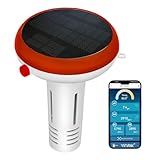
Overview: The YINMIK Solar Charged Pool Monitor targets saltwater pool owners with a streamlined 5-in-1 testing approach focused on the most critical parameters: pH, salt, EC, TDS, and temperature. WiFi connectivity through the Tuya gateway enables remote monitoring, while visual red-flag alerts immediately identify out-of-range values. The solar/USB hybrid power system ensures continuous operation with minimal maintenance.
What Makes It Stand Out: Visual urgency indicators set this monitor apart—parameters display in red when exceeding user-defined ranges, enabling instant recognition without opening the app. The factory-calibrated salinity sensor provides immediate accuracy, while included calibration solutions maintain precision. Family sharing capabilities through the Tuya Smart App allow collaborative pool management, and the fixed rope prevents drift into skimmers. Solar charging eliminates battery anxiety entirely.
Value for Money: At $99.99, YINMIK positions itself as a mid-tier solution balancing advanced features with affordability. The solar charging alone saves $15-20 annually in battery costs, while WiFi connectivity prevents expensive water chemistry disasters during vacations. The included calibration solutions add immediate value, and the 5-parameter focus covers essential metrics without overwhelming casual users.
Strengths and Weaknesses: Strengths: Solar/USB hybrid power; Visual red-alert system; Factory-calibrated salinity; WiFi remote monitoring; Family sharing features; Included calibration solutions; Saltwater-specific design.
Weaknesses: Limited to five parameters; Tuya App dependency; 2.4GHz WiFi restriction; Gateway setup may challenge non-technical users; Lacks ORP measurement.
Bottom Line: YINMIK delivers focused saltwater monitoring with intelligent power management and visual alerts. Perfect for pool owners wanting remote access without premium pricing. The solar charging and red-flag system provide practical advantages that justify the investment, making it a smart mid-range choice.
10. iopool Smart Water Monitor - Works for Chlorine & Bromine Pools, Hot Tubs, & Swim Spas - Gives Precise Dosage recommendations.

Overview: The iopool Smart Water Monitor redefines pool maintenance by shifting focus from measurement to actionable treatment guidance. Compatible with chlorine, bromine, and active oxygen systems, this premium device provides precise chemical dosage recommendations rather than raw data interpretation. The system analyzes water chemistry in real-time and delivers step-by-step maintenance protocols through its intuitive app, effectively serving as a digital pool professional.
What Makes It Stand Out: Unlike competitors that merely display values, iopool’s algorithm calculates exact chemical quantities needed for perfect balance. The guided pool care feature walks users through each treatment step, eliminating guesswork and preventing common dosing errors. Personalized alerts notify owners of required actions before problems develop, while the history feature tracks water evolution over time. App sharing functionality enables neighbor-assisted monitoring during vacations.
Value for Money: At $359.00, iopool commands premium pricing but delivers proportional value through prevented chemical waste and avoided algae outbreaks. The dosage precision saves $200+ annually in unnecessary treatments, while the guided system prevents costly equipment damage from chemical misuse. For busy professionals or pool maintenance novices, the time savings and peace of mind justify the investment within one season.
Strengths and Weaknesses: Strengths: Precise dosage recommendations; Guided maintenance protocols; Multi-sanitizer compatibility; Real-time analysis; App sharing capabilities; Personalized alerts; Professional-grade accuracy.
Weaknesses: Not compatible with saltwater pools; Highest price in category; Requires consistent app engagement; No standalone display; Subscription-free but premium cost; Limited to traditional sanitizers.
Bottom Line: iopool is the choice for those wanting answers, not just data. Its treatment-focused approach eliminates pool maintenance anxiety, making it ideal for novices and time-constrained owners. If you own a chlorine or bromine pool and value precise guidance over DIY interpretation, this premium monitor pays for itself through chemical savings and prevented disasters.
Why Automated Water Chemistry Matters More Than Ever
Pool chemistry isn’t just about keeping water clear—it’s about protecting your investment and your health. Manual testing creates dangerous gaps where pH can swing from acidic to alkaline in hours, etching plaster, corroding heaters, and creating an environment where algae blooms overnight. Smart monitors operate as 24/7 digital lifeguards, catching the subtle chemical shifts that occur after heavy rain, intense sunlight, or a weekend pool party. In 2026, with increasingly unpredictable weather patterns and water conservation mandates, maintaining perfect balance isn’t just convenient—it’s environmentally responsible. Every chemical overdose you prevent keeps phosphates and nitrates out of local waterways while extending the life of your filter and pump by up to 40%.
What Exactly Is a Smart Pool Chemical Monitor?
At its core, a smart pool chemical monitor is a network-connected sensor array that continuously measures key water parameters and transmits data to your smartphone or automation system. Unlike traditional testers that give you a single snapshot, these devices create a chemical timeline, tracking trends and learning your pool’s unique consumption patterns. Modern units monitor far beyond pH and free chlorine—they track total alkalinity, calcium hardness, cyanuric acid levels, temperature, and even oxidation-reduction potential (ORP), which provides a real-time measure of sanitizer effectiveness. The “smart” designation means they don’t just report numbers; they contextualize them, accounting for bather load, weather forecasts, and your specific sanitizer system.
The Evolution from Test Strips to AI-Powered Sensors
The journey from dip-and-read strips to today’s AI-driven platforms mirrors the smartphone revolution. First-generation digital testers simply replaced the human eye with a color sensor. Today’s fifth-generation monitors employ machine learning algorithms that recognize your pool’s “personality”—how quickly it consumes chlorine on sunny days, how rainstorms affect pH, and even how your specific fill water chemistry impacts long-term balance. By 2026, advanced models incorporate predictive analytics that can forecast chemical needs three days ahead, automatically adjusting chemical feeders or alerting you to add precise amounts before levels drift out of range.
How Smart Monitors Actually Work: The Science Simplified
Understanding the technology helps you separate effective tools from expensive toys. Most systems use either potentiometric sensors (electrodes that measure voltage changes) or photometric sensors (LEDs that detect color changes in reagents). pH electrodes are glass-membrane probes that generate voltage proportional to hydrogen ion concentration, while ORP sensors measure electron activity to determine sanitizer potency. For chlorine, some units use amperometric sensors that directly measure hypochlorous acid concentration, while others rely on colorimetric analysis where reagents react with water samples inside the device. The accuracy gap between these methods is substantial—amperometric sensors respond in real-time without consumables but cost significantly more.
Key Features That Separate Premium Monitors from Basic Models
Price tags alone don’t reveal value. The difference between a $200 and $800 monitor often lies in sensor quality, data intelligence, and integration depth. Premium models feature replaceable, individually calibrated probes that maintain accuracy for 18-24 months, while budget units use sealed sensor arrays that drift after six months and require complete replacement. Look for devices with automatic temperature compensation (ATC), which adjusts readings based on water temperature—a critical feature if your pool sees significant seasonal variation. Data logging capacity matters too; entry-level monitors might store 30 days of data, while professional systems maintain two years of trending information accessible via cloud dashboards.
Sensor Accuracy and Response Time
Accuracy specifications tell only part of the story. A monitor claiming ±0.1 pH accuracy might achieve that only in laboratory conditions with pristine probes. In real-world pool water, organic contaminants, oils, and mineral buildup affect readings. Premium devices combat this with self-cleaning mechanisms—tiny wipers or ultrasonic pulses that clear biofilm from probe surfaces every few hours. Response time is equally crucial: a sensor that takes 10 minutes to register a chemical addition is practically useless for active management. Top-tier monitors update readings every 30-60 seconds, creating a responsive feedback loop for automated chemical dosing systems.
Connectivity Options: WiFi vs Bluetooth vs Cellular
Your monitor is only smart if it can reach you anywhere. Bluetooth-only models limit you to poolside checks within 30-50 feet, making them unsuitable for vacation homes or busy lifestyles. WiFi connectivity enables remote monitoring and alerts, but consider your pool’s distance from your router—many units struggle with weak signals through walls and water. Cellular-enabled monitors offer true anywhere-access and continue reporting during power outages, but require ongoing data plans costing $5-15 monthly. The sweet spot for most homeowners is dual-band WiFi with Bluetooth backup, allowing local access when internet fails while providing global monitoring capability.
Power Sources and Battery Life Considerations
Nothing kills convenience faster than a dead monitor. Solar-powered floating units seem eco-friendly but can fail during cloudy weeks or if panels become scaled. Hardwired 120V systems offer unlimited power but complicate installation and create shock hazards near water. The most reliable 2026 designs use long-life lithium batteries (2-5 year lifespan) with solar supplementation, or low-voltage DC power from your pool automation panel. Check the battery replacement cost—some proprietary packs run $80-120, turning “low maintenance” into a recurring expense. Power management features like sleep modes during inactive hours can extend battery life by 40%.
Types of Smart Pool Monitors: Which Form Factor Fits Your Setup?
The physical design of your monitor determines installation complexity, maintenance access, and measurement reliability. Each type carries distinct trade-offs that matter more than brand reputation.
Floating Monitors: Convenience Meets Compromise
These bobbing devices require zero installation—just toss them in and sync. They’re ideal for renters or above-ground pools where permanent mounting isn’t possible. However, they measure surface water chemistry, which can differ significantly from deeper layers, especially in pools without good circulation. They’re also vulnerable to theft, damage from automatic cleaners, and UV degradation. The constant motion can accelerate sensor wear, and their small size limits battery capacity. For pools larger than 20,000 gallons, floating monitors should supplement, not replace, fixed sensors.
Inline Systems: The Professional’s Choice
Installed directly in your plumbing, typically after the heater and before return jets, inline monitors analyze freshly filtered, fully mixed water—the most representative sample possible. They’re protected from physical damage and theft, and their larger size accommodates multiple sensor ports and industrial-grade probes. Installation requires PVC cutting or union fittings, making them best for new construction or filter replacements. The downside? If your pump isn’t running, you’re not monitoring. During power outages or timer-off periods, you’re flying blind. Some advanced systems include battery backup and sample loops that maintain flow during pump cycles.
Portable Digital Testers: Hybrid Solutions
These handheld devices bridge manual and automated testing. You dip them, they analyze, and they sync results to your phone. They’re perfect for pool service professionals or owners who prefer weekly deep-dive analysis over continuous monitoring. The latest models feature guided testing procedures that eliminate human error—think video tutorials and audio prompts. While they lack real-time alerts, their lab-grade accuracy makes them excellent calibration tools for verifying continuous monitor readings. Consider them as quality control instruments rather than primary monitoring solutions.
Critical Specifications to Evaluate Before Buying
Technical specs reveal the real capability beneath marketing claims. Dive into the datasheet before committing.
Measurement Range and Resolution
Your monitor must handle your pool’s extremes. Saltwater pools often run pH higher (7.6-7.8) and need resolution to 0.01 pH units for fine-tuning. Chlorine ranges should extend from 0.5 to 20+ ppm to capture shock treatment levels. Resolution matters: a monitor showing chlorine in 0.5 ppm increments can’t detect the 0.2 ppm drop that signals an emerging algae problem. Look for devices that display at least two decimal places for pH and one decimal place for chlorine below 5 ppm.
Calibration Requirements and Frequency
All sensors drift—this is physics, not a defect. The question is how often you must recalibrate and how difficult the process is. Premium probes need monthly two-point calibration using pH 4.0 and 7.0 buffer solutions, a 10-minute process. Budget sealed sensors might claim “no calibration needed,” but what they mean is “you can’t calibrate, so replace when inaccurate.” Some 2026 models feature automatic calibration using onboard reference solutions, but this adds mechanical complexity. Check if the manufacturer provides free calibration reminder services via app notifications.
Third-Party Integrations and API Access
Your pool monitor shouldn’t live in a silo. Integration with smart home platforms like Apple HomeKit, Google Home, or Amazon Alexa allows voice queries like “What’s my pool pH?” More importantly, API access lets you connect data to broader home automation systems—imagine your monitor triggering a smart valve to add muriatic acid or pausing your robotic cleaner when chlorine drops. Professional-grade units offer Modbus or MQTT protocols for integration with Crestron, Control4, or proprietary automation systems. Consumer models increasingly support IFTTT for custom workflows.
The Hidden Costs: Subscription Services and Consumables
That attractive upfront price often masks ongoing expenses. Cloud data storage, advanced analytics, and cellular connectivity frequently require subscriptions ranging from $3 to $30 monthly. Some manufacturers lock basic features like historical trending behind paywalls. Reagent-based monitors consume $15-40 of chemicals monthly, while electrode-based systems need $50-80 probe replacements every 18-24 months. Factor these costs over a five-year ownership period—a $300 monitor with $20/month subscription costs $1,500 total, while a $600 monitor with no subscription saves money by year three. Always calculate total cost of ownership.
Installation Realities: What the Manual Won’t Tell You
Professional installation for inline systems runs $200-400, but DIY-savvy owners can tackle it with basic PVC skills. The trick is location—install too close to the heater and thermal shock damages sensors; too far downstream and chemical injection points skew readings. For floating monitors, placement matters: keep them away from skimmers and returns to avoid false readings from freshly added chemicals. WiFi models often need a dedicated 2.4GHz network; many pools sit at the edge of 5GHz range, causing frustrating disconnections. Pro tip: install a waterproof WiFi extender in your equipment pad before mounting any networked device.
Interpreting Your Data: From Raw Numbers to Actionable Insights
Raw data without context creates anxiety. A pH of 7.8 isn’t inherently bad if your alkalinity is properly buffered and your sanitizer system is designed for higher pH operation. Smart monitors should provide trend analysis, not just current values. Look for apps that display 7-day moving averages, variance indicators, and correlation charts (does pH always spike after heavy use?). The best systems include educational overlays explaining why levels change and how specific adjustments impact overall balance. They’ll warn you about chasing perfect numbers instead of maintaining stable ranges. Some even factor in your local water source chemistry, predicting how fresh fill water will shift your balance.
Common Pitfalls That Void Warranties and Ruin Sensors
Sensor care makes or breaks your investment. Never store probes dry—this destroys the glass membrane within days. Always keep the protective cap filled with storage solution when removing for winterization. High calcium hardness causes scale buildup on pH probes, requiring monthly cleaning with diluted vinegar. Conversely, aggressive water etches probe glass, requiring more frequent replacement. Most warranties exclude damage from improper winterization, so document your process with photos. A critical 2026 issue: firmware updates. Some manufacturers push updates that brick devices if battery levels are low, so always update with fresh batteries or AC power connected.
2026 and Beyond: Emerging Technologies on the Horizon
This year’s breakthrough is multi-parameter spectroscopy—units that analyze full water composition without reagents or electrodes, using light absorption patterns. Early adopters report 90% cost savings on consumables but face $2,500+ price tags. AI-driven predictive maintenance is maturing, with monitors that detect filter inefficiency by tracking particle counts and pressure differentials. We’re also seeing the first blockchain-verified water quality logs for commercial pools, and while overkill for residential use, this technology may trickle down to luxury home systems. Perhaps most exciting: microfluidic “lab-on-a-chip” sensors that reduce probe size and cost by 70%, promising $100 professional-grade monitors by 2027.
Making the Final Decision: A Framework for Your Unique Pool
Start by honestly assessing your needs. A weekend vacation pool needs cellular connectivity and automated dosing; a small urban plunge pool might only need weekly portable testing. Budget for the total five-year cost, not the purchase price. Prioritize replaceable probes over sealed units, and API access over flashy app interfaces. Read the warranty fine print—look for at least two years on electronics and one year on probes. Finally, check the manufacturer’s support reputation. The best hardware fails without responsive technical help. Join pool owner forums and search for actual failure stories, not just glowing reviews. Your perfect monitor is the one that fades into the background, silently protecting your investment while you actually enjoy your pool.
Frequently Asked Questions
How often do smart pool monitors actually need calibration?
Most quality monitors with replaceable probes require calibration every 30 days for pH and ORP sensors. However, this varies based on water conditions—pools with high calcium hardness or heavy bather loads may need bi-weekly calibration. Some advanced models feature automatic drift compensation that extends intervals to 60-90 days, but you should still verify accuracy monthly using a portable digital tester or liquid reagent test. Never trust a monitor that claims it never needs calibration; all electrochemical sensors drift over time due to membrane fouling and reference junction contamination.
Can I rely solely on a smart monitor and stop manual testing completely?
Smart monitors excel at continuous trending and catching sudden changes, but they shouldn’t completely replace periodic manual testing. Use your monitor for daily management and alerts, but perform a full manual test (including cyanuric acid, calcium hardness, and total alkalinity) monthly using a professional-grade kit. These parameters change slowly and aren’t measured by most continuous monitors. Think of smart monitors as your early warning system and manual tests as your quality control audit—they work best together.
What’s the realistic lifespan of pool monitor sensors in 2026?
Premium glass pH electrodes typically last 18-24 months in residential pools with proper maintenance. ORP sensors often last 12-18 months. Amperometric chlorine sensors have the shortest lifespan at 6-12 months due to membrane degradation. However, these numbers assume proper storage, regular cleaning, and never exposing probes to extremes beyond their rated range. Sealed sensor arrays in budget units may fail unpredictably after 6-12 months and cannot be replaced individually. Always check replacement probe costs before buying—some proprietary designs cost more than the monitor itself.
Do smart monitors work with saltwater chlorine generators?
Yes, but compatibility varies. Saltwater pools operate at higher pH (7.6-7.8) and generate chlorine continuously, requiring monitors with extended pH ranges and rapid response times. Look for units specifically rated for salt pools, as high TDS (total dissolved solids) can interfere with conductivity-based sensors. The best setups integrate the monitor with the salt cell controller, allowing the system to adjust output based on real-time chlorine demand rather than fixed timers. Be aware that salt splash-out can corrode monitor housings—choose units with marine-grade stainless steel or UV-resistant polymer construction.
How accurate are smart monitors compared to professional pool store testing?
Professional pool stores using photometers or titration kits still hold the accuracy edge for comprehensive testing, typically within ±0.05 pH and ±0.2 ppm chlorine. High-end smart monitors achieve ±0.1 pH and ±0.5 ppm chlorine under ideal conditions. The key difference is consistency—store tests vary by technician skill and equipment calibration, while your monitor provides repeatable measurements from the same water source. Use store tests to benchmark your monitor quarterly, but trust your device’s trending data for daily management. Discrepancies usually indicate sensor drift needing calibration, not monitor failure.
Will a smart monitor reduce my chemical costs?
Most owners see 20-40% chemical savings within the first year. Smart monitors prevent the “overdose guessing game” where you add extra chemicals “just to be safe.” By adding precise amounts only when needed, you eliminate waste and avoid the costly rebound cycles caused by overcorrection. Salt pool owners save on pH reducer, while chlorine pool owners cut liquid chlorine use by optimizing timing. The savings typically offset monitor subscription costs within 12-18 months. However, the real financial impact comes from preventing equipment damage—maintaining proper pH extends heater life by 3-5 years, a $2,000+ savings.
What happens to my monitor during a power outage?
It depends on the power design. AC-powered inline systems stop monitoring when the pump stops, creating a blind spot. Battery-powered units continue working but can’t sample water without flow. The best hybrid systems include uninterruptible power supplies (UPS) that keep electronics alive for 24-48 hours, sampling water periodically even when the pump is off. Cellular models continue transmitting data if they have battery backup. During extended outages, remove floating monitors and store them properly to prevent damage from stagnant water and debris accumulation.
Can I install an inline monitor myself, or do I need a professional?
If you can cut and glue PVC pipe, you can install most inline monitors. Manufacturers design them for retrofit installation using included saddle clamps or union fittings. The critical step is locating the sensor tee downstream of your heater (to avoid thermal damage) but upstream of any chemical injection points. You’ll need to shut down your pump for 2-4 hours and may need to drain some water from your plumbing. However, if your equipment pad lacks space or you’re uncomfortable with plumbing, professional installation ($200-400) ensures optimal placement and maintains warranty coverage. Some manufacturers require professional installation for commercial warranty validation.
How do I protect my monitor from freezing in winter?
Never leave probes in frozen water. For floating monitors, remove them, clean thoroughly, and store indoors with probes in storage solution. Inline systems require blowing out the sensor chamber with compressed air during winterization, then filling with non-toxic antifreeze or storage solution. Most damage occurs from ice expansion cracking probe housings. If you keep your pool running through mild winters, maintain circulation and consider a freeze protection controller that activates pumps below 35°F. Some premium monitors include internal heaters that prevent sensor damage during brief cold snaps, but this drains batteries quickly.
Are there privacy concerns with cloud-connected pool monitors?
Any device transmitting data creates a digital footprint. Reputable manufacturers encrypt data in transit and at rest, but read privacy policies carefully. Some free apps sell anonymized water quality data to chemical companies or pool builders. If privacy is paramount, look for monitors with local-only modes that store data on your home server or SD card, or those offering private cloud options. Enterprise-grade monitors with API access let you route data through your own secure servers. For most residential users, the convenience outweighs minimal privacy risk, but avoid devices that require unnecessary personal information beyond email for account setup.