Gone are the days when a simple motion-activated floodlight was considered cutting-edge home security. As we move deeper into 2026, artificial intelligence has fundamentally transformed how outdoor lighting protects our homes—turning passive illumination into an intelligent, predictive guardian that can distinguish between a swaying branch and a suspicious figure. AI motion tracking technology doesn’t just detect movement; it understands context, learns patterns, and responds with precision that would have seemed like science fiction just a few years ago.
But with this technological leap comes complexity. The market is now flooded with options boasting “AI-powered” features, yet not all implementations are created equal. Understanding the nuanced differences between on-device processing and cloud-based analysis, recognizing the importance of true neural network training versus basic algorithmic filtering, and knowing which specifications actually matter for your specific property can mean the difference between a security system that feels like a trusted partner and one that becomes a source of constant frustration. Let’s dive into what makes 2026’s AI security lighting genuinely intelligent—and how to choose the right system for your needs.
Top 10 Smart Security Lights with AI Motion Tracking
Detailed Product Reviews
1. Tapo 2K Dimmable Floodlight Security Camera Outdoor Wireless w/Solar Panel, Pan/Tilt, 360º AI Tracking, Free Person/Vehicle Detection, Works w/Alexa and Google Assistant, SD/Cloud, C615F KIT

Overview: The Tapo C615F KIT redefines outdoor security by combining a solar-powered wireless camera with an 800-lumen dimmable floodlight and 360° pan/tilt capabilities. This all-in-one solution eliminates wiring hassles while delivering 2K resolution surveillance with intelligent AI tracking. Designed for porches, yards, and driveways, it runs on a robust 10,400 mAh battery that can sustain operation for up to 140 days without sunlight, making it ideal for locations where electrical access is limited or where clean aesthetics matter.
What Makes It Stand Out: The integrated solar panel with just 45 minutes of daily direct sunlight provides true maintenance-free operation—a game-changer for wireless security. The 360° AI tracking automatically detects and follows subjects across the entire viewing range, not just within the mechanical pan/tilt limits. Free person and vehicle detection without subscription fees adds significant value, while Alexa/Google Assistant integration enables seamless smart home control. The dimmable floodlight offers customizable illumination rather than binary on/off operation.
Value for Money: At $84.99, this kit undercuts most competitors offering solar-powered 2K cameras with floodlights by $30-50. The absence of mandatory cloud subscription fees makes it even more economical long-term. While the 800-lumen output is modest compared to 5000+ lumen alternatives, the solar convenience and wire-free installation save hundreds in electrician costs, delivering exceptional ROI for DIY homeowners.
Strengths and Weaknesses: Strengths: True solar self-sufficiency; impressive 140-day battery backup; 360° AI tracking with free detection; simple DIY installation; no subscription required for basic AI features.
Weaknesses: 800 lumens is relatively dim for large areas; requires 2.4 GHz Wi-Fi (no 5 GHz support); solar performance depends on installation location and climate; mechanical pan/tilt range smaller than total field of view.
Bottom Line: The Tapo C615F KIT is perfect for homeowners seeking hassle-free, sustainable security without monthly fees. Its solar capability and smart tracking outweigh brightness limitations, making it a top choice for small-to-medium outdoor spaces where wiring is impractical.
2. Onforu Floodlight Camera 360° View 2K HD Video Security Camera Outdoor, 5500LM Motion-Activated Smart Flood Lights Cam, AI Detection and Tracking, 24/7 Recording, Color Night Vision, Work with Alexa

Overview: This Onforu floodlight camera delivers professional-grade security with a blinding 5500-lumen LED array paired with crystal-clear 2K HD video. The three adjustable light heads provide expansive coverage while the 360° pan/tilt mechanism eliminates blind spots entirely. With 24/7 continuous recording, color night vision, and intelligent AI detection, it captures every detail day and night. The system integrates seamlessly with Alexa and Google Assistant for voice control, making it a comprehensive smart security solution for larger properties requiring maximum visibility.
What Makes It Stand Out: The 5500LM brightness far exceeds typical floodlight cameras, creating a powerful deterrent while illuminating vast areas. Intelligent PIR sensors enable precise human detection with auto-tracking for people, pets, and vehicles—maintaining focus on moving subjects automatically. Full-color night vision preserves critical details like clothing colors or vehicle paint that infrared cameras miss. The 24/7 recording capability ensures no event goes undocumented, unlike motion-only systems. Two-way audio allows real-time communication with visitors or delivery personnel.
Value for Money: Priced at $99.99, this model offers premium features typically found in $150+ units. The combination of extreme brightness, 360° tracking, and continuous recording represents excellent value. While it lacks solar power, the wired design ensures uninterrupted operation without battery anxiety. The free AI detection and flexible storage options (cloud or local SD up to 128GB) avoid costly subscriptions, making it more economical than Ring or Arlo equivalents over time.
Strengths and Weaknesses: Strengths: Exceptional 5500LM brightness; true 360° coverage with auto-tracking; 24/7 continuous recording; full-color night vision; reliable wired power; two-way audio; no mandatory subscription.
Weaknesses: Higher power consumption; installation requires electrical wiring; no solar option; SD card not included; may be overkill for small spaces.
Bottom Line: For those prioritizing maximum illumination and comprehensive recording, this Onforu camera is outstanding. The extreme brightness and 360° tracking make it ideal for large properties, driveways, and commercial applications where deterrence and detailed evidence are paramount.
3. Onforu Floodlight Camera 360° View 2K HD Video Security Camera Outdoor, 5500LM Motion-Activated Smart Flood Lights Cam, AI Detection and Tracking, 24/7 Recording, Color Night Vision, Work with Alexa

Overview: Onforu’s flagship floodlight camera combines a formidable 5500-lumen LED system with 2K HD surveillance and 360° pan/tilt functionality. Engineered for comprehensive property monitoring, it features intelligent PIR sensors that automatically track movement across the entire viewing spectrum. The unit records continuously 24/7 while providing full-color night vision, ensuring no detail escapes capture. With Alexa/Google integration and two-way audio, it serves as both a powerful security deterrent and a convenient smart home device for monitoring large outdoor areas like backyards, parking areas, and commercial perimeters.
What Makes It Stand Out: The triple-head floodlight design delivers exceptional 5500LM brightness that blankets expansive zones, far surpassing standard security lights. AI-powered auto-tracking responds instantly to motion, intelligently following subjects rather than merely alerting. The color night vision technology maintains full-spectrum visibility after dark, crucial for identifying details lost in monochrome infrared footage. Continuous 24/7 recording provides complete timeline coverage, eliminating gaps between motion events. Flexible storage options and voice assistant compatibility enhance usability without locking users into proprietary ecosystems.
Value for Money: At $99.99, this camera positions itself as a feature-rich alternative to premium brands costing significantly more. The extreme brightness alone justifies the price compared to separate floodlight and camera systems. Wired operation ensures reliability without battery replacement costs. While the initial investment exceeds basic models, the absence of required monthly fees and the inclusion of professional-grade features like 360° tracking and color night vision deliver strong long-term value for serious security applications.
Strengths and Weaknesses: Strengths: Ultra-bright 5500LM output; complete 360° surveillance with AI tracking; full-color night vision; continuous recording capability; robust two-way audio; flexible local/cloud storage; no subscription required.
Weaknesses: Requires hardwired installation; no battery backup during power outages; SD card purchased separately; brightness may disturb neighbors if not properly aimed; over-featured for simple monitoring needs.
Bottom Line: This Onforu model excels for users demanding maximum security coverage and deterrent capability. The combination of extreme brightness, intelligent tracking, and continuous recording makes it a professional-grade solution at a consumer price point, perfect for large properties needing uncompromising surveillance.
4. Onforu 100W 9000LM Smart LED Security Lights Motion Sensor Outdoor, WiFi Alexa Flood Light APP Control, 2500K-6500K, Motion Detector with Adjustable 3 Head, IP65 Wall Light for Yard (Black)

Overview: This Onforu smart floodlight is a pure lighting solution—note it contains NO camera—delivering an astonishing 9000 lumens from its 100W LED array. Designed for those needing maximum illumination with smart controls, it offers unprecedented customization through the Onforu app. Three adjustable heads provide expansive coverage while WiFi connectivity enables voice control via Alexa/Google Assistant. The IP65 waterproof rating and aluminum construction ensure durability in harsh conditions, making it suitable for yards, garages, driveways, and commercial spaces where extreme brightness and smart scheduling are priorities.
What Makes It Stand Out: The 9000LM output dwarfs typical floodlights, creating daylight-level illumination across vast areas. Stepless color temperature adjustment from 2500K warm white to 6500K cold white is rare in outdoor lights, allowing users to match ambiance or optimize visibility. The motion sensor offers remarkable 72.7-foot detection range with 180° coverage and adjustable sensitivity levels. Group linkage enables multiple lights to activate simultaneously, creating coordinated security zones. Micro-Bright mode maintains low-level illumination for energy savings between motion triggers.
Value for Money: At $79.99, this light delivers professional-grade brightness and smart features for the price of basic floodlights. Competitors with similar lumen output and WiFi control typically cost $120+. The energy-efficient LED design reduces electricity costs despite high output. While it lacks a camera, it excels at its primary function—illumination—making it a cost-effective choice for those with existing camera systems or purely lighting needs. The durability and smart features provide long-term value.
Strengths and Weaknesses: Strengths: Exceptional 9000LM brightness; stepless color temperature control (2500K-6500K); extensive 72.7FT motion detection; group linkage capability; IP65 weatherproofing; voice assistant integration; energy-saving Micro-Bright mode; memory function.
Weaknesses: NO camera or recording capability; requires 2.4GHz WiFi; adapter is not waterproof; installation may require electrical expertise; extreme brightness could be excessive for small residential areas; no battery backup.
Bottom Line: Ideal for users seeking maximum smart lighting without camera functionality. The 9000LM output and advanced customization make it perfect for large properties, workshops, or security-conscious homeowners who already have separate surveillance systems. Unbeatable brightness for the price.
5. Onforu Floodlight Camera Outdoor, 2K Smart Home Security Camera Wired, 360° Surveillance Al Detection & Auto Tracking, 5500 Lumens Motion-Activated Flood Light Cam, Color Night Vision, 2-Way Audio
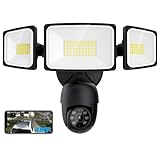
Overview: This wired Onforu floodlight camera balances high-performance security with reliable continuous operation. Delivering 2K HD video through a 360° pan/tilt mechanism, it pairs with a powerful 5500-lumen LED system to provide comprehensive surveillance and illumination. The AI-powered detection automatically tracks people, pets, and vehicles while full-color night vision maintains detail around the clock. Two-way audio enables remote communication, and the system records continuously to cloud or local microSD storage. Designed for homeowners wanting professional features without wireless connectivity concerns, it ensures consistent performance through direct electrical connection.
What Makes It Stand Out: The wired design eliminates battery management and WiFi reliability issues common in wireless cameras, providing 24/7 operation without interruption. AI-powered auto-tracking covers the full 360° range, intelligently following motion across the property. The 5500LM three-head floodlight delivers exceptional brightness with customizable scheduling. Full-color night vision preserves critical visual evidence that infrared systems lose. Real-time mobile alerts and flexible storage options give users complete control over their security footage without mandatory subscriptions.
Value for Money: At $86.99, this model offers a sweet spot between budget wireless cameras and premium commercial systems. It provides the same 5500LM brightness and AI tracking as Onforu’s $99.99 version but at a lower price point, likely due to simplified features or older generation hardware. The wired connection ensures reliability that justifies installation effort. Compared to Ring Floodlight Cam ($249) with similar specs, it delivers outstanding value. The absence of ongoing fees makes it economical for long-term use.
Strengths and Weaknesses: Strengths: Reliable wired power (no batteries); bright 5500LM illumination; comprehensive 360° AI tracking; full-color night vision; continuous recording capability; two-way audio; flexible storage options; lower price than comparable models.
Weaknesses: Requires electrical wiring (installation complexity); no battery backup during outages; no solar option; SD card not included; 2.4GHz WiFi only; may lack some advanced features of premium models.
Bottom Line: An excellent choice for users prioritizing reliability and brightness over installation convenience. The wired design ensures consistent operation, making it ideal for primary entry points and large areas where uninterrupted surveillance is critical. Great value for a feature-rich, professional-grade security solution.
6. Onforu 32W 2 Head Smart LED Security Lights, 3200LM Motion Sensor Outdoor Lights Hardwired, 2700K-6500K, APP Control, WiFi Alexa Motion Detector Light for Outside, IP65 Waterproof Flood Lights(White)

Overview: The Onforu 32W Smart LED Security Lights deliver intelligent outdoor illumination without the complexity of integrated cameras. This hardwired dual-head fixture produces 3200 lumens with adjustable color temperature from warm 2700K to crisp 6500K, all controllable via the Onforu app or Alexa voice commands.
What Makes It Stand Out: This system excels in customization flexibility. The 180° motion sensor covers an impressive 19-72 foot range, adjustable through the app with precise sensitivity settings. Unique timing functions allow switching between standard floodlight and motion-sensor modes based on schedules. The stepless dimming system, built on three color temperature bases with five brightness levels, offers exceptional tailoring for different scenarios.
Value for Money: At $39.99, this represents remarkable value for a WiFi-enabled, weatherproof security light. Comparable smart fixtures from major brands often cost twice as much. While it lacks a camera, the extensive app controls, IP65 rating, and 3200LM output make it an affordable entry point into smart home security lighting.
Strengths and Weaknesses: Strengths:
- Comprehensive app control with Alexa/Google integration
- Wide motion detection range (180°, 72ft)
- IP65 weatherproofing for all-season reliability
- Memory function preserves your settings
- Flexible scheduling and dimming options
Weaknesses:
- No built-in camera for visual verification
- Requires hardwired installation (no plug-and-play)
- 2.4GHz WiFi only, limiting network compatibility
- 3200LM may be insufficient for large properties
Bottom Line: An excellent budget-friendly choice for homeowners wanting smart, adjustable security lighting without the cost or privacy concerns of cameras. Perfect for entryways, garages, and medium-sized yards.
7. iMaihom Floodlight Camera Outdoor, 2K QHD Smart Home Security Cam with Motion-Activated, 5500LM Brightness 5 Heads Light, 360° Pan & Tilt, 2-Way Audio, Cloud/SD Storage, Color Night Vision
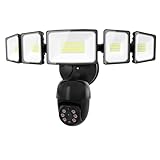
Overview: The iMaihom Floodlight Camera combines powerful illumination with 2K video surveillance in one integrated package. Five adjustable LED heads deliver 5500 lumens while the spherical camera provides 340° horizontal and 120° vertical rotation, creating a comprehensive security solution for outdoor spaces.
What Makes It Stand Out: The five-head design offers unmatched lighting coverage customization, allowing you to direct beams to multiple areas simultaneously. Auto-tracking technology follows moving objects automatically, while color night vision ensures detailed footage even in darkness. The flexible storage options support both SD cards (up to 128GB) and cloud storage, accommodating different security needs.
Value for Money: Priced at $69.99, this hybrid device undercuts most competitors by combining high-brightness lighting with 2K camera capabilities. Separate purchases of a quality floodlight and camera would easily exceed $120. The included advanced features like auto-tracking and two-way audio make this an exceptional value proposition.
Strengths and Weaknesses: Strengths:
- Brilliant 5500LM output with five adjustable heads
- 360° pan/tilt with intelligent auto-tracking
- Color night vision for detailed low-light recording
- Two-way audio for remote communication
- Dual storage options (cloud and local SD card)
Weaknesses:
- Lesser-known brand may have unproven long-term support
- Cloud storage likely requires subscription fees
- Installation complexity with both electrical and WiFi setup
- 180° PIR sensor narrower than some dedicated lights
Bottom Line: A feature-packed, affordable alternative to premium brands. Ideal for homeowners wanting integrated light and camera security without breaking the bank. The five-head design is particularly useful for irregularly shaped properties.
8. Onforu 65W Smart LED Security Lights Motion Sensor Light Outdoor, APP Control, Outdoor Motion Detector WiFi Alexa Flood Light 5500LM, 2500K-6500K, with Adjustable 3 Head

Overview: The Onforu 65W model upgrades the brand’s smart lighting line with significantly more power and enhanced motion detection. Three adjustable heads produce 5500 lumens across an expanded color temperature range of 2500K-6500K, while the upgraded PIR sensor offers more precise environmental sensitivity adjustments.
What Makes It Stand Out: This fixture’s enhanced motion sensor provides granular control with three distance levels and five ambient brightness sensitivity modes. The stepless dimming system allows infinite fine-tuning between warm and cool light. Group control capabilities enable synchronized operation of multiple Onforu lights, creating a cohesive security lighting network across your property.
Value for Money: At $56.99, the 65W version commands a modest premium over its 32W sibling while delivering 70% more brightness and superior motion customization. For illuminating larger driveways or backyards, the additional lumens justify the price increase. It competes favorably with non-smart commercial-grade fixtures costing significantly more.
Strengths and Weaknesses: Strengths:
- Powerful 5500LM output suitable for large areas
- Highly customizable motion detection settings
- Broader 2500K-6500K color temperature range
- Group control for multiple light synchronization
- Robust IP65 construction and memory function
Weaknesses:
- No camera integration for visual monitoring
- Hardwired installation requires electrical expertise
- 2.4GHz WiFi limitation remains
- May be excessively bright for smaller residential spaces
Bottom Line: An excellent mid-range smart floodlight that prioritizes illumination power and motion sensitivity over camera features. Perfect for large properties where brightness and detection precision matter more than video surveillance.
9. eufy Security Floodlight Cam S330, 360-Degree Pan & Tilt Coverage, 2K Full HD, 3,000 Lumens, Smart Lighting, Weatherproof, On-Device AI Subject Lock and Tracking, No Monthly Fee, Hardwired
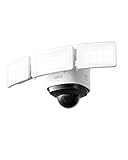
Overview: The eufy Floodlight Cam S330 positions itself as a premium security solution emphasizing artificial intelligence and subscription-free operation. The 360° rotating camera captures 2K footage while three tunable light panels automatically adjust color temperature and brightness based on context, delivering 3000 lumens when activated.
What Makes It Stand Out: On-device AI processing enables intelligent subject lock and tracking without relying on cloud servers, ensuring faster response times and enhanced privacy. The smart lighting system automatically adapts to sunrise/sunset schedules and motion events. Crucially, eufy’s local storage approach eliminates mandatory monthly fees, a significant cost advantage over competitors.
Value for Money: At $199.99, this premium device justifies its price through AI capabilities and zero subscription costs. While brighter lights exist for less, the intelligent tracking, 360° coverage, and long-term savings from avoiding cloud fees make it economically attractive for serious home security users.
Strengths and Weaknesses: Strengths:
- Advanced on-device AI subject tracking
- Complete 360° camera rotation eliminates blind spots
- No mandatory monthly subscription fees
- Smart lighting panels with automatic adjustments
- High-quality 2K video with color night vision
Weaknesses:
- Lower 3000LM brightness than cheaper alternatives
- Premium price point may deter budget-conscious buyers
- Hardwired installation limits placement flexibility
- AI features may occasionally misidentify subjects
Bottom Line: The best choice for privacy-focused users wanting intelligent, subscription-free security. The AI tracking and 360° view provide comprehensive coverage that justifies the investment for properties requiring serious surveillance capabilities.
10. eufy SoloCam E42, 4K Security Camera Wireless Outdoor, Solar Powered, AI Motion Tracking, Strobe Light, Pan & Tilt, Facial Recognition, Up to 16 TB, Smart Home Compatible
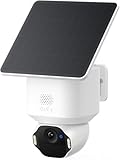
Overview: The eufy SoloCam E42 redefines wireless security with true 4K Ultra HD resolution and solar-powered continuous operation. This wire-free camera delivers exceptional clarity, capturing license plates at 33 feet while offering 360° coverage through pan and tilt functionality, all maintained by just two hours of daily sunlight.
What Makes It Stand Out: SolarPlus 2.0 technology eliminates battery maintenance concerns, providing truly autonomous operation. The AI-powered facial recognition distinguishes between family members and strangers, reducing false alerts. A motion-activated strobe light provides deterrence without the constant power drain of traditional floodlights. Support for up to 16TB of local storage offers unprecedented archival capacity.
Value for Money: Priced at $179.99, the SoloCam E42 competes aggressively with premium wired cameras while offering solar convenience and 4K resolution. Though it lacks a continuous floodlight, the strobe deterrent, facial recognition, and unlimited local storage provide compelling value compared to subscription-based 4K alternatives.
Strengths and Weaknesses: Strengths:
- Stunning 4K UHD resolution with long-range detail capture
- Solar-powered with minimal sunlight requirements
- AI facial recognition and smart motion tracking
- Massive 16TB local storage potential
- Completely wire-free installation flexibility
Weaknesses:
- No continuous floodlighting (only strobe deterrence)
- Solar dependency may concern users in low-sun regions
- Facial recognition requires initial setup and learning
- Premium price for a camera-only solution
Bottom Line: Outstanding for users prioritizing video quality and wire-free convenience over constant illumination. The solar power and 4K resolution make it ideal for remote property areas where running electrical wiring is impractical.
The Evolution of Smart Security Lighting
How AI Motion Tracking Actually Works
The term “AI motion tracking” gets thrown around liberally in marketing materials, but genuine artificial intelligence involves sophisticated neural networks trained on millions of video frames. Unlike traditional PIR (passive infrared) sensors that simply register heat signatures, true AI systems analyze pixel patterns, object dimensions, movement vectors, and even gait recognition. The system builds a three-dimensional understanding of your property, creating virtual zones where it learns typical activity patterns.
In 2026, the most advanced implementations use edge computing to process video streams directly on the device, reducing latency to under 200 milliseconds. This means the light can begin tracking a subject and adjusting its beam angle before the object even reaches your walkway. The AI doesn’t just see movement—it classifies objects in real-time, distinguishing between humans, animals, vehicles, and environmental factors with accuracy rates exceeding 95%.
Why 2026 Is a Breakthrough Year for This Technology
Several converging factors make 2026 a watershed moment for AI security lighting. First, the widespread adoption of the Matter protocol has finally solved interoperability headaches that plagued early smart home devices. Second, advances in low-power AI chips mean sophisticated processing no longer requires hardwired power connections, opening the door for truly wireless installations that don’t compromise on intelligence.
Perhaps most significantly, 2026 marks the year when federated learning became standard in the security industry. This approach allows AI models to improve from user data without compromising privacy—your device learns from patterns across millions of installations while keeping your specific footage local. The result is systems that get smarter monthly, recognizing new types of threats and reducing false positives through collective intelligence.
Key Features That Define Premium AI Security Lights
Motion Detection Sophistication: Beyond Simple Pixels
When evaluating AI capabilities, look beyond basic person detection. Premium systems in 2026 offer behavioral analysis that can identify suspicious patterns—like someone loitering near a window or approaching your door without taking a direct path. The best implementations feature customizable sensitivity profiles that automatically adjust based on time of day, weather conditions, and historical activity.
Consider systems with “attention tracking” that can follow multiple objects simultaneously, prioritizing the most relevant threat. This is particularly crucial for corner installations where the camera might capture both street traffic and your driveway. The AI should intelligently filter out routine passersby while flagging anyone who stops, reverses direction, or approaches vulnerable entry points.
Lighting Power and Coverage Area
Lumens tell only part of the story. While brightness matters—most experts recommend 2,000-3,000 lumens for residential driveways—the beam pattern and adjustability are equally critical. 2026’s top-tier lights feature adaptive illumination that narrows the beam for distant subjects and widens it as they approach, conserving power while maintaining optimal visibility.
Pay attention to the color temperature as well. Lights in the 4000-5000K range provide the best clarity for camera footage without creating harsh shadows. Some advanced models now offer tunable white light that shifts from warm to cool based on the detected threat level, providing psychological deterrence through subtle visual cues.
Camera Resolution and Night Vision Capabilities
Don’t be swayed by inflated megapixel counts. A 4K sensor with poor low-light performance is inferior to a well-implemented 2K sensor with larger pixels and superior noise reduction. What matters is the effective resolution at night, when most incidents occur. Look for cameras with at least 0.1 lux minimum illumination and integrated IR cut filters for true day/night operation.
Color night vision has become a game-changer in 2026, with some systems using AI-powered computational photography to combine visible and infrared light sources. This creates detailed color images even in near-total darkness, making it far easier to identify clothing, vehicles, and other crucial details for law enforcement.
Two-Way Audio and Siren Integration
The ability to communicate through your security light transforms it from a passive recorder to an active deterrent. Modern AI systems can automatically trigger pre-recorded warnings based on detected behavior—“You are being recorded, please leave the premises”—while allowing you to take over with live audio when needed.
Siren integration has evolved beyond simple noise makers. The best systems offer variable tones and volumes, with AI selecting the appropriate response level. A brief, low-volume chirp might suffice for a deer in the garden, while a persistent, high-decibel alarm activates for human intruders after hours. Some units even simulate the sound of a large dog barking, using AI to match the bark pattern to the perceived threat level.
Power Solutions: Wired vs. Battery vs. Solar
Understanding Battery Life Expectations
Battery-powered AI security lights faced skepticism for years, and rightly so—early models drained power in weeks. But 2026’s efficiency breakthroughs have changed the equation. Modern systems use predictive wake-up, where low-power sensors trigger the main camera only when necessary, extending battery life to 6-12 months on a single charge.
However, battery performance varies dramatically based on activation frequency. A light positioned near a busy street might need charging every three months, while a secluded backyard unit could last over a year. Look for systems with transparent battery analytics that show power consumption by feature—AI processing, night vision, two-way audio—and allow you to optimize settings accordingly.
Solar Panel Efficiency in Security Applications
Solar has finally become a viable primary power source, not just a supplemental trickle charger. New monocrystalline panels with 25%+ efficiency can generate enough power even in partially shaded conditions common to residential installations. The key is integrated battery capacity—look for systems with at least 10,000mAh to weather cloudy periods.
Smart solar controllers in 2026’s models adjust charging strategy based on weather forecasts, prioritizing essential functions when storms approach. Some systems even enter “conservation mode” automatically, reducing AI processing frequency and light intensity to preserve core security functions during extended overcast periods.
Smart Home Integration Ecosystems
Matter Protocol and Cross-Platform Compatibility
The Matter standard has finally delivered on the promise of universal compatibility. In 2026, any security light bearing the Matter logo integrates seamlessly with Apple HomeKit, Google Home, Amazon Alexa, and Samsung SmartThings without hub requirements. This means your AI motion tracking can trigger scenes across your entire smart home—locking doors, adjusting indoor lighting, and displaying camera feeds on smart displays.
But not all Matter implementations are equal. Check for “Matter over Thread” support, which creates a mesh network that extends range and improves reliability compared to Wi-Fi-only connections. Thread-enabled lights also respond faster to automation triggers, crucial for security applications where seconds matter.
Local vs. Cloud Processing: The Latency Trade-off
While cloud processing enables more powerful AI models, it introduces latency and requires internet connectivity. The sweet spot in 2026 is hybrid processing: critical detection happens on-device for sub-second response times, while cloud analysis provides deeper insights and pattern recognition for non-urgent events.
This approach also ensures functionality during internet outages. Your light will still detect, illuminate, and record locally even without connectivity, uploading footage and advanced analytics once the connection restores. For privacy-conscious buyers, verify that local storage is encrypted and that cloud uploads can be disabled entirely.
Privacy and Data Security Considerations
On-Device AI Processing vs. Cloud-Based Analysis
The privacy implications of AI security cameras cannot be overstated. Systems that process footage entirely on-device keep your data within your property, transmitted only when you access it remotely. This approach eliminates risks of cloud breaches and unauthorized access by service providers.
However, on-device processing limits AI sophistication. The most secure approach uses edge computing for real-time decisions while sending anonymized metadata to the cloud for model improvement. This metadata might include “human detected at 2:30 AM” without the actual video, allowing the system to learn while preserving your privacy.
GDPR Compliance and Data Sovereignty
Even if you live outside the EU, GDPR compliance indicates a company’s commitment to data protection. Look for certifications like ISO 27001 and SOC 2 Type II, which demonstrate rigorous security practices. In 2026, forward-thinking manufacturers offer data sovereignty options, letting you select which geographic region stores your cloud footage.
Consider systems with automatic face blurring for stored footage, protecting not just your family but also neighbors and passersby from potential privacy violations. Some jurisdictions now require this feature by default, and implementing it proactively shows a manufacturer’s legal foresight.
Installation and Placement Strategies
Optimal Mounting Heights and Angles
AI motion tracking performs best when cameras are mounted 8-10 feet high, angled 15-30 degrees downward. This height captures facial features while remaining out of easy reach. For motion tracking specifically, position lights at corners rather than center points on walls—this maximizes the tracking distance and provides multiple angle reference points for the AI.
Avoid pointing cameras directly at busy streets or neighbors’ windows. Modern AI can filter these areas, but it’s better to design your coverage zones thoughtfully from the start. Use the system’s augmented reality setup tools (common in 2026 models) to visualize coverage before drilling any holes.
Wi-Fi Signal Strength Considerations
AI security lights require stable connectivity, especially for cloud features. A minimum signal strength of -65 dBm is recommended, but don’t rely on your phone’s Wi-Fi indicator. Use the light’s built-in signal test during installation, which measures sustained bandwidth, not just momentary connection strength.
Consider a dedicated 2.4GHz network for security devices. While 5GHz offers faster speeds, 2.4GHz provides better range and wall penetration—critical for outdoor installations. Some advanced systems now support Wi-Fi 6E, using the 6GHz band for interference-free backhaul while maintaining 2.4GHz for device connectivity.
Subscription Models: What You’re Really Paying For
Free Tier Limitations and Feature Gates
Most manufacturers offer basic functionality without subscription: live viewing, motion alerts, and local recording. However, AI-powered features often require cloud processing. Understand exactly which functions are subscription-locked. Person detection might be free, but vehicle recognition, package detection, and advanced behavioral analysis typically require paid plans.
Compare pricing based on features you actually need. A $10/month plan offering 30-day cloud storage and full AI capabilities may be more cost-effective than a $5/month plan that charges extra for each additional camera or locks essential features behind paywalls. In 2026, some manufacturers offer “AI credits”—pay only for the advanced detections you use, ideal for low-traffic properties.
Reducing False Positives: The AI Advantage
Pet Detection, Vehicle Filtering, and Package Recognition
The true value of AI emerges in its ability to learn your specific environment. After a two-week training period, premium systems achieve false positive rates below 2%, compared to 30-40% for traditional motion detectors. This isn’t just convenient—it prevents alarm fatigue, ensuring you take alerts seriously when they occur.
Look for customizable object size thresholds that prevent small animals from triggering alerts while still capturing children. Vehicle filtering should distinguish between cars passing by on the street and those entering your driveway. Package recognition is particularly valuable, with AI drawing virtual boundaries around delivered items and alerting you only if someone approaches within a specified distance.
Weather Resistance and Durability Standards
Understanding IP Ratings for Outdoor Use
An IP65 rating is the minimum for outdoor security lights, protecting against dust and water jets. However, 2026’s premium models achieve IP67 or IP68, ensuring survival during temporary submersion—think heavy storms or pressure washing. More importantly, look for IK08 or higher impact ratings, which indicate resistance to physical damage from debris or attempted vandalism.
Temperature range matters as much as water resistance. Quality systems operate from -40°F to 140°F, with internal heating elements preventing condensation on lenses during cold snaps. Check for UV-resistant polycarbonate housings; cheaper ABS plastic becomes brittle and yellows within two years of sun exposure.
Future-Proofing Your Investment
Technology moves rapidly, but your security light should last 5-7 years. Choose systems with over-the-air firmware updates and a proven track record of multi-year support. Manufacturers committed to sustainability offer modular designs where cameras, batteries, and even AI processors can be upgraded independently.
Consider systems with open APIs or Home Assistant integration, ensuring compatibility with future platforms even if the manufacturer discontinues support. The most forward-thinking models include spare compute capacity, allowing them to run more advanced AI models as they’re developed without hardware replacement.
Frequently Asked Questions
How does AI motion tracking differ from standard motion detection?
Standard motion detection uses PIR sensors or basic pixel-change algorithms, triggering on any movement. AI motion tracking employs neural networks to classify objects, understand behavior, and track subjects intelligently across your property, reducing false alarms by over 90% while providing contextual alerts about what’s happening.
Can AI security lights work during internet outages?
Yes, but functionality varies. Systems with on-device AI processing continue detecting motion, illuminating areas, and recording to local storage during outages. However, remote viewing, cloud notifications, and advanced analytics pause until connectivity returns. Hybrid systems offer the best reliability, ensuring core security functions remain active offline.
What’s the realistic battery life for wireless AI security lights?
In typical residential use, expect 6-9 months between charges. Heavy traffic areas may require charging every 3-4 months, while remote locations with minimal activity can exceed 12 months. Solar-powered units with 10,000mAh+ batteries can operate indefinitely in sunny climates, though performance drops 30-40% during winter months.
Do I need a subscription for AI features to work?
It depends on the manufacturer. Basic person detection often works without subscription thanks to on-device processing. However, advanced features like vehicle recognition, package detection, behavioral analysis, and cloud storage typically require a paid plan. Always verify which features are locked behind subscriptions before purchasing.
How accurate is pet detection in preventing false alarms?
Modern AI systems achieve 95%+ accuracy in distinguishing pets from humans after a 1-2 week training period. You can set size thresholds (e.g., ignore objects under 50 pounds) and schedule pet-friendly hours when alerts are suppressed. Some systems even recognize specific pets by their movement patterns once trained.
Will AI security lights integrate with my existing smart home setup?
Most 2026 models support Matter over Thread, ensuring compatibility with major platforms like Apple HomeKit, Google Home, and Amazon Alexa. For older systems, verify Zigbee or Z-Wave support. Check if your current hub supports Thread border routing to maximize integration capabilities.
What’s the difference between local and cloud AI processing?
Local processing happens on the device, offering faster response times and better privacy but limited AI sophistication. Cloud processing enables more powerful analysis and pattern recognition but introduces latency and potential privacy concerns. Hybrid systems combine both, using local processing for urgent decisions and cloud analysis for deeper insights.
How do I prevent my camera from recording neighbors or public areas?
Use privacy zones within the app to black out areas you don’t want recorded. Premium systems offer automatic face blurring for stored footage and can detect when the camera is pointed at public spaces, suggesting optimal privacy settings. Always position cameras to minimize capturing neighboring properties.
What internet speed do I need for AI security lights?
For a single 2K camera, plan for 2-4 Mbps upload speed. 4K cameras require 5-8 Mbps. More important than raw speed is stability—packet loss and jitter disrupt AI performance. A dedicated 2.4GHz network with strong signal strength (-65 dBm or better) ensures reliable operation.
Can these lights distinguish between delivery personnel and potential intruders?
Advanced AI systems recognize behavioral patterns associated with legitimate deliveries—direct approach to the door, package handling motions, uniform detection—and can suppress alerts or categorize them separately. You can create time-based rules (e.g., expect deliveries between 9 AM-5 PM) and receive distinct notifications for package drops versus suspicious loitering.