Imagine transforming a tough cut of beef into a buttery, restaurant-quality steak without hovering over a hot pan, or infusing delicate herbs into salmon while you’re stuck in traffic. That’s the magic smart sous-vide multi-cookers bring to your kitchen—restaurant-grade precision meets set-it-and-forget-it convenience. These aren’t your grandmother’s slow cookers; they’re culinary command centers that let you orchestrate gourmet meals with scientific accuracy from your smartphone.
But here’s the thing: not all smart sous-vide machines are created equal. While the market floods with devices boasting “AI-powered” this and “Wi-Fi-enabled” that, the real difference between a gimmicky gadget and a game-changing tool lies in understanding the features that genuinely impact your cooking. Whether you’re a weekend warrior aiming for Instagram-worthy plates or a busy professional meal-prepping Michelin-inspired dishes, knowing what to look for will save you from buyer’s remorse and elevate your culinary game.
Top 10 Smart Sous-Vide Multi-Cookers for Gourmet Meals
Detailed Product Reviews
1. Anova Culinary Sous Vide Precision Cooker 3.0 (WiFi), 1100 Watts

Overview: The Anova Culinary Sous Vide Precision Cooker 3.0 represents the evolution of the device that launched the home sous vide revolution in 2014. This third-generation model refines the proven formula with dual-band WiFi connectivity and an improved two-line touchscreen display, maintaining Anova’s position as the category leader for serious home cooks who prioritize reliability and precision.
What Makes It Stand Out: Anova’s ecosystem sets it apart. The free app offers solid remote control, while the optional subscription ($9.99/year) unlocks professional chef recipes and cooking guides that sync directly to the device. The upgraded dual-band WiFi solves connectivity issues that plagued earlier models, and the adjustable clamp fits virtually any pot. The removable stainless steel skirt cleans easily in the dishwasher.
Value for Money: At $199.99, this commands a premium but delivers proven durability and support. You’re investing in the most established brand with the largest recipe database and community. While competitors offer more watts for less money, Anova’s reliability and app maturity justify the cost for committed cooks.
Strengths and Weaknesses: Strengths include legendary brand reputation, improved WiFi stability, intuitive touchscreen, excellent app integration, and easy maintenance. Weaknesses are the 1100W power (lower than budget competitors), premium pricing, and the subscription model for advanced recipes. The temperature range isn’t specified, which may limit some applications.
Bottom Line: Ideal for dedicated home chefs who value brand reliability, ecosystem maturity, and proven performance over raw power specs. The connectivity improvements and build quality make it worth the investment.
2. 1300W Sous Vide Precision Cooker Machines(2.4G WIFI), IPX7 Full Waterproof Immersion Circulator, New Quiet Brushless Motor, 6 One-Touch Presets, Effortless Gourmet Meals

Overview: This 1300W sous vide cooker delivers premium specifications at a budget-friendly price point. With IPX7 waterproofing, a whisper-quiet brushless motor, and six one-touch presets, it targets value-conscious buyers unwilling to compromise on core performance features. The compact design reduces countertop footprint by 35% compared to standard models.
What Makes It Stand Out: The IPX7 full waterproof rating is rare in this price class, allowing complete submersion and worry-free cleaning. The brushless motor operates below 20dB—quieter than most competitors—while lasting three times longer than traditional motors. Six smart presets eliminate guesswork for common proteins, and the 1300W heating element outperforms many premium brands for speed.
Value for Money: At $99.99, this represents exceptional value. You get higher wattage than the $200 Anova, waterproof construction, and advanced motor technology for half the price. The feature set rivals $150+ competitors, making it a smart choice for performance-per-dollar seekers.
Strengths and Weaknesses: Strengths include powerful 1300W heating, true waterproof design, ultra-quiet operation, compact footprint, and intuitive presets. Weaknesses are limited to 2.4GHz WiFi only (no 5GHz), an unestablished brand name with uncertain long-term support, and the SmartLife app may lack the polish of premium alternatives. Temperature range is standard but not exceptional.
Bottom Line: Perfect for budget-savvy cooks who prioritize power, durability, and quiet operation over brand prestige. The waterproof design and brushless motor make it a compelling alternative to pricier options.
3. INKBIRD WIFI Sous Vide Cooker ISV-100W, 1000 Watts Sous Vide Machine Immersion Circulator with 14 Preset Recipes on APP & Calibration Function, Thermal Immersion, Fast-Heating with Timer

Overview: The INKBIRD ISV-100W positions itself as a mid-range workhorse, offering 1000W of power with thoughtful features like calibration function and 14 app-based presets. This model balances affordability with precision, targeting home cooks who want reliable performance without paying premium brand pricing.
What Makes It Stand Out: The calibration function allows users to fine-tune temperature accuracy within a ±10°F range, ensuring long-term precision—a feature rarely seen at this price point. The InkbirdPro app provides 14 preset recipes, and the device maintains ±0.1°C accuracy across a 77-210°F range. Operating under 40dB, it stays quieter than many competitors.
Value for Money: At $76.79, this undercuts most WiFi-enabled competitors while delivering core functionality. You get app control, calibration, respectable power, and quiet operation for less than $80. It’s an ideal sweet spot for cost-conscious buyers wanting more than basic features.
Strengths and Weaknesses: Strengths include excellent price-to-performance ratio, calibration capability, quiet operation, intuitive LCD controls, and wide timer range (99 hours). Weaknesses are the 77°F minimum temperature (higher than some recipes require), 2.4GHz WiFi limitation, and 1000W power that heats slower than 1300W alternatives. Brand recognition lags behind Anova but exceeds no-name competitors.
Bottom Line: A smart choice for pragmatic home chefs seeking accuracy and app connectivity on a budget. The calibration feature and quiet operation make it particularly appealing for precision-focused cooks.
4. VEVOR Sous Vide Cooker, 800W Sous-Vide Machine, Suveed Cooking Machine with LED Digital Display, Glass Lid, Precise Temperature & Timer Control, for Family & Friends, All-in-One Sous Vide Pot
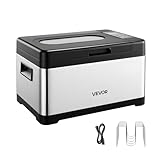
Overview: VEVOR’s all-in-one sous vide cooker takes a fundamentally different approach by integrating the heating element, 8L pot, and rack into a single unit. This 800W machine eliminates the need for separate containers, targeting beginners who value simplicity and space efficiency over maximum power or advanced connectivity.
What Makes It Stand Out: The integrated 8L pot with glass lid creates a complete, self-contained system—no need to find a compatible container or deal with clamps. The 3-in-1 design combines cooker, vessel, and rack, simplifying storage and setup. The high-performance circulation system (100-350 L/min) ensures even heating despite lower wattage.
Value for Money: At $112.99, it’s fairly priced for an integrated solution. While more expensive than some immersion-only models, you’re getting a dedicated pot and lid included. However, the 800W power and lack of smart features make it less versatile than similarly priced immersion circulators.
Strengths and Weaknesses: Strengths include complete integrated design, generous 8L capacity, simple button controls, and fast water circulation. Weaknesses are the underpowered 800W heating element, ±0.3°C accuracy (less precise than competitors), no WiFi or app connectivity, and bulky footprint that can’t be used with your own pots. Temperature range is standard but heating will be slow for large volumes.
Bottom Line: Best suited for sous vide newcomers wanting an uncomplicated, all-inclusive package. The integrated design simplifies the learning curve, but serious cooks will outgrow its limitations quickly. Consider only if you prioritize convenience over flexibility and speed.
5. INKBIRD WIFI Sous Vide Cooker ISV-100W and Vacuum Sealer Machine | 1000W Sous-Vide Cooker Immersion Circulator with 14 Preset Recipes on APP and Thermal Immersion, Fast-Heating with Timer

Overview: This INKBIRD bundle pairs the ISV-100W sous vide cooker with a vacuum sealer machine, creating a complete starter kit for newcomers to the technique. You get the same 1000W circulator as Product 3, plus essential accessories including a vacuum sealer, bag roll, five vacuum bags, and an air suction hose—all for less than the Anova cooker alone.
What Makes It Stand Out: The inclusion of a vacuum sealer transforms this from a solo cooker purchase into a turnkey solution. The sealer offers five modes (Dry, Moist, Vac Seal, Jar Sealing, Seal) and -80 kPa suction strength, handling everything from marinated meats to wine preservation. You essentially get the $77 cooker plus $40+ worth of sealing equipment.
Value for Money: At $111.73, this bundle delivers exceptional value. The vacuum sealer alone would cost $35-50 separately, making the effective cooker price around $70. For beginners needing everything, this eliminates guesswork about compatible accessories while saving significant money.
Strengths and Weaknesses: Strengths include complete package convenience, cost savings, calibration function on the cooker, quiet operation, and versatile sealer modes. Weaknesses mirror the ISV-100W: 2.4GHz WiFi only, 77°F minimum temperature, 1000W power, and the vacuum sealer—while functional—lacks the durability of premium standalone units. The bundle locks you into INKBIRD’s ecosystem.
Bottom Line: The ultimate starter package for sous vide beginners. If you need both a circulator and vacuum sealer, this bundle saves money and ensures compatibility. Skip if you already own a sealer or want maximum power and connectivity.
6. 2.4g Wifi Sous Vide Cooker CharMeter Sous Vide Machine CSV-100-W, 1000 Wattts Sous-Vide Cooker Immersion Circulator App Control with 14 Preset Recipes, Calibration Function,Fast-Heating with Timer

Overview: The CharMeter CSV-100-W brings WiFi connectivity to sous vide cooking, allowing remote operation via the RoastTrackt app. This 1000W immersion circulator handles up to 20 liters of water while operating below 40 decibels—quieter than most kitchen appliances. With a temperature range of 77-210°F and 0.1°C accuracy, it targets home cooks seeking professional precision without kitchen tethering.
What Makes It Stand Out: True remote control freedom sets this apart. The 2.4GHz WiFi connection lets you start, monitor, and adjust cooks from anywhere, eliminating the need to physically check progress. The built-in calibration function (±10°F) ensures long-term accuracy, a feature rarely seen in mid-range models. Fourteen preset recipes and a 99-hour timer provide exceptional versatility for extended cooks like tough meats and infusions.
Value for Money: At $95.99, this sits in the competitive mid-range segment. Comparable WiFi-enabled models typically run $100-130, making this a solid value. The calibration function and extended timer justify the premium over basic units, though brand recognition lags behind established players like Anova or Breville.
Strengths and Weaknesses: Strengths include genuine remote monitoring, quiet operation, calibration capability, and generous capacity. The 2.4GHz-only WiFi may cause connectivity issues in some homes, and the app interface receives mixed reviews. Plastic construction feels less premium than stainless alternatives.
Bottom Line: Ideal for tech-savvy cooks who value flexibility and precision. The CharMeter excels at long, unattended cooks where remote monitoring provides peace of mind, though WiFi reliability depends on your network setup.
7. Sous Vide Cooker with APP Control,1100W Precision Sous Vide Machine with Digital Touch Screen,Ultra-quiet Immersion Circulator with Recipe and Timer for Beginners Home Chefs

Overview: This budget-friendly sous vide cooker delivers 1100W of power with app and touchscreen controls for under $40. Targeting beginners and busy home chefs, it promises restaurant-quality precision (±0.1°C) without the premium price tag. The compact design includes essential safety features and preset functions to simplify the learning curve.
What Makes It Stand Out: The aggressive $39.59 pricing makes this one of the most accessible app-controlled sous vide machines available. It doesn’t sacrifice core features—offering both manual and app control, timer functions, and overheating protection. The inclusion of dry-run protection and leak-proof design at this price point demonstrates surprising attention to safety.
Value for Money: Exceptional value. Competitors with similar specs typically start at $70-90. This undercuts the market significantly, making sous vide technology accessible to budget-conscious buyers. While build quality may not match premium brands, the feature set punches well above its weight class.
Strengths and Weaknesses: Strengths include unbeatable price, dual control methods, robust safety features, and beginner-friendly presets. The unknown brand raises durability questions, and the app ecosystem likely lacks the polish of established alternatives. Power consumption may be less efficient than higher-end models.
Bottom Line: Perfect entry point for sous vide curious cooks. This machine removes financial barriers while delivering core functionality. It’s an excellent choice for beginners wanting to experiment before investing in a premium model, though long-term reliability remains unproven.
8. 1300W Sous Vide Precision Cooker Machines, IPX7 Full Waterproof Immersion Circulator, New Quiet Brushless Motor, 6 One-Touch Presets, Effortless Gourmet Meals

Overview: This 1300W sous vide machine prioritizes durability and quiet operation with its IPX7 waterproof rating and brushless DC motor. Capable of submersion up to 1 meter for 30 minutes, it eliminates concerns about accidental water damage. The compact 10.3-inch design stores easily while delivering powerful, precise heating for gourmet results.
What Makes It Stand Out: The IPX7 waterproofing is a game-changer—most competitors offer only splash resistance. Combined with an ultra-quiet 15dB brushless motor (three times longer lifespan than traditional motors), this machine excels in shared living spaces. Six one-touch presets simplify cooking for common proteins, while dishwasher-safe detachable parts streamline cleanup.
Value for Money: At $79.99, it bridges the gap between budget and premium models. The waterproof construction and brushless motor justify the price over basic $40-60 units, though it lacks WiFi connectivity found in $100+ competitors. For durability-focused buyers, this represents smart mid-range investment.
Strengths and Weaknesses: Strengths include superior waterproofing, whisper-quiet operation, high power output, space-saving design, and easy maintenance. Weaknesses are limited presets (only six), narrower temperature range (32-194°F) than some rivals, and absence of smart connectivity.
Bottom Line: Best suited for cooks prioritizing reliability and quiet operation over tech features. The waterproof design provides peace of mind, while the brushless motor ensures years of silent service. A practical choice for apartment dwellers and noise-sensitive households.
9. Sous Vide Machine-Suvee Cooker-Rocyis Sous Vide Kit with Lid, Recipes-1000W Fast Heating Immersion Circulator/Accurate Temperature and Timer/Digital Touch Screen, Stainless Steel (US Standard)

Overview: Rocyis positions this as a complete sous vide solution, bundling the 1000W immersion circulator with a specialized lid and recipe book. The stainless steel construction and adjustable bracket accommodate various container sizes, while the touch-visibility display simplifies operation. Note that the cooking container itself is not included despite the “kit” designation.
What Makes It Stand Out: The included lid addresses a common pain point—water evaporation during long cooks. This practical addition, combined with the adjustable bracket, provides flexibility often missing in standalone units. The stainless steel pump and housing offer durability advantages over all-plastic competitors at this price.
Value for Money: At $59.48, this represents strong value for a bundle. Comparable lids alone cost $15-25, effectively pricing the unit at under $45. The stainless steel components and included recipe book further sweeten the deal, though WiFi-enabled competitors cost only slightly more.
Strengths and Weaknesses: Strengths include the evaporation-preventing lid, stainless steel durability, adjustable bracket, and comprehensive recipe guide. Weaknesses are the lack of smart connectivity, basic digital display, and misleading “kit” naming (no container). Temperature range (77-198.5°F) is adequate but not class-leading.
Bottom Line: An excellent choice for practical cooks wanting essential accessories without separate purchases. The lid makes extended cooks more reliable, while stainless construction ensures longevity. Skip this if WiFi control is a priority; choose it for straightforward, dependable performance.
10. KitchenBoss WiFi Sous Vide Cooker: Ultra-quiet Sous Vide Machine Built-in TFT Color Display Recipes, 1100W Sous Vide Immersion Circulator Accurate Temp Waterproof Magnetic Knob APP Control, Silver

Overview: The Red Dot Design Award-winning KitchenBoss G320 elevates sous vide with a vibrant TFT color display and premium build quality. This 1100W WiFi-enabled circulator features a unique magnetic knob control alongside app integration, delivering precise 0.1°F accuracy in a sleek silver housing. It targets serious home chefs seeking both performance and aesthetic appeal.
What Makes It Stand Out: The TFT display with 25 chef-crafted recipes provides visual guidance unmatched by monochrome competitors. The magnetic knob offers tactile control without physical penetration (enhancing waterproofing), while the brushless DC motor maintains ultra-quiet operation. The Red Dot Award validates its industrial design excellence.
Value for Money: At $159.99, this commands a premium price. You’re paying for design pedigree, superior display technology, and build quality rather than raw power. Compared to $100-120 WiFi models, the 50% premium is justified for aesthetics and user experience, though budget buyers may find better value elsewhere.
Strengths and Weaknesses: Strengths include gorgeous TFT display, award-winning design, whisper-quiet operation, precise control, and innovative magnetic knob. Weaknesses are the limited temperature range (104-194°F) which excludes some low-temp applications, high price point, and potential overkill for casual users.
Bottom Line: Perfect for design-conscious cooks who appreciate premium user experience. The KitchenBoss excels in daily use joy and visual feedback, making it worth the splurge for enthusiasts. Casual users should consider more affordable alternatives with similar core performance.
What Makes a Sous-Vide Multi-Cooker “Smart”?
The term “smart” gets thrown around liberally in kitchen appliances, but in sous-vide cooking, it represents a fundamental shift from manual monitoring to intelligent automation. A truly smart device doesn’t just connect to your phone—it anticipates, adapts, and ensures flawless results without constant supervision.
Precision Temperature Control: The Heart of Sous-Vide
At its core, sous-vide is about temperature precision measured in tenths of a degree. Smart multi-cookers maintain stability within ±0.1°F, a critical factor when cooking delicate proteins like halibut or eggs. This level of accuracy prevents the textural disasters that occur when temperatures fluctuate—even a 2°F swing can turn silky fish chalky. Look for devices with PID (Proportional-Integral-Derivative) controllers, which continuously learn and adjust heating patterns rather than simply turning elements on and off.
Wi-Fi and Bluetooth Connectivity: Cooking from Anywhere
Bluetooth offers reliable control within your home, perfect for adjusting settings from the living room. Wi-Fi extends your reach globally, letting you start a 12-hour pork shoulder cook from the office or monitor a delicate dessert while running errands. The best implementations use dual-band connectivity, switching seamlessly between protocols to maintain uninterrupted communication. Consider whether the app sends push notifications for temperature deviations, timer completions, or maintenance alerts—these aren’t just conveniences, they’re safeguards for expensive ingredients.
App Integration: Your Digital Sous Chef
A robust companion app transforms your phone into a culinary co-pilot. Beyond basic timers, premium apps feature visual doneness guides, ingredient-specific algorithms, and the ability to create custom cooking programs. Some advanced systems integrate with recipe platforms, automatically populating time and temperature settings when you select a dish. The interface should be intuitive enough to use with flour-dusted fingers, with large buttons and voice command options for hands-free operation mid-recipe.
Why Gourmet Home Chefs Are Embracing Multi-Functionality
The modern kitchen counter is prime real estate. A device that sous-vides, sears, slow cooks, and proofs dough eliminates the need for separate appliances, freeing space while expanding capabilities.
From Searing to Slow Cooking: The All-in-One Advantage
Top-tier smart sous-vide multi-cookers integrate high-heat searing elements that reach 500°F+ after the water bath phase. This eliminates the need to dirty a separate skillet for that crucial Maillard reaction crust. The transition from sous-vide to sear should be seamless—some models even auto-drain water and preheat the searing element while you pat your protein dry. For gourmet results, look for induction-based searing surfaces that distribute heat more evenly than traditional coil elements.
Space-Saving Design for Modern Kitchens
Counter space is non-negotiable in urban apartments and open-concept homes. Multi-cookers with vertical water circulation pumps and integrated cord storage minimize footprint while maximizing capacity. Some designs feature detachable water tanks that slide under cabinets for storage, while others use nesting accessories that pack flat. Consider models with reversible lids that function as trivets or steam trays—every dual-purpose component counts when square footage is limited.
Key Technical Specifications That Matter
Marketing fluff evaporates when you examine the hardware specs. These numbers directly impact performance, consistency, and the types of dishes you can execute.
Wattage and Heating Power: Speed vs. Efficiency
A 1000-watt heater brings 4 gallons to target temperature in 15 minutes, while a 1500-watt system does it in under 10. That difference matters when you’re preheating for a weeknight dinner. However, higher wattage increases energy consumption and can trip circuits in older kitchens. The sweet spot for most households is 1200-1400 watts with intelligent power management that ramps down as the target temperature approaches, preventing overshoot.
Water Capacity: Matching Your Batch Size Needs
Capacity determines whether you’re cooking for two or entertaining twelve. Compact 3-quart models suit couples and small batches, while 8-quart systems handle whole briskets or multiple bags for meal prep. Crucially, check the effective capacity—the actual water volume after accounting for the minimum fill line and displacement from food. A device with a 6-quart tank might only accommodate 4 quarts of usable cooking space once you factor in circulation requirements.
Temperature Range and Stability: The Precision Factor
Gourmet cooking demands extremes: 90°F for tempering chocolate, 165°F for perfectly set custards, and 190°F for vegetable confit. Ensure your choice spans at least 68°F to 212°F. More important is stability at the low end—maintaining 104°F for a 3-hour soft-poached egg requires different engineering than holding 185°F for root vegetables. Look for specifications detailing stability across the entire range, not just at common protein temperatures.
Advanced Features That Elevate Your Cooking
Beyond basics, certain innovations separate hobbyist tools from professional-grade equipment. These features address specific pain points that become apparent only after months of regular use.
Vacuum Sealing Integration: The Complete Package
Some smart multi-cookers include built-in vacuum sealers or proprietary bag systems that communicate with the cooker. These detect bag thickness and automatically adjust pressure to prevent delicate fish from being crushed while ensuring marinades penetrate deeply into meats. If you opt for a model without integrated sealing, ensure it’s compatible with third-party chamber vacuum sealers—clamp-style sealers often struggle with liquid-rich marinades that gourmet recipes require.
Automated Stirring and Water Circulation
Passive water circulation creates hot and cold zones, leading to uneven cooking. Active pump systems with adjustable flow rates ensure uniform temperature distribution, especially critical when cooking multiple bags. Advanced models feature directional jets that create a vortex, preventing bags from sticking together and ensuring every surface receives equal heat exposure. This matters immensely for delicate items like scallops, where a 1°F variation can mean the difference between translucent perfection and rubbery disappointment.
Built-in Recipe Libraries and Guided Cooking
Pre-programmed settings for specific cuts and thicknesses remove guesswork. Premium devices offer chef-curated libraries with hundreds of recipes, each fine-tuned for that exact model’s heating characteristics. The best systems learn from your preferences—if you consistently adjust the recommended time for medium-rare steak, the app begins suggesting your preferred settings automatically. This personalization transforms a generic appliance into your private culinary assistant.
Safety Features You Shouldn’t Overlook
Water and electricity demand respect. Smart features should enhance safety, not complicate it.
Auto-Shutoff and Dry-Boil Protection
Sophisticated sensors detect low water levels and automatically power down the heating element before damage occurs. This is non-negotiable for overnight cooks or when leaving the house. The best systems send emergency alerts to your phone and maintain a log of incidents for warranty purposes. Check whether the auto-shutoff triggers at the minimum fill line or has a buffer zone—some models shut off prematurely, aborting long cooks unnecessarily.
Cool-Touch Exteriors and Insulated Design
Double-wall insulation keeps exterior surfaces safe to touch while reducing energy consumption by up to 30%. This matters in households with children or when the device sits near other heat-sensitive appliances. Insulation also stabilizes temperature during lid removal—briefly opening to add ingredients causes less recovery time in well-insulated models, crucial for multi-stage recipes where you might add vegetables mid-cook.
Understanding Price Tiers and Value Propositions
Smart sous-vide multi-cookers span from budget-friendly to investment pieces. Understanding what each tier offers helps align your purchase with your actual needs rather than marketing hype.
Entry-Level Smart Features: Under $200
In this range, expect Bluetooth-only connectivity, basic PID control (±0.5°F stability), and 800-1000 watt power. These perform admirably for casual cooks but lack advanced app features like custom programming or multi-step recipes. They typically include simple searing functions but may require manual mode switching. The value proposition is strong for beginners wanting to experiment without commitment, though serious gourmets will quickly outgrow limitations.
Mid-Range Powerhouses: $200-$400
This sweet spot delivers Wi-Fi connectivity, ±0.2°F stability, 1200-1400 watts, and comprehensive app ecosystems. You’ll find integrated recipe libraries, voice control, and often dual-element designs for faster searing. Water capacity typically reaches 6-7 quarts, accommodating most entertaining needs. These models balance performance and price, offering 90% of premium features at a reasonable investment. Most home chefs find this tier provides the best long-term satisfaction.
Premium Gourmet Machines: $400+
At this level, you’re paying for build quality, precision, and integration. Expect ±0.1°F stability across the full temperature range, 1500+ watts with intelligent power management, and apps that sync with nutrition trackers or smart home systems. Materials upgrade to stainless steel interiors and die-cast aluminum searing elements. These often include extended warranties and premium support. The investment makes sense for daily users, culinary professionals working from home, or those who demand absolute consistency for recipe development.
How to Match a Cooker to Your Culinary Ambitions
Your cooking style should dictate your choice more than any spec sheet. A mismatch leads to frustration and underutilized features.
For the Weekend Gourmet Experimenter
If you cook ambitious meals on Saturdays but stick to basics during the week, prioritize versatility over speed. A mid-range model with excellent app-guided recipes and a wide temperature range serves you better than a high-wattage searing beast. You’ll value the ability to temper chocolate or make yogurt just as much as perfectly cooked lamb. Look for models with active user communities where fellow enthusiasts share custom programs and techniques.
For the Busy Professional Meal Prepper
Time is your scarcest resource. You need rapid preheating, large capacity, and reliable Wi-Fi monitoring. A 1500-watt model that can handle 8-quart batches lets you prep proteins for the entire week in one session. Prioritize apps with scheduling features—set up a cook to finish precisely when you arrive home. Auto-resume after power blips is crucial; you can’t afford to lose a 24-hour cook to a brief outage.
For the Tech-Savvy Culinary Innovator
If you’re the type who reverse-engineers restaurant dishes and experiments with hydrocolloids, demand open API access or IFTTT integration. You’ll want to create custom temperature curves for unique textures and log data for recipe refinement. Premium models offering firmware updates and developer tools let you push boundaries. Consider units with expandable water capacity via external reservoirs for large-format projects like whole turkeys or multiple terrines.
Setting Up Your Smart Sous-Vide Station
Even the best device underperforms in a poorly configured setup. Your station impacts efficiency, safety, and results.
Essential Accessories That Complete Your Setup
A dedicated sous-vide container with a fitted lid reduces evaporation during long cooks—critical for recipes exceeding 12 hours. Look for polycarbonate options with cutouts for your device’s clamp. Silicone bags offer reusability for eco-conscious cooks, but ensure they’re rated for your cooker’s maximum temperature. A compact blowtorch for post-sear crusts provides finishing control that built-in elements can’t match. Finally, a floating rack system keeps bags separated and submerged, preventing the dreaded buoyancy that leads to uneven cooking.
Optimal Placement and Kitchen Integration
Position your cooker near a grounded outlet on a heat-resistant surface, away from edge-of-counter traffic. The device will emit steam during operation, so avoid placement under wooden cabinets unless you have good ventilation. For Wi-Fi models, test signal strength before committing to a spot—a weak connection defeats the purpose. Consider a rolling cart if you lack permanent counter space; mobility lets you tuck the unit away when not in use while keeping it accessible for multi-day projects.
Maintenance and Longevity: Protecting Your Investment
Smart appliances are only as reliable as their maintenance routine. Neglect leads to sensor drift, scale buildup, and eventual failure.
Cleaning and Descaling Best Practices
Hard water is the enemy of precision heating. Descale monthly using food-safe citric acid solutions, running a cleaning cycle at 150°F to dissolve mineral deposits. After each use, wipe the heating element and sensors with a soft cloth—protein films insulate sensors, causing inaccurate readings. Remove and clean circulation impellers weekly; trapped food particles create drag and reduce pump efficiency. Never submerge the main unit; instead, use a damp cloth on exterior surfaces and check vent ports for grease buildup.
Software Updates and Digital Maintenance
Manufacturers release firmware updates that improve temperature algorithms and add app features. Enable automatic updates but review changelogs to understand how modifications might affect your saved recipes. Periodically clear app cache and re-sync device settings to prevent communication lag. If your model stores cooking logs locally, back them up quarterly—losing a year’s worth of refined settings is like losing a handwritten recipe journal. Check battery status on any internal sensors annually; a failing battery can cause erratic behavior mistaken for hardware failure.
Common Mistakes That Sabotage Sous-Vide Success
Even smart devices can’t compensate for user error. Avoid these pitfalls that plague both novices and experienced cooks.
Overcrowding and Water Flow Issues
Stacking bags like cordwood blocks water circulation, creating temperature gradients. Follow the one-inch rule: maintain at least one inch of space between bags and between bags and the container walls. For large batches, use a rack system that elevates bags off the bottom and spaces them vertically. If your recipe calls for liquid marinades, freeze them first to prevent bag ballooning, which further disrupts flow. Monitor the water vortex during the first 10 minutes; a weak current indicates you’ve overloaded the system.
Ignoring Pre-Heat Times and Temperature Recovery
Adding cold proteins drops water temperature significantly—sometimes 10-15°F. Smart cookers compensate, but recovery time extends your cook. Preheat 5°F above target, then drop to final temperature after loading food. For large roasts, consider tempering at room temperature for 30 minutes before sealing. Opening the lid to add ingredients mid-cook causes similar drops; use the hinged access port if your model includes one. Track recovery time in your app notes; over months, you’ll learn exactly how long your specific setup takes to restabilize.
The Future of Smart Sous-Vide Technology
The next wave of innovation promises even tighter integration between device, ingredient, and chef. Understanding emerging trends helps future-proof your purchase.
AI-Powered Cooking Algorithms
Machine learning is moving beyond simple timer adjustments. Next-generation devices will use computer vision via smartphone cameras to assess bag thickness, protein marbling, and even vegetable density, automatically adjusting time and temperature. Some prototypes analyze audio feedback from the water bath, detecting bubble patterns that indicate evaporation or bag leaks. While these features aren’t mainstream yet, choosing a device with robust firmware update support ensures you’ll access these capabilities as they roll out.
Integration with Smart Home Ecosystems
Voice control via Alexa or Google Home is table stakes. The real advancement lies in synchronization with smart refrigerators that track inventory and suggest sous-vide recipes based on expiration dates. Imagine your fridge notifying your cooker to start defrosting a steak via a 90°F water bath, then automatically shifting to cooking temperature when you confirm you’re heading home. Look for devices with open API documentation or Matter certification—these will integrate seamlessly as kitchen IoT ecosystems mature.
Frequently Asked Questions
What’s the difference between a smart sous-vide multi-cooker and a standard immersion circulator?
A standard immersion circulator only heats and circulates water, requiring separate pots and manual monitoring. Smart multi-cookers integrate the water bath, heating element, and often a searing function into one device with app-based control, recipe guidance, and automated safety features. The multi-cooker approach eliminates guesswork and reduces cleanup, while smart connectivity lets you monitor and adjust remotely—critical for long cooks or when you’re multitasking.
Can I really achieve a proper sear with a built-in element, or do I still need a cast-iron pan?
Modern premium multi-cookers feature 500°F+ induction searing surfaces that rival stovetops. The key is surface area and heat retention. For steaks under 1.5 inches, the built-in element performs beautifully, especially with a preheated lid to trap radiant heat. For larger roasts or when searing multiple pieces, a cast-iron skillet still offers superior capacity. Many chefs use a hybrid approach: sear one side in the multi-cooker for convenience, then finish the second side with a torch for maximum crust.
Is Wi-Fi connectivity actually useful, or just a gimmick?
Wi-Fi proves invaluable for cooks exceeding 6 hours or when you’re away from home. It allows you to start preheating remotely, adjust temperatures based on schedule changes, and receive alerts if water levels drop or temperatures deviate. For quick weeknight cooks under 2 hours, Bluetooth suffices. The real value emerges during overnight cooks or when you’re expecting delivery—being able to pause a cook remotely and resume when you’re ready prevents overcooking. It’s not gimmicky; it’s insurance for expensive ingredients and busy lifestyles.
How much should I realistically spend for a device that will last?
For consistent, reliable performance with genuine smart features, budget $250-$350. This range delivers Wi-Fi connectivity, ±0.2°F stability, durable construction, and an active app ecosystem. Spending less sacrifices precision or connectivity, while spending more yields diminishing returns unless you’re a power user needing advanced customization. Consider it a 5-7 year investment; amortized, that’s under $5 monthly for restaurant-quality results at home.
Do I need a vacuum sealer, or can I use zip-top bags?
Zip-top bags work for short cooks under 2 hours using the water displacement method, but they risk leaking and allow gradual oxygen exposure that affects flavor over time. For cooks exceeding 4 hours or for marinating, a vacuum sealer is essential. Some smart multi-cookers include sealing functions or proprietary reusable bags with one-way valves. If buying separately, choose a chamber sealer over external clamp models—they handle liquid marinades better, which is crucial for gourmet flavor infusion.
What’s the minimum water capacity for cooking for two people?
A 4-quart effective capacity handles dinner for two with leftovers. This accommodates two 6-ounce protein portions plus vegetable sides in separate bags. However, consider your entertaining frequency. If you host monthly dinner parties, opt for 6+ quarts to handle larger roasts or multiple courses simultaneously. Remember, effective capacity is less than total tank volume due to minimum fill lines and displacement.
Is it safe to leave a smart sous-vide multi-cooker running overnight or while I’m at work?
Yes, when using a device with UL certification, auto-shutoff, and dry-boil protection. These features are standard in reputable models. Place the unit on a heat-resistant surface away from flammable materials, ensure the water level is well above the minimum line to account for evaporation, and verify your Wi-Fi alerts are active. For overnight cooks, use a container with a tight-fitting lid to minimize water loss. Millions of users run 24-72 hour cooks unattended; the key is proper setup and using a device with robust safety certifications.
How noisy are these devices during operation?
Quality circulators operate at 35-45 decibels—quieter than a refrigerator hum. You’ll hear gentle water movement and occasional clicks as the heating element cycles. Noise becomes problematic only when the water level drops too low, causing the pump to cavitate, or when scale buildup strains the motor. Regular maintenance keeps operation whisper-quiet. If noise is a concern, place a silicone mat underneath to dampen vibrations and ensure the unit sits level.
What’s the learning curve for someone new to sous-vide?
The basics take under an hour to master: set temperature, seal food, submerge, wait. Smart features flatten the curve further with guided recipes and automatic settings. The gourmet learning curve involves understanding how time and temperature interact for different textures—this takes weeks of experimentation. Start with forgiving proteins like chicken thighs or pork chops, then progress to eggs and fish. Use the app’s community features to learn from others’ adjustments. Within a month, you’ll intuitively know settings for your favorite dishes.
How does energy consumption compare to traditional cooking methods?
Sous-vide is remarkably efficient. A 1200-watt multi-cooker uses approximately 0.6 kWh for a 2-hour cook—costing about 8 cents at average electricity rates. Once at temperature, the device cycles intermittently, drawing power only to maintain heat. Compare this to a 3000-watt oven running for 45 minutes (2.25 kWh) or a gas burner wasting ambient heat. For long cooks, insulation quality becomes the efficiency factor; well-insulated models can maintain temperature drawing power only 20% of the time. Over a year of regular use, you’ll likely save money versus conventional oven methods.