Your lawn’s thirst doesn’t care about your schedule, but in 2026, it finally cares about the weather forecast. Smart sprinkler systems have evolved from simple timers into intelligent water managers that speak directly to the clouds—both literally and digitally. By integrating with sophisticated weather APIs, these systems are revolutionizing how we approach landscape irrigation, transforming reactive watering into predictive hydration that saves thousands of gallons while keeping your greenery thriving.
As drought conditions intensify across regions and water rates climb, the marriage of meteorological data and automated irrigation isn’t just convenient—it’s becoming essential. Weather API triggers represent the brain behind this operation, enabling your sprinkler system to make millisecond decisions based on hyper-local precipitation predictions, soil moisture analytics, and evapotranspiration rates. Understanding these integrations is crucial whether you’re upgrading an existing system or planning a new installation.
Top 10 Smart Sprinkler Systems with Weather API Triggers
Detailed Product Reviews
1. RAINPOINT WiFi Water Timer, Smart Hose Timer for Garden Hose, WiFi Irrigation Controller, Smart Sprinkler System Valve, APP & Voice Control, Weather-Based Automatic Rain Delay, Brass Inlet & Outlet

Overview: The RAINPOINT WiFi Water Timer brings smart irrigation to garden hoses, controlling a single watering zone from your outdoor faucet. This compact device lets you manage schedules via smartphone, making it perfect for targeted garden beds, flowerpots, or small lawns without installing a full sprinkler system. The brass construction signals durability uncommon in plastic-dominated hose timers.
What Makes It Stand Out: Unlike most hose timers, this unit offers volume-based programming—set it to deliver exactly 8 gallons rather than guessing durations. The brass inlet and outlet resist cracking and leaking under pressure, addressing the most common failure point in hose timers. Its weather intelligence automatically delays watering during rain and intensifies schedules during dry spells. When paired with RAINPOINT’s optional WiFi soil sensor, it adjusts based on actual soil moisture, creating a truly responsive system.
Value for Money: The $79.99 price point is deceptive—the required WiFi hub (TTV103WRF/TTV203WRF) isn’t included, adding $30-50 to the real cost. For single-zone watering, it’s still cheaper than multi-station controllers, but the hub requirement should be more prominently disclosed. The brass fittings and smart features justify the investment over mechanical timers, but those needing multiple zones will find better value in dedicated controllers.
Strengths and Weaknesses: Pros: Robust brass construction prevents leaks; unique volume-based watering; intelligent weather-based adjustments; optional soil moisture integration; app and voice control convenience. Cons: Separate WiFi hub required (not included); limited to single zone; 2.4GHz WiFi only; hub dependency adds complexity; unclear product bundling.
Bottom Line: Ideal for gardeners wanting smart control of one hose-fed area. The brass durability and volume programming are genuine advantages, but factor in the hub cost before purchasing. Not suitable for multi-zone systems or those seeking a simple all-in-one solution.
2. Rain Bird ST8I-2.0 Smart Indoor WiFi Sprinkler/Irrigation System Timer/Controller, WaterSense Certified, 8-Zone/Station, Compatible with Amazon Alexa

Overview: The Rain Bird ST8I-2.0 is an indoor-mounted smart controller for 8-zone irrigation systems, bringing professional water management to residential landscapes. As a WaterSense certified device, it meets EPA efficiency standards while offering robust scheduling automation. This second-generation model refines connectivity and ease-of-use, making it a solid mid-range choice for homeowners seeking reliable smart irrigation without premium pricing.
What Makes It Stand Out: Triple control redundancy distinguishes this unit: manage via WiFi from anywhere, connect directly to the timer with an in-range mobile device without internet, or use the built-in control panel. This ensures system access during internet outages. Its weather intelligence automatically adjusts daily schedules based on season, temperature, humidity, and rainfall. Broad compatibility spans Amazon Alexa, Google Assistant, iOS, and Android, integrating seamlessly into most smart home ecosystems.
Value for Money: At $169.99, it strikes an excellent balance for 8-zone systems. It’s $16 less than the outdoor version, making it ideal for garage or basement installations. WaterSense certification often qualifies for municipal rebates, potentially reducing net cost below $120. While lacking advanced flow monitoring found in premium controllers, it delivers essential smart features at a fraction of professional-grade prices, backed by Rain Bird’s decades of irrigation expertise.
Strengths and Weaknesses: Pros: WaterSense certified for rebates; triple access method ensures reliability; broad smart home compatibility; automatic seasonal adjustments; trusted brand reputation; straightforward programming. Cons: Indoor installation only; no built-in flow monitoring; basic app interface; requires C-wire connection; limited to 8 zones may not suit larger properties.
Bottom Line: An excellent mainstream choice for 8-zone residential systems installed indoors. The weather automation and potential rebates deliver strong value. Choose this over the outdoor version if you have covered installation space, but consider alternatives if you need flow monitoring or more than 8 zones.
3. Hunter Hydrawise Pro-HC 24-Station WiFi Smart Sprinkler Controller, Outdoor Irrigation Timer, Weather-Based Watering System, Flow Sensor Ready
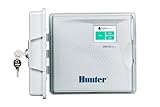
Overview: The Hunter Hydrawise Pro-HC is a professional-grade outdoor controller managing up to 24 irrigation zones for large estates and light commercial properties. This rugged unit combines commercial durability with sophisticated water management through a 2.75-inch color touchscreen and powerful Hydrawise platform. Designed for demanding landscapes, it offers contractor-level diagnostics and scheduling flexibility that consumer-grade controllers cannot match.
What Makes It Stand Out: Six independent programs with six start times per zone provide unprecedented scheduling precision for complex landscapes. Built-in milliamp sensing instantly detects wiring faults, preventing solenoid damage and enabling proactive maintenance. Optional HC Flow Meter integration delivers real-time leak alerts and water usage analytics, potentially saving thousands in water damage. The weather-resistant enclosure, two sensor inputs, and master valve output support sophisticated system configurations that professionals demand.
Value for Money: At $553.76, this premium controller justifies its price through professional features and massive zone capacity. For large properties, it’s more economical than multiple smaller controllers. The flow monitoring and wire fault detection prevent costly repairs, delivering ROI through damage prevention. While overkill for typical homes, estates requiring 12+ zones will find the commercial-grade construction and advanced diagnostics invaluable. The Hydrawise platform’s analytics alone justify the cost for water-conscious property managers.
Strengths and Weaknesses: Pros: 24-zone capacity for large properties; professional weatherproof construction; advanced wire fault detection; flow meter ready; six programs per zone; full-color touchscreen; contractor-trusted reliability. Cons: Highest price point; complexity overwhelms casual users; requires professional installation for optimal setup; flow meter sold separately; significant overkill for small yards.
Bottom Line: Best for large estates, commercial properties, or demanding landscapes requiring 12+ zones. The diagnostic capabilities and capacity are unmatched, but most homeowners should choose simpler, cheaper options. A true professional tool that pays for itself through water savings and damage prevention on large properties.
4. ImoLaza 6-Zone Indoor Smart WiFi Sprinkler System Controller, Easy Install Irrigation Timer for Lawn & Garden, Water-Saving Automatic Sprinkler Timer/Controller with Mobile App, Compatible with Alexa

Overview: ImoLaza’s 6-Zone controller delivers premium smart irrigation features at a budget price point. This indoor unit targets DIY enthusiasts with a 15-30 minute installation promise, transforming existing systems into intelligent water managers. The controller emphasizes weather intelligence and water conservation without subscription fees, making advanced irrigation accessible to cost-conscious homeowners who want maximum features with minimal investment.
What Makes It Stand Out: The proprietary weather system accesses 375,000 weather stations—far exceeding industry standards—for ultra-precise rain, freeze, and wind skip decisions. Unique “New Grass” mode enables up to 24 daily start times, crucial for establishing new lawns. All features remain permanently free, with no premium tiers or subscriptions. The controller claims up to 50% water reduction (30,000+ gallons annually), with quantifiable savings that environmentally conscious users will appreciate. The three-step installation process is genuinely simple.
Value for Money: At $89.99, this is exceptional value—nearly half the price of comparable 6-zone controllers while offering superior weather data. No subscription fees eliminate ongoing costs. The potential water savings could recoup the investment in one season for users in drought-prone areas. While the brand lacks Rain Bird’s legacy, the feature set and price make it a compelling alternative for budget-minded buyers who prioritize weather intelligence over brand reputation.
Strengths and Weaknesses: Pros: Unmatched weather station coverage; innovative New Grass mode; completely free features; easiest DIY installation; outstanding price-to-performance ratio; strong water savings claims. Cons: Newer brand with unproven long-term reliability; indoor installation only; limited to 6 zones; fewer smart home integrations; lacks advanced flow monitoring.
Bottom Line: The best value for 6-zone systems, especially for tech-savvy users prioritizing weather intelligence and simple setup. The feature set exceeds its price class, though brand longevity remains uncertain. Ideal for those wanting maximum smarts with minimal financial commitment.
5. Rain Bird ST8O-2.0 Smart Indoor/Outdoor WiFi Sprinkler/Irrigation System Timer/Controller, WaterSense Certified, 8-Zone/Station, Compatible with Amazon Alexa

Overview: The Rain Bird ST8O-2.0 is the weatherproof version of the ST8I, offering identical smart features in a rugged enclosure for outdoor mounting. This 8-zone controller provides installation flexibility for homes where indoor mounting is impractical. WaterSense certified and Alexa-compatible, it delivers professional-grade water management with the convenience of outdoor installation, eliminating the need for protective modifications or indoor space allocation.
What Makes It Stand Out: The indoor/outdoor versatility distinguishes it from single-environment controllers, allowing installation at your irrigation system’s termination point. Triple control redundancy ensures access via WiFi, direct mobile connection, or manual panel operation—even during internet outages. The controller’s seasonal adjust feature automatically modifies watering percentages monthly, while daily weather monitoring provides precise rain and freeze skips. This balances landscape health with water conservation across changing conditions.
Value for Money: At $185.80, the $16 premium over the indoor version is justified by the IP-rated enclosure and installation freedom. The outdoor rating may unlock additional municipal rebates beyond WaterSense certification. Compared to retrofitting an indoor controller with weatherproof housing, it’s more economical and aesthetically pleasing. While pricier than some alternatives, Rain Bird’s proven reliability and extensive service network justify the modest premium for buyers prioritizing brand trust and durability.
Strengths and Weaknesses: Pros: Weatherproof outdoor design; triple control method ensures reliability; WaterSense certified; broad smart home compatibility; automatic seasonal adjustments; trusted brand with strong support. Cons: $16 more than indoor version; no built-in flow monitoring; basic app interface; requires outdoor electrical connection; fewer weather data sources than premium competitors.
Bottom Line: The ideal choice for 8-zone systems requiring outdoor installation. The weatherproof design and flexible control options provide convenience and reliability worth the small premium. A dependable, no-surprise solution from an established industry leader that will serve most residential landscapes excellently.
6. Rain-Bird ESP-TM2 Indoor Outdoor Irrigation WiFi Zone Controller Timer Box and Link Lnk WiFi Mobile Wireless Smartphone Upgrade Module Sprinkler System (8 Zone)

Overview: The Rain-Bird ESP-TM2 represents professional-grade irrigation control for discerning homeowners. This eight-zone controller seamlessly transitions between indoor and outdoor installations, featuring a rugged design with a factory-installed six-foot outdoor-rated power cord. The large backlit LCD display ensures visibility in any lighting condition, while WiFi connectivity transforms your smartphone into a powerful remote management tool.
What Makes It Stand Out: This controller distinguishes itself through Rain-Bird’s legendary reliability and contractor-focused features. The Contractor Default function lets you save custom schedules indefinitely, while the 14-day delay watering function automatically resumes operations—perfect for vacations or rainy periods. The system’s hyperlocal weather adjustments can reduce water usage by up to 50%, delivering both environmental and financial benefits.
Value for Money: At $202.50, this sits in the premium tier but delivers commensurate value. You’re investing in decades of irrigation expertise, commercial-grade components, and features that prevent costly overwatering. Compared to professional installation fees exceeding $500, this DIY-friendly unit pays for itself within a single season through water savings alone.
Strengths and Weaknesses: Strengths include robust construction, intuitive three-step programming, brand reputation, and sophisticated water management. The outdoor-ready design eliminates additional housing costs. Weaknesses are the premium price point and potentially overwhelming feature set for users with simple irrigation needs. The eight-zone capacity may exceed requirements for smaller properties.
Bottom Line: Ideal for homeowners seeking commercial-quality irrigation control without contractor pricing. The Rain-Bird ESP-TM2 justifies its cost through durability, water savings, and professional features that adapt to complex landscaping needs while remaining surprisingly user-friendly.
7. 4 Zone Smart Sprinkler Controller with Local Weather Intelligence and Atmosphere Lights, Automated Watering and App Control WiFi Irrigation System, Save Water Through Rain Skip

Overview: This four-zone smart sprinkler controller packs impressive intelligence into an affordable package, making smart irrigation accessible to budget-conscious homeowners. The system combines weather prediction technology with versatile control options, including a built-in panel and smartphone app. Unique atmosphere lights provide visual status indicators, while voice control integration adds modern convenience.
What Makes It Stand Out: Three specialized irrigation modes set this controller apart: Normal for daily consistency, Interval for customized date-based scheduling, and Cycle & Soak for challenging terrain. The dual-control approach ensures you’re never locked out if WiFi fails. Integration with Alexa and Google Home enables hands-free operation, while the 15-minute installation requires no technical expertise.
Value for Money: At $69.99, this controller delivers exceptional value, undercutting many competitors by half while maintaining premium features. The weather-based skipping alone can reduce water bills by 30-40%, ensuring rapid ROI. For small to medium lawns, this represents the sweet spot between functionality and affordability.
Strengths and Weaknesses: Strengths include unbeatable pricing, versatile irrigation modes, dual control methods, and US-based 24/7 support. The atmosphere lights are a thoughtful touch for quick status checks. Weaknesses are limited to four zones, 2.4GHz WiFi only, and a less established brand name compared to industry giants. May require replacement for expanding landscapes.
Bottom Line: Perfect for first-time smart irrigation users or those with modest-sized yards. This controller democratizes water-saving technology without compromising essential features, backed by reliable customer support that inspires confidence in its longevity.
8. RAINPOINT Sprinkler Controller 8 Zone, Local Weather-Based Smart Irrigation Controller, WiFi Sprinkler Timer for Sprinkler System,Yard,Lawn

Overview: The RAINPOINT eight-zone controller bridges the gap between affordability and advanced functionality, emphasizing universal compatibility and intelligent water management. Designed around standard 24VAC specifications, it integrates with 99% of existing sprinkler systems without costly modifications. Weather-based adjustments automatically skip rainy days, while seasonal customization adapts to changing climate conditions.
What Makes It Stand Out: Unparalleled compatibility eliminates the guesswork from system upgrades, making this ideal for retrofit applications. The SMART+ app provides comprehensive control from anywhere, allowing monitoring of irrigation history to refine schedules. Each zone supports up to eight custom schedules with cycle and interval flexibility, offering granular control typically found in premium units.
Value for Money: Priced at $105.99, this controller positions itself as a mid-range champion. It avoids the premium pricing of established brands while delivering comparable core features. The DIY installation takes 15-30 minutes without special tools, saving professional installation costs. Water savings from intelligent skipping typically recover the investment within one to two seasons.
Strengths and Weaknesses: Strengths include universal compatibility, flexible scheduling, intuitive app interface, and straightforward installation with helpful labeling. The weather intelligence effectively prevents overwatering. Weaknesses include a lesser-known brand reputation, potential long-term durability questions, and fewer advanced features than commercial-grade alternatives. Lacks dual-band WiFi support.
Bottom Line: An excellent choice for replacing legacy controllers without system overhauls. RAINPOINT delivers smart irrigation fundamentals with impressive compatibility, making it perfect for cost-conscious homeowners wanting reliable water savings without sacrificing zone capacity.
9. Smart Sprinkler Controller, 16-Zone/Station Irrigation System with APP Remote Control, GreenVation 2.4G/5GHz WiFi Water Timer for Outdoor Garden/Yard/Lawns (16 Zone)
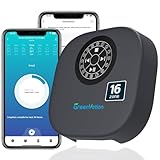
Overview: The GreenVation sixteen-zone controller shatters price barriers by offering high-capacity smart irrigation at an unprecedented $59.99. Supporting both 2.4GHz and 5GHz WiFi, this unit manages extensive landscapes through the Smart Life/Tuya app ecosystem. The system automatically generates dynamic schedules based on weather data and historical usage, promising up to 50% water savings.
What Makes It Stand Out: The zone-to-dollar ratio is unmatched—sixteen stations at this price point are revolutionary. Dual-band WiFi ensures reliable connectivity in congested network environments, a feature often reserved for premium models. The ability to activate only one zone at a time prevents hydraulic overload, protecting pump systems and ensuring consistent pressure.
Value for Money: This controller redefines value, costing less than $4 per zone. Even with modest water savings, it pays for itself within months. For large properties requiring extensive coverage, alternative solutions cost three to five times more. The DIY-friendly design eliminates installation expenses entirely.
Strengths and Weaknesses: Strengths include unbeatable pricing, high zone count, dual-band WiFi, and straightforward app integration. The one-zone-at-a-time operation is hydraulically responsible. Weaknesses involve an obscure brand, requirement for immediate firmware updates, dependence on the Tuya app ecosystem, and unknown long-term reliability. Build quality may reflect the aggressive pricing.
Bottom Line: Best suited for budget-savvy homeowners with large irrigation needs willing to accept some risk. If the controller performs reliably, it’s the deal of the decade. Consider purchasing extended warranty protection to mitigate potential quality concerns inherent in ultra-budget electronics.
10. ImoLaza 16-Zone Indoor Smart WiFi Sprinkler System Controller, Easy Install Irrigation Timer for Lawn & Garden, Water-Saving Automatic Sprinkler Timer/Controller with Mobile App, Compatible with Alexa

Overview: The ImoLaza sixteen-zone controller targets water conservation purists with scientifically precise irrigation management. Using hyperlocal weather monitoring and real-time evapotranspiration calculations, it adjusts watering based on plant type, soil conditions, and sunlight exposure. The exclusive New Grass Schedule offers up to 24 daily start times, ideal for establishing new turf.
What Makes It Stand Out: Zero water waste philosophy drives every feature—rain skip, wind skip, freeze skip, and ET-based scheduling ensure irrigation only occurs when absolutely necessary. The system calculates actual water loss rather than relying on simplistic weather rules. This scientific approach, combined with hyperlocal weather data updated 24/7, represents the cutting edge of residential water management.
Value for Money: At $179.99, this premium controller justifies its cost through genuine water savings and superior lawn health. Traditional timers waste 40-50% of irrigation water; ImoLaza’s precision can cut this dramatically. For environmentally conscious homeowners or those in drought-prone regions, the investment protects both resources and landscaping investments.
Strengths and Weaknesses: Strengths include advanced water science, flexible scheduling, real-time monitoring, easy installation, and Alexa compatibility. The New Grass Schedule is genuinely innovative. Weaknesses are indoor-only installation limiting placement options, premium pricing, and complexity that may overwhelm casual users. Requires trust in cloud-based calculations.
Bottom Line: The ultimate choice for water-conscious homeowners prioritizing lawn health over simplicity. ImoLaza’s scientific approach delivers measurable results, making it worth every penny for those in water-restricted areas or managing high-value landscaping where precision matters most.
Understanding Smart Sprinkler Weather API Integration
The Evolution From Timers to Intelligent Systems
Remember when irrigation meant either manual hose-dragging or rigid timer-based systems that watered regardless of conditions? Those days are effectively over. Modern smart sprinkler controllers have undergone a paradigm shift, evolving from simple clockwork mechanisms into cloud-connected devices that process dozens of data points before releasing a single drop. The integration of weather APIs marks the third generation of this technology—moving beyond basic rain sensors to predictive, data-driven decision-making.
These systems now communicate with meteorological services that provide real-time and forecasted conditions specific to your property’s exact coordinates. The API (Application Programming Interface) acts as a translator, converting raw weather data into actionable irrigation commands. When a weather API reports incoming precipitation within your system’s response window, it automatically adjusts or skips scheduled watering cycles. This isn’t just about rain; advanced integrations factor in humidity, wind speed, solar radiation, and even localized microclimate variations.
How Weather API Triggers Actually Work
The technical process behind weather API triggers is elegant in its complexity. Your smart controller periodically sends a request—typically every 15 to 60 minutes—to a weather data provider’s API endpoint. This request includes your location coordinates and possibly elevation data. The API responds with a structured data packet containing current conditions and short-term forecasts, usually spanning 24-48 hours.
Your sprinkler system’s firmware then applies proprietary algorithms to this data, weighing factors like precipitation probability percentage, expected rainfall accumulation, temperature trends, and wind conditions. If the algorithm determines that natural precipitation will meet or exceed your landscape’s moisture requirements, it triggers a suppression command for upcoming watering events. The system also calculates “rain skip” thresholds—typically user-configurable between 1/8-inch to 1-inch of predicted rainfall—to balance conservation with plant health.
Critical Features to Evaluate in 2026 Models
Predictive Analytics and Machine Learning
The most sophisticated systems now incorporate machine learning models that improve accuracy over time. These algorithms analyze historical weather data alongside your soil’s actual moisture retention performance, creating a feedback loop that refines future predictions. When evaluating systems, look for controllers that advertise “adaptive forecasting” or “learning algorithms”—these features indicate the device tracks not just what the weather API predicted, but what actually happened in your yard.
This capability is crucial because weather APIs aren’t perfect. A system that learns that your specific location consistently receives 30% less rainfall than predicted can automatically adjust its trigger thresholds, preventing both overwatering and underwatering. The machine learning component should also factor in seasonal vegetation changes, recognizing that your lawn’s water needs in spring differ dramatically from summer stress periods.
Hyper-Local Weather Data Processing
Not all weather data is created equal. In 2026, the gold standard is hyper-local processing that goes beyond regional airport weather stations. Premium integrations tap into mesonet networks—dense grids of automated weather stations that can provide data from locations just a few miles apart. Some advanced systems even blend multiple API sources, cross-referencing government meteorological services with private weather networks to optimize accuracy.
When assessing a system’s specifications, investigate its weather data sources. Does it rely on a single national service, or can it integrate with local mesonet stations? Can you manually select the nearest weather station, or does the system automatically choose? The difference between a system using data from 20 miles away versus one using a station 2 miles away can be substantial, especially in regions with varied topography where rainfall amounts differ significantly over short distances.
Multi-Zone Microclimate Differentiation
Your front yard’s sunny slope has entirely different watering needs than your shaded backyard garden. Leading 2026 systems recognize this through zone-specific weather API applications. Rather than applying a single weather decision to your entire property, advanced controllers can maintain separate trigger parameters for each zone based on microclimate factors.
This feature requires sophisticated mapping capabilities within the system’s app, allowing you to designate sun exposure levels, soil types, slope angles, and plant species for each zone. The weather API integration then processes these variables, potentially watering a shaded zone while skipping a full-sun area during the same cycle. Look for systems that offer granular control over zone-specific rain skip thresholds and evapotranspiration calculations.
Technical Infrastructure Requirements
Decoding API Response Times and System Latency
Timing is everything in weather-responsive irrigation. A system that only checks weather data every six hours might miss rapidly developing thunderstorms or sudden heatwaves. When evaluating controllers, inquire about API polling frequency and system latency—the time between receiving weather data and acting on it.
Optimal systems check conditions every 15 minutes during active watering windows and can process API responses within 30-60 seconds. They also feature “last-minute checking” protocols that perform a final verification 5-10 minutes before a scheduled watering event begins. This prevents the frustrating scenario where your system waters diligently during a downpour simply because the rain started after the last data check.
Network Connectivity Standards
Weather API integration demands robust internet connectivity, but not all systems handle network instability gracefully. In 2026, look for controllers with dual-band Wi-Fi 6 support and optional cellular backup connectivity. The latter is particularly valuable in regions prone to storms that might knock out home internet precisely when you need weather data most.
Equally important is offline operation logic. Premium systems cache recent weather data and maintain a 24-48 hour operational buffer, allowing them to make intelligent decisions even during temporary internet outages. They should also feature automatic reconnection protocols and alert you via push notification if they’ve been offline for more than a few hours, ensuring you’re never unaware of a system failure.
Power Backup and Failover Systems
A smart sprinkler that can’t operate during power outages offers limited value, especially since severe weather often causes both power failures and irrigation needs. Modern controllers should include battery backup systems capable of running the device for 24-72 hours while maintaining API communication. Solar-powered options are emerging for 2026, particularly valuable for rural properties or areas with unreliable grid power.
The failover system should also include non-volatile memory that preserves your watering schedules and learned preferences. When power and internet return, the system should automatically resync with the weather API, download missed forecast data, and adjust upcoming schedules accordingly without requiring manual intervention.
Installation and Setup Considerations
Professional Integration vs. DIY Approaches
While many smart sprinkler controllers are marketed as DIY-friendly, weather API integration adds complexity that might warrant professional installation. A certified irrigation technician can ensure proper wiring, optimal sensor placement, and correct API configuration. They’ll also calibrate the system’s baseline settings based on your specific soil composition and plant materials.
DIY installation is certainly feasible for those comfortable with basic electrical work and smartphone apps. The critical step is the initial API setup and zone mapping phase. Budget 2-3 hours for a typical residential installation, plus an additional week of observation and tweaking. Most systems require a “learning period” of 1-2 weeks where you monitor their decisions and adjust sensitivity settings before trusting fully automated operation.
Calibration and Learning Period Optimization
The first month with your new system is crucial for long-term performance. During this period, manually verify the system’s weather-based decisions against actual conditions. Did it skip watering when only a brief drizzle occurred? Did it water unnecessarily before a major storm? Use the app’s manual override logging to track these events.
Optimal calibration involves setting appropriate baseline durations for each zone, then letting the weather API integration adjust from there. Start conservative—slightly longer watering times than you think necessary—then observe plant response. The system’s learning algorithms will adjust, but they need accurate starting parameters. Take soil samples from each zone to determine soil type (clay, loam, sand) as this dramatically affects water retention and should be accurately entered during setup.
Advanced Weather Trigger Capabilities
Precipitation Prediction and Response
Beyond simple rain detection, 2026 systems differentiate between precipitation types and intensities. A light misting triggers different responses than a heavy downpour. Advanced APIs provide quantitative precipitation forecasts (QPF) that predict exact rainfall amounts down to hundredths of an inch. Your system should allow you to set different skip thresholds for different zones—a vegetable garden might need watering after 0.25 inches of rain, while a mature lawn can skip after 0.5 inches.
The most sophisticated integrations also factor in precipitation timing. Rain predicted for 6 PM shouldn’t necessarily cancel a 6 AM watering if the day’s heat will evaporate moisture before the storm arrives. Look for systems that analyze precipitation probability curves rather than simple binary rain/no-rain indicators.
Temperature-Based Adjustments
Weather API triggers extend beyond precipitation to temperature-based modifications. When forecasts predict heat waves above certain thresholds (typically 90-95°F), advanced systems automatically increase watering duration or frequency to compensate for higher evapotranspiration rates. Conversely, unseasonably cool periods trigger reductions.
The key feature to evaluate is the system’s use of evapotranspiration (ET) data—a calculation combining temperature, humidity, wind, and solar radiation to determine actual plant water loss. Premium integrations pull ET values directly from weather APIs rather than estimating them from basic temperature data. This results in 20-30% more accurate watering adjustments during temperature extremes.
Wind and Evapotranspiration Factors
High winds can render sprinkler irrigation nearly useless, with water blowing away from target areas. Modern weather API integrations monitor wind speed forecasts and automatically delay watering during windy periods, typically above 15-20 mph. The system reschedules these cycles for calmer periods, often during pre-dawn hours.
Advanced systems also integrate historical wind patterns with ET calculations, recognizing that windy days increase water loss even when temperatures are moderate. This nuanced approach prevents the common problem of underwatering during dry, windy spring days that don’t meet traditional “hot weather” thresholds.
Smart Home Ecosystem Compatibility
Cross-Platform Integration Potential
Your sprinkler system shouldn’t exist in isolation. Leading 2026 controllers offer deep integration with broader smart home platforms, allowing weather API triggers to influence other devices. When rain is predicted, your system can signal smart window closers, adjust outdoor lighting schedules, or alert your robotic lawn mower to avoid mowing wet grass.
Look for controllers with open API documentation or certified partnerships with major smart home platforms. Matter compatibility is becoming the new standard, ensuring your irrigation system can communicate seamlessly with devices from different manufacturers. This interoperability future-proofs your investment as smart home ecosystems evolve.
Voice Assistant and Automation Synergy
Voice control goes beyond simple “turn on zone 3” commands. Advanced integrations allow you to ask, “Should I water the garden today?” and receive answers based on current weather API data, soil moisture levels, and upcoming forecasts. You can create complex automation routines like “If rain is predicted within 12 hours, delay all watering and send a notification to my phone.”
The most useful feature is conditional voice feedback—systems that proactively alert you to unusual situations. “I’ve detected a 90% chance of hail in 2 hours and have disabled all watering to prevent plant damage.” This level of intelligent communication transforms your sprinkler from a silent utility into an active garden partner.
Cost Considerations and ROI Analysis
Upfront Investment Breakdown
Weather API-enabled controllers typically cost 2-4 times more than basic smart timers, with prices ranging from $200 to $600 depending on zone capacity and feature sets. However, this upfront cost represents only 30-40% of total first-year investment. Factor in installation (if professional), possible Wi-Fi upgrades, soil moisture sensors ($50-150 each), and flow meters ($100-300).
The hidden cost is your time for initial setup and calibration. Budget 5-10 hours for DIY installation and the first month of monitoring. While not a monetary expense, this time investment is crucial for optimal performance and should be factored into your decision.
Ongoing Subscription Costs
Here’s where many buyers get surprised. Basic weather API access is often included free, but premium hyper-local data, extended forecasts, and advanced ET calculations frequently require subscriptions. These typically run $3-10 monthly, though some manufacturers bundle the first year free.
Evaluate what’s included in the base price versus premium tiers. Basic subscriptions might provide only 24-hour forecasts, while premium tiers offer 7-day predictive analytics and access to multiple weather data sources. Some systems allow you to bring your own API key from services like OpenWeatherMap or AerisWeather, potentially saving money if you’re tech-savvy enough to manage your own data subscriptions.
Water Bill Savings Calculations
The financial justification for weather API integration lies in water savings, typically 30-50% compared to traditional timers. For average suburban lawns using 20,000 gallons monthly during growing season, this translates to 6,000-10,000 gallons saved. At national average water rates ($1.50 per 1,000 gallons), you’re looking at $9-15 monthly savings, or $108-180 annually.
However, these calculations vary dramatically by region. In drought-prone areas with tiered pricing, savings can exceed $50 monthly during peak summer. The payback period typically ranges from 18 months in high-cost water districts to 3-4 years where water is inexpensive. Factor in potential municipal rebates (often $100-300) when calculating ROI, as many water districts actively incentivize smart irrigation adoption.
Environmental Impact and Water Conservation
Water Conservation Impact Metrics
Weather API integration delivers measurable environmental benefits beyond cost savings. The average residential system prevents 30,000-50,000 gallons of unnecessary irrigation annually—the equivalent of a swimming pool’s worth of water. Multiply this across neighborhoods, and the community impact becomes substantial, reducing strain on municipal water supplies and wastewater treatment systems.
Advanced systems now include conservation dashboards that quantify your environmental impact, showing gallons saved, equivalent energy reductions from water pumping, and even your personal contribution to aquifer preservation. These metrics aren’t just feel-good numbers; they’re increasingly used by municipalities to demonstrate regional conservation progress and secure water rights.
Regulatory Compliance and Rebates
Many municipalities now mandate smart irrigation for new construction or major landscape renovations. Weather API integration with documented water savings helps ensure compliance with these regulations. Some systems can automatically generate usage reports for water districts, simplifying rebate applications and conservation audits.
Research local regulations before purchasing. Some regions require specific certifications (like EPA WaterSense) or minimum API check frequencies to qualify for rebates. The most forward-thinking systems include built-in compliance modes that automatically adjust settings to meet local water restrictions, such as mandatory watering day schedules or seasonal irrigation bans.
Troubleshooting Common Integration Issues
Common API Integration Failures
Even the best systems experience hiccups. The most frequent issue is API rate limiting—when your system requests data too frequently and gets temporarily blocked. Quality controllers handle this gracefully with exponential backoff algorithms that reduce request frequency during high-traffic periods. Less sophisticated systems might simply stop checking weather, reverting to dumb timer mode without alerting you.
Another common failure is geolocation errors, where the system pulls weather data from the wrong location. This typically occurs in rural areas or near county lines. Ensure your system’s location settings use precise coordinates rather than zip codes, and manually verify during setup that it’s pulling data from the nearest appropriate weather station.
Seasonal Calibration Requirements
Weather API integration isn’t a set-and-forget solution. Seasonal changes require recalibration, particularly during spring green-up and fall dormancy periods. Most systems include seasonal adjustment modes that automatically modify baseline watering by 10-20% monthly, but these should be manually verified.
The critical seasonal task is updating your system’s plant type settings. Cool-season grasses have different water needs in April versus September, even if temperatures are similar. Advanced systems allow you to set growth stage parameters that automatically adjust ET calculations. Schedule quarterly calibration reviews to ensure your weather triggers remain aligned with actual landscape needs.
Security and Data Privacy
Protecting Your Irrigation Network
A connected sprinkler system represents a potential network vulnerability. In 2026, security standards have improved, but vigilance remains necessary. Ensure any controller you consider includes end-to-end encryption for API communications, automatic firmware updates for security patches, and secure boot processes that prevent unauthorized firmware modifications.
The most secure systems segment their weather API communications from local network controls, using separate encrypted channels. Look for controllers that support WPA3 Wi-Fi encryption and offer two-factor authentication for app access. Some advanced models include intrusion detection that alerts you to unusual API request patterns, potentially indicating a compromised device.
Understanding Data Collection Practices
Weather API integration requires sharing your location and irrigation patterns with external services. Investigate each manufacturer’s privacy policy regarding data retention and sharing. Premium systems anonymize usage data before sharing it with weather services for forecast improvement, while budget options might sell your irrigation patterns to third-party marketers.
The key question: Who owns your irrigation data? Opt for manufacturers with clear data ownership policies that let you export or delete your historical data. The most privacy-conscious systems offer local-only processing options, where weather API data is fetched and processed on-device rather than in the cloud, though this typically reduces some advanced features.
Future-Proofing Your System
Scalability and Firmware Update Policies
Technology evolves rapidly, and your 2026 purchase should remain relevant through at least 2030. Evaluate manufacturers’ firmware update histories—do they support devices for 4-5 years, or abandon them after 2? The best companies provide quarterly updates that add features and improve weather API integrations as new data sources become available.
Scalability matters if you might expand your landscape. Ensure the controller supports more zones than you currently need, and verify that adding zones later doesn’t require system replacement. Some modular systems allow you to add expansion modules, while others require purchasing a larger capacity controller upfront.
Emerging 2026 Standards and Protocols
The irrigation industry is standardizing around several key protocols. Matter compatibility ensures cross-platform smart home integration. OpenWeatherMap’s One Call API 3.0 is becoming the default for many systems, offering 1,000 free calls daily. The Irrigation Association’s new Smart Water Application Technologies (SWAT) testing protocol provides standardized performance metrics.
When selecting a system, prioritize those adhering to these emerging standards. This ensures compatibility with future weather services and smart home platforms. The most forward-thinking controllers include hardware acceleration for AI processing, enabling future firmware updates to run more sophisticated machine learning models without requiring hardware replacement.
Frequently Asked Questions
How exactly do weather API triggers determine whether to skip watering?
Weather API triggers analyze precipitation probability, expected rainfall amounts, and timing. Most systems let you set a threshold—typically 0.25 to 0.5 inches of predicted rain—within a specific window (usually 12-24 hours before scheduled watering). If the forecast meets or exceeds your threshold, the system automatically skips that cycle. Advanced models also factor in soil moisture levels and evapotranspiration rates to make more nuanced decisions.
What happens if my internet goes down during a critical weather event?
Quality systems cache the last 24-48 hours of weather data and can operate offline using this information. They also store your baseline watering schedules and will revert to these if offline for extended periods. Premium controllers with cellular backup maintain full API connectivity even when home Wi-Fi fails. Always verify a system’s offline capabilities before purchasing, as some budget models simply stop functioning without internet.
Are weather API integrations accurate enough to trust with my expensive landscaping?
Modern hyper-local APIs achieve 85-90% accuracy for 24-hour precipitation predictions, improving to 95%+ for current conditions. The key is combining API data with soil moisture sensors for ground-truth verification. Most systems learn your property’s specific microclimate patterns over 2-4 weeks, adjusting trigger thresholds to compensate for local forecast biases. For high-value landscapes, enable conservative settings that slightly overwater rather than risk drought stress.
Can I add weather API integration to my existing traditional sprinkler system?
Yes, in most cases. Weather API-enabled controllers are designed as direct replacements for traditional timer boxes, using the existing valve wiring. The main requirements are adequate Wi-Fi signal at the installation location and access to a power source. Some older systems may need valve upgrades if they’re incompatible with modern controller voltages, but this is rare. Professional assessment typically costs $50-100 and can identify any compatibility issues.
How much can I realistically expect to save on my water bill?
Typical savings range from 30-50% of outdoor water use, translating to $100-300 annually for average households. In regions with tiered water pricing or drought surcharges, savings can exceed $500 during peak summer months. The payback period averages 2-3 years, not including municipal rebates that can reduce this to under 18 months. Your actual savings depend on local water rates, landscape size, and how inefficient your previous watering schedule was.
Do these systems work in climates with unpredictable weather?
Actually, they’re most valuable in variable climates. Weather API integrations excel at responding to rapidly changing conditions that manual scheduling can’t accommodate. In regions with scattered thunderstorms or quick-moving fronts, the ability to check forecasts every 15 minutes prevents both missed watering opportunities and unnecessary irrigation. Systems with multiple API sources are particularly effective in volatile climates, as they can cross-reference conflicting forecasts to make more reliable decisions.
What maintenance does a weather API-integrated system require beyond normal sprinkler maintenance?
Beyond winterization and routine head cleaning, these systems need quarterly API calibration checks and annual Wi-Fi signal strength verification. Update your app and controller firmware every 3-6 months to ensure compatibility with evolving API standards. If you experience frequent false skips or unnecessary watering, recalibrate your rain threshold settings. Also, verify your location settings annually, as some systems can drift coordinates after major firmware updates.
Will my irrigation data be sold to third parties?
It depends on the manufacturer. Reputable companies anonymize data and use it only for service improvement. Always review privacy policies before purchasing. Look for statements about data ownership, retention periods, and sharing practices. Premium systems often offer local-only processing modes that keep your data on-device. If privacy is a major concern, contact manufacturers directly to ask about their data handling practices—legitimate companies provide clear, straightforward answers.
How do I handle watering restrictions that conflict with weather-based scheduling?
Most systems include “compliance modes” where you input allowed watering days and times. The weather API integration then works within these constraints, choosing the best allowed day based on forecasts. During severe restrictions, you can set priority zones (like vegetable gardens) to receive limited water while skipping less critical areas. Some advanced systems automatically download municipal restriction updates if your water provider participates in data-sharing programs.
Can weather API integration help with winterization and freeze protection?
Absolutely. Advanced systems monitor temperature forecasts and can automatically drain above-ground components when hard freezes are predicted. They’ll also alert you to unexpected cold snaps that might damage irrigation lines. Some integrate with smart valves that automatically shut off water supply during freeze warnings. This proactive freeze protection prevents costly burst pipe repairs and extends system lifespan by eliminating manual drain-down guesswork.