Living off-grid is about self-reliance, but that doesn’t mean leaving security to chance. As we look toward 2026, solar-powered outdoor cameras have evolved from niche gadgets to sophisticated sentinel systems capable of operating for months without intervention. For cabin owners who measure their distance from civilization in miles rather than minutes, these devices aren’t just convenient—they’re essential infrastructure that bridges the gap between isolation and peace of mind.
The technology has matured dramatically, moving beyond simple motion detection to AI-powered analytics that can distinguish between a curious bear and an actual threat. But with this evolution comes complexity. Understanding what makes a solar camera truly off-grid ready requires looking past marketing claims and into the engineering realities that determine whether your system will capture critical footage during a January blizzard or fade to black when you need it most. This guide cuts through the noise to arm you with the knowledge to build a surveillance network as resilient as your cabin itself.
Top 10 Solar-Powered Outdoor Cameras for Off-Grid Cabins
Detailed Product Reviews
1. Naseto Cellular Security Camera Wireless Outdoor, No WiFi Need, Battery & Solar Powered, Magnetic, Free Human Detection, Free 7-Day Cloud/SD, Night Vison, Siren, 2-Way, IP65 Talk, 2K
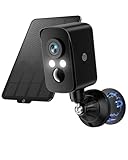
Overview: The Naseto Cellular Security Camera is a budget-friendly, true off-grid solution for remote property monitoring. Operating exclusively on 4G LTE networks with a pre-installed SIM card, it eliminates the need for WiFi or power outlets, making it ideal for farms, construction sites, and vacation cabins.
What Makes It Stand Out: Its magnetic mount sets it apart from competitors, enabling tool-free installation in minutes. The lifetime free 7-day rolling cloud storage (6-second clips) is a rare find at this price point, eliminating ongoing storage costs. The 9,000mAh battery combined with a 5W solar panel ensures year-round operation without manual intervention.
Value for Money: At $33.99, this is one of the most affordable cellular cameras available. Subscription plans ($19.99/monthly, $53.99/quarterly, $179.99/yearly) are competitive, and the included free cloud storage adds significant long-term value. The magnetic mounting system saves on installation costs and hassle.
Strengths and Weaknesses: Pros include exceptional battery capacity, innovative magnetic mounting, free lifetime cloud storage, and AI person detection. Cons are WiFi-only limitation (no dual connectivity), locked SIM card (no BYO option), and short 6-second cloud clips. The 300° pan requires manual rotation for full 360° coverage.
Bottom Line: Perfect for budget-conscious buyers needing reliable off-grid security. The magnetic mount and free cloud storage make it an unbeatable value for single-camera setups in truly remote locations.
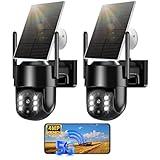
2. 4G LTE Cellular Security Camera Outdoor, Off Grid Security Camera No WiFi Solar Powered, 360° PTZ Solar Camera Outdoor Wireless, 2K Color Night Vision, PIR Motion Sensor, Built in SIM Card, 2 Cameras

Overview: This dual-camera 4G LTE kit delivers comprehensive off-grid surveillance for larger properties. With two cameras included, it provides overlapping coverage without the typical multi-camera price premium. The pre-installed SIM card offers immediate 4G connectivity across major carriers for true wireless freedom.
What Makes It Stand Out: The 4X digital zoom and 360° PTZ control provide exceptional monitoring flexibility. The 360-day free cloud storage offer (upon application) surpasses most competitors’ trial periods. Having two cameras for the price of one competitor’s single unit is a major differentiator for budget shoppers.
Value for Money: At $51.99 for two cameras, the per-unit cost of approximately $26 is outstanding. Subscription plans ($19.90/monthly or $169.99/yearly) are slightly cheaper annually than some rivals. The enhanced solar panel and high-capacity battery (capacity unspecified) promise reliable operation in low-light conditions.
Strengths and Weaknesses: Pros include dual-camera value, superior zoom capability, extended cloud trial, and integrated spotlight/siren deterrent. Cons are vague battery specifications, cloud storage requiring application/activation, and limited SD card support (128GB max). The 360° coverage eliminates blind spots effectively.
Bottom Line: An excellent choice for property owners needing multiple angles of coverage. The two-camera kit offers exceptional value, making it ideal for monitoring both entry and perimeter simultaneously without breaking the bank.
3. Solar Security Cameras Wireless Outdoor, 5G/2.4G Solar WIFI Cameras for Home Security,Solar Powered Outside Camera Wireless,Human Detection, Color Night Vision, 2-Way Talk for home Porch/Garage/Yard
Overview: Unlike the pure cellular options, this hybrid camera offers both 5G/2.4G WiFi and solar power, bridging the gap between traditional wireless and off-grid security. It’s designed for homeowners wanting flexibility in connectivity while maintaining eco-friendly operation.
What Makes It Stand Out: WiFi capability with 5G support provides future-proof connectivity, while Alexa integration enables voice control and smart home automation. The 355° horizontal and 100° vertical rotation offers excellent coverage range, and the IP65 rating handles diverse weather conditions from -4°F to 121°F.
Value for Money: At $68.39, it’s priced higher than cellular-only alternatives, but the dual connectivity justifies the premium. The solar panel eliminates electricity costs, and WiFi operation avoids cellular subscription fees for users with reliable internet. This flexibility can save money long-term.
Strengths and Weaknesses: Pros include WiFi/cellular flexibility, Alexa compatibility, wide rotation range, and robust weather resistance. Major cons require manual spotlight activation for color night vision (defeating automation benefits) and the higher price point. Battery capacity isn’t specified, raising longevity questions. The product title mentions 5G but features don’t detail cellular plans.
Bottom Line: Best suited for residential users wanting solar backup with primary WiFi operation. The manual night vision activation is a significant drawback for hands-off security, but the smart home integration appeals to tech-savvy homeowners prioritizing connectivity options over pure off-grid capability.
4. 4G LTE Security Camera Outdoor, No WiFi Cellular Camera, Solar Camera Wireless with SIM Card & 32GB SD Card, 2K 4MP, PIR Motion Detection, Color Night Vision, 2-Way Talk, Siren, No Trespassing Sign

Overview: This cellular security camera balances affordability with premium features, offering a complete off-grid package that includes local storage and physical deterrents. The 4G LTE connectivity works with all major carriers through its 3-in-1 SIM card for broad network compatibility.
What Makes It Stand Out: The included 32GB SD card and bonus “No Trespassing” sign add immediate value. The 10x digital zoom is class-leading for this price range. Optional AI object recognition upgrade provides advanced detection for users wanting enhanced security beyond standard PIR motion detection capabilities.
Value for Money: At $39.99, it’s competitively priced, especially considering the included accessories. Flexible subscription options ($19.90/monthly, $49.99/quarterly, $169/yearly) and a 100MB 7-day trial offer choice. The 8,000mAh battery is slightly smaller than some competitors but adequate for solar-supplemented operation year-round.
Strengths and Weaknesses: Pros include included SD card, powerful 10x zoom, bonus deterrent sign, dual night vision modes, and flexible subscription tiers. Cons are the smaller battery capacity, optional AI requiring paid subscription, and only 100MB trial data (less generous than unlimited trials). The locked SIM prevents carrier switching.
Bottom Line: A solid mid-range choice for users wanting comprehensive out-of-the-box functionality. The included storage and sign make it ideal for immediate deployment on construction sites or rural properties where visible deterrence matters.
5. MaxiViz 4G LTE Outdoor Solar Powered Cellular Security Camera Wireless, Off-Grid Camera No WiFi Required, 2.5K UHD Color Night Vision, 360° Live View, Local/Cloud Storage, IP66 Weatherproof, SIM Card

Overview: The MaxiViz camera pushes the boundaries of off-grid security with 2.5K UHD resolution and advanced AI analysis. This premium cellular camera is engineered for users demanding maximum clarity and intelligent detection in remote locations without WiFi or power infrastructure.
What Makes It Stand Out: The 2.5K UHD resolution (4MP) with 6X zoom delivers the sharpest imagery in this roundup. The $15.99/month subscription starting price is the lowest available, and lifetime 7-day cloud backup eliminates storage worries. The 98% accurate AI object analysis distinguishes people and vehicles automatically without requiring a premium subscription upgrade.
Value for Money: At $39.99, it offers flagship features at mid-range pricing. The 9,000mAh battery with 5W solar panel and 25% conversion rate ensures reliable operation. IP66 weatherproofing exceeds most competitors’ IP65 ratings, justifying the investment for harsh environments and extreme temperatures.
Strengths and Weaknesses: Pros include highest resolution, lowest subscription cost, included AI analysis, superior weatherproofing, and robust battery/solar combo. Cons are limited brand recognition and vague details on higher-tier subscription plans. The 7-day cloud backup, while free, may be insufficient for users needing longer retention periods.
Bottom Line: The best feature-to-price ratio for discerning buyers. The MaxiViz excels in image quality and intelligent detection, making it ideal for large properties where identifying details at distance is critical. The low subscription cost sweetens the deal significantly.
6. 4G LTE Security Cameras Wireless Outdoor, 2K Solar Cellular Security Camera, No WiFi Security Camera, Off Grid With 360° Live View, Color Night Vision, PIR Motion Alerts, 2 Way Talk, Built-In SIM Card

Overview: The 4G LTE Security Camera offers a budget-friendly entry into cellular surveillance at just $24.99. Designed for off-grid locations without WiFi, this solar-powered unit features an upgraded 8W panel that outperforms competitors’ typical 6W offerings. It delivers 2K resolution with 360° viewing and color night vision, making it suitable for farms, warehouses, and remote properties.
What Makes It Stand Out: The standout feature is its 8W solar panel ensuring consistent power without electrical wiring. The built-in 4G LTE SIM with 300MB trial data enables immediate deployment anywhere with cellular coverage. Advanced PIR detection provides accurate motion alerts, while two-way audio allows remote communication. The camera’s ability to operate on AT&T, T-Mobile, and Verizon networks offers carrier flexibility.
Value for Money: At $24.99, the hardware is exceptionally affordable, but the true cost lies in data plans ranging from $19.9 monthly to $199.9 annually per camera. While competitive for cellular cameras, these ongoing fees add up. The 30-day cloud trial and SD card support (up to 128GB) provide storage flexibility without mandatory subscriptions.
Strengths and Weaknesses: Strengths include powerful solar charging, true off-grid cellular connectivity, sharp 2K video, and comprehensive rotation. Weaknesses are expensive long-term data costs, limited 300MB trial data, lack of WiFi option, and US-only compatibility. The mandatory data plan makes it less economical for casual users.
Bottom Line: This camera excels for remote monitoring where WiFi is unavailable. The low entry price is attractive, but factor in recurring data costs. Best suited for users needing reliable off-grid security who accept the subscription model.
7. Solar Camera Outdoor Wireless WiFi Three Lens Solar Security Camera 360° Pan & Tilt, No Blind Spots Smart AI Human Detection Tracking Color Night Vision 2-Way Talk Siren Alarm No Cellular Needed
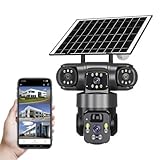
Overview: This Solar Camera redefines outdoor surveillance with its innovative triple-lens design, delivering 12MP Ultra HD monitoring without blind spots. Priced at $70.99, it combines three 4MP lenses with 355° pan and 90° tilt rotation, powered by a robust 16,000mAh battery and high-efficiency solar panel. The WiFi-only connectivity makes it ideal for properties with stable internet but no cellular needs.
What Makes It Stand Out: The three-lens panoramic system simultaneously captures three 1080P streams, tripling coverage efficiency for complex areas like courtyards and driveways. AI-powered human detection eliminates false alerts from pets and vehicles, while dual-mode night vision offers both infrared and full-color options. Supporting up to eight simultaneous users with customizable access tiers, it’s perfect for families or team security scenarios.
Value for Money: At $70.99, this camera sits in the mid-range but justifies its price through unique multi-lens technology and premium features. Unlike cellular models, there are no data subscription fees—just your existing WiFi. The 16,000mAh battery is among the largest available, ensuring reliable solar operation. No monthly costs make it economical long-term.
Strengths and Weaknesses: Strengths include revolutionary triple-lens coverage, massive battery capacity, sophisticated AI detection, multi-user support, and flexible storage options. Weaknesses are WiFi dependency limiting remote placement, lack of cellular backup, and higher upfront cost. The three-lens system may be overkill for simple monitoring needs.
Bottom Line: A premium choice for comprehensive WiFi-based security. The triple-lens design offers unmatched coverage, making it ideal for large properties. Just ensure reliable WiFi coverage for optimal performance.
8. MOES 4G LTE Cellular Security Camera with 360-Day Unlimited VSIM Data, No WiFi Security Camera Solar Powered, Remote Monitoring, Motion Sensor, 2K Wireless Outdoor Surveillance, 360° Viewing
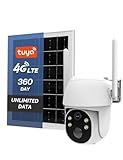
Overview: The MOES 4G LTE Cellular Security Camera distinguishes itself with an unmatched data offering: 360 days of unlimited data included for $93.59. This solar-powered unit combines 2K resolution with 4G connectivity, eliminating WiFi dependency while providing affordable long-term operation through its exclusive VSIM card.
What Makes It Stand Out: The included year of unlimited data is unprecedented, with renewals starting at just $9.9 per 30 days—significantly cheaper than competitors. The H.265 coding technology reduces storage needs by 40%, optimizing both cloud and SD card usage. Its AI-powered PIR detection specifically identifies humans and vehicles, minimizing false alerts from other motion.
Value for Money: While the $93.59 price exceeds basic models, the bundled data plan delivers exceptional value. Competing cameras often charge $200+ annually for data alone. Over two years, total investment remains under $150, making it the most economical cellular option. The 7800mAh battery and efficient solar panel ensure consistent operation without hidden power costs.
Strengths and Weaknesses: Strengths include unbeatable data pricing, advanced video compression, crisp 2K clarity, and reliable cellular connectivity. Weaknesses are limited 270° horizontal rotation (versus 355° competitors), no auto-tracking capability, and the VSIM’s incompatibility with other IoT devices. The 90° vertical tilt is adequate but not exceptional.
Bottom Line: The best value proposition for long-term cellular surveillance. The upfront cost is justified by massive data savings. Perfect for remote properties where WiFi is unavailable and budget-conscious operation is priority.
9. Moultrie Edge Solar Cellular Trail Camera - Integrated Solar Panel with Battery - 40MP - 1080p Video - Low-Glow Flash - Multi-Carrier Auto-Connect - Built-in Memory - 0.4s Trigger Speed

Overview: The Moultrie Edge Solar Cellular Trail Camera is a specialized scouting tool doubling as remote security, priced at $99.99. Designed for wildlife monitoring, it captures stunning 40MP photos and 1080p video with a lightning-fast 0.4-second trigger. The integrated solar panel and built-in rechargeable battery eliminate AA battery hassles, offering true set-and-forget operation.
What Makes It Stand Out: The 40MP image resolution is exceptional, surpassing typical security cameras. Multi-carrier auto-connect seamlessly switches between networks for optimal signal. The included 3-month onX Hunt Elite membership adds premium GPS mapping value for hunters. Cloud-based memory removes SD card management, while remote access via the Moultrie App enables instant photo requests and settings adjustments.
Value for Money: At $99.99, it’s priced competitively for a trail camera but higher than basic security cameras. Moultrie’s data plans start at $9.99 monthly with no contracts, offering flexibility. The integrated solar panel and built-in memory justify the premium over traditional trail cameras requiring frequent maintenance. For security use, the 40MP resolution may exceed practical needs.
Strengths and Weaknesses: Strengths include class-leading photo resolution, rapid trigger speed, reliable solar power, automatic network switching, and cloud convenience. Weaknesses are 1080p video (not 2K/4K), low-glow flash that may alert intruders, and hunting-focused features unnecessary for pure security applications. The specialized design may confuse typical security users.
Bottom Line: Outstanding for wildlife enthusiasts needing remote monitoring. Works for security but excels at game tracking. Choose this if high-resolution photos and field durability matter more than video quality.
10. Solar Security Cameras Wireless Outdoor, 5G/2.4G Solar WIFI Cameras for Home Security,Battery Powered Outside Camera,Human Detection, Color Night Vision, 2-Way Talk for home Porch/Garage/Yard

Overview: This Solar Security Camera delivers impressive features at an entry-level $39.99 price point. The dual-band WiFi camera (5G/2.4G) offers 2K resolution with color night vision, solar power, and 360° PTZ coverage. Alexa integration adds smart home convenience, while IP65 weatherproofing ensures durability from -4°F to 121°F.
What Makes It Stand Out: The sub-$40 price with 5G/2.4G WiFi support is remarkable, providing flexibility for modern routers. Alexa compatibility enables voice control and integration with smart home ecosystems. The 355° horizontal and 100° vertical rotation offers comprehensive coverage comparable to premium models. Color night vision, activated via spotlight, provides detailed low-light monitoring.
Value for Money: At $39.99, this is among the most affordable solar security cameras available. It includes features typically found in $70+ models: 2K resolution, pan-tilt-zoom, two-way audio, and PIR motion detection. No subscription is required for basic functionality, though cloud storage is optional. The solar panel eliminates electricity costs, making it essentially free to operate after purchase.
Strengths and Weaknesses: Strengths include exceptional affordability, dual-band WiFi, Alexa integration, wide temperature range, and solid 2K video. Weaknesses are WiFi-only connectivity limiting remote placement, unspecified battery capacity raising longevity questions, IP65 rating (less robust than IP66), and no advanced AI detection. The spotlight must be manually activated for color night vision.
Bottom Line: An unbeatable budget option for smart home users with reliable WiFi. Perfect for porches, garages, and yards where Alexa integration is valued. The low price makes it ideal for first-time security camera buyers.
Why Solar-Powered Cameras Are Essential for Off-Grid Cabin Security
Understanding True Off-Grid Operation
A genuinely off-grid solar camera system operates independently of hardwired power and internet connections, but the definition runs deeper than that. True autonomy means maintaining functionality through consecutive weeks of overcast weather, surviving temperature swings from -40°F to 120°F, and storing footage securely when cellular signals drop to one bar or disappear entirely. In 2026, we’re seeing a shift toward systems with multiple redundancies: dual power inputs (solar plus micro-wind), hybrid storage (local plus edge-cloud), and mesh networking capabilities that allow cameras to communicate with each other, creating a self-healing network that doesn’t rely on a single point of failure.
The distinction matters because many “solar” cameras are merely battery-powered units with small photovoltaic panels that extend battery life but won’t survive a true off-grid winter. For remote cabins, you need systems engineered for energy sovereignty, where the camera’s daily power consumption is less than 70% of the worst-case daily solar harvest. This safety margin separates hobbyist equipment from professional-grade surveillance that protects your investment when you’re not there to troubleshoot.
The Evolution of Solar Camera Technology Heading Into 2026
The landscape in 2026 looks radically different from just three years ago. Monocrystalline solar cells have pushed past 24% efficiency in field conditions, while new perovskite-silicon tandem cells (just entering the commercial market) promise 28%+ efficiency in low-light conditions—critical for northern latitudes with short winter days. More importantly, power management integrated circuits (PMICs) have become exponentially smarter, using machine learning to predict weather patterns and adjust recording schedules proactively.
We’re also witnessing the mainstream adoption of event-driven recording architectures. Instead of continuously buffering video, next-generation systems use ultra-low-power PIR sensors combined with mmWave radar to pre-activate the main camera system. This approach cuts standby power consumption from 500mW to under 50mW, fundamentally changing the power equation. For cabin owners, this means smaller, less conspicuous panels that still deliver reliable performance through a week of Pacific Northwest drizzle or Appalachian fog.
Key Power System Considerations
Solar Panel Efficiency Ratings: What the Numbers Really Mean
When manufacturers claim “24% efficiency,” they’re quoting laboratory conditions under 1000W/m² solar irradiance at 25°C. Your cabin’s reality involves dawn-to-dusk sun angles, pine needle coverage, and sub-zero temperatures that can actually improve panel performance but reduce battery capacity. For 2026 installations, look for bifacial solar panels that capture reflected light from snow or water, boosting real-world output by 15-30% in the right conditions.
The critical specification isn’t peak efficiency but the low-light performance curve—how many watts the panel generates at 200W/m² on an overcast morning. Quality panels will maintain 60-70% of their rated output in diffuse light, while budget options might plummet to 30%. For off-grid cabins, this difference determines whether your camera stays online through a three-day storm or spends those critical days offline, blind to potential threats.
Battery Capacity and Longevity in Extreme Conditions
Battery specifications require even deeper scrutiny. Lithium Iron Phosphate (LiFePO4) has become the non-negotiable standard for 2026, offering 2000+ charge cycles compared to 500 for older lithium-ion variants. But cycle life means nothing if the battery can’t deliver power at -20°F. Look for batteries with built-in heating elements that activate only when charging is possible, preventing permanent capacity loss during deep freezes.
Capacity ratings are equally misleading. A “10,000mAh” battery might sound substantial, but at 3.7V nominal voltage, that’s only 37Wh—barely enough for two days of operation without sun. For true off-grid resilience, calculate your needs based on worst-case winter power consumption. A robust system should store at least 10 days of operational energy, meaning 200Wh+ for a typical 4K camera with infrared. This requires larger panels not for peak summer days, but for the marginal charging days of December when every photon counts.
Cold Weather Performance: Lessons From Nordic Field Testing
Scandinavian cabin owners have become the unintentional proving ground for solar camera reliability, and their data is sobering. Below -4°F, standard LiFePO4 batteries lose 30-40% of their usable capacity. The solution isn’t just insulation—it’s thermal mass engineering. Leading 2026 designs incorporate phase-change materials that absorb heat during brief daylight hours and release it slowly through the night, keeping batteries above critical temperatures without active heating that would drain power.
Another overlooked factor is snow shedding. Panels mounted at less than 45° will accumulate wet, heavy snow that requires manual clearing. Vertical mounting on south-facing walls often outperforms optimal-angle roof mounting in heavy snow regions because gravity does the cleaning. For cabins in lake-effect snow belts, consider heated panels with autonomous snow detection—the 15W heating element draws less power than you’d lose to three days of snow cover, making it a net-positive investment.
Connectivity Solutions for Remote Locations
Cellular vs. Satellite: Making the Right Choice
The connectivity decision hinges on your definition of “off-grid.” If you’re within 15 miles of a cellular tower, modern 5G low-band (600-900MHz) can penetrate forest canopy surprisingly well, delivering 5-10Mbps upload speeds sufficient for 4K video clips. The key is choosing cameras with external antenna connectors. A directional MIMO antenna mounted 30 feet up a tree can pull signal where your phone shows no bars, transforming marginal connectivity into reliable communication.
For truly remote locations, satellite IoT has matured dramatically. 2026’s LEO satellite networks offer sub-100ms latency and data plans at $5-10/month for security camera applications. The catch is power consumption—satellite modems draw 3-5W when active, 10x more than cellular. This necessitates larger solar systems but enables coverage anywhere with sky visibility. Hybrid systems are emerging that use cellular for routine checks and satellite for critical alerts, optimizing both cost and power consumption based on message priority.
Local Storage vs. Cloud: Hybrid Approaches for 2026
Relying solely on cloud storage in off-grid scenarios is a recipe for disaster. When connectivity fails—and it will—you need local storage that continues recording. The 2026 standard is edge storage with intelligent sync: 128GB-256GB of industrial-grade eMMC storage that can hold 2-4 weeks of event-triggered footage, paired with firmware that automatically uploads clips when bandwidth becomes available.
But local storage has failure modes too. A lightning strike or determined thief could destroy the camera and its recordings. The emerging best practice is a three-tier system: local storage for immediate access, edge-cloud (uploaded to a server in your cabin’s network if you have a base station), and periodic batch uploads to remote cloud storage when you visit. For cabins without any network infrastructure, some systems now support sneaker-net sync via encrypted USB drives that maintain a rolling 30-day archive you can retrieve during seasonal visits.
Image Quality and Detection Capabilities
Resolution Standards: Beyond Simple Megapixels
The 4K marketing blitz has obscured what actually matters for security: pixel density at distance. A 4K sensor (8MP) is only superior if the lens can resolve that detail. Many budget 4K cameras use cheap lenses that blur the edges, making the extra resolution meaningless. For cabin security, prioritize cameras with larger pixel sensors (1/1.8" or bigger) over raw megapixel counts. These capture more light per pixel, delivering cleaner images in the dawn and dusk hours when most wildlife activity occurs.
More importantly, consider the compression algorithm. H.265 (HEVC) encoding cuts bandwidth and storage needs by 50% compared to H.264, but requires more processing power—which means more power consumption. The sweet spot for off-grid is H.265 with hardware acceleration, delivering a 4K stream at 2-3Mbps instead of 6-8Mbps. This directly translates to smaller solar panels and longer battery life without sacrificing the ability to read a license plate at 50 feet.
AI-Powered Detection: Reducing False Alerts
Traditional pixel-based motion detection is useless in wilderness settings—every swaying branch and shifting shadow triggers an alert. 2026’s edge AI models run directly on the camera’s chipset, analyzing objects semantically. A quality system can differentiate between deer, bear, human, and vehicle with 95%+ accuracy, only alerting you to the categories you care about. This isn’t just convenient; it’s critical for power management, as transmitting false alerts burns precious battery and bandwidth.
The sophistication varies dramatically. Basic models use single-frame object detection, while advanced systems employ temporal analysis—tracking movement patterns over multiple frames to identify suspicious behavior like loitering near a tool shed. For cabin security, look for cameras with customizable detection zones that can be armed differently based on time of day. You might want alerts for humans anywhere on your property after dark, but only near structures during daylight when you’re present. This granular control minimizes alert fatigue while maximizing meaningful surveillance.
Night Vision Technologies for Wilderness Settings
Infrared illumination has long been the standard, but its effective range is limited to 30-60 feet and creates a visible red glow that some wildlife finds unsettling. For 2026, consider cameras with starlight sensors (0.001 lux sensitivity) that produce full-color images in near-total darkness without any illumination. These sensors, combined with large aperture lenses (f/1.0 or better), can capture usable footage under starlight alone—ideal for monitoring large clearings or driveways.
For perimeter security where you need to detect movement at 100+ feet, thermal imaging has become surprisingly affordable. 160x120 resolution thermal cores now cost under $200 in bulk, and when paired with AI, they can detect a human at 300 feet through fog, smoke, or dense foliage. The power penalty is significant—thermal cores draw 2-3W continuously—but for high-security applications, the detection reliability outweighs the solar system costs. Some hybrid models switch from thermal to starlight mode when an object approaches, optimizing both detection range and identification quality.
Durability and Weather Resistance Standards
IP Ratings Decoded for Cabin Environments
That “IP66” rating looks impressive until you understand what it omits. The first digit (6) means dust-tight, while the second (6) means protected against powerful water jets—but says nothing about submersion, condensation, or ice damage. For cabin installations, you need IP67 minimum (temporary submersion protection), but more importantly, you need IP66K for high-pressure wash-down resistance. Why? Because pressure washers are how you’ll clean pine sap and moss off the solar panels, and a standard IP66 housing can fail when hit directly with a 1500psi stream.
Beyond the rating itself, examine the gasket material. EPDM rubber gaskets degrade in UV exposure within 2-3 years, while silicone gaskets last 10+ years. Quality manufacturers now publish gasket material specifications and offer replacement kits. For coastal cabins, look for ASTM B117 salt spray certification—standard IP ratings don’t test for corrosion resistance, and salt air will destroy unprotected aluminum housings in a single season.
Wind, Snow, and Wildlife: Real-World Durability Factors
Your camera’s mounting system is its Achilles’ heel. A camera rated for 150mph winds means nothing if the included bracket bends at 80mph. For exposed ridge-line cabins, insist on systems with heavy-gauge steel mounts and vibration dampening. The 2026 standard includes spring-loaded mounting bases that allow the camera to sway slightly in high winds, preventing stress fractures in the housing while maintaining aim.
Wildlife presents unique challenges. Bears will swat cameras, porcupines chew cables, and woodpeckers sometimes mistake them for trees. Look for cable management that routes wires through the mount itself, eliminating exposed sections. Some systems now include ultrasonic deterrents that activate when large animals approach, protecting both the camera and the creature from a confrontation. For bird-related issues, avoid cameras with flat top surfaces where nests can be built—a simple 30° sloped roof addition can eliminate this problem entirely.
Installation and Mounting Strategies
Optimal Solar Panel Positioning
The “south-facing at latitude angle” rule is a starting point, not a solution. For cabins used seasonally, you need to optimize for your presence schedule. If you only visit in summer, a flatter angle (latitude minus 15°) captures more summer sun. For year-round monitoring, a steeper angle (latitude plus 15°) sheds snow better and captures low winter sun more effectively. The best 2026 installations use adjustable mounts that can be seasonally tweaked during your visits—15 minutes of adjustment can improve winter charging by 40%.
Consider split-array designs: a small panel (10W) mounted vertically on the south wall for winter reliability, paired with a larger panel (30W+) on the roof for summer abundance. This redundancy ensures at least minimal charging even when the roof panel is buried in snow. For heavily forested properties, sometimes the only sunny spot is 100 feet from the ideal camera location. In these cases, run low-voltage DC cable (10AWG) from a remote panel array to the camera, accepting the 10-15% transmission loss in exchange for optimal sun exposure.
Height and Angle Considerations for Wildlife vs. Security
Mounting height creates a fundamental tension. Security experts recommend 8-10 feet to prevent tampering, but wildlife biologists note this creates unflattering angles that make animal identification difficult. The 2026 compromise is mounting at 12-15 feet with a slight downward angle (15-20°), placing the camera above human reach while capturing enough of the animal’s profile for AI identification. For bear country, add a protective cage that allows the camera to see out but prevents swatting damage.
Angle matters more than height for detection zones. A camera pointed parallel to the ground will miss nearby movement directly beneath it. The ideal security angle captures a zone 20-50 feet from the structure, where intruders are most likely to approach but before they’re close enough to cause damage. Use the camera’s built-in test mode (most 2026 models have this) to walk the perimeter and verify coverage before finalizing the mount. Mark your calibration points with small reflectors so you can check alignment during seasonal visits without needing to stream video.
Maintenance and Troubleshooting
Seasonal Maintenance Schedules
Your maintenance routine should follow the seasons, not the calendar. In late fall, clean panels and apply hydrophobic coatings that cause snow to slide off more easily. Check battery voltage under load—anything below 12.8V for a 12V LiFePO4 system indicates capacity degradation. In spring, inspect for wildlife damage and replace any chewed cables. Summer is for firmware updates and adjusting panel angles. Winter visits should focus on snow clearing and verifying that heating elements are functioning.
Create a maintenance log accessible via QR code on the camera housing. Scanning it with your phone pulls up a checklist and records the date, creating a service history that helps identify patterns. If a battery drops below 80% capacity within two years, that’s warranty data. If a particular camera needs monthly alignment tweaks, that’s an installation issue. This simple system turns reactive repairs into predictive maintenance, extending system life by 30-50%.
Common Issues and DIY Solutions
The most frequent failure point isn’t the camera—it’s the connection. Vibration loosens terminal screws, causing resistance that drops voltage and triggers low-power shutdowns. Apply thread-locking compound to all connections and use ferrule crimps on stranded wire rather than direct screw termination. Every six months, tug-test each wire; if it moves, it will eventually fail.
Another silent killer is condensation inside the lens. Even IP67 cameras can develop internal humidity if the housing isn’t perfectly sealed during assembly. Fix it by drilling a 1mm vent hole at the housing’s lowest point (not on a vertical surface) and covering it with Gore-Tex membrane. This allows pressure equalization without water ingress, eliminating the temperature-cycle condensation that fogs lenses every morning. It’s a permanent fix that takes 10 minutes and costs under $5.
Future-Proofing Your Investment
Firmware Updates and Security Patches
A camera that can’t update is a security liability within 18 months. In 2026, insist on systems that support over-the-air (OTA) updates via both cellular and local Bluetooth/WiFi. More importantly, verify the manufacturer’s update policy. Reputable companies guarantee security patches for 5 years and feature updates for 3 years. Some open-source platforms offer indefinite support but require manual installation—feasible if you visit monthly, problematic if you’re seasonal.
Check the update mechanism’s security. Updates should be cryptographically signed; if the manufacturer can’t explain their code-signing process, their devices are vulnerable to hijacking. The nightmare scenario is someone taking over your camera network to scout your cabin for burglary. In 2026, look for devices with hardware security modules (HSMs) that make remote exploitation nearly impossible, even if firmware is compromised.
Modular Upgrade Paths
Technology moves fast, and solar cameras are no exception. Avoid all-in-one units where the panel, battery, and camera are inseparable. Instead, choose systems with standardized connections: USB-C Power Delivery for power input, allowing panel upgrades; removable battery packs so you can swap in higher-capacity cells as they become available; and modular camera heads that can be replaced without changing the mount.
The 2026 trend is toward “compute module” architectures where the AI processor is separate from the camera sensor. This lets you upgrade the brains (for better detection algorithms) without replacing the entire optical assembly. Some manufacturers offer trade-in programs where you return the old compute module for a 30% discount on the new one, reducing e-waste and keeping your system current for a fraction of the replacement cost. For remote cabins, this modular approach means you can upgrade components during seasonal visits without a complete system overhaul.
Frequently Asked Questions
How much solar panel wattage do I actually need for reliable year-round operation?
For a modern 4K camera with AI detection, plan for 30W of panel capacity minimum in northern latitudes (above 45°N), or 20W in southern regions. This assumes 5Wh daily consumption and accounts for 3-5 consecutive days of minimal sun. Oversizing to 40W provides a comfortable buffer and extends battery life by reducing deep-discharge cycles.
Will these cameras work during extended periods of heavy cloud cover or rain?
Quality systems will operate for 7-10 days without direct sun, but performance degrades. During extended overcast periods, cameras automatically reduce frame rates and disable non-essential features. Some 2026 models incorporate micro-wind turbines or thermoelectric generators as backup power sources, harvesting energy from temperature differences between air and ground.
What’s the realistic cellular data consumption for a remote cabin setup?
With AI pre-filtering and H.265 compression, expect 2-5GB per month for a typical two-camera system. This assumes motion-activated recording (10-20 events daily) with 30-second clips uploaded at 1080p. Disable continuous streaming and use thumbnail previews to stay within budget data plans. Satellite IoT consumes less data due to higher costs but charges per message, making it suitable only for critical alerts.
How do I prevent bears and other wildlife from damaging the cameras?
Mount cameras at least 12 feet high using steel mounting brackets. Install ultrasonic deterrents that activate for large animals, and use protective cages that prevent direct contact. Route all cables through the mount to eliminate chewable exposed sections. Some cabin owners report success with capsaicin-treated wraps on lower mounting hardware, though this requires reapplication every 3-4 months.
Can I install these cameras myself, or do I need professional help?
Most systems are designed for DIY installation with basic tools. The critical steps are proper solar panel wiring (use weatherproof connectors and fuse everything) and optimal positioning, which requires trial and error. Professional installation becomes valuable for complex multi-camera setups requiring trenching for cables or specialized climbing equipment for tree mounts. Budget 4-6 hours for your first camera, 2-3 hours for subsequent units.
What happens to footage if someone steals the camera?
Choose systems with immediate cloud upload of motion events. The camera begins uploading within 2-3 seconds of detection, typically completing before a thief can reach and remove it. For areas with no connectivity, some 2026 models feature detachable SD cards that are spring-ejected if the camera is forcibly removed, dropping the storage into dense vegetation where it’s unlikely to be found.
How often should I replace the batteries in a solar camera system?
LiFePO4 batteries in quality systems last 5-7 years before capacity drops below 80%. Replace them when voltage under load falls below 12.8V for a 12V system, or when runtime during cloudy weather decreases noticeably. Avoid replacements advertised as “drop-in” unless they include a proper battery management system (BMS) calibrated for solar charging patterns.
Are there any legal restrictions on recording audio in remote locations?
Audio recording laws vary dramatically by state and country. In the U.S., 38 states allow one-party consent, but that applies to conversations you participate in—not ambient recording. For cabin security, disable audio recording unless you post visible signage indicating audio surveillance. The legal risk outweighs the benefit; visual evidence is sufficient for law enforcement and insurance claims.
How do firmware updates work when I’m not at the cabin regularly?
Configure automatic security patches via cellular or satellite connection. For major firmware updates requiring 100MB+ downloads, schedule them during seasonal visits. Most 2026 systems support “delta updates” that only download changed code (typically 5-10MB), making OTA updates feasible even on metered connections. Always update during daylight hours when solar charging is active to prevent mid-update power loss.
What should I budget for a complete two-camera system in 2026?
Plan for $800-1200 per camera including panel, battery, mounting hardware, and first-year data plan. A robust two-camera system with satellite backup connectivity and professional-grade durability runs $1800-2400 total. This represents a 30% price drop from 2023, driven by mainstream adoption of solar technology. Budget an additional $200 for installation tools and materials if doing it yourself, or $500-800 for professional installation in remote locations.