Keeping your scaly companion healthy starts with understanding their invisible world. In 2026, reptile husbandry has evolved far beyond simple dial thermometers and misting schedules—today’s keepers recognize that precision environmental monitoring is the cornerstone of thriving habitats. Whether you’re maintaining a tropical paradise for a crested gecko or crafting an arid desertscape for a bearded dragon, the difference between survival and flourishing often comes down to fractions of a degree and percentage points of moisture.
The modern reptile enthusiast faces an overwhelming landscape of sensor technologies, connectivity options, and feature sets that would have seemed like science fiction just five years ago. This guide cuts through the marketing noise to equip you with the knowledge to evaluate any temperature and humidity monitoring system on the market. We’ll explore what separates professional-grade equipment from hobbyist gadgets, why placement matters as much as accuracy, and how emerging technologies are reshaping reptile care standards for 2026 and beyond.
Top 10 Temperature & Humidity Sensors for Reptile Enclosures
Detailed Product Reviews
1. Mini Hygrometer Thermometer Digital Humidity Meter Indoor/Outdoor Humidity Monitor Reptile Thermometer for Greenhouse Garden Cellar Fahrenheit(℉)/ Celsius(℃) 2 Pack

Overview: This two-pack of mini digital hygrometers delivers essential temperature and humidity monitoring at an entry-level price point. Designed for both indoor and outdoor use, these compact devices provide quick readings for homes, greenhouses, reptile enclosures, and various other environments. The units measure temperature from 32°F to 158°F and humidity from 10% to 99% RH, making them versatile enough for most common applications. Each device runs on a single LR44 button cell battery with a claimed 9-month lifespan, and notably includes a backup cell for each unit.
What Makes It Stand Out: The combination of fast 10-second response times and solid accuracy ratings (±1℉ for temperature and ±3%RH for humidity) distinguishes this budget offering. The inclusion of backup batteries adds immediate value and convenience, eliminating the need for quick replacements. The Fahrenheit/Celsius toggle function accommodates user preferences without complicated programming. Its broad operating range and extensive list of suitable applications—from reptile terrariums to wine cellars—demonstrate remarkable flexibility for such an inexpensive device.
Value for Money: At $5.89 for two units ($2.95 each), this represents exceptional value in the basic environmental monitoring category. Competitors with similar specifications typically charge 50-100% more per device. While lacking advanced features like data logging or remote monitoring, the core functionality and included spare batteries make this a financially sound choice for straightforward monitoring needs.
Strengths and Weaknesses: Strengths include rapid response time, respectable accuracy, extended battery life with spares included, versatile mounting options, and intuitive operation. Weaknesses involve the lack of a remote probe for hard-to-reach areas, absence of smart connectivity, basic LCD display without backlighting, and plastic construction that may not withstand harsh conditions.
Bottom Line: For users seeking reliable, no-frills temperature and humidity monitoring without breaking the bank, this two-pack delivers outstanding bang for your buck. It’s ideal for reptile keepers, gardeners, and homeowners needing multiple monitoring points. While it won’t satisfy those wanting app integration or data history, it excels at its core mission with impressive reliability and value.
2. JEDEW 2 Pack Hygrometer Thermometer Digital Humidity Meter Indoor/Outdoor Humidity Monitor Reptile Thermo-Hygrometer for Greenhouse Humidors Terrarium Jars, Fahrenheit (℉) /Celsius(℃) (2)

Overview: The JEDEW two-pack digital hygrometer thermometer positions itself as a health-conscious environmental monitoring solution. These compact units track indoor and outdoor temperature and humidity with a 10-second refresh rate, covering ranges from 32°F to 158°F and 10% to 99% RH. Marketed prominently as a “Healthy Living Monitor,” the device targets families looking to optimize their living conditions for wellness. Each unit operates on an LR44 battery with a claimed 10-month lifespan and includes a backup cell, ensuring continuous operation.
What Makes It Stand Out: The most distinctive feature is the emphasis on health benefits, explicitly linking humidity control to cold prevention and skin health. The advertised “24 sensitive VENTS” theoretically improve air circulation around the sensors for more accurate readings compared to enclosed designs. The slightly extended battery life claim of 10 months per cell edges out many competitors. The Fahrenheit/Celsius conversion and ±1°F temperature accuracy with ±3%RH humidity precision match professional-grade specifications in a budget package.
Value for Money: Priced at $6.92 for two ($3.46 per unit), this offering sits in the competitive mid-budget tier. While marginally more expensive than the absolute cheapest options, the health-focused positioning and ventilated design justify the small premium. For families prioritizing wellness monitoring, the targeted marketing provides clear use-case guidance that generic alternatives lack.
Strengths and Weaknesses: Strengths include rapid response time, reliable accuracy, extended battery life with spares, health-oriented messaging, improved ventilation design, and broad application compatibility. Weaknesses comprise the lack of remote sensing probe, absence of smart features, basic display without backlight, and plastic construction. The health claims, while logical, aren’t uniquely measurable compared to similar devices.
Bottom Line: The JEDEW hygrometer excels for health-conscious households wanting reliable environmental data to optimize comfort and wellness. The ventilated design and wellness positioning add thoughtful touches to an otherwise standard budget monitor. While not revolutionary, it’s a dependable choice that justifies its modest price premium through user-focused features and clear health benefits.
3. Reptile Thermometer and Humidity Gauge Digtal Terrarium Thermometer Rectangle Bearded Dragon Cage Accessories Reptile Temp and Humidity Gauge for Leopard Gecko Hermit Crab Gecko Lizard Etc 2pc

Overview: This two-pack of digital thermometers specifically targets reptile keepers, offering tailored features for monitoring terrarium environments. Designed to track both temperature and humidity simultaneously, these units provide 10-second response times with ±1°F temperature accuracy and ±5%RH humidity precision. The package includes four total batteries—two pre-installed and two spares per device—addressing the power demands of continuous reptile habitat monitoring. The LCD display measures 1.42 x 0.6 inches for clear visibility, and installation uses simple double-sided tape for clean mounting without wires.
What Makes It Stand Out: The reptile-specific branding and design philosophy set this apart from generic monitors. The inclusion of two spare batteries per device (four total) demonstrates an understanding that reptile keepers need uninterrupted monitoring for pet safety. The double-sided tape mounting system is optimized for glass terrariums, providing secure attachment without suction cups or stands that clutter the habitat. The device explicitly lists compatibility with bearded dragons, leopard geckos, ball pythons, and other common reptiles, showing market-specific expertise.
Value for Money: At $5.90 for two units ($2.95 each), this package offers exceptional value for herpetology enthusiasts. The four included batteries significantly extend the usable lifespan before requiring additional purchases. While humidity accuracy is slightly lower than some competitors (±5%RH vs ±3%RH), the reptile-focused features and battery abundance compensate for reptile keepers who prioritize convenience and habitat-specific design over laboratory-grade precision.
Strengths and Weaknesses: Strengths include reptile-specific marketing, abundant battery supply, easy tape installation, clear LCD display, and pet-safe design. Weaknesses involve marginally lower humidity accuracy, shorter initial battery life claim (4 months), lack of remote probe, basic feature set, and no smart connectivity. The specialized focus may limit appeal for general household use.
Bottom Line: For reptile owners seeking purpose-built monitoring solutions, this two-pack delivers outstanding value and thoughtful design. The generous battery inclusion and terrarium-optimized installation make it a practical choice for pet health management. While general users might prefer more accurate alternatives, herpetologists will appreciate the specialized features and reliability.
4. Weewooday Mini Digital Temperature Humidity Meters Gauge with Probe Gauge LCD Fahrenheit Display Thermometer Hygrometer for Incubator Reptile Plant Greenhouse Chicken Coop Garden(Black, 3 Pieces)
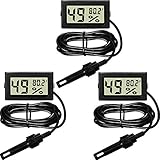
Overview: The Weewooday three-pack distinguishes itself with an integrated probe design, offering flexible positioning for hard-to-reach monitoring locations. Each unit displays temperature in Fahrenheit only, covering an exceptional range from -58°F to 158°F with humidity measurement from 10% to 99% RH. The package provides three complete monitors, each featuring a stainless steel probe connected to a main display unit constructed from durable ABS plastic. The probe design allows users to measure conditions inside enclosures while keeping the display externally visible.
What Makes It Stand Out: The external probe capability is the primary differentiator, enabling measurements in incubators, soil, or enclosed spaces without exposing the main unit to harsh conditions. The three-unit packaging offers excellent per-unit value for multi-location monitoring. The extreme low-temperature capability (-58°F) extends usability to freezers and harsh winter environments where standard monitors fail. The stainless steel probe construction ensures durability and accurate thermal conductivity compared to plastic sensors.
Value for Money: At $9.99 for three units ($3.33 each), this represents strong value despite being the most expensive per-package option. The probe feature typically commands premium pricing, yet this offering remains budget-friendly. For users needing to monitor incubators, greenhouse soil, or reptile hides, the probe design eliminates the cost of separate sensor systems.
Strengths and Weaknesses: Strengths include flexible probe placement, three-unit quantity, extreme temperature range, quality ABS and stainless steel construction, and easy-to-read LCD displays. Notable weaknesses are Fahrenheit-only display (no Celsius conversion), reduced accuracy (±2°F temperature, ±5%RH humidity), non-waterproof probe limiting aquarium use, lack of smart features, and basic display without backlight.
Bottom Line: This three-pack excels for users requiring probe-based monitoring across multiple locations. Gardeners, incubation enthusiasts, and reptile keepers needing substrate or interior measurements will find exceptional utility. While accuracy trade-offs and Fahrenheit limitation may deter some, the probe flexibility and quantity make it a practical, cost-effective solution for specialized monitoring scenarios.
5. MOCREO WiFi Reptile Hygrometer Indoor Thermometer, Smart Humidity and Temperature Sensor, Remote Monitor with App Push Notification, Email Alerts, 2-Year Data Export, for Greenhouse Incubator
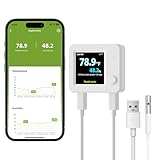
Overview: The MOCREO WiFi Reptile Hygrometer represents the premium smart monitoring tier, transforming basic environmental tracking into a connected ecosystem. This single unit delivers continuous temperature and humidity monitoring via USB power, eliminating battery concerns while providing real-time data synchronization to a dedicated smartphone app through 2.4GHz WiFi. Users receive instant app and email alerts when conditions exceed preset thresholds, making it ideal for protecting valuable reptiles, plants, or incubation projects. The high-precision external probe achieves ±0.9℉ temperature and ±3%RH humidity accuracy, while the backlit screen offers on-site verification.
What Makes It Stand Out: True remote monitoring capability distinguishes this from all competitors, allowing users to check conditions from anywhere with internet access. The instant alert system provides peace of mind for critical applications where environmental fluctuations could prove disastrous. The thoughtful screen-off function, activated by a two-second press, eliminates light pollution in reptile tanks—a feature unique to this smart device. Two-year data export capability enables long-term trend analysis and veterinary record-keeping. The USB power ensures uninterrupted 24/7 operation without battery replacement hassles.
Value for Money: At $25.99, this commands a significant premium over basic units but delivers proportional value for serious enthusiasts. Comparable smart sensors cost $30-50, making this competitively priced for its feature set. For users managing valuable reptile collections, sensitive incubation projects, or remote greenhouses, the alert system alone justifies the cost by preventing potential losses.
Strengths and Weaknesses: Strengths include WiFi connectivity, remote monitoring, instant alerts, exceptional accuracy, USB power reliability, data logging, screen-off feature, and quality probe design. Weaknesses involve higher price point, requirement for 2.4GHz WiFi network, app dependency, potential firmware update needs, and overkill for casual users. Setup complexity may challenge non-technical owners.
Bottom Line: The MOCREO is the definitive choice for dedicated reptile keepers, serious gardeners, and incubation experts requiring constant oversight and historical data. While excessive for simple household monitoring, its smart features, precision, and alert system provide invaluable protection for critical environments. The investment pays dividends through prevention of catastrophic losses.
6. Mini Hygrometer Digital Thermometer Humidity Meter 6 Pack Hygrometer Thermometers Indoor/Outdoor Humidity Monitor Reptile Thermometer for Greenhouse Garden Cellar Fahrenheit(℉)/ Celsius(℃)
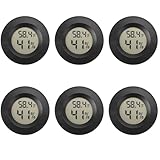
Overview: The Mini Hygrometer Digital Thermometer 6-Pack delivers comprehensive environmental monitoring across multiple locations simultaneously. Each compact unit measures temperature and humidity with automatic 10-second updates, making them ideal for greenhouses, reptile enclosures, wine cellars, or monitoring different rooms in your home. The package includes six independent monitors, providing exceptional coverage for enthusiasts managing diverse environments without needing to purchase multiple separate devices.
What Makes It Stand Out: This six-pack offering is unique in its bulk value proposition, allowing users to monitor half a dozen locations for under $14. The units feature both Fahrenheit and Celsius conversion with impressive accuracy—±1℉ for temperature and ±3%RH for humidity. Each device includes a backup LR44 battery, extending the already substantial 9-month battery life. The wide operating range (32°F-158°F, 10%-99%RH) accommodates virtually any indoor or outdoor application, from reptile habitats to garden greenhouses.
Value for Money: At $13.89 for six units, you’re paying just $2.32 per monitor—significantly less than purchasing individually. The inclusion of backup batteries effectively doubles your operational time before needing replacements, adding hidden value. Comparable single units typically retail for $5-8, making this bundle 50-70% cheaper while maintaining professional-grade accuracy specifications that rival more expensive brands.
Strengths and Weaknesses: Strengths include unbeatable bulk pricing, high measurement accuracy, dual-unit display, long battery life with backups, and versatile application range. The primary weakness is the lack of external probes, limiting placement flexibility in larger enclosures. The LCD display is basic without backlighting, and build quality reflects the budget price point, potentially affecting long-term durability in harsh environments or outdoor use.
Bottom Line: This 6-pack is perfect for anyone needing multiple monitoring points without breaking the bank. Greenhouse operators, reptile breeders with several tanks, or homeowners wanting whole-house climate data will find exceptional value. While not feature-rich, the core accuracy and quantity make it a smart, economical choice for comprehensive environmental awareness.
7. 2-Pack Mini Digital Hygrometer Thermometer Gauge with Probe LCD Display Temperature Fahrenheit Humidity Meter for Incubator Reptile Plant Terrarium Sealed Containers Guitar Case

Overview: The 2-Pack Mini Digital Hygrometer with Probe offers targeted environmental monitoring through its external sensor design. Unlike all-in-one units, this device allows you to place the display outside sealed containers while the probe measures conditions inside incubators, terrariums, or guitar cases. This separation prevents disturbance to sensitive environments while providing continuous temperature and humidity tracking with 10-second updates for precise control.
What Makes It Stand Out: The external probe is the defining feature, enabling precise spot measurements without compromising sealed environments. The wide temperature range (-58°F to 158°F) accommodates extreme conditions from incubators to refrigerated storage. Designed specifically for applications requiring internal monitoring, it’s ideal for reptile eggs, botanical specimens, or musical instrument preservation where opening the container would disrupt the carefully controlled atmosphere.
Value for Money: At $9.99 for two units ($5 each), this sits in the mid-range price bracket. The probe functionality justifies the cost premium over basic units for users needing internal measurements. However, specialized single-probe units can cost $15-20, making this two-pack competitively priced for its niche application, though limited by its single-unit display format and modest accuracy specifications.
Strengths and Weaknesses: Strengths include the external probe for sealed environments, wide temperature range, and incubator-specific design. Significant weaknesses include Fahrenheit-only display (no Celsius conversion), lower accuracy (±2°F, ±5%RH) than similarly priced competitors, and a probe that isn’t water-resistant. The two-unit pack may be insufficient for those needing broader coverage, and the lack of backlighting limits low-light visibility.
Bottom Line: Best suited for hobbyists requiring internal monitoring of sealed environments like incubators or specialized terrariums. The probe design is its main selling point, but accuracy limitations and lack of unit conversion restrict its versatility. Consider this if you specifically need probe access, but look elsewhere for general-purpose monitoring or metric system compatibility.
8. Mini Hygrometer Digital Thermometer Humidity Meter 2 Pack Hygrometer Thermometers Indoor/Outdoor Humidity Monitor Reptile Thermometer for Greenhouse Garden Cellar Fahrenheit(℉)/ Celsius(℃)

Overview: This 2-Pack Mini Hygrometer delivers essential temperature and humidity monitoring at an entry-level price point. Each compact unit provides dual measurements with switchable Fahrenheit/Celsius display, making them versatile tools for basic environmental tracking. The devices refresh every 10 seconds through multiple air holes that improve sensor accuracy, offering reliable data for home, office, or reptile habitat applications without complicated setup or configuration requirements.
What Makes It Stand Out: The standout feature is the exceptional price-to-performance ratio. At under $5 for two units, it maintains respectable accuracy (±1°F, ±3%RH) and includes premium features like unit conversion and backup batteries. The long-press power function prevents accidental activation during storage, and the 9-month battery life with included spare cells ensures extended operation without additional investment, distinguishing it from bare-bones competitors.
Value for Money: At $4.99 for two units ($2.50 each), this represents the lowest cost option in the market while retaining competitive specifications. Individual budget hygrometers typically cost $6-10, making this bundle 60-75% cheaper. The inclusion of backup batteries eliminates immediate replacement costs, providing true out-of-the-box value that budget competitors often omit to keep prices artificially low.
Strengths and Weaknesses: Strengths include unbeatable pricing, dual-unit display, good accuracy, backup batteries, and fast refresh rate. The primary weaknesses are the lack of external probes for flexible placement, limited quantity (only two units), and basic construction that may not withstand outdoor elements long-term. The warranty terms are vague, and customer support responsiveness is uncertain compared to established brands with dedicated service teams.
Bottom Line: Ideal for budget-conscious buyers needing basic, reliable monitoring. Perfect for a couple of reptile tanks, a small greenhouse, or general home humidity tracking. While it lacks advanced features, the core functionality and incredible price make it an excellent starter option. Purchase with realistic expectations about build quality, and you’ll find these deliver remarkable value for essential climate monitoring.
9. Reptile Thermometer and Humidity Gauge,2PCS Digital Hygrometer Adhesive Reptile Terrarium Hydrometer,Bearded Dragon Tank Accessories,Pet Humidity Meter Supplies for Leopard Crested Gecko,Snake,Lizard

Overview: The Reptile Thermometer and Humidity Gauge 2-Pack is specifically engineered for terrarium applications, emphasizing pet health monitoring. These adhesive-backed units feature high-precision sensors (±0.9°F accuracy) and LED displays for clear visibility in dim reptile habitats. The cordless design maintains enclosure aesthetics while providing critical environmental data for sensitive species like leopard geckos, crested geckos, and snakes that require precise climate control for optimal health.
What Makes It Stand Out: The adhesive mounting system enables tool-free installation in seconds, positioning it perfectly for reptile enclosures where traditional stands or clips are impractical. The LED screen remains readable in low-light conditions typical of nocturnal reptile habitats. With ±0.9°F precision, it offers superior accuracy compared to most budget options, addressing the critical health needs of temperature-sensitive reptiles where small fluctuations can cause stress or illness.
Value for Money: At $5.99 for two units, this reptile-specific design offers good value. The adhesive backing eliminates need for separate mounts ($3-5 savings), and the LED display is a premium feature rarely found at this price. Comparable reptile-focused monitors cost $8-12 each, making this bundle 50-60% cheaper while maintaining pet-appropriate accuracy and convenient installation that hobbyists value.
Strengths and Weaknesses: Strengths include high precision, easy adhesive installation, LED low-light visibility, cordless design, and pet-specific engineering. Weaknesses include limited quantity (only two units), lack of external probe for gradient monitoring, potential adhesive failure in high-humidity environments over time, and suitability primarily for smaller enclosures. The display size is compact, potentially challenging for users with vision difficulties.
Bottom Line: Excellent choice for reptile owners prioritizing accuracy and convenience. The adhesive mounting and LED display make it uniquely suited for terrarium use. While not ideal for large habitats requiring multiple gradient measurements, it provides reliable, precise monitoring for standard enclosures. For bearded dragons, geckos, and snakes, this offers professional-grade accuracy at a budget-friendly price.
10. DIGITEN Temperature and Humidity Controller with Timer - 3 Outlet, 2 Separate Probes, Plug in Temperature Controller for Reptiles,Snake, Mushrooms, Tent, Triple Control for Temp,Humidity,Time

Overview: The DIGITEN Temperature and Humidity Controller with Timer represents a professional-grade environmental automation system. Unlike passive monitors, this device actively controls heating, cooling, humidifying, and dehumidifying equipment through three independent outlets. With dual precision probes and a large LCD display, it provides 24/7 climate management for demanding applications like reptile breeding, mushroom cultivation, and home fermentation where stable conditions are critical for success and cannot be left to manual adjustment.
What Makes It Stand Out: The triple-zone control system integrates temperature, humidity, and timer functions into one unit, eliminating need for multiple controllers. Dual independent probes (±0.7°F temp, ±3% humidity accuracy) enable simultaneous monitoring of different parameters. The three outlets operate independently, allowing customized programming for heat mats, misters, and lights. Plug-and-play setup with four-button programming makes professional automation accessible without technical expertise or complicated wiring.
Value for Money: At $44.99, this premium controller delivers significant value by replacing three separate devices that could cost $30-50 each. The industrial-grade sensors and independent outlet control justify the investment for serious enthusiasts. For commercial applications like mushroom farming or breeding operations, it’s a cost-effective alternative to professional systems costing $150+, offering comparable precision at a fraction of the price while maintaining reliability.
Strengths and Weaknesses: Strengths include exceptional accuracy, triple independent control zones, dual probes, large display, versatile programming, and professional build quality. Weaknesses include higher price point unsuitable for casual users, requirement for compatible heating/cooling devices, and potential complexity for simple setups. The unit lacks wireless connectivity found in some modern controllers, limiting remote monitoring capabilities for tech-savvy users.
Bottom Line: A professional solution for serious hobbyists and small-scale commercial operations. Ideal for complex setups requiring automated climate control rather than just monitoring. The investment pays dividends through precision, reliability, and consolidated control. For bearded dragons, mushroom farms, or fermentation projects, this controller provides peace of mind and consistent results that justify its premium pricing.
Why Precise Environmental Monitoring is Non-Negotiable for Reptile Health
Reptiles are ectothermic creatures whose entire physiology depends on external conditions. A basking spot that’s 5°F too cool can compromise digestion, leading to impaction or malnutrition. Humidity levels that drift outside species-specific parameters for even a few hours can trigger respiratory infections or problematic sheds. Unlike mammals that can vocalize distress, reptiles often suffer in silence until symptoms become severe. This biological reality makes continuous, accurate monitoring not just a convenience but a critical welfare requirement. The best sensors act as your 24/7 digital assistant, catching dangerous fluctuations before they become health crises.
The Evolution of Reptile Habitat Technology in 2026
The reptile care industry has witnessed a paradigm shift toward integrated smart ecosystems. Today’s sensors don’t just display numbers—they communicate with misting systems, heat lamps, and ventilation controllers to maintain dynamic stability. Artificial intelligence algorithms can now predict humidity drop patterns based on ambient room conditions, while IoT connectivity allows breeders to monitor 50+ enclosures from a single dashboard. This technological leap means modern keepers must understand not just what readings mean, but how data flows through their habitat systems and what automation triggers are appropriate for their specific species.
Digital vs Analog: Choosing the Right Sensor Technology
Digital Sensor Technology: Precision and Connectivity
Digital sensors have become the undisputed standard for serious reptile keepers, offering accuracy within ±0.5°F and ±2% RH. These devices use microelectromechanical systems (MEMS) that sample conditions multiple times per minute, providing real-time data streams. The true advantage lies in their ability to store calibration data, compensate for drift, and integrate with smart home ecosystems. In 2026, most digital units feature redundant sensing elements that cross-validate readings, alerting you if one element fails—a crucial failsafe for rare or delicate species.
Analog Alternatives: Simplicity and Reliability
While increasingly rare, analog hygrometers and thermometers still have niche applications. Mechanical devices require no power, making them valuable backup systems during outages or in quarantine setups where electromagnetic interference might affect digital units. However, their ±5-7% accuracy margin and inability to log data make them supplementary at best. The bi-metal coils in analog thermometers can also become permanently deformed if exposed to temperatures beyond their range—a common issue when placed too close to heat sources.
Accuracy Standards: What “Precision” Really Means
When manufacturers claim “high accuracy,” scrutinize the specifications. Professional-grade sensors specify both absolute accuracy and long-term stability. Absolute accuracy (e.g., ±0.3°F) describes how close readings are to a true reference standard. Long-term stability indicates drift over time—quality sensors drift less than 0.5°F per year. For reptile applications, prioritize sensors with NIST-traceable calibration certificates or those that allow user calibration against reference standards. Remember that accuracy degrades at environmental extremes; a sensor accurate at 70°F might show significant error at 110°F basking temperatures.
Essential Features of Modern Reptile Sensors
Connectivity Options: From Bluetooth to IoT
Bluetooth 5.3 offers 200+ foot ranges and mesh networking capabilities, allowing sensors to relay data through each other—perfect for basement reptile rooms. Wi-Fi 6E enables cloud-based monitoring with unlimited range but requires stable internet. For privacy-conscious keepers, Zigbee and Z-Wave protocols create local networks that don’t transmit data externally. The emerging Matter standard promises seamless integration across brands, though adoption in niche reptile products remains limited in early 2026. Consider your infrastructure: Bluetooth suits single-enclosure setups, while Wi-Fi or Ethernet better serve multi-unit collections.
Data Logging and Trend Analysis
Top-tier sensors log readings at intervals from 1 second to 1 hour, storing weeks to months of data locally before requiring sync. This historical view reveals subtle patterns—like how your room’s HVAC cycle affects nighttime temperatures or how substrate depth influences humidity retention. Look for sensors with exportable CSV data and APIs that integrate with spreadsheet programs. Some advanced units now feature edge computing that identifies anomalies automatically, flagging potential equipment failures before they impact your animal.
Customizable Alert Systems
Generic high/low alarms are obsolete. Modern systems offer gradient alerts (e.g., “notify if cool side exceeds 75°F for more than 30 minutes”) and rate-of-change warnings (“alert if humidity drops more than 10% in 5 minutes”). Multi-channel notifications via push, SMS, email, and even phone calls ensure you never miss critical alerts. The best systems allow different alert profiles for day/night cycles and seasonal adjustments, recognizing that a nighttime temperature drop is normal while a midday drop signals a problem.
Power Solutions: Battery, USB, and Hardwired
Battery life spans from 3 months to 3 years depending on sampling frequency and connectivity type. Lithium batteries outperform alkaline in high-heat environments but require proper disposal. USB-powered sensors eliminate battery concerns but need backup power solutions—consider models with built-in capacitors that maintain readings during brief outages. PoE (Power over Ethernet) sensors offer the ultimate reliability for permanent installations, delivering both power and data through a single cable. For critical setups, dual-power sensors that switch between primary and backup sources provide redundancy.
Display Technology and Readability
E-ink displays consume minimal power and remain visible in direct sunlight, making them ideal for bright terrariums. OLED screens offer vibrant colors and wide viewing angles but can degrade over time in UV-rich environments. The most practical displays show current readings, 24-hour highs/lows, and trend arrows at a glance. For nocturnal species, red LED backlighting preserves their night vision while allowing you to check parameters after dark. Some premium units now feature photochromic displays that automatically adjust brightness based on ambient light.
Strategic Sensor Placement for Maximum Accuracy
Hot Zone Monitoring
Position temperature sensors 2-4 inches above the basking surface—where your reptile’s back would be—never directly on the substrate. For arboreal species, place additional sensors at perch height. Use radiation shields (small pieces of non-conductive material) to prevent direct IR heat from lamps from skewing readings. The goal is measuring the microclimate your animal experiences, not the air temperature near the enclosure wall.
Cool Side and Ambient Tracking
The cool side sensor should sit at mid-enclosure height, away from both heat sources and ventilation openings. This reading determines your temperature gradient’s effectiveness. For large enclosures over 4 feet, consider multiple cool-side sensors to detect stratification—where warm air layers above cooler air, creating hidden temperature pockets that affect thermoregulation.
Humidity Microclimate Assessment
Humidity varies dramatically within inches. Place sensors near the substrate in humid hides, at mid-level in general areas, and near ventilation points. For species requiring high humidity, a sensor in the drainage layer (for bioactive setups) monitors excess moisture that could cause scale rot. Desert species benefit from sensors positioned near water dishes to ensure localized humidity spikes don’t create persistent damp spots.
Placement Mistakes to Avoid
Never place sensors where water can directly contact them, even if rated “water-resistant.” Avoid corners where air stagnates, and keep sensors at least 6 inches from glass walls where external room temperature influences readings. Most critically, don’t place humidity sensors directly above water features—the evaporative cooling and moisture plume create artificially high readings that don’t represent the enclosure’s general conditions.
Understanding Temperature Gradients and Thermal Zones
Reptiles require thermal choice to regulate metabolism, immune function, and digestion. A proper gradient spans 15-25°F from cool side to basking zone, with sensors documenting that your gradient remains stable throughout the day. The “thermal neutral zone”—where reptiles spend most time—should be clearly identifiable in your data logs. Advanced keepers map gradients using multiple sensors to identify microclimates under cork bark, inside hides, and at different vertical levels. This data informs habitat redesigns, revealing whether that decorative branch actually creates a usable temperature step or just looks pretty.
Humidity Management for Different Reptile Families
Tropical and Rainforest Species
Species like chameleons and tree boas need 70-90% humidity with minimal fluctuation. Sensors must refresh every 10-30 seconds to catch the rapid humidity drops that occur when ventilation fans activate. Look for sensors with high-range accuracy (up to 95% RH) and condensation-resistant coatings. Data logging should capture nighttime humidity spikes from automated misting and daytime drops from basking heat, allowing you to fine-tune timing and duration.
Desert and Arid Environment Species
Bearded dragons and leopard geckos thrive in 20-40% humidity, but even desert setups experience dangerous spikes after misting or from leaky water bowls. Sensors in these environments need low-range accuracy and fast recovery times after moisture events. Consider sensors with separate “wet” and “dry” calibration modes—some advanced units can auto-detect moisture events and temporarily increase sampling rates to monitor drying patterns.
Temperate and Seasonal Variations
Species experiencing brumation require sensors that track gradual temperature and humidity decreases over weeks. Programmable profiles that automatically adjust alert thresholds based on calendar dates simplify seasonal management. For example, your corn snake’s enclosure might run at 78°F during summer but need a gradual drop to 55°F for winter dormancy—sensors should accommodate these shifts without requiring manual recalibration each season.
Smart Integration and Automation Capabilities
The true power of 2026 sensor technology lies in ecosystem integration. When your humidity sensor detects a 5% drop, it should trigger a misting system for 15 seconds, then verify the correction. Temperature sensors can dim heat lamps through smart dimmers rather than simple on/off cycling, creating smoother gradients. Look for sensors with IFTTT support, MQTT protocols, or native integration with platforms like Hubitat or Home Assistant. The most sophisticated setups use PID controllers that learn your enclosure’s thermal inertia, activating heating elements before temperatures actually drop based on predictive algorithms.
Calibration Protocols for Long-Term Accuracy
Even premium sensors drift. Establish a quarterly calibration routine using saturated salt solutions for humidity (33% and 75% RH standards) and ice-water baths (32°F) or certified thermometers for temperature. Quality sensors allow user offset adjustments without voiding warranties. Some professional units feature auto-calibration routines that compare against internal references weekly. Document all calibrations in a logbook—if a sensor consistently drifts in the same direction, it may indicate enclosure issues rather than device failure.
Budget Considerations: Entry-Level to Professional Grade
Entry-level sensors ($15-30) offer basic accuracy and Bluetooth connectivity but lack data logging or advanced alerts. Mid-range units ($40-80) provide cloud sync, basic automation, and 6-month battery life—suitable for most enthusiasts. Professional systems ($100-200 per sensor) deliver medical-grade accuracy, multiple connectivity protocols, 5-year battery life, and ruggedized enclosures. For collections, consider that a $150 sensor with 3-year reliability costs less over time than replacing $30 sensors annually. Factor in subscription costs too—some cloud services charge $5-10 monthly per sensor, while others offer free local storage.
Infrastructure Choices: Wired vs Wireless Systems
Wireless systems offer flexibility for rearranging enclosures but face interference from UV ballasts and heat lamp transformers. Wired PoE sensors provide ultimate reliability and power redundancy but require planning cable runs. For hybrid setups, use wireless sensors in display enclosures and wired systems in breeding racks where reliability trumps aesthetics. Mesh networks like Zigbee can relay signals through intermediate sensors, extending range without additional hubs—critical in basement or garage setups where Wi-Fi signals weaken.
Multi-Enclosure Monitoring for Breeders and Collectors
Managing 20+ enclosures demands centralized dashboards that display all parameters simultaneously. Look for systems allowing sensor grouping by species, rack position, or life stage. Bulk alert management prevents notification overload—instead of 20 individual texts, receive one summary: “3 enclosures in Rack 2 above temperature threshold.” Advanced systems support enclosure templates, where adding a new ball python setup automatically applies appropriate alert thresholds and placement guidelines based on your proven configurations.
Safety Certifications and Reptile-Specific Requirements
Reputable sensors carry IP ratings—IP65 withstands misting, while IP67 survives brief submersion during enclosure cleaning. UL or ETL certification ensures electrical safety in damp environments. Crucially, look for RoHS compliance guaranteeing no heavy metals that could leach if a sensor fails in a water dish. The Reptile Lighting Group’s 2025 safety standard specifically addresses UV resistance and heat tolerance—sensors meeting this standard won’t degrade when mounted near high-output UVB fixtures.
Future-Proofing: Emerging Technologies on the Horizon
2026 is seeing early adoption of laser-based humidity sensors that measure water vapor density without physical elements, eliminating drift entirely. Machine learning algorithms now predict equipment failure by detecting subtle changes in heating element performance. Battery-free sensors powered by temperature differentials are entering beta testing, using the enclosure’s own heat gradient to generate power. While these technologies remain premium today, understanding their trajectory helps you choose expandable systems that can integrate next-generation sensors without replacing your entire monitoring infrastructure.
Frequently Asked Questions
How often should I replace temperature and humidity sensors in my reptile enclosures?
Quality digital sensors last 3-5 years before significant drift occurs, but you should test accuracy quarterly. Replace sensors immediately if they show inconsistent readings compared to a reference standard or if physical damage occurs. For critical breeding setups, consider a 2-year replacement cycle as preventative maintenance.
Can I use the same sensor for both temperature and humidity, or should I use separate devices?
Combination sensors are convenient and sufficiently accurate for most species. However, separate sensors allow optimal placement—temperature probes near basking spots and humidity sensors closer to substrate level. For delicate species like chameleons or rare pythons, dedicated sensors provide redundancy and slightly better accuracy.
What’s the ideal sampling rate for reptile enclosure sensors?
For most setups, a reading every 30-60 seconds balances accuracy with battery life. Active species like monitors that move frequently benefit from 10-second intervals to catch rapid microclimate changes. During brumation or for nocturnal species, extend sampling to 5-10 minutes to conserve power without missing significant trends.
How do I calibrate humidity sensors without expensive equipment?
Use the salt method: place a sensor in a sealed bag with a bottle cap containing table salt and a few drops of water (creates 75% RH). For 33% RH, use magnesium chloride. Wait 12-24 hours, then adjust sensor offsets. This method achieves ±2% accuracy—sufficient for most reptile applications.
Are smartphone-connected sensors reliable, or do they lose data if the phone isn’t nearby?
Modern sensors store 2-8 weeks of data locally and sync automatically when your phone comes within range. Wi-Fi models upload directly to cloud servers, eliminating phone dependency. For critical monitoring, choose Wi-Fi or Ethernet-connected sensors that maintain continuous data streams regardless of mobile device proximity.
What causes sensors to read inaccurately over time, and how can I prevent it?
Contamination from substrate dust, mineral deposits from misting, and UV degradation of sensor housings cause drift. Prevent issues by mounting sensors vertically (reduces dust accumulation), using radiation shields, and cleaning quarterly with compressed air. Never use liquids on sensor elements.
Should I place sensors inside hides where my reptile spends most of its time?
Yes, but strategically. Place a small sensor inside the primary hide to monitor the microclimate your animal actually experiences. Use a separate sensor for general enclosure conditions. Ensure hide-mounted sensors have smooth edges and secure mounting to prevent ingestion or entrapment risks.
How many sensors does a single enclosure really need?
Minimum: two—one for basking temperature and one for cool side ambient conditions. Optimal: three to four, adding humidity monitoring and a hide sensor. Large enclosures (over 75 gallons) or those with complex landscaping benefit from five sensors mapping thermal zones at different heights and depths.
Can temperature and humidity sensors interfere with my reptile’s behavior or health?
Properly mounted sensors have no impact. Avoid sensors with audible clicking relays, bright LEDs (cover with tape if needed), or strong chemical odors from manufacturing. Ensure all cables are secured outside the enclosure or within protective conduit—chewing risks exist with some species.
What’s the difference between relative humidity and absolute humidity, and which matters for reptiles?
Relative humidity (RH) is what sensors measure and what care sheets reference—it’s the moisture percentage relative to air temperature. Absolute humidity measures actual water content regardless of temperature. RH is more relevant because it determines evaporative cooling and respiratory water loss rates. However, understanding both helps explain why humidity drops when you increase ventilation, even if absolute moisture stays constant.