The smart home landscape is evolving at breakneck speed, and by 2026, the difference between a sluggish, frustrating automation setup and one that feels like pure magic will come down to a single critical factor: your choice of motion sensor technology. Thread-enabled sensors are quietly revolutionizing how our homes respond to our presence, slashing latency from seconds to milliseconds while creating a mesh network that gets stronger with every device you add. Unlike their Wi-Fi predecessors that clog your router and Zigbee alternatives that require dedicated hubs, Thread devices speak directly to each other, forming a self-healing web of instant communication that makes “lightning-fast” feel like an understatement.
But here’s the challenge—not all Thread motion sensors are created equal, and the marketing jargon can obscure what really matters for your specific automation needs. Whether you’re building a security-conscious setup that triggers cameras before someone reaches your porch, or crafting ambiance that shifts seamlessly as you move from room to room, understanding the nuanced differences in detection technology, power management, and ecosystem integration will determine whether your investment feels futuristic or frustratingly limited. This guide cuts through the noise to equip you with the expert knowledge needed to evaluate 2026’s offerings like a seasoned pro.
Top 10 Thread-Enabled Motion Sensors for Automation
Detailed Product Reviews
1. Onvis Smart Motion Sensor, Wireless Hygrometer, Thermometer, Works with Apple HomeKit, Smart Home Automation, PIR Motion Detector-Thread ((iOS 17.4 and Above is Required)

Overview: The Onvis Smart Motion Sensor is a versatile triple-threat device that combines motion detection with environmental monitoring for Apple HomeKit users. At $31.99, it delivers Thread-enabled responsiveness while tracking temperature, humidity, and ambient light levels.
What Makes It Stand Out: This sensor’s unique selling proposition is its multi-functionality paired with Thread technology. Unlike single-purpose sensors, it consolidates three monitoring functions into one compact device. The customizable scheduling feature allows you to activate detection only during specific hours, preventing unnecessary alerts during family movie night or sleeping hours. Its 100% privacy-first approach—storing data locally on your iOS devices without cloud dependency—appeals to security-conscious users.
Value for Money: For Apple-centric households, this represents solid value. You’re essentially getting three sensors for the price of one, with the added benefit of Thread’s speedy performance. However, the HomeKit exclusivity limits its appeal compared to Matter-enabled alternatives.
Strengths and Weaknesses: Strengths include Thread responsiveness, triple sensor functionality, end-to-end encryption, and flexible scheduling. Weaknesses are the Apple-only ecosystem lock-in, requiring iOS 17.4+, and the need for a HomePod mini as a hub. The 15-minute data update interval may feel sluggish for some applications.
Bottom Line: Ideal for dedicated Apple HomeKit users seeking an affordable, privacy-focused multi-sensor. If you’re invested in the Apple ecosystem and want to avoid cloud services, this Thread-enabled device delivers excellent functionality for the price.
2. Eve Motion (Matter) - Smart Motion Sensor with Light Sensor, IPX3 Water Resistance, Automatic Activation of Lights and Devices, Thread

Overview: The Eve Motion sensor positions itself as a premium, platform-agnostic motion detector for the modern smart home. Priced at $54.95, it leverages Matter and Thread protocols to deliver reliable motion and light detection across multiple ecosystems.
What Makes It Stand Out: Its Matter certification ensures seamless operation with Apple Home, Google Home, Amazon Alexa, and Samsung SmartThings—a rare feat in the fragmented smart home market. The IPX3 water resistance rating enables outdoor installation on covered patios or porches, expanding placement options. The integrated light sensor allows for sophisticated automations that consider both movement and ambient brightness.
Value for Money: While nearly double the price of basic sensors, the cross-platform compatibility justifies the premium. You’re investing in future-proof Matter technology that won’t become obsolete if you switch platforms. Build quality and the IPX3 rating add tangible value.
Strengths and Weaknesses: Strengths include Matter/Thread support, outdoor durability, privacy-focused local communication, and broad hub compatibility. The 120° field of view and 9-meter range cover most spaces effectively. Weaknesses include the steep price point and complex hub requirements that vary by platform. Battery replacement in outdoor installations may be inconvenient.
Bottom Line: The best choice for households with mixed platform preferences or those planning future ecosystem changes. Its Matter support and outdoor rating make it a versatile, long-term investment despite the higher cost.
3. Aqara Door and Window Sensor P2, Matter Over Thread, Requires Thread Border Router, Contact Sensor with Remote Alarm and Local Automation, Supports Apple Home, Google Home, Alexa

Overview: The Aqara Door and Window Sensor P2 brings Matter-over-Thread connectivity to entry monitoring at an aggressive $26.99 price point. This contact sensor detects open/closed states while enabling complex local automations.
What Makes It Stand Out: As one of the first Matter-enabled contact sensors, it breaks ecosystem barriers, working with Apple Home, Alexa, Google Home, and SmartThings simultaneously. The high-precision Hall sensor ensures reliable detection even with minimal door/window movement. Local automation execution means your “turn on lights when door opens” routines work without internet, protecting privacy and ensuring reliability.
Value for Money: Exceptional. Matter-over-Thread devices typically command premium pricing, but Aqara delivers this future-proof technology for under $27. The ability to trigger thermostat adjustments, security cameras, and lighting without cloud processing adds significant value.
Strengths and Weaknesses: Strengths include native Matter support, local automation, cross-platform voice alerts, and precise magnetic sensing. The compact design blends discreetly into door frames. Weaknesses: requires a separate Thread Border Router (not included), and the 22mm maximum gap between sensor and magnet may not suit all installations. Setup complexity increases for non-Aqara hubs.
Bottom Line: A must-buy for anyone building a Matter-based smart home. The combination of advanced protocol support, local processing, and budget-friendly pricing makes it the best value contact sensor currently available.
4. Aqara Motion and Light Sensor P2, Motion Detector with Light Sensor, Matter Over Thread, Requires 2-in-1 Matter Controller & Thread Border Router, Supports Apple Home, Alexa

Overview: Aqara’s Motion and Light Sensor P2 merges PIR motion detection with independent light sensing through Matter-over-Thread for $33.99. This dual-purpose sensor enables sophisticated, brightness-aware automations across major platforms.
What Makes It Stand Out: The light sensor operates independently from motion detection—a crucial distinction that allows circadian lighting routines based purely on ambient conditions. The 170° horizontal field of view and 7-meter range surpass many competitors, while the adjustable 360° stand enables precise positioning. With up to two-year battery life from two CR2450 cells, maintenance is minimal.
Value for Money: Outstanding. You’re getting a Matter-over-Thread motion sensor plus a dedicated light sensor for the price of many single-function devices. The energy-saving potential through brightness-based automations quickly offsets the cost.
Strengths and Weaknesses: Strengths include independent light sensor functionality, wide detection angle, Matter support, local automation, and exceptional battery life. The adjustable sensitivity accommodates seasonal changes. Weaknesses: Alexa doesn’t support the light sensor (limiting functionality for Amazon users), and it requires a separate Thread Border Router. The 6-meter hub distance requirement may constrain placement.
Bottom Line: Perfect for Apple Home and Google Home users wanting advanced lighting control. The independent light sensor and wide viewing angle make it ideal for complex automations, though Alexa households should consider alternatives.
5. THIRDREALITY Zigbee Motion Sensor 2 Pack, Zigbee Hub Required, Pet Friendly, Work with Home Assistant,SmartThings, Aeotec,Homey, Hubitat or Echo Devices with Built-in Zigbee hub

Overview: THIRDREALITY offers a budget-conscious twin pack of Zigbee motion sensors for $37.99, targeting Alexa and Home Assistant users who prioritize value over cutting-edge protocols. These pet-friendly detectors focus on essential functionality without frills.
What Makes It Stand Out: The two-pack configuration delivers immediate multi-room coverage at just $19 per sensor—significantly undercutting Thread/Matter alternatives. Pet-friendly calibration reduces false triggers from small animals, a common pain point. The hassle-free Alexa discovery process (“Alexa, discover devices”) simplifies setup for non-technical users.
Value for Money: Unbeatable for Zigbee ecosystems. Two sensors with two-year battery life for under $38 represents exceptional cost-per-sensor value. While lacking Matter/Thread future-proofing, it delivers reliable motion detection for current Zigbee setups.
Strengths and Weaknesses: Strengths include affordable dual-pack pricing, broad Zigbee hub compatibility, long AAA battery life, and straightforward Alexa integration. The 20-foot detection range handles most indoor spaces. Weaknesses: Zigbee protocol limits future interoperability, indoor-only design restricts placement, and it lacks advanced features like light sensing or temperature monitoring. No native HomeKit support.
Bottom Line: The best budget option for Alexa-centric homes or existing Zigbee networks. If you’re not ready to invest in Matter/Thread infrastructure, this 2-pack provides reliable motion detection and smart lighting triggers at an unbeatable price.
6. Centralite by Ezlo Micro Motion Sensor - Home Automation and Security - Lighting Scenes, Security Alarm, Alerts upon Motion Detection - Zigbee

Overview: The Centralite by Ezlo Micro Motion Sensor is a budget-friendly Zigbee HA 1.2 device for home security and automation. At $19.95, it detects movement to trigger lighting scenes, security alerts, and energy-saving routines. It works with major hubs like SmartThings, Vera, and Wink, offering reliable indoor motion detection across rooms and hallways for established smart home systems.
What Makes It Stand Out: The Ezlo Smart Home for Life Guarantee provides industry-leading warranty coverage and guaranteed hub compatibility. Its energy-saving capabilities automatically turn off electronics and adjust thermostats when no movement is detected. The sensor’s sensitivity is tuned for practical home use, detecting motion across large rooms and down extended hallways without excessive false triggers.
Value for Money: At $19.95, this is among the most affordable Zigbee motion sensors available, with competitors typically costing $30-35. While it lacks light sensing or Thread connectivity, the savings are substantial for multi-sensor deployments. The lifetime guarantee adds long-term value that offsets its basic feature set.
Strengths and Weaknesses: Strengths include broad hub compatibility, proven Zigbee HA 1.2 reliability, robust warranty, and excellent price-to-performance ratio. Weaknesses are the absence of an ambient light sensor, older Zigbee standard (not 3.0), and requirement for a separate hub. The design prioritizes function over aesthetics, creating a slightly bulkier profile than premium alternatives.
Bottom Line: Ideal for budget-conscious users building a Zigbee motion network. If you own a compatible hub and need reliable, no-frills sensing, the Centralite delivers exceptional value backed by a guarantee competitors can’t match at this price.
7. Qingping Motion & Light Sensor, Works with Apple HomeKit via Thread or Bluetooth, Two Sensors Combined for Various Automation, Long Standby Time

Overview: The Qingping Motion & Light Sensor is a HomeKit-exclusive device combining PIR motion detection with a precision light sensor for $24.99. It connects via Thread or Bluetooth, enabling responsive automation without Wi-Fi dependency. The sensor measures illuminance from 0-83,000 lux, allowing sophisticated lighting automations based on both movement and ambient light levels in Apple Home ecosystems.
What Makes It Stand Out: The high-precision Texas Instruments light sensor paired with a multi-section Fresnel lens enables compact yet sensitive detection. Thread support provides low-latency, mesh-networked connectivity that outperforms Bluetooth while maintaining excellent battery life. The magnetic base allows easy angle adjustment, optimizing detection coverage from 15° at 7 meters to 120° within 2 meters.
Value for Money: At $24.99, this sensor offers excellent value for HomeKit users. Competing HomeKit motion sensors with Thread typically cost $30-40. The dual-sensor functionality essentially provides two devices in one, saving money and reducing clutter. Two-year battery life on included button cells minimizes maintenance costs.
Strengths and Weaknesses: Strengths include Thread connectivity, precise light sensing, flexible mounting, and exceptional standby time. Weaknesses are Apple ecosystem lock-in requiring HomePod/Apple TV as a hub, no Android support, and limited compatibility outside HomeKit. The detection angle narrows significantly at longer distances, potentially requiring multiple units for large spaces.
Bottom Line: This is the best motion sensor for dedicated HomeKit households. If you’re invested in Apple’s ecosystem and need reliable, responsive motion and light detection, the Qingping’s Thread performance and dual-sensor design make it a compelling choice that justifies its price premium over basic Bluetooth options.
8. HEIMAN Motion Sensor, Matter Over Thread,Smart Motion Detector with Light Sensor, Requires Thread Border Router,Compatible with Apple HomeKit, Google Home, Alexa and SmartThings
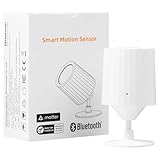
Overview: The HEIMAN Motion Sensor is a future-proof device supporting Matter over Thread for $23.99, making it compatible with Apple HomeKit, Google Home, Alexa, and SmartThings. It features both motion and light sensors, enabling cross-platform automations. Local Thread connectivity eliminates cloud dependency, enhancing responsiveness and network security while reducing latency for real-time alerts and device linkage.
What Makes It Stand Out: Native Matter support ensures long-term compatibility across evolving smart home ecosystems. The 110° detection range up to 7 meters covers large areas effectively. Its 360° adjustable stand allows precise positioning without permanent mounting commitments. Local Thread communication provides superior reliability compared to Wi-Fi sensors and protects against external network threats.
Value for Money: At $23.99, this sensor undercuts many platform-specific alternatives while offering broader compatibility. Matter-certified devices typically command $30+ premiums. The CR2 battery delivers extended life beyond Wi-Fi competitors, reducing replacement frequency. For multi-platform households or those planning ecosystem changes, the investment future-proofs your setup.
Strengths and Weaknesses: Strengths include Matter standard support, multi-platform compatibility, local Thread reliability, integrated light sensor, and flexible mounting. Weaknesses are the requirement for a Thread border router (additional cost), newer standard with potential early-adopter bugs, and limited availability of advanced Matter features across all platforms currently.
Bottom Line: This sensor is perfect for users wanting ecosystem flexibility. If you have or plan to add a Thread border router, the HEIMAN offers unmatched cross-platform support at an aggressive price. Matter compatibility makes it a smart long-term investment, though platform-specific features may lag behind native sensors temporarily.
9. Onvis Outdoor Weather Resistant Motion Sensor & Detector, IP66 Water Resistance Smart Motion Sensor, Automatic Activation of Lights and Devices, Thread -iOS Only

Overview: The Onvis Outdoor Motion Sensor is a rugged IP66-rated device designed for exterior use at $39.99. It withstands harsh weather while providing motion detection up to 5 meters with a 100° field of view. Thread connectivity ensures responsive performance, and the sensor includes temperature and humidity monitoring for comprehensive environmental awareness. iOS exclusivity limits it to Apple HomeKit ecosystems.
What Makes It Stand Out: The four-year battery life is exceptional for an outdoor sensor, minimizing maintenance in hard-to-reach locations. IP66 water resistance enables reliable operation in rain, snow, and dust. The Activate/Inactivate Detection Control in the Onvis app allows customized notification schedules, preventing alert fatigue. Combined motion and environmental monitoring provides all-in-one outdoor awareness.
Value for Money: At $39.99, this commands a premium over indoor sensors but justifies it with weatherproofing and extended battery life. Comparable outdoor sensors cost $45-60. For iOS users needing reliable exterior motion detection, the durability and four-year battery life deliver strong long-term value despite the higher upfront cost.
Strengths and Weaknesses: Strengths include IP66 rating, four-year battery life, Thread responsiveness, and integrated environmental sensors. Weaknesses are iOS-only compatibility, limited 5-meter range, premium pricing, and requirement for HomePod mini as a hub. The narrower detection angle may necessitate multiple units for comprehensive coverage.
Bottom Line: This is the best outdoor motion sensor for dedicated HomeKit users. If you need weatherproof reliability and extended battery life for exterior automation, the Onvis justifies its price. However, the iOS limitation and shorter range make it niche. For Apple-centric households with outdoor lighting or security needs, it’s worth the investment.
10. THIRDREALITY Zigbee Motion Sensor R1,Adjustable Sensitivity,Real-time Alerts,Zigbee Hub Required,Support Home Assistant,SmartThings, Homey, Hubitat or Echo Devices with Built-in Zigbee hub

Overview: The THIRDREALITY Zigbee Motion Sensor R1 is a versatile detector featuring manual sensitivity adjustment from 1.5 to 9.5 meters for $29.99. Powered by three AA batteries providing up to three years of life, it works with Zigbee 3.0 hubs including Home Assistant, SmartThings, Homey, and Echo devices with built-in Zigbee. The sensor focuses on accurate human movement detection unaffected by heat or sunlight.
What Makes It Stand Out: Physical sensitivity adjustment via button controls eliminates app dependency for range tuning, allowing quick adaptation to different room sizes. The exceptional battery life from standard AA batteries reduces maintenance costs. Zigbee 3.0 certification ensures broad compatibility across major platforms, while the detection technology specifically filters out non-human heat sources for fewer false alarms.
Value for Money: At $29.99, this sits in the mid-range for Zigbee sensors. While pricier than budget options, the adjustable range and three-year battery life offer compelling value. Competing sensors with fixed ranges may require multiple units for optimal coverage, making this potentially more economical for variable spaces. AA battery convenience adds practical value.
Strengths and Weaknesses: Strengths include adjustable detection range, three-year AA battery life, Zigbee 3.0 compatibility, heat-resistant detection, and hub flexibility. Weaknesses are the bulky size from AA batteries, lack of light sensor, requirement for a Zigbee hub, and manual adjustment that may be less convenient than app-based tuning for some users.
Bottom Line: This sensor excels for users needing customizable detection ranges. If your rooms vary significantly in size or you want to avoid false triggers in specific areas, the manual adjustment is invaluable. For Zigbee households prioritizing battery life and accuracy over compact design, the THIRDREALITY R1 is a smart, flexible choice.
Why Thread Technology Redefines Motion Sensor Performance in 2026
Thread isn’t just another wireless protocol—it’s a fundamental architectural shift in how smart home devices communicate. By 2026, the protocol has matured from a promising newcomer to the backbone of responsive automation, leveraging IPv6 addressing and 6LoWPAN compression to deliver enterprise-grade networking in battery-powered devices smaller than a golf ball.
The real magic lies in Thread’s mesh topology. Each powered device acts as a router, creating redundant pathways that eliminate single points of failure. When your motion sensor detects movement in the hallway, that signal doesn’t crawl to a central hub before triggering your lights. Instead, it hops through the nearest Thread router—perhaps a smart plug in the adjacent room—arriving at its destination in under 16 milliseconds. This sub-second responsiveness transforms automation from a noticeable delay into an invisible, anticipatory experience that feels genuinely intelligent.
Understanding the Thread Protocol: A Foundation for Speed
How Thread Differs from Zigbee and Wi-Fi
While Zigbee also uses mesh networking, Thread’s IP-native design removes translation layers that introduce latency. Wi-Fi, despite higher bandwidth, forces every device to compete for router attention, creating bottlenecks that become catastrophic in sensor-dense environments. Thread’s low-power design means sensors can remain in sleep mode until triggered, waking instantly to transmit brief, efficient data packets without the connection overhead that plagues Wi-Fi.
The Matter Connection: Why It Matters for Your Ecosystem
Thread serves as the transport layer for Matter, the universal smart home standard. This synergy means your motion sensor isn’t locked into a single vendor’s ecosystem. A Thread sensor certified for Matter can trigger automations in Apple HomeKit, Google Home, Amazon Alexa, and Samsung SmartThings simultaneously—without workarounds or cloud dependencies. In 2026, this cross-platform fluidity has become non-negotiable for serious enthusiasts who refuse to rebuild their setup when switching platforms.
Key Performance Metrics That Matter for Lightning-Fast Automation
Latency: The Milliseconds That Make Magic
Manufacturers love to claim “instant” response times, but savvy buyers look for specific metrics. Target sensors with sub-20ms latency from detection to action execution. This measurement accounts for the entire chain: PIR sensor activation, microcontroller processing, Thread network traversal, and hub instruction delivery. Anything above 50ms becomes perceptible, breaking the illusion of anticipation.
Refresh Rate and Detection Cooldown
The interval between detections—often called the “cooldown period”—determines whether your sensor catches rapid successive movements. Premium 2026 models offer adjustable refresh rates from 5 seconds to continuous tracking, crucial for occupancy-based lighting that mustn’t leave you in darkness when you’re still but fidgeting. Avoid sensors locked to 30+ second cooldowns; they’re relics of power-saving compromises that modern Thread efficiency has rendered obsolete.
Range and Coverage Area: Mapping Your Smart Home Needs
Understanding Detection Patterns
PIR sensors create detection zones shaped like fan blades, not perfect circles. A sensor claiming “30-foot range” might only cover a 110-degree arc, leaving dead spots in corners. For 2026 installations, look for models offering selectable patterns—some provide narrow corridor modes that stretch coverage linearly, while others offer wide-angle hemisphere mapping for open-concept spaces.
Thread Network Range vs. Detection Range
Don’t confuse motion detection radius with wireless range. A sensor might detect movement 40 feet away but require Thread routers every 50 feet to maintain connectivity. Map your home’s Thread backbone first: place powered Thread devices (smart switches, outlets) strategically to create a robust mesh before considering sensor placement. In multi-story homes, vertical signal propagation becomes critical—Thread penetrates floors better than Wi-Fi but still benefits from stairwell-located routers.
Power Options: Battery Life vs. Wired Solutions
Battery Chemistry Advances in 2026
Lithium thionyl chloride cells have emerged as the gold standard, delivering 3-5 years of life even with aggressive reporting intervals. Avoid older lithium-ion designs that degrade faster in temperature fluctuations. Some cutting-edge sensors now harvest ambient light or RF energy, achieving theoretical perpetual operation in well-lit rooms—though these remain premium options with trade-offs in detection sensitivity.
The Hidden Cost of Wired Sensors
Hardwired sensors eliminate battery anxiety but introduce installation complexity. PoE (Power over Ethernet) Thread sensors offer the best of both worlds—reliable power and data—but require Cat6 runs to strategic locations. For new construction, they’re unbeatable. Retrofits should prioritize battery models with external power options; some 2026 sensors accept USB-C backup power, automatically switching to battery during outages while enabling higher-performance continuous detection modes.
Sensitivity and Detection Zones: Fine-Tuning Your Setup
Pet Immunity and False Trigger Prevention
Advanced sensors now use dual-element PIR arrays combined with microwave doppler verification. This dual-tech approach distinguishes between a 60-pound dog and a human by analyzing movement patterns and thermal signatures. Look for adjustable sensitivity thresholds calibrated by height—set it to ignore anything below 2.5 feet for pet immunity without sacrificing human detection speed.
Zone Masking and Directional Detection
2026’s sophisticated models allow digital masking through companion apps. Paint out areas like windows or heating vents that cause false triggers. Directional detection takes this further: sensors can differentiate between someone entering versus leaving a room, enabling different automations for each direction—dim lights when exiting, bright welcome lighting when entering.
Occupancy vs. Motion Detection: Choosing the Right Intelligence
PIR Limitations and the Rise of MMW Radar
Traditional PIR (passive infrared) sensors detect changes in heat signatures, making them blind to stationary occupants. This is why you’re left in darkness during a movie. Millimeter-wave radar sensors, now standard in mid-tier 2026 models, emit low-power radio waves to detect micro-movements like breathing. They maintain “room occupied” states even when you’re perfectly still, creating truly intelligent lighting that respects your presence.
Hybrid Approaches for Power Efficiency
The best sensors combine PIR for initial detection with radar for occupancy maintenance. PIR triggers instantly with minimal power, then radar takes over for sustained monitoring. This hybrid approach extends battery life by 40% compared to radar-only operation while eliminating the “dark room” problem entirely.
Integration Ecosystems: Matter, HomeKit, and Beyond
Evaluating Matter Certification Levels
Not all Matter devices are equal. “Matter-compatible” might mean cloud-dependent bridges, while “Matter-native” indicates true local operation. Insist on Thread border routers built into your primary ecosystem hub—Apple TV 4K (3rd gen), Google Nest Hub Max (2025), or Samsung SmartThings Station. These devices translate Thread packets to your home network without proprietary gateways that introduce latency and vendor lock-in.
Advanced Automation Platforms
For power users, evaluate sensors that expose additional attributes through Matter’s Cluster Library. Look for support for the Occupancy Sensing Cluster’s “Hold Time” attribute and the Illuminance Measurement Cluster for light-level triggers. These enable complex automations like “turn on lights only if room is dark AND occupied,” executed locally without cloud processing.
Installation and Placement Strategies for Optimal Performance
Height and Angle Optimization
Mount sensors 7-8 feet high, angled 5-10 degrees downward. This maximizes detection of horizontal movement across zones while minimizing false triggers from floor-level pets. For stairwells, mount at landing height where movement naturally crosses detection beams. Corner placement provides 90-degree coverage but creates blind spots directly beneath—compensate with additional sensors in high-traffic areas.
Avoiding Interference Sources
Thread operates in the 2.4GHz band, sharing space with Wi-Fi, Bluetooth, and microwave ovens. While Thread’s channel hopping mitigates interference, physical placement matters. Keep sensors at least 3 feet from Wi-Fi routers, baby monitors, and USB 3.0 devices that spew RF noise. Metal objects reflect Thread signals unpredictably—avoid mounting sensors on metal door frames unless specifically designed with antenna compensation.
Privacy and Security Considerations in Thread Networks
Local Processing vs. Cloud Dependencies
Thread’s design prioritizes local communication, but some manufacturers still phone home. Audit your sensor’s network traffic—use a tool like Wireshark to confirm data stays within your LAN. Premium 2026 sensors include hardware encryption chips that secure Thread network keys in tamper-resistant storage, preventing physical extraction attacks that could compromise your entire mesh.
Data Minimization and Guest Privacy
Motion data reveals intimate details about your routines. Seek sensors with on-device processing that only transmit occupancy states (occupied/unoccupied) rather than raw motion vectors. For rental properties or guest areas, choose models with physical privacy switches that disable detection entirely, indicated by an LED that’s hardwired to the sensor circuit—software toggles can be remotely reactivated.
Advanced Features to Watch For in 2026 Models
Ambient Light Sensing Integration
Next-generation sensors combine motion detection with high-precision lux meters, enabling circadian-aware automations. These adjust color temperature and brightness based on both occupancy and natural light levels, maintaining 300-500 lux during work hours and transitioning to warmer tones post-sunset. The key spec is dynamic range—look for 0.1 to 100,000 lux capability to handle everything from dim basements to sun-drenched atriums.
Temperature and Humidity Sensing
Environmental sensors piggyback on motion detection hardware, turning each sensor into a three-in-one monitoring point. This data feeds HVAC automations: motion confirms occupancy while temperature sensors detect solar gain near windows, triggering proactive cooling before the room becomes uncomfortable. Accuracy matters—±0.5°C for temperature and ±3% RH for humidity are benchmarks for meaningful automation.
Cost Analysis: Balancing Budget with Performance
The Total Cost of Ownership Trap
A $25 sensor requiring battery changes every 6 months costs more over three years than a $60 model lasting 5 years. Factor in battery costs, installation time, and automation reliability. Cheap sensors often use inferior PIR lenses that degrade in UV light, developing dead spots within 18 months. Premium models use germanium lenses with anti-reflective coatings that maintain sensitivity for a decade.
Scalability Economics
Building a Thread network requires investment in border routers and powered routers. Budget $150-200 for a robust backbone before adding sensors. However, each additional sensor strengthens the mesh, improving reliability for all devices. This network effect means your 10th sensor performs better than your first—a unique advantage that justifies front-loading your investment with high-quality router devices.
Common Pitfalls and How to Avoid Them
Over-Sensoring and Automation Conflicts
More sensors don’t always mean better automation. Overlapping detection zones create race conditions where multiple sensors trigger competing scenes. Use sensor priority settings—assign a “primary” sensor per room that takes precedence, with secondary sensors serving as backup. Test automations during different times of day; afternoon sun through windows can trigger PIR sensors as heat signatures shift.
Ignoring Firmware Update Policies
Thread and Matter evolve rapidly. Manufacturers that abandon firmware support within two years leave you with incompatible devices. Research update history—companies with public roadmaps and beta programs demonstrate commitment. Avoid brands requiring proprietary apps for updates; choose those supporting Matter’s standard OTA (Over-The-Air) update mechanism for ecosystem-agnostic maintenance.
Future-Proofing Your Investment: What to Expect Beyond 2026
Emerging Sensor Fusion Technologies
Ultra-wideband (UWB) precision location tracking is merging with Thread connectivity, enabling sensors that know not just that you’re present, but exactly where you’re standing within 10cm. Early 2026 models use UWB for “follow-me lighting,” where only lights nearest to you illuminate. While premium today, this will become standard by 2027—choose sensors with UWB-ready hardware that can be activated via firmware update.
AI Edge Processing on Sensors
On-device machine learning models are beginning to recognize individual family members by gait and thermal signature, enabling personalized automations without cloud processing. Look for sensors with NPUs (Neural Processing Units) even if the feature isn’t yet enabled—this hardware headroom ensures your investment won’t become obsolete when Matter 2.0 introduces standardized user recognition protocols.
Frequently Asked Questions
What makes Thread-enabled motion sensors faster than other wireless types?
Thread’s mesh network architecture allows direct device-to-device communication without hub bottlenecks. Signals hop through the nearest powered router in under 16 milliseconds, while Zigbee requires hub processing and Wi-Fi congests your router. The IP-native design eliminates protocol translation delays, making Thread 3-5x faster in real-world automation scenarios.
Do I need a special hub for Thread motion sensors?
Yes, but it’s likely already in your home. Thread requires a Border Router—Apple TV 4K (3rd gen), HomePod mini, Google Nest Hub Max (2025), or Samsung SmartThings Station all include this functionality. Unlike proprietary hubs, one Thread border router serves all Matter-compatible devices regardless of brand, eliminating hub clutter.
How long do batteries last in 2026 Thread motion sensors?
Premium models with lithium thionyl chloride batteries last 3-5 years with typical use (10-15 triggers daily). Hybrid PIR/radar sensors extend this further by using low-power PIR for wake-up and radar only when needed. Avoid sensors using standard alkaline or Li-ion cells—they’ll need replacement within 12-18 months.
Can Thread sensors work during internet outages?
Absolutely. Thread operates locally over your home network. Once configured, automations between Thread devices execute without internet, cloud services, or even Wi-Fi. This is a core advantage—your lights will still respond to motion when your ISP fails, unlike cloud-dependent systems.
What’s the difference between motion detection and occupancy sensing?
Motion detection (PIR) only registers movement between heat zones—it can’t see stationary people. Occupancy sensing uses millimeter-wave radar to detect micro-movements like breathing, maintaining “room occupied” status even when you’re still. For lighting that won’t leave you in the dark, occupancy sensing is essential.
How many Thread sensors can I add to my network?
A single Thread network supports 250+ devices, but practical limits depend on router density. Each powered Thread device (smart plugs, light switches) extends the mesh. Plan for one router device per 500-800 square feet for reliable sensor performance in typical homes.
Will Thread sensors interfere with my Wi-Fi?
Thread uses 2.4GHz but employs channel hopping and spread-spectrum techniques to avoid interference. Properly designed Thread networks actually reduce Wi-Fi congestion by offloading IoT traffic. Keep sensors 3+ feet from Wi-Fi routers and use Thread’s built-in channel assessment feature to steer clear of busy frequencies.
Can I mix Thread sensors from different brands?
Yes—this is Thread’s superpower. A Thread sensor from Brand A can trigger a light from Brand B through your Matter-compatible hub. All device-to-device communication uses standardized clusters, ensuring seamless interoperability. Just verify Matter certification, not just Thread radio compatibility.
What mounting height works best for Thread motion sensors?
7-8 feet high, angled 5-10 degrees down. This captures horizontal movement across detection zones while minimizing pet triggers. For corner mounting, tilt the sensor 45 degrees into the room. Stairwell sensors belong at landing height, not the top or bottom, to catch cross-traffic movement patterns.
Are Thread sensors secure from hacking?
Thread uses AES-128 encryption and device-specific network keys stored in secure hardware. However, security varies by manufacturer. Choose sensors with tamper-resistant key storage and regular firmware updates. Disable unused features like cloud backup through your hub’s settings to minimize attack surfaces. Physical access remains the weakest link—secure sensors out of reach in commercial installations.