Your firearm represents a significant responsibility, and securing it against unauthorized access is non-negotiable. While traditional gun safes provide a physical barrier, today’s smart security landscape demands something more sophisticated—proactive monitoring that alerts you the moment someone attempts to breach that barrier. Vibration sensors have emerged as the silent guardians of modern gun safes, transforming passive storage into an active security system that communicates directly with your smartphone, even when you’re miles away.
Understanding these advanced detection systems isn’t just about buying a gadget; it’s about building a comprehensive defense strategy that respects both your need for rapid authorized access and your duty to prevent tragic accidents or theft. Whether you’re a seasoned gun owner upgrading your security or a first-time buyer navigating the complexities of smart safe technology, this deep dive will equip you with the knowledge to make informed decisions about vibration detection systems that actually perform when it matters most.
Top 10 Vibration Sensors for Smart Gun Safes
Detailed Product Reviews
1. ThirdReality Vibration Sensor

Overview: The ThirdReality Vibration Sensor is a ZigBee 3.0-enabled device designed for comprehensive home monitoring. It detects vibrations on doors, windows, drawers, and appliances, integrating seamlessly with major smart home ecosystems. With manual sensitivity adjustment and a built-in siren, it offers both automated alerts and local audible warnings for enhanced security.
What Makes It Stand Out: This sensor’s standout feature is its broad ZigBee hub compatibility, working natively with Echo devices (4th Gen and newer), SmartThings, Home Assistant, and Hubitat. The physical sensitivity switches provide four levels of adjustment without requiring app configuration, while the integrated 110dB siren delivers immediate local alerts. The mute switch offers flexibility for phone-only notifications.
Value for Money: At $14.99 for a single unit, this sensor delivers strong value for ZigBee ecosystem users. Unlike WiFi alternatives that rely on cloud services, ZigBee provides local control and faster response times. The device requires no subscription fees and competes favorably with premium brands while offering unique features like the physical siren that many competitors lack.
Strengths and Weaknesses: Strengths include extensive hub compatibility, local control via ZigBee, four physical sensitivity levels, loud 110dB alarm, mute switch functionality, and versatile mounting options. Weaknesses are the requirement for a compatible ZigBee hub (adding cost for new users) and limited standalone operation without hub integration.
Bottom Line: Ideal for existing ZigBee smart home owners seeking reliable, locally-controlled vibration monitoring. The physical controls and integrated siren make it superior to basic sensors, though you’ll need a compatible hub to unlock its full potential.
2. Smart Vibration Sensor: Wireless Glass Break Detector, WiFi Door Sensor with App Alerts, Adjustable Sensitivity, Glass Break Security Sensor for Alarm System and Smart Home Automation (2-Pack)

Overview: This two-pack WiFi vibration sensor offers cloud-connected monitoring without requiring a dedicated hub. Operating on 2.4GHz networks, it integrates with the Tuya ecosystem to provide smartphone alerts when vibrations are detected on doors, windows, or glass surfaces. The sensors support adjustable sensitivity and maintain historical activity logs.
What Makes It Stand Out: The hub-free WiFi connectivity makes this exceptionally accessible for beginners. Smart linkage capabilities allow it to trigger Tuya-compatible sirens or lights automatically. The two-pack configuration provides immediate multi-location coverage, while the app-based sensitivity adjustment and history tracking offer detailed monitoring insights. Tool-free 3M adhesive installation simplifies deployment.
Value for Money: At $22.99 for two sensors (under $11.50 per unit), this pack delivers excellent entry-level value. The WiFi approach eliminates hub costs, making it cheaper for small-scale deployments than ZigBee alternatives requiring additional hardware. For Tuya-centric homes, the per-unit pricing competes aggressively with standalone sensors.
Strengths and Weaknesses: Strengths include no hub requirement, affordable two-pack pricing, easy installation, app-based history tracking, and Tuya ecosystem integration. Weaknesses are 2.4GHz-only WiFi limitation, cloud dependency for alerts, potential latency compared to local protocols, and incompatibility with non-Tuya smart home platforms.
Bottom Line: Perfect for budget-conscious users invested in the Tuya ecosystem. The two-pack provides flexible coverage, though cloud dependency and WiFi limitations may concern advanced users prioritizing local control.
3. THIRDREALITY Zigbee Vibration Sensor 3 Pack with 110dB Alarm, Zigbee Hub Required,Adjustable Sensitivity, Work with SmartThings, Home Assistant via ZHA/Z2M and Echo Devices with Built-in Zigbee hub
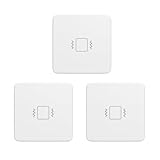
Overview: The ThirdReality Zigbee Vibration Sensor three-pack delivers the same robust features as the single unit but optimized for whole-home coverage. These ZigBee 3.0 sensors monitor vibrations across doors, windows, appliances, and valuables, integrating with major hubs like Echo devices, SmartThings, and Home Assistant for comprehensive security automation.
What Makes It Stand Out: This multi-pack maintains the single unit’s exceptional features: four physical sensitivity levels, an integrated 110dB siren with mute switch, and broad ZigBee compatibility. Buying in bulk provides cost savings for securing multiple entry points simultaneously. The local control via ZigBee ensures reliable operation even during internet outages.
Value for Money: At $43.99 for three units ($14.66 each), the three-pack offers modest savings over individual purchases. For ZigBee households needing multiple sensors, this eliminates repetitive shipping costs and provides cohesive coverage. The value proposition strengthens when considering ZigBee’s low power consumption and absence of subscription fees compared to cloud-dependent alternatives.
Strengths and Weaknesses: Strengths include bulk packaging for whole-home security, extensive hub compatibility, local ZigBee operation, physical sensitivity controls, loud integrated alarms, and mute functionality. Weaknesses remain the mandatory ZigBee hub requirement and higher upfront cost compared to entry-level WiFi sensors.
Bottom Line: An excellent choice for committed ZigBee smart home users securing multiple locations. The three-pack provides convenient expansion, though the per-unit discount is minimal. Prioritize this if you value local control and integrated sirens.
4. WiFi Vibration Sensor: Smart Door Window Sensor with App Alerts, Wireless Glass Break Detector, Adjustable Sensitivity, Compatible with Alexa Google Home (4Pack)
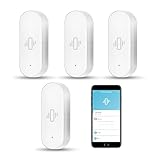
Overview: This four-pack WiFi vibration sensor provides comprehensive coverage for large homes without requiring a hub. Operating on 2.4GHz networks, these Tuya-compatible devices detect vibrations on doors, windows, and glass, sending instant app alerts. The pack includes batteries and features low-power consumption with battery warnings for maintenance-free operation.
What Makes It Stand Out: The four-sensor bundle offers the best per-unit value in this category, enabling whole-home monitoring at an aggressive price point. WiFi connectivity eliminates hub complexity for beginners. Smart Life app integration supports automation routines, history tracking, and seamless linking with other Tuya devices like sirens and cameras for layered security.
Value for Money: At $37.99 for four sensors (under $9.50 each), this represents exceptional value. The pack includes batteries and provides immediate coverage for most homes. For WiFi-based smart homes, this undercuts ZigBee alternatives when factoring in hub costs. The included battery warning system prevents unexpected failures, adding long-term value.
Strengths and Weaknesses: Strengths include outstanding per-unit pricing, four-sensor coverage, hub-free WiFi setup, included batteries, low-power design with warnings, and Tuya ecosystem integration. Weaknesses are 2.4GHz-only limitation, cloud dependency, potential WiFi network congestion with many devices, and lack of local control during internet outages.
Bottom Line: The top budget pick for extensive coverage in Tuya-compatible homes. The four-pack delivers unbeatable per-sensor value, making it ideal for securing multiple entry points without investing in a dedicated hub.
5. Chatthen WiFi Vibration Sensor, Smart Window Alarm Sensors, Tuya APP Remotely Receives Notifications with Adjustable Sensitivity, for Window Security Door Alarm Home Assistant

Overview: The Chatthen WiFi Vibration Sensor is an entry-level, single-unit device for basic vibration monitoring. Operating via the Tuya Smart Life app on 2.4GHz WiFi, it sends real-time smartphone alerts when detecting movement on doors, windows, or equipment. Its compact design and tool-free installation suit renters and small-scale security needs.
What Makes It Stand Out: As the lowest-priced option, it provides an accessible entry point into smart vibration sensing. The high-sensitivity detection captures subtle vibrations, while adjustable sensitivity settings adapt to various scenarios. Energy-efficient design extends battery life, and Tuya ecosystem integration enables basic automation with other compatible devices like lights or cameras.
Value for Money: At $12.89, it’s affordable for single-location monitoring, but multi-packs offer better per-unit value. The WiFi approach eliminates hub costs, making it economical for isolated use cases. However, expanding coverage with individual units becomes expensive compared to bundled alternatives. Battery efficiency reduces long-term operating costs.
Strengths and Weaknesses: Strengths include low entry price, easy WiFi setup, adjustable sensitivity, Tuya integration, and low power consumption. Weaknesses are single-unit limitation, cloud dependency, 2.4GHz-only connectivity, lack of local control, and minimal cost savings versus multi-packs for whole-home use.
Bottom Line: Suitable for testing the waters or monitoring a single critical point. For broader coverage, choose multi-pack alternatives. Best for Tuya users needing one sensor, though larger bundles provide superior value.
6. Smart Vibration Sensor: Wireless Glass Break Detector, WiFi Door Sensor with App Alerts, Adjustable Sensitivity, Glass Break Security Sensor for Alarm System and Smart Home Automation (1-Pack)

Overview: This Smart Vibration Sensor offers an affordable entry point into DIY smart home security, detecting vibrations from potential break-ins through windows or doors. Operating on 2.4GHz WiFi, it sends instant notifications to your smartphone via the Tuya app when disturbances are detected, allowing remote monitoring without a monthly subscription.
What Makes It Stand Out: The sensor’s adjustable sensitivity sets it apart, letting you calibrate detection from light touches to forceful knocks, reducing false alarms. Its integration with the broader Tuya ecosystem enables smart automation—link it with sirens, lights, or cameras for triggered responses. The ability to view historical data through the app provides valuable insight into activity patterns, while tool-free 3M adhesive installation makes deployment effortless on sliding doors, hinged windows, or even as a portable doorstop alarm.
Value for Money: At $13.99, this sensor undercuts many Zigbee alternatives that require costly hubs. For Tuya ecosystem users, it delivers comparable functionality to premium brands at a fraction of the price, though you’ll need to purchase batteries separately.
Strengths and Weaknesses: Pros include hub-free WiFi connectivity, adjustable sensitivity, smart home integration, historical tracking, and versatile mounting options. Cons are limited to 2.4GHz networks only, ecosystem lock-in with Tuya, unspecified battery life, and potential latency issues common to cloud-dependent devices.
Bottom Line: An excellent budget-friendly choice for Tuya smart home enthusiasts seeking basic intrusion detection without recurring fees. While not suitable for professional security systems, it provides peace of mind for apartments and secondary properties.
7. WiFi Vibration Sensor: Smart Door Window Sensor with App Alerts, Wireless Glass Break Detector, Adjustable Sensitivity, Compatible with Alexa Google Home (1Pack)
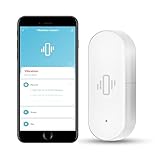
Overview: This WiFi Vibration Sensor provides affordable, hub-free security monitoring for doors and windows. Using a built-in vibration detector, it alerts your smartphone via the Tuya/Smart Life app when unauthorized movement is detected. The system works independently without requiring a central hub, making it ideal for renters and homeowners seeking simple, expandable protection.
What Makes It Stand Out: Unlike basic models, this sensor includes two AAA batteries and features a low-battery warning system through both LED indicators and app notifications. Its compatibility with Alexa and Google Home enables voice control and broader smart home integration. The adjustable sensitivity prevents false alarms from environmental factors, while historical data tracking helps identify patterns or test optimal placement.
Value for Money: Priced at $13.99 with batteries included, it offers better value than similar sensors requiring separate battery purchases. It competes directly with Zigbee devices but eliminates hub costs, making it cost-effective for small-scale deployments.
Strengths and Weaknesses: Strengths include included batteries, low-battery alerts, easy 3M adhesive installation, no hub requirement, voice assistant compatibility, and adjustable sensitivity. Weaknesses are 2.4GHz WiFi limitation, dependency on Tuya cloud infrastructure, potential connectivity issues in larger homes, and limited to the Tuya ecosystem for advanced automation.
Bottom Line: A solid, ready-to-use security sensor that delivers immediate value with included batteries. Perfect for entry-level smart home security, though best suited for users already invested in or willing to adopt the Tuya ecosystem.
8. WiFi Vibration Sensor: Smart Door Window Sensor with App Alerts, Wireless Glass Break Detector, Adjustable Sensitivity, Compatible with Alexa Google Home (2Pack)

Overview: This two-pack WiFi Vibration Sensor bundle delivers the same features as the single unit but at a reduced per-sensor cost. Designed for comprehensive home coverage, these sensors detect vibrations on doors, windows, and glass surfaces, sending instant alerts through the Tuya/Smart Life app without requiring a central hub.
What Makes It Stand Out: The dual-pack configuration provides immediate value for securing multiple entry points. Each sensor includes AAA batteries and low-battery warnings, while maintaining adjustable sensitivity to prevent false triggers. The ability to deploy two units simultaneously makes it practical for protecting both front and back entrances, or multiple windows in a single room.
Value for Money: At $21.99 for two units (roughly $11 each), this bundle offers a 20% savings compared to purchasing individually. For homes needing multiple sensors, this represents excellent value while maintaining all the smart features—Alexa/Google compatibility, historical tracking, and ecosystem integration—of single-unit alternatives.
Strengths and Weaknesses: Pros include cost savings per unit, included batteries, easy installation, no hub requirement, voice assistant support, and comprehensive coverage. Cons remain the 2.4GHz-only limitation, reliance on Tuya cloud services, and potential signal range issues in larger properties. Some users may find the identical packaging of two sensors redundant if only one is needed.
Bottom Line: The most economical choice for securing multiple access points in a Tuya-based smart home. While individual sensors function identically to single-pack versions, the bundle pricing makes it a smart purchase for whole-home protection.
9. EC Buying 5Pcs SW-420 Vibration Sensor Module Vibration Switch Alarm Sensor Module for Arduino

Overview: This five-pack of SW-420 vibration sensor modules targets DIY electronics enthusiasts and Arduino hobbyists rather than mainstream consumers. These bare-bones modules detect physical vibrations and output a simple digital signal (0 or 1) compatible with microcontrollers. Operating between 3.3V-5V with an integrated LM393 comparator, they’re designed for custom security systems, robotics, or interactive projects.
What Makes It Stand Out: The modular design offers unparalleled flexibility for makers. At just $6.49 for five units, it provides exceptional per-unit value for those comfortable with soldering and programming. Unlike consumer-grade sensors, these allow direct integration into bespoke solutions—whether building a custom home alarm, creating a seismic activity logger, or adding impact detection to a robot.
Value for Money: At approximately $1.30 per sensor, this is unbeatable for DIY applications. However, the hidden cost includes time, technical expertise, and additional components (microcontroller, power supply, WiFi module) needed to replicate consumer product functionality.
Strengths and Weaknesses: Strengths include ultra-low cost, high customization potential, wide voltage compatibility, and digital output simplicity. Significant weaknesses are lack of WiFi connectivity, no app integration, requirement for programming knowledge, absence of enclosures, and no consumer support or warranty. These are components, not finished products.
Bottom Line: Ideal for Arduino enthusiasts and makers seeking building blocks for custom projects. Not recommended for average consumers wanting plug-and-play security. The value is exceptional only if you possess the technical skills to utilize them effectively.
10. IHSENO 2.4G WiFi Vibration Sensor Shock Alarm Detector SmartLife/Tuya Smart App Notification for Indoor Window Security Door Alarm

Overview: The IHSENO WiFi Vibration Sensor offers another Tuya-compatible option for smart home security, detecting shocks and vibrations on doors and windows. It sends real-time push notifications through the Smart Life/Tuya app when triggered, enabling remote monitoring without subscription fees. The sensor supports voice control via Alexa and Google Assistant, though notably ships without batteries.
What Makes It Stand Out: The sensor emphasizes smart linkage capabilities with examples like automatically opening curtains when vibration is detected—useful for both security and automation scenarios. It supports historical data recording and one-key WiFi setup, streamlining installation. The ability to function as both a security device and automation trigger adds versatility beyond simple alarm functionality.
Value for Money: At $14.88 without batteries, it’s slightly more expensive than comparable models that include power cells. The value proposition depends on having spare AAA batteries available or being willing to purchase them separately. It matches competitors feature-for-feature but loses ground on out-of-box readiness.
Strengths and Weaknesses: Pros include Alexa/Google integration, smart automation potential, remote monitoring, history tracking, and straightforward app setup. Cons are batteries not included, 2.4GHz WiFi limitation, reliance on Tuya ecosystem, and slightly higher price point than battery-included alternatives. The lack of batteries diminishes immediate usability.
Bottom Line: A capable sensor with strong automation features, but the missing batteries and marginally higher price make it less compelling than similar offerings. Choose this if you prioritize its specific automation examples or already own compatible batteries.
Understanding Vibration Sensors in Smart Gun Safe Security
Vibration sensors represent a fundamental shift from reactive to proactive gun security. Unlike traditional locks that simply wait to be opened, these devices continuously monitor the structural integrity of your safe, detecting everything from subtle prying attempts to full-blown physical attacks. The technology operates on principles refined through decades of industrial and military applications, now miniaturized for residential use.
At their core, these sensors function as your safe’s nervous system, converting mechanical energy from impacts, tilting, or vibrational forces into electrical signals that trigger instant alerts. This capability is particularly crucial for gun owners who store firearms in garages, basements, or other locations where a break-in might go unnoticed for hours. The moment someone attempts to drill, hammer, or move your safe, you’re notified—giving you precious time to contact authorities or respond appropriately.
How Piezoelectric Technology Detects Unauthorized Movement
The most reliable vibration sensors utilize piezoelectric crystals—materials that generate measurable voltage when subjected to mechanical stress. When a thief attempts to pry your safe door or drill into the steel housing, these microscopic crystal structures deform infinitesimally, producing electrical signatures unique to specific types of attacks. Advanced algorithms analyze these signatures to distinguish between benign disturbances (like a passing delivery truck) and genuine threats.
This technology offers sensitivity levels measured in micro-volts, capable of detecting vibrations as subtle as 0.001 G-forces. For context, that’s sensitive enough to register someone gently tapping on your safe’s surface while remaining stable during normal household activities. The piezoelectric element’s rapid response time—typically under 50 milliseconds—ensures that by the time someone’s tools make contact with your safe, your phone is already buzzing with an alert.
The Critical Role of Sensitivity Calibration
Raw detection capability means nothing without intelligent calibration. Premium systems offer granular sensitivity adjustment, allowing you to fine-tune the sensor’s responsiveness based on your safe’s location, construction, and environmental factors. A safe bolted to concrete in a quiet home office requires vastly different settings than one in a busy workshop where power tools operate regularly.
Calibration protocols should include baseline learning periods where the sensor maps normal environmental vibrations over several days. This “fingerprinting” process helps the system understand that your garage door opener’s rumble or your teenager’s subwoofer are routine, while the specific frequency pattern of a reciprocating saw against steel is an anomaly. Without this customization, you’ll either miss real threats or become desensitized to constant false alarms—both outcomes that compromise your security posture.
Key Features That Define Premium Vibration Detection Systems
Not all vibration sensors are created equal, and distinguishing between marketing fluff and genuine capability requires understanding the technical features that directly impact performance. The difference between a $30 sensor and a $300 system often lies in sophisticated features that dramatically reduce false positives while increasing detection reliability.
Look for systems that offer real-time signal processing rather than simple threshold triggers. Advanced units analyze vibration patterns across multiple parameters: amplitude, frequency, duration, and acceleration rate. This multi-factor analysis prevents common false triggers from environmental noise while ensuring that deliberate attacks—characterized by specific frequency signatures and escalating intensity—never go unnoticed.
Adjustable Sensitivity Thresholds and Why They Matter
Static sensitivity settings are a recipe for frustration. The ideal sensor provides at least 5-10 distinct sensitivity levels, each corresponding to different threat scenarios. At the lowest setting, the system might only alert to direct impacts or significant tilting—perfect for high-traffic areas where you want to avoid nuisance notifications. Crank it to maximum sensitivity when you’re away on vacation, and the system becomes hyper-vigilant, detecting even preliminary reconnaissance tapping.
Some advanced systems offer geofencing integration, automatically adjusting sensitivity based on your smartphone’s location. When you leave home, sensitivity ramps up; when you return, it dials back to avoid alerting you to your own access attempts. This contextual intelligence transforms a simple sensor into a sophisticated security partner that adapts to your lifestyle.
Multi-Axis Detection: Covering Every Angle of Attack
Single-axis sensors are dangerously limited, only detecting vibrations along one plane. Modern threats require 3-axis (tri-axial) or even 6-axis detection capabilities that monitor movement across X, Y, and Z coordinates plus rotational forces. A determined thief might attempt to rock your safe off its bolts, tip it for leverage, or attack from the side—each requiring different detection vectors.
Tri-axial accelerometers provide complete spatial awareness, measuring both linear acceleration and gravitational changes. This means the sensor knows if your safe is being lifted, tilted, or vibrated, and can differentiate between these actions. Some systems incorporate gyroscopic data to detect rotational movement, essential for identifying attempts to spin or twist a safe free from its anchors.
Response Time: When Milliseconds Make the Difference
In security, time is measured in opportunities. A sensor that takes 5 seconds to process and transmit an alert gives a prepared thief ample time to disable it or complete a smash-and-grab operation. Industry-leading systems achieve sub-100 millisecond detection-to-notification speeds, ensuring your alert arrives before the perpetrator can react.
This speed demands optimized firmware, robust wireless connectivity, and efficient power management. Look for systems that advertise “edge computing” capabilities, where initial signal analysis occurs on the sensor itself rather than waiting for cloud processing. This local intelligence reduces latency and ensures alerts transmit even during brief network interruptions.
Integration Capabilities with Modern Smart Home Ecosystems
A vibration sensor isolated from your broader security system is like a watchdog that can’t bark. Premium systems integrate seamlessly with smart home platforms, creating coordinated responses that amplify protection. When your safe sensor triggers, it should simultaneously activate security cameras, illuminate floodlights, and lock smart deadbolts—turning a single alert into a comprehensive defensive reaction.
Compatibility matters more than you might think. A sensor that only works with proprietary apps limits your ability to create automated routines. Seek devices supporting standard protocols like Zigbee, Z-Wave, or Thread, ensuring they communicate with platforms such as SmartThings, Hubitat, or Apple HomeKit. This interoperability future-proofs your investment and allows for sophisticated conditional logic.
Wi-Fi vs. Cellular Connectivity: Pros and Cons
Wi-Fi connectivity offers unlimited data transmission and integrates easily with home networks, but fails during power outages unless backed by UPS systems. Cellular connections provide independence from your home internet and continue working even if thieves cut your cable lines, but require subscription plans and can have slower data speeds.
The gold standard is dual-path communication: primary Wi-Fi for speed and richness of data, with cellular as a failover. These systems automatically switch to cellular backup during network issues, ensuring continuous protection. When evaluating cellular options, confirm 4G LTE or 5G compatibility—2G networks are being phased out, rendering older sensors obsolete.
Third-Party Platform Compatibility
Beyond basic connectivity, investigate whether the sensor supports IFTTT (If This Then That) or similar automation platforms. This opens virtually unlimited customization: you could program your safe sensor to trigger your Ring doorbell’s siren, send alerts through Discord, or log events to a Google Sheet for insurance documentation.
API availability indicates a manufacturer’s confidence in their product. Companies providing open APIs allow tech-savvy users to create custom integrations and verify security claims independently. Closed systems might hide security flaws and limit your control over personal data.
Power Solutions for Uninterrupted Protection
A security device that dies during a power outage is worse than useless—it provides false confidence. Understanding power architecture is critical for ensuring 24/7 operation regardless of circumstances. Most quality sensors offer multiple power options, but the implementation details determine real-world reliability.
Battery-only units offer installation flexibility but require diligent maintenance schedules. Hardwired systems provide unlimited power but complicate installation and fail if your home’s electricity is cut. The optimal solution combines both: primary hardwired power with long-life battery backup that automatically engages during outages.
Battery Life Expectations and Optimization Strategies
Manufacturers’ battery life claims often assume ideal conditions—moderate temperatures, minimal alerts, and strong signal strength. Real-world usage typically reduces advertised lifespans by 30-50%. A sensor claiming 2-year battery life might need replacement every 14-16 months in a cold garage where frequent alerts and weak Wi-Fi force constant retransmissions.
Lithium batteries are non-negotiable for gun safe applications. They perform reliably in temperature ranges from -40°F to 140°F, unlike alkaline batteries that degrade rapidly in extreme conditions. Some advanced systems use energy-harvesting technology, converting ambient vibrations or temperature differentials into trickle charges that extend battery life indefinitely—a feature worth the premium for safes in remote locations.
Hardwired vs. Wireless: Installation Trade-offs
Hardwired sensors eliminate battery anxiety and can support more power-hungry features like onboard cameras or advanced processors. However, running low-voltage cable to your safe location may require professional installation, especially if walls need opening. Wireless units install in minutes with adhesive or screws but demand ongoing battery management.
Consider hybrid approaches: hardwire power to a central control unit placed near your safe, which then wirelessly communicates with battery-powered sensor nodes inside the safe. This reduces battery drain since the power-hungry radio transmitter remains external while internal sensors operate on minimal power for years.
False Alarm Prevention: Advanced Filtering Technologies
The boy who cried wolf eventually got ignored, and the same principle applies to security alerts. A sensor that pings your phone every time the dryer vibrates nearby will train you to dismiss notifications—exactly when a real threat occurs. Sophisticated false alarm prevention separates professional-grade systems from toy-like gadgets.
Modern sensors employ multi-layered filtering that examines vibration signatures against known patterns. Environmental noise like passing trains, thunderstorms, or construction work creates broad-spectrum vibrations that differ sharply from the focused, high-frequency impacts of drilling or prying. The system learns these patterns over time, automatically adjusting sensitivity during predictable events.
Machine Learning Algorithms in Modern Sensors
Leading manufacturers now incorporate on-device machine learning that continuously refines detection models based on your specific environment. These systems analyze hundreds of variables: time of day, ambient temperature, historical vibration patterns, and even local seismic data. Over weeks of operation, they build an environmental profile so precise that they can distinguish between your teenager slamming the adjacent door and someone testing your safe’s hinges.
This AI-driven approach also enables predictive alerts. The system might notice an unusual increase in exploratory tapping over several nights—perhaps a burglar casing your home—and warn you of heightened risk before a full attack occurs. This predictive capability transforms reactive security into proactive threat assessment.
Environmental Factor Compensation
Temperature fluctuations affect both the safe’s metal structure and the sensor’s electronic components, potentially causing drift in sensitivity. Humidity can corrode connections, while barometric pressure changes might slightly alter the safe’s door seal tension, creating micro-movements. Premium systems include environmental sensors that compensate for these factors in real-time, maintaining consistent detection thresholds regardless of conditions.
Look for IP65 or higher ingress protection ratings, ensuring the sensor withstands the humid, dusty environment inside many safes. Internal heaters prevent condensation in cold climates, while conformal coatings protect circuit boards from corrosion in coastal areas where salt air penetrates even sealed enclosures.
Installation Best Practices for Maximum Effectiveness
Even the most advanced sensor performs poorly if installed incorrectly. Proper placement and mounting directly impact detection reliability and false alarm rates. The installation process begins long before you peel adhesive backing or drill mounting holes.
First, conduct a vibration audit of your safe’s location. Use a smartphone accelerometer app to measure baseline environmental noise over several days. Identify peak vibration periods and sources. This data informs optimal sensor placement and initial sensitivity settings, preventing weeks of frustrating recalibration.
Optimal Placement Within Your Gun Safe
Mount sensors directly to the safe’s steel body, not to interior shelving or door organizers. Steel transmits vibrations far more efficiently than wood or plastic, ensuring the sensor detects attacks anywhere on the structure. The ideal location is the rear wall, centered vertically, as this area experiences the least flexing during normal door operation while remaining sensitive to overall safe movement.
Avoid mounting near locking bolts or hinges, as these components generate normal operational vibrations that can mask attack signatures. For safes with thick fireproofing material, you may need to mount the sensor on the interior steel liner rather than the outer shell, ensuring it couples directly with the structural frame rather than floating within insulation.
Professional vs. DIY Installation
DIY installation works for wireless units with adhesive mounts, but professional installation becomes essential for hardwired systems or when integrating with monitored alarm services. Certified installers understand how to route cables discreetly, preventing tampering, and can properly ground systems to avoid electrical interference that causes false triggers.
Professional installation also ensures compliance with insurance requirements. Some providers demand certified installation for coverage of firearms collections, and improper DIY work can void both equipment warranties and insurance claims. Factor $150-300 for professional installation into your budget—it’s a small price for guaranteed correct operation.
Legal and Privacy Considerations
Smart security devices collect sensitive data about your firearm access patterns, home occupancy, and security events. Understanding how this data is stored, transmitted, and potentially shared is crucial for protecting your privacy and legal standing. Unlike traditional safes, smart sensors create digital footprints that could become evidence in legal proceedings.
Review the manufacturer’s privacy policy with a critical eye. Reputable companies encrypt data end-to-end and store it on servers in privacy-respecting jurisdictions. Be wary of “free” cloud services that monetize your data or sensors requiring suspicious app permissions unrelated to security functionality.
Data Security and Encryption Standards
Your safe’s vibration data reveals when you’re home, when you access firearms, and potentially your travel patterns. This information demands military-grade encryption—AES-256 minimum—for both data at rest and in transit. The system should use TLS 1.3 protocols for app communication and offer two-factor authentication to prevent unauthorized account access.
Investigate whether the manufacturer has undergone third-party security audits. Companies serious about security publish penetration test results and bug bounty program details. Avoid devices with hardcoded passwords or known vulnerabilities like unencrypted MQTT broadcasts that neighbors could intercept with simple software-defined radio equipment.
Compliance with State and Federal Regulations
Several states now mandate specific security measures for firearm storage, particularly in homes with children. California’s Proposition 63, for example, requires safes meet certain standards, and adding a vibration sensor may affect compliance certification. Similarly, Massachusetts and New York have stringent storage laws where smart monitoring could be interpreted as a required “reasonable precaution.”
Consult with a firearms attorney familiar with your state’s laws before installing any smart security device. Some jurisdictions classify certain sensor data as “electronic surveillance,” potentially implicating wiretapping laws if the sensor captures audio inadvertently. The legal landscape evolves rapidly, and what’s permissible today may require disclosure or registration tomorrow.
Maintenance and Troubleshooting
Like any precision instrument, vibration sensors require periodic maintenance to maintain peak performance. A “set and forget” mentality leads to degraded sensitivity, missed alerts, and eventual system failure. Establish a quarterly maintenance schedule that includes physical inspection, sensitivity testing, and firmware updates.
Begin each maintenance session with a visual inspection of mounting hardware and cable connections. Vibrations can loosen screws over time, and temperature cycling may compromise adhesive mounts. Verify the sensor hasn’t shifted position, which would alter its calibrated baseline and potentially create blind spots.
Regular Testing Protocols
Monthly functional testing ensures your system remains vigilant. Use a calibrated test hammer (available from security equipment suppliers) to deliver measured impacts at various locations on your safe. Document the force required to trigger alerts at different sensitivity settings, creating a performance log that reveals gradual degradation.
Perform “walk-away tests” where you simulate an attack after leaving home, verifying that alerts reach your phone through cellular backup if Wi-Fi is disabled. Test during different times of day and weather conditions to confirm environmental compensation remains effective. Keep detailed logs; they’re invaluable for warranty claims and insurance documentation.
Common Issues and Solutions
Intermittent connectivity often stems from weak Wi-Fi signals penetrating steel safe walls. Solutions include installing external antennas (some sensors support this) or using powerline Ethernet adapters to place a Wi-Fi access point closer to the safe. Persistent false alarms usually indicate insufficient baseline learning—reset the sensor and allow a full 7-day learning period without manual adjustments.
Battery drain acceleration often correlates with temperature extremes or excessive alert frequency. If battery life drops below 60% of specifications, inspect for environmental stressors or adjust sensitivity to reduce nuisance triggers. For hardwired systems experiencing power fluctuations, install a dedicated UPS with pure sine wave output to prevent damage to sensitive electronics.
Cost Analysis and Value Proposition
Price shopping for vibration sensors proves counterproductive when security is at stake. Instead, evaluate total cost of ownership over a 5-year lifespan, factoring in subscription fees, battery replacements, and potential insurance discounts. A $200 sensor requiring no subscription and lasting 5 years costs less than a $50 unit with $10/month monitoring fees that need annual battery changes.
Consider the financial impact of a successful theft. Firearms average $500-1500 each, and insurance deductibles often exceed $1000. A quality sensor system preventing even one burglary pays for itself immediately. Many insurers offer 5-15% discounts on premiums for monitored smart safes, potentially saving hundreds annually.
Total Cost of Ownership
Calculate TCO by adding: initial purchase price + (annual subscription × 5) + (battery replacement cost × expected replacements) + installation costs. A premium $250 sensor with $5/month monitoring, $15 battery replacement every 2 years, and $200 professional installation totals approximately $750 over 5 years. Compare this to a budget $60 sensor with $15/month monitoring, $10 annual batteries, and DIY installation totaling $985 over the same period—the “expensive” option actually costs less.
Factor in intangible costs: time spent dealing with false alarms, stress from unreliable alerts, and potential legal liability from system failures. Quality systems minimize these hidden expenses through superior engineering and support.
Warranty and Support Considerations
Lifetime warranties with no fine print indicate manufacturer confidence. Read warranty terms carefully—many exclude “environmental damage” or “improper installation,” creating loopholes to deny claims. Premium manufacturers offer advanced replacement programs, shipping a new unit overnight when failures occur, and provide US-based technical support from engineers rather than script-reading call center staff.
Investigate the company’s firmware update policy. Do they provide security patches for discontinued models? How frequently do they add features? A sensor receiving regular updates 3 years post-purchase demonstrates ongoing commitment, while abandoned products become security liabilities as vulnerabilities emerge.
Future Trends in Gun Safe Security Technology
The next generation of vibration sensors will integrate with biometric access logs, creating complete audit trails of who accessed your safe and when, combined with environmental data showing if unauthorized attempts occurred between legitimate openings. Blockchain technology may soon secure these logs against tampering, providing court-admissible evidence of due diligence.
Emerging sensors will incorporate micro-radar and lidar, detecting motion near the safe before physical contact occurs. Combined with AI-powered facial recognition through integrated cameras, future systems will identify individuals and assess intent, differentiating between you fumbling for keys at night and a stranger with a crowbar. Battery technology advances like solid-state batteries promise decade-long power autonomy, making maintenance virtually obsolete.
As smart home standards converge on Matter protocol, expect seamless cross-platform compatibility regardless of brand. This interoperability will enable sophisticated scenarios where your safe sensor communicates directly with your car’s security system, alerting you if someone attempts access while you’re approaching home—perhaps indicating a targeted attack timed to your routine.
Frequently Asked Questions
1. Will a vibration sensor detect someone simply touching or bumping into my safe accidentally?
Premium sensors use multi-factor analysis to distinguish between incidental contact and deliberate attacks. Accidental bumps generate single, low-frequency events, while tool attacks create sustained, high-frequency patterns with escalating intensity. Properly calibrated systems won’t alert to normal household contact but will catch purposeful manipulation.
2. Can vibration sensors work inside fireproof safes with thick insulation?
Yes, but installation requires careful consideration. Mount the sensor on the interior steel wall, not within the insulation layer. Steel transmits vibrations efficiently through fireproofing material. Some manufacturers offer sensors specifically designed for insulated safes with extended probes that couple directly to the structural shell.
3. How do I prevent my teenager from being alerted every time I access my own safe?
Most systems offer “privacy modes” that suppress alerts during specified hours or when your smartphone is connected to home Wi-Fi. Geofencing automatically disables alerts when you’re present. Some advanced systems recognize your phone’s Bluetooth signature, treating your access as authorized while flagging all other interactions.
4. Will a vibration sensor interfere with my safe’s fire rating?
Properly installed sensors won’t compromise fire protection. Use low-profile mounts and route cables through existing bolt holes rather than drilling new penetrations. Many sensors are specifically tested and certified to maintain fire ratings. Check with your safe manufacturer before installation to ensure warranty compliance.
5. Can thieves detect or jam vibration sensors?
Quality sensors use encrypted, frequency-hopping communication that’s extremely difficult to jam without sophisticated equipment. Additionally, many systems detect jamming attempts as a trigger event itself. The sensor’s internal memory logs all activity, so even if transmission is blocked, the event record uploads once connectivity restores, providing evidence of the attack window.
6. What’s the realistic battery life in high-traffic households?
In homes with frequent vibrations (nearby traffic, construction, active families), expect 12-18 months from quality lithium batteries. High alert frequency drains power faster. Enable “adaptive power modes” that reduce transmission frequency during known high-activity periods. Some systems allow you to check battery voltage remotely, providing weeks of advance warning before replacement is needed.
7. Do vibration sensors work during power outages?
Battery-powered sensors and those with battery backup continue operating normally during outages. However, your ability to receive alerts depends on whether your internet router and modem have UPS backup. For cellular-enabled sensors, alerts transmit normally as long as the sensor’s internal battery remains charged, typically 24-72 hours without external power.
8. Are there insurance benefits to installing a vibration sensor?
Many insurers offer discounts of 5-15% on firearms coverage for monitored safes. The sensor provides proof of due diligence, potentially reducing liability if a theft occurs. Some policies require specific security measures for high-value collections; a smart sensor often satisfies these requirements. Always document installation with photos and keep receipts for insurance purposes.
9. Can I install multiple sensors in one large safe for better coverage?
Absolutely, and it’s recommended for safes exceeding 30 inches in any dimension. Multiple sensors create triangulation capability, pinpointing attack locations and reducing false positives through cross-verification. Install sensors on opposite walls or one on the door and one on the body. Ensure the system supports multi-sensor configurations without requiring separate subscriptions for each device.
10. How do extreme temperatures affect sensor accuracy?
Quality sensors include temperature compensation circuits that maintain calibration from -20°F to 140°F. Below -20°F, battery voltage drops and LCD screens may fail, but the sensor itself continues operating. Above 140°F, piezoelectric crystals can temporarily lose sensitivity. For safes in unheated spaces, choose industrial-rated sensors with extended temperature ranges and consider external battery packs kept in conditioned spaces.