Living in a rental doesn’t mean compromising on security, but it does require a strategic approach. Unlike homeowners who can drill, wire, and modify to their heart’s content, renters navigate a delicate balance between safety and security deposit preservation. The good news? The security technology landscape in 2026 has evolved dramatically, making sophisticated window and door sensors more accessible and renter-friendly than ever before. With advanced wireless protocols, damage-free installation methods, and smartphone integration becoming standard features even at budget price points, you can build a comprehensive security perimeter without breaking the bank—or your lease agreement.
The under-$30 category has become surprisingly competitive, offering capabilities that were premium features just a few years ago. However, not all budget sensors are created equal, and the unique constraints of rental living demand careful consideration beyond just price. From understanding which mounting methods won’t forfeit your deposit to navigating the complexities of smart home ecosystems in multi-unit buildings, making an informed choice requires knowing what separates a bargain from a liability.
Top 10 Window & Door Sensors for Renters
Detailed Product Reviews
1. Sanjie Door Window Alarms - 5 Pack,125dB,Volume Control,Window Door Open Alarm Sensors for Kids Safety/Dementia/Pool,Wireless Sensors Keep Your Home Security,Easy to Install,Long Battery Life

Overview: The Sanjie alarm system delivers a comprehensive five-pack solution for proactive home security monitoring. These wireless sensors emit powerful 125dB alerts when doors or windows open, making them ideal for protecting children, elderly family members with dementia, and pool areas. The straightforward adhesive installation requires no tools, appealing to renters and homeowners seeking immediate protection without permanent modifications.
What Makes It Stand Out: Unlike basic alarms, Sanjie offers three distinct volume modes: a piercing 125dB alarm, a moderate 100dB alarm, and a 100dB chime. This versatility transforms a simple security device into a multi-functional monitoring tool. The 12-month battery life with low-battery flashing indicators sets a new standard for maintenance-free operation. The 3M adhesive backing adheres securely to sliding doors, cabinets, and drawers, expanding beyond traditional window/door applications.
Value for Money: At $27.19 ($5.44 per unit), this system occupies the sweet spot between budget disposables and professional installations. The volume customization alone justifies the premium over basic 90dB models. For families requiring specialized monitoring scenarios—like dementia care or pool safety—the tailored modes deliver targeted value that cheaper alternatives cannot match, making it a worthwhile investment.
Strengths and Weaknesses: Strengths: Three adjustable volume modes for diverse needs; exceptional 125dB maximum output; 12-month battery life with visual low-power alerts; versatile installation on various surfaces; ideal for child and elder safety monitoring. Weaknesses: Five units may insufficient for comprehensive whole-house coverage; requires less common LR44 batteries; indoor-only installation limits exterior applications; alarm cycles 30 seconds regardless of response time.
Bottom Line: A feature-rich, reliable choice for families needing customizable volume control and extended battery life in their security monitoring system.
2. Universal Door Window Sensor Compatible with VIVINT and 2GIG Security Systems – Surface Mount Wireless Contact
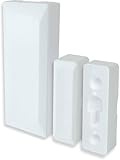
Overview: This professional-grade sensor integrates seamlessly with existing VIVINT and 2GIG security ecosystems. Designed for homeowners already invested in monitored systems, it provides reliable wireless contact monitoring for doors, windows, and cabinets. The surface-mount design prioritizes quick deployment without drilling, while built-in tamper protection ensures alerts if someone attempts to disable the device.
What Makes It Stand Out: The dedicated compatibility with major security platforms distinguishes this from standalone alarms. It communicates directly with your central panel, enabling professional monitoring services and smartphone integration through your security provider’s app. The tamper-protection feature triggers system-wide alerts if the sensor is removed or manipulated, a critical security layer absent in consumer-grade alternatives. Tool-free surface mounting preserves rental agreements and historic homes.
Value for Money: At $26.95 for a single sensor, this represents a cost-effective expansion option for monitored system owners. Professional-grade sensors typically cost $35-50 through security companies, making this third-party alternative a smart economic choice. However, without an existing VIVINT or 2GIG system, it provides zero value, rendering it unsuitable for DIY security newcomers seeking standalone functionality.
Strengths and Weaknesses: Strengths: Seamless integration with VIVINT/2GIG platforms; professional monitoring compatibility; built-in tamper detection; damage-free surface mounting; reliable wireless signal transmission; suitable for cabinets and interior applications. Weaknesses: Completely dependent on existing security system; single-unit packaging limits coverage; no standalone audible alarm; higher per-unit cost than multi-pack consumer alternatives; limited cross-platform compatibility.
Bottom Line: Essential for VIVINT/2GIG users expanding their system, but useless as an independent security solution.
3. HIIXHC Personal Security Window & Door Alarm Bell | Wireless Sensor Door Window Burglar Alarm | Pack of 10

Overview: This budget-friendly ten-pack delivers straightforward magnetic sensor alarms for comprehensive home coverage. Emitting 90dB alerts when contacts separate, these devices provide basic intrusion detection for homes, apartments, offices, and mobile homes. The adhesive mounting system enables rapid deployment across multiple entry points without tools or technical expertise, making it accessible for renters and security novices.
What Makes It Stand Out: The exceptional quantity-to-price ratio dominates the value proposition. Ten units allow whole-house protection—including cabinets and drawers—for less than the cost of a single smart sensor. The AAA battery operation uses readily available power sources, though batteries aren’t included. The simplicity of operation—just three steps from unboxing to activation—eliminates the learning curve that complicates many electronic security devices.
Value for Money: At $14.99 ($1.50 per unit), this represents the most economical path to comprehensive coverage. Competing ten-packs typically cost $20-25, making this an aggressive budget leader. While the 90dB output lacks the ear-piercing intensity of premium models, the ability to protect every window and door simultaneously creates security through saturation. The trade-off between volume and coverage area favors quantity for most residential applications.
Strengths and Weaknesses: Strengths: Unbeatable price per unit; ten sensors enable whole-house coverage; uses common AAA batteries; simple three-step installation; suitable for diverse environments including RVs and hotel rooms; compact design fits cabinets and drawers. Weaknesses: 90dB output less intimidating than louder alternatives; batteries not included; no volume adjustment; basic magnetic sensor lacks advanced features; limited to 0.59-inch detection gap; no low-battery indicator mentioned.
Bottom Line: The ultimate value choice for maximum coverage on minimal budget, ideal for renters and basic security needs.
4. Door Window Alarm, 95DB Door Alarms for Kids Safety, Wireless Sensor Door Window Burglar Alarm-Window Pool Alarms for Home (12 Pack)

Overview: This twelve-pack system balances affordability with slightly enhanced audio output, delivering 95dB alarms across multiple entry points. Designed for families prioritizing child safety and pool security, these adhesive-mounted sensors provide immediate alerts when doors or windows open. The magnetic sensor technology requires two AAA batteries per unit and installs without tools, making it practical for widespread residential deployment.
What Makes It Stand Out: The twelve-unit packaging offers the highest sensor count in its price class, enabling protection of secondary access points like garage windows and basement doors often neglected in basic security plans. The 95dB output strikes a middle ground between ear-piercing deterrents and gentle chimes, providing noticeable alerts without causing neighborhood disturbances. The straightforward on/off switch simplifies daily operation for families who need to temporarily disable sensors.
Value for Money: At $17.99 ($1.50 per unit), this matches the per-unit cost of the ten-pack HIIXHC while adding two extra sensors. The modest 5dB volume increase over the 90dB baseline provides measurable improvement without price premium. For pool safety compliance and child monitoring, the quantity advantage allows placement on interior doors and pool gates simultaneously—critical for comprehensive family protection that cheaper four-packs cannot achieve.
Strengths and Weaknesses: Strengths: Highest sensor count (12) for extensive coverage; 95dB output improves audibility; easy adhesive installation; simple on/off switch operation; ideal for multi-point child safety monitoring; cost-effective per-unit pricing. Weaknesses: AAA batteries not included; no volume modes or adjustment; basic functionality without smart features; 0.59-inch maximum gap limitation; no tamper detection; lacks battery status indicators.
Bottom Line: The best quantity-value proposition for families needing widespread coverage with adequate volume for safety monitoring.
5. Eve Door & Window (Matter) 3 Pack – Smart Contact Sensor for Doors & Windows, Open/Closed State, Automatic Control of Accessories, Matter Over Thread, Apple Home, Alexa, Google Home, SmartThings

Overview: Eve’s Matter-enabled smart sensors represent the cutting edge of home automation integration. This three-pack provides real-time open/closed status monitoring across major smart home platforms including Apple Home, Alexa, Google Home, and SmartThings. The Thread protocol ensures robust, responsive communication while 100% local processing maintains privacy. These sensors trigger automations—like adjusting thermostats or activating lights—based on door/window activity, transforming security into intelligent home management.
What Makes It Stand Out: Matter compatibility future-proofs your investment, ensuring interoperability across ecosystem changes. The Eve app delivers usage statistics and time-stamped activity logs, enabling data-driven decisions about energy efficiency and security patterns. Unlike cloud-dependent competitors, Eve’s local communication prevents data harvesting and maintains functionality during internet outages. The sensors integrate with platform hubs for professional-grade automation while preserving consumer privacy.
Value for Money: At $84.95 ($28.32 per sensor), this premium option targets tech enthusiasts prioritizing integration over quantity. While three sensors cost more than twelve basic alarms, the automation capabilities—controlling HVAC, lighting, and security cameras—deliver utility beyond simple alerting. For smart home ecosystems, the price aligns with other Matter-enabled devices, but budget-conscious buyers may find the functionality-per-dollar ratio inferior to multi-pack acoustic alarms.
Strengths and Weaknesses: Strengths: Matter/Thread future-proof compatibility; cross-platform support (Apple, Alexa, Google, SmartThings); 100% local privacy protection; automation triggers for connected devices; detailed usage analytics; tamper-resistant smart technology. Weaknesses: Requires compatible hub (additional cost); only three sensors limits coverage; highest price point in category; complex setup unsuitable for non-technical users; dependent on smart home ecosystem investment.
Bottom Line: The premium choice for smart home enthusiasts seeking seamless automation and privacy-focused security integration.
6. Qolsys DW Mini-S (2-Pack) Wireless Contact Sensor for Windows & Doors - S-Line Encrypted 319.5 MHz - Window Alarm Sensor for Smart Home - Create Personalized Notifications & Rules

Overview: The Qolsys DW Mini-S two-pack delivers premium wireless contact sensors for smart home security enthusiasts. Operating on 319.5 MHz frequency with S-Line encryption, these compact devices integrate seamlessly with IQ Panel systems while maintaining backward compatibility with legacy 319.5 MHz setups. Each sensor monitors doors, windows, cabinets, or safes with real-time status reporting and personalized notification capabilities.
What Makes It Stand Out: The standout feature is advanced S-Line encryption, ensuring secure signal transmission that prevents hacking or interference. Unlike basic sensors, these support personalized notifications and smart home automation rules, allowing you to trigger lights, thermostats, or other devices when doors open. The 600-foot wireless range provides flexibility for larger properties, while tamper protection alerts you if someone attempts removal.
Value for Money: At $48.61 for two sensors, this sits in the premium tier. However, the encryption technology, smart home integration capabilities, and IQ Panel compatibility justify the cost compared to basic unencrypted alternatives. You’re paying for security and sophistication that budget options simply cannot match, making it worth the investment for serious smart home users.
Strengths and Weaknesses:
- Strengths: Encrypted wireless communication; extensive 600-foot range; easy adhesive installation; tamper detection; customizable chimes and voice prompts; long-lasting CR2032 batteries; smart home rule creation.
- Weaknesses: Requires compatible IQ Panel or 319.5 MHz system; higher price point than basic sensors; battery replacements needed periodically; limited to two sensors per pack.
Bottom Line: Ideal for homeowners invested in the Qolsys ecosystem who prioritize encrypted security and smart automation. The premium price delivers genuine value through advanced features and reliable performance.
7. GAGALOR 4 Sets NC Wired Door Alarm Magnetic Contact Sensor with Double Side Tape

Overview: The GAGALOR four-pack offers budget-friendly wired magnetic contact sensors for straightforward security installations. These normally-closed (NC) devices activate when doors or windows open, sending simple circuit-breaking signals to alarm panels. Designed for DIY enthusiasts, they work with 22-28 AWG wiring and mount easily using included double-sided tape on most door and window frames.
What Makes It Stand Out: The ultra-low price point makes professional-grade security accessible to everyone. These sensors operate without batteries or wireless complexity, ensuring consistent performance. The generous 1/2-inch operation distance accommodates various door and window types, while the versatile wiring gauge compatibility suits most alarm panels and DIY electronics projects without specialized equipment.
Value for Money: At $11.99 for four complete sensor sets, this represents exceptional value. Costing less than $3 per sensor, it’s perfect for budget-conscious homeowners or those needing multiple entry points secured without investing in expensive wireless ecosystems. The reliability of wired connections eliminates ongoing battery costs and wireless interference concerns entirely.
Strengths and Weaknesses:
- Strengths: Extremely affordable; no batteries required; simple NC operation; easy tape installation; compatible with standard alarm panels; reliable wired connection; suitable for various materials.
- Weaknesses: Requires wiring skills and cable management; no wireless or smart features; basic functionality only; installation more labor-intensive; limited to systems accepting NC inputs.
Bottom Line: An excellent choice for DIY security installers prioritizing affordability and reliability over smart features. Perfect for basic alarm systems where wired sensors are practical and preferred.
8. Tellegloww 20 Sets NC Wired Surface Mounted Alarm Magnetic Door Contact Sensor Door Window Reed Switch Sensor with Double Side Tape for Security

Overview: The Tellegloww twenty-pack provides bulk wired magnetic contact sensors for large-scale security deployments. These normally-closed (NC) plastic reed switches mount on doors and windows, sending signals when separated. Each set includes both adhesive tape and screws, supporting installation on wood, glass, or plastic surfaces across homes, offices, or commercial properties requiring extensive coverage.
What Makes It Stand Out: The massive quantity at an affordable price makes this ideal for comprehensive security coverage. The package includes 80 screws alongside tape, offering multiple mounting options. Operating on simple principles with no batteries or wireless pairing needed, these sensors deliver consistent performance for basic alarm systems, LED triggers, or door openers without technical complexity.
Value for Money: At $23.49 for twenty sensor sets, you’re paying just over $1 per sensor—exceptional bulk pricing. This makes professional-grade security feasible for entire homes or small businesses without breaking the bank. The included mounting hardware adds further value and installation flexibility that bulk competitors often omit.
Strengths and Weaknesses:
- Strengths: Outstanding bulk value; versatile mounting options; works with various materials; simple NC operation; no batteries needed; suitable for large installations; includes abundant screws.
- Weaknesses: Plastic construction less durable than metal; adhesive may weaken over time; wired installation requires cable management; no smart features or encryption; basic functionality only.
Bottom Line: Perfect for property managers or DIY installers needing numerous reliable sensors affordably. The bulk packaging and dual mounting options make large projects practical and cost-effective.
9. GAGALOR 20 Sets NC Magnetic Contacts Window Door Sensor Surface-Mounted Reed Switch Alarm with Double Side Tape

Overview: The GAGALOR twenty-pack delivers budget-friendly wired magnetic contact sensors for extensive security coverage. These normally-closed (NC) ABS plastic reed switches monitor doors and windows by breaking a conductive signal when separated. Designed for surface mounting on various materials, each sensor features double-sided tape for quick installation across homes, offices, and public spaces requiring multiple entry point monitoring.
What Makes It Stand Out: The organized packaging separates 80 screws into dedicated PE bags, streamlining large installations. The high-strength ABS plastic offers better heat resistance than standard plastic alternatives. With compatibility across wood, glass, and plastic surfaces, these sensors provide flexibility for diverse architectural applications while maintaining simple, reliable operation without technical overhead.
Value for Money: At $20.99 for twenty sets, this undercuts most competitors at roughly $1.05 per sensor. The combination of improved materials, thoughtful packaging, and comprehensive mounting hardware delivers remarkable value for bulk purchasers seeking quality on a tight budget. It’s among the most cost-effective solutions for large-scale wired security projects.
Strengths and Weaknesses:
- Strengths: Extremely affordable bulk pricing; durable ABS construction; organized screw packaging; versatile material compatibility; easy tape installation; simple NC operation; no maintenance batteries.
- Weaknesses: Wired only (no wireless); basic functionality without smart features; adhesive-dependent mounting; requires wiring expertise; limited to NC alarm systems.
Bottom Line: The best bulk option for cost-conscious buyers prioritizing material quality and installation organization. Excellent for large DIY security projects where affordability meets decent durability.
10. Xf¡nity Security Visonic XHS2-UE Door Window Sensor XFINITY by EbidDealz

Overview: The Xfinity Security Visonic XHS2-UE door/window sensor serves as a replacement or expansion component for existing Xfinity home security systems. This wireless sensor detects when doors or windows open, triggering alerts through the Xfinity platform. Designed for seamless integration, it maintains compatibility with the broader Xfinity security ecosystem and typical DIY installation without professional assistance.
What Makes It Stand Out: As an official-compatible sensor, it ensures reliable communication with Xfinity panels without compatibility concerns. The low individual price allows cost-effective system expansion. Its dedicated design for Xfinity systems means straightforward pairing and consistent performance within that specific ecosystem, unlike universal sensors that may have integration issues or require technical workarounds.
Value for Money: At $8.70 for a single sensor, this offers reasonable value for Xfinity customers needing authentic compatibility. While cheaper universal sensors exist, the assurance of proper integration justifies the modest premium. However, value is entirely contingent on existing Xfinity service and may require professional activation for some system configurations.
Strengths and Weaknesses:
- Strengths: Guaranteed Xfinity system compatibility; affordable expansion option; wireless convenience; reliable brand reputation; easy integration for subscribers.
- Weaknesses: Extremely limited product information provided; requires active Xfinity security service; single sensor only; no encryption details; not suitable for non-Xfinity systems; potential proprietary limitations.
Bottom Line: Only recommended for current Xfinity Security subscribers seeking hassle-free sensor expansion. Others should consider more versatile alternatives with better documentation and broader compatibility.
Why Renters Need Specialized Security Solutions
The Temporary Nature of Rental Properties
Renters face a fundamentally different security calculus than homeowners. Your investment in security needs to travel with you, not stay behind. This mobility requirement means prioritizing sensors with transferable warranties, universal mounting systems, and minimal footprint. In 2026, the average renter moves every 18-24 months, making installation and removal speed critical factors. Look for sensors that advertise sub-five-minute setup and clean removal without residue. The temporary nature also influences battery choices—coin cell batteries might last longer, but AAA-powered sensors allow you to swap in rechargeables, reducing long-term costs during multiple lease cycles.
Landlord Restrictions and Lease Agreements
Lease agreements in 2026 have become increasingly specific about smart home modifications. Many now include clauses about wireless frequency usage in multi-unit dwellings, particularly regarding sensors that operate on crowded 2.4GHz bands that can interfere with building-wide systems. Before purchasing any sensor, review your lease for terms like “modifications,” “wireless devices,” or “security installations.” Some progressive landlords actually require notification but not permission for adhesive-mounted devices, while others prohibit anything that transmits data through shared networks. Understanding these nuances prevents costly violations and helps you select sensors with alternative connectivity options like Z-Wave or Thread protocols that play nicer in dense living environments.
Understanding Window and Door Sensor Technology in 2026
Magnetic Contact Sensors: The Classic Choice
Magnetic contact sensors remain the backbone of entry detection, but their implementation has grown sophisticated. In the sub-$30 category, you’ll encounter two primary designs: surface-mounted and recessed. For renters, surface-mounted is the only viable option, but even these vary significantly. The gap tolerance—how far apart the magnet and sensor can be before triggering—has improved to nearly 1.5 inches in newer models, up from the standard ¾ inch. This matters for rental windows that may have uneven frames or decorative molding. Pay attention to the magnet strength rating; neodymium magnets in 2026 models offer more reliable performance on metal door frames, a common headache in urban apartment buildings.
Vibration and Glass-Break Detection
Budget sensors now increasingly combine magnetic contact with basic accelerometers for vibration detection. This dual-functionality provides layered security—a window might be jimmied without breaking the magnetic contact, but the vibration sensor picks up the tampering. However, the sensitivity calibration on sub-$30 devices varies wildly. Too sensitive, and you’ll get false alarms from passing trucks or slamming doors in adjacent units. Too insensitive, and a determined intruder could bypass it. The sweet spot is adjustable sensitivity with a learning period. Some 2026 models feature a “training mode” that learns your building’s ambient vibration patterns over 7-10 days, reducing false positives by up to 60%.
Motion-Activated Sensors
While technically different from contact sensors, many budget security kits bundle PIR (passive infrared) motion sensors with door/window sensors. For renters in small apartments, this creates a coverage dilemma. A motion sensor in a studio might be triggered by your cat, while in a larger rental, you need strategic placement to avoid dead zones. The key metric is the detection angle and range. In 2026, budget sensors offer 110-120 degree angles, but beam pattern matters more than raw numbers. Look for descriptions like “pet-immune up to 40 pounds” or “stairwell-optimized pattern” that indicate more thoughtful engineering for specific rental layouts.
Key Features That Define Budget-Friendly Excellence
Wireless Connectivity Standards Matter
The connectivity protocol determines everything from battery life to reliability in crowded apartment buildings. Wi-Fi sensors are direct-to-cloud but drain batteries faster and compete with your streaming devices for bandwidth. Zigbee and Z-Wave create mesh networks that improve reliability with each added device but require a hub—potentially pushing you over budget. Bluetooth Low Energy (BLE) sensors are emerging in the sub-$30 space, offering smartphone-direct connectivity without hub requirements, but with limited range. Thread, the newcomer in 2026, promises the best of all worlds: mesh networking without hubs, IP-based communication, and excellent battery life. For renters, Thread-compatible sensors represent the future-proof choice, especially if your building is equipped with Thread border routers.
Battery Life Expectations Under $30
Realistic battery life in the budget category ranges from 6 months to 2 years, but manufacturer claims often assume ideal conditions. The critical factor is the sleep current—how much power the sensor draws while idle. Cheaper sensors might use 30-50 microamps, while efficient designs achieve under 10 microamps. This difference translates to years of battery life. For renters, battery type accessibility matters. CR2032 coin cells are cheap but require specific purchases; AAA batteries cost more initially but can be bought anywhere and replaced with rechargeables. Some 2026 sensors feature energy harvesting from ambient light or RF signals, theoretically offering indefinite battery life, but these remain unproven in real-world rental conditions.
App Integration and User Experience
A sensor is only as good as its notification system. Budget sensors in 2026 universally offer smartphone apps, but the quality varies from polished experiences to barely functional afterthoughts. Key app features for renters include: multi-user access (so roommates get alerts), geofencing integration (automatic arming when you leave), and temporary access sharing for pet sitters or maintenance workers. Look for apps with offline logging capabilities—if your building’s internet goes down, the sensor should store events locally and sync them when connectivity returns. App store ratings can be misleading; instead, check recent reviews mentioning specific firmware versions, as manufacturers push updates that can dramatically change performance.
Installation Methods That Protect Your Security Deposit
Damage-Free Mounting Solutions
The holy grail for renters is mounting that leaves zero evidence. In 2026, command-strip style adhesive has evolved to include sensors with built-in release tabs that stretch the adhesive for clean removal. However, these work best on smooth surfaces like painted drywall or metal door frames. For textured surfaces common in older rentals, consider sensors with magnetic mounting plates. You adhere a thin metal plate (which is easier to remove cleanly) and the sensor attaches magnetically. Some innovative designs use micro-suction cups that work on glass and smooth surfaces without any adhesive at all. Always test your chosen mounting method in an inconspicuous area first, and photograph the pre-installation surface condition for your records.
Proper Placement for Maximum Effectiveness
Sensor placement in rentals requires creative problem-solving. Front doors in apartments often swing inward, limiting frame space. In these cases, mounting the sensor on the door itself and the magnet on the wall behind it can work. For sliding patio doors, vertical mounting on the non-moving frame with the magnet on the sliding panel is standard, but ensure the sensor isn’t visible from outside—some leases prohibit exterior-visible security devices. Window placement should prioritize ground-floor access points and those near fire escapes. In multi-story buildings, don’t neglect upper windows; burglars increasingly use ladders or climb balconies. The 2026 trend is toward sensors with 360-degree detection patterns, allowing more flexible mounting angles without compromising reliability.
Smart Home Ecosystem Compatibility
Voice Assistant Integration
Alexa, Google Assistant, and Siri support has become table stakes, but the depth of integration matters. Basic skills allow you to arm/disarm via voice, but advanced integration includes routines like “Alexa, I’m leaving” which arms sensors, adjusts thermostat, and turns off lights. For renters, the key is local processing capability. Sensors that rely entirely on cloud processing can experience lag of 2-5 seconds, while those with local hub integration respond in under 500 milliseconds. In 2026, Matter-certified sensors guarantee interoperability across ecosystems, preventing lock-in when you move and potentially switch platforms. Matter support in sub-$30 sensors is still emerging but worth prioritizing for future-proofing.
IFTTT and Automation Platforms
If This Then That (IFTTT) and similar automation platforms transform basic sensors into powerful triggers. Imagine your door sensor not just sending an alert, but also turning on all smart lights, recording from your security camera, and blasting music to simulate occupancy. For renters, this creates a security ecosystem without permanent installations. However, free IFTTT tiers now limit applet complexity, and some sensor manufacturers restrict API access on budget models. Look for sensors advertising “open API” or “webhook support” even in the sub-$30 range. These technical terms indicate you can create custom automations that transcend basic app limitations, essential for renters who can’t install dedicated security panels.
Range and Connectivity Considerations
Understanding Signal Strength in Apartment Buildings
Radio frequency propagation in multi-unit dwellings is a nightmare. Concrete walls, metal studs, and neighboring Wi-Fi networks create a hostile environment for sensor signals. The 2.4GHz band, used by most budget sensors, has only three non-overlapping channels, leading to congestion. In 2026, sensors with adaptive frequency hopping automatically switch channels when interference is detected. For renters, sensor placement relative to your router or hub becomes crucial. Each wall between sensor and hub can reduce effective range by 30-50%. In high-rise buildings, consider that signals may travel better vertically through floors than horizontally through concrete firewalls. Some sensors now include signal strength indicators in their apps, allowing you to test placement before final mounting.
Mesh Networks vs. Direct Connections
Mesh networking, where each sensor acts as a repeater for others, solves range problems but introduces complexity. Zigbee and Thread excel here, creating robust networks where adding more sensors actually improves reliability. However, if you start with just one or two sensors, you won’t benefit from mesh advantages. Direct-to-Wi-Fi sensors offer simplicity but create a separate device load on your network—some routers limit connections to 32 devices, a real concern in smart apartments. For renters building gradually, consider starting with a hub-based system even if it stretches the initial budget. The hub cost amortizes over multiple $30 sensors, and the resulting mesh network will outperform direct connections in challenging rental environments.
Alert Systems and Notification Customization
Push Notifications vs. SMS Alerts
Push notifications through apps are free but unreliable—iOS and Android battery optimization can delay them by minutes. SMS alerts are immediate but often require a subscription, even on “free” apps. In 2026, the best budget sensors offer both, with intelligent routing: push for routine events, SMS for confirmed breaches after a 30-second verification period. For renters, consider your phone usage patterns. If you routinely use Do Not Disturb mode, look for sensors that can override it for critical alerts. Some advanced models can escalate notifications—first to your phone, then to a designated emergency contact if unacknowledged within two minutes. This multi-tier approach provides peace of mind without monthly monitoring fees.
Siren Decibel Levels and Neighborhood Etiquette
Many budget sensors include integrated sirens, but loud doesn’t mean effective. A 90-decibel siren is loud enough to startle an intruder but won’t permanently damage hearing or violate most city noise ordinances. However, in apartments, a siren that triggers falsely can create neighbor conflicts. The 2026 solution is progressive volume: a soft chirp for the first 10 seconds, escalating to full volume only if the sensor remains triggered. Some sensors allow you to disable the siren entirely and rely on silent alerts—ideal for renters in buildings with thin walls. If you do use audible alerts, check your lease for “nuisance” clauses and consider informing adjacent neighbors that you’re testing a new security system to maintain good relations.
Battery Types and Replacement Strategies
Coin Cell vs. AAA Power Solutions
The battery format debate extends beyond mere convenience. CR2032 coin cells offer 2-3 year life in efficient sensors but require specific purchase trips. AAA batteries, while bulkier, provide more consistent voltage as they drain, preventing the “low battery false alarm” syndrome common in coin cell devices. For renters, AAA sensors are often slightly larger but offer the advantage of using rechargeable NiMH batteries, reducing waste and long-term cost. Some 2026 sensors feature hybrid power—coin cell primary with a AAA backup that kicks in during low-battery conditions, giving you weeks instead of days to replace the primary cell. This hybrid approach represents the best of both worlds for forgetful renters.
Low-Battery Warning Systems
A sensor that dies silently is worse than no sensor at all. Quality budget sensors provide multiple low-battery warnings: app notifications, LED blinks, and even a final “critical battery” alert sent to your email. The warning threshold matters—alerts at 20% remaining capacity give you ample time to source replacements, while warnings at 5% might come too late. In 2026, some sensors calculate battery life based on actual usage patterns rather than simple voltage readings, providing more accurate estimates. For renters who travel frequently, look for sensors that send battery status to a cloud dashboard you can check remotely. This prevents returning from a two-week vacation to find your security system has been offline for days.
Security Features Beyond Basic Detection
Tamper Detection Mechanisms
Budget sensors can be surprisingly sophisticated about tampering. The simplest form is a back-mounted button that triggers if the sensor is removed from its mount. More advanced models include accelerometers that detect orientation changes or vibration patterns consistent with someone trying to pry the device off. For renters, tamper detection serves dual purposes: security against intruders and accountability against unauthorized removal by landlords or maintenance staff. Some sensors log all tamper events with timestamps, creating a digital trail. In 2026, the most innovative budget sensors include “maintenance mode” that you can activate via app, temporarily disabling tamper alerts during scheduled service visits.
Encryption Standards for Budget Devices
Security of the security system itself is paramount. In 2026, AES-128 encryption is the minimum standard, even for sub-$30 sensors. However, implementation varies. End-to-end encryption, where alerts are encrypted from sensor to phone, is preferable to transport-only encryption that leaves data vulnerable on intermediary servers. For renters in multi-unit buildings, sensors using rolling code technology prevent replay attacks where a neighbor could capture and retransmit your sensor’s signal. While budget sensors won’t offer enterprise-grade security, they should at minimum provide unique encryption keys per device, set during manufacturing. Avoid sensors that use default passwords or allow you to set weak PINs—these are red flags indicating poor security hygiene.
Design and Aesthetics for Modern Rentals
Color Options and Form Factors
Gone are the days of clunky white plastic bricks. 2026 budget sensors come in multiple colors—black, gray, and even woodgrain patterns—to blend with various decors. Form factors have shrunk to match, with some sensors measuring under 2 inches long. For renters, the ability to paint sensors is a game-changer. Look for models with paintable surfaces or removable faceplates you can custom-color to match your trim. The trend toward modular design means you can relocate sensors between different colored mounts as you move. Consider the viewing angle: a sensor mounted high on a door frame might be visible from the living room. Low-profile designs that sit flush against surfaces create a cleaner aesthetic that landlords appreciate during move-out inspections.
Discreet vs. Visible Deterrent Value
There’s a psychological component to security device visibility. Visible sensors can deter opportunistic burglars, but they also signal “valuables inside” to sophisticated thieves. For renters, this decision impacts neighbor perception too. A visible sensor on your door might make adjacent units seem more vulnerable by comparison. The 2026 compromise is the “semi-discreet” design—visible upon close inspection but not obviously a security device from across the hall. Some sensors disguise themselves as smoke detectors or outlet covers. Consider your neighborhood’s crime profile: in high-traffic urban areas, discretion prevents unwanted attention, while in suburban complexes, visible security can be a selling point that reassures neighbors and deters porch pirates.
Performance Metrics That Matter Most
Response Time and Latency
The time between a door opening and your phone alerting you is critical. Budget sensors in 2026 typically achieve 500ms to 2 seconds, but this depends heavily on connectivity path. Wi-Fi sensors can be faster but suffer from network congestion. Zigbee sensors might take longer for the first hop but benefit from mesh reliability. For renters, the real-world test is simple: trigger the sensor and start a stopwatch. If it takes more than 3 seconds consistently, the lag could mean the difference between stopping a burglary and just documenting it. Look for sensors that publish their “time-to-alert” specifications, and favor those under 1.5 seconds. Some apps now include latency diagnostics, showing exactly where delays occur in the notification chain.
False Alarm Prevention Technology
Nothing erodes trust in a security system faster than false alarms. Modern budget sensors employ multiple strategies: dual-magnet verification requiring both door and frame magnets to separate, humidity sensors to distinguish between door movement and thermal expansion, and machine learning algorithms that recognize your usage patterns. For renters with roommates or frequent guests, “grace period” settings are invaluable—a sensor can be configured to wait 30 seconds after triggering before sending an alert, allowing time to disarm via app if it’s just your roommate coming home. The best 2026 sensors include “smart snooze” that automatically disables alerts during your typical arrival window based on phone location data, reactivating if you leave again.
Shopping Strategies for 2026
Seasonal Sales Patterns
The security device market follows predictable cycles. January sees discounts on previous-year models as manufacturers clear inventory for spring releases. Prime Day and Black Friday offer 20-40% discounts on current models, often bringing $45 sensors under the $30 threshold. For renters, timing purchases around move-in dates can yield savings, but don’t compromise on features for marginal discounts. The 2026 trend is “ecosystem bundles” where buying three sensors gets you a free hub, effectively reducing per-sensor cost. Watch for manufacturer-specific sales tied to National Moving Day (typically late May) when security companies target renters specifically. Subscribe to price alerts on comparison sites, but verify that discounted models aren’t stripped-down versions lacking key features like encryption or app support.
Bundle Deals and Ecosystem Lock-In
Buying sensors individually at $30 each seems budget-friendly until you need five sensors and a hub. Many ecosystems offer “starter packs” that bring per-sensor costs down to $20-25 but require committing to their platform. For renters, this lock-in has implications for your next move. If your new rental has different layout needs or your new roommate uses a different ecosystem, you might need to start over. The 2026 solution is prioritizing Matter-certified sensors even if individual units cost slightly more. Matter ensures your sensors work with any compatible hub or app, allowing you to mix and match brands or switch platforms without replacing hardware. Think of it as paying a small premium for moving insurance on your security investment.
Troubleshooting Common Renter-Specific Issues
Signal Interference from Building Materials
Concrete, metal lathe in plaster walls, and energy-efficient window coatings can block sensor signals. If your sensor shows intermittent connectivity, the issue is likely physical obstruction. The 2026 fix isn’t always buying a repeater—sometimes simply rotating the sensor 90 degrees changes the antenna orientation enough to punch through barriers. For renters, the challenge is you can’t modify walls to install repeaters. Instead, strategic sensor placement becomes crucial. Position sensors on the side of door frames facing your router, not the exterior wall. In extreme cases, placing a sensor near a window (even if it’s not monitoring that window) can create a signal bridge to outdoor areas. Some advanced apps include signal heat mapping, helping you visualize coverage without trial-and-error.
Managing Multiple Sensors in Small Spaces
Studio and one-bedroom renters face unique challenges with sensor overlap and notification fatigue. When your front door is 10 feet from your window, a single event can trigger multiple sensors. The solution is zoning and dependency rules. Configure your system so window sensors only arm when the door sensor shows you’re away, or create “quiet zones” where bedroom sensors disable when you’re home but living room sensors remain active. The 2026 app innovation is “space-aware” configurations that use your phone’s location within the apartment (via Bluetooth beacons) to dynamically adjust which sensors are active. This prevents the “crawl to the bathroom at 3 AM” false alarm scenario while maintaining perimeter security.
Frequently Asked Questions
Can my landlord legally require me to remove window and door sensors when I move out?
Generally, landlords can only require removal if the sensors caused damage or if your lease specifically prohibits “alterations.” Adhesive-mounted sensors that leave no residue typically don’t qualify as alterations. Always photograph the pre-installation condition and keep documentation of the mounting method. Some states now have “renter’s right to security” laws that explicitly protect temporary security installations.
Will these sensors work if my apartment loses internet connection?
Most Wi-Fi sensors cannot send smartphone alerts without internet, but many log events locally and sync when connectivity returns. Zigbee and Thread sensors connected to a battery-backed hub can continue functioning during outages, storing events locally. For true offline reliability, look for sensors with cellular backup modules, though these typically exceed the $30 price point. A practical renter solution is pairing sensors with a local alarm siren that doesn’t require internet.
How do I prevent my roommates from triggering false alarms?
Modern sensors support multiple user profiles with individual disarm codes or app-based presence detection. Configure geofencing so the system auto-disarms when any authorized phone enters the apartment. For visitors without smartphones, use temporary access codes or schedule-based arming that automatically disables during expected guest arrival times. Some systems offer “roommate mode” where alerts are sent as gentle notifications rather than full alarms for the first trigger.
Are there any privacy concerns with budget security sensors?
Yes. Some budget manufacturers monetize user data or use less secure cloud servers. Prioritize sensors with local processing options and clear privacy policies stating they don’t sell data. In 2026, Matter-certified devices must meet stricter privacy standards. Avoid sensors requiring unnecessary permissions like location access when not used for geofencing. Regularly check for firmware updates, as manufacturers patch security vulnerabilities.
Can I take my sensors with me when I move to another state?
Absolutely. The beauty of renter-focused sensors is their portability. However, check that your new rental’s internet provider doesn’t block ports used by your sensor’s cloud service. Also, extreme climate differences can affect battery life and adhesive performance. Cold climates may require different battery chemistries, and humid environments can degrade adhesive mounts faster. Keep original packaging for safe transport.
What’s the realistic lifespan of a sub-$30 sensor?
Expect 3-5 years of reliable service. The weakest link is typically the battery contacts, which can corrode in humid environments. Adhesive mounts may need replacement every 2-3 years. Firmware support is the real limitation—manufacturers often stop updates after 4-5 years. For renters planning multiple moves, this lifespan aligns well with typical moving cycles, making the investment worthwhile even at the budget tier.
How many sensors do I actually need for a one-bedroom apartment?
Minimum viable security requires three: front door, primary accessible window, and a secondary entry point like a patio door or bedroom window. For comprehensive coverage, add sensors to all ground-floor windows and any window within reach of a fire escape. A typical one-bedroom needs 4-6 sensors. Prioritize entry points over interior doors, and remember that quality placement of three sensors beats haphazard installation of six.
Do these sensors detect break-ins or just open/close events?
Standard magnetic sensors only detect separation of magnet and sensor. They won’t trigger if glass is broken while the window remains closed. For break-in detection, you need vibration-sensitive sensors or dedicated glass-break detectors. Many 2026 budget sensors combine both functions. Check the product specifications for “shock detection” or “vibration analysis” features. For renters, a combined approach provides better protection than either method alone.
Can I integrate these sensors with my existing smart home devices?
Matter-certified sensors integrate seamlessly with Apple HomeKit, Google Home, and Amazon Alexa ecosystems. For non-Matter devices, check for specific integrations like SmartThings, Hubitat, or Home Assistant support. IFTTT compatibility provides a universal bridge but may introduce latency. Before purchasing, verify the exact integration method—some require cloud accounts while others work locally. For renters with existing devices, ecosystem compatibility should be a primary filter.
What should I do if my sensor triggers while I’m away?
First, verify it’s not a false alarm through any connected cameras or by calling a neighbor. If it’s a confirmed breach, contact local law enforcement immediately—don’t attempt to confront intruders yourself. Many sensors allow you to trigger a siren remotely, which may scare off opportunistic thieves. Document everything with photos and timestamps. After the incident, review sensor placement and sensitivity settings. Some insurance companies offer renter’s insurance discounts for professionally monitored systems, so consider upgrading if you experience a real break-in.