Tired of climbing ladders every few weeks to recharge your outdoor security cameras? You’re not alone. The promise of wireless outdoor cameras with 365-day battery life represents a seismic shift in home security—liberating homeowners from the chore of constant maintenance while delivering uninterrupted protection. But not all “year-long” claims are created equal, and understanding the technology behind these power-sipping sentinels is crucial before investing.
This comprehensive guide demystifies the world of ultra-long-life battery cameras, exploring the engineering marvels that make year-long operation possible, the features that separate premium models from pretenders, and the real-world considerations that impact performance. Whether you’re securing a suburban backyard or monitoring a remote vacation property, we’ll equip you with the knowledge to choose a camera that truly goes the distance.
Top 10 Wireless Outdoor Cameras with 365-Day Battery Life
Detailed Product Reviews
1. ANSQUE Security Cameras Wireless Outdoor Home System, 4 Camera Kit, No Subscription Fees, Solar Powered, Local Storage, 365-Day Battery Life, 360°PTZ Surveillance, Auto Tracking, 2K Color Night Vision

Overview: The ANSQUE 4-Camera PTZ System delivers professional-grade surveillance without subscription fees. This solar-powered kit features 360° pan-tilt-zoom cameras with 2K color night vision and 365-day battery life. The included Homebase serves dual purposes: a WiFi extender eliminating dead zones and a local storage hub with 32GB capacity for 120 days of loop recording. Designed for comprehensive property monitoring, it covers multiple entry points simultaneously while maintaining encrypted, private data storage.
What Makes It Stand Out: Intelligent auto-tracking and cross-camera coordination elevate this beyond standard systems. When motion triggers one camera, it automatically pans to follow the subject while neighboring cameras activate to maintain visual contact, creating a complete activity record. The Homebase’s dual-band technology extends 2.4GHz coverage while boosting transmission speeds via 5GHz. Crucially, offline recording continues during internet outages, storing footage locally until connectivity restores. One-tap controls enable instant 360° patrols or simultaneous quad-view monitoring.
Value for Money: At $425.45, this kit undercuts subscription-based alternatives within two years. Estimated $200 annual savings on cloud storage mean the system essentially pays for itself. Individual PTZ cameras with similar specs cost $150-$200 each, making this four-camera bundle with Homebase a financially sound choice for extensive property coverage.
Strengths and Weaknesses:
- Pros: 360° coverage eliminates blind spots; intelligent tracking across cameras; offline recording prevents gaps; no monthly fees; robust WiFi extension
- Cons: Higher upfront investment; PTZ features unnecessary for compact spaces; mechanical components may require maintenance
Bottom Line: Ideal for security-conscious homeowners with larger properties. The autonomous tracking and offline capabilities provide reliability that cheaper systems lack. While the initial cost is significant, the elimination of subscription fees and advanced PTZ functionality deliver compelling long-term value for comprehensive surveillance needs.
2. ANSQUE Solar Security Cameras Wireless Outdoor, 4-Cam-Kit, 2K Home Security Camera System, 365-Day Battery Life, No Subscription Fee, Easy to Install, Color Night Vision, Local Storage

Overview: The ANSQUE 4-Camera Kit provides straightforward, subscription-free security with solar-powered cameras featuring 2K resolution and 133° super wide-angle lenses. Each camera captures full-color night vision using four integrated LEDs and maintains 365-day battery life with just two hours of daily sunlight. The system includes a Homebase for stable connectivity and 32GB local storage, eliminating cloud dependency while simplifying installation for DIY users.
What Makes It Stand Out: Exceptional ease-of-use defines this system. The advertised one-minute setup with included positioning stickers and QR-code app connection makes it genuinely accessible for seniors and tech novices. Customizable detection zones allow users to draw priority areas directly in the app, ignoring neighbor activity or street traffic to reduce false alerts. The Homebase acts as a signal booster, providing more reliable connectivity than standard WiFi cameras. Solar panels are integrated into each unit, requiring no separate mounting or wiring.
Value for Money: Priced at $419.99 for four cameras, this kit matches competitors’ subscription costs within two years while delivering superior convenience. The estimated $200 annual savings on cloud fees, combined with the included installation accessories, make it a cost-effective whole-home solution. Comparable wide-angle cameras typically cost $100-$130 each without the Homebase stability feature.
Strengths and Weaknesses:
- Pros: Effortless installation; super wide-angle reduces camera count; customizable zones minimize false alerts; solar integration; no monthly fees
- Cons: Fixed viewing angle limits flexibility; no PTZ capabilities; 133° may still require careful positioning for complete coverage
Bottom Line: Perfect for homeowners wanting reliable, hassle-free security without technical complexity. The combination of wide-angle coverage, solar power, and intuitive zone customization makes this an excellent set-and-forget solution. While it lacks advanced PTZ features, its simplicity and comprehensive accessories deliver outstanding value for straightforward surveillance needs.
3. ANSQUE Solar Security Cameras Wireless Outdoor, 2-Cam-Kit, 2K Home Security Camera System, 365-Day Battery Life, No Subscription Fee, Easy to Install, Color Night Vision, Local Storage
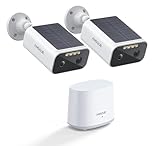
Overview: The ANSQUE 2-Camera Kit scales down the popular solar-powered system for smaller properties, offering the same 2K resolution, 133° super wide-angle lenses, and full-color night vision in a more compact package. Each camera maintains 365-day battery life through integrated solar panels and connects via the included Homebase for stable, subscription-free recording to 32GB local storage. Designed for targeted coverage, this kit suits apartments, townhouses, or focused area monitoring.
What Makes It Stand Out: This kit retains the flagship model’s user-friendly DNA while addressing smaller-scale needs. The one-minute setup process with QR-code pairing remains identical, making it equally accessible for non-technical users. Customizable detection zones allow precise monitoring of entry points like front doors and garages while ignoring irrelevant areas. The Homebase signal booster ensures reliable connectivity even with just two cameras, and integrated solar panels eliminate maintenance hassles.
Value for Money: At $319.99, the two-camera kit offers the same per-camera value as its larger sibling while reducing upfront costs. The estimated $200 annual subscription savings apply equally, making this financially attractive for budget-conscious buyers. For smaller properties requiring only two vantage points, it avoids paying for unnecessary cameras while delivering identical image quality and features.
Strengths and Weaknesses:
- Pros: Same excellent image quality and features as 4-camera kit; lower initial investment; ideal for compact spaces; simple installation; solar powered
- Cons: Limited to two fixed viewpoints; may require careful positioning for complete coverage; still carries Homebase cost for smaller setup
Bottom Line: An excellent choice for smaller homes or focused surveillance areas. It provides the same reliability and ease-of-use as the larger kit without unnecessary hardware costs. While coverage is inherently limited to two cameras, the wide-angle lenses and intelligent zone customization make it surprisingly effective for its scale. For apartments or single-entry homes, this delivers premium features at an appropriately scaled price.
4. ANSQUE Security Cameras Wireless Outdoor Home System, 2 Camera Kit, No Subscription Fees, Solar Powered, Local Storage, 365-Day Battery Life, 360°PTZ Surveillance, Auto Tracking, 2K Color Night Vision

Overview: The ANSQUE 2-Camera PTZ System brings premium pan-tilt-zoom capabilities to smaller properties, offering intelligent surveillance without subscription fees. Each solar-powered camera provides complete 360° coverage, 2K color night vision, and 365-day battery life. The Homebase extends WiFi coverage while storing footage locally on 32GB memory, ensuring privacy and continuous operation even during internet outages.
What Makes It Stand Out: Auto-tracking and cross-camera coordination deliver professional-grade security in a compact package. When motion is detected, cameras automatically follow subjects and share tracking data, creating comprehensive activity records. The Homebase’s dual-band technology boosts signal range and enables one-second camera wake-up. Offline recording continues seamlessly during network disruptions, storing footage locally until reconnection. One-tap controls allow instant panoramic patrols or dual-camera viewing modes.
Value for Money: At $299.98, this kit provides PTZ functionality at a mid-range price point. The two-camera setup costs significantly less than the four-camera version while retaining core intelligent features. Estimated $200 annual savings on cloud subscriptions make this financially viable long-term. Comparable PTZ cameras cost $150+ individually, making this bundled system with Homebase a smart investment for medium-sized properties.
Strengths and Weaknesses:
- Pros: 360° PTZ eliminates blind spots; intelligent tracking across cameras; offline recording; no monthly fees; scaled for medium properties
- Cons: Limited to two cameras; PTZ features increase price over fixed systems; mechanical components require occasional maintenance
Bottom Line: A balanced solution for homeowners wanting advanced PTZ features without committing to a four-camera system. The intelligent tracking and offline capabilities provide reliability that justifies the premium over basic cameras. While two cameras limit overall coverage, their 360° movement effectively monitors multiple areas. For medium-sized properties seeking smart surveillance without subscriptions, this hits the sweet spot between capability and cost.
5. 2025 Upgraded 2K Security Cameras Wireless Outdoor, Free Cloud Storage, 1-6 Months Battery Life, Waterproof, 2-Way Talk, AI Motion Detection Spotlight Siren Alarm Cameras for Home Security

Overview: The 2025 Upgraded Security Camera offers budget-friendly surveillance with 2K resolution and full-color night vision at a remarkably low price point. This single-camera solution features dual-band WiFi support, AI motion detection, and a built-in spotlight with siren alarm. With 1-6 months battery life and free cloud storage options, it targets cost-conscious consumers seeking basic outdoor monitoring without complex installations.
What Makes It Stand Out: The $26.98 price is unprecedented for a 2K camera with color night vision and AI detection. Dual-band WiFi support (2.4GHz/5GHz) ensures stable connectivity uncommon in budget models. The free cloud storage tier provides SD-quality recordings without subscription requirements, while local SD card support (up to 256GB) offers upgrade flexibility. Integrated two-way talk and spotlight siren add interactive security features typically found in premium models.
Value for Money: At under $27, this camera costs less than a monthly subscription fee for many competitors. While the free cloud storage is limited to SD quality and HD requires paid plans, the option for local storage mitigates ongoing costs. The battery life, rated 1-6 months depending on usage, requires more maintenance than solar alternatives but remains reasonable for the price. For supplemental coverage or testing smart camera utility, the value proposition is undeniable.
Strengths and Weaknesses:
- Pros: Extremely affordable; 2K resolution; dual-band WiFi; free cloud tier; two-way communication; spotlight siren
- Cons: Short battery life vs solar models; single camera limits coverage; SD card not included; free cloud limited to SD quality; no local storage base station
Bottom Line: An excellent entry-level or supplemental camera for those prioritizing budget over convenience. While it lacks the maintenance-free operation and comprehensive coverage of multi-camera kits, it delivers surprising features for the price. Ideal for renters, small apartments, or as an additional viewpoint to an existing system. For whole-home security, invest in a more complete kit; for affordable experimentation or targeted monitoring, this is outstanding value.
6. Security Cameras Wireless Outdoor,2K Indoor WiFi Wireless Cameras,Outside Battery Powered Camera for Home Security,AI Motion Detection,Color Night Vision,Spotlight,Siren Alarm,SD/Cloud Storage,2 Pack

Overview: This dual-pack delivers 2K UHD surveillance for indoor and outdoor use without wiring hassles. Each camera captures crisp footage day and night, switching between full-color and infrared night vision with 3x digital zoom for detail on faces or license plates. The IP65 weatherproof rating ensures reliability through rain and snow, while the integrated spotlight and siren provide active deterrence. Two-way audio allows real-time communication via smartphone.
What Makes It Stand Out: The 3-day rolling free cloud storage immediately sets it apart from subscription-heavy competitors. At this price point, combining 2K resolution with a spotlight and siren is rare. The rechargeable battery design enables placement virtually anywhere, making it ideal for renters or remote structures like sheds and garages where power outlets don’t exist.
Value for Money: At $39.50 per camera, this kit significantly undercuts most 2K alternatives. The included cloud storage provides genuine savings, though the required subscription for AI person/vehicle detection adds long-term cost. Compared to premium brands like Arlo or Ring, you’re trading intelligent alerts for affordability and resolution, which suits budget-conscious users prioritizing image quality over smart features.
Strengths and Weaknesses: Pros: Sharp 2K resolution; free 3-day cloud storage; IP65 weatherproofing; integrated spotlight and siren; flexible battery-powered installation; two-way audio.
Cons: AI detection requires paid subscription; 2.4GHz WiFi only; 128GB microSD limit is restrictive; battery life unspecified; no solar panel option.
Bottom Line: A solid entry-level 2K system for basic monitoring with valuable deterrent features. Best for users satisfied with standard motion alerts and free cloud storage, but factor in subscription costs if you need intelligent detection.
7. Upgraded 2K/3MP Outdoor Camera Wireless with XL Solar Panel- Security Cameras Wireless Outdoor, Battery Powered, 2-Way Audio, AI Motion Detection, Spotlight,Used for Front Door, Backyard, Guardhouse

Overview: This solar-powered camera emphasizes hardware innovation over brand recognition. The unit features an oversized solar panel and a truly removable battery—rare in this category—powering a genuine 3MP sensor for native 2K video. The 16x digital zoom and auto-activated spotlight provide detailed color night vision. Designed for entryways and perimeters, it promises maintenance-free operation in adequate sunlight.
What Makes It Stand Out: The XL solar panel (17×11.5cm) dwarfs competitors, capturing more energy for reliable charging. The click-in removable battery is genuinely unique, allowing quick swaps without dismantling the mount. Supporting 256GB microSD cards doubles typical capacity, while the hardware-first 3MP sensor approach avoids software-upscaled blur common in budget 2K cameras.
Value for Money: At $38.98, it’s aggressively priced for a solar camera with these specs. The solar panel eliminates electricity costs and frequent recharging, while the removable battery extends the device’s usable lifespan. However, the unknown brand and unspecified cloud storage options create risk compared to established ecosystems with proven app longevity.
Strengths and Weaknesses: Pros: Oversized solar panel for consistent charging; removable battery simplifies maintenance; true 3MP sensor delivers sharper footage; 256GB SD support; color night vision; no wiring required.
Cons: Single camera only; brand reliability unproven; no mentioned cloud backup; marketing claims need verification; requires sufficient sunlight; mounting hardware quality unknown.
Bottom Line: An innovative hardware package perfect for sunny locations where maintenance-free operation is critical. The removable battery is a real advantage, but verify cloud storage options and brand support before committing.
8. Blink Outdoor 4 – Wireless smart security camera, two-year battery life, 1080p HD day and infrared night live view, two-way talk. Sync Module Core included – 3 camera system

Overview: Amazon’s Blink Outdoor 4 prioritizes battery longevity and ecosystem reliability over resolution. This three-camera system delivers 1080p HD video with infrared night vision, powered by an industry-leading two-year battery life using included AA lithium batteries. The Sync Module Core centralizes connectivity and enables local USB storage. Enhanced dual-zone motion detection provides faster smartphone alerts without excessive false triggers.
What Makes It Stand Out: The two-year battery life is genuinely revolutionary, eliminating quarterly recharging common with competitors. The included Sync Module Core ($35 value) improves connection stability and enables offline storage. Blink’s streamlined setup and Amazon-backed infrastructure ensure reliable performance, while the embedded computer vision offers basic person detection capabilities.
Value for Money: At $63 per camera, this mid-range pricing seems high for 1080p resolution. However, the value lies in minimal maintenance costs and brand trust. While 2K cameras flood the market at similar prices, Blink’s battery longevity and reliability appeal to users prioritizing convenience. The optional subscription for advanced person detection adds ongoing expense that diminishes long-term value.
Strengths and Weaknesses: Pros: Unmatched two-year battery life; Sync Module Core included; trusted brand with stable app; simple installation; enhanced motion detection; local storage support; reliable infrared night vision.
Cons: Limited to 1080p resolution; no color night vision or spotlight; subscription required for person detection; uses disposable batteries; fewer smart features than competitors; narrower field of view.
Bottom Line: A dependable, low-maintenance system for users wanting “set it and forget it” security. The battery life is unmatched, but tech-savvy buyers may find the 1080p resolution and lack of color night vision dated for the price.
9. Outdoor Security Camera Wireless, 2K Battery Powered WiFi Cameras for Home Security with AI Motion Detection, Color Night Vision, Siren Alarm, 2-Way Talk, IP66 Waterproof, Cloud/SD Storage (4 Pack)

Overview: This four-pack delivers whole-property 2K coverage at an aggressive price point. Each camera features dual night vision modes, PIR motion detection with AI analysis that distinguishes people, vehicles, pets, and packages at 98% accuracy. The IP66-rated housing withstands harsh conditions while rechargeable batteries provide 1-5 months per charge. A built-in siren and flashing white light offer layered deterrence, complemented by two-way audio through the Vicohome app.
What Makes It Stand Out: The AI recognition works without a mandatory subscription—a major cost advantage. Four 2K cameras with color night vision for under $150 represents exceptional value. The PIR sensor reduces false alerts compared to pixel-based detection, and the siren with flashing light provides active deterrence beyond passive recording.
Value for Money: At $37.50 per camera, this is the lowest cost-per-unit for AI-equipped 2K cameras available. Eliminating subscription fees for intelligent detection dramatically improves long-term affordability. While battery life is shorter than solar alternatives, the four-camera coverage area justifies more frequent recharging for budget-conscious buyers seeking comprehensive monitoring without ongoing costs.
Strengths and Weaknesses: Pros: Outstanding four-camera value; AI detection included without subscription; IP66 weatherproofing; siren and flashing light deterrence; color and IR night vision; PIR sensor minimizes false alerts; 2K resolution.
Cons: 1-5 month battery life requires frequent recharging; 2.4GHz WiFi only; brand recognition lower than competitors; mounting hardware durability uncertain; cloud storage details vague; no solar option.
Bottom Line: The best value for extensive property coverage, offering legitimate AI features without subscription fees. Perfect for users wanting multiple 2K cameras on a tight budget, provided they accept regular battery maintenance.
10. Baseus Security Cameras Wireless Outdoor, N1 2-Cam Kit with True 2K Clarity, No Monthly Fee, 16TB Expandable Local Storage, 210-Day Battery Life, Spotlight & Alarm, Works with Alexa and Google Home

Overview: Baseus targets privacy-focused users with a subscription-free security ecosystem. This two-camera kit includes a HomeStation hub with 16GB eMMC storage expandable to an extraordinary 16TB via hard drive (not included). Cameras capture true 2K video through a 145° wide-angle lens with color night vision. The massive 7,800mAh batteries deliver up to 210 days per charge, while IP67 weatherproofing handles extreme temperatures from -20℃ to 50℃.
What Makes It Stand Out: The zero-subscription model is increasingly rare, keeping footage private on local storage. The 16TB expansion capacity exceeds competitors by orders of magnitude. Human tracking AI provides intelligent alerts without cloud dependency. Alexa/Google integration, TÜV Rheinland certification, AES+RSA encryption, a 2-year warranty, and lifetime tech support create a premium, privacy-first package.
Value for Money: At $80 per camera, upfront costs are higher, but eliminating $3-10 monthly fees pays for itself within two years. The HomeStation adds value, though requiring a separate hard drive purchase increases initial investment. For privacy-conscious users prioritizing data ownership and long-term savings, this represents excellent value despite the premium price.
Strengths and Weaknesses: Pros: No monthly fees ever; massive 16TB expandable storage; 210-day battery life; IP67 weatherproofing; true 2K clarity; smart home integration; 2-year warranty; lifetime support; human tracking AI included.
Cons: Higher upfront cost; only two cameras included; hard drive not included; battery life varies with usage; brand newer to security market; requires HomeStation hub; mounting flexibility limited by hub proximity.
Bottom Line: A premium, privacy-focused system ideal for users wanting full control without subscriptions. The expandable storage and long battery life justify costs for serious home security, but budget buyers may prefer lower upfront alternatives.
The Revolution of Year-Long Battery Power
The evolution from monthly to annual battery replacements didn’t happen by accident. It represents a convergence of low-power processors, sophisticated power management, and battery chemistry breakthroughs. Modern wireless outdoor cameras achieve 365-day operation by spending approximately 90% of their time in deep sleep mode, consuming mere microamps of power until motion triggers activation. This fundamental shift from continuous recording to event-driven capture is the cornerstone of extended battery life.
How 365-Day Battery Technology Actually Works
The magic lies in a multi-layered power conservation strategy. First, the camera’s microcontroller enters a dormant state where only the motion sensor remains active. When triggered, the system boots from sleep to recording in under 300 milliseconds—a process optimized through specialized firmware that pre-loads only essential functions. Advanced models employ adaptive algorithms that learn from your property’s activity patterns, automatically adjusting sensitivity during high-traffic periods to prevent battery drain from false triggers. The image sensor itself plays a crucial role, with newer back-illuminated CMOS designs requiring 40% less power to capture usable footage in low light.
Key Features That Define Premium Long-Life Cameras
Beyond battery claims, several non-negotiable features distinguish truly capable year-long cameras. Look for customizable motion zones that prevent the camera from waking for irrelevant movement like passing cars or swaying trees. Pre-roll buffering capability—where the camera continuously records a few seconds to internal memory—ensures you don’t miss the critical moment that triggered activation. Adjustable recording lengths (5-60 seconds) let you balance evidence capture with power conservation, while intelligent scheduling allows you to disable monitoring during known activity periods like garbage collection days.
Power Management Systems: The Unsung Hero
The difference between a camera that lasts 8 months versus a full year often comes down to its power management integrated circuit (PMIC). Premium PMICs regulate voltage with 98% efficiency, minimizing energy loss as heat—a critical factor in outdoor temperature fluctuations. These systems dynamically scale power to different components, delivering full voltage to the Wi-Fi chip only during transmission while keeping the image sensor at minimal standby power. Some advanced implementations feature solar trickle-charging compatibility, where a small panel can extend battery life indefinitely in sunny climates.
Battery Types: Lithium vs. Rechargeable Options
Most 365-day cameras utilize non-rechargeable lithium batteries (CR123A or proprietary packs) because they maintain consistent voltage throughout their discharge cycle, ensuring reliable performance until depletion. Rechargeable lithium-ion options, while eco-friendly, exhibit voltage sag as they drain, potentially triggering low-power modes prematurely. However, newer LiFePO4 (lithium iron phosphate) rechargeable cells offer 2,000+ cycles with minimal degradation, making them viable for solar-integrated systems. The trade-off? Non-rechargeable cells typically deliver 20-30% longer life per charge but generate ongoing replacement costs of $15-30 annually.
Understanding Motion Activation and Its Impact on Longevity
Your camera’s battery life depends more on motion trigger frequency than any other factor. A camera in a secluded backyard might easily exceed 365 days, while one monitoring a busy driveway could deplete in 3-4 months. Manufacturers calculate their “year-long” claims based on 5-10 daily activations—understanding your specific use case is essential. High-traffic locations benefit from cameras with adjustable cooldown periods between triggers, preventing rapid-fire recordings from draining the battery during a single prolonged event.
PIR vs. Pixel-Based Detection: Which Saves More Power?
Passive Infrared (PIR) sensors detect heat signatures, consuming virtually no power in standby and triggering only on warm-bodied subjects like people and animals. This makes them the gold standard for battery conservation. Pixel-based detection, which analyzes image changes, requires the image sensor to remain partially active, increasing standby consumption by 30-50%. However, pixel-based systems offer superior detection precision and can distinguish between object types using AI. The latest hybrid systems use PIR for initial wake-up, then engage pixel-based analysis to confirm threats, delivering the best of both worlds.
Video Quality vs. Battery Life: Finding the Sweet Spot
Higher resolution demands more power for image processing and data transmission. A 4K camera might consume 2.5x the power of a 1080p model for the same recording duration. For most residential applications, 2K resolution (2560x1440) strikes the optimal balance—providing sufficient detail for facial recognition and license plate capture while maintaining reasonable power consumption. Frame rate also matters: 15 fps delivers smooth motion while using 25% less power than 30 fps. Advanced cameras offer dynamic quality adjustment, automatically reducing resolution during nighttime infrared recording when color detail is irrelevant.
Weather Resistance: What IP Ratings Really Mean
That “IP65” rating isn’t just marketing fluff—it defines your camera’s survival in harsh conditions. The first digit (6) indicates complete dust protection, while the second (5) means resistance to water jets from any direction. For year-round outdoor use, IP65 is the minimum; IP66 handles powerful waves, and IP67 survives temporary immersion. However, ratings don’t tell the full story. Look for cameras with sealed battery compartments that require tools to open, preventing moisture ingress during battery changes. UV-resistant polycarbonate housings prevent sun-induced brittleness that can compromise seals after two summers of exposure.
Temperature Extremes and Battery Performance
Battery capacity plummets in cold weather—lithium cells lose 20-30% of their effective power at -4°F (-20°C). Premium cameras compensate with insulated battery compartments and low-temperature firmware that reduces non-essential functions in extreme cold. In hot climates, batteries degrade faster; sustained temperatures above 120°F (49°C) can permanently reduce capacity by 15% annually. Some manufacturers offer desert-rated models with reflective white housings and heat-dissipating designs that keep internal temperatures 20-30 degrees cooler than ambient air.
Storage Solutions: Cloud, Local, or Hybrid?
Cloud storage offers convenience but requires longer Wi-Fi transmission times, consuming 10-15% more battery per event. Local microSD storage is more power-efficient but risks losing footage if the camera is stolen. Hybrid systems record locally first, then upload during low-activity periods, optimizing both security and battery life. For maximum efficiency, look for cameras with H.265+ video compression, which reduces file sizes by 50% compared to H.264, halving transmission time and power consumption. Some models offer edge AI that analyzes footage locally, uploading only relevant clips and further conserving power.
Smart Home Integration Without Draining Power
Every Alexa command or Google Home query that wakes your camera consumes precious battery. Premium models implement “selective wake” protocols, responding to smart home requests only during user-defined hours or when motion has recently occurred. Matter-compatible cameras promise future efficiency gains through standardized low-power communication protocols. When integrating with platforms like SmartThings or Hubitat, disable constant status polling—a single status check consumes as much power as a 10-second video recording. Instead, configure your hub to rely on push notifications from the camera.
Wi-Fi Standards and Their Power Consumption Impact
Wi-Fi 6 (802.11ax) offers 30% better power efficiency than Wi-Fi 5 through Target Wake Time (TWT), which schedules transmission windows and allows the radio to sleep longer between communications. However, the real-world benefit depends on your router—if your network equipment doesn’t support Wi-Fi 6, the camera falls back to less efficient protocols. For remote installations, consider cameras with external antenna connectors; a high-gain antenna reduces transmission power requirements by improving signal strength, potentially extending battery life by 5-10% in weak-signal areas.
Installation Strategies for Maximum Efficiency
Proper installation dramatically impacts battery performance. Mount cameras at least 7 feet high to reduce false triggers from small animals while maintaining optimal detection range. Avoid pointing cameras toward busy streets or reflective surfaces like windows, which can cause repeated activations from passing headlights. For maximum battery life, install cameras under eaves or awnings to protect from direct sun and precipitation, reducing the power needed for temperature regulation and preventing weather-related false triggers from rain or snow movement.
Optimal Positioning for Motion Detection and Power Savings
Motion sensors have a cone-shaped detection zone—positioning your camera to monitor perpendicular to likely movement paths rather than head-on increases detection reliability while reducing trigger count. For example, mounting a driveway camera at a 45-degree angle to the approach path captures license plates more effectively than a head-on view, often reducing false triggers by 30%. Use the camera’s test mode (available in most premium models) to visualize the detection zone during installation, ensuring you cover entry points without monitoring areas where shadows or plants cause unnecessary activations.
Security Features That Matter Most
In battery-powered cameras, security features must be power-selective. Two-way audio is useful but consumes significant power—look for “push-to-talk” models that activate the microphone only when you manually initiate communication. Sirens should be reserved for confirmed threats, triggered by AI-verified human detection rather than any motion. Color night vision, while impressive, uses power-hungry white LEDs; infrared night vision extends battery life by 40% and is preferable for most applications. Tamper detection is non-negotiable—accelerometer-based systems that alert you if the camera is moved consume minimal power while providing crucial protection.
Maintenance and Optimization Best Practices
Even 365-day cameras require occasional attention. Clean the solar panel (if equipped) and camera lens quarterly with a microfiber cloth—dust accumulation can reduce solar charging efficiency by 50% and trigger false motion alerts from diffused light. Test battery voltage every six months using the camera’s app; a sudden voltage drop indicates extreme temperature stress or battery degradation. In high-traffic areas, consider implementing “quiet hours” during predictable busy periods (like school drop-off times) to prevent unnecessary recordings and extend battery life beyond the baseline year.
Firmware Updates: Balancing Features and Battery Life
Manufacturers regularly release firmware updates that can improve—or impair—battery performance. Updates adding AI features often increase power consumption by 5-10% due to additional processing. Before updating, read release notes carefully and wait 2-3 weeks to gauge community feedback. Some premium cameras offer “battery-preservation mode” firmware branches that prioritize longevity over cutting-edge features. Never update firmware when the battery is below 30%; a failed update due to power loss can brick the device and force a battery-draining factory reset.
Cost Considerations: Total Ownership Economics
The true cost of a 365-day camera extends beyond the purchase price. Factor in $15-30 annually for non-rechargeable battery replacements, or $0 for solar-integrated models after the initial $30-50 panel investment. Cloud storage subscriptions typically run $30-100 per year—over a 5-year lifespan, this can exceed the camera’s purchase price. Consider models offering free local storage with optional paid cloud backup for critical events. Energy costs for solar panels are negligible, but factor in $10-15 for mounting hardware and weatherproofing materials for DIY installations.
Frequently Asked Questions
How accurate are manufacturer claims of 365-day battery life?
Manufacturer claims assume 5-10 motion events daily in moderate temperatures (50-80°F). Real-world performance varies significantly based on installation location, Wi-Fi signal strength, temperature extremes, and motion sensitivity settings. In high-traffic areas, expect 3-6 months; in low-activity spots, you might exceed 18 months. Always check independent tests that measure standby current draw and per-event consumption.
Can extreme weather really cut battery life in half?
Yes. At -4°F, lithium batteries lose 20-30% capacity due to increased internal resistance. At 120°F, self-discharge accelerates, and the camera’s cooling efforts consume extra power. Desert and arctic-rated models compensate with better insulation and firmware adjustments, but expect 25-40% shorter life in extreme climates. Solar-integrated models perform better in cold but worse in extreme heat due to battery stress.
Should I choose rechargeable or non-rechargeable batteries for year-long operation?
Non-rechargeable lithium batteries (CR123A) deliver the most consistent voltage and longest single-charge life, making them ideal for hassle-free annual replacement. Rechargeable LiFePO4 cells are cost-effective long-term and eco-friendly but require active monitoring to prevent deep discharge. Choose non-rechargeable for set-and-forget convenience; choose rechargeable if you’re comfortable with quarterly check-ins and want to minimize environmental impact.
Does video resolution significantly impact battery longevity?
Absolutely. A 4K recording consumes 2.5-3x more power than 1080p due to increased processing and larger file transmission. For most users, 2K resolution offers the sweet spot—sufficient detail for identification while maintaining reasonable power consumption. Some cameras offer dynamic resolution, using 4K only during daylight when power efficiency is highest and dropping to 1080p at night.
How does Wi-Fi signal strength affect battery drain?
Weak signals force the Wi-Fi radio to transmit at maximum power, increasing per-event consumption by 20-40%. Use a Wi-Fi analyzer app to check signal strength at the installation location; aim for at least -65 dBm. If the signal is weaker, consider a mesh network node, Wi-Fi extender, or cameras with external antenna ports. The power saved by a strong signal often exceeds the consumption of a small extender.
Are solar panels worth the extra cost for 365-day cameras?
In sunny climates (6+ hours of direct sunlight daily), a $30-50 solar panel can eliminate battery replacement costs and extend life indefinitely. However, panels require quarterly cleaning and may not generate sufficient power during winter months or in shaded locations. For partially shaded areas, larger 5W panels with battery backup provide better reliability. Calculate your break-even point: if you replace batteries twice yearly at $20 each, a solar panel pays for itself in 15 months.
What’s the difference between PIR and AI motion detection for battery life?
PIR sensors are passive and consume virtually no standby power, making them ideal for battery life. AI detection requires partial sensor activity, increasing standby consumption. The best approach is hybrid: PIR for initial wake-up, then AI verification to filter false alerts. This combination adds only 5% to standby consumption while dramatically improving accuracy. Avoid cameras that rely solely on pixel-based detection if battery life is your priority.
Can I disable night vision to extend battery life?
Yes, but it’s rarely advisable. Infrared LEDs consume 30-40% of a camera’s active power budget. Disabling them extends battery life but renders the camera blind after dark. A better approach is using “smart IR” that adjusts LED intensity based on subject distance, or scheduling night vision to activate only during specific hours when threats are most likely. Some cameras offer “moonlight mode” using ambient light without IR, but this requires significant moonlight or street lighting.
How often should I expect to replace batteries in real-world conditions?
With optimal settings (moderate climate, strong Wi-Fi, 5-10 daily triggers), non-rechargeable batteries last 12-15 months. High-traffic locations (30+ triggers daily) may need replacement every 4-6 months. Rechargeable cells typically require charging every 6-9 months but can handle 500-2000 cycles before replacement. Set calendar reminders to check battery levels quarterly rather than waiting for low-power alerts, which often come too late.
Do all 365-day battery cameras work with smart home platforms?
Most integrate with major platforms, but power consumption varies dramatically. Cameras that support “push” notifications rather than constant status polling preserve battery life. Matter-compatible models promise better efficiency through standardized low-power communication. When integrating, disable features like continuous live view and frequent status updates. Configure your smart home hub to treat the camera as a “sleepy” device that reports only on significant events, not a constantly active sensor.